
Baked Beans
Small white navy beans baked low and slow for hours in a crock with salt pork, molasses, brown sugar and mustard, until they are tender, glossy and dark: Boston baked beans, the dish that gave the city the name Beantown.
🍳Cook alongOne move at a time, with real timers
 Edited by JP Lambiase
Change the estimate
Swaps change the price only: cook any meat to its own safe temperature. Where these numbers come from
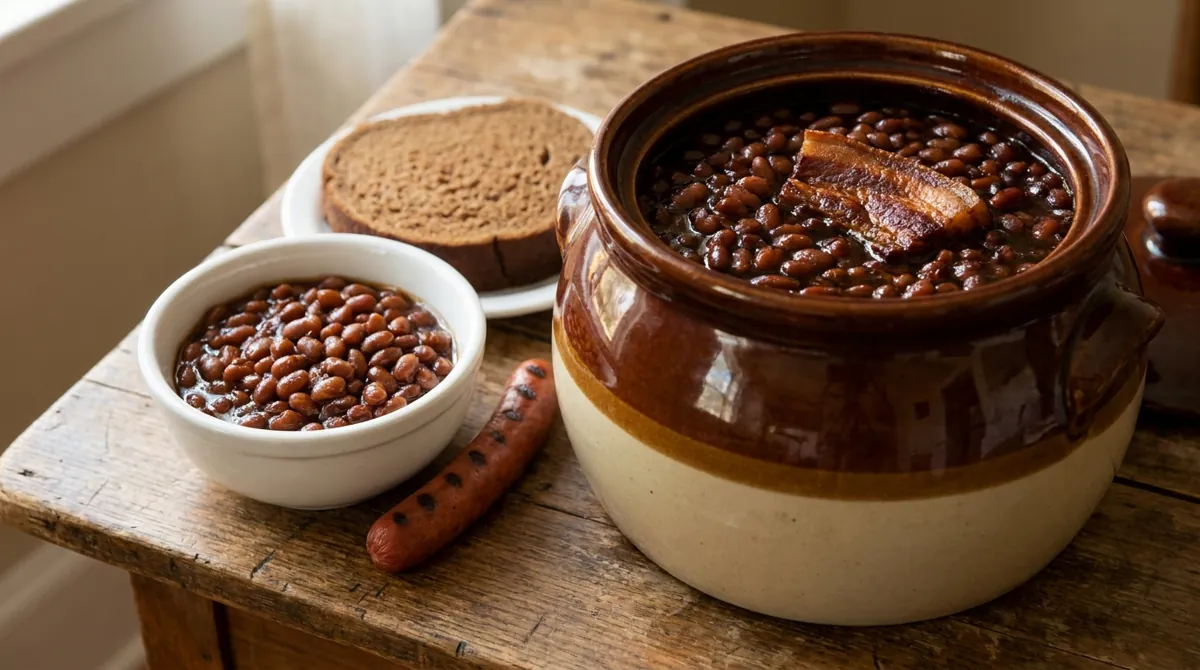
Beans are American. They were farmed and cooked across the Americas long before Europeans arrived, and the usual story of baked beans starts with the peoples of the Northeast, such as the Narragansett and the Penobscot, cooking beans with maple sugar and bear fat in pots set into "bean holes" lined with hot rocks. That story is widely told, but food historians Keith Stavely and Kathleen Fitzgerald note there is no direct evidence for it, only that it is possible.
The English settlers brought a bean pottage of their own. Wikipedia says the Plymouth Pilgrims cooked beans with bacon in the 1620s. In colonial New England, beans were traditionally put in the brick oven on Saturday and left overnight, so there was a hot meal on Sunday without cooking on the Sabbath. In the 1700s Boston sat in the middle of the triangular trade and distilled molasses into rum, and colonists used molasses in place of maple sugar, partly to dodge British taxes on sugar. That molasses gave the beans their dark, sweet, distinctly New England style, and Boston became "Beantown"; its baseball team was even called the Beaneaters from 1883 to 1906.
The tradition went everywhere. Maine lumber camps buried iron pots of beans in pits of hot ash overnight, and Saturday night beans and brown bread with hot dogs are still a New England supper. In 1895 Heinz began canning baked beans in the United States; in Britain they were sold first at Fortnum and Mason as a luxury, and they became beans on toast.
This is the slow, old-fashioned version: navy beans, salt pork and molasses in a crock at 300°F.
Why it works the kitchen science
Salted soak
Soaking in salt water softens the skins and seasons the beans, so they cook evenly and burst less.
The blowing test
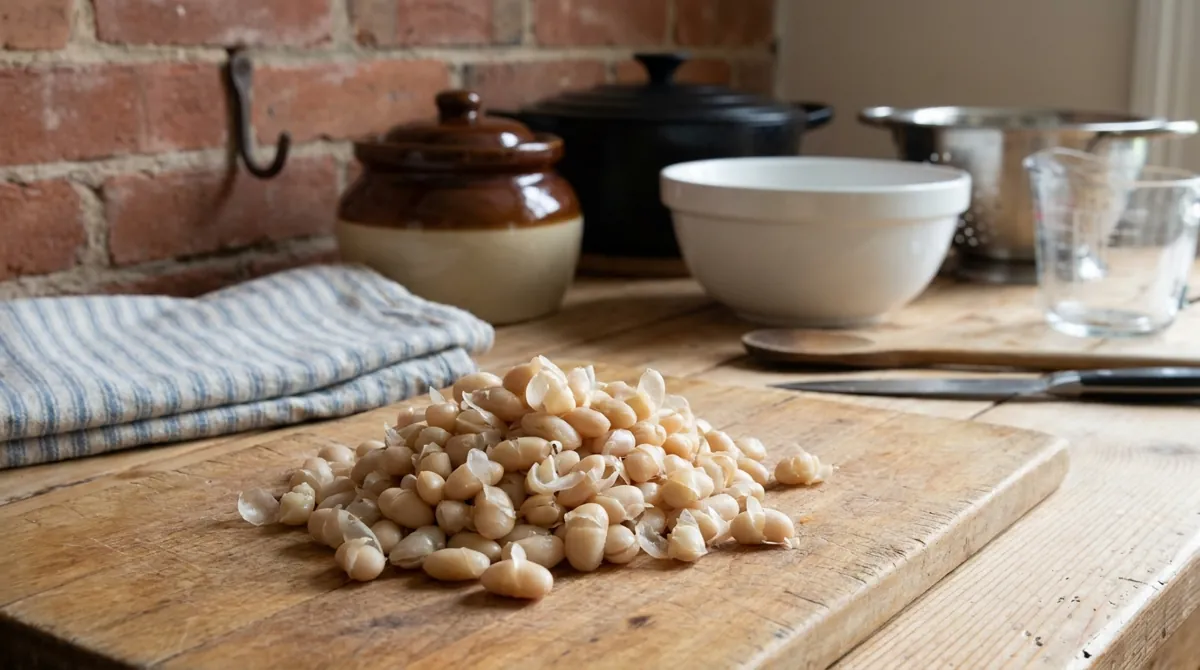
Skins that split when you blow on them mean the beans are ready to bake; undercooked beans can stay hard once the molasses goes in, because sugar and acid slow softening.
300°f for hours
The gentle heat lets the beans soak up the molasses and pork fat without falling apart.
Scored salt pork on top
The fat melts down through the beans as they bake, and the rind turns brown and crisp.
Uncovering at the end
The last hour thickens the sauce and gives the dark, glazed top.
Vinegar at the end
A little acid wakes up the sweet, heavy sauce.
🧰 You'll need 6 items
Everything the steps call for. Tick off what you have before you start.
Appliances
Pans and pots
Tools
Step by step
- Step 1
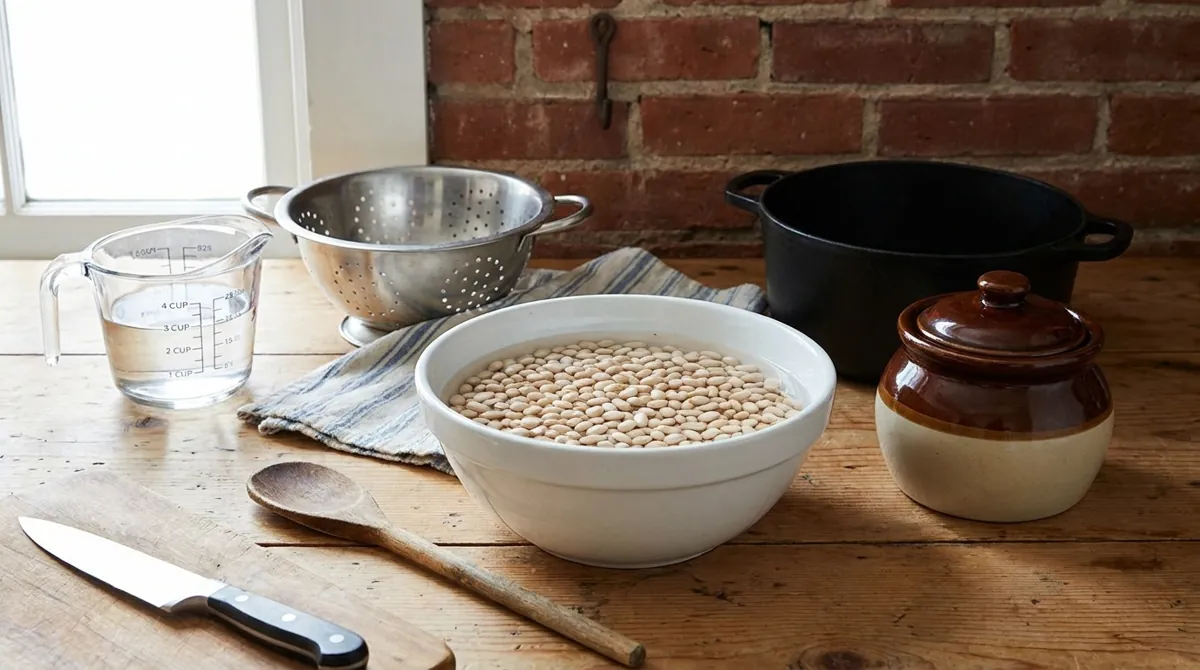
Put the beans in a large bowl with 1 tbsp salt and 10 cups cold water and soak overnight, 8 hours, at room temperature. Drain and rinse.
- Step 2
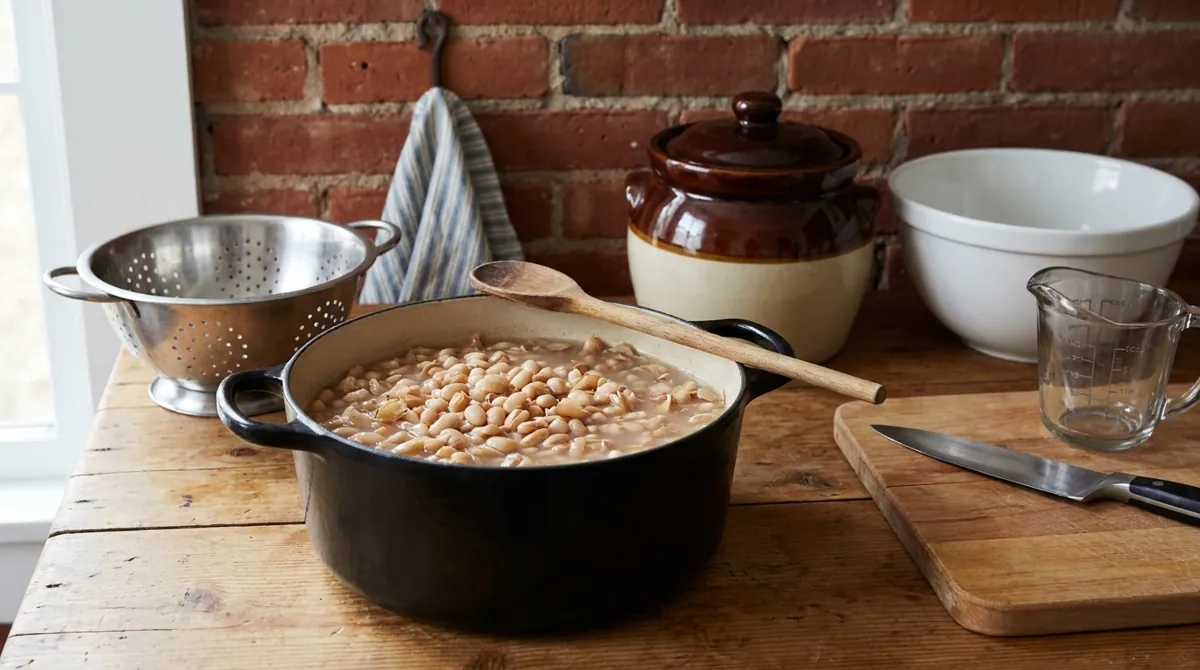
Put the beans in the Dutch oven with 10 cups fresh water, bring to a boil and simmer gently, partly covered, until the skins split and curl back when you blow on a few in a spoon, 30 to 45 minutes. Drain the beans in the colander set over a bowl and save the cooking liquid. Heat the oven to 300°F.
✓ What it should look like - Step 3
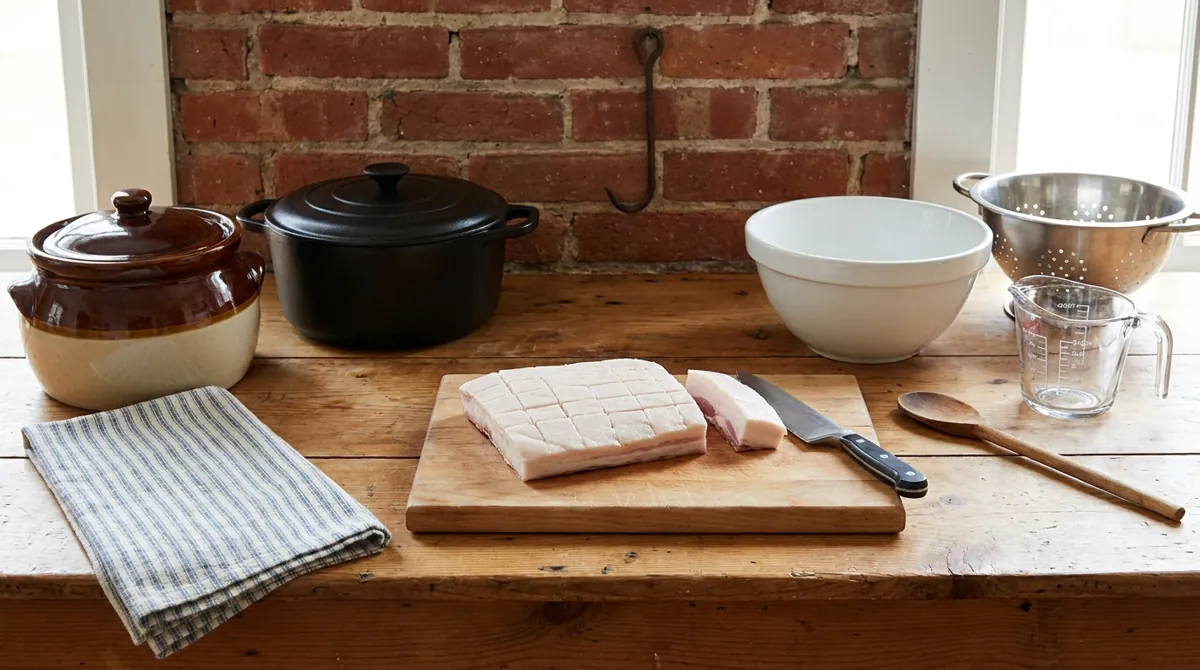
Cut a 2 inch slab off the salt pork and leave it whole. Score the rest through the rind every 1/2 inch in a crosshatch.
- Step 4
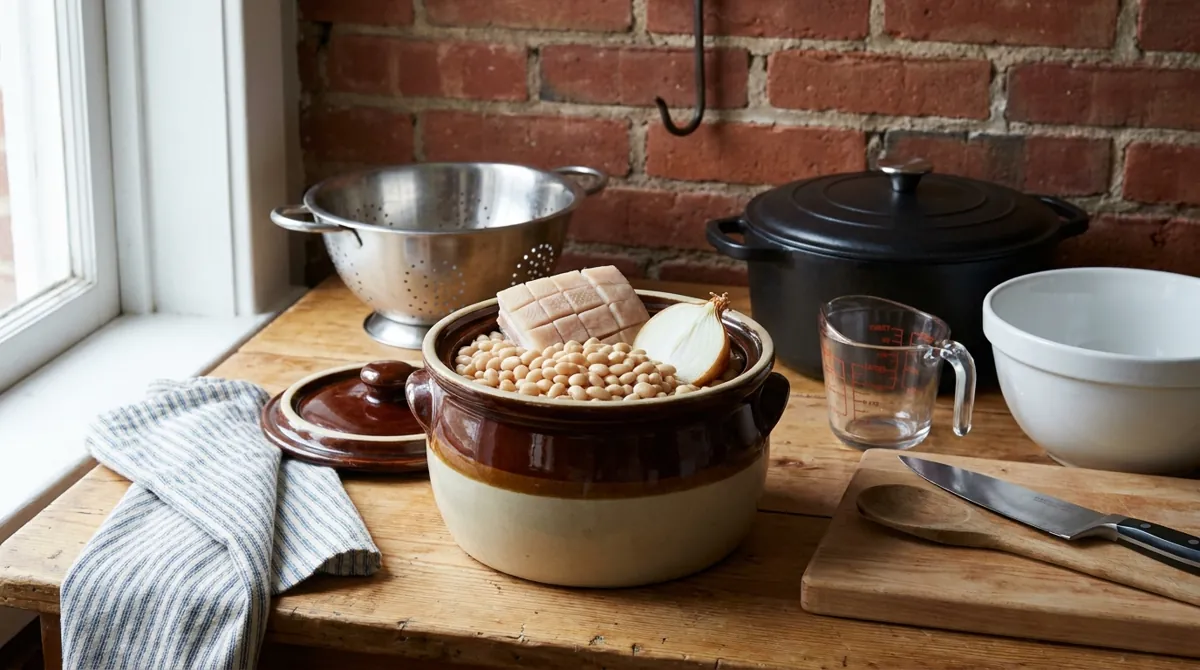
Set the onion halves and the 2 inch slab of salt pork in the bottom of the bean pot and add the beans. Push the scored salt pork into the top of the beans, rind side up, so only the rind shows.
- Step 5
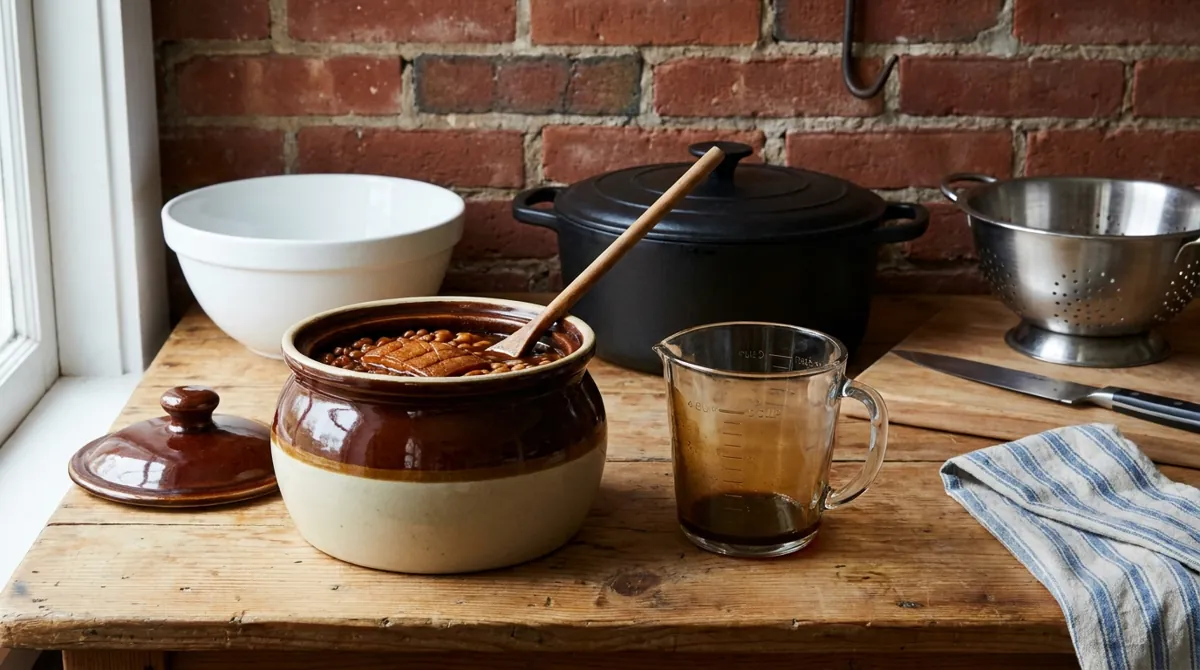
In the measuring jug, stir the molasses, brown sugar, dry mustard, salt and pepper into 2 cups of the hot bean liquid. Pour it over the beans, then add more bean liquid (or hot water) until the beans are just covered.
- Step 6
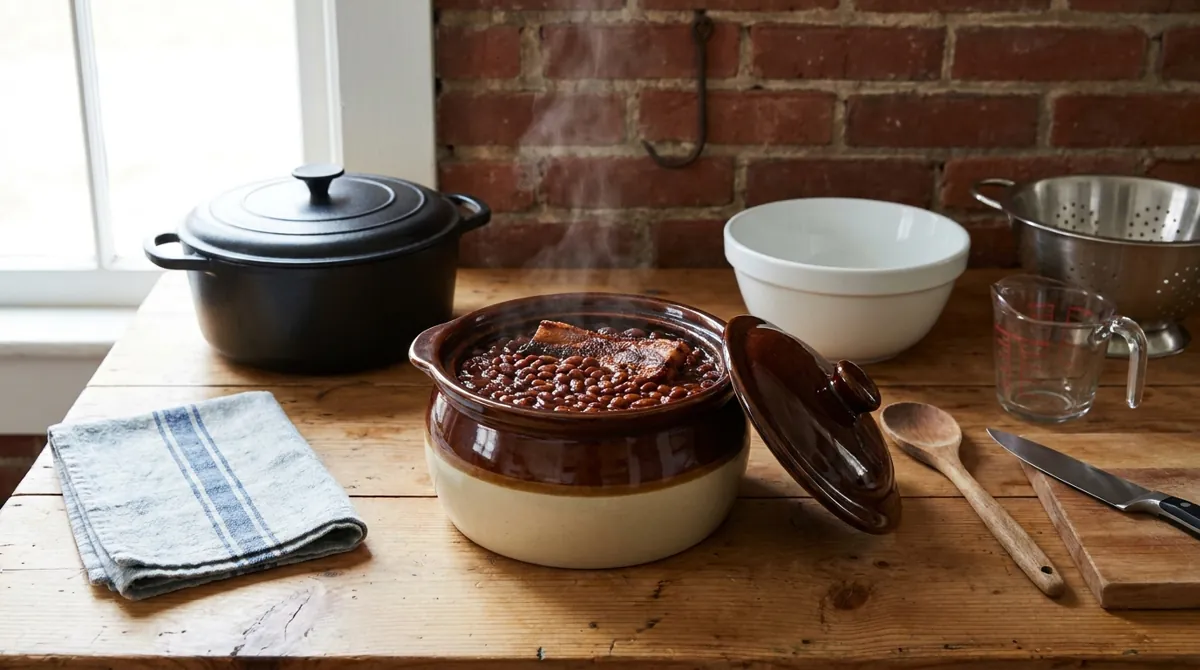
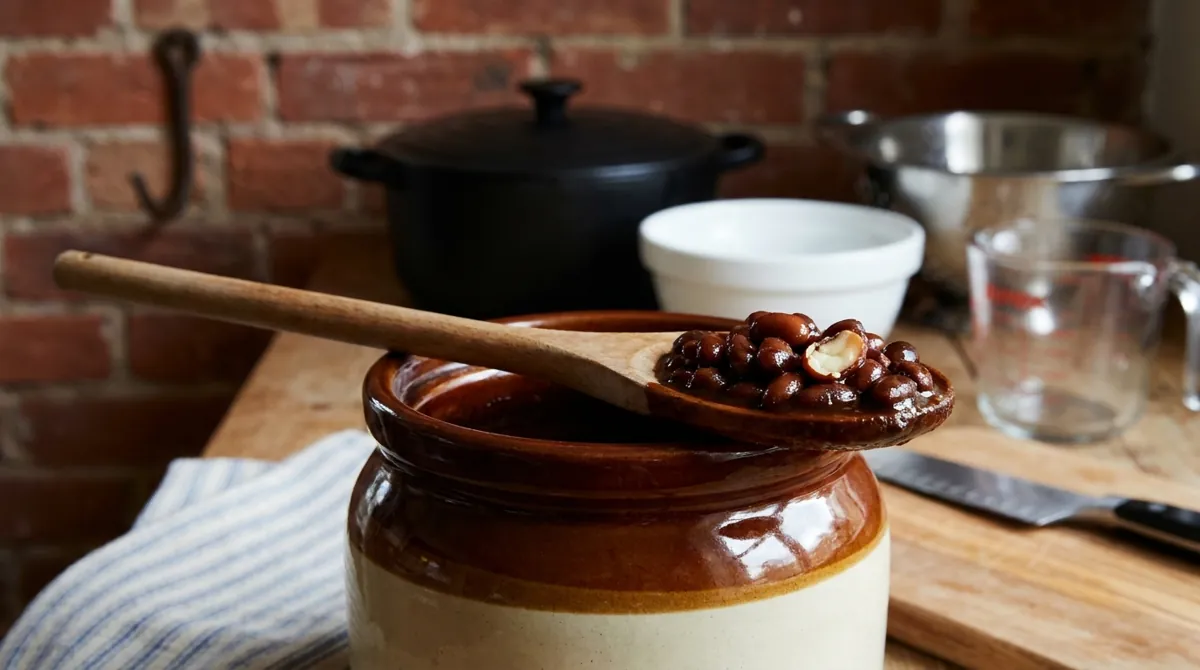
Cover and bake 5 hours, checking every hour and adding hot water so the beans stay just covered. Uncover and bake 1 hour more, without adding water, so the top browns and the sauce thickens. The beans are done when they are completely tender and creamy inside, glossy and dark, sitting in a thick sauce.
✓ What it should look like - Step 7
Stir in the vinegar, taste for salt and rest 15 minutes. Serve with brown bread and hot dogs if you like.
Baked Beans
Serves 8 · about 8 cups, one 4 quart bean pot · 15 hr 20 min total
- 1 lb dried navy beans (about 2 1/3 cups, 454 g), picked over and rinsed
- 6 oz salt pork, in one piece (170 g)
- 1 medium onion, peeled and halved (150 g)
- 1/3 cup unsulphured molasses (112 g)
- 1/4 cup packed dark brown sugar (55 g)
- 2 tsp dry mustard
- 1 1/2 tsp fine salt, plus 1 tbsp for soaking
- 1/2 tsp black pepper
- 1 tbsp cider vinegar (15 g)
- Water
To serve
- Brown bread and hot dogs, optional
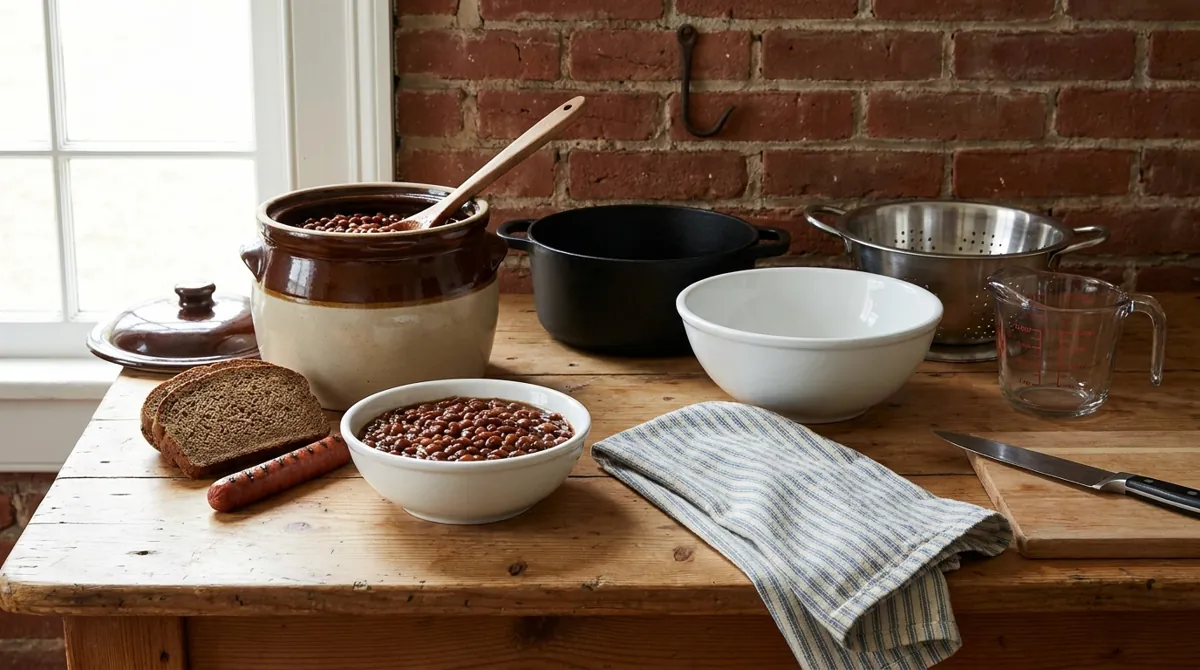
Equipment: Oven, Dutch oven, Chef's knife and cutting board, Measuring cups and spoons, Mixing bowls, Colander
Method
- Put the beans in a large bowl with 1 tbsp salt and 10 cups cold water and soak overnight, 8 hours, at room temperature. Drain and rinse.
- Put the beans in the Dutch oven with 10 cups fresh water, bring to a boil and simmer gently, partly covered, until the skins split and curl back when you blow on a few in a spoon, 30 to 45 minutes. Drain the beans in the colander set over a bowl and save the cooking liquid. Heat the oven to 300°F.
- Cut a 2 inch slab off the salt pork and leave it whole. Score the rest through the rind every 1/2 inch in a crosshatch.
- Set the onion halves and the 2 inch slab of salt pork in the bottom of the bean pot and add the beans. Push the scored salt pork into the top of the beans, rind side up, so only the rind shows.
- In the measuring jug, stir the molasses, brown sugar, dry mustard, salt and pepper into 2 cups of the hot bean liquid. Pour it over the beans, then add more bean liquid (or hot water) until the beans are just covered.
- Cover and bake 5 hours, checking every hour and adding hot water so the beans stay just covered. Uncover and bake 1 hour more, without adding water, so the top browns and the sauce thickens. The beans are done when they are completely tender and creamy inside, glossy and dark, sitting in a thick sauce.
- Stir in the vinegar, taste for salt and rest 15 minutes. Serve with brown bread and hot dogs if you like.
Americanized house recipe, written for this site. History: Wikipedia, "Baked beans" (beans of the Americas, the Narragansett and Penobscot bean holes with maple sugar and bear fat, Stavely and Fitzgerald's note that there is no evidence though it is possible, molasses replacing maple partly to avoid British sugar taxes, Boston beans of navy beans, salt pork and molasses baked six to eight hours, Maine lumber camp bean holes, Heinz from 1895 and Fortnum and Mason, beans on toast); Wikipedia, "Boston baked beans" (the Pilgrims' bean and bacon pottage in the 1620s, Saturday baking left overnight in brick ovens for the Sabbath, the triangular trade and rum, molasses as the New England style, "Beantown" and the Boston Beaneaters of 1883 to 1906, beans and brown bread on Saturday night). Technique: America's Test Kitchen, "Quicker Boston Baked Beans" (navy beans, salt pork browned with onion, dark brown sugar, molasses, mustard and cider vinegar, baked covered then uncovered, extra molasses and mustard stirred in at the end). en.wikipedia.org. Ingredient list follows the source; the method is in our own words.
All sources (3)
Tips
- No bean pot? A heavy Dutch oven works the same way; check the water more often, since it evaporates faster.
- Short on time: use America's Test Kitchen's quick method, simmering the unsoaked beans 20 minutes with 1 tbsp baking soda, then rinsing, which cuts the baking to about 2 hours.
- Thick-cut bacon can replace salt pork; it gives a smoky flavor salt pork does not have.
- Baked beans taste better the next day and keep 4 days in the fridge or 3 months in the freezer.
- For the Maine style, use yellow-eye beans and add 2 tbsp maple syrup.
The rules people argue about
What the sources agree on, what they don't, and what is just a good story.
- Indigenous peoples invented baked beans. Disputed: beans are American and the bean-hole story is widely told, but Stavely and Fitzgerald say there is no evidence for it, only that it is possible.
- Soak the beans overnight. Disputed: the old way is overnight; America's Test Kitchen skips it with a baking soda boil.
Meatballs of the World

Italian-American Meatballs
Big, tender meatballs braised for an hour in red sauce over spaghetti. The one most Americans grew up with.

Pallottine (Abruzzo Meatballs)
Tiny meatballs, smaller than a marble, tossed right through square spaghetti alla chitarra. No bread at all.

Swedish Meatballs (Köttbullar)
Small, soft meatballs browned in butter, in a cream sauce made from the same pan, with lingonberry jam on the plate.

Danish Frikadeller
Pork meatballs shaped with a spoon and fried slowly in butter, crusty outside and soft in the middle.

Königsberger Klopse
German meatballs that are never fried: poached, then served in a creamy white sauce with capers.

Spanish Albóndigas in Almond Saffron Sauce
The tapas bar classic: small meatballs in a golden sauce thickened with fried almonds and bread.

Mexican Albóndigas with Chipotle and Mint
Soft meatballs with rice and fresh mint inside, simmered in a smoky tomato and chipotle broth.

Izgara Köfte (Turkish Grilled Meatballs)
Small, flat meatballs kneaded hard, rested cold, and charred on a hot grill pan.

Lion's Head Meatballs
Big, soft pork meatballs, stirred into a sticky paste, fried to set, then braised in a savory sauce.

Chicken Tsukune
Japan's chicken meatball: kneaded sticky, grilled on skewers, glazed with sweet soy tare, dipped in egg yolk.