
Banana Pudding
Layers of vanilla wafers, ripe banana slices and warm homemade vanilla custard under a toasted meringue, chilled until the wafers turn soft and cakey: the 1880s layered pudding the South made its own.
🍳Cook alongOne move at a time, with real timers
 Edited by JP Lambiase
Change the estimate
Swaps change the price only: cook any meat to its own safe temperature. Where these numbers come from
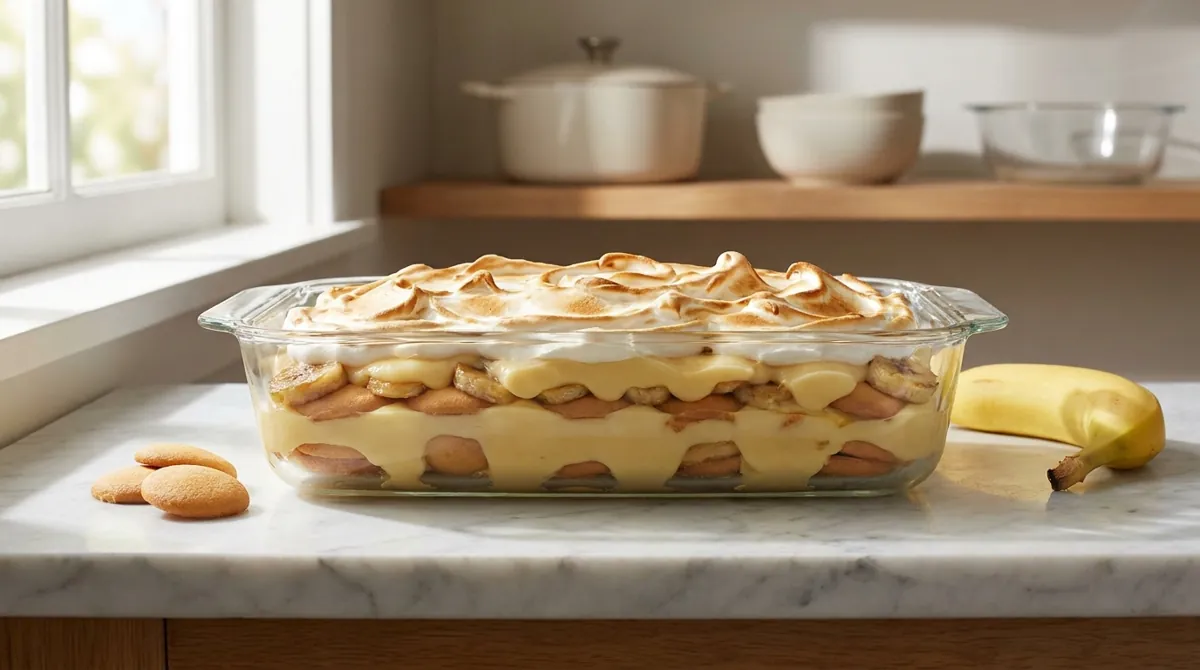
Banana pudding could not exist until bananas did, at least in America. Before the Civil War most Americans had never tasted one; a few bunches arrived from the West Indies in the 1840s and 1850s, and by the end of the 1870s steamships were bringing about 4 million bananas a year from the Caribbean and Central America. The earliest known banana pudding recipe followed in 1888, in Good Housekeeping, a magazine then published in Massachusetts: custard layered with bananas and sponge cake, close to an English trifle. Through the 1890s recipes like it filled cookbooks, magazines and newspapers.
The cookie came later. In 1920 or 1921 (sources differ) a Mrs. Laura Kerley published a version in The Pantagraph of Bloomington, Illinois, that used vanilla wafers in place of the sponge cake or ladyfingers, and through the 1920s cooks followed. The National Biscuit Company noticed, printed a banana pudding recipe on its vanilla wafer box in the 1940s, and in 1967 renamed the cookie the Nilla Wafer.
How it became Southern is the open question. A syndicated column offered a "Southern Banana Pudding" in 1933 without saying why, and by the 1950s newspaper writers took the link for granted. One common theory is that it feeds a crowd, needs little cooking and keeps well, so it suited church suppers, family reunions and barbecues. This version is the old-fashioned Southern one: stovetop custard and a baked meringue.
Why it works the kitchen science
Cornstarch with yolks
Cornstarch keeps the custard from curdling and sets it firm enough to slice into layers, but only once it has bubbled for a minute; undercooked custard turns runny in the dish.
Hot custard over the layers
It starts to soften the wafers and seals the bananas from the air, so they brown less.
Meringue on hot custard, sealed to the rim
The heat from below helps cook the meringue through, and sealing it to the dish keeps it from shrinking and weeping.
Chilling
The wafers absorb moisture from the custard and turn soft and cake-like, which is the texture the dish is known for.
🧰 You'll need 8 items
Everything the steps call for. Tick off what you have before you start.
Appliances
Pans and pots
Tools
Step by step
- Step 1
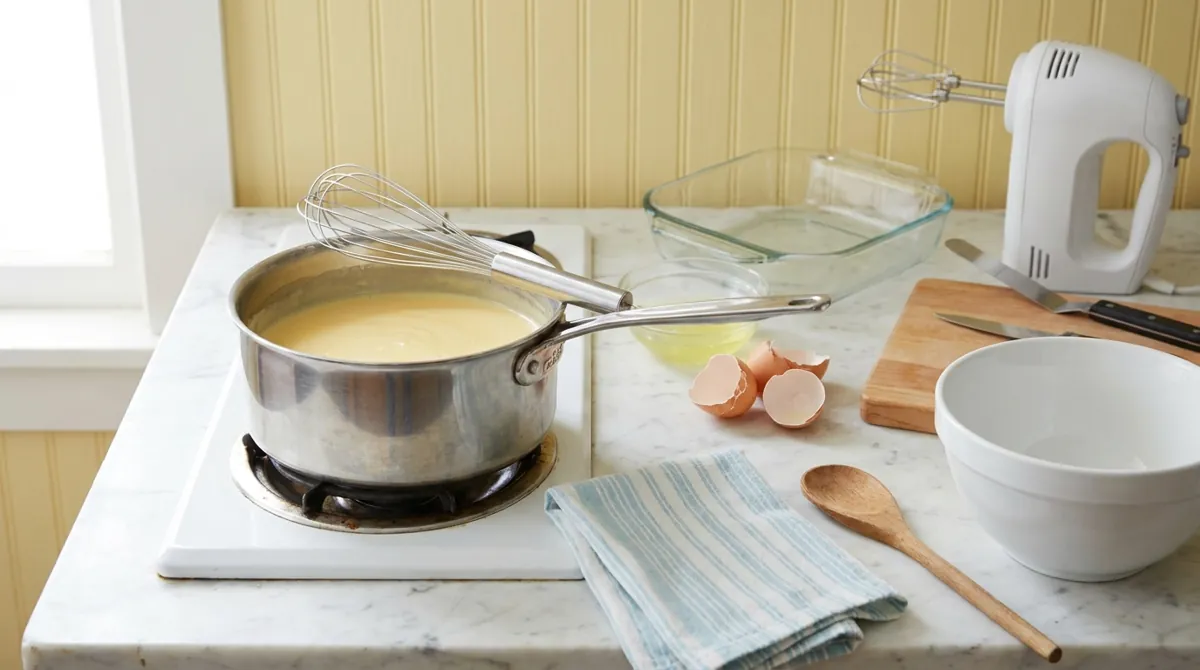
Heat the oven to 350°F. Whisk the 2/3 cup sugar, cornstarch and salt in a medium saucepan, then whisk in the milk and the egg yolks until smooth.
- Step 2
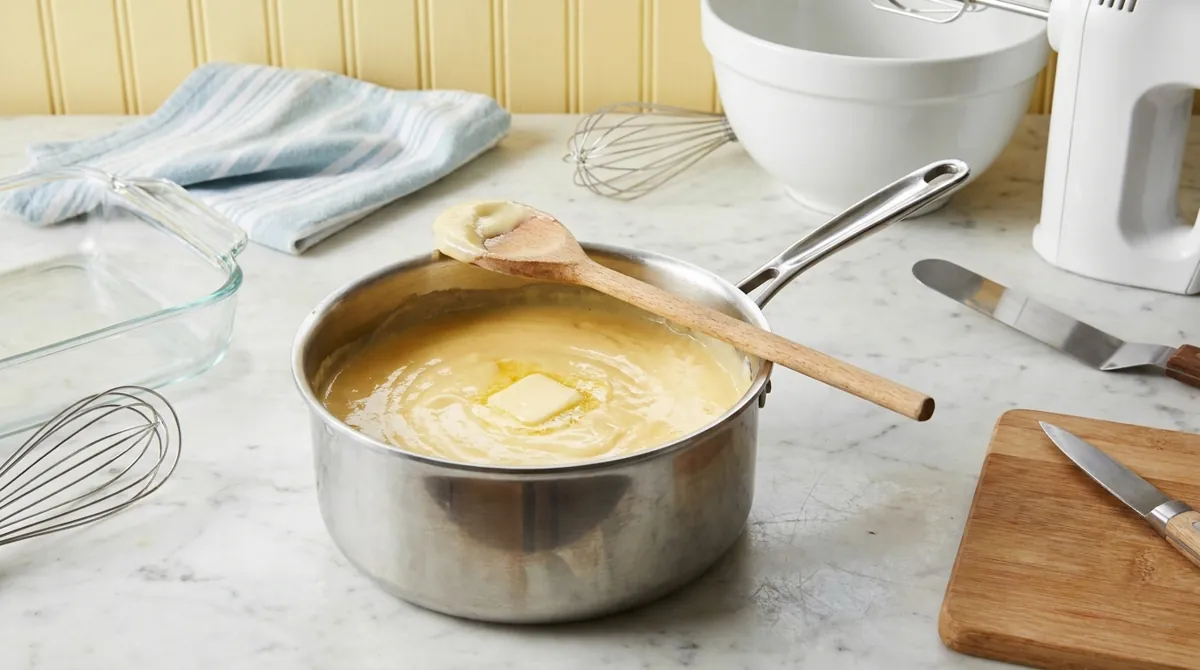
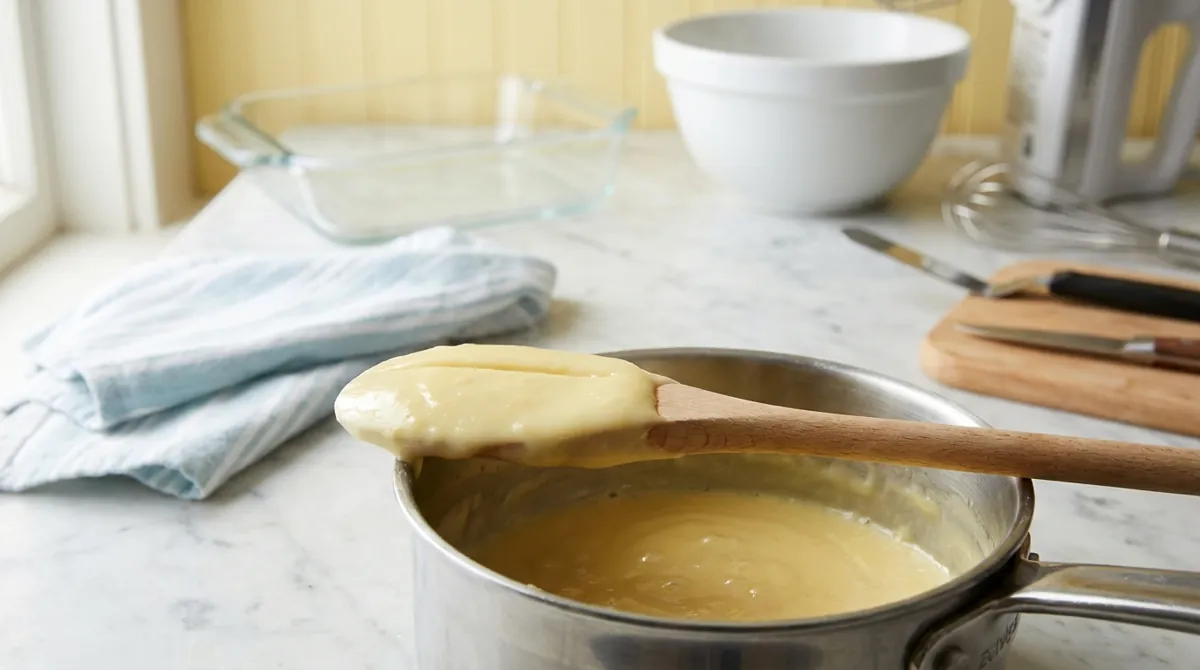
Cook over medium heat, whisking constantly and scraping the bottom and corners, until the custard thickens and comes to a bubble, about 8 to 10 minutes, then keep it bubbling gently for 1 minute more. Take it off the heat and whisk in the butter and vanilla. It should be thick enough to coat a spoon and leave a clear line when you draw a finger across the back.
✓ What it should look like - Step 3
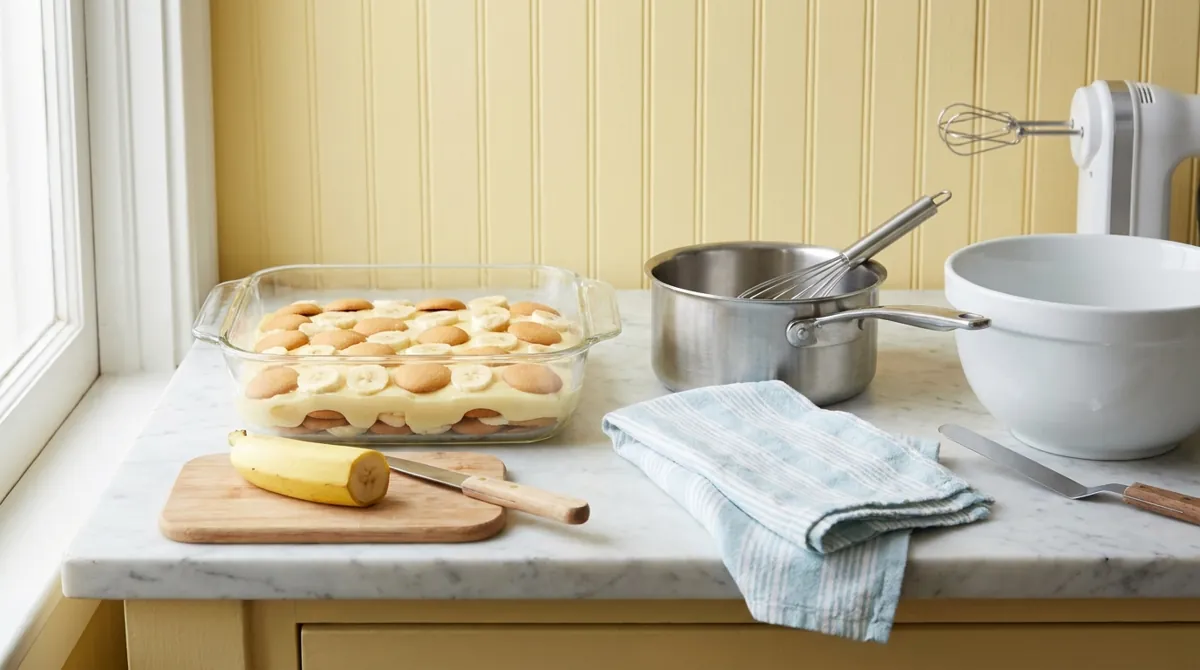
Layer in a 2 quart glass or ceramic baking dish: a single layer of wafers, a layer of banana slices cut 1/4 inch thick, then a third of the hot custard spread to cover them. Repeat twice, ending with custard, so no banana is left uncovered.
- Step 4
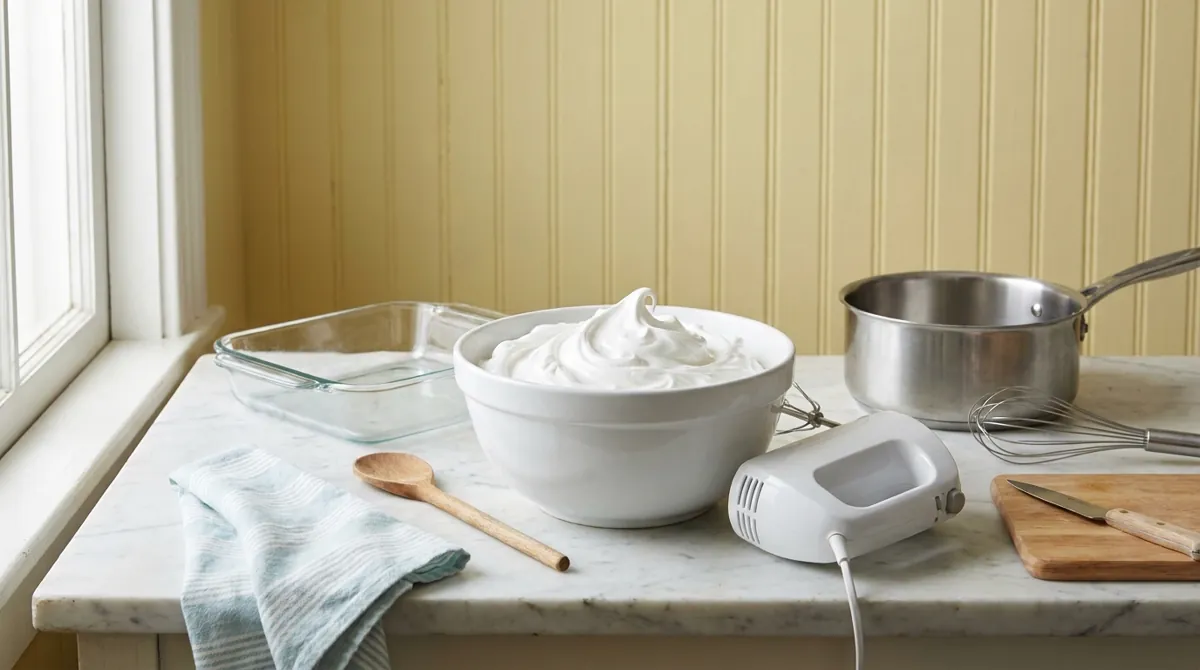
Beat the egg whites and cream of tartar with an electric mixer in a clean large bowl until foamy and holding soft peaks. Add the 1/4 cup sugar a spoonful at a time and beat until the meringue is glossy and holds stiff peaks.
- Step 5
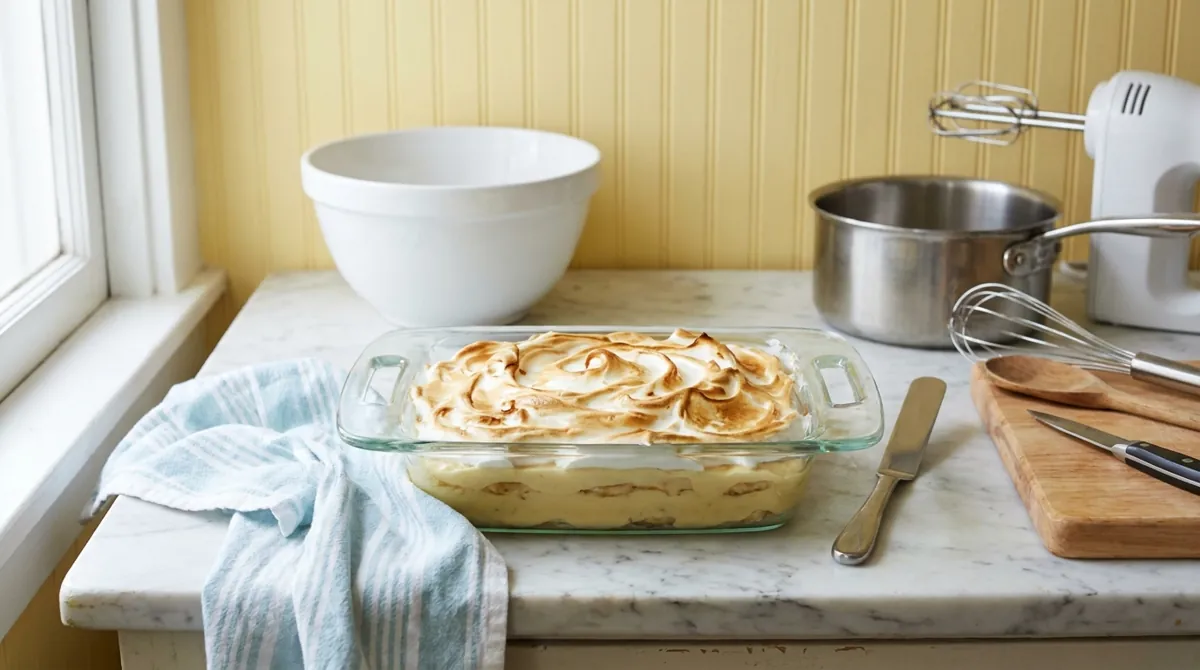
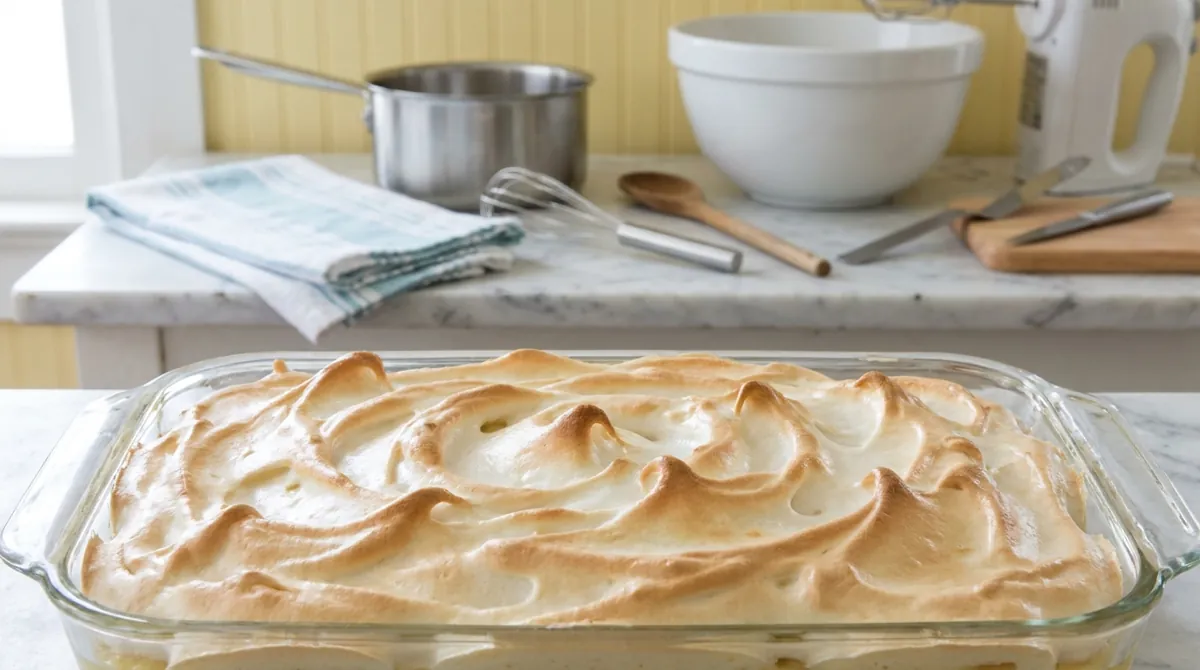
Spread the meringue over the hot pudding right to the edges of the dish, sealing it to the rim so it does not shrink, and swirl it into peaks. Bake 15 to 20 minutes, until the peaks are golden brown.
✓ What it should look like - Step 6
Cool 30 minutes at room temperature, then refrigerate at least 2 hours, until cold and the wafers have softened. Tuck a few whole wafers around the edge just before serving.
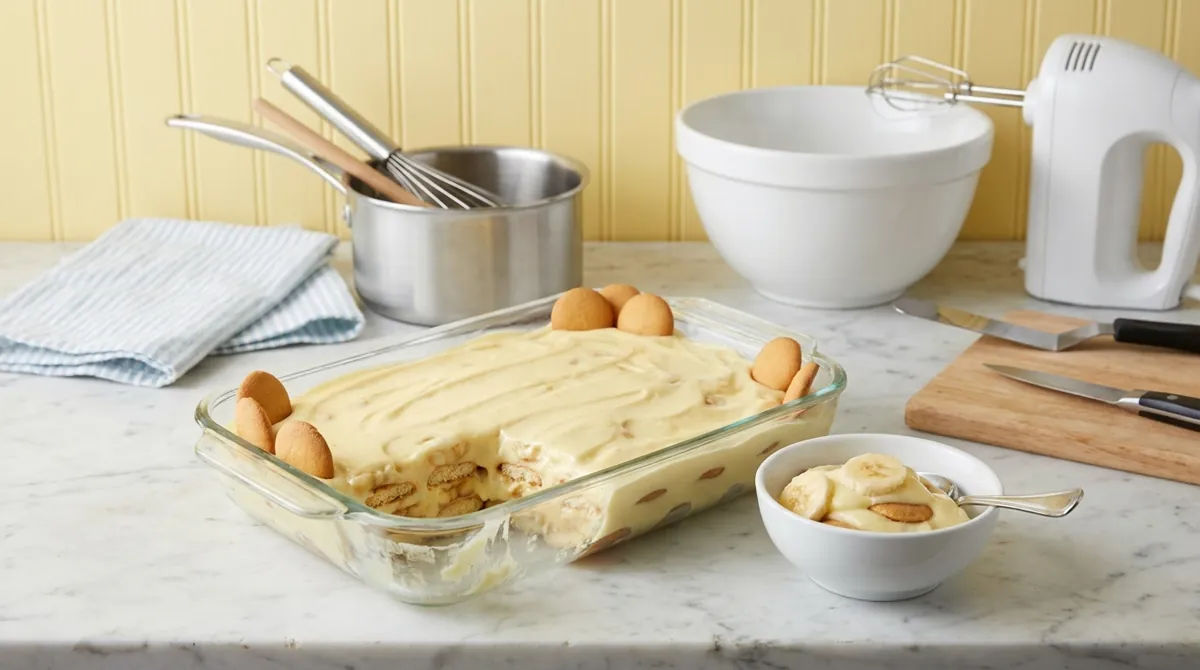
Banana Pudding
Serves 10 · one 2 quart baking dish · 3 hr 30 min total
Custard
- 2/3 cup granulated sugar (133 g)
- 3 tbsp cornstarch (24 g)
- 1/4 tsp fine salt
- 3 cups whole milk (732 g)
- 4 large egg yolks (68 g), whites saved for the meringue
- 2 tbsp unsalted butter (28 g)
- 2 tsp vanilla extract
Layers
- About 60 vanilla wafers (8 oz, 225 g), plus a few for the top
- 4 ripe bananas, yellow with a few brown freckles (about 470 g peeled)
Meringue
- 4 large egg whites (132 g), at room temperature
- 1/4 tsp cream of tartar
- 1/4 cup granulated sugar (50 g)
Equipment: Oven, Hand or stand mixer, Baking dish, Medium saucepan, Chef's knife and cutting board, Measuring cups and spoons, Mixing bowls, Whisk
Method
- Heat the oven to 350°F. Whisk the 2/3 cup sugar, cornstarch and salt in a medium saucepan, then whisk in the milk and the egg yolks until smooth.
- Cook over medium heat, whisking constantly and scraping the bottom and corners, until the custard thickens and comes to a bubble, about 8 to 10 minutes, then keep it bubbling gently for 1 minute more. Take it off the heat and whisk in the butter and vanilla. It should be thick enough to coat a spoon and leave a clear line when you draw a finger across the back.
- Layer in a 2 quart glass or ceramic baking dish: a single layer of wafers, a layer of banana slices cut 1/4 inch thick, then a third of the hot custard spread to cover them. Repeat twice, ending with custard, so no banana is left uncovered.
- Beat the egg whites and cream of tartar with an electric mixer in a clean large bowl until foamy and holding soft peaks. Add the 1/4 cup sugar a spoonful at a time and beat until the meringue is glossy and holds stiff peaks.
- Spread the meringue over the hot pudding right to the edges of the dish, sealing it to the rim so it does not shrink, and swirl it into peaks. Bake 15 to 20 minutes, until the peaks are golden brown.
- Cool 30 minutes at room temperature, then refrigerate at least 2 hours, until cold and the wafers have softened. Tuck a few whole wafers around the edge just before serving.
Americanized house recipe, written for this site. History: Levine Museum of the New South, "Banana Pudding" (bananas before and after the Civil War, about 4 million a year by the late 1870s, the 1888 Good Housekeeping recipe, sponge cake in the 1890s, vanilla wafers in the 1920s, Nabisco's box recipe in the 1940s, the Nilla name in 1967, the 1933 "Southern Banana Pudding" column, the Southern link established by the 1950s); Wikipedia, "Banana pudding" (sponge cake recipes popular in the 1890s, Laura Kerley's vanilla wafer recipe in The Pantagraph, Nabisco's 1940s box recipe, no consensus on how the Southern identity developed, the church picnic and reunion theory); The Takeout, "How Banana Pudding Became The Queen Of Desserts In The South" (1888 Good Housekeeping and the trifle comparison, wafers and Nabisco). Food safety for the meringue: bake until the peaks are golden and the meringue reaches 160°F, per USDA egg guidance. museumofthenewsouth.org. Ingredient list follows the source; the method is in our own words.
All sources (3)
Tips
- Bananas that are just ripe, yellow with a few freckles, hold their shape; very black ones turn mushy and gray in the pudding.
- Banana pudding is best the day it is made and good the next day. After that the bananas darken and the wafers go soggy.
- For the whipped cream style, skip the meringue, chill the pudding covered with plastic wrap pressed on the custard, and top with 1 1/2 cups heavy cream whipped with 2 tbsp sugar just before serving.
- Short on time? Many church-supper recipes use instant vanilla pudding; the homemade custard here is richer and sets more firmly.
The rules people argue about
What the sources agree on, what they don't, and what is just a good story.
- Banana pudding is a Southern invention. Disputed: the earliest known recipe (1888) appeared in Good Housekeeping, a Massachusetts magazine, and the first vanilla wafer version in an Illinois newspaper. The South adopted it later, and the Museum of the New South says it is not clear how.
- Nabisco invented banana pudding with Nilla Wafers. Folklore: home cooks were using vanilla wafers by the 1920s; Nabisco printed its box recipe in the 1940s, and the Nilla name only dates from 1967.
- The first wafer recipe is from 1921. Disputed on the year: Wikipedia gives 1920 for Laura Kerley's recipe in The Pantagraph; other accounts say 1921.
- Real banana pudding has meringue, not whipped cream. Disputed: both are traditional and family recipes split on it; meringue is the older Southern church-supper style, whipped cream and instant pudding the common modern one.
Meatballs of the World

Italian-American Meatballs
Big, tender meatballs braised for an hour in red sauce over spaghetti. The one most Americans grew up with.

Pallottine (Abruzzo Meatballs)
Tiny meatballs, smaller than a marble, tossed right through square spaghetti alla chitarra. No bread at all.

Swedish Meatballs (Köttbullar)
Small, soft meatballs browned in butter, in a cream sauce made from the same pan, with lingonberry jam on the plate.

Danish Frikadeller
Pork meatballs shaped with a spoon and fried slowly in butter, crusty outside and soft in the middle.

Königsberger Klopse
German meatballs that are never fried: poached, then served in a creamy white sauce with capers.

Spanish Albóndigas in Almond Saffron Sauce
The tapas bar classic: small meatballs in a golden sauce thickened with fried almonds and bread.

Mexican Albóndigas with Chipotle and Mint
Soft meatballs with rice and fresh mint inside, simmered in a smoky tomato and chipotle broth.

Izgara Köfte (Turkish Grilled Meatballs)
Small, flat meatballs kneaded hard, rested cold, and charred on a hot grill pan.

Lion's Head Meatballs
Big, soft pork meatballs, stirred into a sticky paste, fried to set, then braised in a savory sauce.

Chicken Tsukune
Japan's chicken meatball: kneaded sticky, grilled on skewers, glazed with sweet soy tare, dipped in egg yolk.