
Beef Stew
Well-browned chuck, onions, tomato paste, red wine and broth braised low in a Dutch oven until the beef is spoon-tender, with carrots and potatoes added late so they hold their shape.
🍳Cook alongOne move at a time, with real timers
 Edited by JP Lambiase
Change the estimate
Swaps change the price only: cook any meat to its own safe temperature. Where these numbers come from
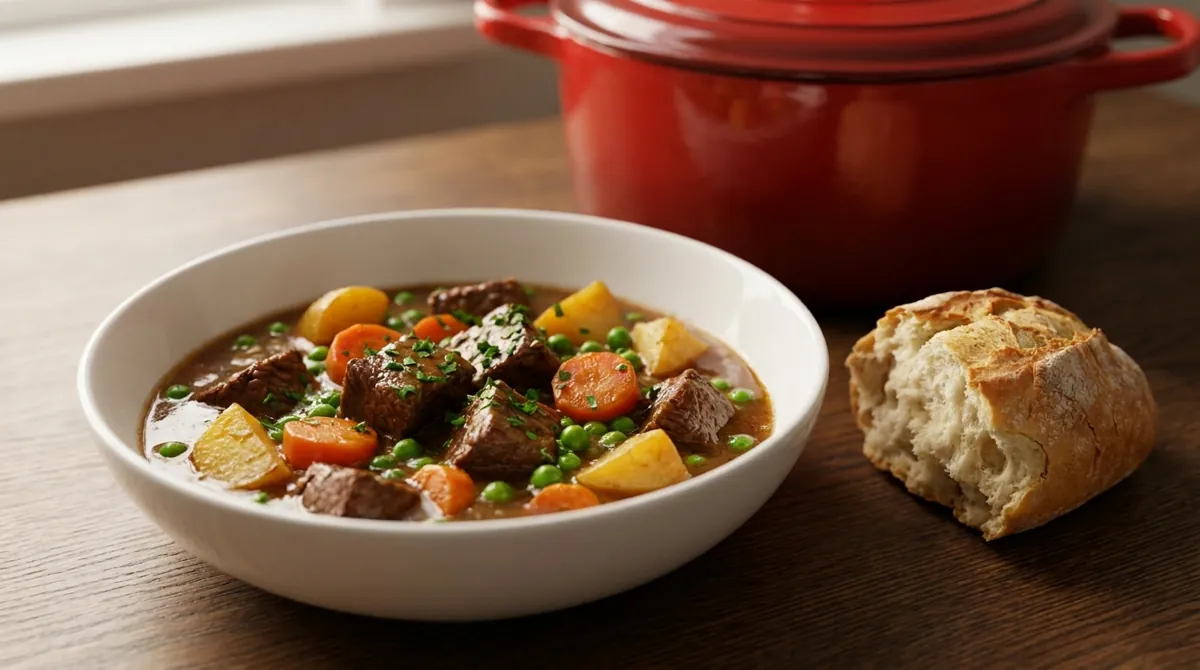
Beef stew has no birthday. Stewing, slow-cooking pieces of meat in liquid in a covered pot, is one of the oldest ways to cook. The Roman recipe collection known as Apicius, thought to date from around the 4th century AD, has stews of pork and fish, and Le Viandier, the French cookbook attributed to the cook Taillevent, has ragouts of several kinds.
The American version is a plain one: a cheap, tough cut of beef cooked low and slow with onions, carrots and potatoes until it falls apart, thickened with a little flour. There is no inventor and no famous first recipe, which is the honest point of it. It is the dish families built around whatever beef and roots they had, and the one most home cooks still make on a cold Sunday.
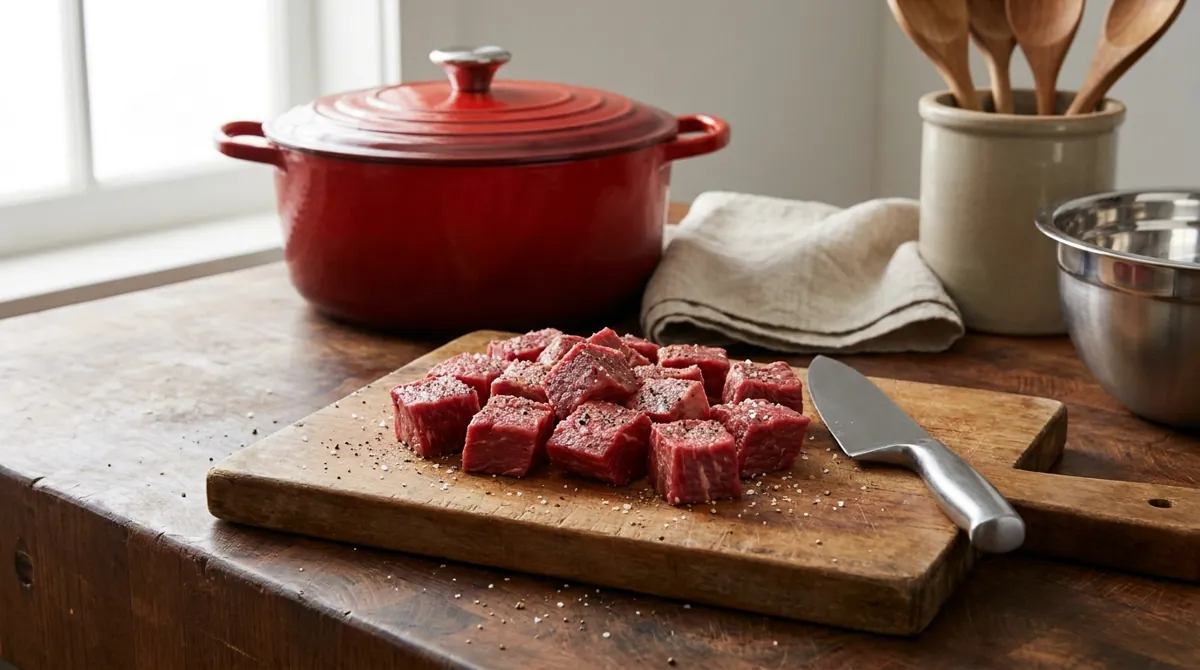
The modern test-kitchen version adds two upgrades: buy a whole chuck roast and cut it yourself instead of buying "stew meat", and let the pot simmer in a low oven, where the heat stays steady.
Why it works the kitchen science
🧰 You'll need 6 items
Everything the steps call for. Tick off what you have before you start.
Appliances
Pans and pots
Tools
Supplies
Step by step
- Step 1
Heat the oven to 325°F. Pat the beef cubes dry with paper towels and season them all over with the salt and pepper.
- Step 2
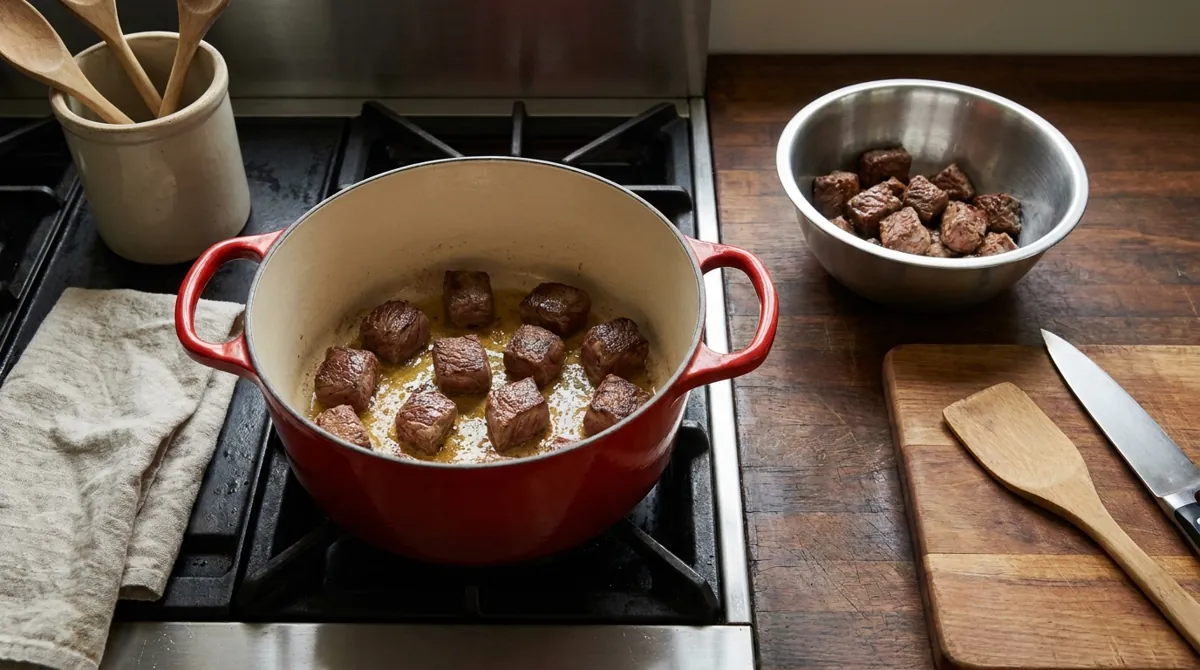
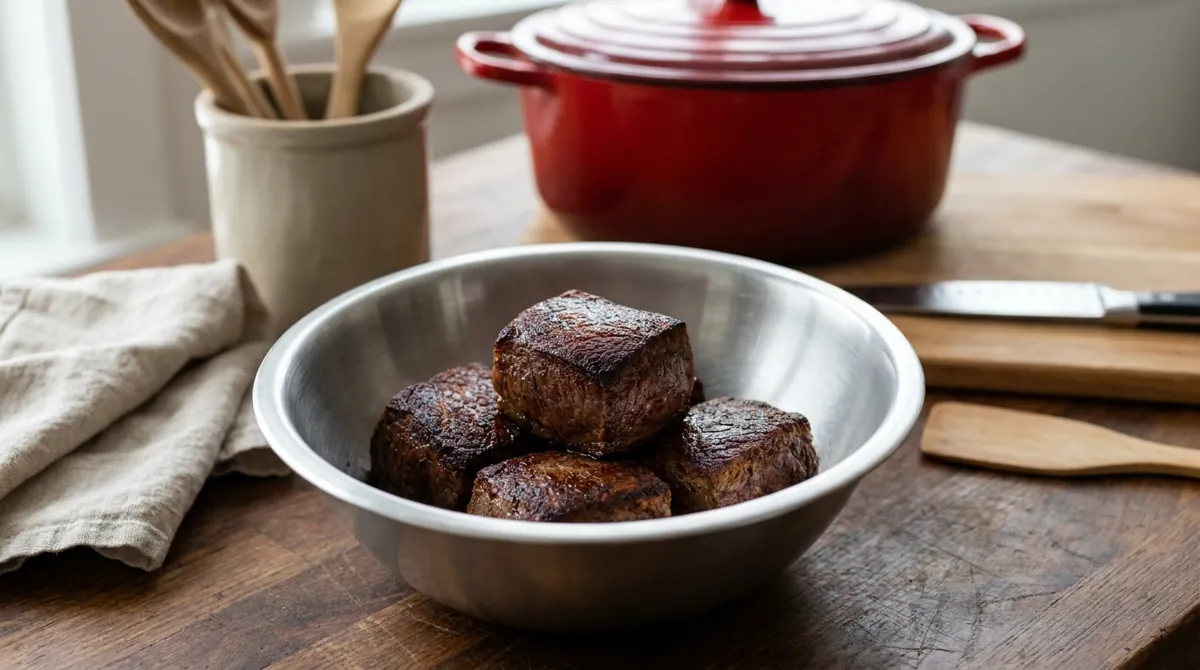
Heat the oil in a large Dutch oven over medium-high heat until it shimmers. Brown the beef in 3 batches, without crowding, 6 to 8 minutes per batch, turning until two or more sides are deep brown. Move each batch to a bowl. Add a little oil between batches if the pot looks dry.
✓ What it should look like - Step 3
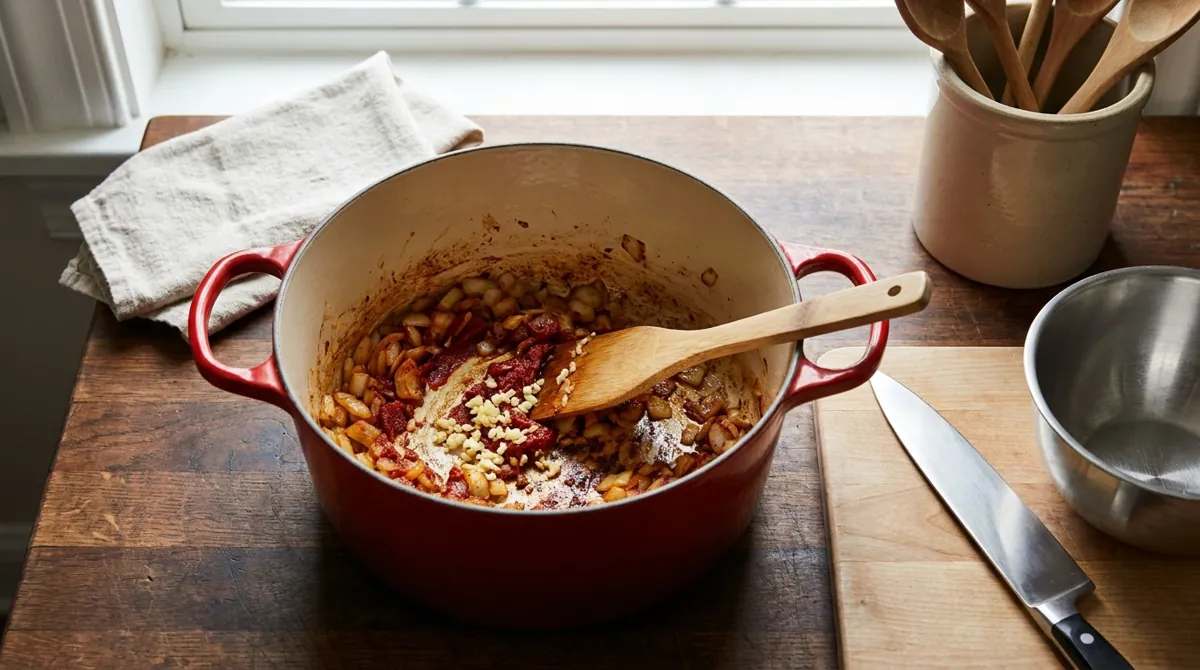
Lower the heat to medium. Add the onions and cook 5 to 7 minutes, scraping up the brown bits, until soft and golden. Stir in the garlic and tomato paste and cook 2 minutes, until the paste darkens to brick red.
- Step 4
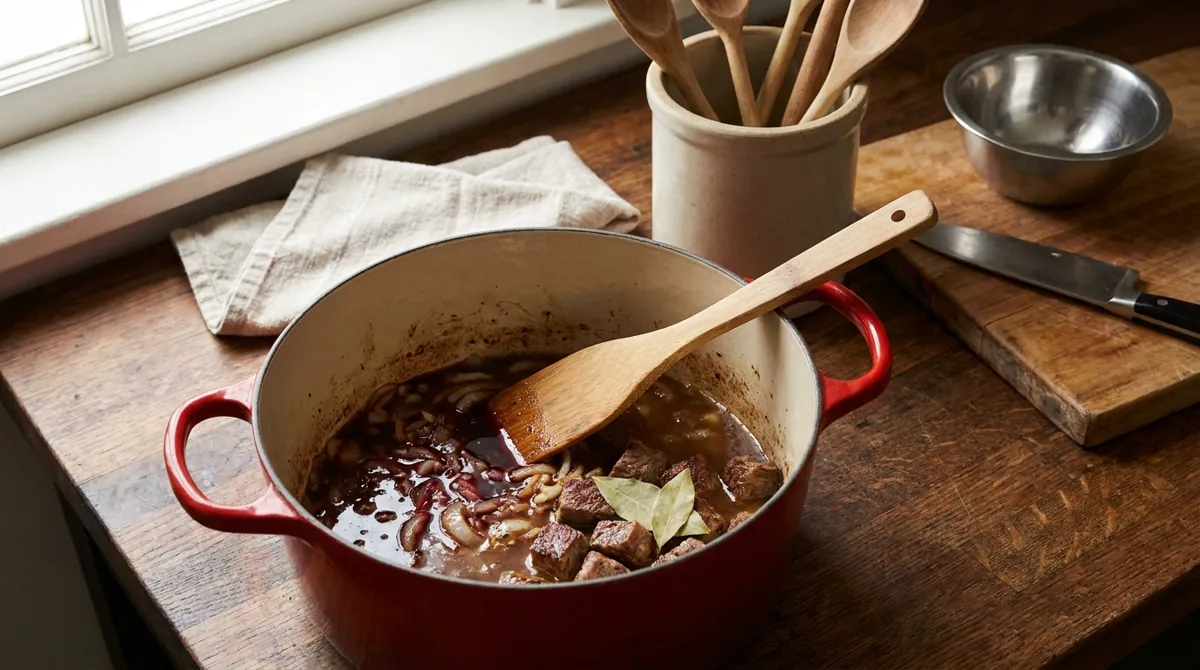
Sprinkle in the flour and stir 1 minute. Pour in the wine, scraping the bottom, then the broth, Worcestershire, bay leaves and thyme. Return the beef and its juices. Bring to a simmer.
- Step 5
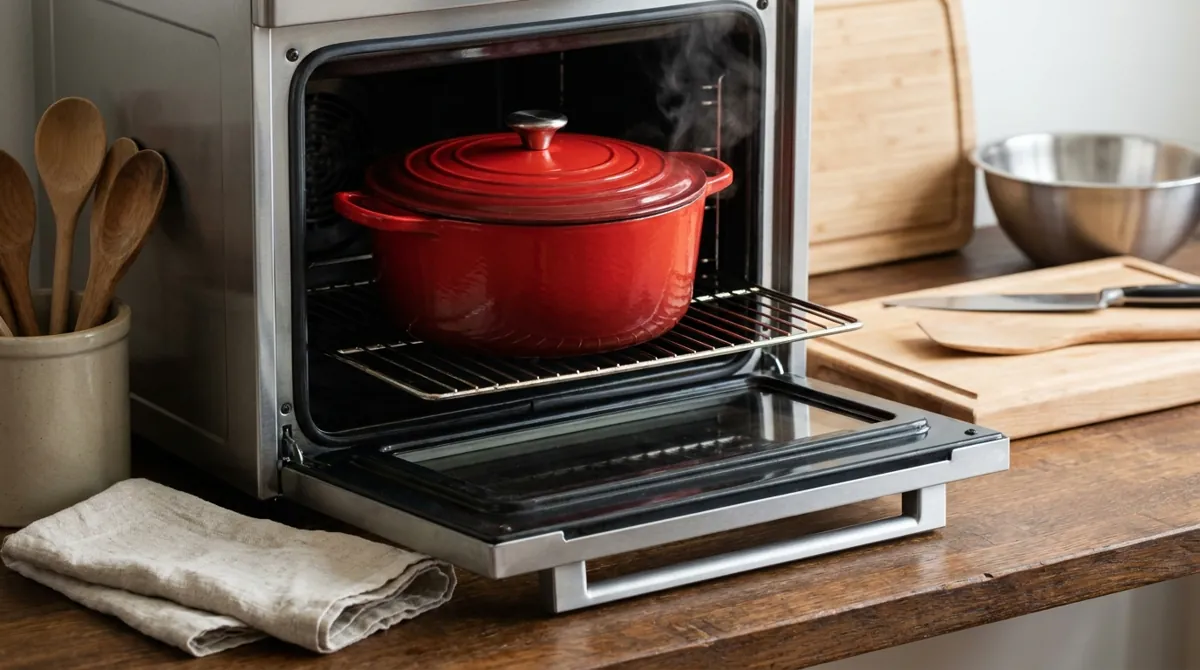
Cover the pot and put it in the oven for 90 minutes.
- Step 6
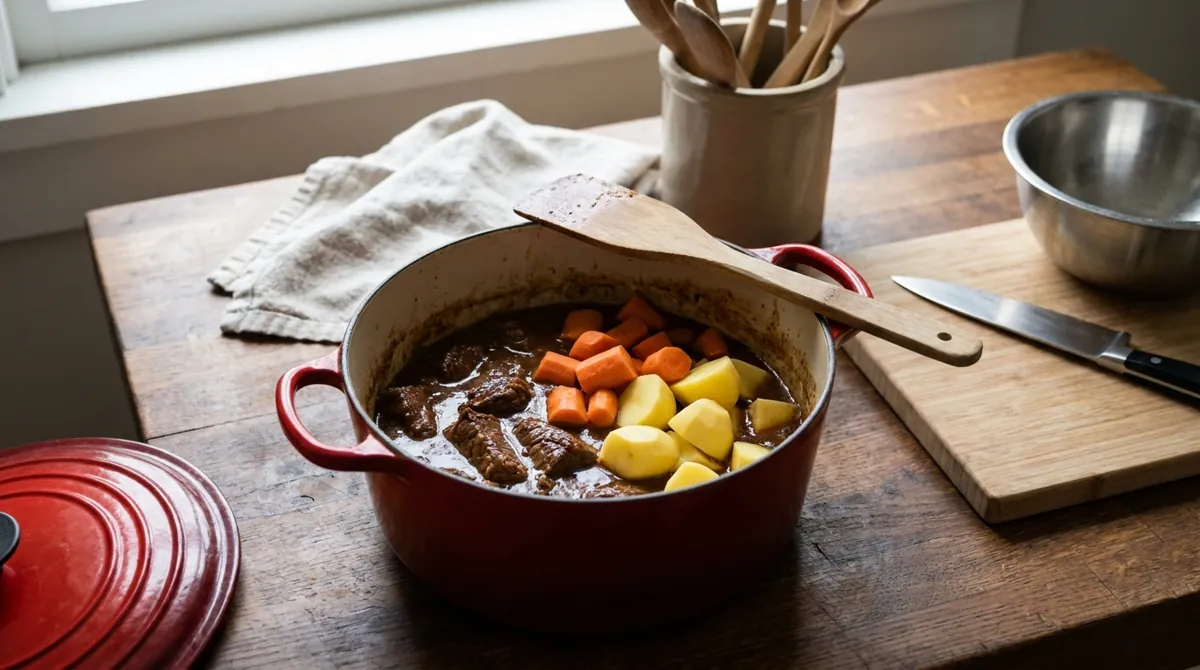
Stir in the carrots and potatoes, cover again and return to the oven for 60 to 75 minutes, until a fork slides through the beef with almost no resistance and the potatoes are tender.
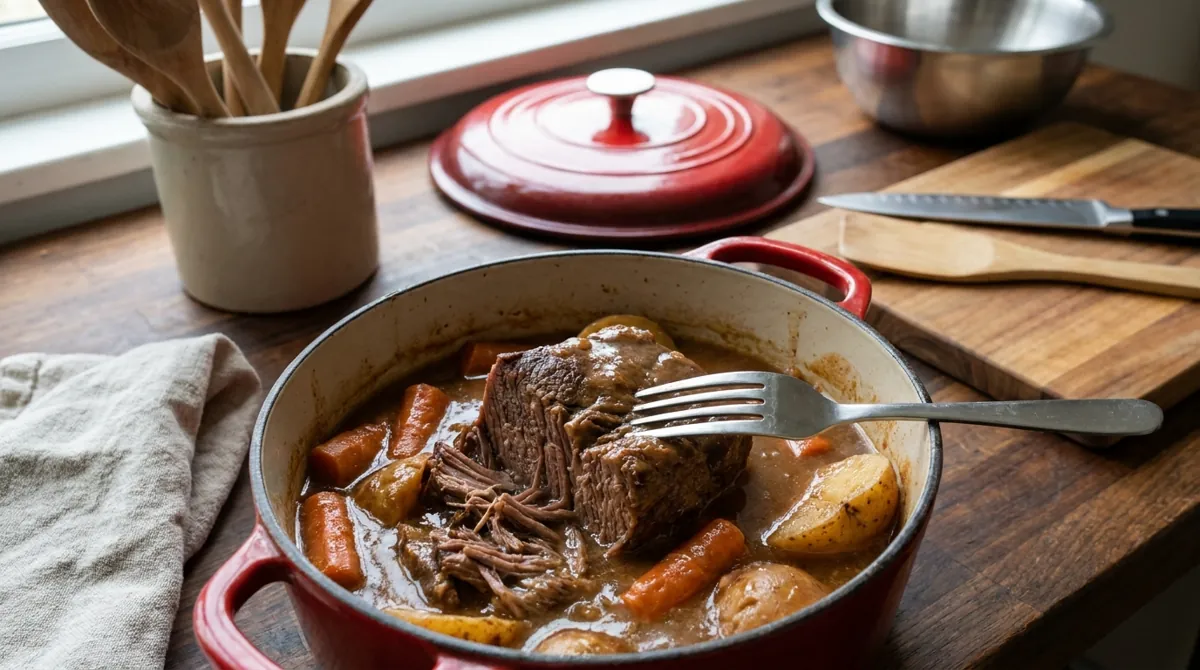
✓ What it should look like - Step 7
Take out the bay leaves. Stir in the peas and let the stew stand, uncovered, 5 minutes. Skim off any fat on top, taste for salt and pepper, and serve sprinkled with parsley.
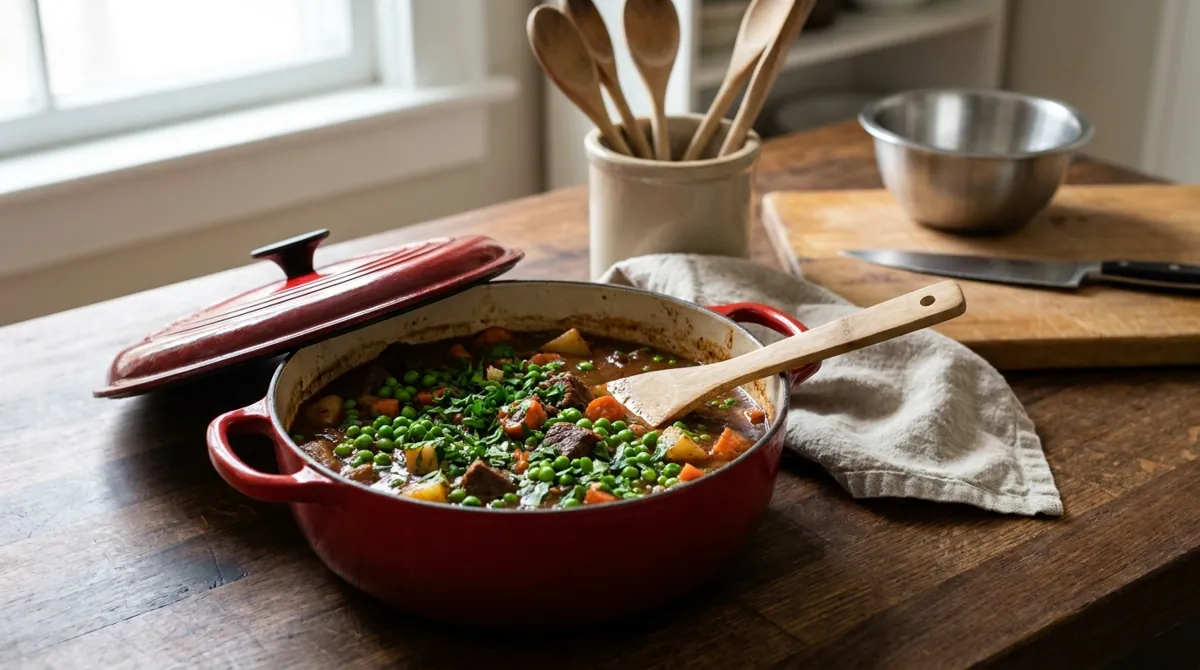
Beef Stew
Serves 6 · about 12 cups · 3 hr 40 min total
Beef and base
- 3 lb boneless beef chuck roast (1360 g), trimmed of large fat and cut into 1 1/2 inch cubes
- 2 tsp kosher salt, plus more to taste
- 1 tsp black pepper
- 2 tbsp vegetable oil (28 g), plus more if the pot gets dry
- 2 medium yellow onions, chopped (about 300 g)
- 4 cloves garlic, minced (12 g)
- 2 tbsp tomato paste (32 g)
- 1/4 cup all-purpose flour (31 g)
Liquid
- 1 cup dry red wine (240 ml), or more broth
- 3 cups beef broth (720 ml)
- 1 tbsp Worcestershire sauce
- 2 bay leaves
- 1 tsp dried thyme
Vegetables
- 1 lb carrots (450 g), peeled and cut into 1 inch pieces
- 1 1/2 lb Yukon Gold potatoes (680 g), peeled and cut into 1 1/2 inch chunks
- 1 cup frozen peas (140 g)
- 2 tbsp chopped fresh parsley
Equipment: Oven, Dutch oven, Chef's knife and cutting board, Measuring cups and spoons, Mixing bowls, Paper towels
Method
- Heat the oven to 325°F. Pat the beef cubes dry with paper towels and season them all over with the salt and pepper.
- Heat the oil in a large Dutch oven over medium-high heat until it shimmers. Brown the beef in 3 batches, without crowding, 6 to 8 minutes per batch, turning until two or more sides are deep brown. Move each batch to a bowl. Add a little oil between batches if the pot looks dry.
- Lower the heat to medium. Add the onions and cook 5 to 7 minutes, scraping up the brown bits, until soft and golden. Stir in the garlic and tomato paste and cook 2 minutes, until the paste darkens to brick red.
- Sprinkle in the flour and stir 1 minute. Pour in the wine, scraping the bottom, then the broth, Worcestershire, bay leaves and thyme. Return the beef and its juices. Bring to a simmer.
- Cover the pot and put it in the oven for 90 minutes.
- Stir in the carrots and potatoes, cover again and return to the oven for 60 to 75 minutes, until a fork slides through the beef with almost no resistance and the potatoes are tender.
- Take out the bay leaves. Stir in the peas and let the stew stand, uncovered, 5 minutes. Skim off any fat on top, taste for salt and pepper, and serve sprinkled with parsley.
Americanized house recipe, written for this site. History: Wikipedia, "Stew" (Apicius pork and fish stews, believed to date from the 4th century AD; Le Viandier ragouts). Method: America's Test Kitchen, "Tips for Successful Stews" (cut your own stew meat from a shoulder roast in 1 1/2 to 2 inch chunks; cook the flour with the aromatics about a minute; stew in the oven for a steady simmer; season lightly early and adjust at the end); America's Test Kitchen, "Cutting Stew Meat". en.wikipedia.org. Ingredient list follows the source; the method is in our own words.
Tips
- Buy a whole chuck roast and cut it yourself. Packaged "stew meat" is often trimmings from several cuts that cook at different speeds.
- Make it a day ahead if you can. Chilled overnight, the fat sets on top and lifts off in one piece, and it reheats well over low heat.
- Thin sauce? Simmer it uncovered on the stove for 10 minutes. Too thick? Add a splash of broth.
- It keeps 4 days in the fridge or 3 months in the freezer, though the potatoes turn a little grainy once frozen.
The rules people argue about
What the sources agree on, what they don't, and what is just a good story.
- Searing seals in the juices. Folklore: browned meat loses moisture just like unbrowned meat. Browning is for flavor and color, which is still the best reason to do it.
- Dredge the beef in flour before browning. Disputed: plenty of family recipes do it, and it does thicken the sauce. Test kitchens tend to brown the bare meat for a better crust and add the flour to the pot instead, as here.
Meatballs of the World

Italian-American Meatballs
Big, tender meatballs braised for an hour in red sauce over spaghetti. The one most Americans grew up with.

Pallottine (Abruzzo Meatballs)
Tiny meatballs, smaller than a marble, tossed right through square spaghetti alla chitarra. No bread at all.

Swedish Meatballs (Köttbullar)
Small, soft meatballs browned in butter, in a cream sauce made from the same pan, with lingonberry jam on the plate.

Danish Frikadeller
Pork meatballs shaped with a spoon and fried slowly in butter, crusty outside and soft in the middle.

Königsberger Klopse
German meatballs that are never fried: poached, then served in a creamy white sauce with capers.

Spanish Albóndigas in Almond Saffron Sauce
The tapas bar classic: small meatballs in a golden sauce thickened with fried almonds and bread.

Mexican Albóndigas with Chipotle and Mint
Soft meatballs with rice and fresh mint inside, simmered in a smoky tomato and chipotle broth.

Izgara Köfte (Turkish Grilled Meatballs)
Small, flat meatballs kneaded hard, rested cold, and charred on a hot grill pan.

Lion's Head Meatballs
Big, soft pork meatballs, stirred into a sticky paste, fried to set, then braised in a savory sauce.

Chicken Tsukune
Japan's chicken meatball: kneaded sticky, grilled on skewers, glazed with sweet soy tare, dipped in egg yolk.