
Bibimbap
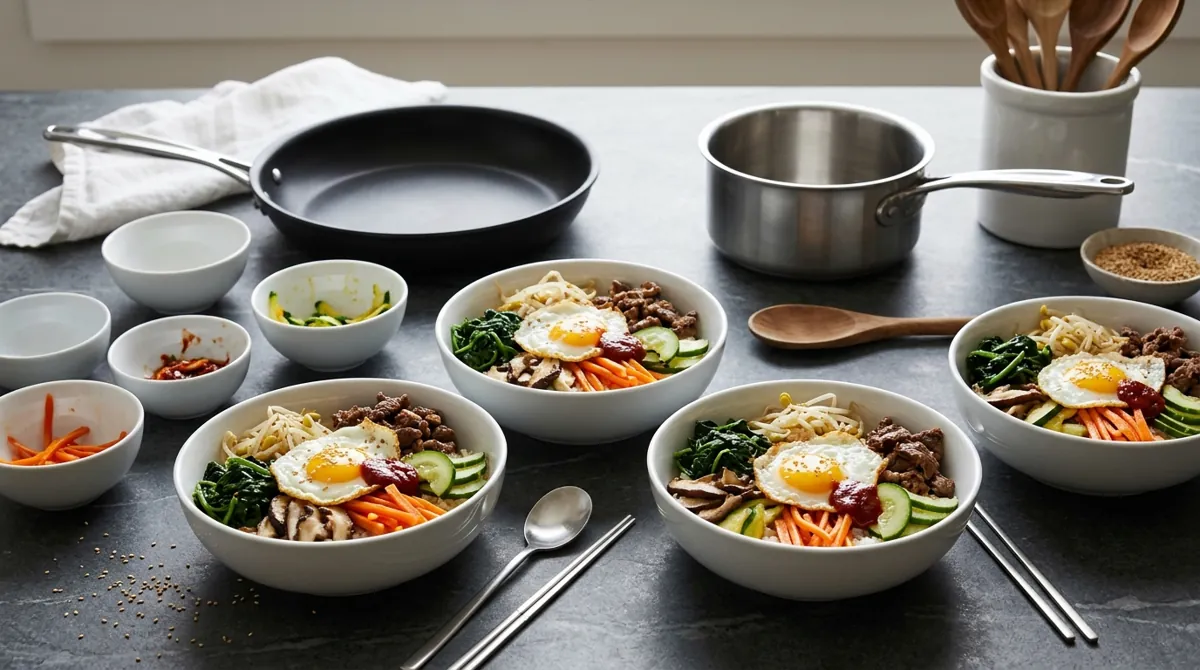
Warm rice topped with colorful seasoned vegetables, savory marinated beef and a runny fried egg, finished with a spoonful of gochujang and mixed together at the table.
🍳Cook alongOne move at a time, with real timers
 Edited by JP Lambiase
Change the estimate
Swaps change the price only: cook any meat to its own safe temperature. Where these numbers come from
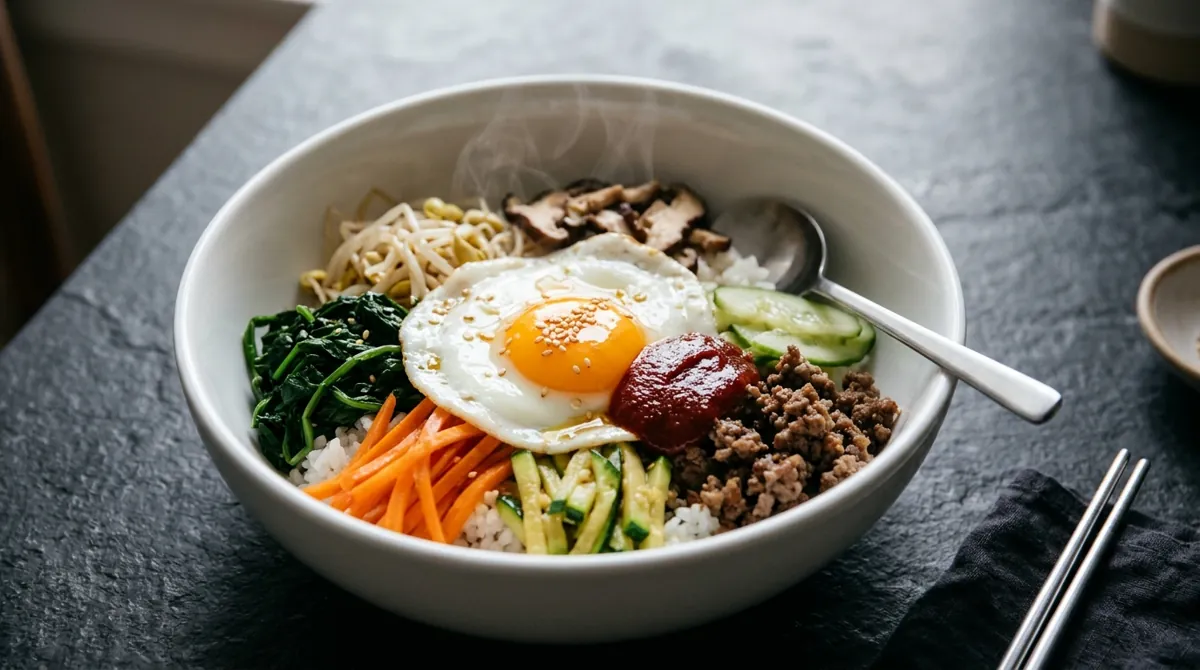
Bibimbap means "mixed rice," and where it came from is honestly not known. One theory says it grew out of mixing the food offerings from ancestral rites, or the shared meals eaten after village and mountain rites. Another says farmers and rural households simply combined leftover vegetables and rice into one bowl to save time. A third ties it to the lunar new year, when leftover side dishes were mixed with rice to clear them out before the new year.
The written record is thin. Wikipedia says the earliest recorded name appears in hanja texts from around 1590, as hondon-ban, and that the first known recipe is in the anonymous late 19th century cookbook Siuijeonseo. Regional styles are argued over: Jeonju, Jinju and Tongyeong in South Korea are all named, and a vegetable version is linked to Pyongyang. The sizzling stone pot version, dolsot bibimbap, is commonly credited to a Jeonju restaurant that began using stone bowls in 1969 to keep the dish hot.
Why it works the kitchen science
Seasoning each topping separately
Every part has its own flavor and color, so the mixed bowl tastes layered instead of muddled.
Quick cooking of the vegetables
Crisp-tender pieces keep their texture against the soft rice and the egg.
Gochujang sauce
It is salty, sweet and spicy, and the sesame oil and vinegar round it out so it coats the rice without being harsh.
Mixing it all
The runny yolk and the sauce turn the rice into a glossy, seasoned bowl.
🧰 You'll need 5 items
Everything the steps call for. Tick off what you have before you start.
Pans and pots
Tools
Step by step
- Step 1
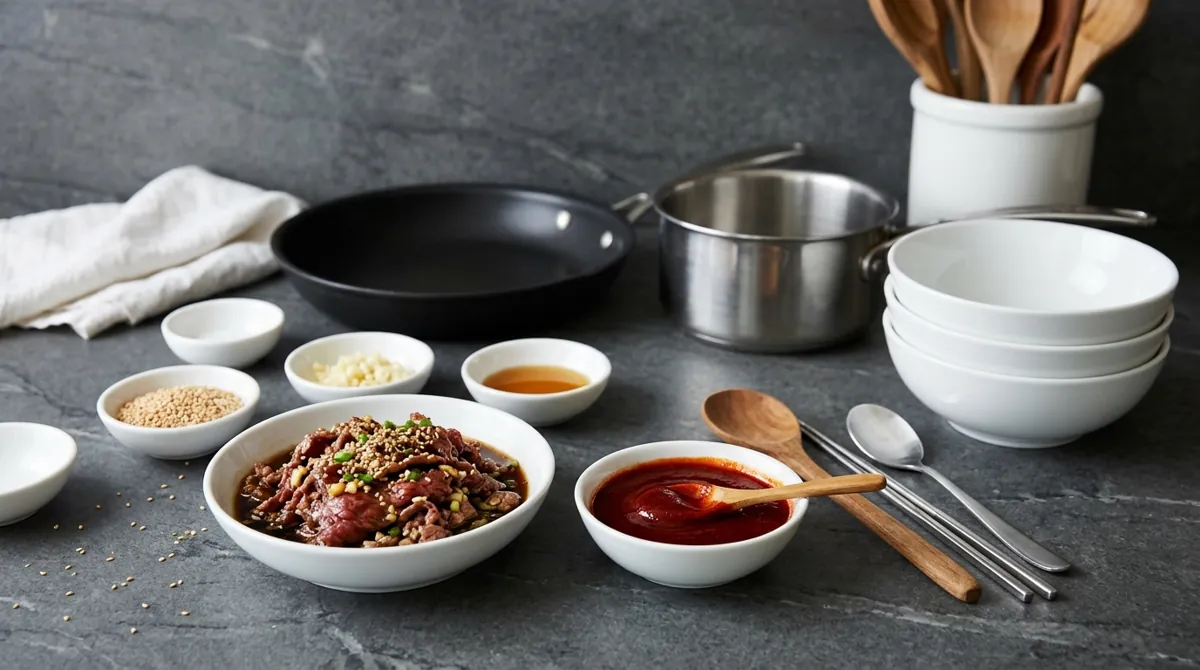
Whisk the gochujang sauce ingredients in a small bowl. Toss the beef with the soy sauce, sugar, sesame oil, garlic and sesame seeds and marinate 15 minutes while you prep the vegetables.
- Step 2
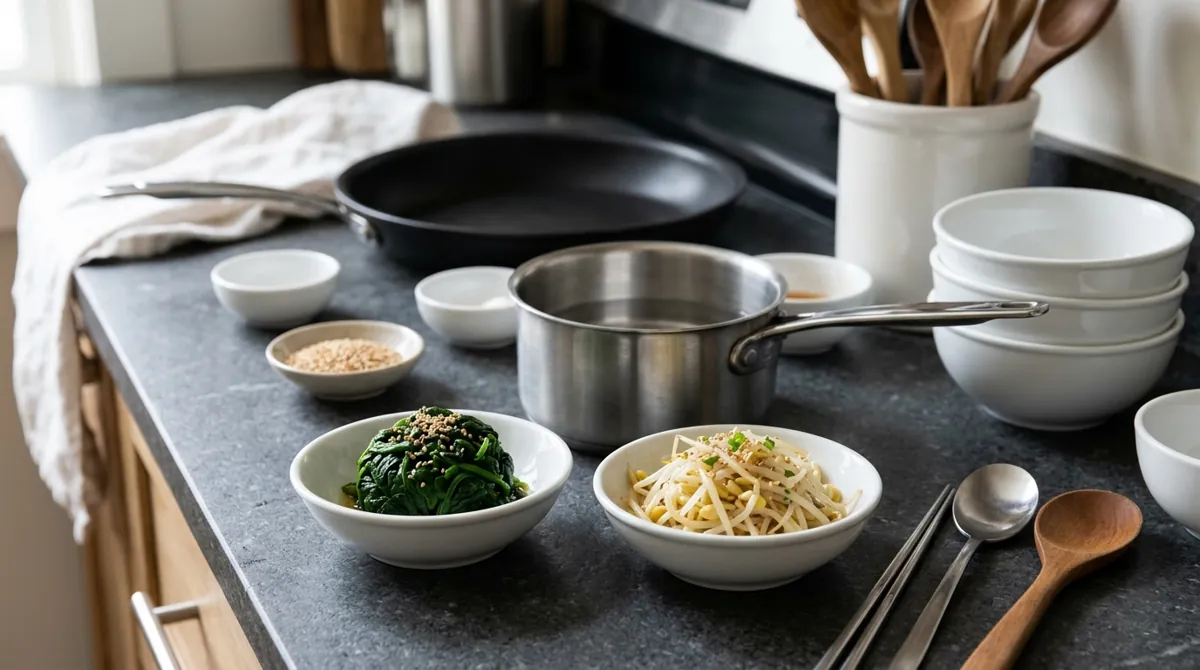
Blanch the spinach in boiling water for 30 seconds and the soybean sprouts for 3 to 4 minutes, then drain, cool under cold water and squeeze dry. Season each with a little sesame oil, salt and soy sauce.
- Step 3
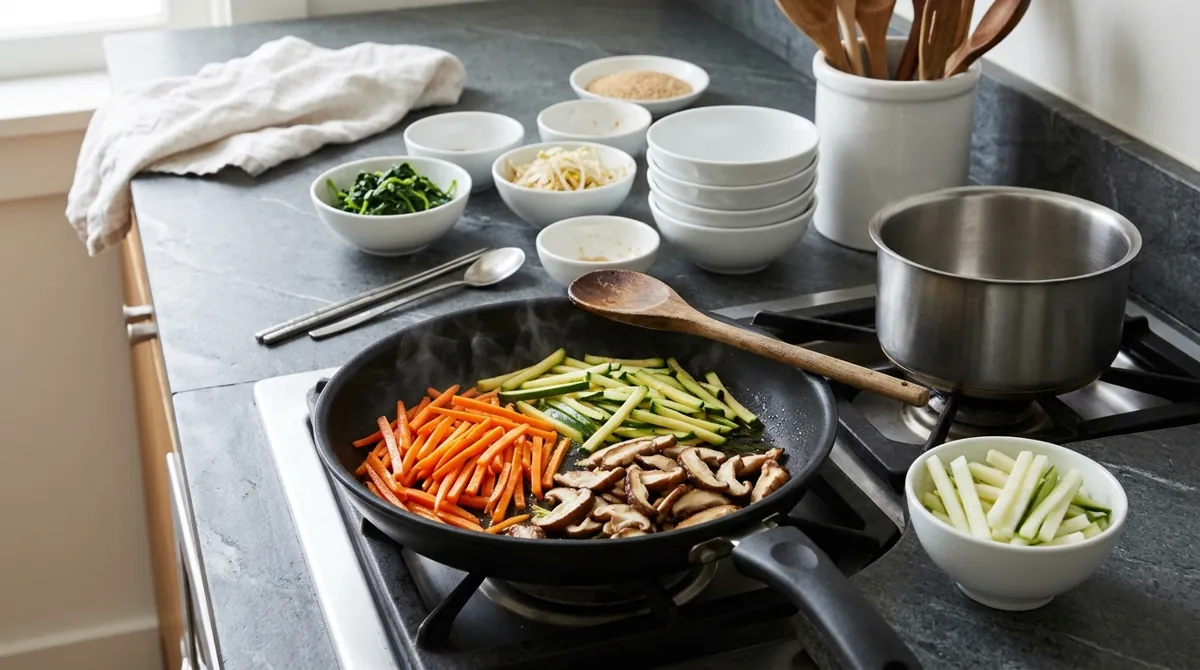
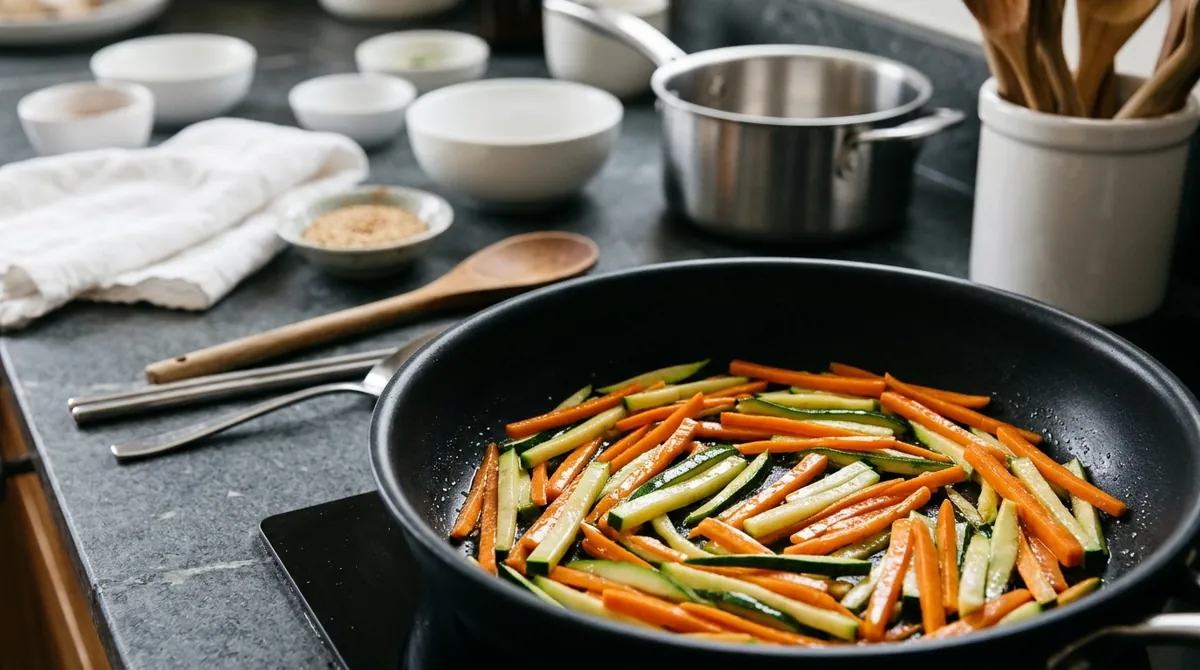
Heat a skillet over medium heat with a little oil. Cook the carrot, zucchini and mushrooms one at a time for 2 to 3 minutes each, with a pinch of salt, until crisp-tender and not mushy. Leave the cucumber raw.
✓ What it should look like - Step 4
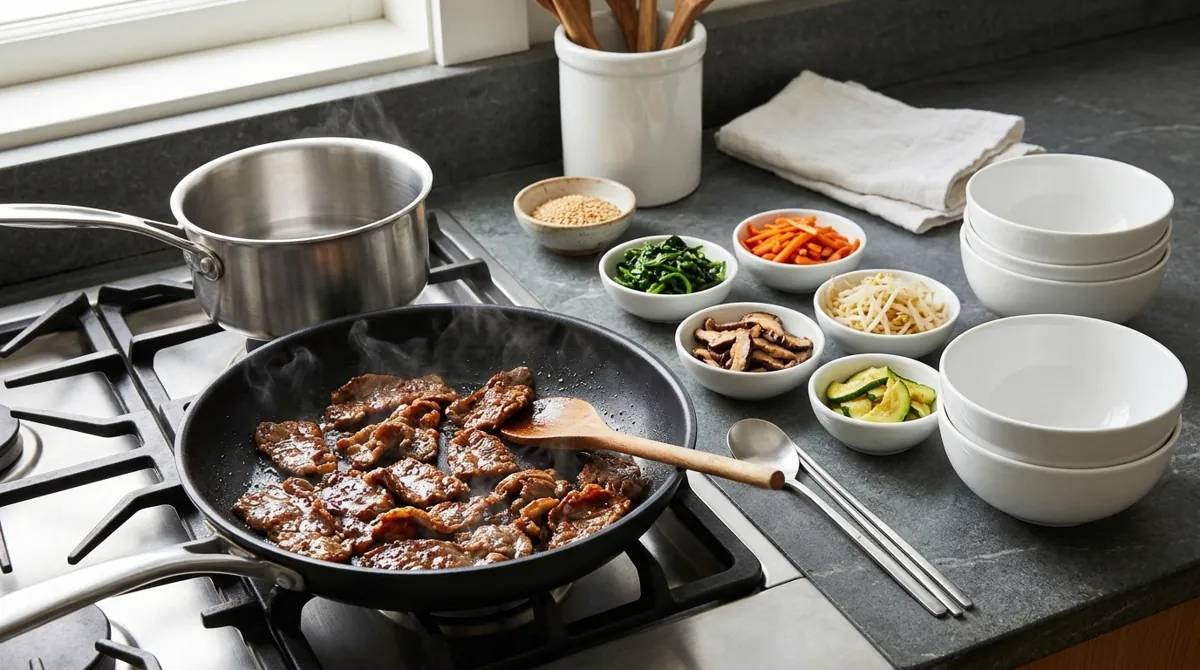
Cook the beef in a hot skillet over medium-high heat for 2 to 3 minutes, until browned and cooked through.
- Step 5
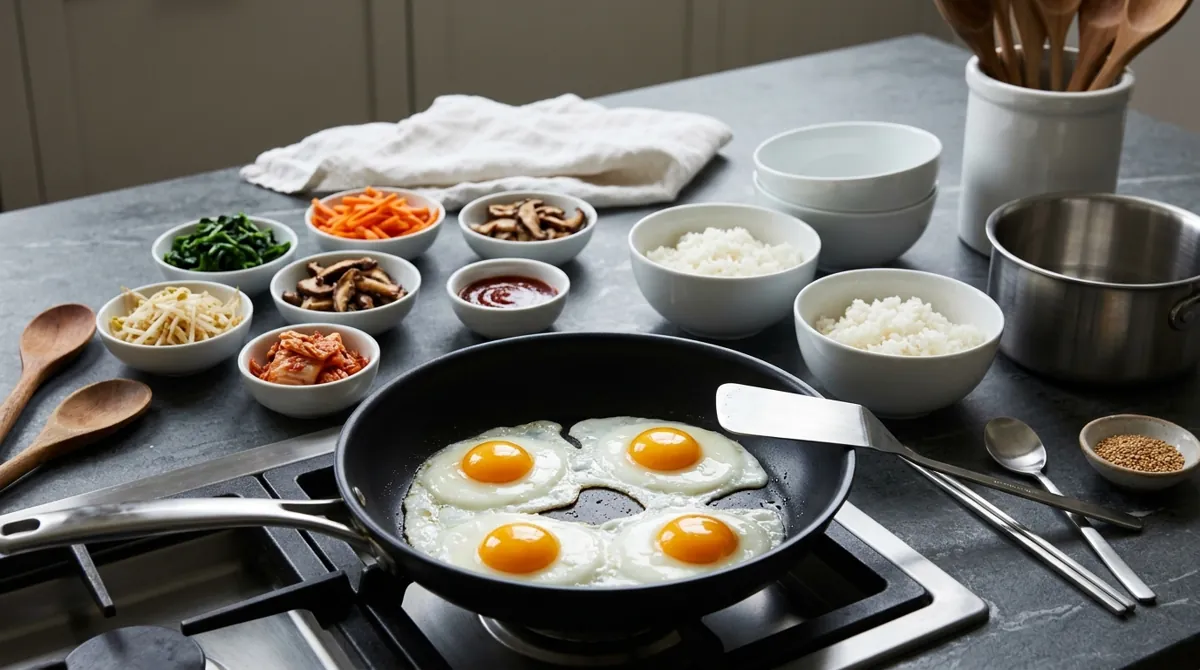
Fry the eggs sunny-side up in a little oil for 2 to 3 minutes, until the whites are set and the yolks are still runny.

✓ What it should look like - Step 6
Divide the warm rice among 4 bowls. Arrange the vegetables and beef in sections on top, set a fried egg in the center and add a spoonful of the gochujang sauce. Mix everything together thoroughly before eating.
Bibimbap
Serves 4 · 4 bowls · 1 hr 10 min total
Beef
- 8 ounces (225 g) thinly sliced beef sirloin or ribeye
- 2 tbsp soy sauce (36 g)
- 1 tbsp granulated sugar (12 g)
- 1 tbsp toasted sesame oil
- 2 cloves garlic, minced
- 1 tsp toasted sesame seeds
Vegetables
- 5 ounces (150 g) fresh spinach
- 5 ounces (150 g) soybean sprouts
- 1 medium carrot (100 g), cut into thin matchsticks
- 1 small zucchini (150 g), cut into thin matchsticks
- 4 ounces (115 g) fresh shiitake mushrooms, thinly sliced
- 1 small cucumber (100 g), cut into thin matchsticks
- 2 tbsp neutral oil, for cooking
- 1 tbsp toasted sesame oil, 1 tsp salt and 1 tsp soy sauce, to season the vegetables
For the bowls
- 4 cups cooked short-grain rice (740 g), warm
- 4 large eggs (200 g)
Gochujang sauce
- 4 tbsp gochujang (Korean red pepper paste, about 76 g)
- 1 tbsp toasted sesame oil
- 1 tbsp granulated sugar (12 g)
- 1 tbsp water
- 1 tsp rice vinegar
Equipment: Skillet, Chef's knife and cutting board, Measuring cups and spoons, Mixing bowls, Whisk
Method
- Whisk the gochujang sauce ingredients in a small bowl. Toss the beef with the soy sauce, sugar, sesame oil, garlic and sesame seeds and marinate 15 minutes while you prep the vegetables.
- Blanch the spinach in boiling water for 30 seconds and the soybean sprouts for 3 to 4 minutes, then drain, cool under cold water and squeeze dry. Season each with a little sesame oil, salt and soy sauce.
- Heat a skillet over medium heat with a little oil. Cook the carrot, zucchini and mushrooms one at a time for 2 to 3 minutes each, with a pinch of salt, until crisp-tender and not mushy. Leave the cucumber raw.
- Cook the beef in a hot skillet over medium-high heat for 2 to 3 minutes, until browned and cooked through.
- Fry the eggs sunny-side up in a little oil for 2 to 3 minutes, until the whites are set and the yolks are still runny.
- Divide the warm rice among 4 bowls. Arrange the vegetables and beef in sections on top, set a fried egg in the center and add a spoonful of the gochujang sauce. Mix everything together thoroughly before eating.
Americanized house recipe, written for this site, within the common ratios of Korean home cooks for 4 bowls (about 1/2 pound beef, 5 or 6 vegetables, 3 to 4 tablespoons gochujang in the sauce). Korean Bapsang's bibimbap, could not be fetched. History: Wikipedia, "Bibimbap" (unknown origin, ancestral-rite, farmers and new-year theories, hondon-ban around 1590, the Siuijeonseo recipe, Jeonju, Jinju and Tongyeong styles, 1969 stone bowls). Korean Bapsang. Ingredient list follows the source; the method is in our own words.
All sources (2)
Tips
- Cook the toppings first, in the same pan, from mildest to strongest (carrot, zucchini, mushroom, beef), so you do not need to wash it between.
- Leftover rice is fine; microwave it with a splash of water to soften.
- For the crisp rice of dolsot bibimbap, press the rice into a hot oiled cast iron or stone bowl and let it crackle 3 to 4 minutes before adding the toppings.
- Skip the beef for a vegetarian bowl, or use tofu.
The rules people argue about
What the sources agree on, what they don't, and what is just a good story.
- Bibimbap began as leftovers or ritual food. Disputed: the origin is unknown; the ancestral-rite meal, the farmers' leftover bowl and the new year clear-out are all offered.
- Jeonju is the original home. Disputed: Jeonju style is the best known, but Jinju and Tongyeong are also named as regional styles, and the Jinju legend that links it to the Imjin War has no surviving documents behind it.
- The stone pot version is the real one. Disputed: dolsot bibimbap is commonly credited to a Jeonju restaurant in 1969, so it is a modern variation of an older dish.
Meatballs of the World

Italian-American Meatballs
Big, tender meatballs braised for an hour in red sauce over spaghetti. The one most Americans grew up with.

Pallottine (Abruzzo Meatballs)
Tiny meatballs, smaller than a marble, tossed right through square spaghetti alla chitarra. No bread at all.

Swedish Meatballs (Köttbullar)
Small, soft meatballs browned in butter, in a cream sauce made from the same pan, with lingonberry jam on the plate.

Danish Frikadeller
Pork meatballs shaped with a spoon and fried slowly in butter, crusty outside and soft in the middle.

Königsberger Klopse
German meatballs that are never fried: poached, then served in a creamy white sauce with capers.

Spanish Albóndigas in Almond Saffron Sauce
The tapas bar classic: small meatballs in a golden sauce thickened with fried almonds and bread.

Mexican Albóndigas with Chipotle and Mint
Soft meatballs with rice and fresh mint inside, simmered in a smoky tomato and chipotle broth.

Izgara Köfte (Turkish Grilled Meatballs)
Small, flat meatballs kneaded hard, rested cold, and charred on a hot grill pan.

Lion's Head Meatballs
Big, soft pork meatballs, stirred into a sticky paste, fried to set, then braised in a savory sauce.

Chicken Tsukune
Japan's chicken meatball: kneaded sticky, grilled on skewers, glazed with sweet soy tare, dipped in egg yolk.