
Biscuits and Gravy
Tall, flaky buttermilk biscuits split open under a peppery white gravy made in the sausage pan with flour and whole milk: the cheap, filling Southern breakfast that Appalachian mill and mining families leaned on, and the reason it is still called sawmill gravy.
🍳Cook alongOne move at a time, with real timers
 Edited by JP Lambiase
Change the estimate
Swaps change the price only: cook any meat to its own safe temperature. Where these numbers come from
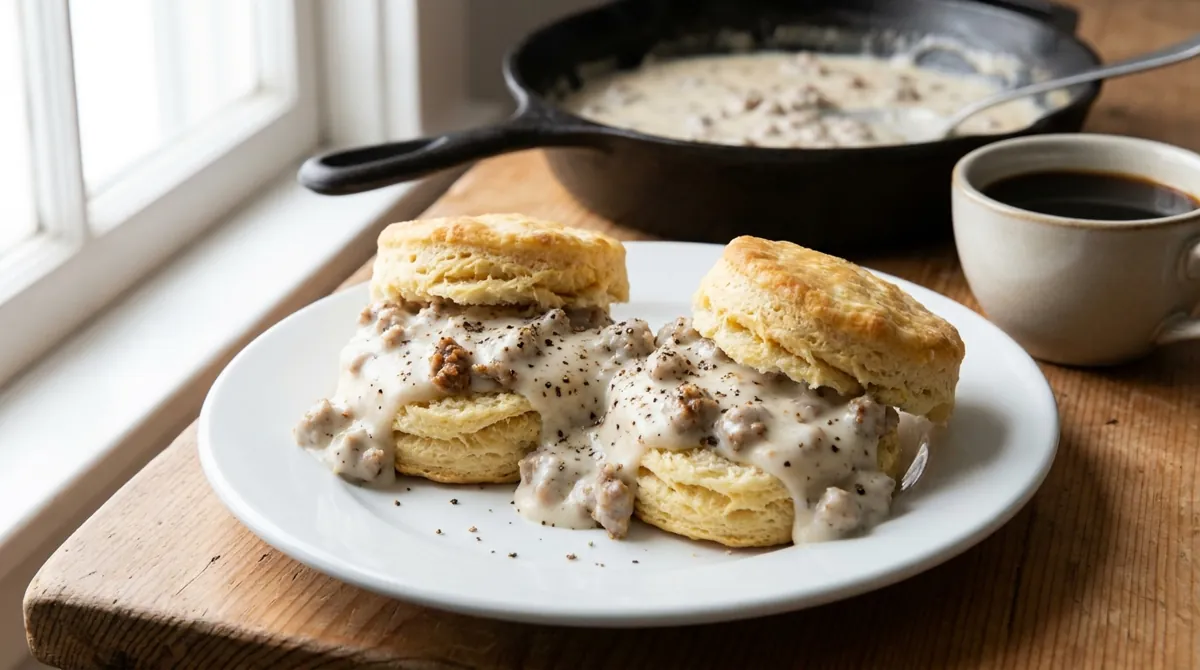
Biscuits and gravy is breakfast food from the American South, built from the cheapest things in a farm kitchen: flour, pork fat and milk. Wikipedia's account, drawing on older food histories, says it became a distinct regional dish after the Revolutionary War, when supplies and money were short and the big morning meal for people doing hard physical work had to be cheap. Pork was cheap, and its drippings, browned with flour and loosened with milk, stretched a little meat into a meal.
Its best-known nickname comes from the mountains. Southern Appalachia's logging and coal country, in the late 1800s and early 1900s, ran on hard work and low pay, and food writers tie the name sawmill gravy to the plain milk gravy fed to the sawmill crews there. Why exactly is argued over: some say the name simply came from the workers, others that early versions were thickened with cornmeal and were gritty enough that loggers joked the cook had used sawdust. None of the versions comes with a primary source, so treat the details as folklore.
This is the version most diners serve today: buttermilk biscuits and a pork sausage gravy, black pepper and all.
Why it works the kitchen science
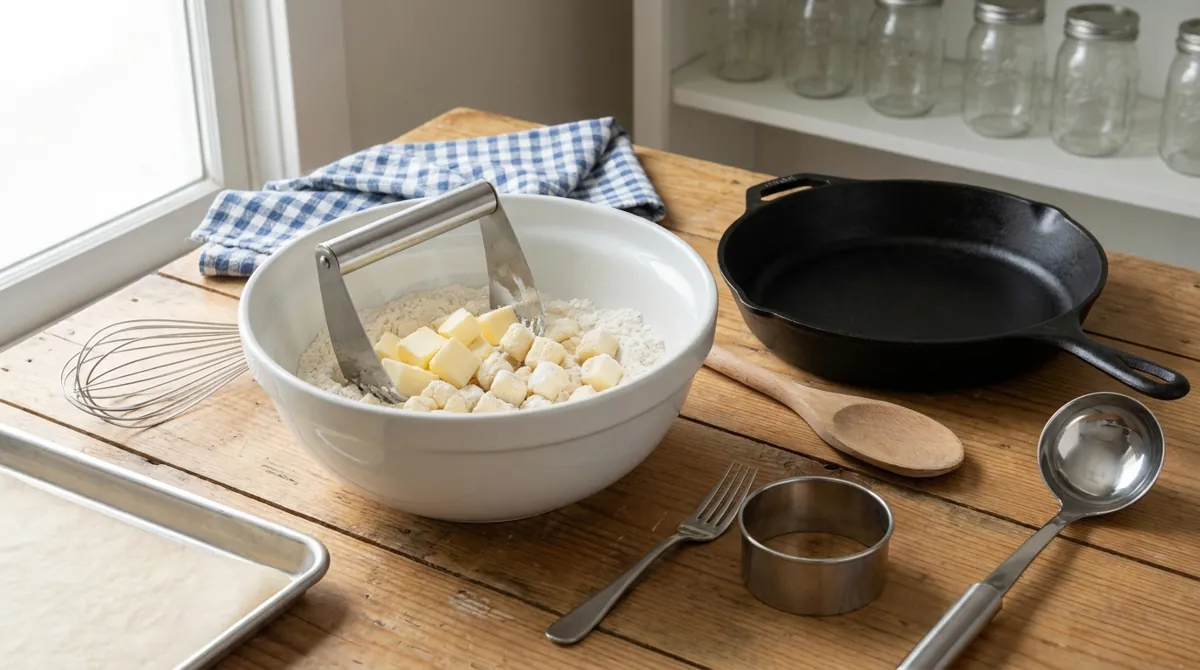
Cold butter in pea-size pieces
It melts in the hot oven and turns to steam, which pushes the dough into flaky layers.
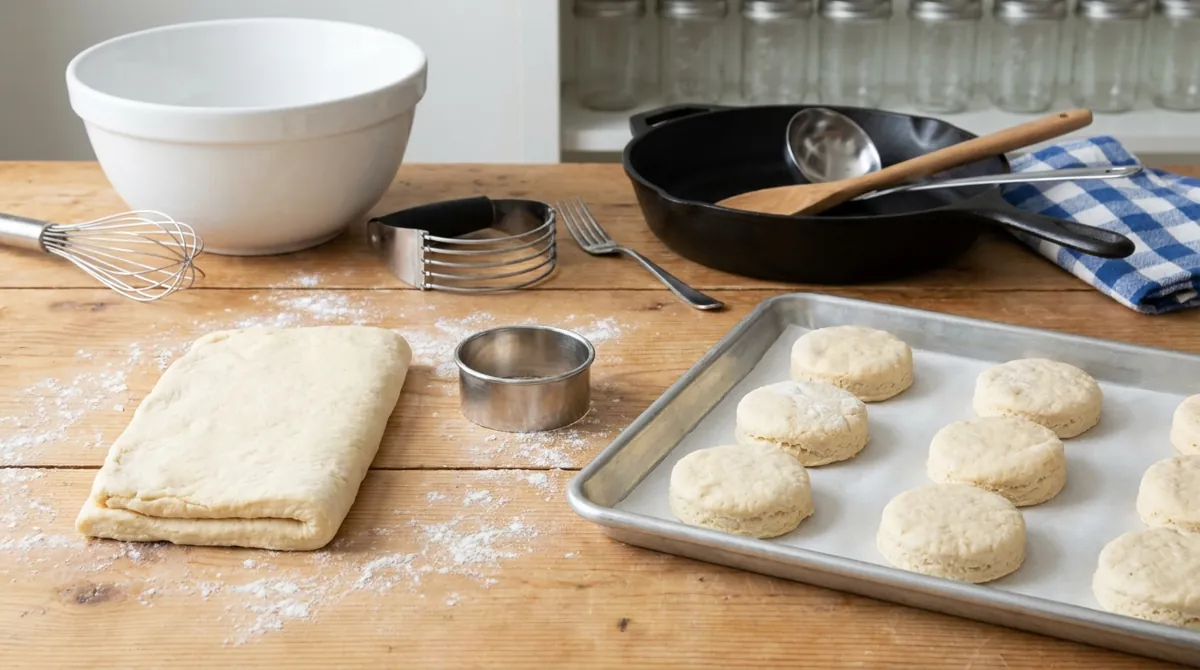
Folding the dough twice
Each fold stacks more butter layers, so the biscuits rise taller.
Cutting straight down
Twisting the cutter pinches the edges shut and the biscuits rise crooked.
Biscuits almost touching
They hold each other up and rise higher, with soft sides.
Cooking the flour in the sausage fat first
It loses its raw taste, and coating every bit of fat in flour keeps the gravy smooth when the milk goes in.
Cold milk added slowly
It heats gradually and thickens without lumps.
🧰 You'll need 10 items
Everything the steps call for. Tick off what you have before you start.
Appliances
Pans and pots
Tools
Supplies
Step by step
- Step 1
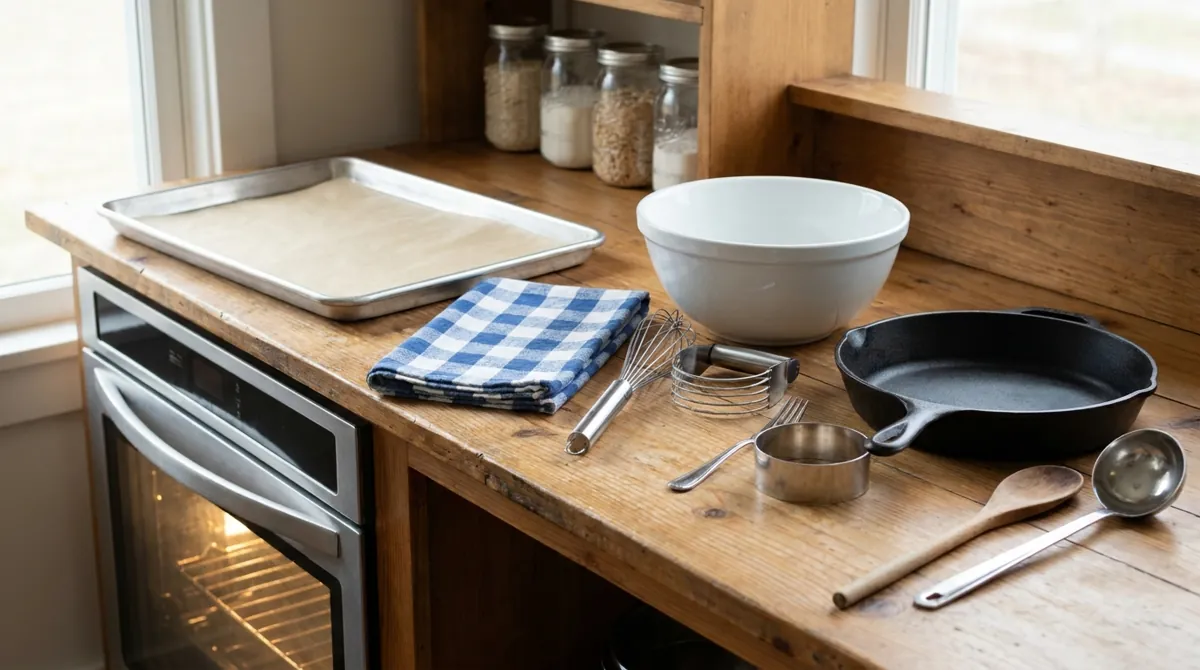
Heat the oven to 425°F with a rack in the upper third. Line a rimmed half sheet pan with parchment.
- Step 2
Whisk the flour, baking powder, baking soda and salt in a large bowl. Add the cold butter and cut it in with a pastry blender until the pieces are the size of small peas, with a few bigger ones left.
- Step 3
Pour in the cold buttermilk and stir with a fork just until a shaggy dough forms. Turn it out onto a lightly floured counter, pat it into a 3/4 inch thick rectangle, fold it in thirds like a letter and pat it out again; repeat once. Cut 2 1/2 inch rounds, pressing straight down without twisting, and set them on the pan almost touching. Press the scraps together and cut once more.
- Step 4
Bake 15 to 18 minutes, until tall and golden brown on top and bottom.
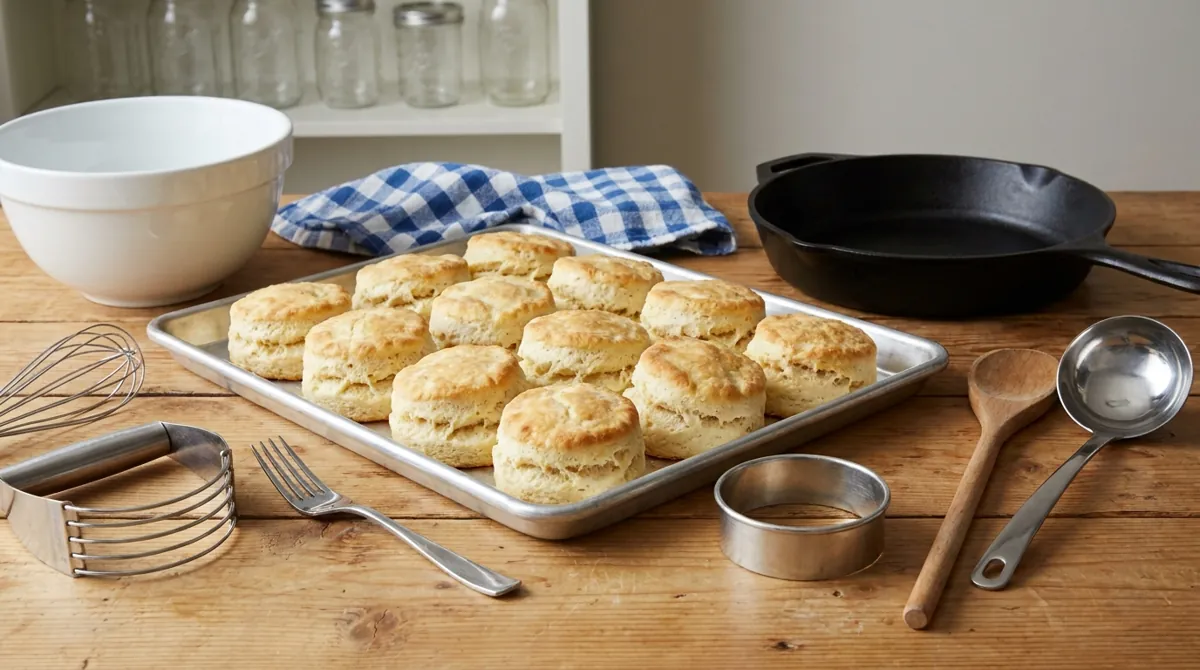
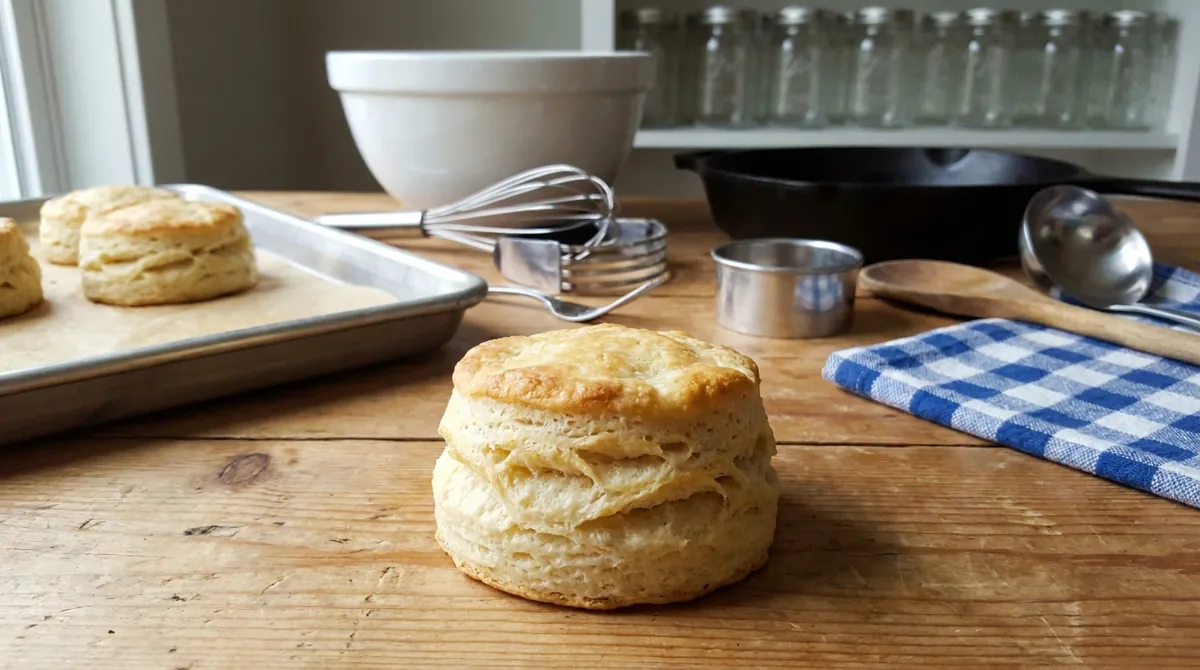
✓ What it should look like - Step 5
While the biscuits bake, cook the sausage in a 12 inch cast-iron skillet over medium-high heat, breaking it into small crumbles with a wooden spoon, 8 to 10 minutes, until browned and no pink remains. Leave the sausage and its fat in the pan; if there are less than about 3 tablespoons of fat, add the butter. Sprinkle the flour over and stir 2 minutes, until it coats the sausage and smells toasty.
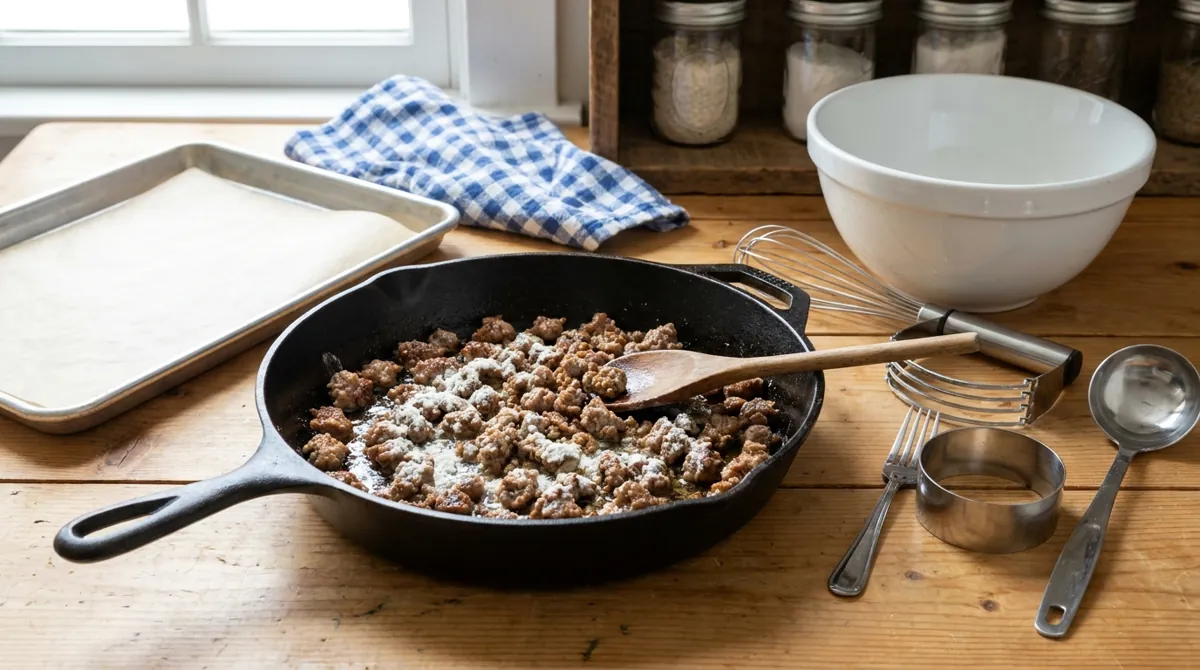
- Step 6
Pour in the milk a little at a time, stirring constantly, and bring to a simmer. Simmer, stirring, 5 to 8 minutes, until the gravy is thick enough to coat the spoon. Stir in the pepper and season with salt; add a splash of milk if it gets too thick.
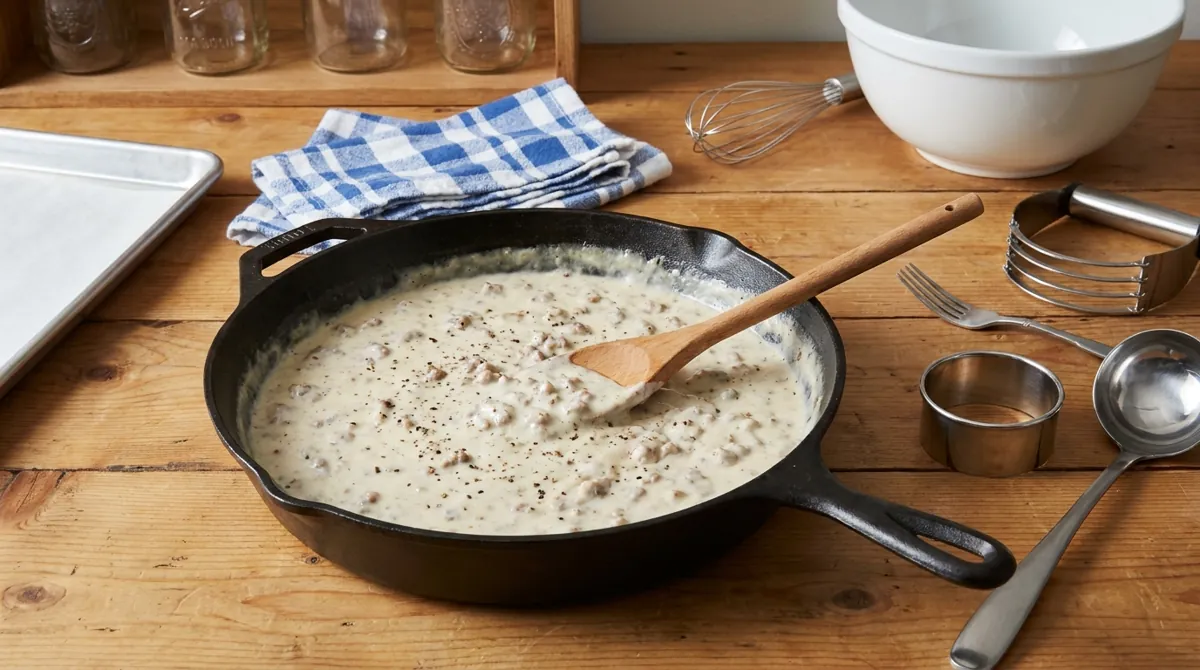
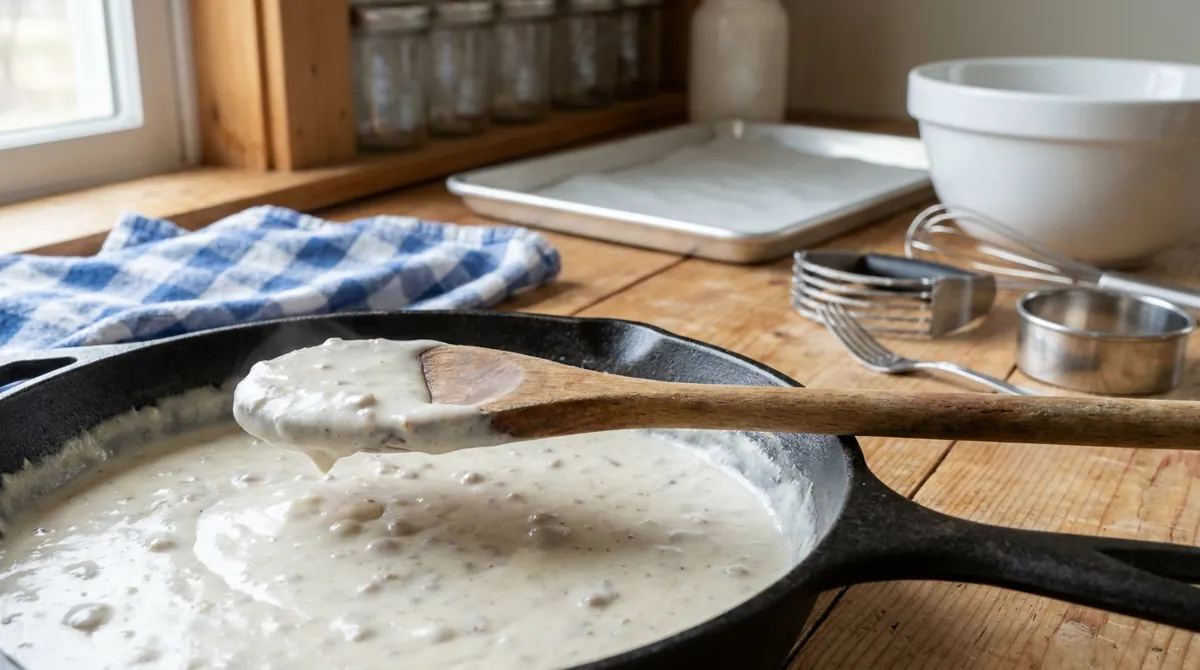
✓ What it should look like - Step 7
Split the warm biscuits, set two halves on each plate and ladle the gravy over. Finish with more black pepper.
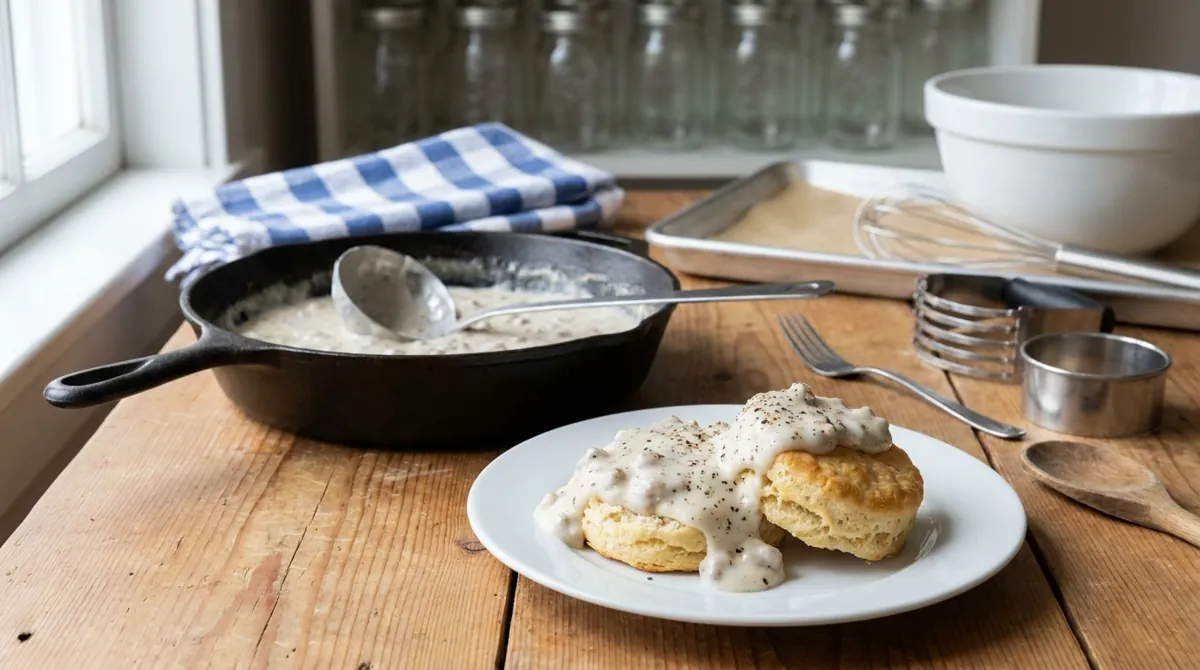
Biscuits and Gravy
Serves 6 · 10 to 12 biscuits and about 4 cups of gravy · 45 min total
Buttermilk biscuits
- 2 1/2 cups all-purpose flour (320 g), plus a little for the counter
- 1 tbsp baking powder (14 g)
- 1/2 tsp baking soda
- 1 tsp fine salt
- 1/2 cup cold unsalted butter (113 g), cut into small cubes
- 1 cup cold buttermilk (245 g)
Sausage gravy
- 1 lb bulk pork breakfast sausage (454 g)
- 2 tbsp unsalted butter (28 g), if the sausage is lean
- 1/3 cup all-purpose flour (40 g)
- 3 cups cold whole milk (730 g)
- 1 tsp coarsely ground black pepper, or more to taste
- Salt to taste
Equipment: Oven, Blender, Rimmed baking sheet, Cast-iron skillet, Chef's knife and cutting board, Measuring cups and spoons, Mixing bowls, Whisk, Ladle, Parchment paper
Method
- Heat the oven to 425°F with a rack in the upper third. Line a rimmed half sheet pan with parchment.
- Whisk the flour, baking powder, baking soda and salt in a large bowl. Add the cold butter and cut it in with a pastry blender until the pieces are the size of small peas, with a few bigger ones left.
- Pour in the cold buttermilk and stir with a fork just until a shaggy dough forms. Turn it out onto a lightly floured counter, pat it into a 3/4 inch thick rectangle, fold it in thirds like a letter and pat it out again; repeat once. Cut 2 1/2 inch rounds, pressing straight down without twisting, and set them on the pan almost touching. Press the scraps together and cut once more.
- Bake 15 to 18 minutes, until tall and golden brown on top and bottom.
- While the biscuits bake, cook the sausage in a 12 inch cast-iron skillet over medium-high heat, breaking it into small crumbles with a wooden spoon, 8 to 10 minutes, until browned and no pink remains. Leave the sausage and its fat in the pan; if there are less than about 3 tablespoons of fat, add the butter. Sprinkle the flour over and stir 2 minutes, until it coats the sausage and smells toasty.
- Pour in the milk a little at a time, stirring constantly, and bring to a simmer. Simmer, stirring, 5 to 8 minutes, until the gravy is thick enough to coat the spoon. Stir in the pepper and season with salt; add a splash of milk if it gets too thick.
- Split the warm biscuits, set two halves on each plate and ladle the gravy over. Finish with more black pepper.
Americanized house recipe, written for this site. History: Wikipedia, "Biscuits and gravy" (a Southern breakfast dish, white gravy from pork sausage drippings, flour and milk, black pepper, emerged as a distinct regional dish after the American Revolutionary War, cheap breakfast for hard labor, tomato gravy and military variants); Wikipedia, "Sausage gravy" (method: brown loose pork sausage, make a roux in the fat, add milk); Chowhound, "How Biscuits And Gravy Became The Historic Breakfast Of Appalachia" (coal miners and loggers in the late 19th and early 20th centuries, early flour-and-water biscuits, bulldog gravy); Mashed, "Why The Southern Sauce That Adorns Biscuits Is Called 'Sawmill Gravy'" (sawmill workers in 1800s Southern Appalachia, the cornmeal and sawdust theory, presented as speculation). Technique: King Arthur Baking, "Buttermilk Biscuits" (cold butter worked in unevenly for flaky layers, fold into thirds, biscuits close together rise higher). en.wikipedia.org. Ingredient list follows the source; the method is in our own words.
Tips
- Sage breakfast sausage is the classic; hot sausage, or a pinch of cayenne, makes a spicier gravy.
- The gravy thickens as it stands. Loosen leftovers with milk while reheating.
- Freeze cut, unbaked biscuits on the pan, then bag them; bake from frozen, adding 3 to 5 minutes.
- No buttermilk? Stir 1 tbsp lemon juice into 1 cup whole milk and let it stand 5 minutes.
The rules people argue about
What the sources agree on, what they don't, and what is just a good story.
- Biscuits and gravy began after the Revolutionary War. Disputed: Wikipedia's account says so, citing food histories, but other writers place it in the 1800s Appalachian lumber and coal camps, and none of the dates comes with a first recipe.
- Sawmill gravy is named for sawmill workers. Folklore, widely repeated: food writers agree on the Appalachian lumber-camp link and disagree on why. One theory says workers ate it daily; another says early cornmeal versions were gritty like sawdust. No primary source backs either.
- Sawmill gravy is the same as sausage gravy. Disputed: many cooks and restaurants use the names for the same dish; others say sawmill gravy is made from bacon or other pork drippings, or from cornmeal, with or without meat in it.
- Butter, lard or shortening. Disputed: butter gives flavor and flaky layers, lard and shortening give a softer, more tender biscuit, and Southern cooks use all three.
Meatballs of the World

Italian-American Meatballs
Big, tender meatballs braised for an hour in red sauce over spaghetti. The one most Americans grew up with.

Pallottine (Abruzzo Meatballs)
Tiny meatballs, smaller than a marble, tossed right through square spaghetti alla chitarra. No bread at all.

Swedish Meatballs (Köttbullar)
Small, soft meatballs browned in butter, in a cream sauce made from the same pan, with lingonberry jam on the plate.

Danish Frikadeller
Pork meatballs shaped with a spoon and fried slowly in butter, crusty outside and soft in the middle.

Königsberger Klopse
German meatballs that are never fried: poached, then served in a creamy white sauce with capers.

Spanish Albóndigas in Almond Saffron Sauce
The tapas bar classic: small meatballs in a golden sauce thickened with fried almonds and bread.

Mexican Albóndigas with Chipotle and Mint
Soft meatballs with rice and fresh mint inside, simmered in a smoky tomato and chipotle broth.

Izgara Köfte (Turkish Grilled Meatballs)
Small, flat meatballs kneaded hard, rested cold, and charred on a hot grill pan.

Lion's Head Meatballs
Big, soft pork meatballs, stirred into a sticky paste, fried to set, then braised in a savory sauce.

Chicken Tsukune
Japan's chicken meatball: kneaded sticky, grilled on skewers, glazed with sweet soy tare, dipped in egg yolk.