
Bulgogi
Thin-sliced beef marinated in soy, sugar, sesame oil, garlic and grated pear, then seared until caramelized: Korea's "fire meat", ready in an hour in a plain skillet.
🍳Cook alongOne move at a time, with real timers
 Edited by JP Lambiase
Change the estimate
Swaps change the price only: cook any meat to its own safe temperature. Where these numbers come from
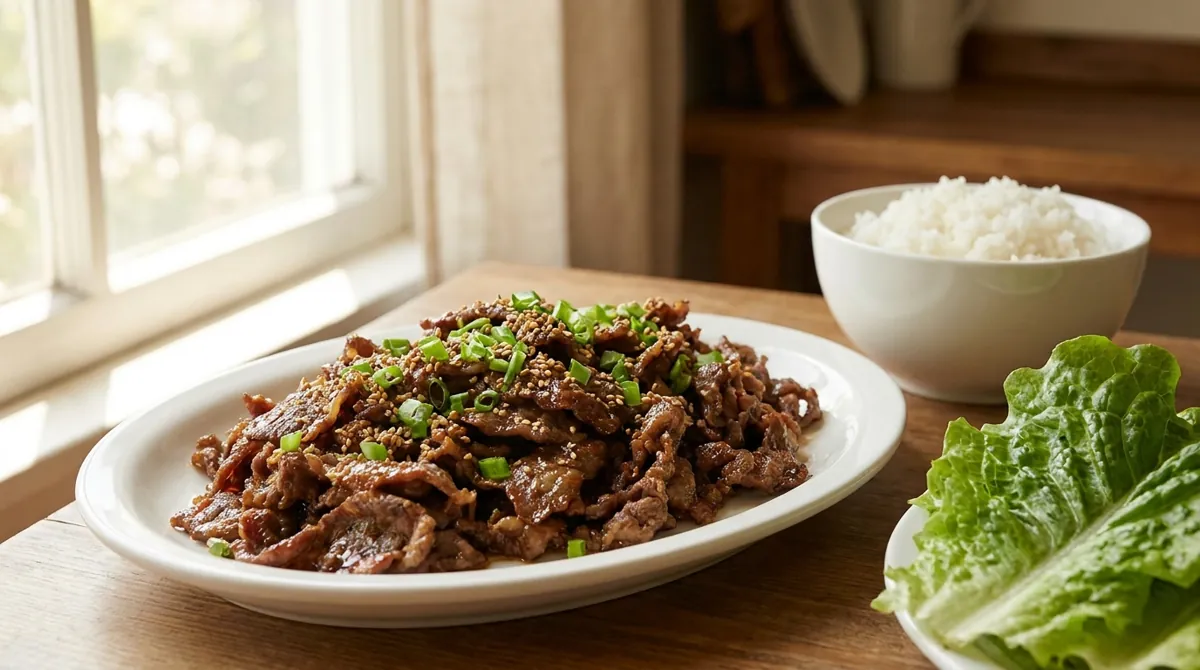
Bulgogi means "fire meat": bul is fire and gogi is meat. Its roots are usually traced to the Goguryeo era (37 BCE to 668 CE), when a grilled skewered dish called maekjeok is believed to be an ancestor. In the Joseon period a similar dish was called neobiani, "thinly spread" meat, and it was made for the wealthy and nobles.
The word "bulgogi" itself is tied to the Pyongan region in the north. Today the marinade is a family matter: soy sauce, sugar, sesame oil, garlic and black pepper are the base, with a grated pear, onion, pineapple or kiwi to tenderize the beef.
Why it works the kitchen science
Grated pear
Its enzymes tenderize the thin meat, and its sugar helps it brown.
Very thin slices
They cook in minutes and soak up the marinade all the way through.
A very hot pan, in batches
The sugar in the marinade caramelizes before the thin beef overcooks.
🧰 You'll need 4 items
Everything the steps call for. Tick off what you have before you start.
Pans and pots
Tools
Step by step
- Step 1
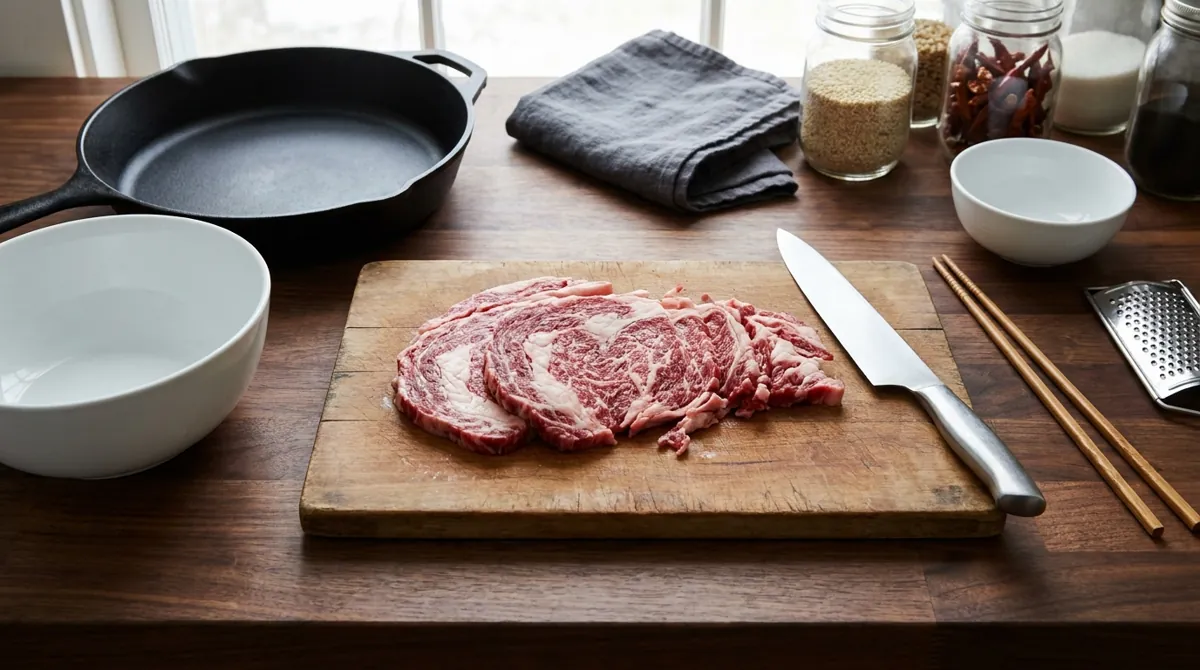
If the beef is not already sliced, freeze it for 20 minutes until firm, then slice it as thinly as you can against the grain.
- Step 2
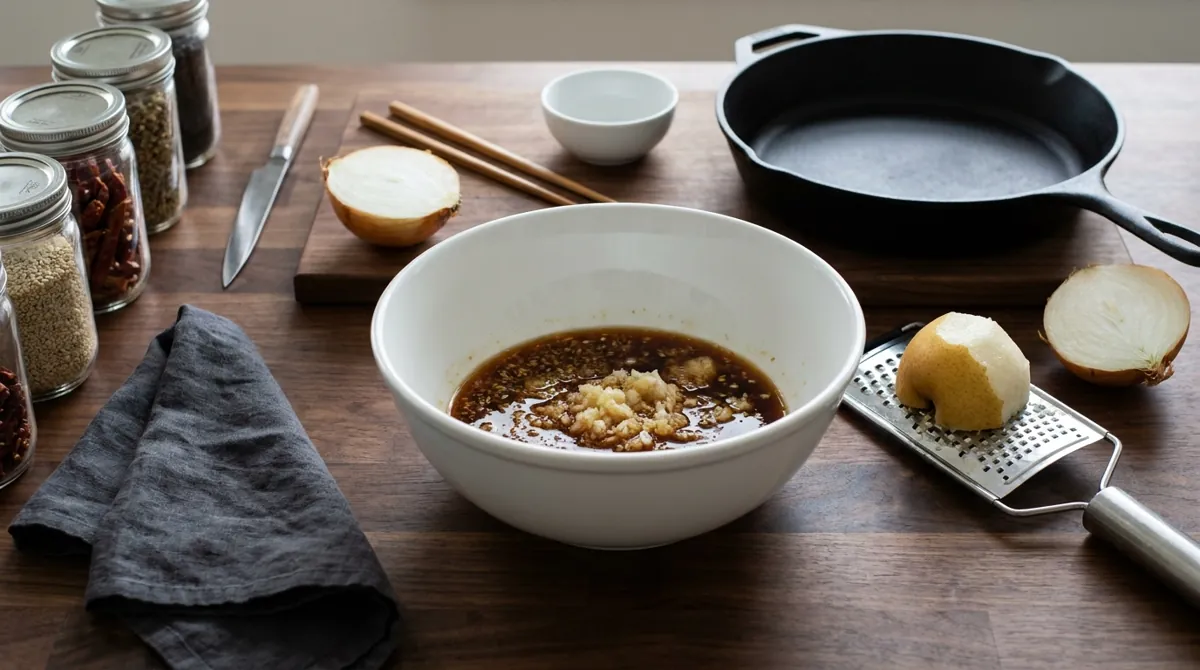
Mix the pear, onion, soy sauce, sugar, sesame oil, garlic and pepper in a large bowl.
- Step 3
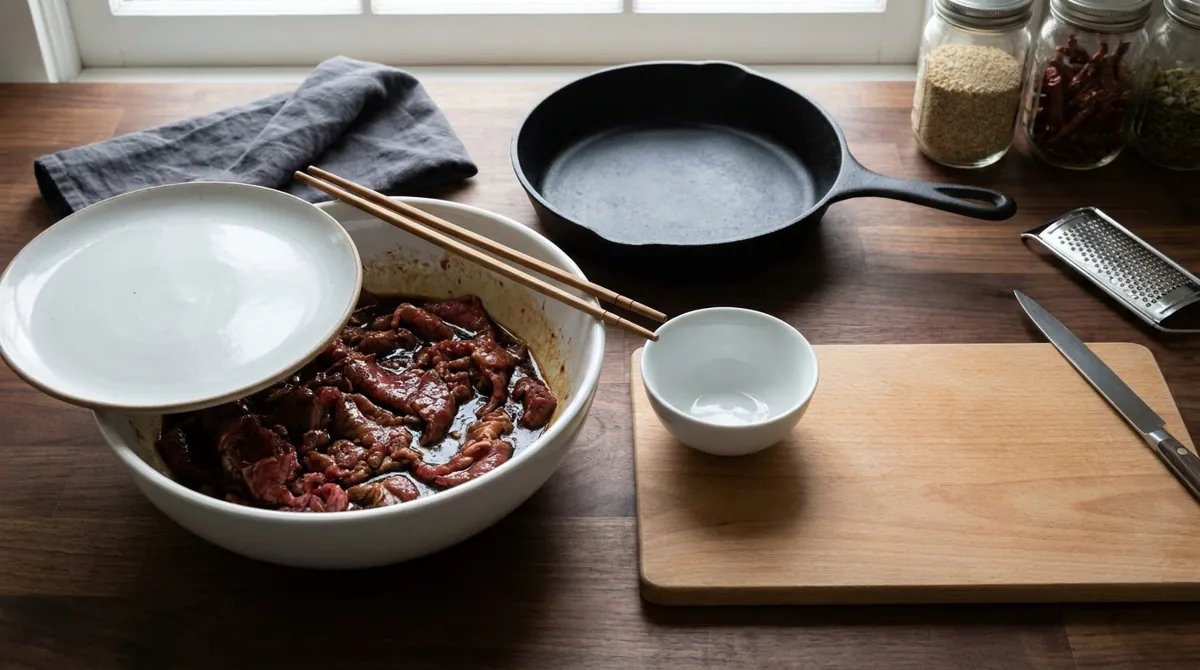
Add the beef and mix it into the marinade. Cover and chill 30 minutes, up to 4 hours; any longer and the pear makes the meat mushy.
- Step 4
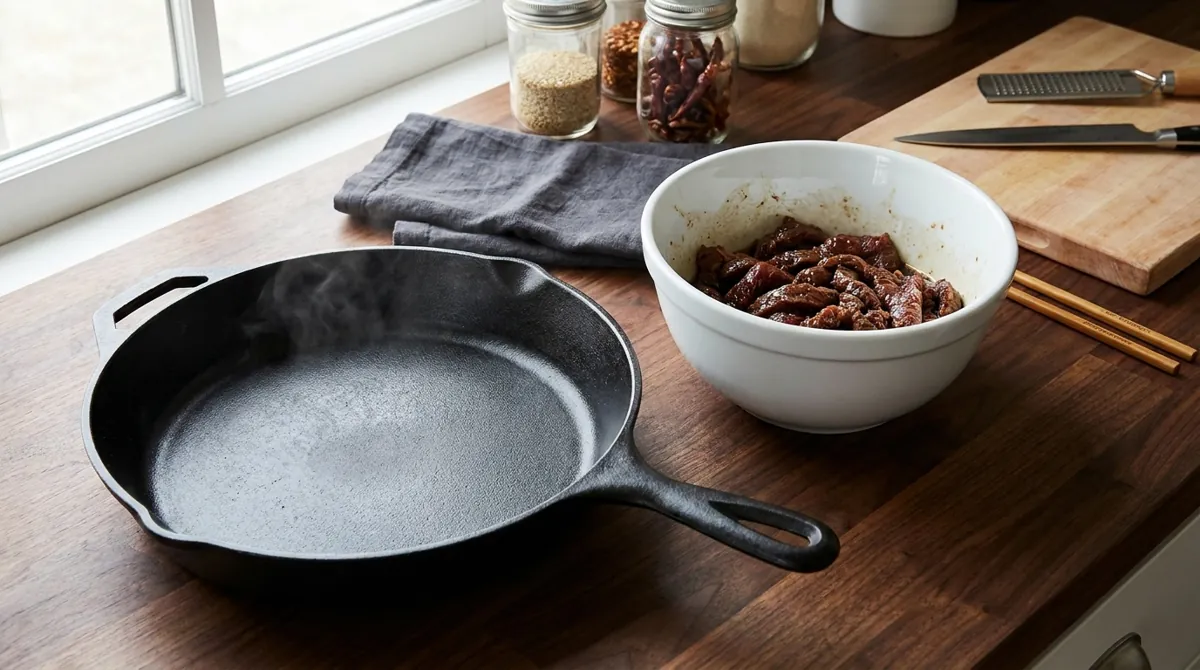
Heat a large cast-iron skillet over high heat until very hot, about 3 minutes.
- Step 5
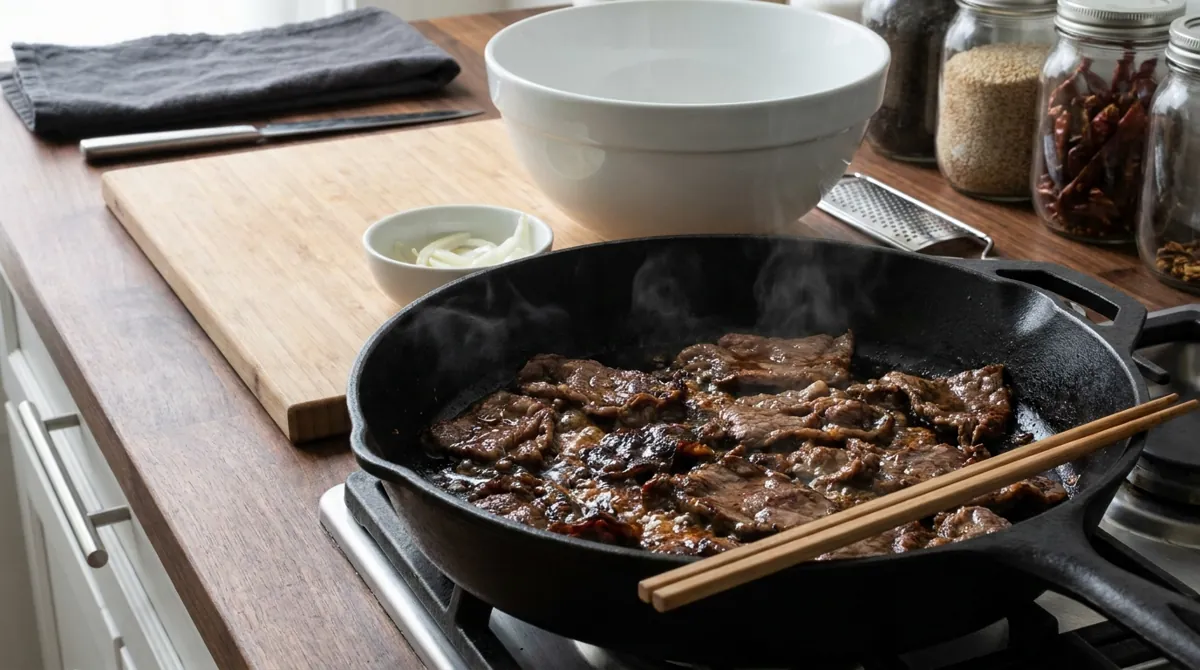
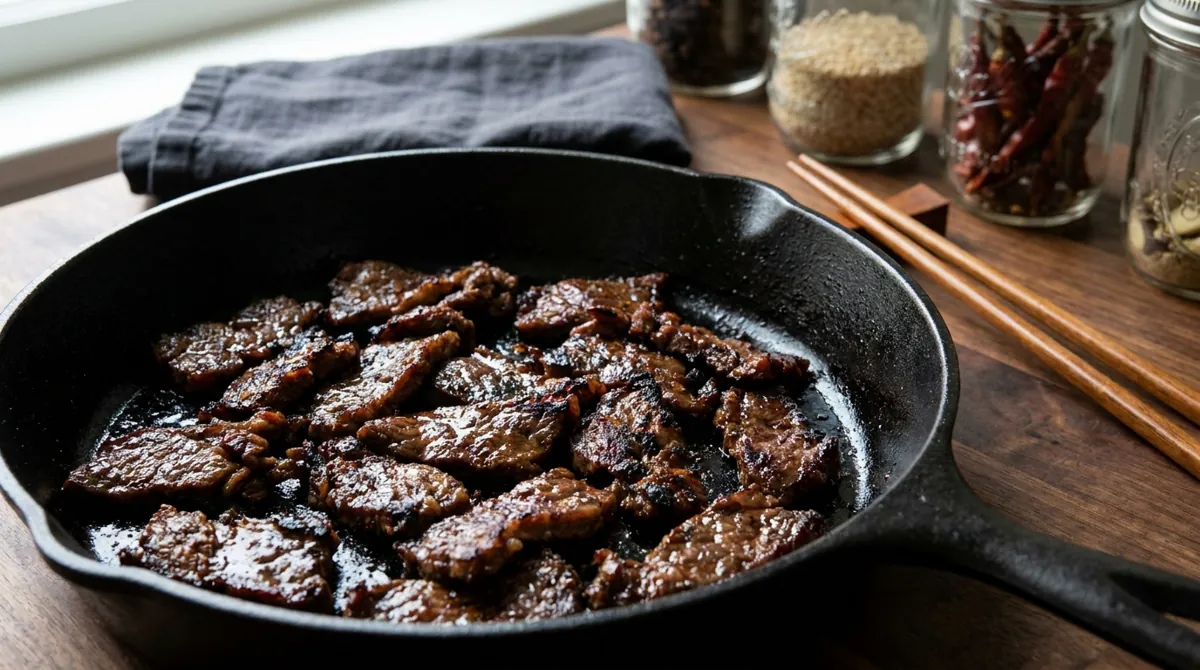
Cook the beef in 2 or 3 batches, spread in a single layer, 2 to 3 minutes per side, until well browned with caramelized edges. Do not crowd the pan or the meat will steam.
✓ What it should look like - Step 6
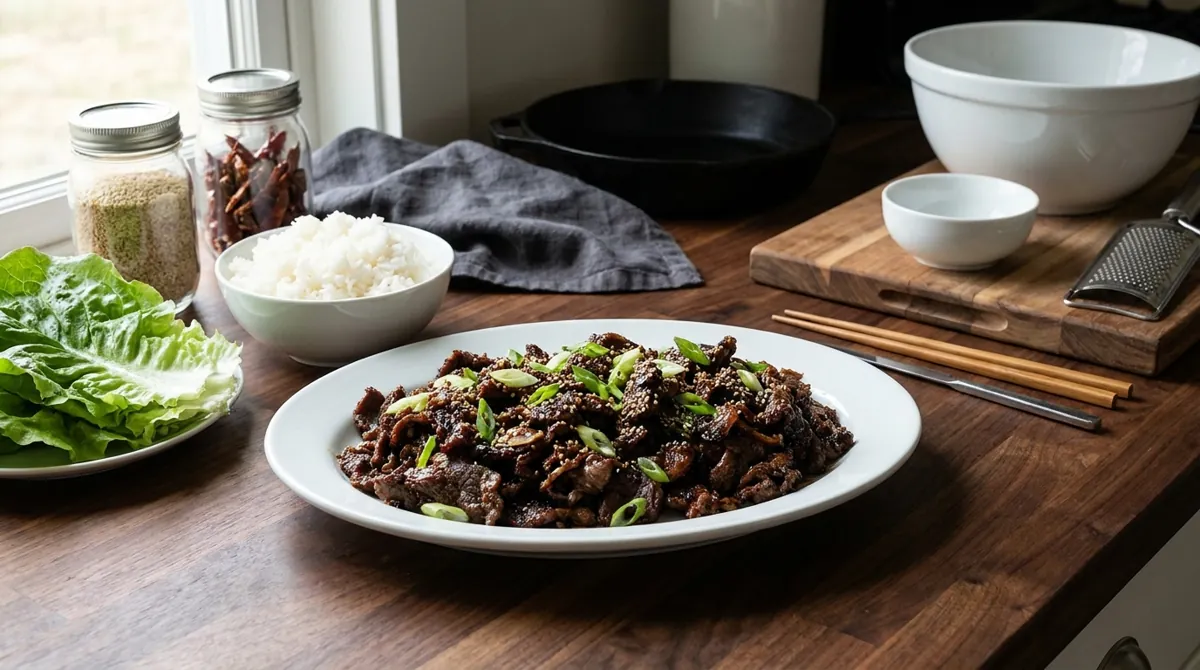
Pile the beef on a platter, scatter on the scallions and sesame seeds, and serve with rice and lettuce leaves for wrapping.
Bulgogi
Serves 4 · about 1 1/2 lb cooked beef · 1 hr total
- 1 1/2 lb ribeye, very thinly sliced (680 g)
- 1/2 Asian pear, finely grated (150 g)
- 1/2 medium onion, finely grated (100 g)
- 5 tbsp soy sauce (80 g)
- 2 tbsp sugar (25 g)
- 1 tbsp toasted sesame oil (14 g)
- 5 cloves garlic, minced (15 g)
- 1/2 tsp black pepper
- 4 scallions, sliced (60 g)
- 1 tbsp toasted sesame seeds (9 g)
- To serve: steamed rice and lettuce leaves
Equipment: Cast-iron skillet, Chef's knife and cutting board, Measuring cups and spoons, Mixing bowls
Method
- If the beef is not already sliced, freeze it for 20 minutes until firm, then slice it as thinly as you can against the grain.
- Mix the pear, onion, soy sauce, sugar, sesame oil, garlic and pepper in a large bowl.
- Add the beef and mix it into the marinade. Cover and chill 30 minutes, up to 4 hours; any longer and the pear makes the meat mushy.
- Heat a large cast-iron skillet over high heat until very hot, about 3 minutes.
- Cook the beef in 2 or 3 batches, spread in a single layer, 2 to 3 minutes per side, until well browned with caramelized edges. Do not crowd the pan or the meat will steam.
- Pile the beef on a platter, scatter on the scallions and sesame seeds, and serve with rice and lettuce leaves for wrapping.
Americanized house recipe, written for this site. History and marinade: Wikipedia, "Bulgogi" (Goguryeo maekjeok, Joseon neobiani, the name, soy-sugar-sesame-garlic base, pear and other tenderizers, ribeye and sirloin). en.wikipedia.org. Ingredient list follows the source; the method is in our own words.
All sources (1)
Tips
- Ribeye is the easy choice because of its marbling. Sirloin works if you slice it thinner.
- No Asian pear? Use a ripe Bosc pear or a few tablespoons of grated apple.
- Marinated beef freezes well for 2 months in a flat bag; thaw it overnight before cooking.
The rules people argue about
What the sources agree on, what they don't, and what is just a good story.
- Bulgogi is 2,000 years old. Disputed: it is "believed" to descend from Goguryeo maekjeok, but the old skewered dish and the marinated, thinly sliced one we know today are not the same.
Meatballs of the World

Italian-American Meatballs
Big, tender meatballs braised for an hour in red sauce over spaghetti. The one most Americans grew up with.

Pallottine (Abruzzo Meatballs)
Tiny meatballs, smaller than a marble, tossed right through square spaghetti alla chitarra. No bread at all.

Swedish Meatballs (Köttbullar)
Small, soft meatballs browned in butter, in a cream sauce made from the same pan, with lingonberry jam on the plate.

Danish Frikadeller
Pork meatballs shaped with a spoon and fried slowly in butter, crusty outside and soft in the middle.

Königsberger Klopse
German meatballs that are never fried: poached, then served in a creamy white sauce with capers.

Spanish Albóndigas in Almond Saffron Sauce
The tapas bar classic: small meatballs in a golden sauce thickened with fried almonds and bread.

Mexican Albóndigas with Chipotle and Mint
Soft meatballs with rice and fresh mint inside, simmered in a smoky tomato and chipotle broth.

Izgara Köfte (Turkish Grilled Meatballs)
Small, flat meatballs kneaded hard, rested cold, and charred on a hot grill pan.

Lion's Head Meatballs
Big, soft pork meatballs, stirred into a sticky paste, fried to set, then braised in a savory sauce.

Chicken Tsukune
Japan's chicken meatball: kneaded sticky, grilled on skewers, glazed with sweet soy tare, dipped in egg yolk.