
California Roll
Creamy avocado, sweet crab and crisp cucumber rolled inside out in seasoned sushi rice and toasted sesame: the Los Angeles sushi bar roll that taught America to eat sushi, and that Japan eventually imported back.
🍳Cook alongOne move at a time, with real timers
 Edited by JP Lambiase
Change the estimate
Swaps change the price only: cook any meat to its own safe temperature. Where these numbers come from
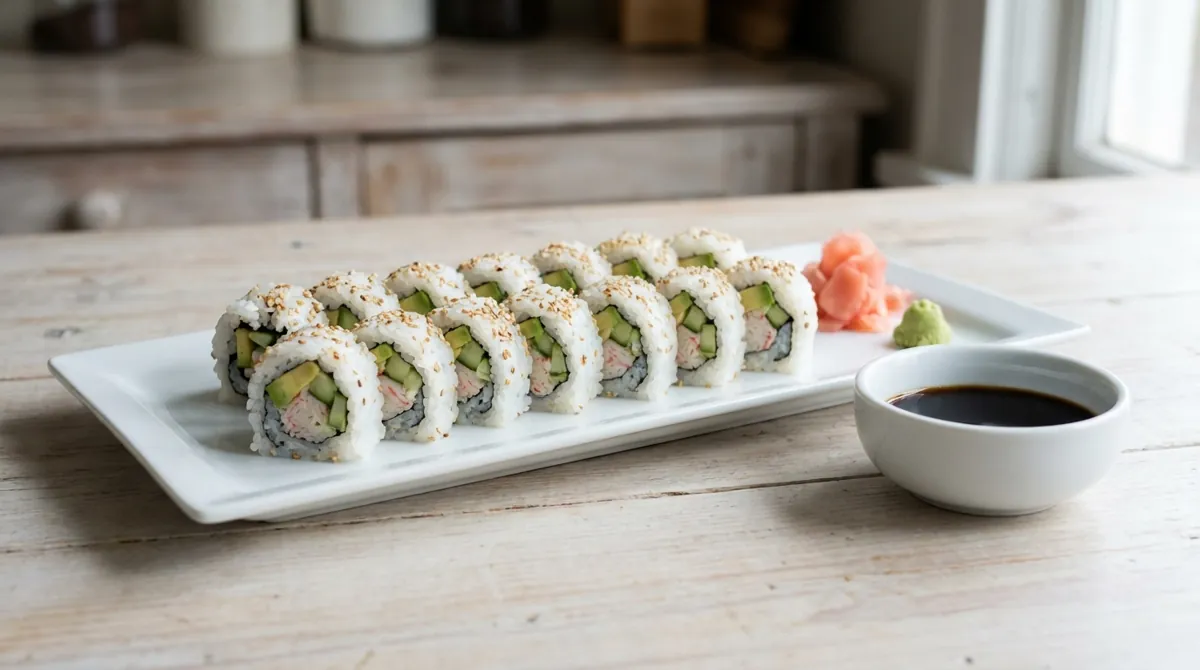
The California roll was made for Americans. It came out of the Japanese sushi bars of Los Angeles, most often credited to Ichiro Mashita, a chef at the Tokyo Kaikan restaurant in Little Tokyo, who is said to have swapped ripe avocado for fatty tuna when the tuna was out of season, in the 1960s or early 1970s depending on who tells it. The crab came from the West Coast, the avocado from California's groves, and the rice went on the outside because American diners, the story goes, tended to peel off the dark nori.
Who actually invented it is not settled. An Associated Press story in 1979 named Ken Seusa, a chef at Kin Jo near Hollywood, and that claim went unchallenged for more than 20 years. Vancouver chef Hidekazu Tojo says he created it in the late 1970s and named it for "C.A.", California, where his customers came from; food historians find his account hard to square with the Los Angeles evidence, though Japan's agriculture ministry made him a goodwill ambassador for Japanese cuisine in 2016.
The first print mentions came in the Los Angeles Times in November 1979, then Gourmet in 1980 and The New York Times in 1981. By the 1980s the roll was everywhere in the United States and did more than any other dish to make sushi ordinary. Japan later took it back as California maki, or Kashū maki. Most California rolls today use imitation crab (surimi); early versions used king crab legs.
Why it works the kitchen science
Rinsing the rice
It washes off loose surface starch, so the rice is sticky enough to hold but each grain stays distinct.
Seasoning the rice while hot
Hot rice absorbs the vinegar evenly; fanning it cools it fast and makes it glossy.
Plastic wrap on the mat
With the rice outside, the roll would glue itself to bare bamboo.
Rice to the edges, filling low
An even, thin layer and a line of filling near the edge give a round roll with the filling in the center.
A wet blade
Rice sticks to a dry knife and crushes the roll; a wet, wiped blade cuts clean.
🧰 You'll need 6 items
Everything the steps call for. Tick off what you have before you start.
Pans and pots
Tools
Supplies
Step by step
- Step 1
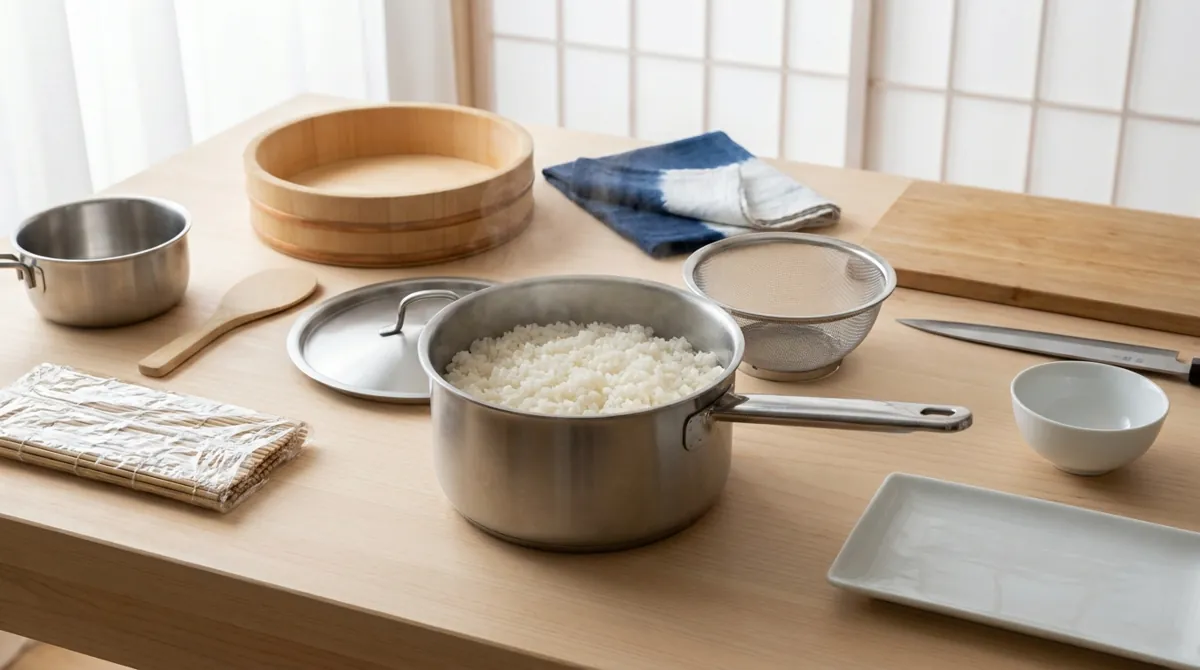
Rinse the rice in a bowl of cold water, swishing and draining 4 or 5 times, until the water is nearly clear. Drain it in a fine strainer 15 minutes. Put it in a heavy saucepan with the water, bring to a boil, cover, turn the heat to the lowest setting and cook 15 minutes. Take it off the heat and let it steam, still covered, 10 minutes.
- Step 2
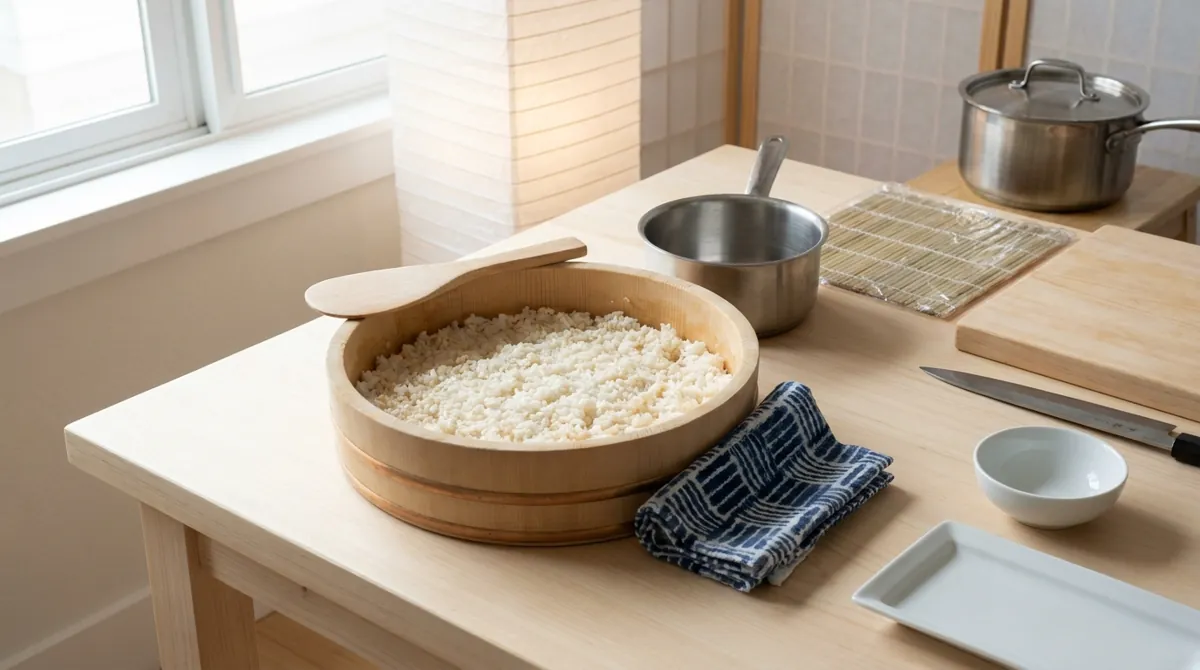
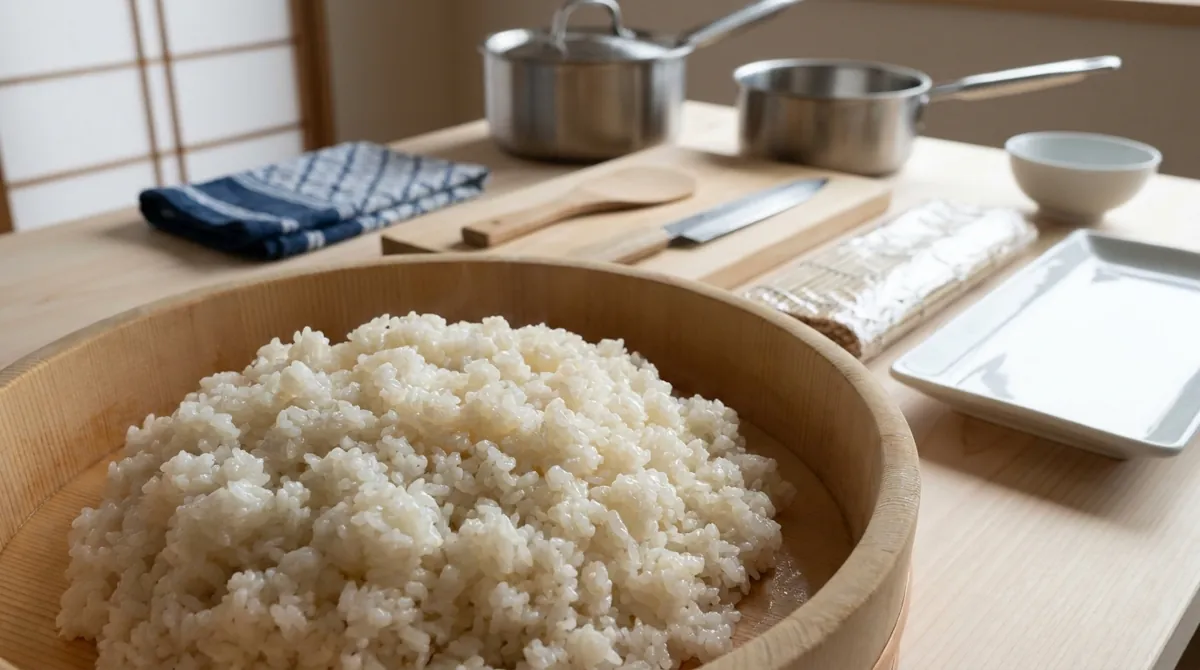
Meanwhile warm the vinegar, sugar and salt in a small saucepan just until the sugar dissolves. Turn the hot rice into a wide shallow bowl, sprinkle the vinegar over it and cut and fold it in with a rice paddle, without mashing, for about a minute. Fan it until it cools to about body temperature, about 10 minutes; it should be glossy, sticky and each grain distinct. Cover with a damp towel.
✓ What it should look like - Step 3
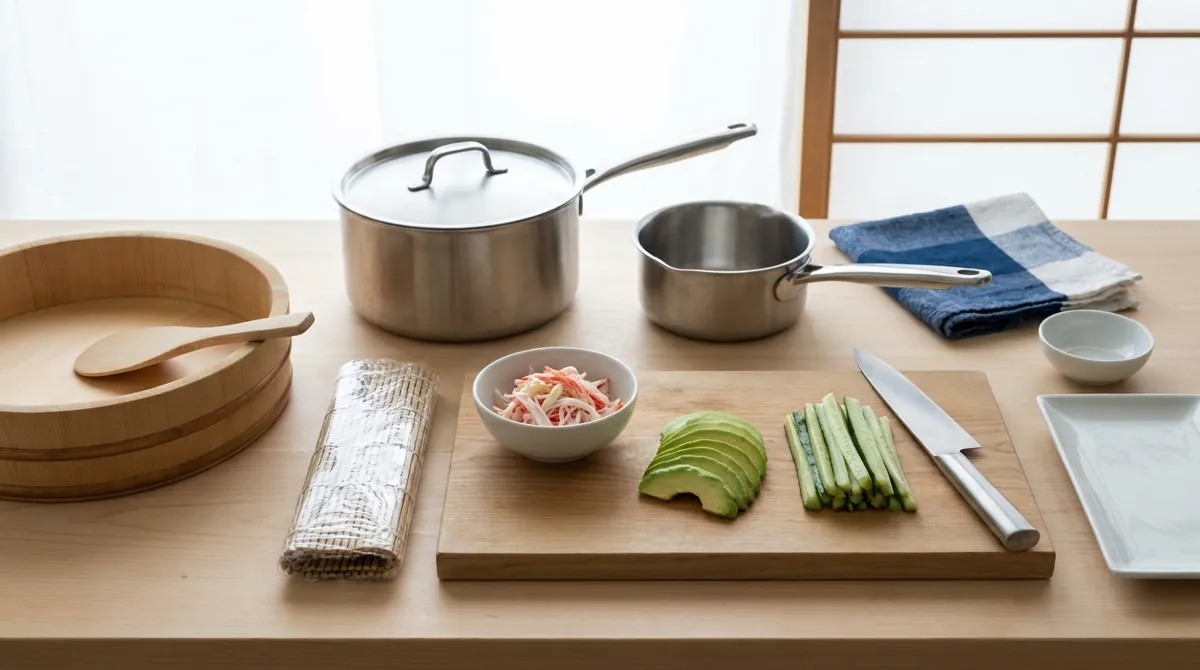
Shred the crab sticks into thin strands and stir them with the mayonnaise. Halve, pit and peel the avocado and cut it into thin slices. Halve the cucumber lengthwise, scoop out the seeds and cut it into long thin batons.
- Step 4
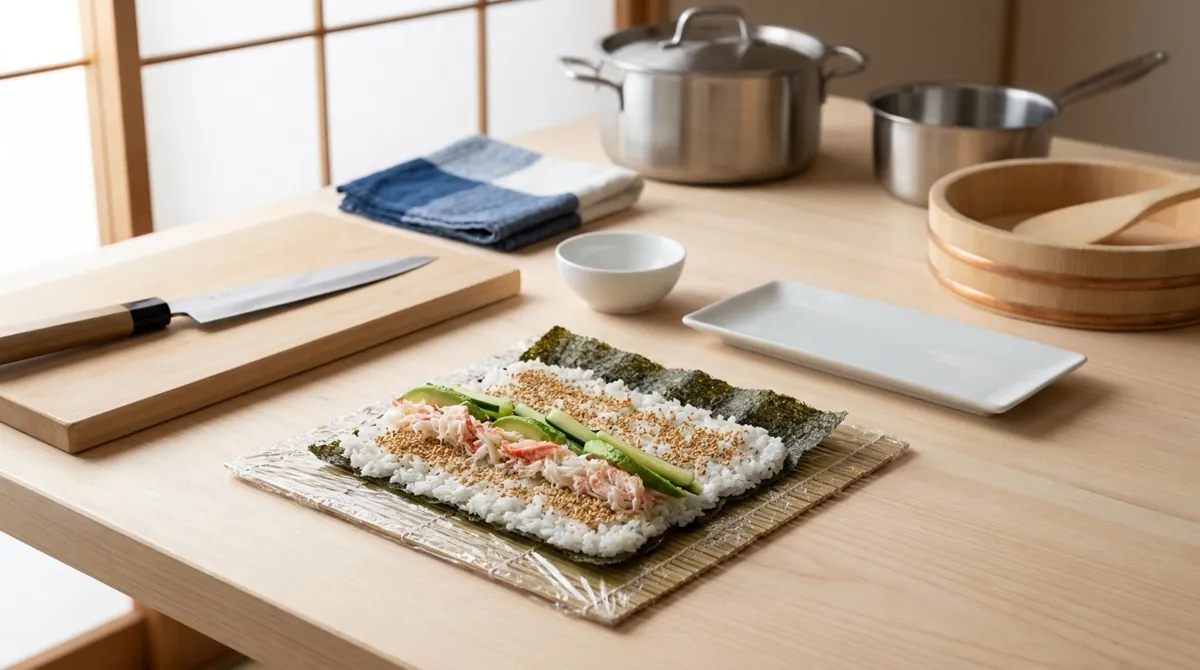
Wrap a bamboo rolling mat in plastic wrap. Lay a half sheet of nori on it, rough side up. With wet fingers, spread about 3/4 cup of rice evenly over the whole sheet, right to the edges, and sprinkle it with sesame seeds. Flip the sheet over so the rice faces the mat. Lay a quarter of the crab, cucumber and avocado in a line across the nori, about an inch from the near edge.
- Step 5
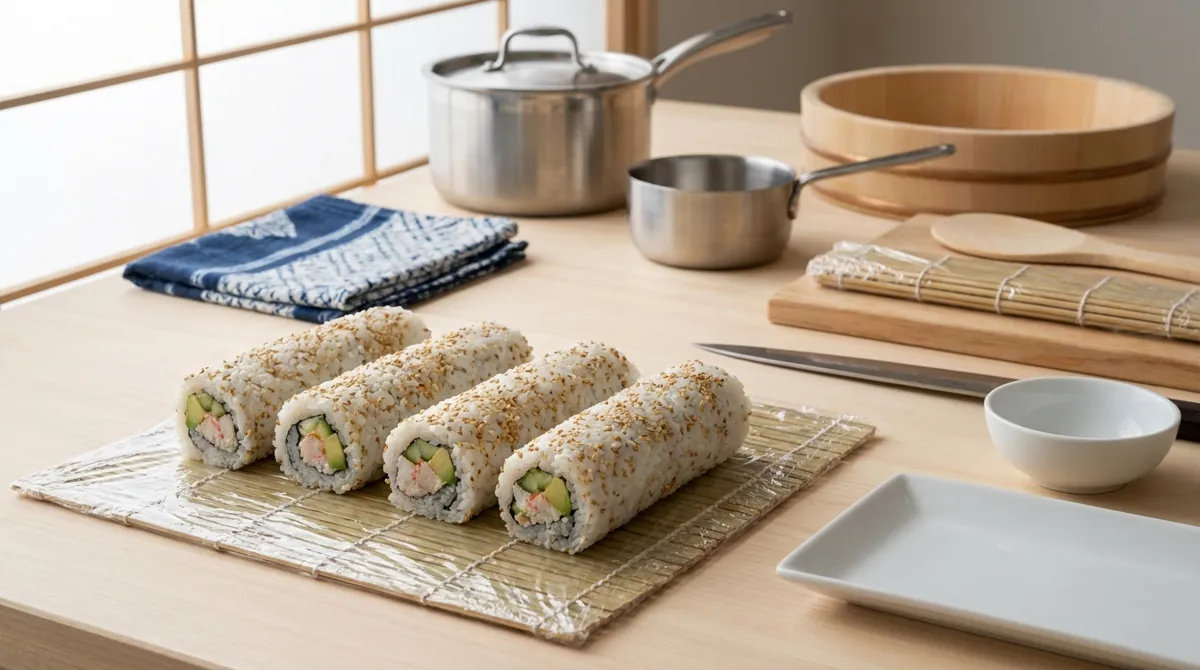
Lift the near edge of the mat up and over the filling, tuck it in tight, then roll forward, pressing gently along the length, until the roll closes. Press the mat around it once more to firm and square it. Repeat to make 4 rolls.
- Step 6
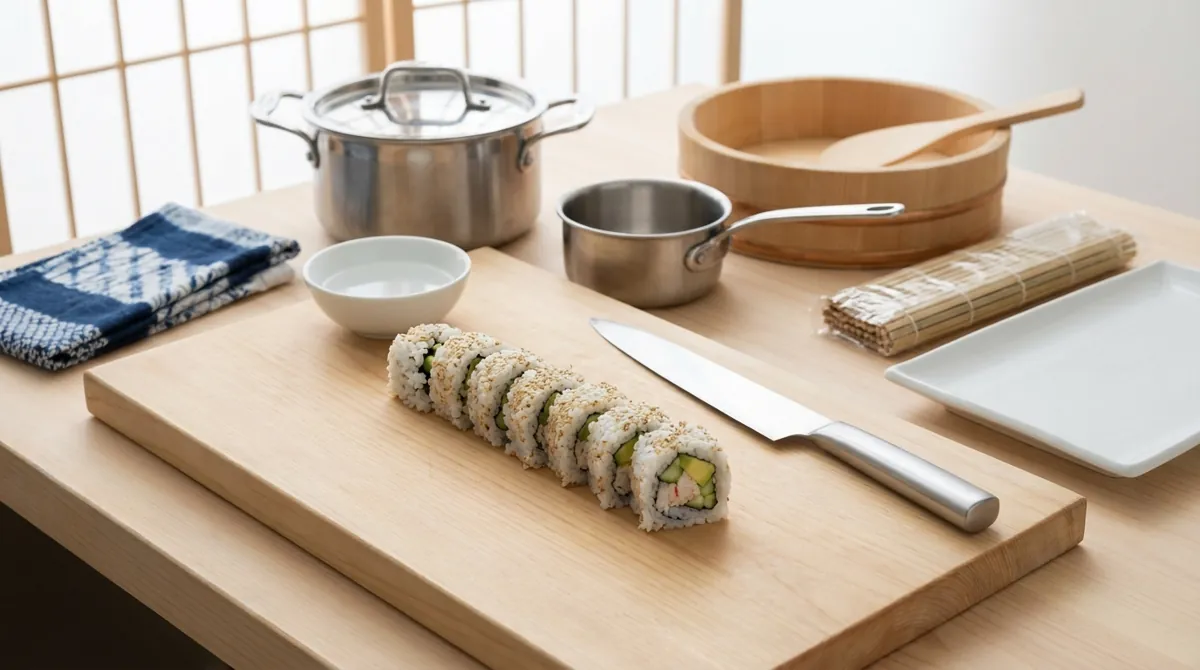
With a sharp knife dipped in water, cut each roll in half, then each half into 4 pieces, wiping the blade between cuts. Serve right away with soy sauce, pickled ginger and wasabi.
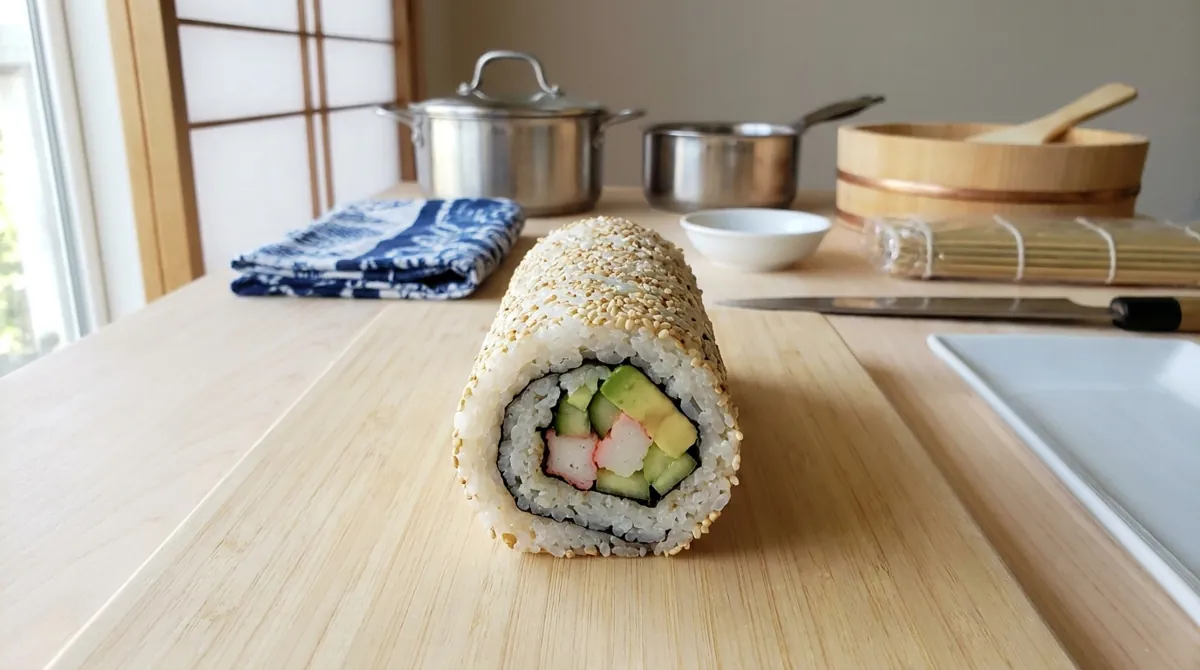
✓ What it should look like
California Roll
Serves 4 · 4 rolls, 32 pieces · 1 hr 25 min total
Sushi rice
- 2 cups Japanese short-grain white rice (400 g)
- 2 cups plus 2 tbsp water (500 g)
- 1/3 cup unseasoned rice vinegar (80 g)
- 2 1/2 tbsp granulated sugar (31 g)
- 1 1/2 tsp Diamond Crystal kosher salt (or 3/4 tsp fine salt)
Filling and rolling
- 8 oz imitation crab sticks (227 g), or cooked crab meat
- 2 tbsp mayonnaise, Japanese style if you have it (28 g)
- 1 ripe Hass avocado (about 150 g flesh)
- 1/2 English cucumber (150 g)
- 2 sheets nori, cut in half crosswise (6 g)
- 2 tbsp toasted white sesame seeds (18 g)
To serve
- Soy sauce (2 tbsp, 32 g), pickled ginger and wasabi
Equipment: Heavy saucepan, Chef's knife and cutting board, Measuring cups and spoons, Mixing bowls, Fine-mesh strainer, Plastic wrap
Method
- Rinse the rice in a bowl of cold water, swishing and draining 4 or 5 times, until the water is nearly clear. Drain it in a fine strainer 15 minutes. Put it in a heavy saucepan with the water, bring to a boil, cover, turn the heat to the lowest setting and cook 15 minutes. Take it off the heat and let it steam, still covered, 10 minutes.
- Meanwhile warm the vinegar, sugar and salt in a small saucepan just until the sugar dissolves. Turn the hot rice into a wide shallow bowl, sprinkle the vinegar over it and cut and fold it in with a rice paddle, without mashing, for about a minute. Fan it until it cools to about body temperature, about 10 minutes; it should be glossy, sticky and each grain distinct. Cover with a damp towel.
- Shred the crab sticks into thin strands and stir them with the mayonnaise. Halve, pit and peel the avocado and cut it into thin slices. Halve the cucumber lengthwise, scoop out the seeds and cut it into long thin batons.
- Wrap a bamboo rolling mat in plastic wrap. Lay a half sheet of nori on it, rough side up. With wet fingers, spread about 3/4 cup of rice evenly over the whole sheet, right to the edges, and sprinkle it with sesame seeds. Flip the sheet over so the rice faces the mat. Lay a quarter of the crab, cucumber and avocado in a line across the nori, about an inch from the near edge.
- Lift the near edge of the mat up and over the filling, tuck it in tight, then roll forward, pressing gently along the length, until the roll closes. Press the mat around it once more to firm and square it. Repeat to make 4 rolls.
- With a sharp knife dipped in water, cut each roll in half, then each half into 4 pieces, wiping the blade between cuts. Serve right away with soy sauce, pickled ginger and wasabi.
Americanized house recipe, written for this site. History: Wikipedia, "California roll" (Ichiro Mashita at Tokyo Kaikan, avocado for toro, Ken Seusa at Kin Jo and the AP story, Hidekazu Tojo's Vancouver claim and his 2016 goodwill ambassador title, first print mentions on November 25, 1979, Gourmet 1980 and The New York Times 1981, nori on the outside because diners peeled it, imitation crab and early king crab, cucumber, mayonnaise and sesame as later additions, reverse import to Japan as Kashū maki). Technique: Wikipedia, "Sushi" (shari seasoned with rice vinegar, sugar and salt; uramaki, the inside-out roll, developed after the California roll and topped with roe or toasted sesame; rolls shaped on a makisu mat and cut into 6 or 8 pieces). Sushi vinegar ratio checked against Just One Cookbook's (1/3 cup unseasoned rice vinegar, 3 tbsp sugar, 1 1/2 tsp Diamond Crystal kosher salt). en.wikipedia.org. Ingredient list follows the source; the method is in our own words.
All sources (3)
Tips
- Use Japanese short-grain rice (often sold as sushi rice). Long-grain rice will not hold together.
- Cut the avocado just before rolling so it does not brown.
- Real crab is the luxury version: lump crab or king crab, which the earliest rolls used, mixed with the mayonnaise.
- California rolls are best eaten within a couple of hours. Refrigerated rice turns hard.
- Swap the sesame for tobiko or masago (fish roe), the other classic topping.
The rules people argue about
What the sources agree on, what they don't, and what is just a good story.
- Ichiro Mashita of Tokyo Kaikan invented the California roll. Disputed: he is the most widely credited, but a 1979 AP story named Ken Seusa of Kin Jo, and Vancouver's Hidekazu Tojo claims he invented it in the late 1970s. Historians generally favor Los Angeles.
- The rice went outside because Americans peeled off the seaweed. Folklore, partly: it is the standard story, but the account of who developed the inside-out version is contested.
Meatballs of the World

Italian-American Meatballs
Big, tender meatballs braised for an hour in red sauce over spaghetti. The one most Americans grew up with.

Pallottine (Abruzzo Meatballs)
Tiny meatballs, smaller than a marble, tossed right through square spaghetti alla chitarra. No bread at all.

Swedish Meatballs (Köttbullar)
Small, soft meatballs browned in butter, in a cream sauce made from the same pan, with lingonberry jam on the plate.

Danish Frikadeller
Pork meatballs shaped with a spoon and fried slowly in butter, crusty outside and soft in the middle.

Königsberger Klopse
German meatballs that are never fried: poached, then served in a creamy white sauce with capers.

Spanish Albóndigas in Almond Saffron Sauce
The tapas bar classic: small meatballs in a golden sauce thickened with fried almonds and bread.

Mexican Albóndigas with Chipotle and Mint
Soft meatballs with rice and fresh mint inside, simmered in a smoky tomato and chipotle broth.

Izgara Köfte (Turkish Grilled Meatballs)
Small, flat meatballs kneaded hard, rested cold, and charred on a hot grill pan.

Lion's Head Meatballs
Big, soft pork meatballs, stirred into a sticky paste, fried to set, then braised in a savory sauce.

Chicken Tsukune
Japan's chicken meatball: kneaded sticky, grilled on skewers, glazed with sweet soy tare, dipped in egg yolk.