
Cannoli
A crisp fried shell blistered like bubbles, filled with sweet ricotta cream and finished with pistachios: Sicily's carnival pastry, one shell at a time.
🍳Cook alongOne move at a time, with real timers
 Edited by JP Lambiase
Change the estimate
Swaps change the price only: cook any meat to its own safe temperature. Where these numbers come from
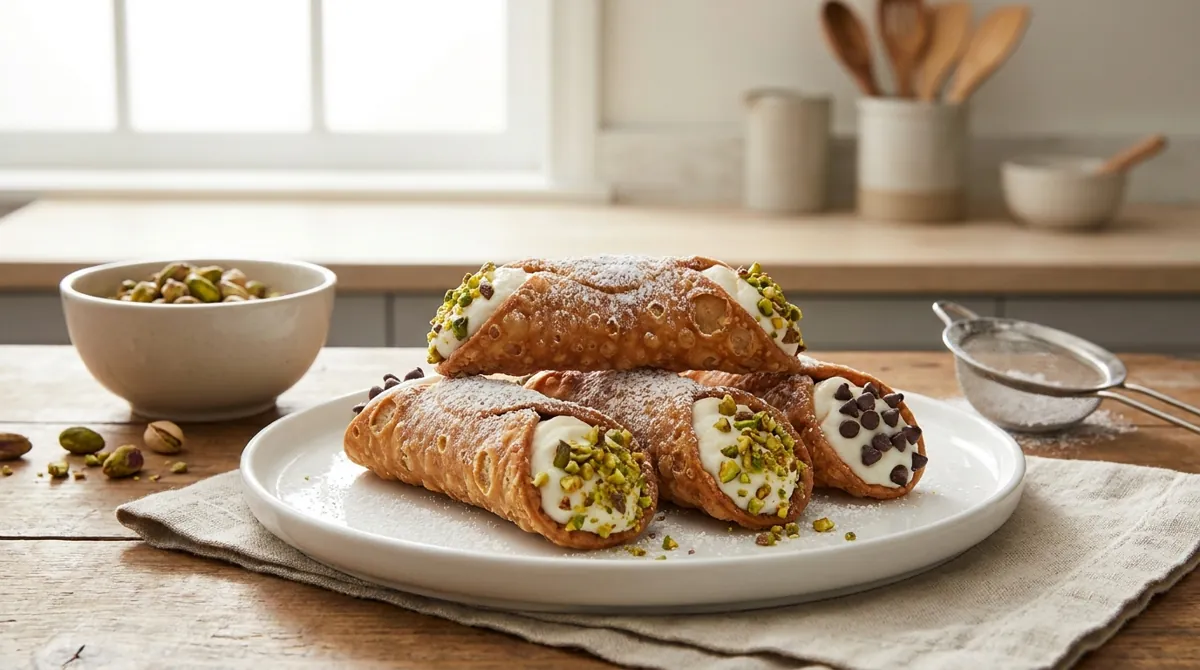
Cannoli come from Sicily, where they began as a Carnival sweet, the festive days before Lent. Which town can claim them is not settled: food writer Gaetano Basile places them around Palermo and Messina, while another account points to Caltanissetta, in the years of Arab rule. The shell is fried dough, the filling is sweet ricotta, and the Arab influence on Sicilian baking (candied fruit, pistachios, cinnamon) is well documented.
Cannoli are the plural; one pastry is a cannolo. Palermo is known for candied orange zest in the cream, and Catania for chopped pistachios on the ends.
Why it works the kitchen science
Draining the ricotta
Wet ricotta makes a runny cream that turns the shell soggy; drained ricotta holds its shape.
Marsala in the dough
The wine adds flavor and its alcohol and acid help the thin shell blister and stay crisp instead of tough.
Filling at the last minute
A fried shell is only crisp until moisture reaches it, so fill just before serving.
🧰 You'll need 12 items
Everything the steps call for. Tick off what you have before you start.
Pans and pots
Tools
Supplies
Step by step
- Step 1
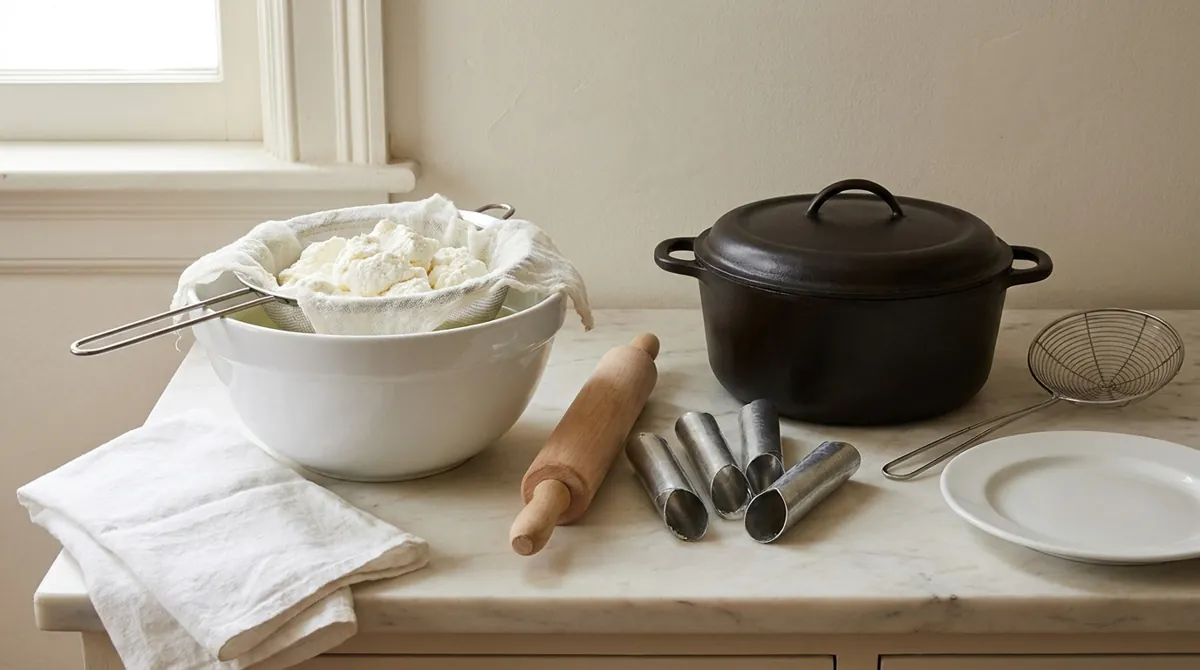
The day before, line a sieve with cheesecloth over a bowl, spoon in 2 pounds of whole-milk ricotta and refrigerate it overnight so the whey drains out.
- Step 2
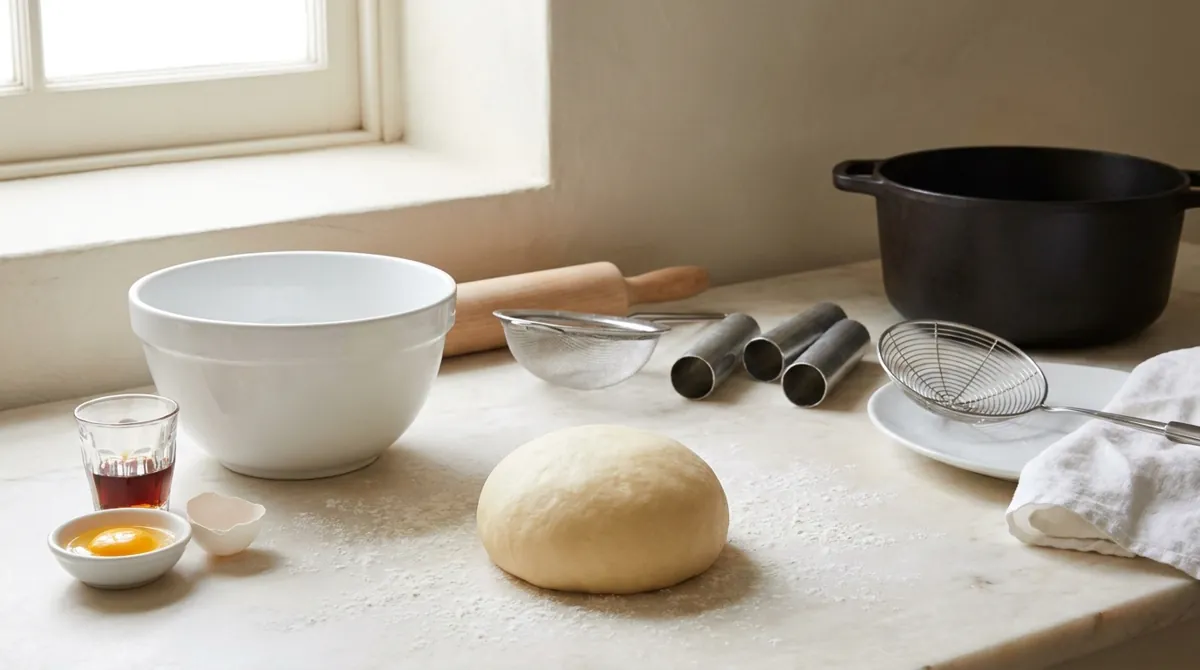
Make the dough: in a large bowl whisk 2 cups flour, 2 tbsp sugar, 1/2 tsp cinnamon and 1/4 tsp salt. Rub in 2 tbsp butter, then stir in 1 beaten egg and about 1/4 cup Marsala until a stiff dough forms. Knead 5 minutes, wrap and rest 1 hour.
- Step 3
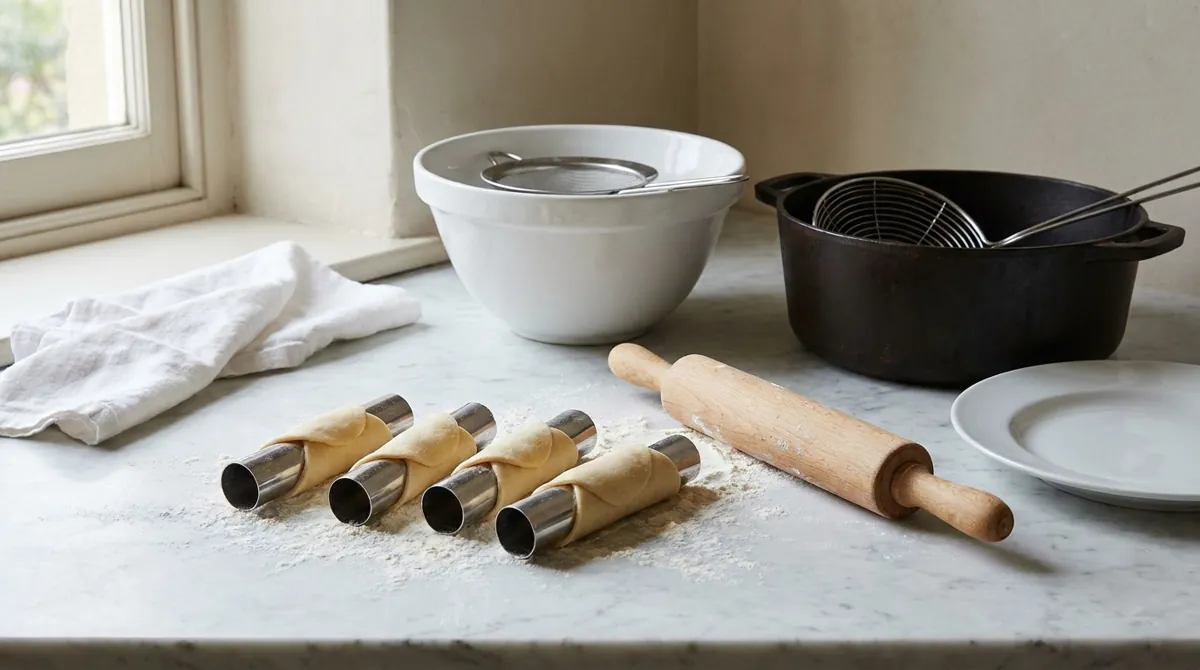
Roll the dough very thin, about 1/16 inch. Cut 4-inch circles, wrap each loosely around a metal cannoli tube and seal the overlap with a dab of egg white.
- Step 4
Heat 2 inches of vegetable oil to 350°F in a heavy pot. Fry the shells 2 to 3 minutes, until deep golden and blistered, turning once. Lift out with a spider, drain on paper towels and slide off the tubes once cool enough to touch.
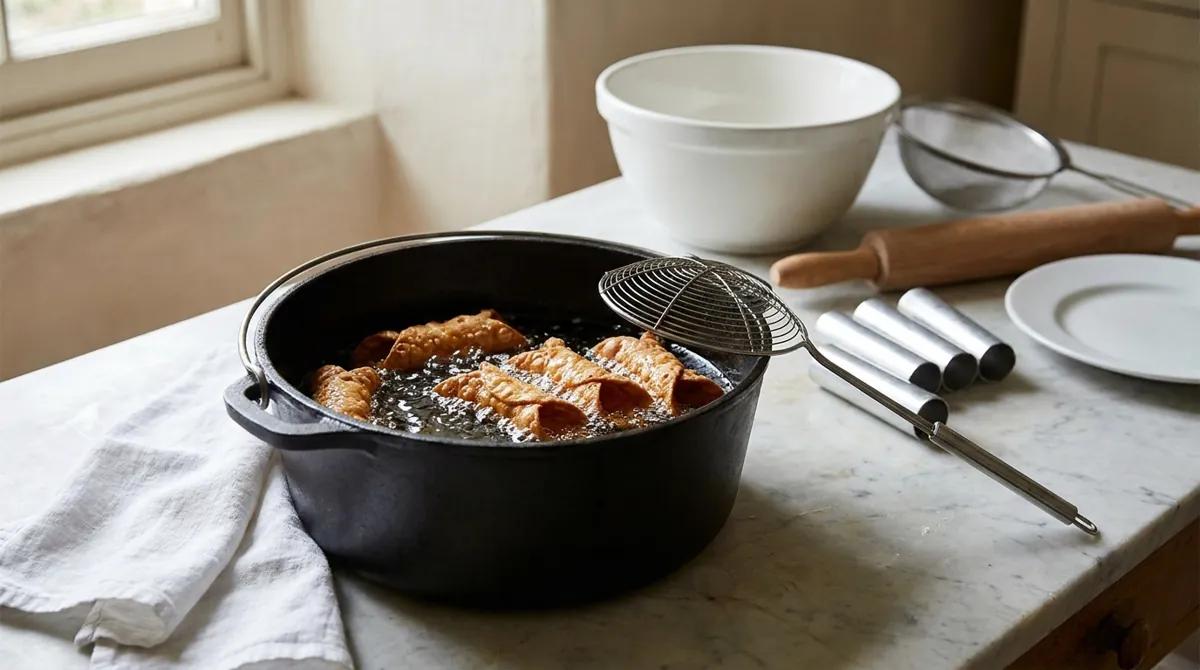
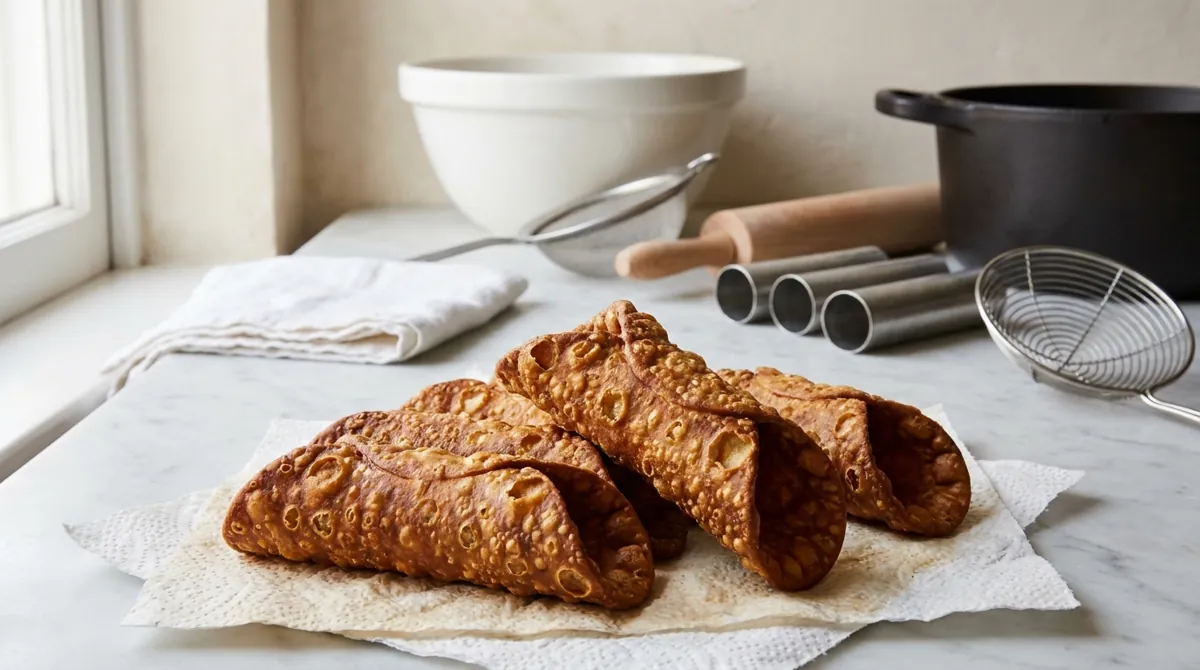
✓ What it should look like - Step 5
Mix the filling: beat the drained ricotta with 3/4 cup powdered sugar and a pinch of cinnamon until smooth, then stir in the chocolate chips. Chill 30 minutes.
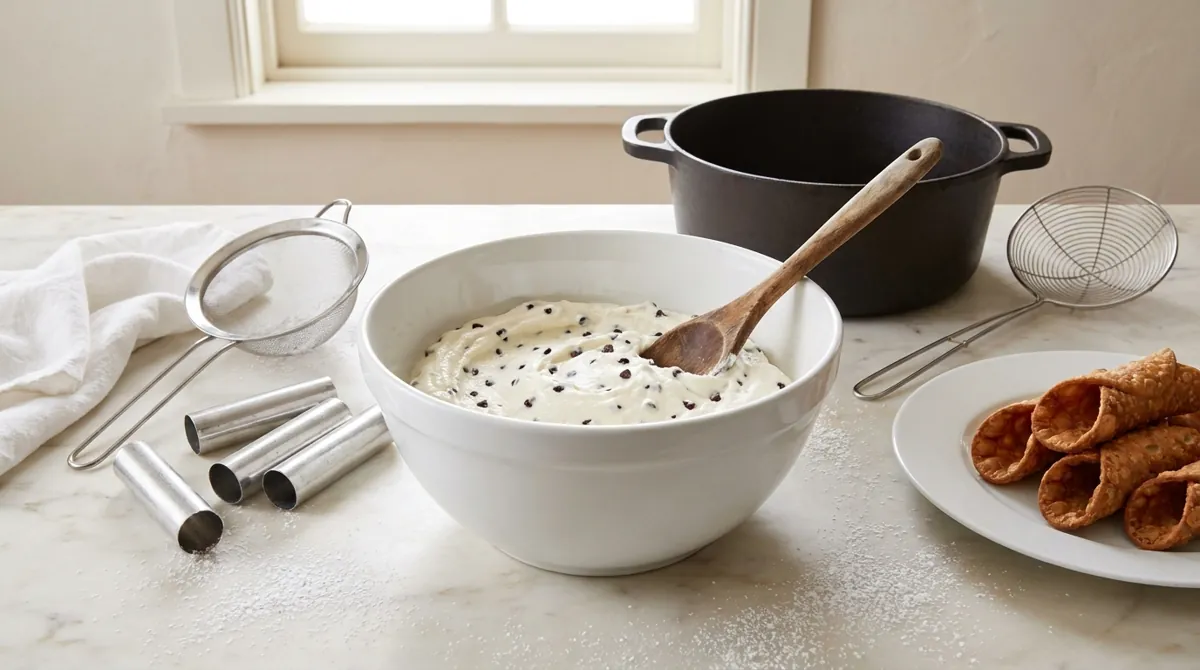
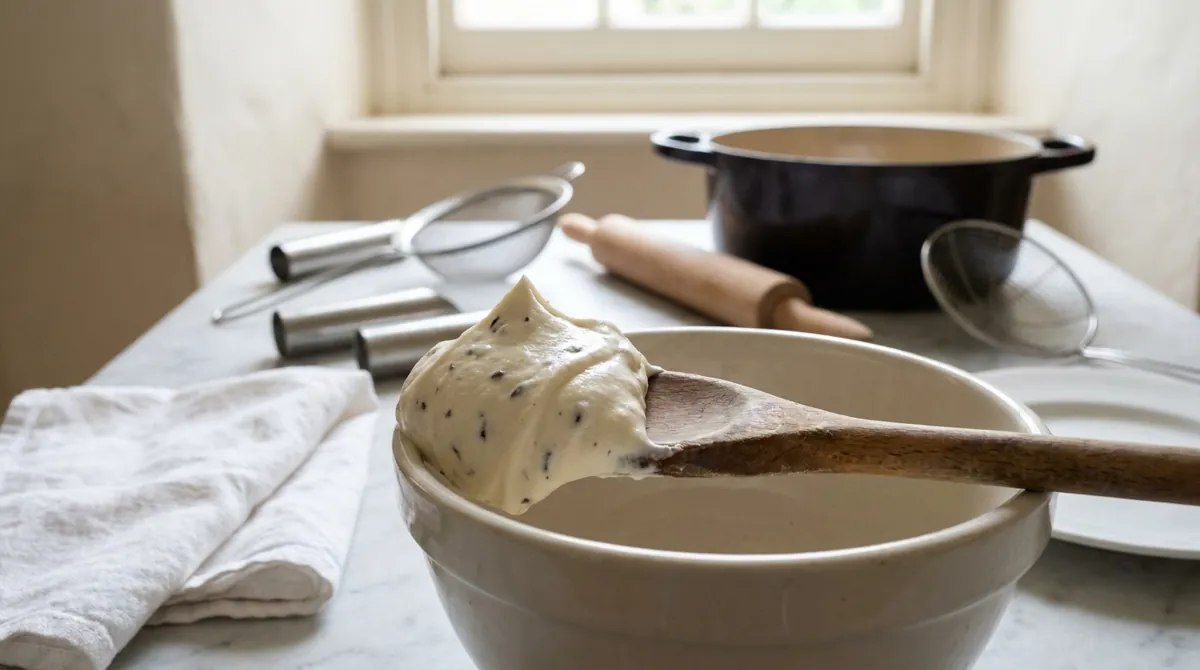
✓ What it should look like - Step 6
Fill the shells with the ricotta cream just before serving, using a piping bag or a spoon from each end. Dip the ends in chopped pistachios or chocolate chips and dust with powdered sugar.
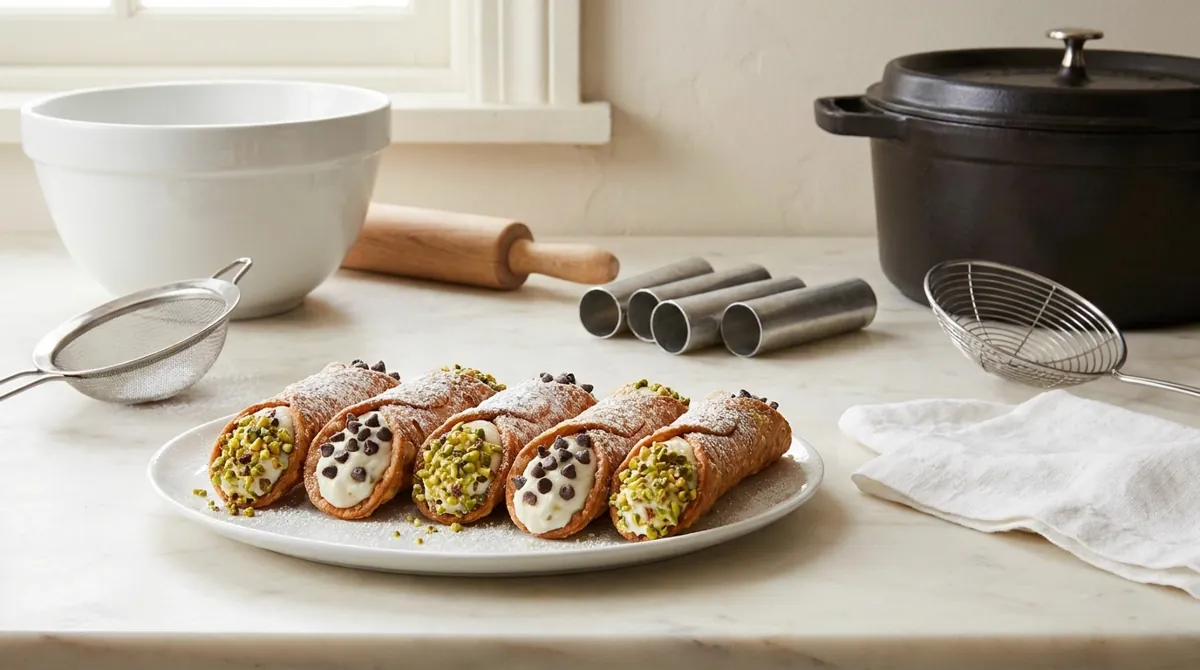
Cannoli
Serves 12 cannoli · 12 shells, about 4 inches long · 3 hr 15 min total
Shells
- 2 cups all-purpose flour (250 g)
- 2 tbsp granulated sugar (25 g)
- 1/2 tsp ground cinnamon
- 1/4 tsp fine salt
- 2 tbsp cold unsalted butter (28 g), or lard
- 1 large egg (50 g), beaten, plus 1 egg white for sealing
- 1/4 cup dry Marsala (60 g)
- Vegetable oil for frying (about 2 inches deep)
Filling
- 2 pounds whole-milk ricotta (900 g), drained overnight
- 3/4 cup powdered sugar (90 g), plus more for dusting
- 1/2 cup mini chocolate chips (80 g)
- 1/3 cup chopped pistachios (40 g), for the ends
Equipment: Large pot, Deep-fry or candy thermometer, Chef's knife and cutting board, Measuring cups and spoons, Mixing bowls, Whisk, Slotted spoon or spider, Fine-mesh strainer, Rolling pin, Piping bag (or a zip-top bag), Cheesecloth, Paper towels
Method
- The day before, line a sieve with cheesecloth over a bowl, spoon in 2 pounds of whole-milk ricotta and refrigerate it overnight so the whey drains out.
- Make the dough: in a large bowl whisk 2 cups flour, 2 tbsp sugar, 1/2 tsp cinnamon and 1/4 tsp salt. Rub in 2 tbsp butter, then stir in 1 beaten egg and about 1/4 cup Marsala until a stiff dough forms. Knead 5 minutes, wrap and rest 1 hour.
- Roll the dough very thin, about 1/16 inch. Cut 4-inch circles, wrap each loosely around a metal cannoli tube and seal the overlap with a dab of egg white.
- Heat 2 inches of vegetable oil to 350°F in a heavy pot. Fry the shells 2 to 3 minutes, until deep golden and blistered, turning once. Lift out with a spider, drain on paper towels and slide off the tubes once cool enough to touch.
- Mix the filling: beat the drained ricotta with 3/4 cup powdered sugar and a pinch of cinnamon until smooth, then stir in the chocolate chips. Chill 30 minutes.
- Fill the shells with the ricotta cream just before serving, using a piping bag or a spoon from each end. Dip the ends in chopped pistachios or chocolate chips and dust with powdered sugar.
Americanized house recipe, written for this site. History and regional variants: Wikipedia, "Cannoli" (Carnival origin, Palermo and Messina versus Caltanissetta claims, Arabic and Latin etymologies, Palermo orange, Catania pistachios, year-round staple). en.wikipedia.org. Ingredient list follows the source; the method is in our own words.
All sources (1)
Tips
- No cannoli tubes? Wrap the dough around a clean wooden dowel about 3/4 inch thick, or a foil-wrapped piece of PVC.
- Keep the oil at 350°F. Too cool and the shells soak up oil; too hot and they burn before they blister.
- Unfilled shells keep 3 days airtight at room temperature. Fill only what you will eat.
The rules people argue about
What the sources agree on, what they don't, and what is just a good story.
- Cannoli began in Caltanissetta. Disputed: one account places the origin there under Arab rule; Gaetano Basile attributes them to the Palermo and Messina areas as a Carnival treat. Neither is settled.
- The name comes from Arabic. Disputed: one theory derives it from qanawat, "tubes"; another traces it to Latin canneolus.
Meatballs of the World

Italian-American Meatballs
Big, tender meatballs braised for an hour in red sauce over spaghetti. The one most Americans grew up with.

Pallottine (Abruzzo Meatballs)
Tiny meatballs, smaller than a marble, tossed right through square spaghetti alla chitarra. No bread at all.

Swedish Meatballs (Köttbullar)
Small, soft meatballs browned in butter, in a cream sauce made from the same pan, with lingonberry jam on the plate.

Danish Frikadeller
Pork meatballs shaped with a spoon and fried slowly in butter, crusty outside and soft in the middle.

Königsberger Klopse
German meatballs that are never fried: poached, then served in a creamy white sauce with capers.

Spanish Albóndigas in Almond Saffron Sauce
The tapas bar classic: small meatballs in a golden sauce thickened with fried almonds and bread.

Mexican Albóndigas with Chipotle and Mint
Soft meatballs with rice and fresh mint inside, simmered in a smoky tomato and chipotle broth.

Izgara Köfte (Turkish Grilled Meatballs)
Small, flat meatballs kneaded hard, rested cold, and charred on a hot grill pan.

Lion's Head Meatballs
Big, soft pork meatballs, stirred into a sticky paste, fried to set, then braised in a savory sauce.

Chicken Tsukune
Japan's chicken meatball: kneaded sticky, grilled on skewers, glazed with sweet soy tare, dipped in egg yolk.