
Ceviche
Cubes of very fresh white fish cured for minutes in sharp lime juice with red onion, hot chili and cilantro, served ice cold with sweet potato and corn: Peru's national dish, bright, clean and ready in forty minutes.
 Edited by JP Lambiase
Change the estimate
Swaps change the price only: cook any meat to its own safe temperature. Where these numbers come from
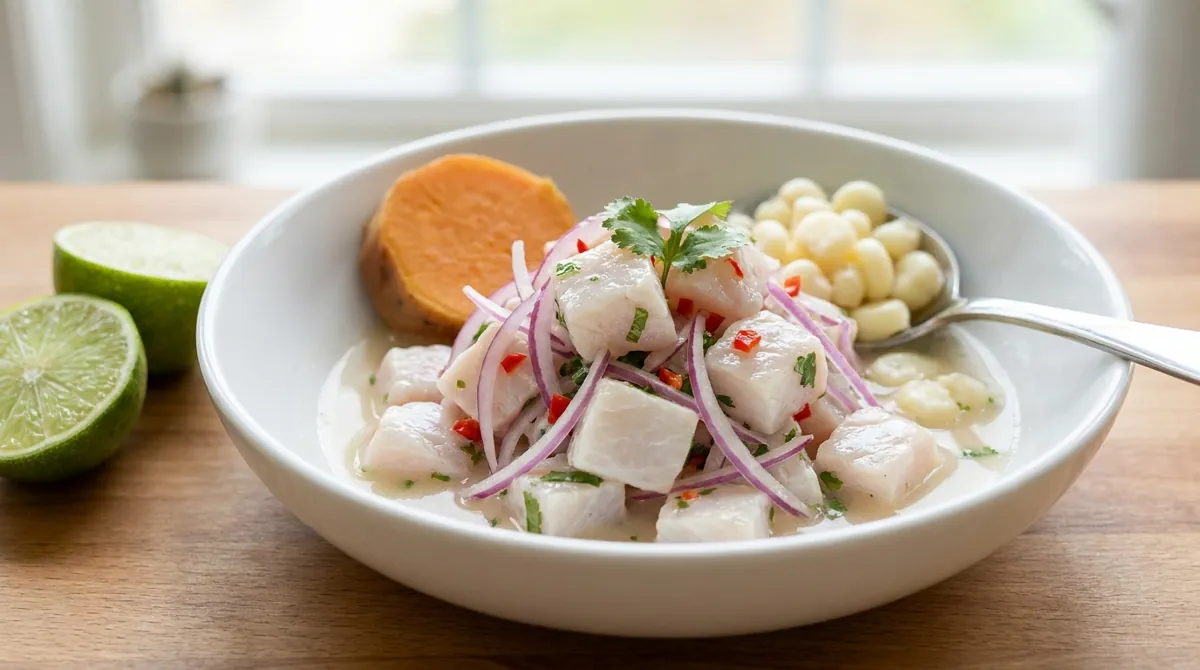
Ceviche is raw fish "cooked" without heat: the acid in citrus juice firms the flesh and turns it opaque, though it stays raw. Peru treats it as its national dish, and in December 2023 UNESCO added Peruvian ceviche to its list of Intangible Cultural Heritage of Humanity as part of Peruvian traditional cuisine.
Where it began is argued. Some point to pre-Hispanic coastal peoples eating raw fish with chili and salt, with ancient Moche or Inca cooks using sour fruit juice or chicha. Others credit Spanish cooks and their escabeche-style marinades, with Moorish roots, and still others claim Ecuador, Central America or Polynesia. What most sources agree on is that the modern dish took shape in colonial Peru once limes and onions arrived, and that Japanese immigrants and Peruvian-Japanese chefs in the 20th century shortened the cure from hours to minutes, which is how it is usually made today. The leftover marinade is called leche de tigre, "tiger's milk," and is served in a small glass on the side.
Why it works the kitchen science
Lime juice
The acid unwinds the fish proteins so the flesh turns firm and white, much like cooking, with no heat.
A short cure
15 minutes keeps the center tender, since fish left in acid for hours turns chalky and tough.
Cold everything
A chilled bowl, ice and chilled fish keep the texture clean and the dish safer to eat.
Soaked onion and a sweet side
The soak takes the harsh bite off the onion, and sweet potato and corn calm the heat and sourness.
🧰 You'll need 3 items
Everything the steps call for. Tick off what you have before you start.
Tools
Step by step
- Step 1
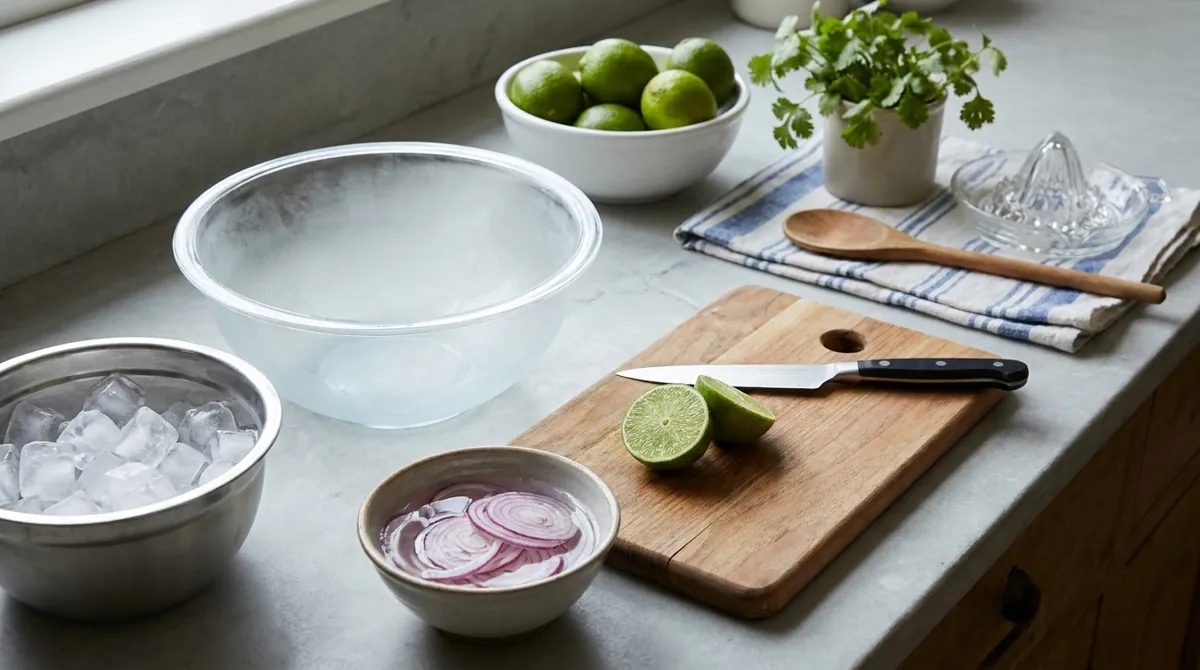
Chill a glass bowl in the freezer for 10 minutes. Soak the sliced red onion in cold water for 5 minutes, then drain it, so it is crisp and mild.
- Step 2
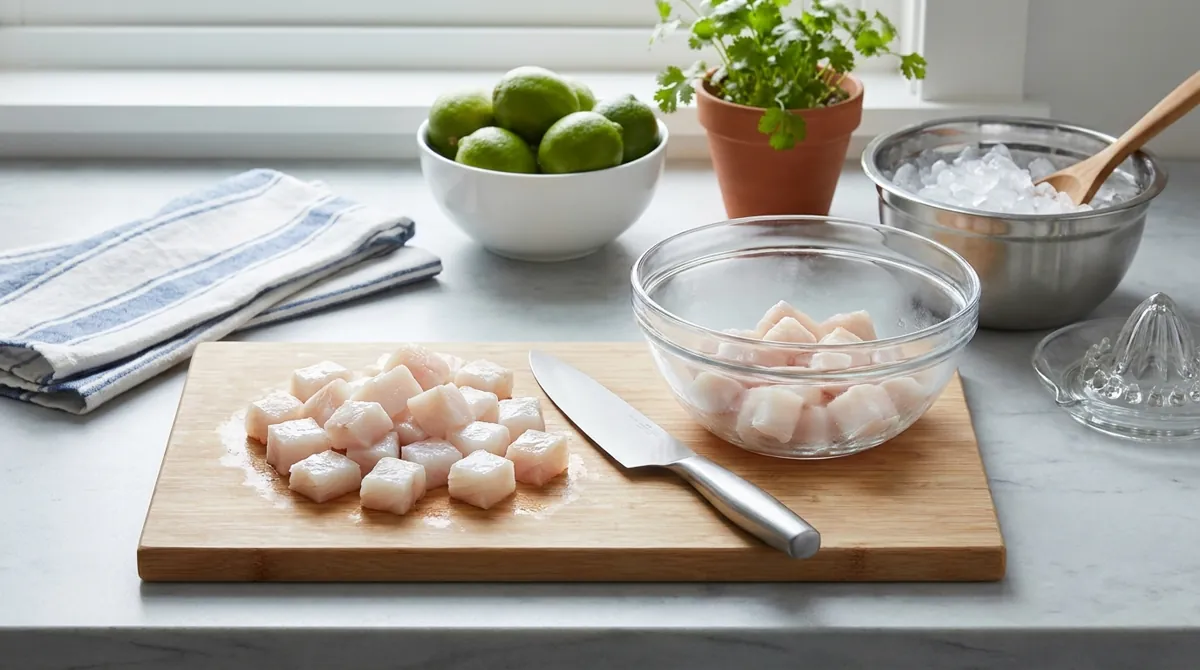
Cut the fish into 3/4 inch cubes, discarding any skin or dark bloodline, and keep it cold. Put the cubes in the chilled bowl.
- Step 3
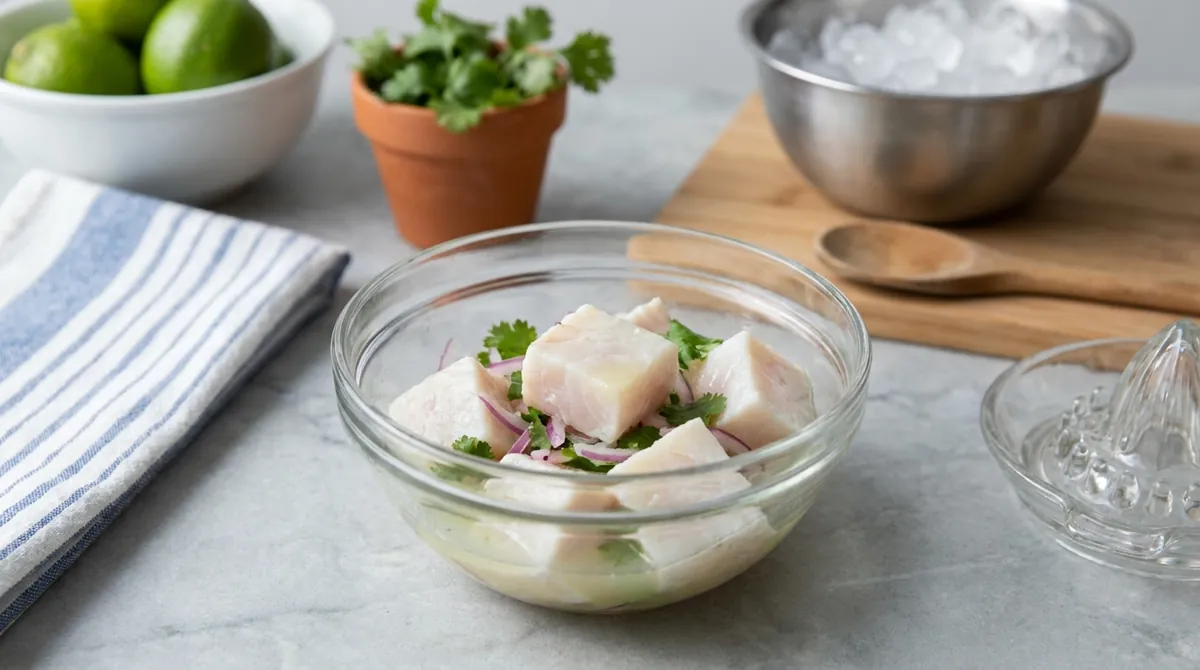
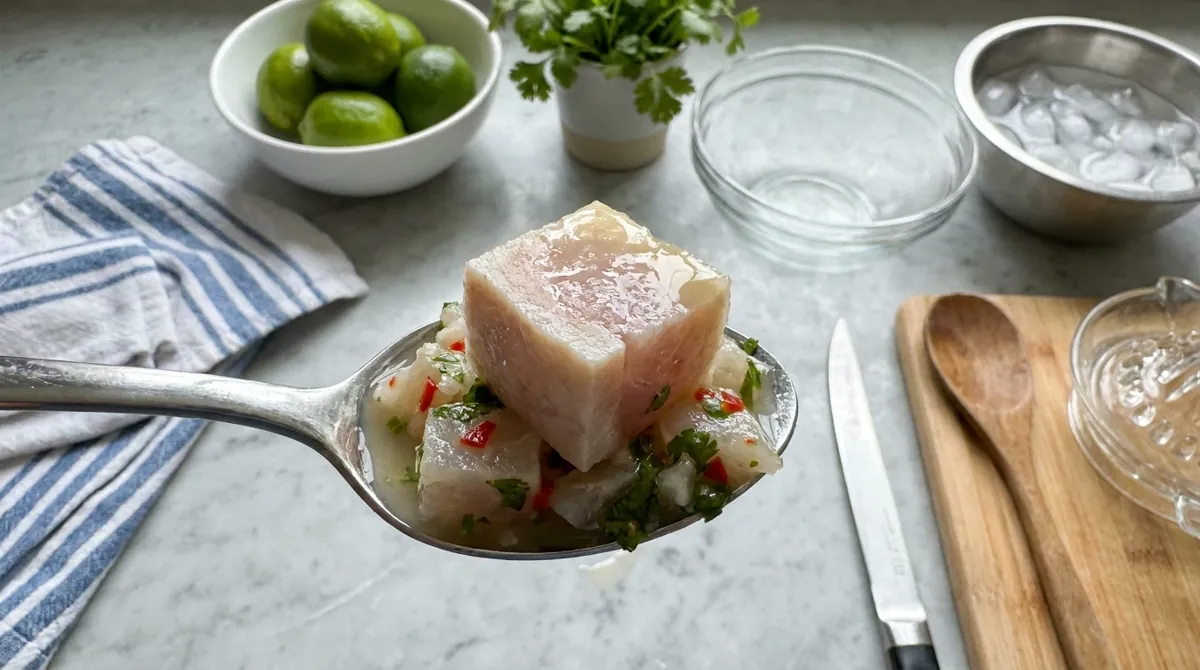
Add the salt and the lime juice, so the fish is just covered, and tuck a few ice cubes in. Cure in the refrigerator 15 minutes, until the outside of each cube is opaque white and the center is still slightly translucent.
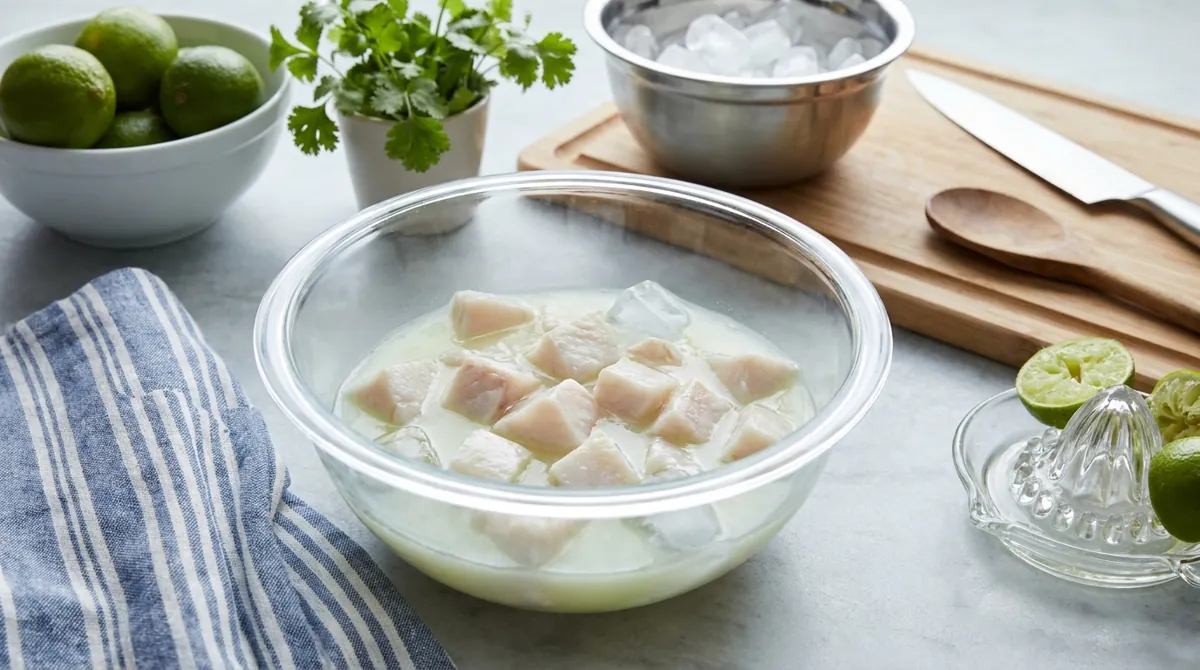
✓ What it should look like - Step 4
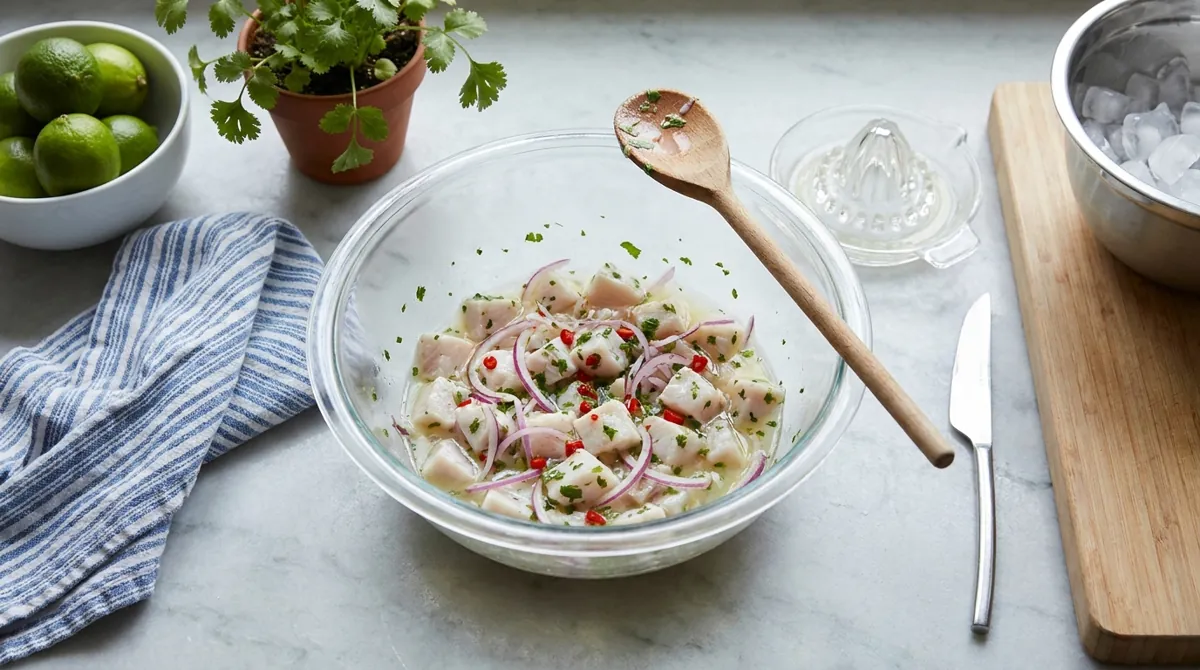
Remove the ice, then add the drained onion, chili and cilantro and stir gently. Taste the juice and add salt or lime as needed.
- Step 5
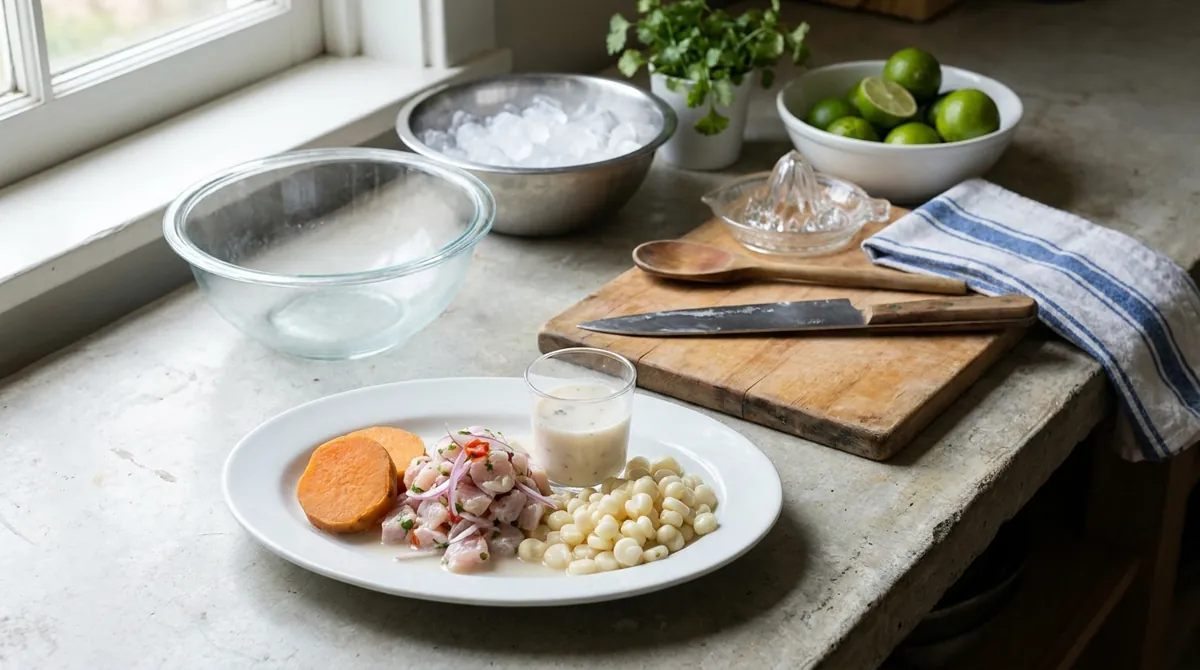
Spoon into chilled bowls with a little of the juice, and serve right away with slices of sweet potato and a spoon of corn.
✓ What it should look like
Ceviche
Serves 4 small plates · about 4 cups · 40 min total
- 1 lb very fresh skinless white fish fillet (454 g), such as sea bass, halibut or corvina, bought the same day
- 3/4 cup fresh lime juice (180 g), from about 8 to 10 limes
- 1/2 small red onion (80 g), sliced paper-thin
- 1 fresh hot chili (habanero, aji limo or serrano), seeded and minced
- 1/4 cup chopped fresh cilantro (10 g)
- 1 tsp fine salt, plus more to taste
- Ice cubes, a few
- To serve, optional: 1 sweet potato, boiled and sliced; 1 cup cooked large-kernel corn
Equipment: Chef's knife and cutting board, Measuring cups and spoons, Mixing bowls
Method
- Chill a glass bowl in the freezer for 10 minutes. Soak the sliced red onion in cold water for 5 minutes, then drain it, so it is crisp and mild.
- Cut the fish into 3/4 inch cubes, discarding any skin or dark bloodline, and keep it cold. Put the cubes in the chilled bowl.
- Add the salt and the lime juice, so the fish is just covered, and tuck a few ice cubes in. Cure in the refrigerator 15 minutes, until the outside of each cube is opaque white and the center is still slightly translucent.
- Remove the ice, then add the drained onion, chili and cilantro and stir gently. Taste the juice and add salt or lime as needed.
- Spoon into chilled bowls with a little of the juice, and serve right away with slices of sweet potato and a spoon of corn.
Americanized house recipe, written for this site, with quantities and the short cure checked against Eat Peru's ceviche recipe (cubed white fish, lime, red onion, hot pepper, cilantro, 20 to 30 minutes in the juice, served with sweet potato). History: Wikipedia, "Ceviche" (national dish, UNESCO 2023, disputed origins, 1820 first written use, Japanese influence, leche de tigre). Other cooks cure for an hour; this recipe uses 15 minutes for a tender center. eatperu.com. Ingredient list follows the source; the method is in our own words.
All sources (2)
Tips
- Buy the freshest fish you can, from a fishmonger who knows you will eat it raw, and keep it on ice until you cut it.
- Squeeze limes right before using; juice that sits turns bitter.
- Eat it within 30 minutes; the longer it sits the firmer it gets.
- Serve the leftover juice (leche de tigre) in small glasses.
- Raw fish is not advised for pregnant people, small children or anyone with a weakened immune system.
The rules people argue about
What the sources agree on, what they don't, and what is just a good story.
- Ceviche was invented in Peru. Disputed: Peru's claim is strong and UNESCO recognizes the Peruvian dish, but Ecuador, Spanish and Moorish marinade traditions and other coastal cultures also have claims, and no single inventor or date is documented.
Meatballs of the World

Italian-American Meatballs
Big, tender meatballs braised for an hour in red sauce over spaghetti. The one most Americans grew up with.

Pallottine (Abruzzo Meatballs)
Tiny meatballs, smaller than a marble, tossed right through square spaghetti alla chitarra. No bread at all.

Swedish Meatballs (Köttbullar)
Small, soft meatballs browned in butter, in a cream sauce made from the same pan, with lingonberry jam on the plate.

Danish Frikadeller
Pork meatballs shaped with a spoon and fried slowly in butter, crusty outside and soft in the middle.

Königsberger Klopse
German meatballs that are never fried: poached, then served in a creamy white sauce with capers.

Spanish Albóndigas in Almond Saffron Sauce
The tapas bar classic: small meatballs in a golden sauce thickened with fried almonds and bread.

Mexican Albóndigas with Chipotle and Mint
Soft meatballs with rice and fresh mint inside, simmered in a smoky tomato and chipotle broth.

Izgara Köfte (Turkish Grilled Meatballs)
Small, flat meatballs kneaded hard, rested cold, and charred on a hot grill pan.

Lion's Head Meatballs
Big, soft pork meatballs, stirred into a sticky paste, fried to set, then braised in a savory sauce.

Chicken Tsukune
Japan's chicken meatball: kneaded sticky, grilled on skewers, glazed with sweet soy tare, dipped in egg yolk.