
Char Siu
Pork shoulder marinated in hoisin, soy and five-spice, roasted until the edges char and glazed with honey: sticky, sweet and savory, the pork behind a thousand buns.
 Edited by JP Lambiase
Change the estimate
Swaps change the price only: cook any meat to its own safe temperature. Where these numbers come from
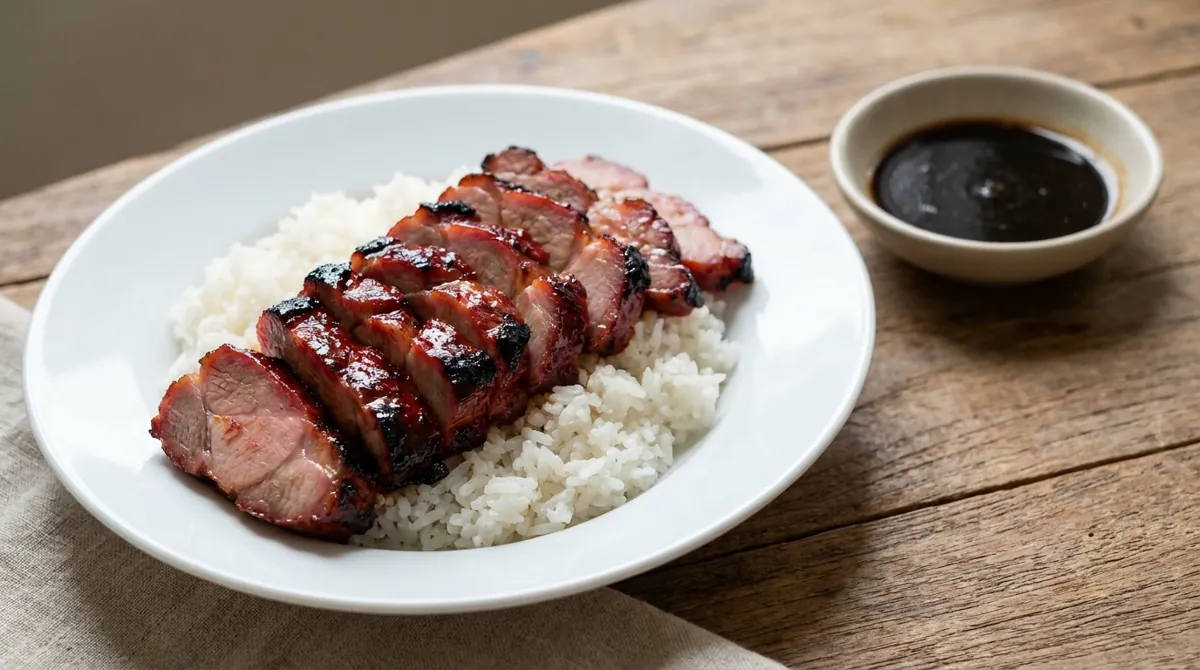
Char siu is Cantonese barbecue pork from Guangdong. The name means "fork roasted": strips of pork were once skewered on long forks and roasted over fire. The traditional cut is the boneless collar or shoulder, called mui tau, and the glossy glaze is maltose or honey. It is eaten over rice or noodles, and slices go into baked and steamed buns.
The classic red color came from red fermented bean curd and red yeast rice; today red food coloring is common, and optional.
Why it works the kitchen science
Pork shoulder
Its fat keeps the strips juicy through the long roast, where a lean loin would dry out.
Marinating overnight
The salt and sugar season the meat to the center.
The final honey and broil
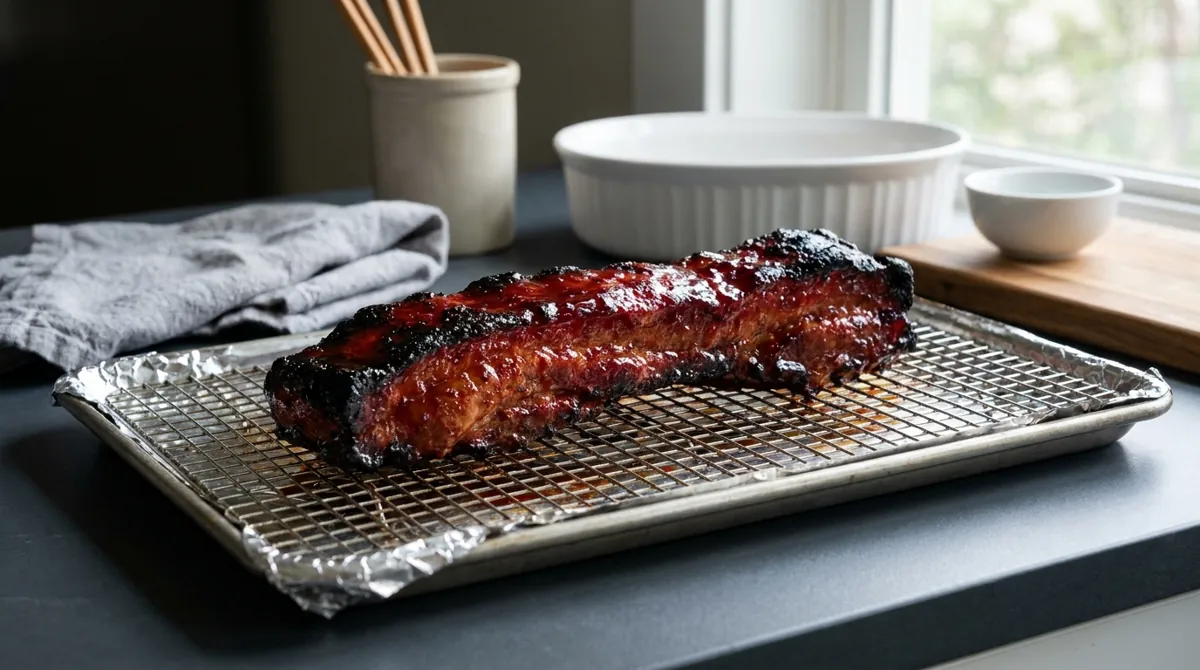
The sugar caramelizes into the sticky, lacquered, slightly charred edge that defines the dish.
🧰 You'll need 7 items
Everything the steps call for. Tick off what you have before you start.
Appliances
Pans and pots
Tools
Supplies
Step by step
- Step 1
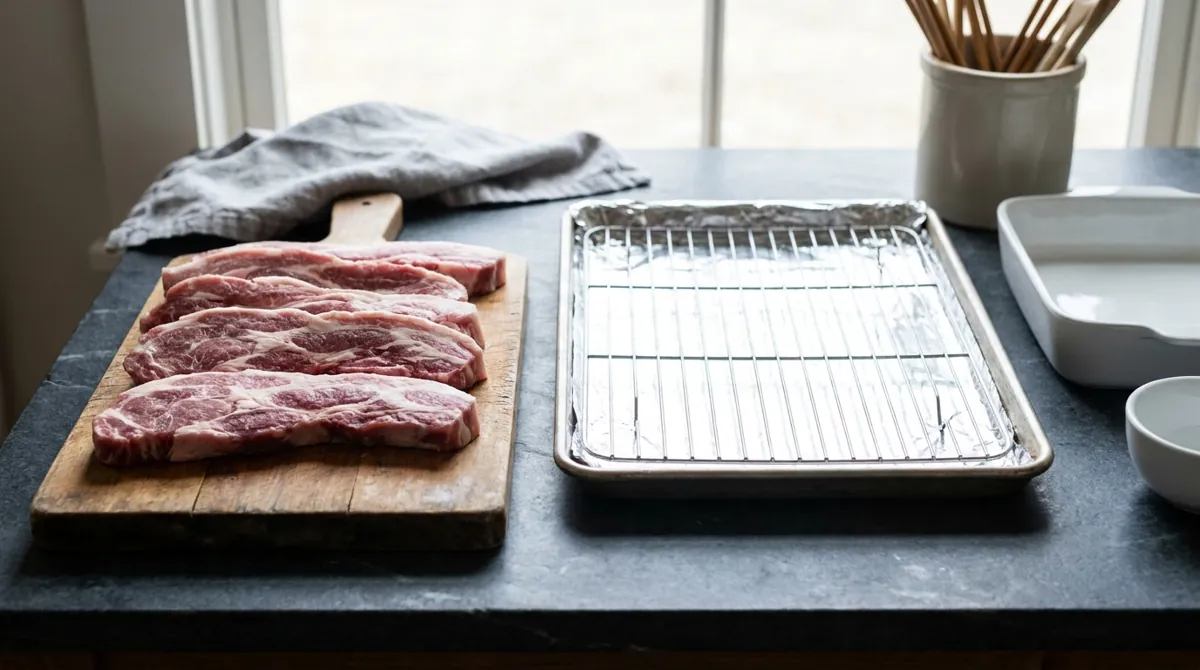
Cut the pork lengthwise into strips about 2 inches thick and 6 inches long. Trim any thick sinew but leave the fat.
- Step 2
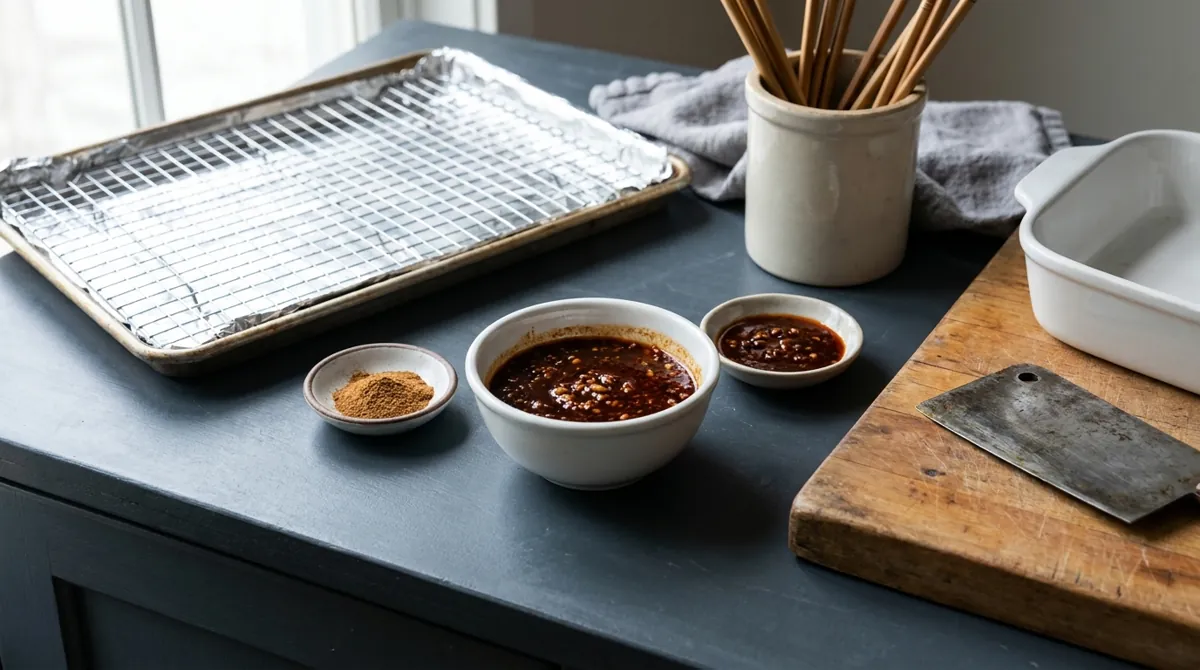
Stir together the hoisin, soy, sugar, wine, garlic, five-spice and 1 tbsp honey. Set aside 1/4 cup of it in a small dish for later.
- Step 3
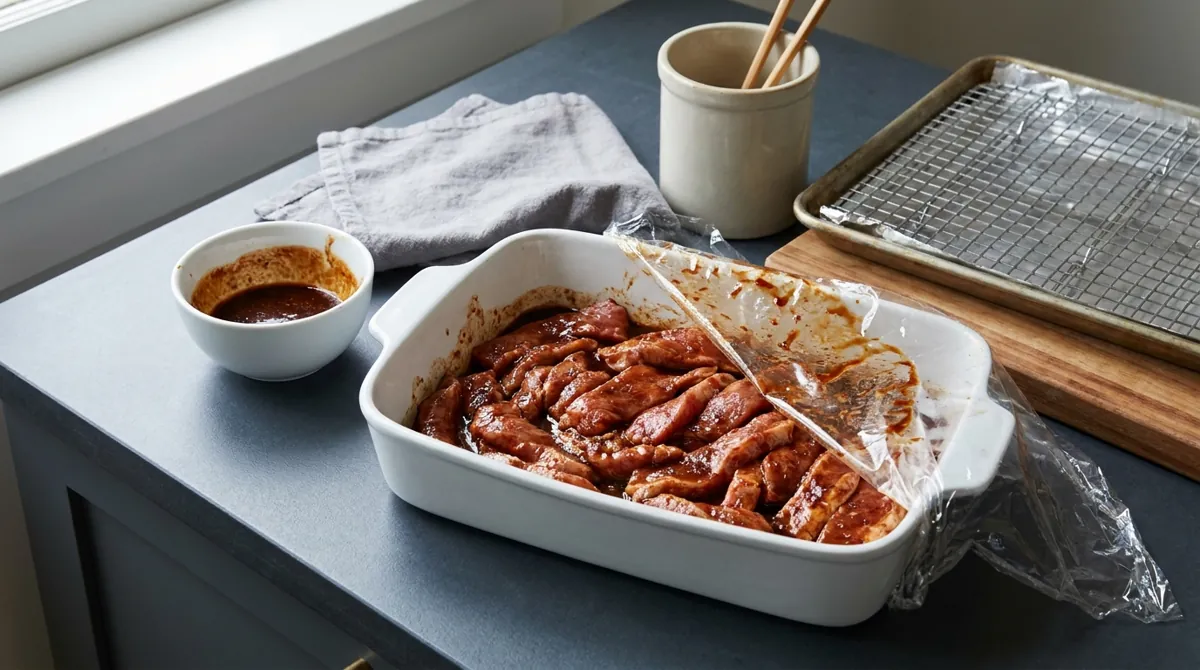
Coat the pork in the rest of the marinade in a dish, cover and refrigerate 8 to 24 hours.
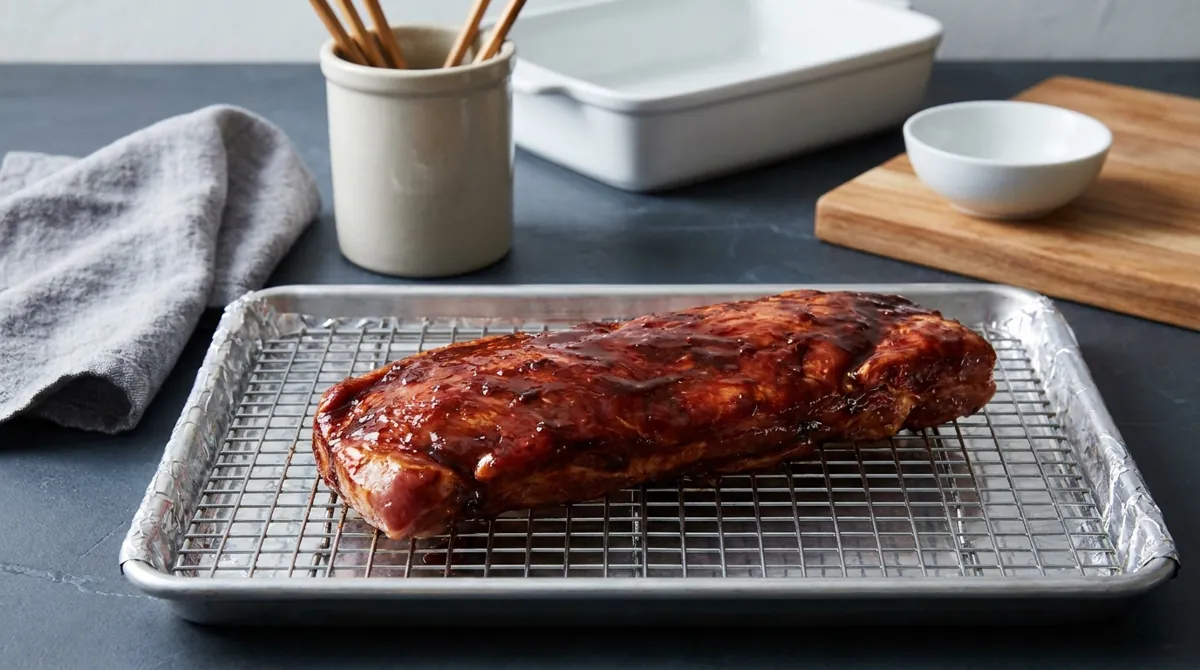
✓ What it should look like - Step 4
Heat the oven to 400°F. Set a wire rack over a foil-lined sheet pan with 1 cup of water in the pan. Lay the strips on the rack with space between them and roast 25 minutes.
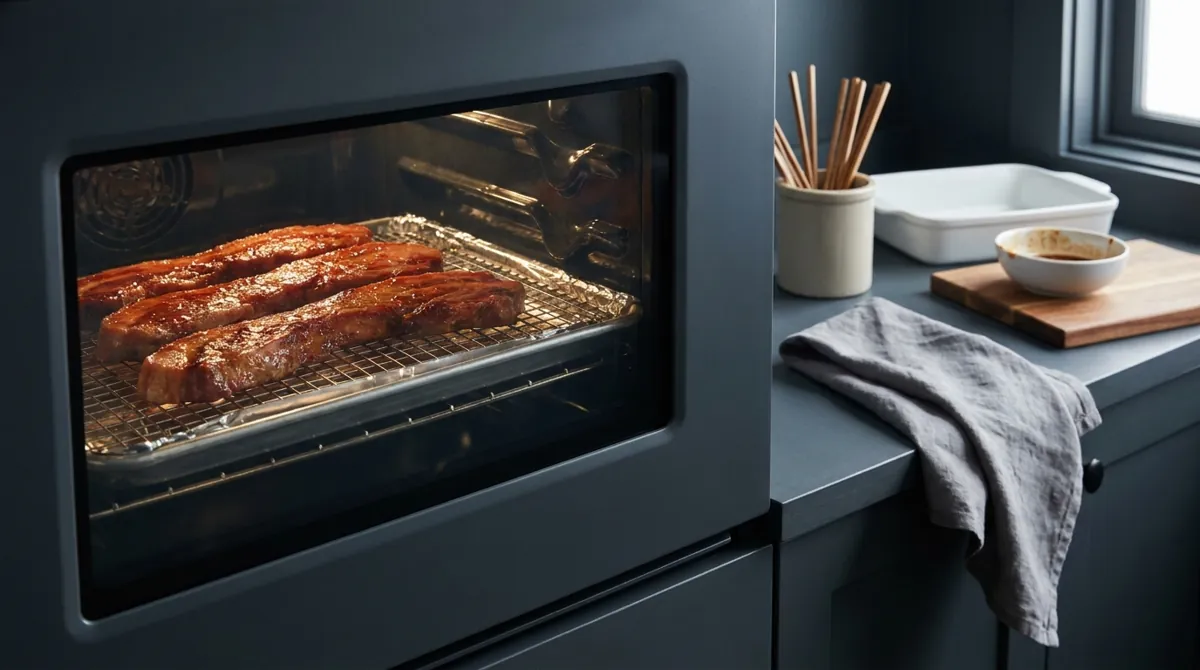
- Step 5
Brush the strips with the reserved marinade, turn them and roast another 20 minutes.
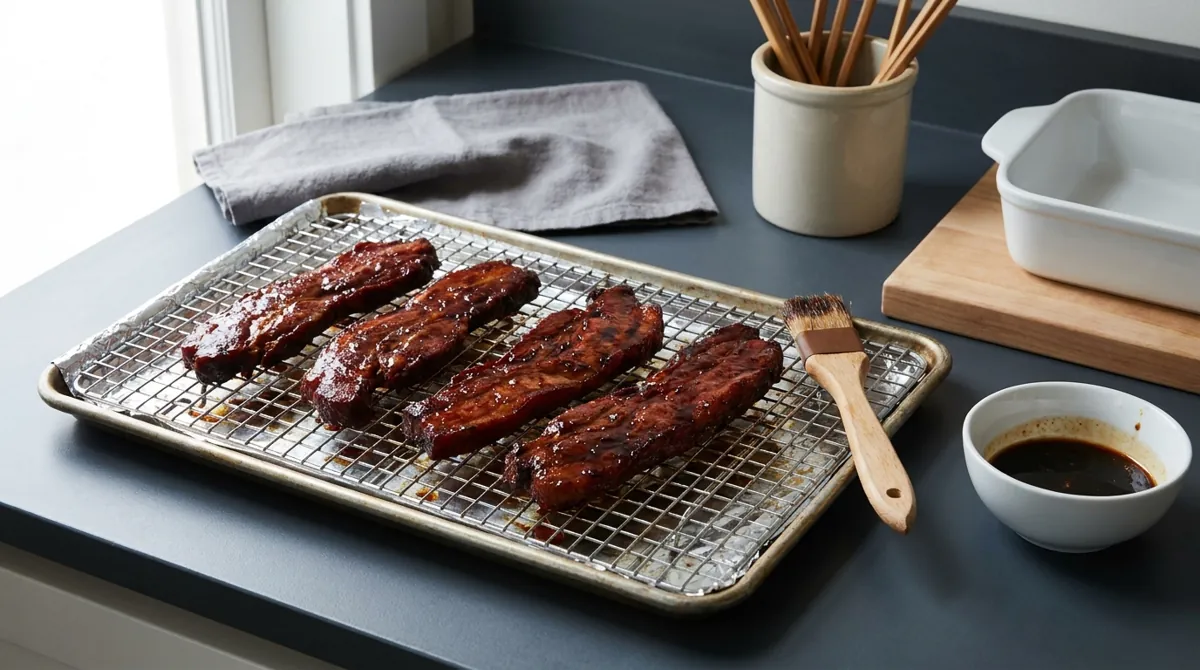
- Step 6
Brush with the honey glaze and broil 3 to 5 minutes, watching closely, until the edges are dark and charred in spots and the inside reaches at least 160°F.
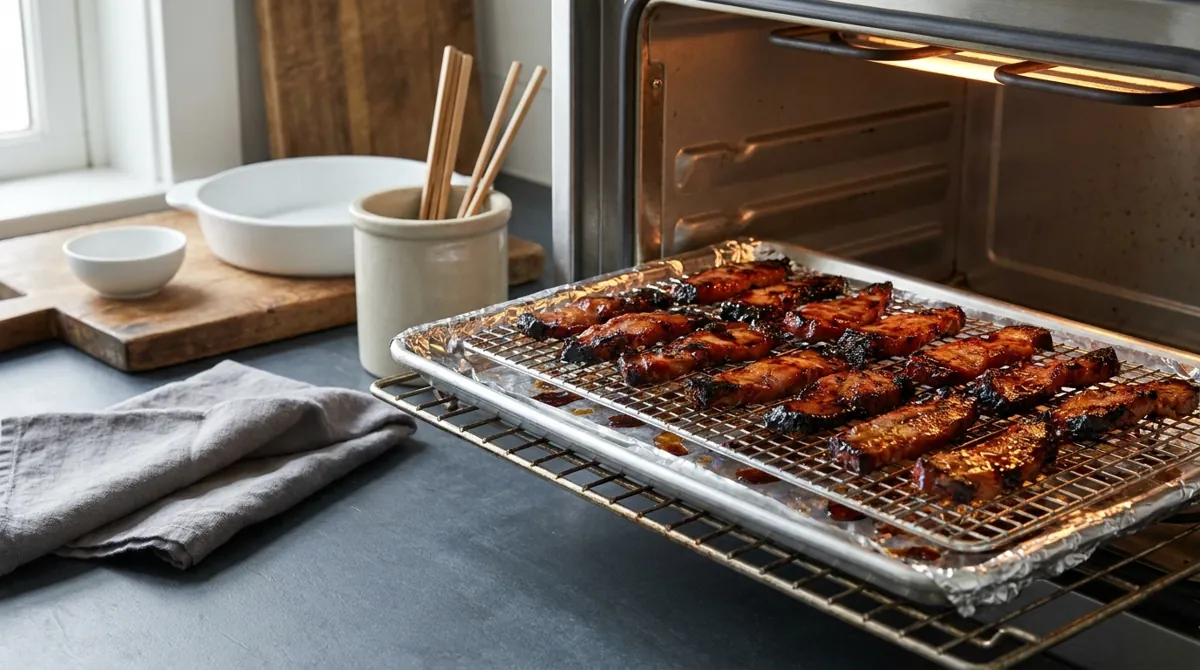
✓ What it should look like - Step 7
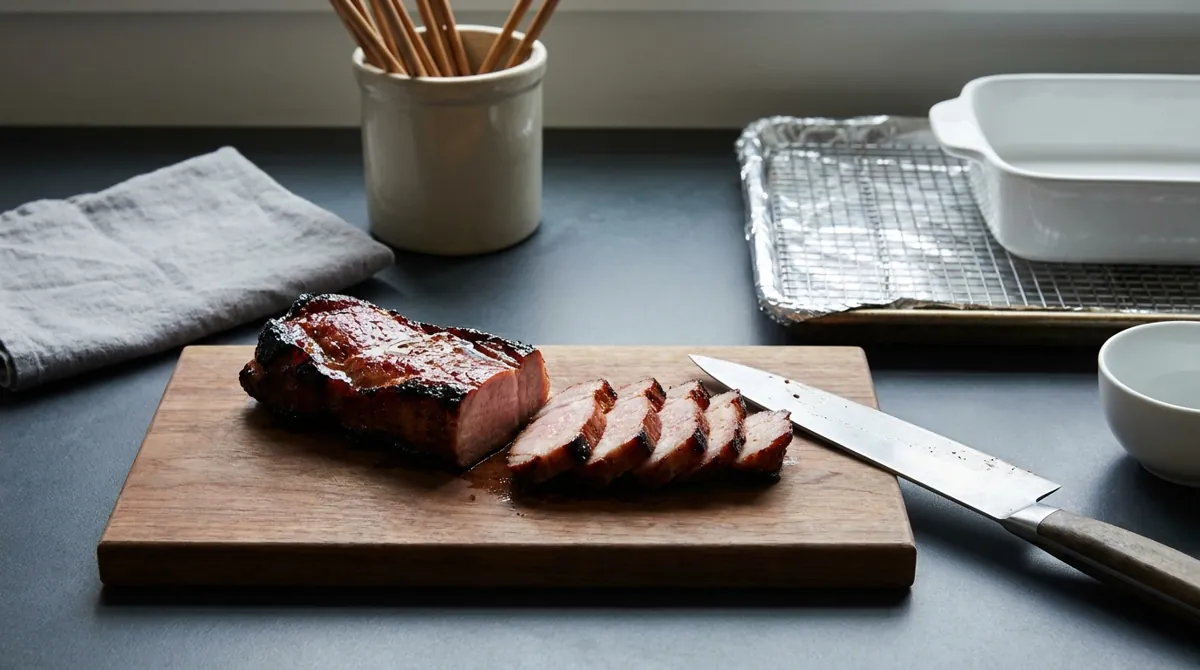
Rest 10 minutes, then slice across the grain.
Char Siu
Serves 6 · about 6 strips · 1 hr 15 min total
Pork
- 2 lb boneless pork shoulder (900 g), cut lengthwise into strips about 2 inches thick
Marinade
- 3 tbsp hoisin sauce (60 g)
- 3 tbsp soy sauce (45 g)
- 2 tbsp sugar (25 g)
- 2 tbsp Shaoxing wine or dry sherry (30 g)
- 3 cloves garlic, grated (9 g)
- 1 tsp five-spice powder
- 1 tbsp honey (20 g)
- Optional: a few drops of red food coloring
Glaze
- 2 tbsp honey (40 g), mixed with 1 tbsp hot water
Equipment: Oven, Rimmed baking sheet, Wire rack, Chef's knife and cutting board, Measuring cups and spoons, Pastry brush, Aluminum foil
Method
- Cut the pork lengthwise into strips about 2 inches thick and 6 inches long. Trim any thick sinew but leave the fat.
- Stir together the hoisin, soy, sugar, wine, garlic, five-spice and 1 tbsp honey. Set aside 1/4 cup of it in a small dish for later.
- Coat the pork in the rest of the marinade in a dish, cover and refrigerate 8 to 24 hours.
- Heat the oven to 400°F. Set a wire rack over a foil-lined sheet pan with 1 cup of water in the pan. Lay the strips on the rack with space between them and roast 25 minutes.
- Brush the strips with the reserved marinade, turn them and roast another 20 minutes.
- Brush with the honey glaze and broil 3 to 5 minutes, watching closely, until the edges are dark and charred in spots and the inside reaches at least 160°F.
- Rest 10 minutes, then slice across the grain.
Americanized house recipe, written for this site. History and method: Wikipedia, "Char siu" (Guangdong origin, "fork roasted", mui tau cut, red coloring, hoisin and five-spice marinade, maltose or honey glaze). Safe doneness: USDA minimum for pork is 145°F. en.wikipedia.org. Ingredient list follows the source; the method is in our own words.
All sources (1)
Tips
- Water in the pan catches drips and keeps the oven from smoking.
- Do not baste with marinade that touched raw pork unless you boil it; that is why a portion is set aside first.
- It keeps 4 days refrigerated and freezes well sliced.
The rules people argue about
What the sources agree on, what they don't, and what is just a good story.
- The right cut. Disputed: mui tau (collar or shoulder) is traditional; belly gives a fattier result, loin a leaner one, and some high-end shops use Iberian pork.
Meatballs of the World

Italian-American Meatballs
Big, tender meatballs braised for an hour in red sauce over spaghetti. The one most Americans grew up with.

Pallottine (Abruzzo Meatballs)
Tiny meatballs, smaller than a marble, tossed right through square spaghetti alla chitarra. No bread at all.

Swedish Meatballs (Köttbullar)
Small, soft meatballs browned in butter, in a cream sauce made from the same pan, with lingonberry jam on the plate.

Danish Frikadeller
Pork meatballs shaped with a spoon and fried slowly in butter, crusty outside and soft in the middle.

Königsberger Klopse
German meatballs that are never fried: poached, then served in a creamy white sauce with capers.

Spanish Albóndigas in Almond Saffron Sauce
The tapas bar classic: small meatballs in a golden sauce thickened with fried almonds and bread.

Mexican Albóndigas with Chipotle and Mint
Soft meatballs with rice and fresh mint inside, simmered in a smoky tomato and chipotle broth.

Izgara Köfte (Turkish Grilled Meatballs)
Small, flat meatballs kneaded hard, rested cold, and charred on a hot grill pan.

Lion's Head Meatballs
Big, soft pork meatballs, stirred into a sticky paste, fried to set, then braised in a savory sauce.

Chicken Tsukune
Japan's chicken meatball: kneaded sticky, grilled on skewers, glazed with sweet soy tare, dipped in egg yolk.