
Chicken Adobo
Chicken braised in vinegar, soy sauce, garlic and black pepper until the sauce turns sticky and glossy: the Philippines' unofficial national dish, one pot, and it keeps for days.
🍳Cook alongOne move at a time, with real timers
 Edited by JP Lambiase
Change the estimate
Swaps change the price only: cook any meat to its own safe temperature. Where these numbers come from
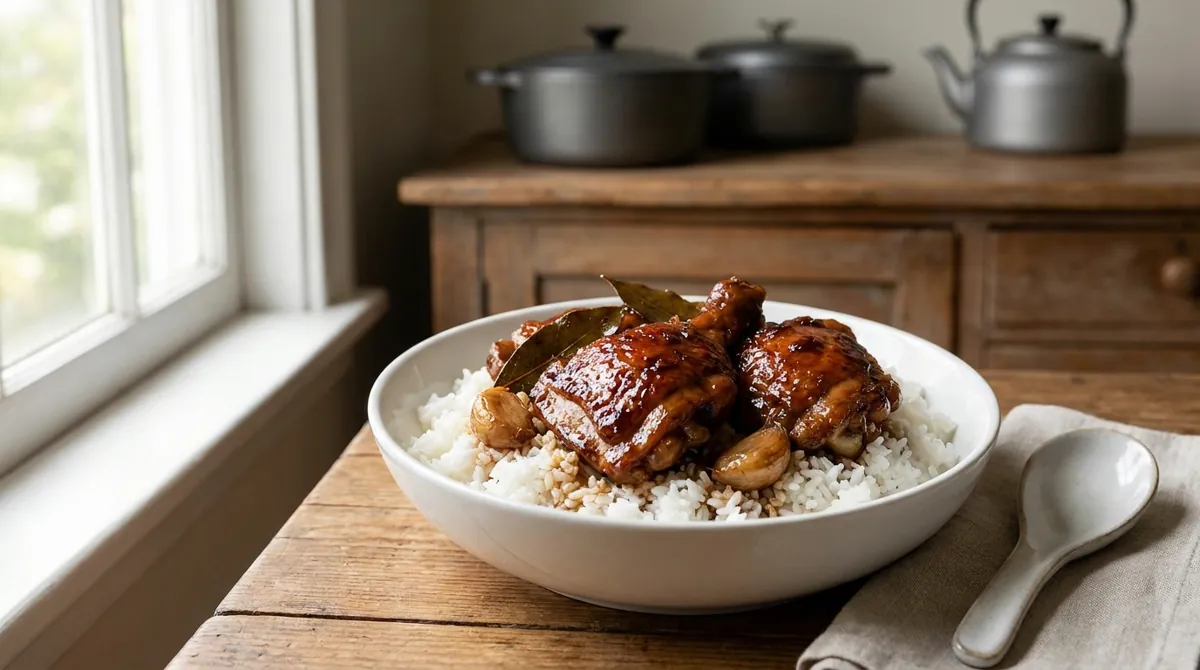
Adobo is a Philippine cooking method as much as a recipe: meat simmered in vinegar, salt or soy sauce, garlic, peppercorns and bay leaves. Spaniards in the late 1500s named it adobo because it looked like their own marinade of that name, but Philippine sources and Wikipedia describe it as indigenous and developed independently: its core ingredients (vinegar, soy sauce or fish sauce, peppercorns, garlic, bay leaves) are all native to Southeast Asia, and traditional versions use no chilies, paprika, oregano or tomatoes. Cooks still argue about every other detail.
The result is characteristically salty and sour, and often a little sweet.
Why it works the kitchen science
Vinegar and soy together
The vinegar tenderizes and brightens, the soy salts and darkens; together they make the balance of sour and salty that defines adobo.
Not stirring while the vinegar comes to a boil
Many Filipino cooks say it cooks off the harsh edge of the vinegar. Many also say it makes no difference.
Reducing the sauce
Boiled down, it becomes glossy and clings to the chicken instead of being thin and sharp.
Browning at the end
It gives crisp skin that the braise alone cannot.
🧰 You'll need 4 items
Everything the steps call for. Tick off what you have before you start.
Pans and pots
Tools
Step by step
- Step 1
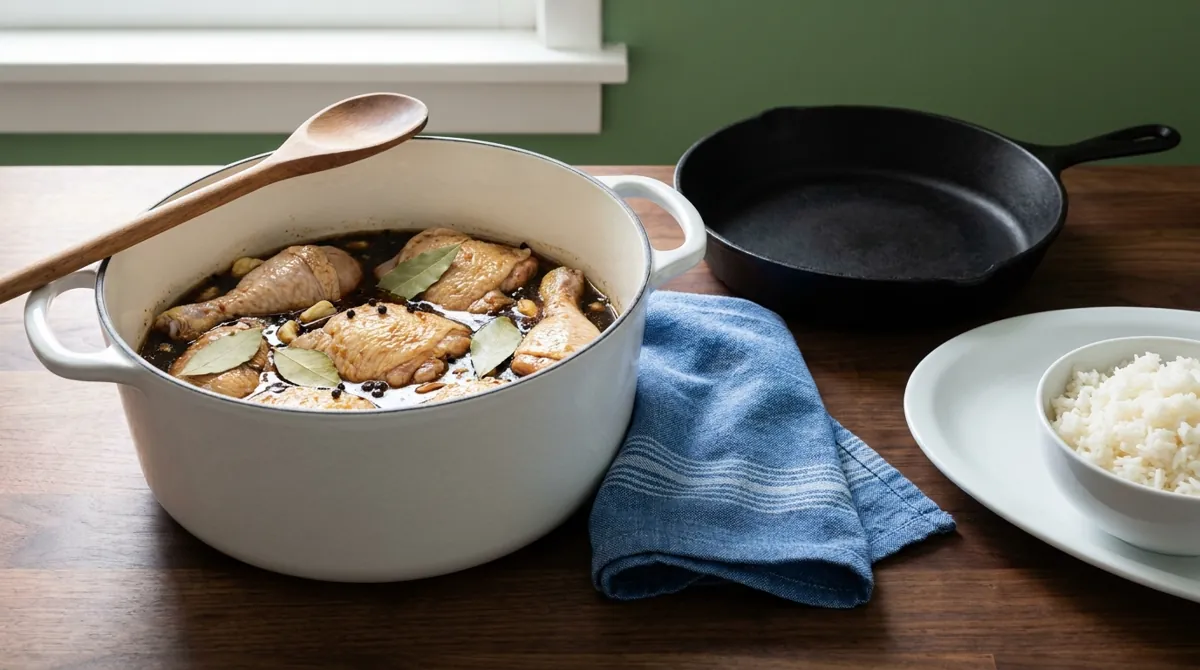
In a large pot or Dutch oven, combine the chicken, soy sauce, vinegar, garlic, peppercorns and bay leaves. Marinate 30 minutes at room temperature, turning the chicken once.
- Step 2
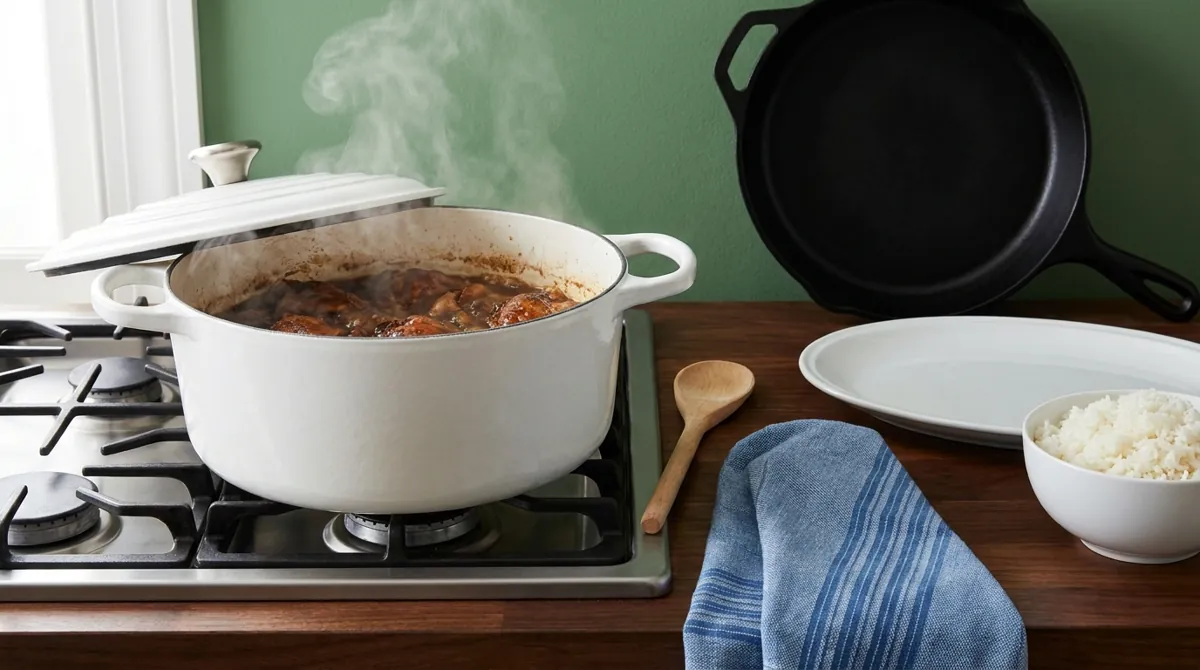
Add the water and bring to a boil over medium-high heat without stirring. Reduce to a simmer, cover and cook 25 minutes, turning the chicken once halfway.
- Step 3
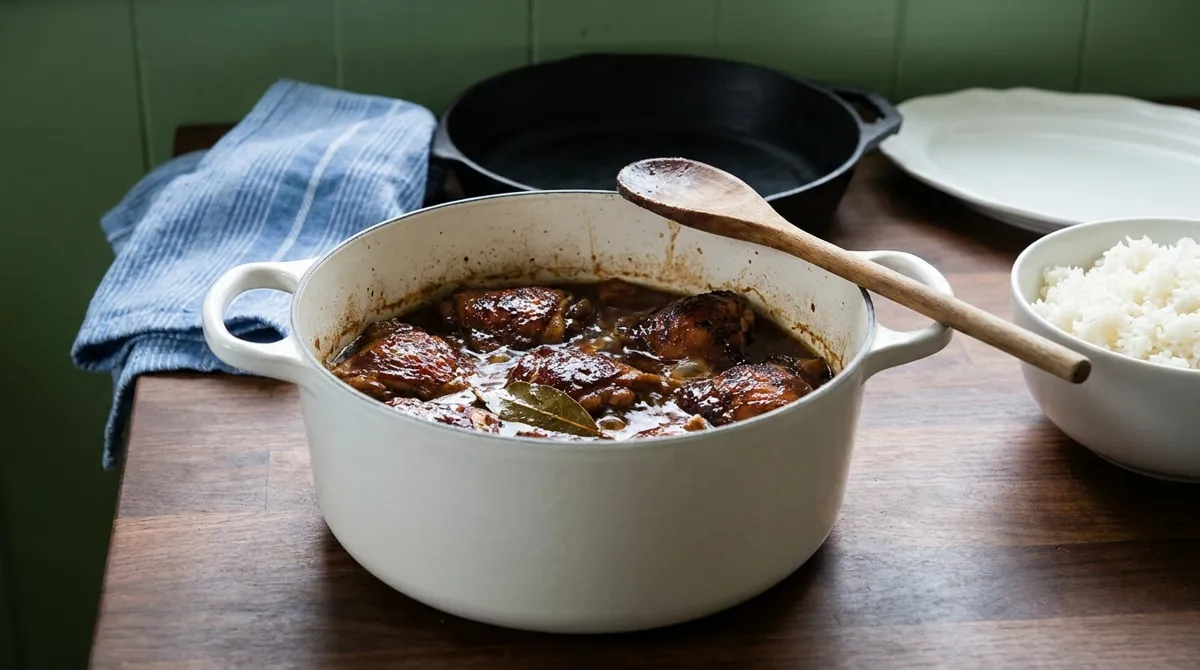
Uncover, add the brown sugar if you like it, and simmer 12 to 15 minutes, until the sauce is reduced by about half and glossy and the chicken is tender (175°F at the thickest part).
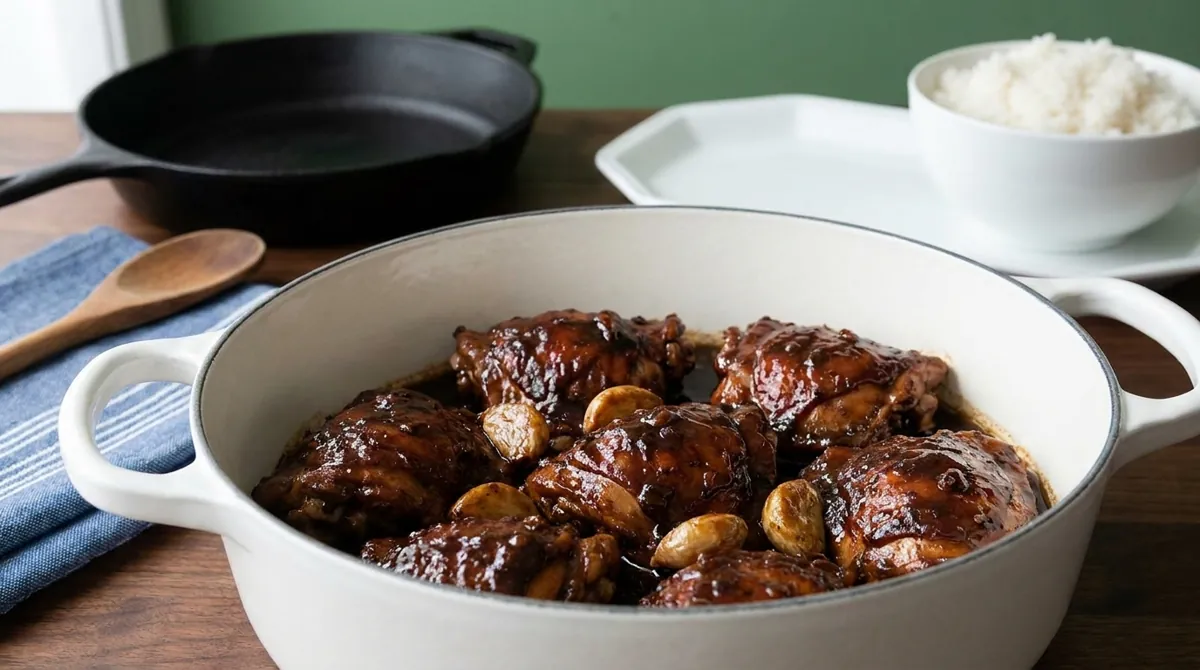
✓ What it should look like - Step 4
Heat the oil in a large skillet over medium-high heat. Lift the chicken out of the sauce, skin side down, and brown 3 to 4 minutes until the skin is deep golden and crisp, then turn and brown 1 to 2 minutes more.
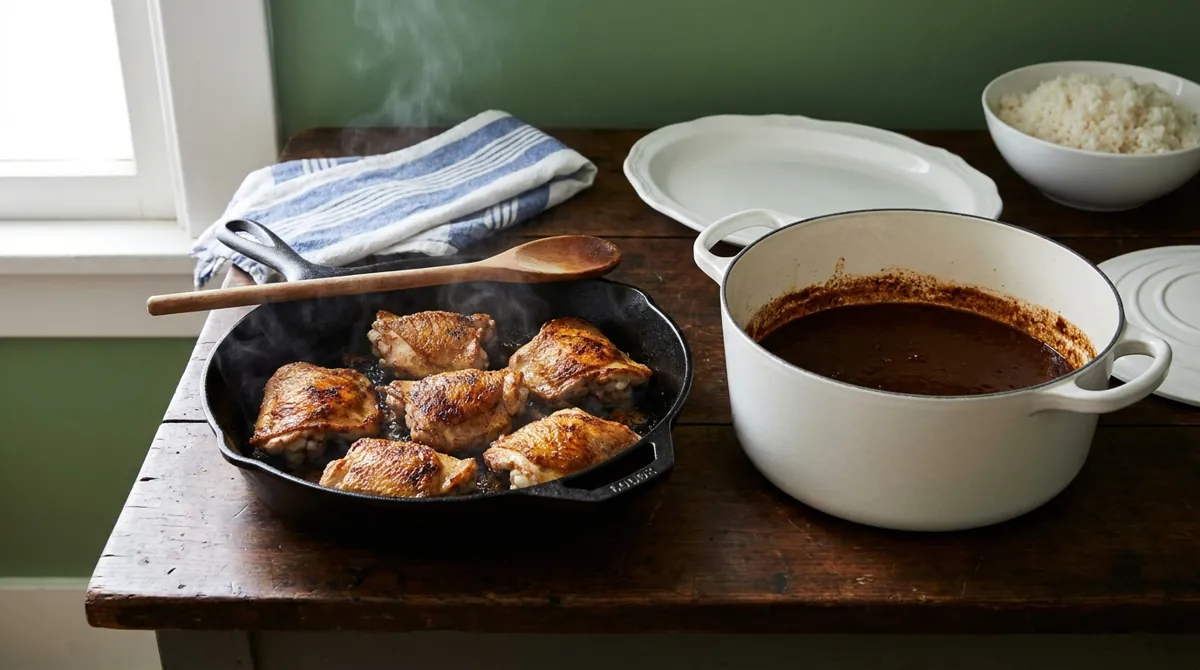
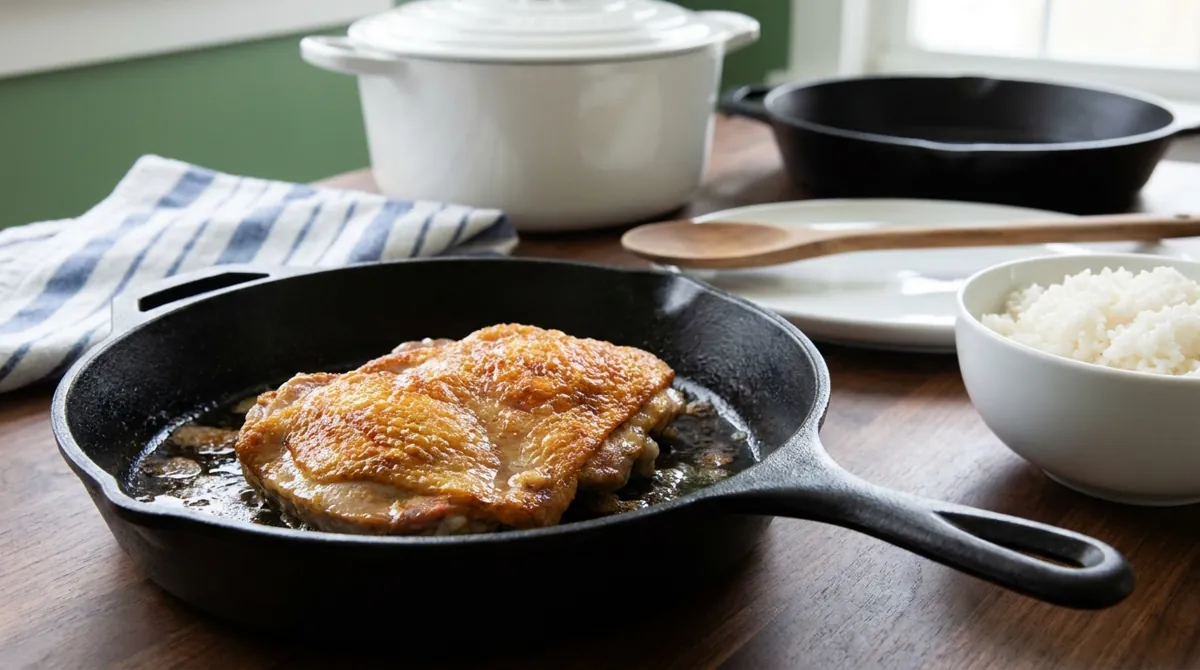
✓ What it should look like - Step 5
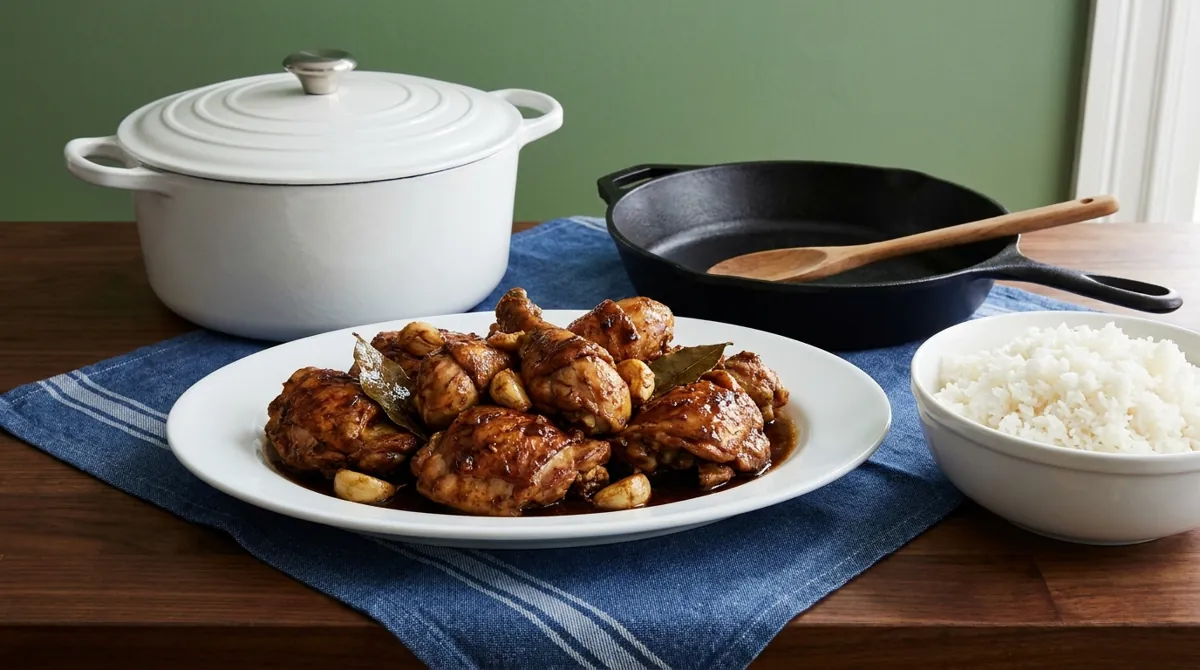
Return the chicken to the pot with the sauce, or spoon the sauce over it on a platter. Serve with steamed white rice.
Chicken Adobo
Serves 4 · about 8 pieces of chicken with sauce · 1 hr 30 min total
- 3 pounds bone-in, skin-on chicken thighs and drumsticks (1.4 kg; about 1 kg meat and skin)
- 1/2 cup soy sauce (140 g)
- 1/2 cup white or cane vinegar (120 g)
- 1 head garlic, about 10 cloves, smashed (30 g)
- 1 tsp whole black peppercorns
- 3 bay leaves
- 1 cup water
- 1 tbsp brown sugar (13 g), optional
- 1 tbsp neutral oil (14 g)
- Steamed white rice, to serve
Equipment: Dutch oven, Large pot, Large skillet, Measuring cups and spoons
Method
- In a large pot or Dutch oven, combine the chicken, soy sauce, vinegar, garlic, peppercorns and bay leaves. Marinate 30 minutes at room temperature, turning the chicken once.
- Add the water and bring to a boil over medium-high heat without stirring. Reduce to a simmer, cover and cook 25 minutes, turning the chicken once halfway.
- Uncover, add the brown sugar if you like it, and simmer 12 to 15 minutes, until the sauce is reduced by about half and glossy and the chicken is tender (175°F at the thickest part).
- Heat the oil in a large skillet over medium-high heat. Lift the chicken out of the sauce, skin side down, and brown 3 to 4 minutes until the skin is deep golden and crisp, then turn and brown 1 to 2 minutes more.
- Return the chicken to the pot with the sauce, or spoon the sauce over it on a platter. Serve with steamed white rice.
Americanized house recipe, written for this site. History and ingredients: Wikipedia, "Adobo" (indigenous Philippine method, named by Spanish colonists, vinegar, soy sauce or fish sauce, garlic, peppercorns, bay leaves; variants such as adobong gata with coconut milk). en.wikipedia.org. Ingredient list follows the source; the method is in our own words.
All sources (1)
Tips
- Adobo gets better overnight. Cool it, refrigerate and reheat gently. It keeps 4 days.
- Use a vinegar made from cane or coconut for a softer sourness; plain distilled white vinegar also works.
- Make it with coconut milk (adobong gata): stir in 1/2 cup at the reduction step.
The rules people argue about
What the sources agree on, what they don't, and what is just a good story.
- Adobo is Spanish. Disputed: Spanish colonists named it after their own marinade, but Philippine and Wikipedia accounts describe the method as indigenous and developed independently; the name is Spanish, the dish is not.
- Real adobo uses soy sauce. Disputed: salt or fish sauce was the older seasoning; soy is now the common home version, and the "white adobo" without it is also traditional.
- Do not stir until the vinegar boils. Folklore, maybe: it is repeated everywhere as a rule, and many cooks swear by it, but it is not settled by a source.
Meatballs of the World

Italian-American Meatballs
Big, tender meatballs braised for an hour in red sauce over spaghetti. The one most Americans grew up with.

Pallottine (Abruzzo Meatballs)
Tiny meatballs, smaller than a marble, tossed right through square spaghetti alla chitarra. No bread at all.

Swedish Meatballs (Köttbullar)
Small, soft meatballs browned in butter, in a cream sauce made from the same pan, with lingonberry jam on the plate.

Danish Frikadeller
Pork meatballs shaped with a spoon and fried slowly in butter, crusty outside and soft in the middle.

Königsberger Klopse
German meatballs that are never fried: poached, then served in a creamy white sauce with capers.

Spanish Albóndigas in Almond Saffron Sauce
The tapas bar classic: small meatballs in a golden sauce thickened with fried almonds and bread.

Mexican Albóndigas with Chipotle and Mint
Soft meatballs with rice and fresh mint inside, simmered in a smoky tomato and chipotle broth.

Izgara Köfte (Turkish Grilled Meatballs)
Small, flat meatballs kneaded hard, rested cold, and charred on a hot grill pan.

Lion's Head Meatballs
Big, soft pork meatballs, stirred into a sticky paste, fried to set, then braised in a savory sauce.

Chicken Tsukune
Japan's chicken meatball: kneaded sticky, grilled on skewers, glazed with sweet soy tare, dipped in egg yolk.