
Chicken Katsu (Hawaii Plate Lunch)
A panko chicken cutlet fried golden and drizzled with sweet-tangy katsu sauce, served the Hawaii way: two scoops of rice and a scoop of creamy macaroni salad.
 Edited by JP Lambiase
Change the estimate
Swaps change the price only: cook any meat to its own safe temperature. Where these numbers come from
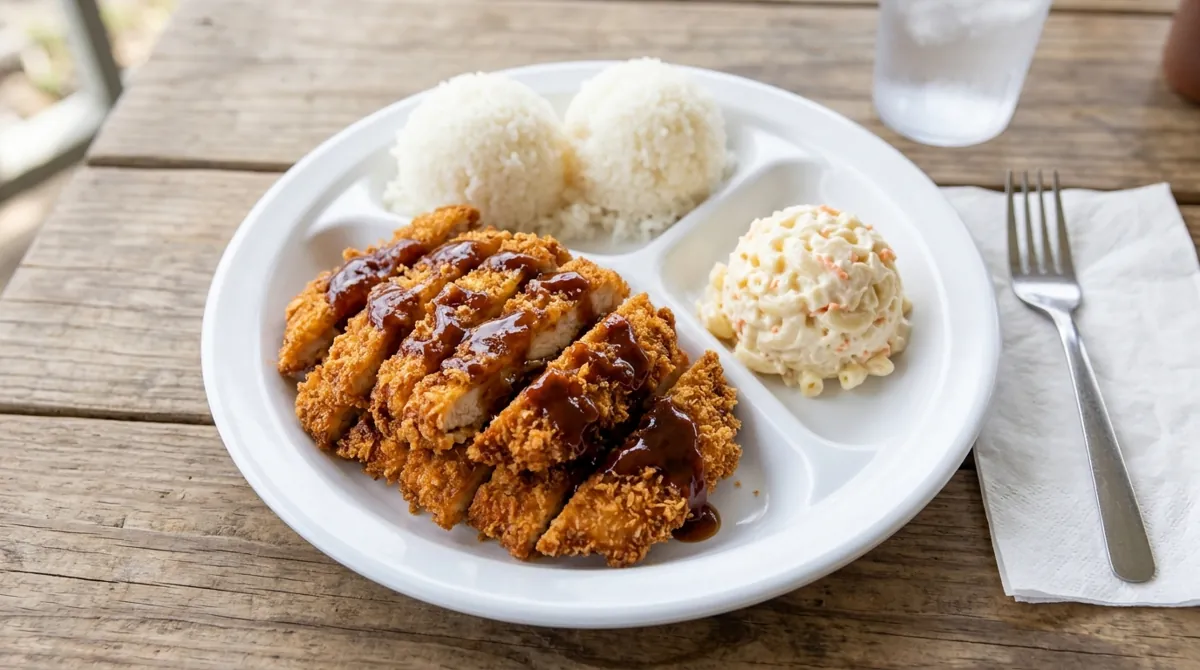
Chicken katsu on a Hawaii plate lunch is a Japanese cutlet that went local. The plate lunch itself is a Hawaii meal: a hot entree with two scoops of white rice and a scoop of American-style macaroni salad. Wikipedia says its origin is disputed. One view, from a University of Hawaii professor, is that it grew out of the Japanese bento; the meal took recognizable form in the 1880s among plantation workers from China, Japan, Portugal and the Philippines, and macaroni salad and cabbage were added later. It then moved to lunch wagons for construction workers and to local restaurants, and to the mainland, with the L&L chain's 1999 expansion into California as one marker.
Chicken katsu, a boneless breast breaded in panko, is one of the entrees on the plate, alongside teriyaki and kalbi. The Hawaii katsu sauce is a thinner, sweeter, ketchup-and-Worcestershire sauce than the thick tonkatsu sauce of Japan.
Why it works the kitchen science
Pounded to an even thickness
The thin cutlet cooks through before the crust over-browns.
Panko
The airy flakes give a crunchy shell that holds up to the sauce.
Shallow frying at 350°f
The cutlets brown in minutes, and the oil is easy to manage on a stove.
A thinner sauce with ketchup and sugar
It soaks into the rice and the crust, and the sweet-tangy bite cuts the fry.
Soft macaroni and a lot of mayonnaise
The cool creamy salad is the contrast to the hot crisp chicken, and the soft pasta takes the dressing.
🧰 You'll need 8 items
Everything the steps call for. Tick off what you have before you start.
Pans and pots
Tools
Step by step
- Step 1
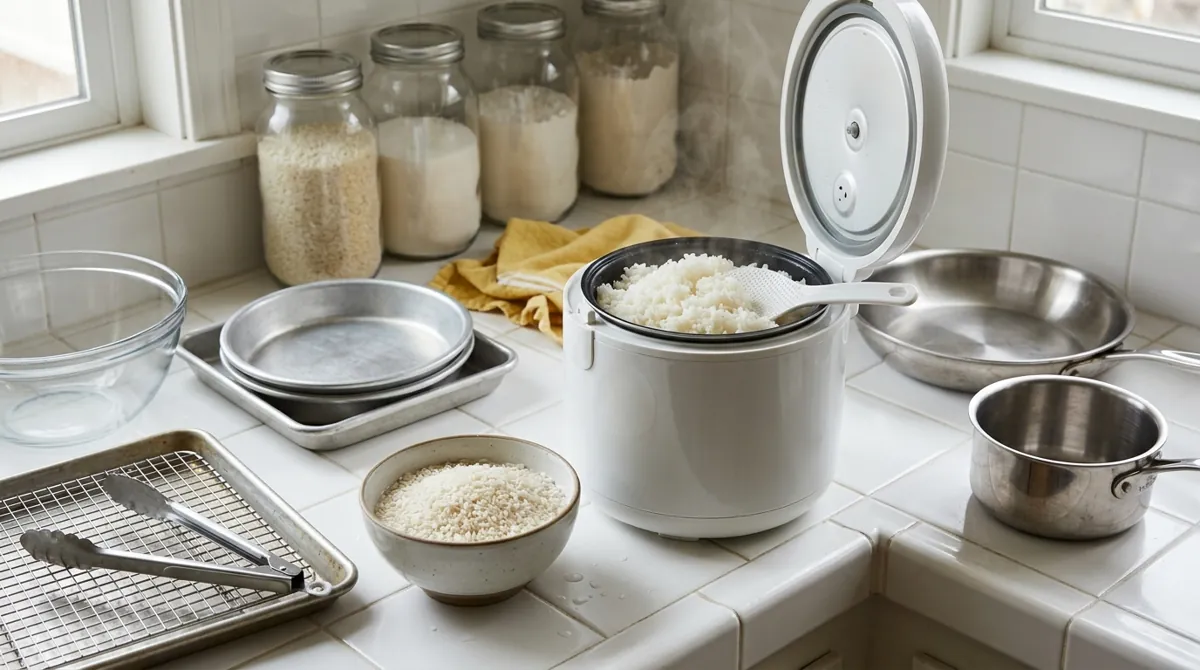
Rinse the rice until the water runs nearly clear, then cook it in a rice cooker or covered pot with 2 1/2 cups water, and let it steam 10 minutes after it finishes.
- Step 2
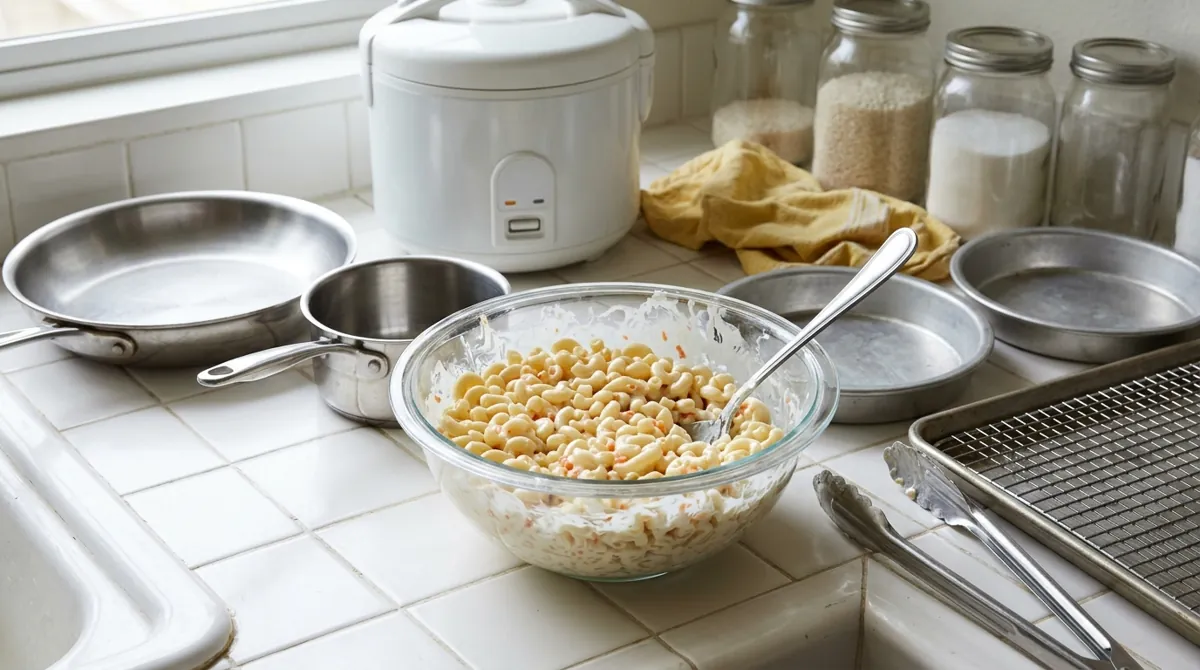
Boil the macaroni in salted water about 2 minutes past the package time, until quite soft, which is the Hawaii way. Drain, rinse in cold water, and mix with the mayonnaise, milk, carrot, onion, salt and pepper. Chill until serving; it thickens as it sits.
- Step 3
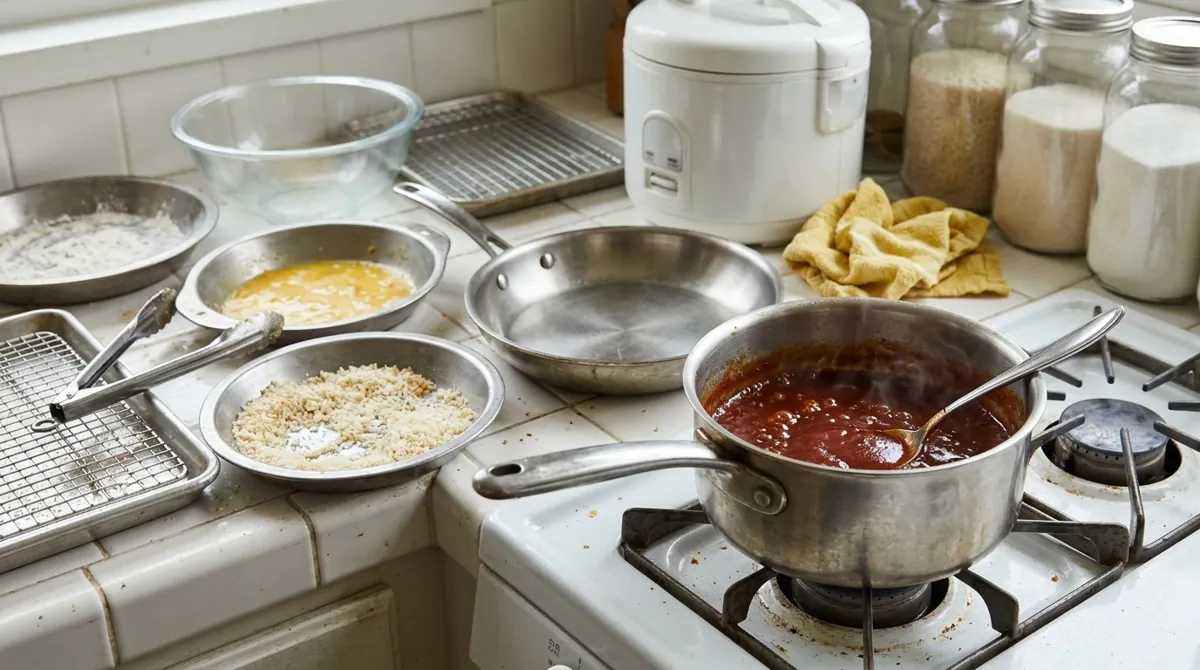
Stir the ketchup, Worcestershire, soy sauce and sugar in a small saucepan, bring it to a simmer for 3 minutes, and let it cool.
- Step 4
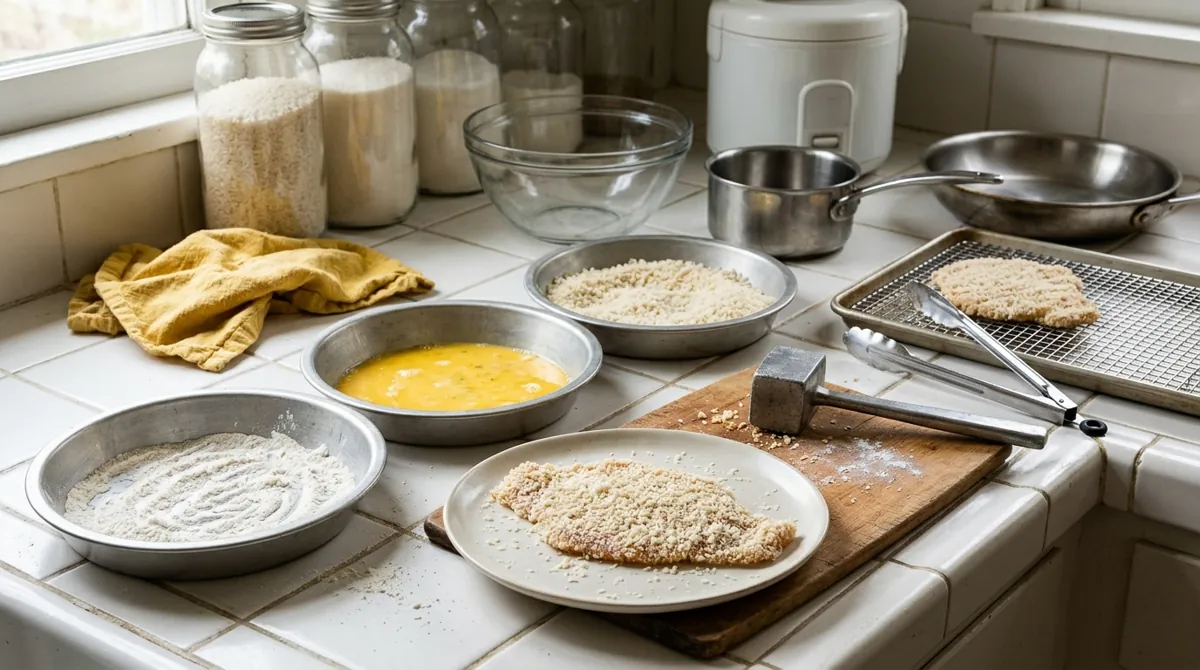
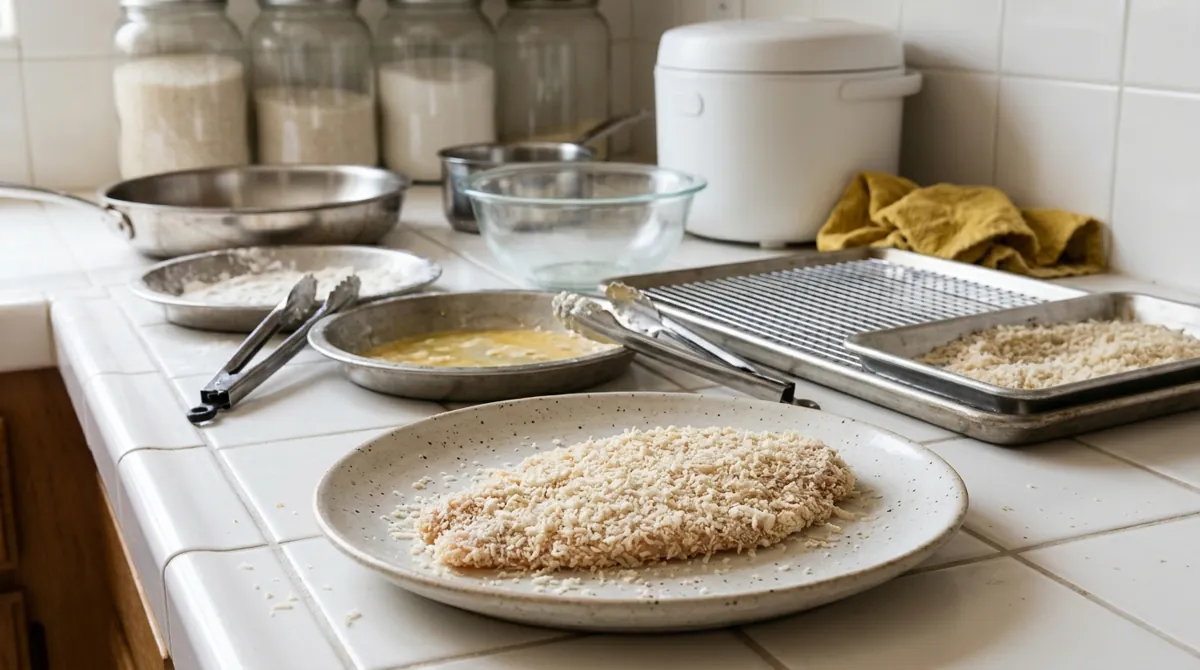
Pound the 6 half-breasts to an even 1/2 inch, season both sides, and coat each in flour, then egg, then panko, pressing the crumbs on firmly. Rest them on a rack 5 minutes.
✓ What it should look like - Step 5
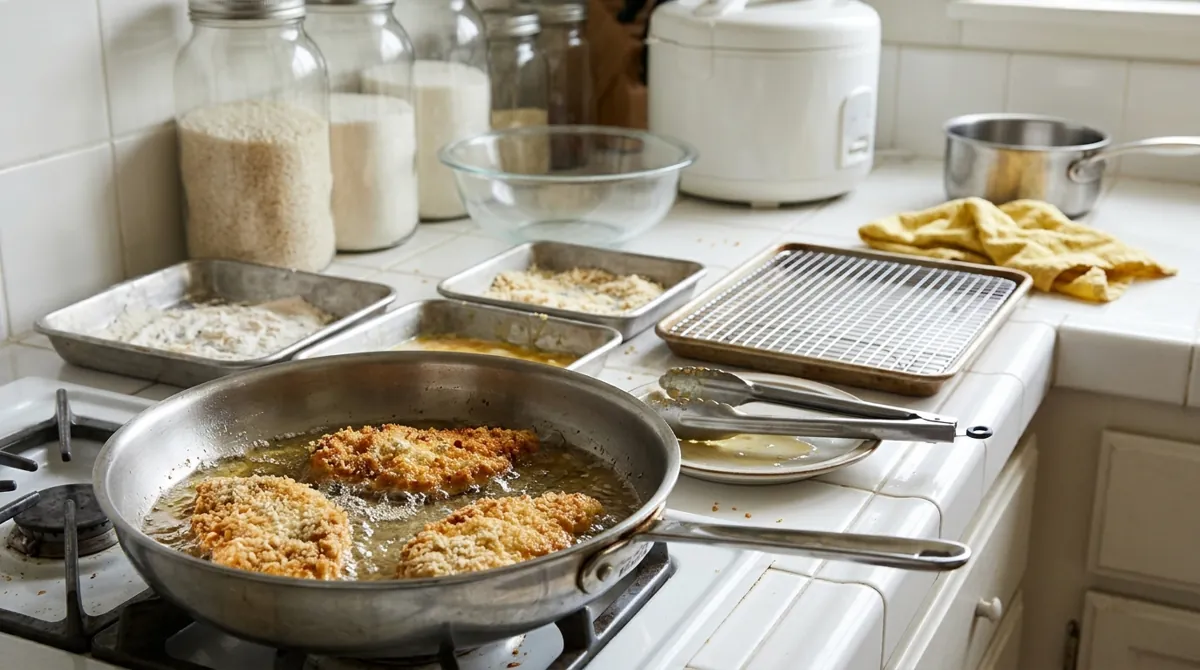
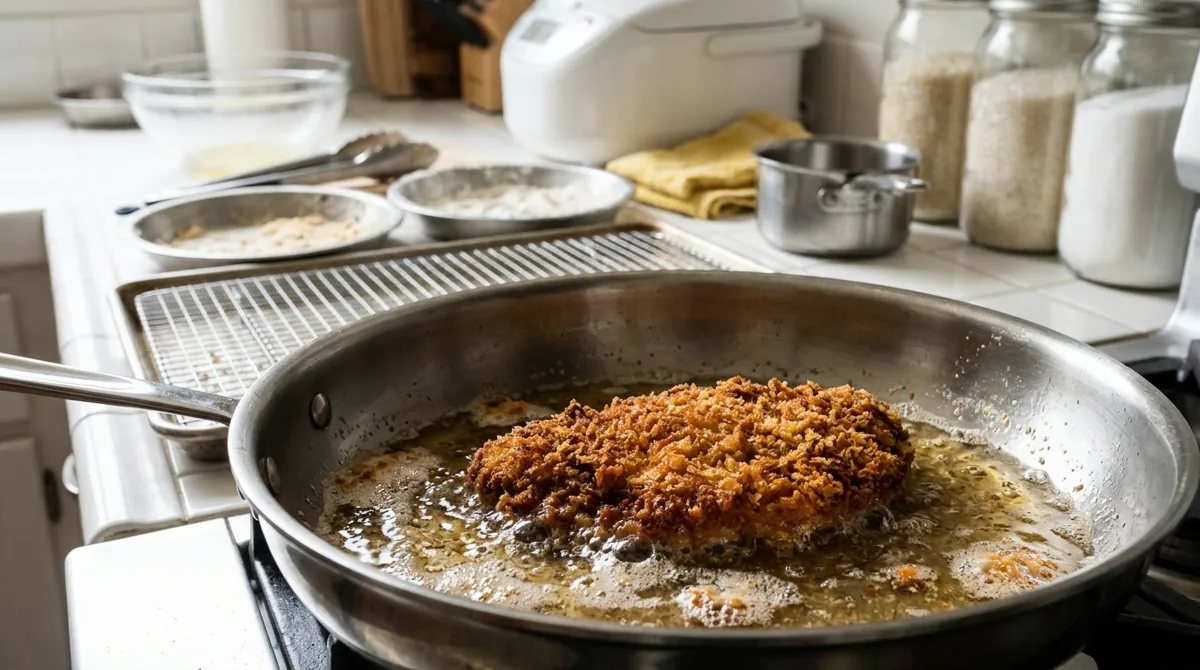
Heat 1/2 inch of oil in a wide skillet to 350°F. Fry the cutlets 3 to 4 minutes a side, 3 at a time, until deep golden and the center reads 165°F.
✓ What it should look like - Step 6
Move the cutlets to a wire rack set over a tray for 2 minutes, then slice them crosswise into strips.
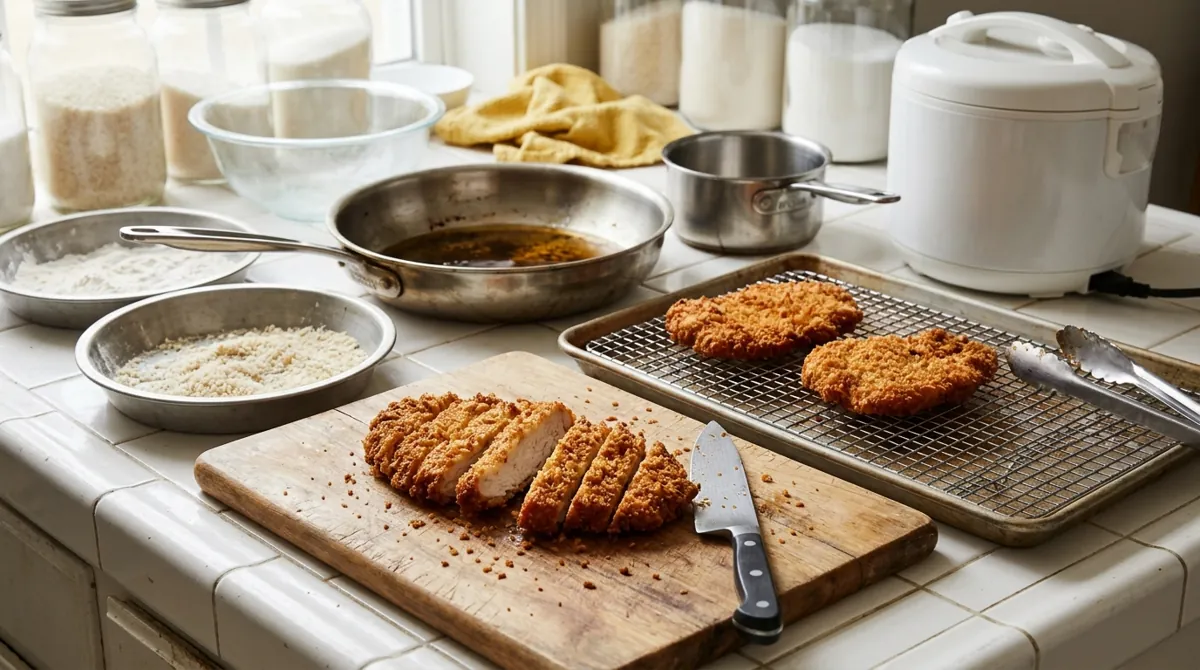
- Step 7
For each plate, set two scoops of rice and one scoop of macaroni salad side by side, lay the sliced katsu on top, and spoon over the katsu sauce.
Chicken Katsu (Hawaii Plate Lunch)
Serves 4 · 4 cutlets, with rice and macaroni salad · 55 min total
Chicken
- 1 1/2 lb boneless skinless chicken breasts (680 g), 3 breasts, each sliced in half horizontally to make 6 thin cutlets
- 1 tsp fine salt and 1/2 tsp black pepper
- 1/2 cup all-purpose flour (65 g)
- 2 large eggs (100 g), beaten
- 2 cups panko breadcrumbs (100 g)
- About 2 cups neutral oil, such as vegetable or canola (1/2 inch deep in a skillet)
Katsu sauce
- 1/2 cup ketchup (136 g)
- 3 tbsp Worcestershire sauce (51 g)
- 2 tbsp soy sauce (32 g)
- 1 tbsp granulated sugar (12 g)
Rice
- 2 cups uncooked medium-grain white rice (370 g), rinsed, cooked with 2 1/2 cups water
Macaroni salad
- 8 oz dry elbow macaroni (225 g)
- 1/2 cup mayonnaise (110 g)
- 2 tbsp whole milk (31 g)
- 1 small carrot, finely grated (60 g)
- 2 tbsp grated yellow onion (30 g)
- Salt and pepper
Equipment: Wire rack, Pot, Small saucepan, Wide skillet, Instant-read thermometer, Deep-fry or candy thermometer, Chef's knife and cutting board, Measuring cups and spoons
Method
- Rinse the rice until the water runs nearly clear, then cook it in a rice cooker or covered pot with 2 1/2 cups water, and let it steam 10 minutes after it finishes.
- Boil the macaroni in salted water about 2 minutes past the package time, until quite soft, which is the Hawaii way. Drain, rinse in cold water, and mix with the mayonnaise, milk, carrot, onion, salt and pepper. Chill until serving; it thickens as it sits.
- Stir the ketchup, Worcestershire, soy sauce and sugar in a small saucepan, bring it to a simmer for 3 minutes, and let it cool.
- Pound the 6 half-breasts to an even 1/2 inch, season both sides, and coat each in flour, then egg, then panko, pressing the crumbs on firmly. Rest them on a rack 5 minutes.
- Heat 1/2 inch of oil in a wide skillet to 350°F. Fry the cutlets 3 to 4 minutes a side, 3 at a time, until deep golden and the center reads 165°F.
- Move the cutlets to a wire rack set over a tray for 2 minutes, then slice them crosswise into strips.
- For each plate, set two scoops of rice and one scoop of macaroni salad side by side, lay the sliced katsu on top, and spoon over the katsu sauce.
Americanized house recipe, written for this site, using the usual ratios of home recipes (a 1/2 inch cutlet, flour, egg, panko, shallow-fried in 350°F oil; a ketchup, Worcestershire and soy katsu sauce; a mayonnaise-heavy macaroni salad). History: Wikipedia, "Plate lunch" (the bento theory, the 1880s plantations, macaroni salad, chicken katsu, L&L in 1999); Wikipedia, "Chicken katsu" (the dish). en.wikipedia.org. Ingredient list follows the source; the method is in our own words.
All sources (2)
Tips
- Do not crowd the pan; the oil temperature drops and the crust turns greasy.
- Chicken thighs, pounded flat, are juicier and more forgiving than breasts.
- Chill the macaroni salad at least 30 minutes; if it dries out, stir in another spoonful of mayonnaise or milk.
- For a Hawaii touch, add a pile of shredded cabbage on the plate.
- Katsu sauce keeps 2 weeks in the fridge.
The rules people argue about
What the sources agree on, what they don't, and what is just a good story.
- The plate lunch came from the Japanese bento. Disputed: Wikipedia says its exact origin is disputed; the bento theory is one scholar's, and plantation lunches with many Asian and Portuguese influences are another.
- Katsu sauce is tonkatsu sauce. Disputed: they are related, but the Hawaii restaurant sauce is thinner and sweeter, and recipes differ on soy sauce, oyster sauce and garlic.
Meatballs of the World

Italian-American Meatballs
Big, tender meatballs braised for an hour in red sauce over spaghetti. The one most Americans grew up with.

Pallottine (Abruzzo Meatballs)
Tiny meatballs, smaller than a marble, tossed right through square spaghetti alla chitarra. No bread at all.

Swedish Meatballs (Köttbullar)
Small, soft meatballs browned in butter, in a cream sauce made from the same pan, with lingonberry jam on the plate.

Danish Frikadeller
Pork meatballs shaped with a spoon and fried slowly in butter, crusty outside and soft in the middle.

Königsberger Klopse
German meatballs that are never fried: poached, then served in a creamy white sauce with capers.

Spanish Albóndigas in Almond Saffron Sauce
The tapas bar classic: small meatballs in a golden sauce thickened with fried almonds and bread.

Mexican Albóndigas with Chipotle and Mint
Soft meatballs with rice and fresh mint inside, simmered in a smoky tomato and chipotle broth.

Izgara Köfte (Turkish Grilled Meatballs)
Small, flat meatballs kneaded hard, rested cold, and charred on a hot grill pan.

Lion's Head Meatballs
Big, soft pork meatballs, stirred into a sticky paste, fried to set, then braised in a savory sauce.

Chicken Tsukune
Japan's chicken meatball: kneaded sticky, grilled on skewers, glazed with sweet soy tare, dipped in egg yolk.