
Chicken Teriyaki
Juicy chicken thighs browned in a skillet and glazed in a shiny, sweet and salty reduction of soy sauce, mirin, sake and sugar: the Japanese technique that became a Hawaiian plate lunch and Seattle's own fast food.
🍳Cook alongOne move at a time, with real timers
 Edited by JP Lambiase
Change the estimate
Swaps change the price only: cook any meat to its own safe temperature. Where these numbers come from
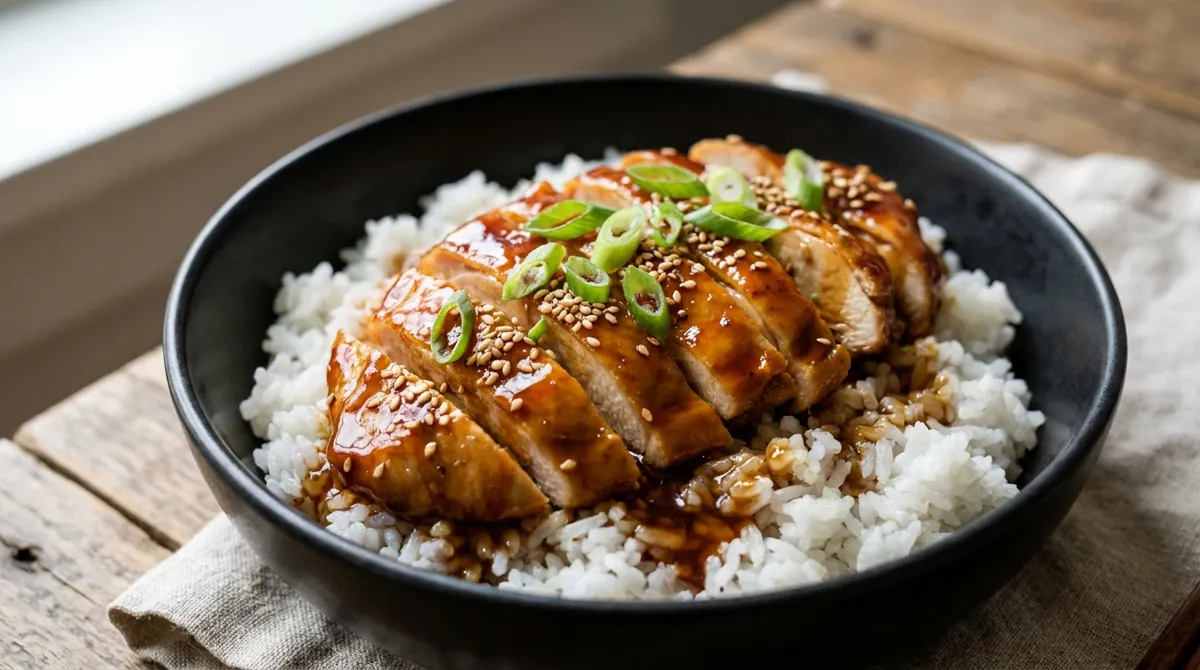
In Japanese, teriyaki is a way of cooking, not a bottled sauce. Teri is the shine that the sugar in the sauce gives the food, and yaki means grilled or broiled. The sauce, called tare, is soy sauce, sake or mirin and sugar simmered until it thickens, brushed on the meat or fish as it cooks. The technique grew up in the Edo period, and it is believed to date to the 1600s. In Japan it is mainly made with fish.
Japanese immigrants brought teriyaki to Hawaii, where it took on local tastes and became a fixture of the plate lunch. On the mainland the word drifted. In North America almost any sweet soy glaze is called teriyaki, often with garlic, ginger, sesame or pineapple juice, used as a marinade or sauced after grilling, and made mostly with chicken, beef or pork.
Seattle took it furthest. In March 1976 Toshihiro Kasahara, a Japanese immigrant, opened Toshi's Teriyaki, a 30-seat shop on Roy Street in Lower Queen Anne, selling cheap plates of grilled chicken, rice and salad. It is generally believed to be the first stand-alone teriyaki shop in the country. Copycats followed, Toshi's grew to 17 locations by 1996, and by 2010 more than 83 Seattle restaurants had "teriyaki" in their name. Seattle teriyaki is now its own thing: charred, chopped chicken thigh over rice with a thicker, sweeter sauce.
This version is the pan-glazed home style: Japanese ratios, with a little ginger and garlic the way the American shops do it.
Why it works the kitchen science
Thighs
They stay juicy through the high heat of searing and glazing, and they are what the Seattle shops use.
Equal parts soy, mirin and sake with half as much sugar
The classic Japanese ratio, salty, sweet and rounded, with enough sugar to give the teri, the shine.
Searing before saucing
Sugar burns fast, so the chicken browns first and the sauce only goes in for the last few minutes.
Blotting the fat
RecipeTin Japan's point; too much fat in the pan keeps the glaze from sticking to the meat.
Reducing instead of cornstarch
The sauce thickens on its own into a true glaze and stays clear and shiny.
🧰 You'll need 6 items
Everything the steps call for. Tick off what you have before you start.
Pans and pots
Tools
Supplies
Step by step
- Step 1
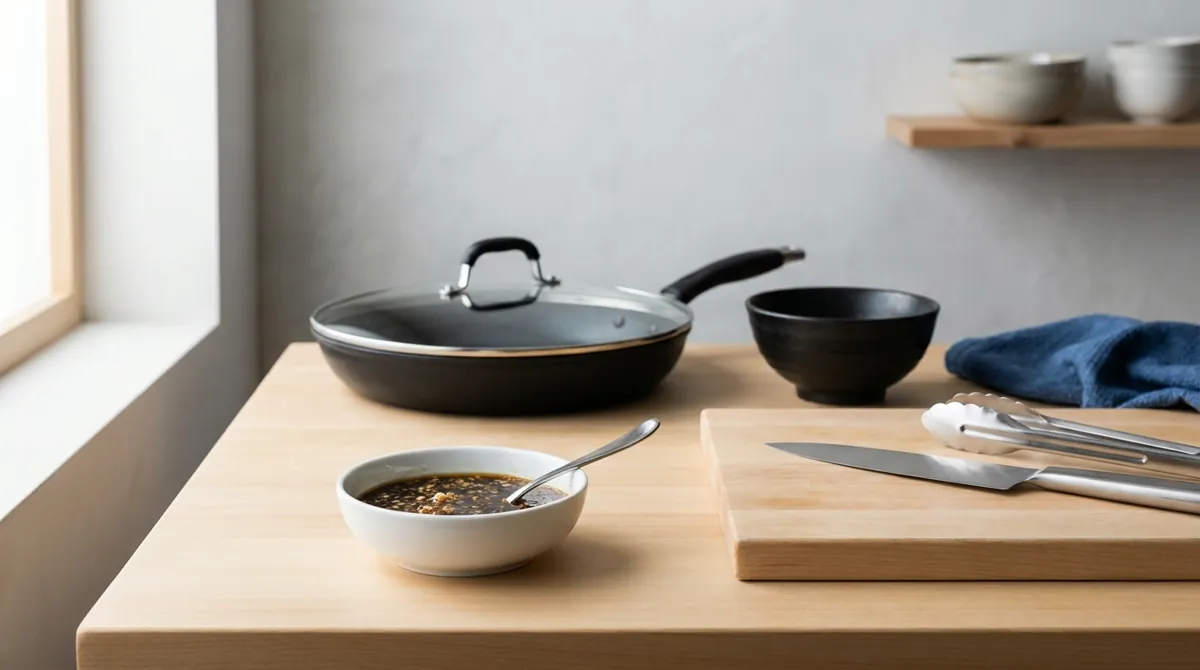
Stir the soy sauce, mirin, sake, sugar, ginger and garlic in a small bowl until the sugar dissolves.
- Step 2
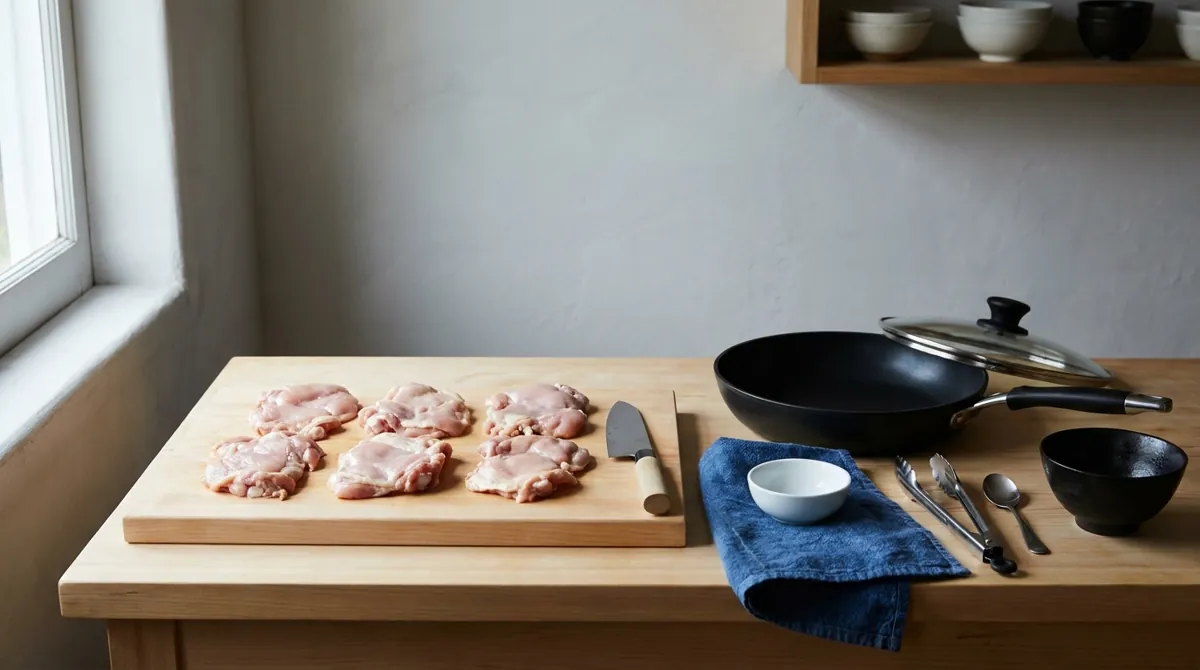
Pat the chicken thighs dry. Where a thigh is very thick, cut a shallow slit and open it out so it lies an even thickness.
- Step 3
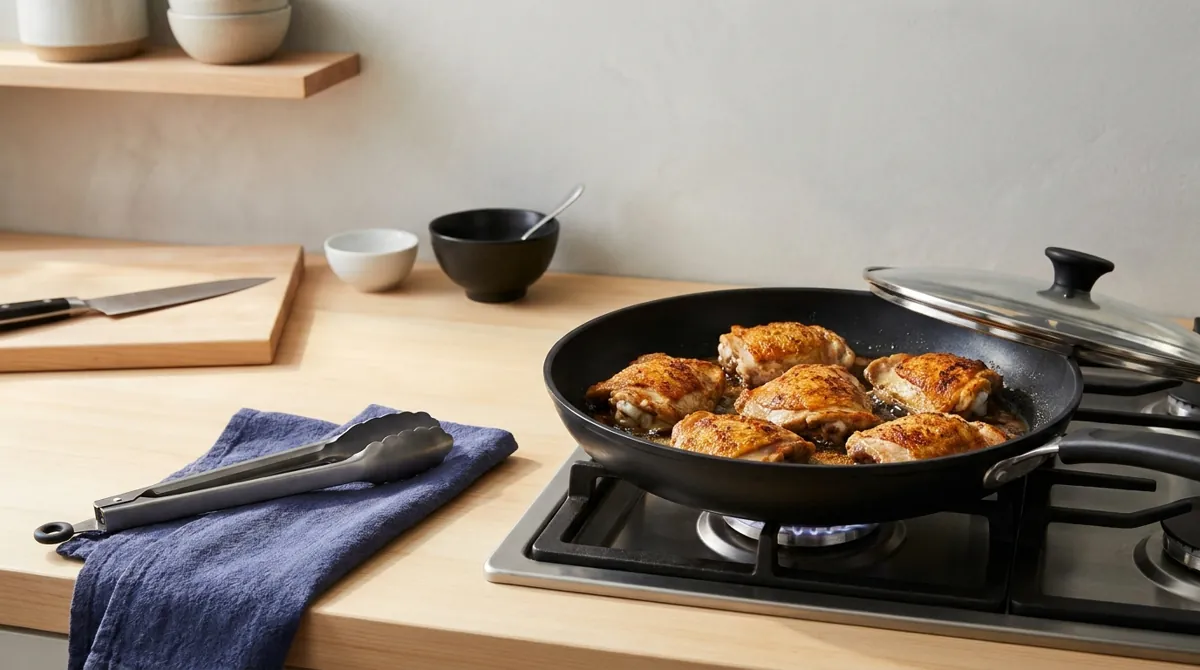
Heat the oil in a 12 inch nonstick skillet over medium-high heat. Lay the thighs in smooth side down and cook without moving until deep golden, 5 to 6 minutes. Turn and cook 4 minutes more.
- Step 4
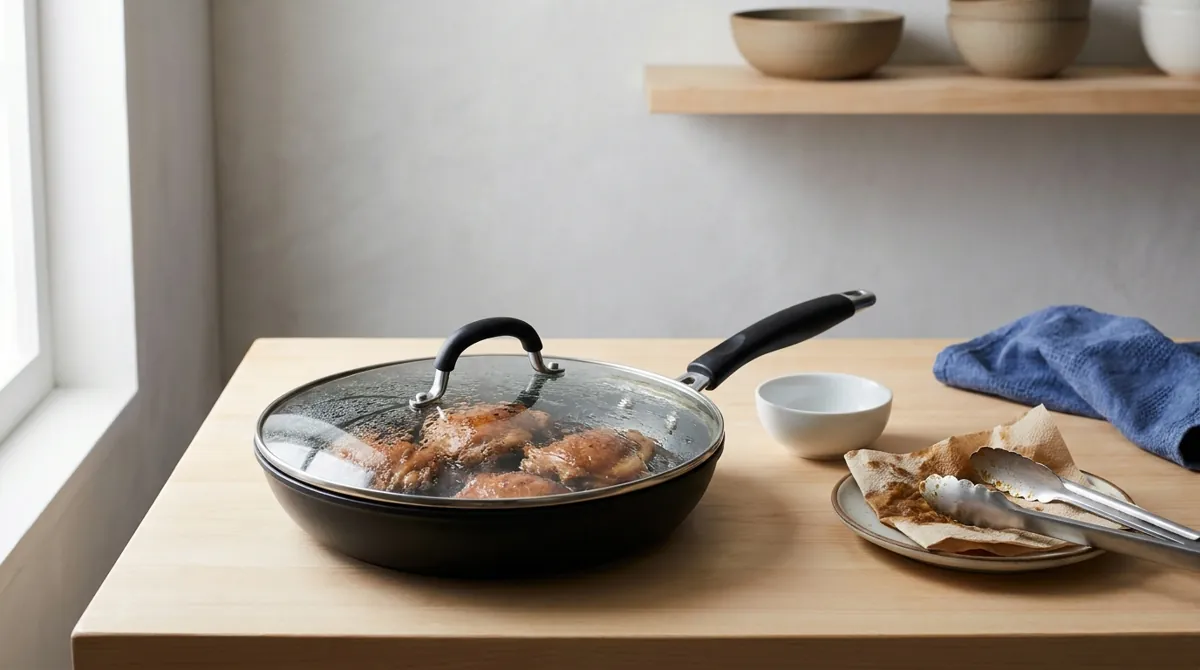
Turn off the heat for a moment and blot the fat out of the pan with a wad of paper towel held in tongs. Add the sauce, cover and cook over medium heat 1 minute.
- Step 5
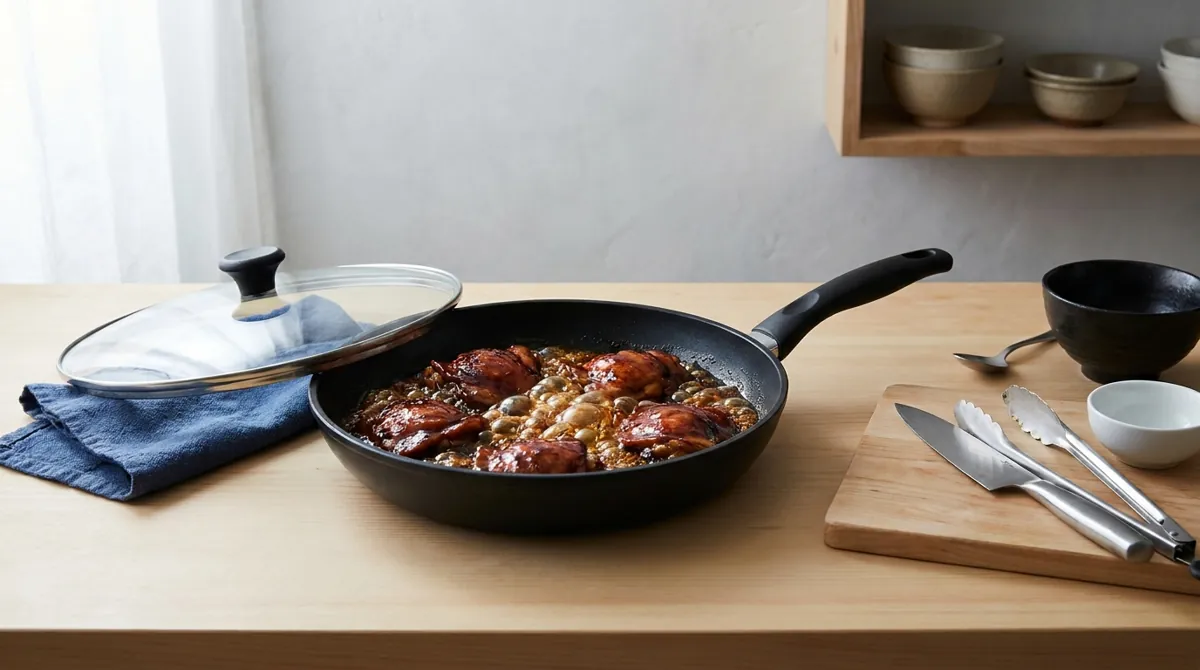
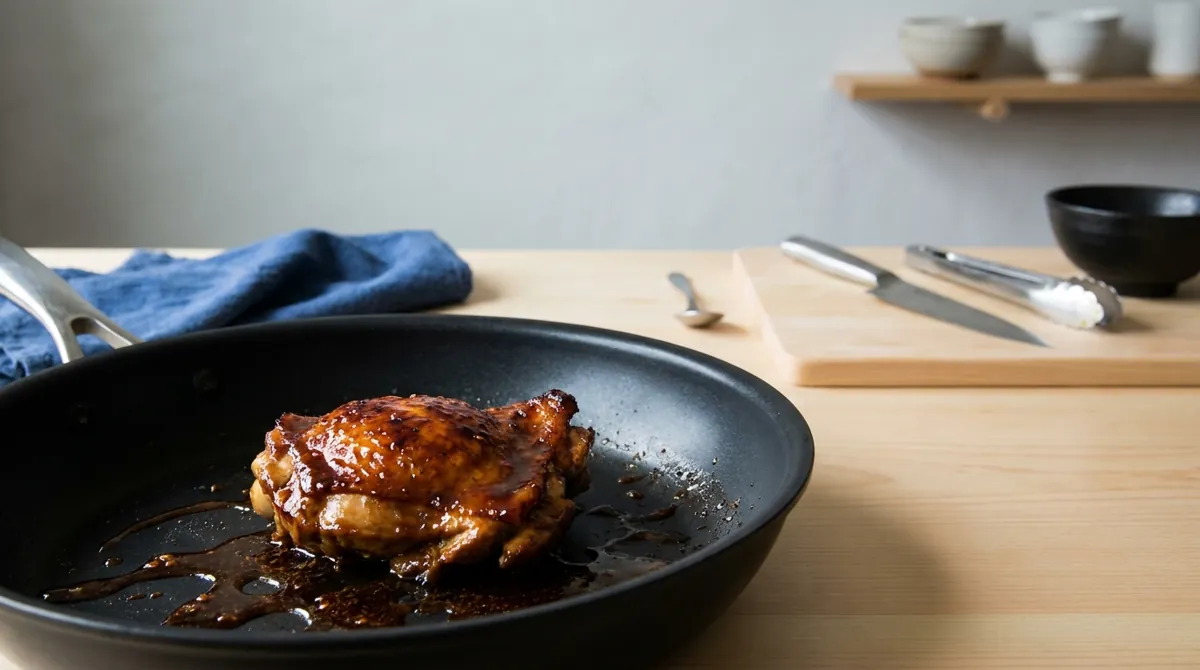
Uncover and simmer, turning the thighs every minute, until the sauce reduces to a glossy syrup that coats them, 3 to 4 minutes, and the thickest part reads at least 165°F (175°F is even better for thighs). Take it off the heat a little early: the glaze keeps thickening as it cools.
✓ What it should look like - Step 6
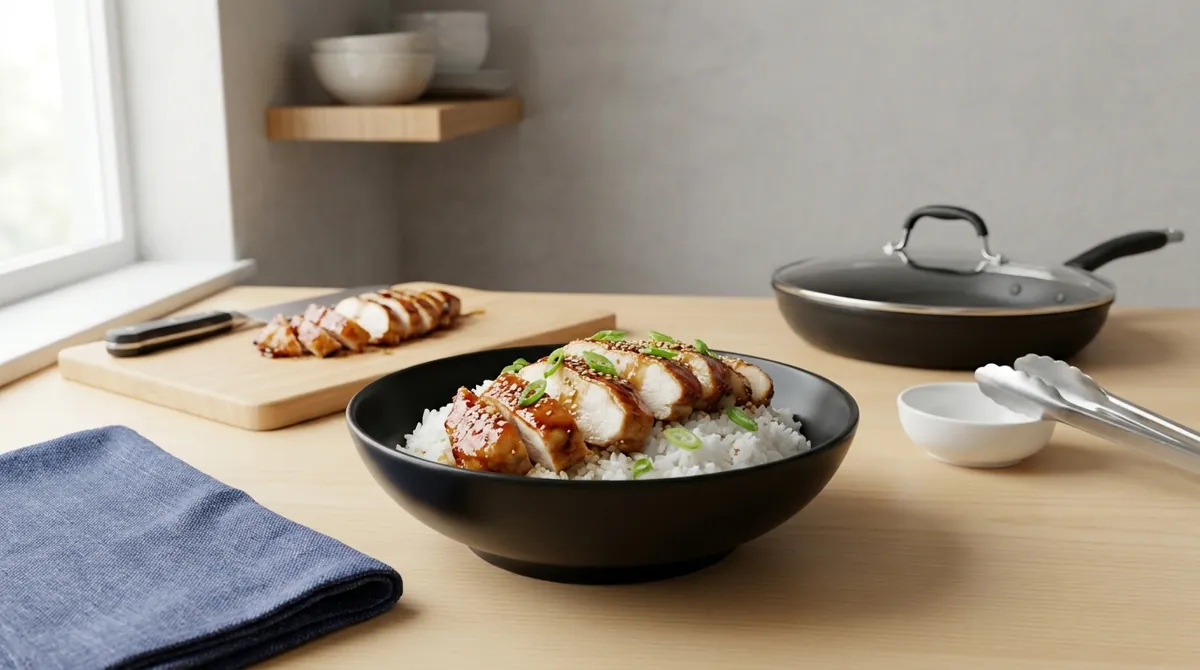
Rest the chicken on a cutting board 3 minutes, slice it across into strips and spoon the pan glaze over. Scatter scallions and sesame seeds and serve over rice.
Chicken Teriyaki
Serves 4 · about 1 1/2 lb glazed chicken, with rice · 25 min total
Teriyaki sauce
- 1/4 cup soy sauce (64 g)
- 1/4 cup mirin (72 g)
- 1/4 cup sake (58 g)
- 2 tbsp sugar (25 g)
- 1 tsp finely grated fresh ginger (5 g), optional
- 1 garlic clove, finely grated (3 g), optional
Chicken
- 1 1/2 lb boneless, skinless chicken thighs, about 6 (680 g)
- 1 tsp neutral oil, such as canola (5 g)
To serve
- 2 scallions, thinly sliced (30 g)
- Toasted sesame seeds and steamed white rice
Equipment: Nonstick skillet, Chef's knife and cutting board, Measuring cups and spoons, Mixing bowls, Tongs, Paper towels
Method
- Stir the soy sauce, mirin, sake, sugar, ginger and garlic in a small bowl until the sugar dissolves.
- Pat the chicken thighs dry. Where a thigh is very thick, cut a shallow slit and open it out so it lies an even thickness.
- Heat the oil in a 12 inch nonstick skillet over medium-high heat. Lay the thighs in smooth side down and cook without moving until deep golden, 5 to 6 minutes. Turn and cook 4 minutes more.
- Turn off the heat for a moment and blot the fat out of the pan with a wad of paper towel held in tongs. Add the sauce, cover and cook over medium heat 1 minute.
- Uncover and simmer, turning the thighs every minute, until the sauce reduces to a glossy syrup that coats them, 3 to 4 minutes, and the thickest part reads at least 165°F (175°F is even better for thighs). Take it off the heat a little early: the glaze keeps thickening as it cools.
- Rest the chicken on a cutting board 3 minutes, slice it across into strips and spoon the pan glaze over. Scatter scallions and sesame seeds and serve over rice.
Americanized house recipe, written for this site. History: Wikipedia, "Teriyaki" (teri the shine from sugar, yaki grilling or broiling, tare of soy sauce, sake or mirin and sugar, believed to date to the 1600s, the Edo period, fish mainly used in Japan, Japanese immigrants in Hawaii and the plate lunch, North American teriyaki with garlic, sesame and pineapple juice, Toshi's Teriyaki in Lower Queen Anne in 1976, 17 locations by 1996, more than 83 Seattle restaurants named teriyaki by 2010); KUOW, "Did you know?: Teriyaki was, and wasn't, invented in Seattle" (Toshi Kasahara, Toshi's in 1976); Tasting Table, "The History Of Seattle-Style Teriyaki" (opened March 1976 at 372 Roy Street, 30 seats, generally believed the first stand-alone teriyaki shop in the country). Technique: RecipeTin Japan, "Teriyaki Chicken" (1 part soy sauce, 1 part sake, 1 part mirin, about 1/2 part sugar; chicken browned first, fat blotted off so the sauce sticks, sauce reduced in the pan with no cornstarch; traditional sauce has no garlic or ginger). Safety: FoodSafety.gov (US Department of Health and Human Services), "Safe Minimum Internal Temperatures" (poultry 165°F). en.wikipedia.org. Ingredient list follows the source; the method is in our own words.
Tips
- No sake? Use dry sherry or Chinese Shaoxing wine; or use all mirin and cut the sugar a little.
- For the Seattle shop style, marinate the thighs in half the sauce for an hour, grill them over high heat until charred, chop them and serve the rest of the sauce, thickened with 1 tsp cornstarch, over rice.
- Skin-on, boneless thighs are the Japanese home favorite: start them skin side down in a dry pan and cook until the skin is crisp.
- Make a double batch of sauce; it keeps in the fridge for 2 weeks and works on salmon, which is closer to what Japan grills.
The rules people argue about
What the sources agree on, what they don't, and what is just a good story.
- Teriyaki is a sauce. Disputed by country: in Japan it is a cooking method, grilling or broiling with a shiny tare; in North America the bottled sauce is what the word means.
- Thicken it with cornstarch. Disputed: American shops and bottled sauces do; the Japanese method reduces the sauce in the pan.
Meatballs of the World

Italian-American Meatballs
Big, tender meatballs braised for an hour in red sauce over spaghetti. The one most Americans grew up with.

Pallottine (Abruzzo Meatballs)
Tiny meatballs, smaller than a marble, tossed right through square spaghetti alla chitarra. No bread at all.

Swedish Meatballs (Köttbullar)
Small, soft meatballs browned in butter, in a cream sauce made from the same pan, with lingonberry jam on the plate.

Danish Frikadeller
Pork meatballs shaped with a spoon and fried slowly in butter, crusty outside and soft in the middle.

Königsberger Klopse
German meatballs that are never fried: poached, then served in a creamy white sauce with capers.

Spanish Albóndigas in Almond Saffron Sauce
The tapas bar classic: small meatballs in a golden sauce thickened with fried almonds and bread.

Mexican Albóndigas with Chipotle and Mint
Soft meatballs with rice and fresh mint inside, simmered in a smoky tomato and chipotle broth.

Izgara Köfte (Turkish Grilled Meatballs)
Small, flat meatballs kneaded hard, rested cold, and charred on a hot grill pan.

Lion's Head Meatballs
Big, soft pork meatballs, stirred into a sticky paste, fried to set, then braised in a savory sauce.

Chicken Tsukune
Japan's chicken meatball: kneaded sticky, grilled on skewers, glazed with sweet soy tare, dipped in egg yolk.