
Coleslaw
Finely shredded green cabbage and carrot, salted so it stays crunchy, then dressed in a tangy mayonnaise, cider vinegar and celery seed dressing: the Dutch "koolsla" that became the side dish of every American barbecue and fish fry.
🍳Cook alongOne move at a time, with real timers
 Edited by JP Lambiase
Change the estimate
Swaps change the price only: cook any meat to its own safe temperature. Where these numbers come from
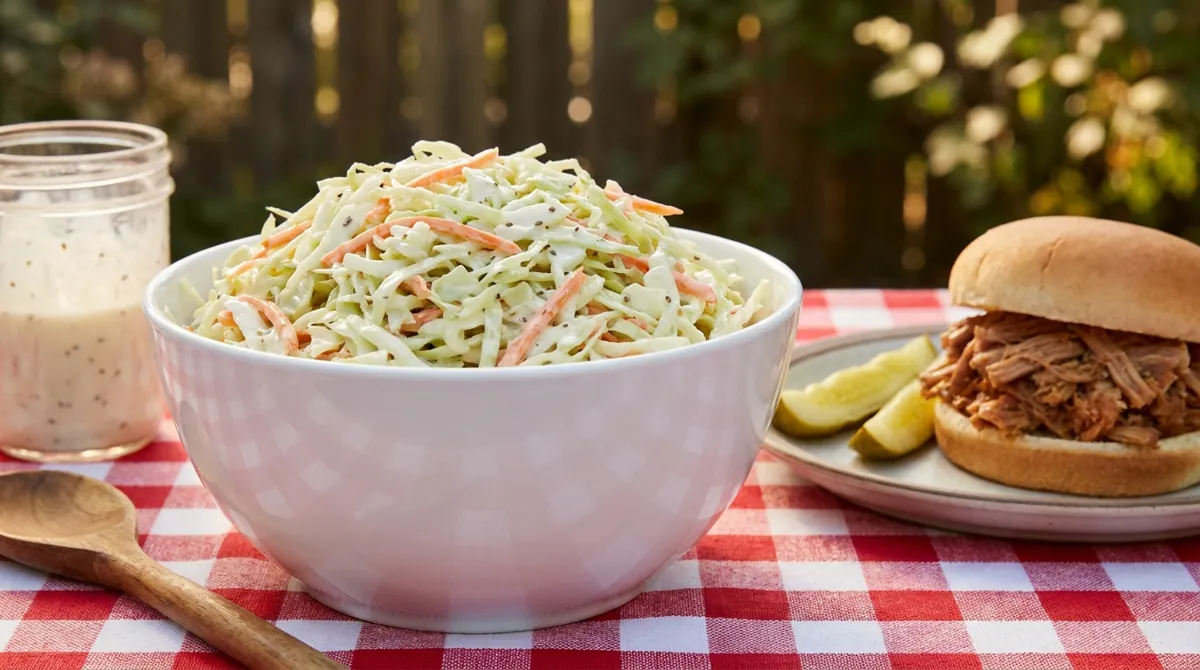
The name gives the story away. Coleslaw comes from the Dutch koolsla, "cabbage salad", and the English word took shape in the 18th century because the Dutch kool sounds like the English "cole", an old word for cabbage that goes back to the Latin caulis. The Dutch also had an American colony, New Netherland, which became New York, and the dish is usually said to have arrived with them, though no early American recipe proves it. A Dutch cookbook, De Verstandige Kock (The Sensible Cook, 1667), already has one: thin strips of cabbage dressed with melted butter, vinegar and oil, a recipe credited to the author's Dutch landlady.
That early slaw had no mayonnaise. The creamy slaw most Americans know today is a later development, made possible once mayonnaise came along in the mid-18th century and, much later, once jarred mayonnaise sat in every refrigerator. Even now there is no single coleslaw. The Joy of Cooking says raw cabbage is the only ingredient every coleslaw shares, and the dressing changes by region: buttermilk slaw across the South, fine vinegary slaw with North Carolina barbecue, red slaw made with ketchup and vinegar in Lexington, North Carolina, and creamy slaw piled on pulled pork sandwiches in Memphis.
This version is the creamy picnic slaw, with the cabbage salted first, America's Test Kitchen style, so it never turns watery.
Why it works the kitchen science
Salting first
Salt pulls water out of the cabbage by osmosis before the dressing goes on, so the slaw stays crunchy and the dressing stays creamy instead of turning into a puddle (America's Test Kitchen's method).
Rinsing and drying
Rinsing removes the excess salt, and drying keeps the dressing thick.
Sugar with the vinegar
A spoonful of sugar rounds off the sharp cider vinegar without making the slaw sweet.
Thin shreds
Thin cabbage takes the dressing evenly and is easy to pile on a sandwich.
🧰 You'll need 8 items
Everything the steps call for. Tick off what you have before you start.
Appliances
Tools
Step by step
- Step 1
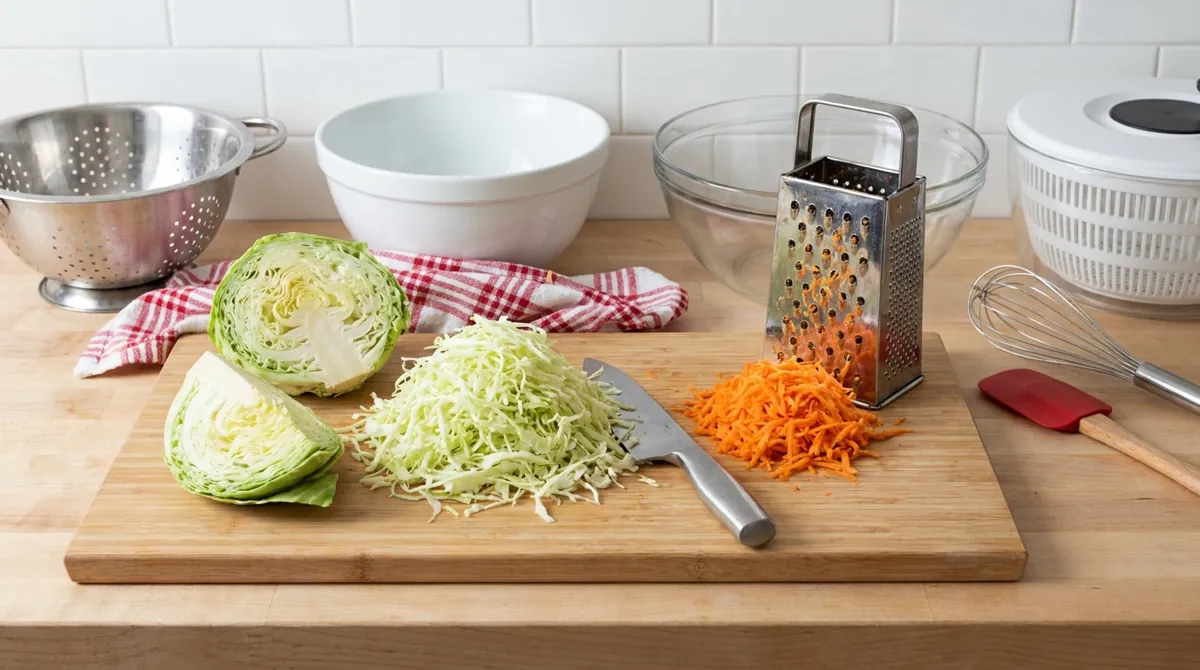
Quarter and core the cabbage and slice it as thinly as you can with a chef's knife on a cutting board (or use the slicing disk of a food processor). Grate the carrot and onion on the large holes of a box grater.
- Step 2
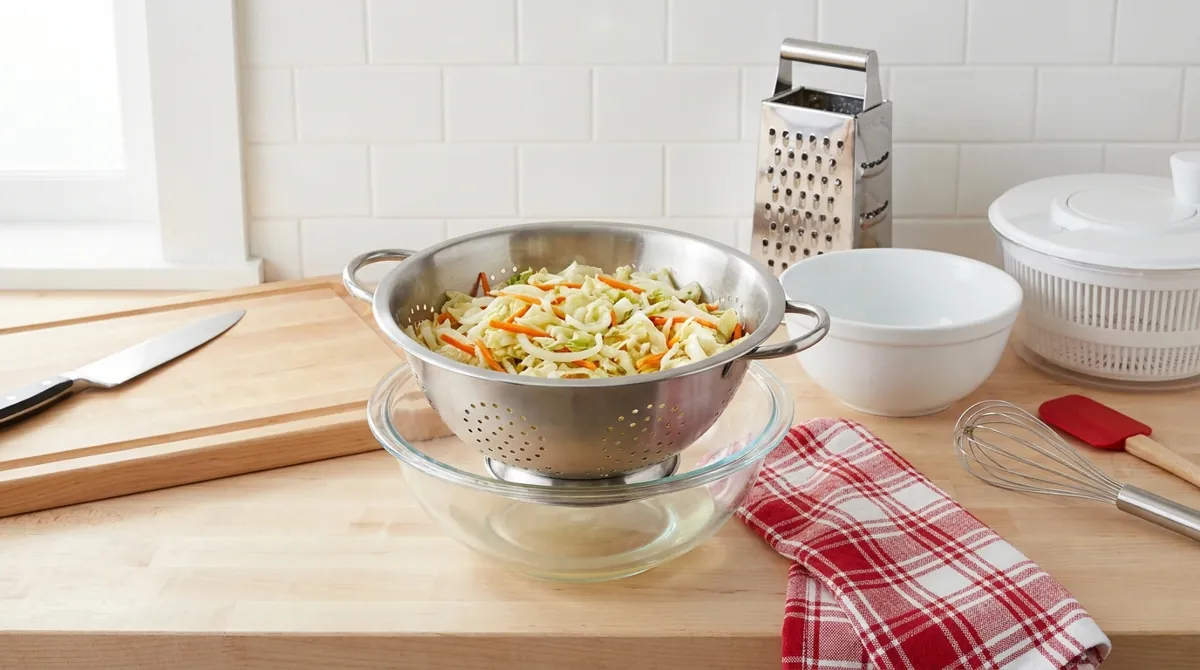
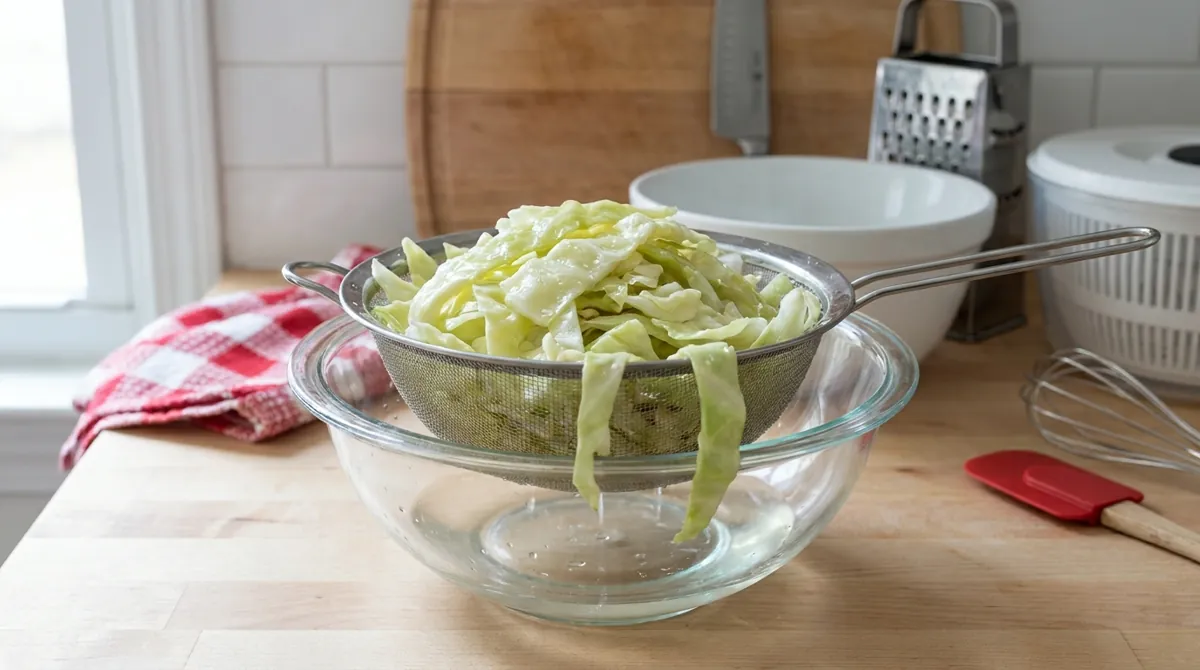
Toss the cabbage, carrot, onion and salt in a colander set over a large bowl and let it stand about 1 hour, until the cabbage is wilted and limp and a pool of liquid has collected in the bowl.
✓ What it should look like - Step 3
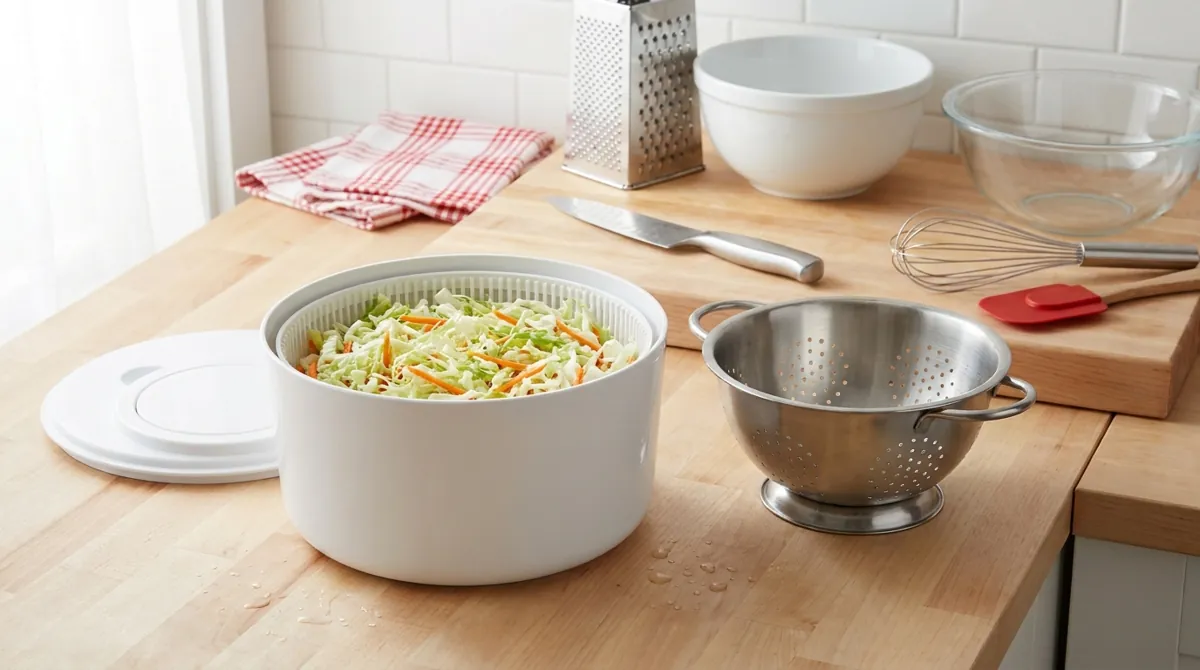
Rinse the vegetables well under cold water, drain, then dry them thoroughly in a salad spinner or by pressing them in a clean kitchen towel. Wet cabbage means watery slaw.
- Step 4
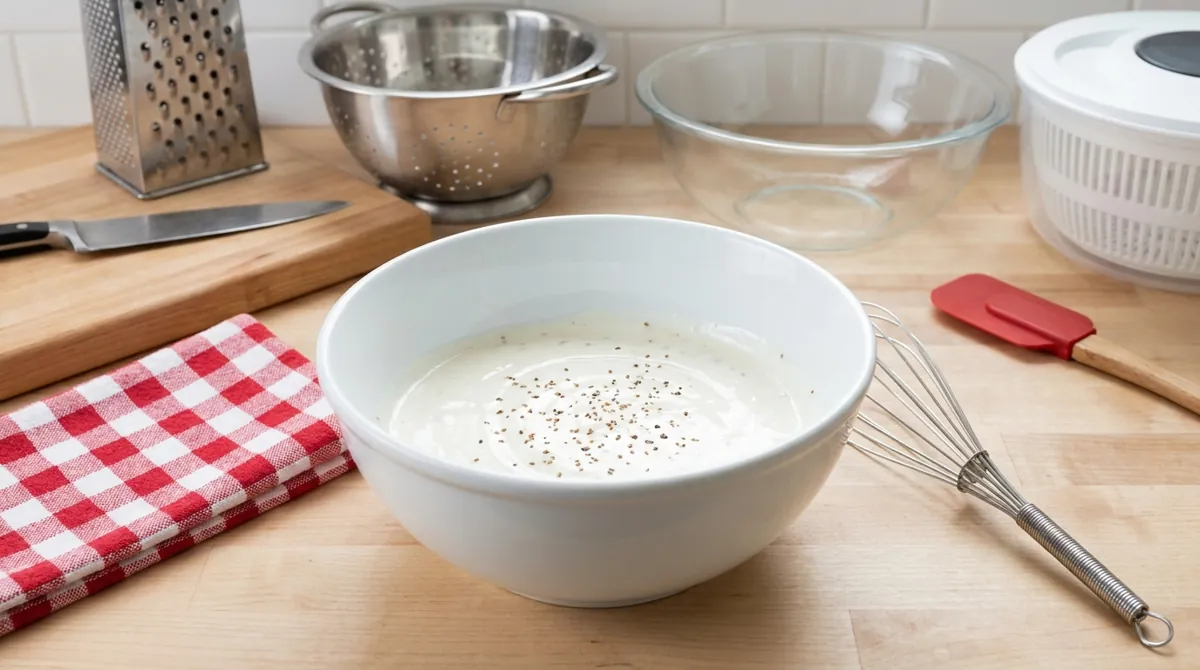
Whisk the mayonnaise, cider vinegar, sugar, celery seed and pepper in a large mixing bowl until smooth.
- Step 5
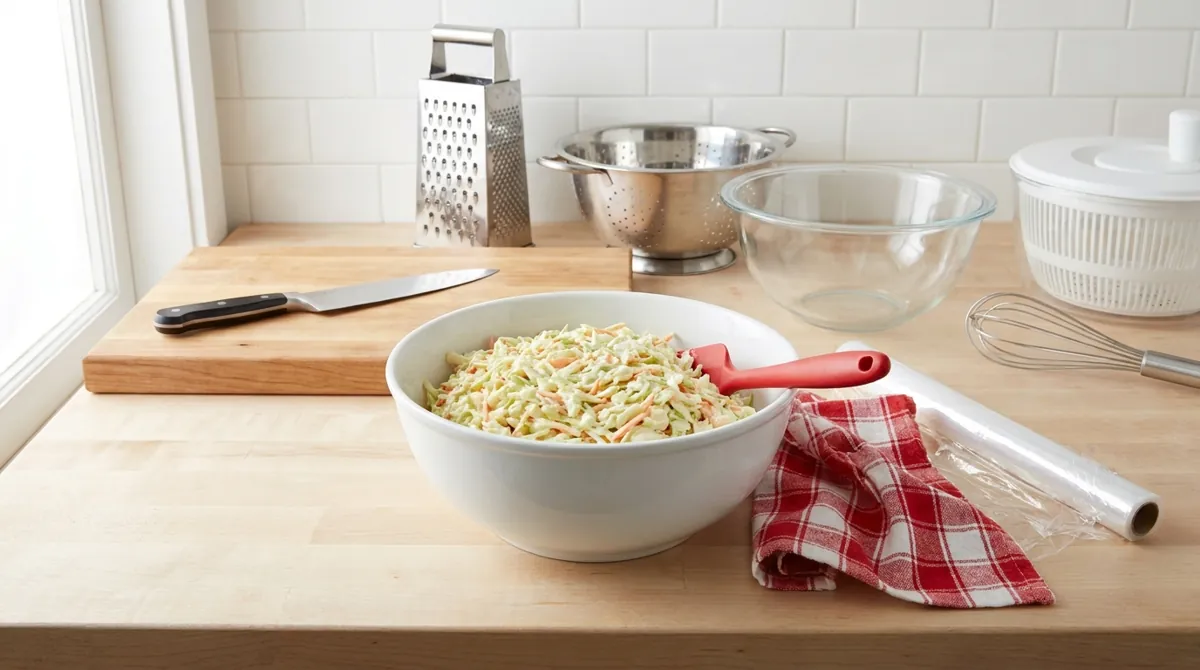
Add the cabbage mixture and toss with a rubber spatula until every shred is coated. Cover and refrigerate at least 30 minutes, until cold.
- Step 6
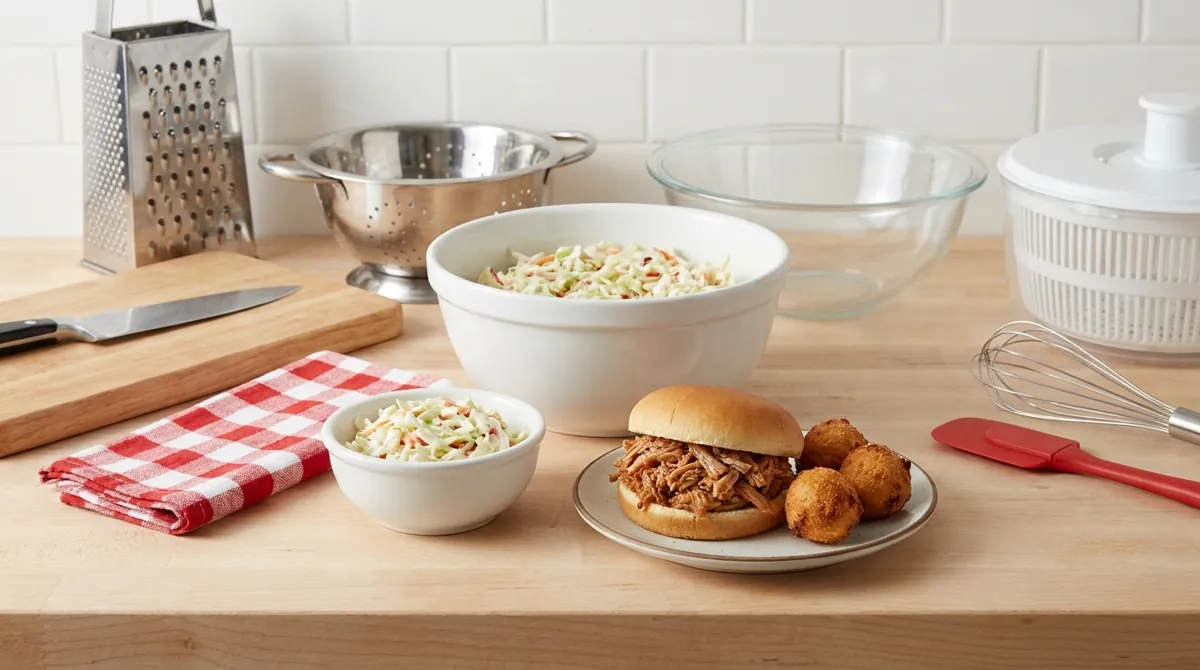
Toss once more, taste for salt and vinegar, and serve cold beside barbecue, fried fish or on a pulled pork sandwich.
Coleslaw
Serves 8 · about 6 cups · 1 hr 50 min total
Slaw
- 1 medium head green cabbage, about 2 lb (900 g whole, about 800 g cored and shredded)
- 1 large carrot, peeled and grated (70 g)
- 1/2 small onion, grated (40 g), optional
- 2 tsp fine salt
Dressing
- 3/4 cup mayonnaise (165 g)
- 2 tbsp cider vinegar (30 g)
- 1 tbsp granulated sugar (13 g)
- 1/2 tsp celery seed
- 1/4 tsp ground black pepper
Equipment: Food processor, Chef's knife and cutting board, Measuring cups and spoons, Mixing bowls, Whisk, Spatula, Colander, Grater (box or rasp)
Method
- Quarter and core the cabbage and slice it as thinly as you can with a chef's knife on a cutting board (or use the slicing disk of a food processor). Grate the carrot and onion on the large holes of a box grater.
- Toss the cabbage, carrot, onion and salt in a colander set over a large bowl and let it stand about 1 hour, until the cabbage is wilted and limp and a pool of liquid has collected in the bowl.
- Rinse the vegetables well under cold water, drain, then dry them thoroughly in a salad spinner or by pressing them in a clean kitchen towel. Wet cabbage means watery slaw.
- Whisk the mayonnaise, cider vinegar, sugar, celery seed and pepper in a large mixing bowl until smooth.
- Add the cabbage mixture and toss with a rubber spatula until every shred is coated. Cover and refrigerate at least 30 minutes, until cold.
- Toss once more, taste for salt and vinegar, and serve cold beside barbecue, fried fish or on a pulled pork sandwich.
Americanized house recipe, written for this site. History: Wikipedia, "Coleslaw" (Dutch koolsla, 18th century anglicization, kool and "cole", Latin caulis, De Verstandige Kock of 1667 with butter, vinegar and oil, mayonnaise as the later innovation, The Joy of Cooking on raw cabbage as the only constant, buttermilk slaw in the South, North Carolina vinegar slaw, Lexington red slaw, Memphis slaw on pulled pork, hot slaw named Tennessee's first official state food in 2024). Technique: America's Test Kitchen, "Basic Creamy Coleslaw" (salt the shredded cabbage, carrot and onion in a colander about 1 hour, rinse and dry, dress with mayonnaise, sour cream, vinegar and sugar, chill 30 minutes, keeps 2 days); America's Test Kitchen, "Creamy Buttermilk Coleslaw" (the Southern buttermilk style). en.wikipedia.org. Ingredient list follows the source; the method is in our own words.
Tips
- The salted, rinsed and dried cabbage keeps in a zipper-lock bag in the refrigerator for a day, so you can dress it just before the picnic.
- Dressed slaw keeps 2 days in the refrigerator, though it softens a little each day.
- For Southern buttermilk slaw, swap 1/4 cup of the mayonnaise for buttermilk. For a tangier slaw, replace 1/4 cup of the mayonnaise with sour cream.
- Swap a quarter of the green cabbage for red cabbage for color.
- Keep it cold: mayonnaise salads should not sit out in the sun for more than 2 hours, or 1 hour on a hot day.
The rules people argue about
What the sources agree on, what they don't, and what is just a good story.
- The name means "cold slaw". Folklore: the word comes from the Dutch koolsla, cabbage salad; "cole" is an old word for cabbage, not "cold" (Wikipedia). "Cold slaw" is a folk spelling, not the origin.
- Real coleslaw is made with mayonnaise. Disputed: the earliest recipe on record (1667) used melted butter, vinegar and oil, and North Carolina slaw is still made with vinegar or ketchup and no mayonnaise. The Joy of Cooking says raw cabbage is the only constant.
Meatballs of the World

Italian-American Meatballs
Big, tender meatballs braised for an hour in red sauce over spaghetti. The one most Americans grew up with.

Pallottine (Abruzzo Meatballs)
Tiny meatballs, smaller than a marble, tossed right through square spaghetti alla chitarra. No bread at all.

Swedish Meatballs (Köttbullar)
Small, soft meatballs browned in butter, in a cream sauce made from the same pan, with lingonberry jam on the plate.

Danish Frikadeller
Pork meatballs shaped with a spoon and fried slowly in butter, crusty outside and soft in the middle.

Königsberger Klopse
German meatballs that are never fried: poached, then served in a creamy white sauce with capers.

Spanish Albóndigas in Almond Saffron Sauce
The tapas bar classic: small meatballs in a golden sauce thickened with fried almonds and bread.

Mexican Albóndigas with Chipotle and Mint
Soft meatballs with rice and fresh mint inside, simmered in a smoky tomato and chipotle broth.

Izgara Köfte (Turkish Grilled Meatballs)
Small, flat meatballs kneaded hard, rested cold, and charred on a hot grill pan.

Lion's Head Meatballs
Big, soft pork meatballs, stirred into a sticky paste, fried to set, then braised in a savory sauce.

Chicken Tsukune
Japan's chicken meatball: kneaded sticky, grilled on skewers, glazed with sweet soy tare, dipped in egg yolk.