
Copycat McDonald's Big Mac Sauce
Mayonnaise, ketchup, sweet relish, mustard and a little vinegar and spice: an inspired-by home version of the tangy special sauce on the world's best-known double burger.
🍳Cook alongOne move at a time, with real timers
 Edited by JP Lambiase
Change the estimate
Swaps change the price only: cook any meat to its own safe temperature. Where these numbers come from
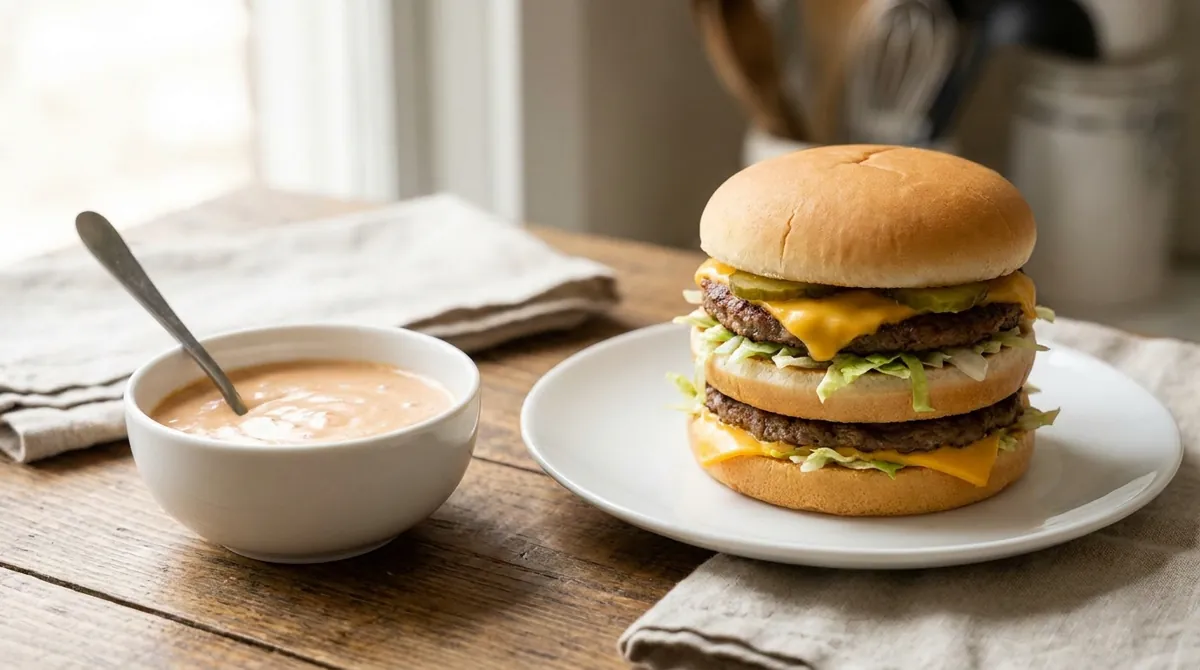
The Big Mac was created by Jim Delligatti, a McDonald's franchisee in western Pennsylvania, who tested it at his Uniontown restaurant on April 22, 1967, and it went national in 1968. The sauce was part of the idea from the start: a tangy, sweet-sour dressing on a double burger with lettuce, cheese, pickles and onions. Accounts say the sauce was later standardized, in 1972, into a single formula. The company called it "secret sauce" for years; the name "special sauce" came from a famous 1974 jingle.
McDonald's has never given out its exact formula, and a company chef has described it publicly as a mayonnaise-based dressing, so this recipe is the usual home match. It is a copycat, not the chain's formula.
Why it works the kitchen science
Mayonnaise base
Thick and creamy, so it stays on a patty and a bun.
Relish plus mustard and vinegar
Sweet, sharp and sour in one bite, like a stripped-down Thousand Island.
Paprika and the two powders
Color and savory depth without raw onion or garlic bite.
Chilling
The powders soften and the flavors even out.
🧰 You'll need 4 items
Everything the steps call for. Tick off what you have before you start.
Tools
Supplies
Step by step
- Step 1
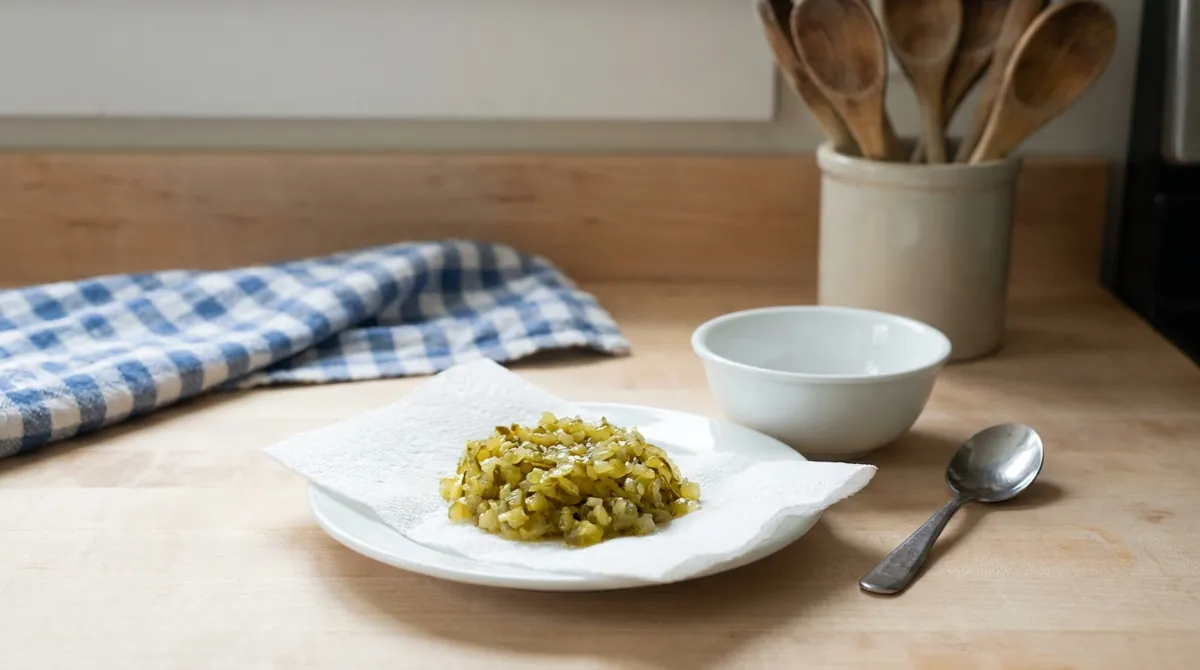
Drain the relish on a paper towel, then chop it a little finer.
- Step 2
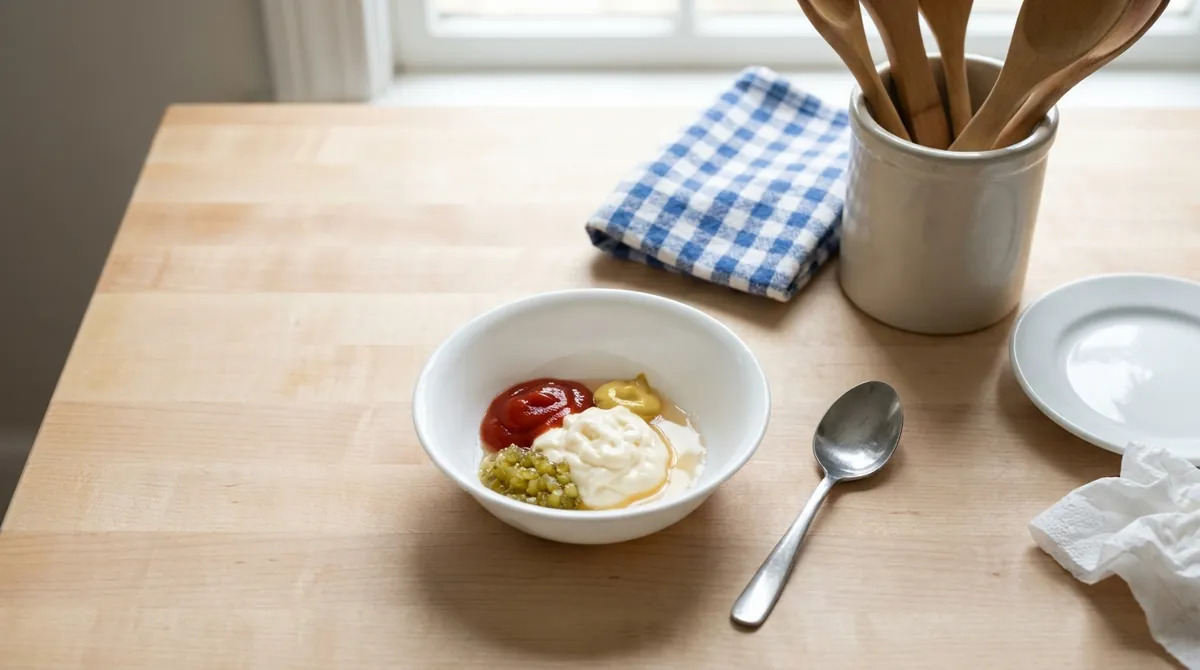
Put the mayonnaise, ketchup, relish, mustard and vinegar in a small bowl.
- Step 3
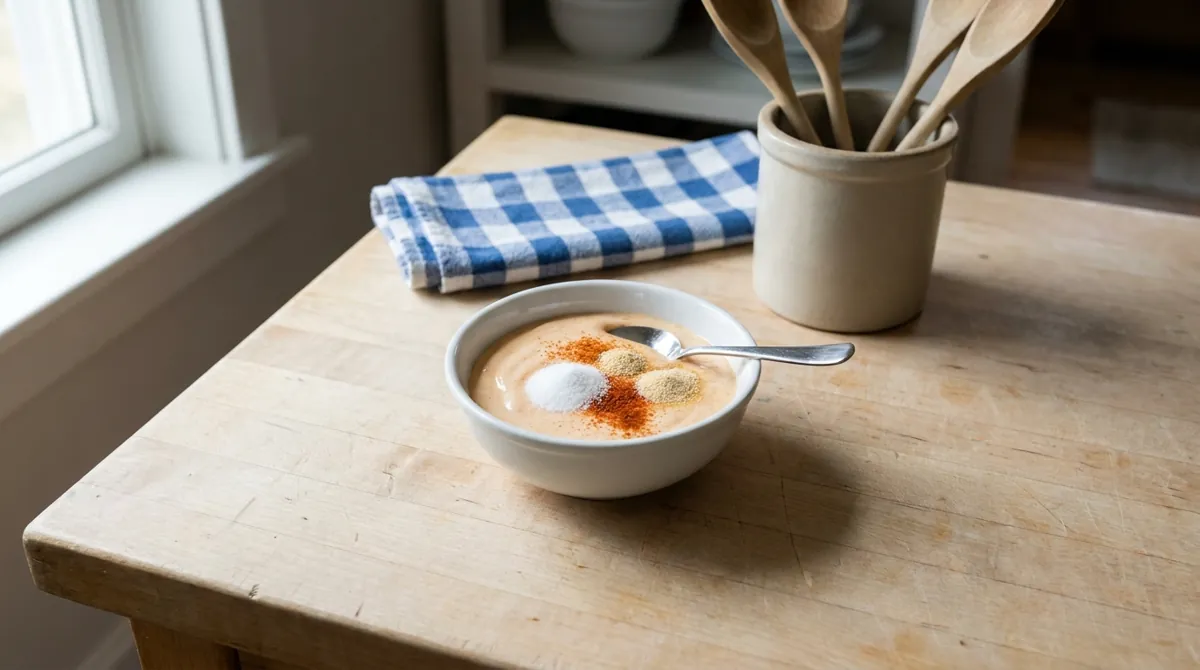
Add the sugar, paprika, garlic powder, onion powder and salt.
- Step 4
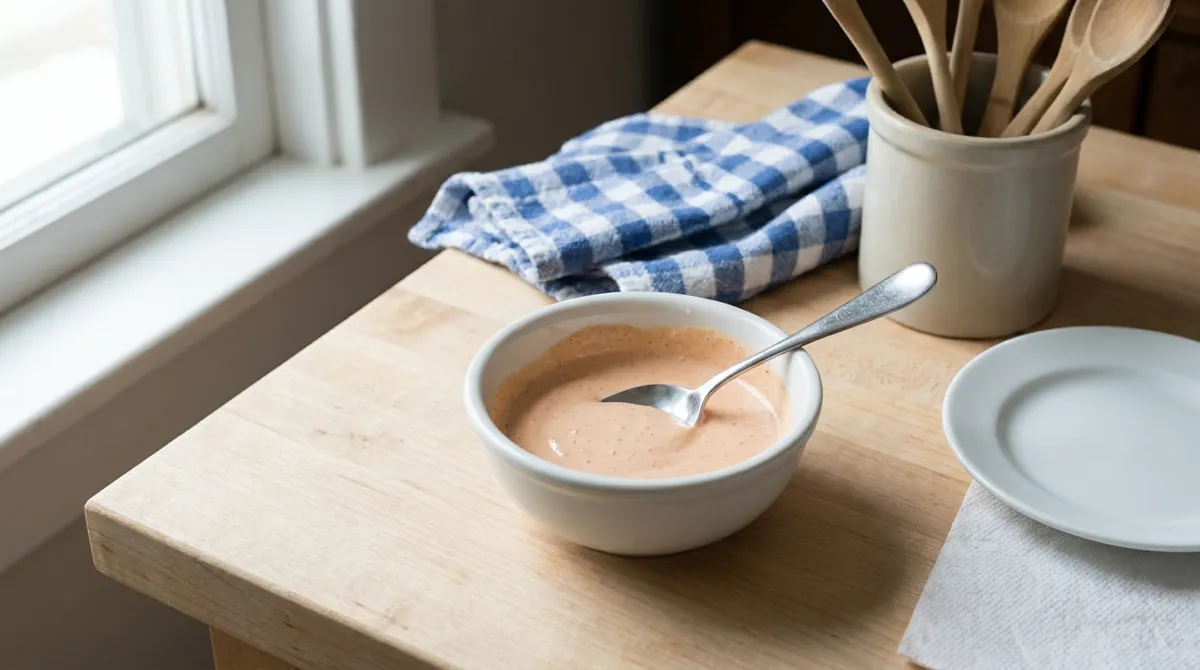
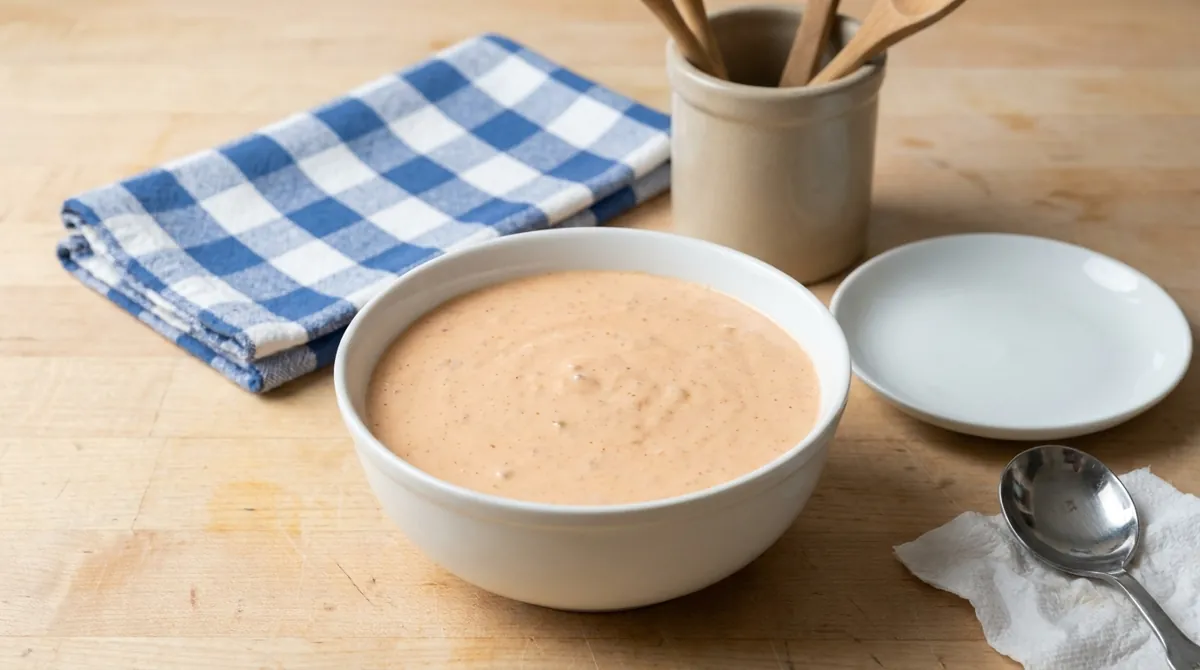
Stir with a spoon until the sauce is an even light orange-pink with no streaks and no grains of sugar.
✓ What it should look like - Step 5
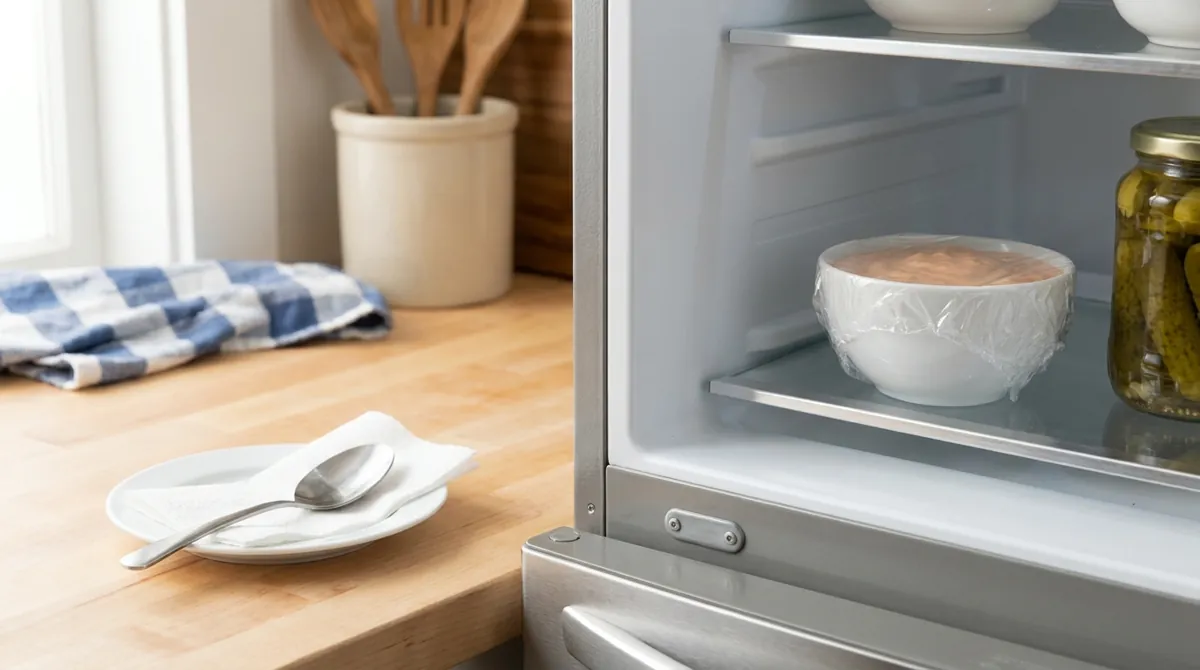
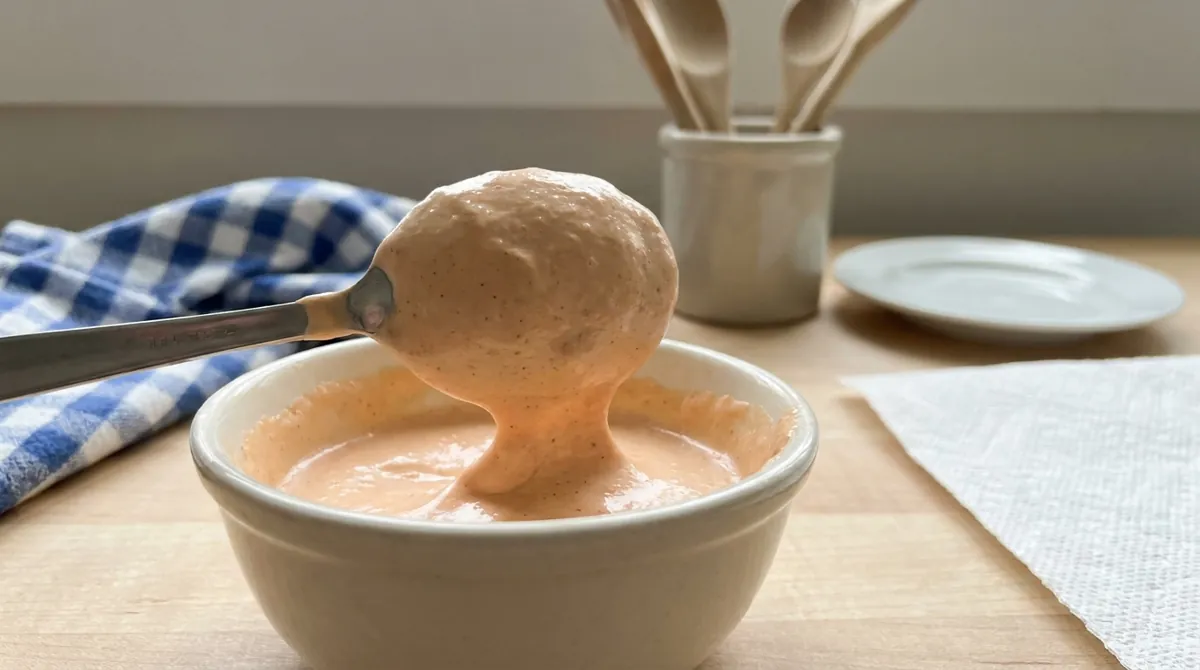
Cover and chill at least 30 minutes. Stir once and taste; add a few drops of vinegar if you want more tang.
✓ What it should look like
Copycat McDonald's Big Mac Sauce
Serves 4 burgers · about 2/3 cup · 35 min total
- 1/2 cup mayonnaise (110 g)
- 1 tbsp ketchup (17 g)
- 4 tsp sweet pickle relish (20 g), drained
- 1 tsp yellow mustard
- 1 tsp distilled white vinegar
- 1 tsp granulated sugar
- 1/2 tsp paprika
- 1/4 tsp garlic powder
- 1/4 tsp onion powder
- A pinch of salt
Equipment: Chef's knife and cutting board, Measuring cups and spoons, Mixing bowls, Paper towels
Method
- Drain the relish on a paper towel, then chop it a little finer.
- Put the mayonnaise, ketchup, relish, mustard and vinegar in a small bowl.
- Add the sugar, paprika, garlic powder, onion powder and salt.
- Stir with a spoon until the sauce is an even light orange-pink with no streaks and no grains of sugar.
- Cover and chill at least 30 minutes. Stir once and taste; add a few drops of vinegar if you want more tang.
Americanized house recipe, inspired by the chain's sauce; not an official recipe. History: Wikipedia, "Jim Delligatti"; NPR, "Creator Of McDonald's Big Mac Dies At 98"; Pittsburgh Magazine, "A Pittsburgher's Determination Gave Us the Big Mac". The 1972 standardization and the 1974 jingle date come from secondary summaries. en.wikipedia.org. Ingredient list follows the source; the method is in our own words.
All sources (3)
Tips
- Keeps 5 days covered in the fridge.
- Use it on a double-patty burger with shredded lettuce, cheese, pickles and onion, or on a chicken sandwich.
- If it tastes too sweet, add vinegar; if too sharp, add a pinch of sugar.
The rules people argue about
What the sources agree on, what they don't, and what is just a good story.
- It is a Thousand Island dressing. Disputed: close in flavor and often called a variant of it, but the chain has never confirmed its formula.
- Home cooks need French dressing for the right taste. Disputed: many copycats use it, others use ketchup; both land in the same place.
Meatballs of the World

Italian-American Meatballs
Big, tender meatballs braised for an hour in red sauce over spaghetti. The one most Americans grew up with.

Pallottine (Abruzzo Meatballs)
Tiny meatballs, smaller than a marble, tossed right through square spaghetti alla chitarra. No bread at all.

Swedish Meatballs (Köttbullar)
Small, soft meatballs browned in butter, in a cream sauce made from the same pan, with lingonberry jam on the plate.

Danish Frikadeller
Pork meatballs shaped with a spoon and fried slowly in butter, crusty outside and soft in the middle.

Königsberger Klopse
German meatballs that are never fried: poached, then served in a creamy white sauce with capers.

Spanish Albóndigas in Almond Saffron Sauce
The tapas bar classic: small meatballs in a golden sauce thickened with fried almonds and bread.

Mexican Albóndigas with Chipotle and Mint
Soft meatballs with rice and fresh mint inside, simmered in a smoky tomato and chipotle broth.

Izgara Köfte (Turkish Grilled Meatballs)
Small, flat meatballs kneaded hard, rested cold, and charred on a hot grill pan.

Lion's Head Meatballs
Big, soft pork meatballs, stirred into a sticky paste, fried to set, then braised in a savory sauce.

Chicken Tsukune
Japan's chicken meatball: kneaded sticky, grilled on skewers, glazed with sweet soy tare, dipped in egg yolk.