
Copycat Italian Beef (Portillo's)
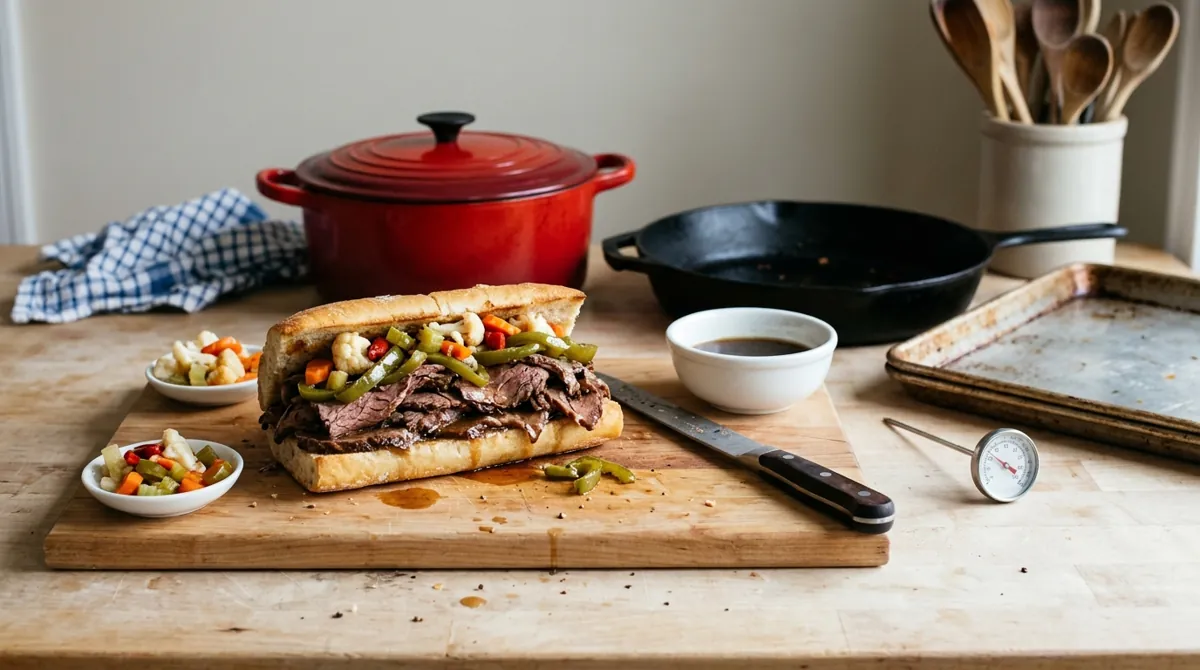
Thin-sliced, garlicky roast beef piled on a crusty roll and soaked in its own seasoned juice, topped with sweet peppers or hot giardiniera: a home version inspired by the Chicago sandwich Portillo's helped carry far beyond the city.
🍳Cook alongOne move at a time, with real timers
 Edited by JP Lambiase
Change the estimate
Swaps change the price only: cook any meat to its own safe temperature. Where these numbers come from
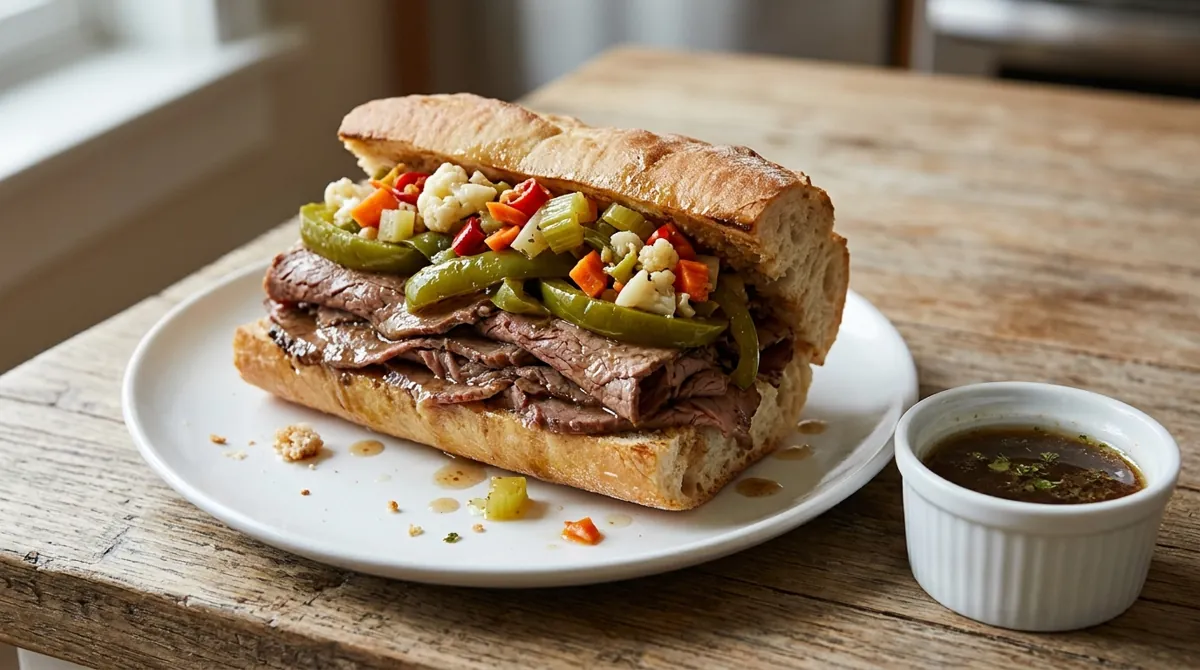
Italian beef is a Chicago sandwich, and nobody is sure who made the first one. One theory is that Italian American families stretched a cheap, tough cut of beef by roasting it in seasoned stock, slicing it very thin and piling it on bread. Some historians credit Pasquale Scala, who reportedly made it for weddings in the 1920s; Al's Beef credits Tony Ferreri in the 1920s and says his son Al began selling it in 1938. The sandwich was unfashionable in the 1950s and 1960s, took off in the 1970s and was citywide by the 1980s.
Portillo's is the best-known chain to sell it. Dick Portillo opened his first stand, a small trailer called The Dog House, in Villa Park, Illinois, on April 9, 1963, and the company grew from there; its menu leans on Chicago street food: hot dogs, Italian sausage and Italian beef. The chain's exact beef seasoning and juice are not public, so this is an inspired-by home version, not Portillo's recipe.
Why it works the kitchen science
Slicing thin after resting
Thin slices soak up juice and stay tender instead of chewy.
Crusty roll
The crust holds up to the juice that makes the sandwich.
🧰 You'll need 7 items
Everything the steps call for. Tick off what you have before you start.
Appliances
Pans and pots
Tools
Step by step
- Step 1
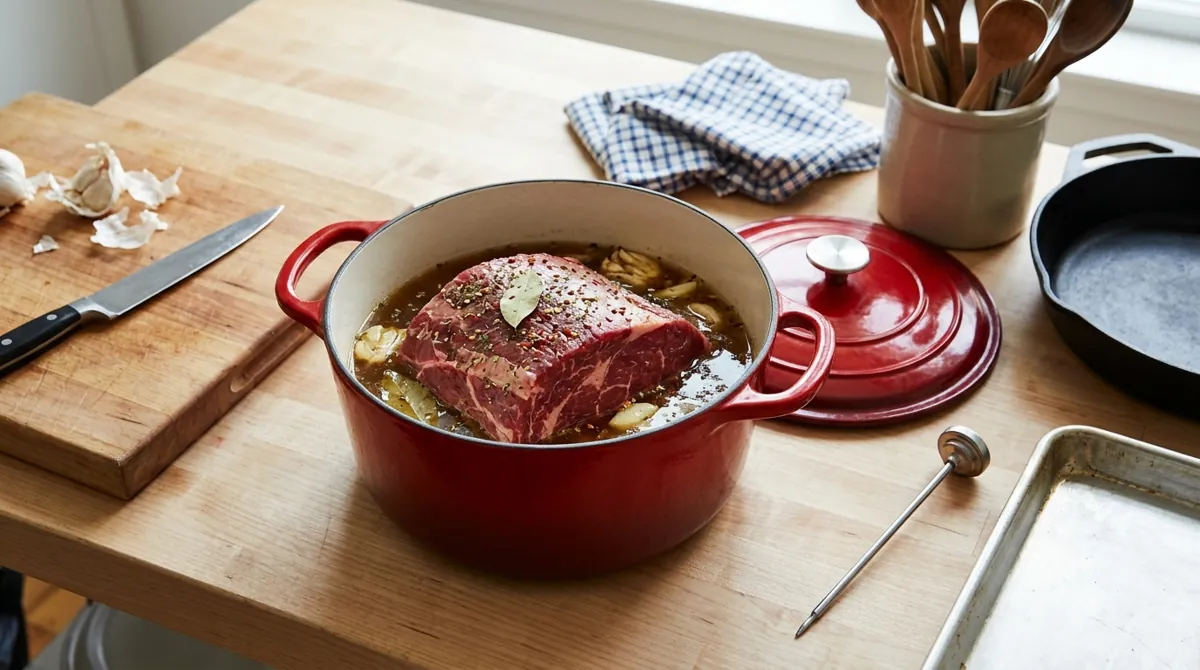
Heat the oven to 325°F. Rub the roast with salt, black pepper and oregano and set it in a Dutch oven. Add the broth, garlic, red pepper flakes and bay leaves.
- Step 2
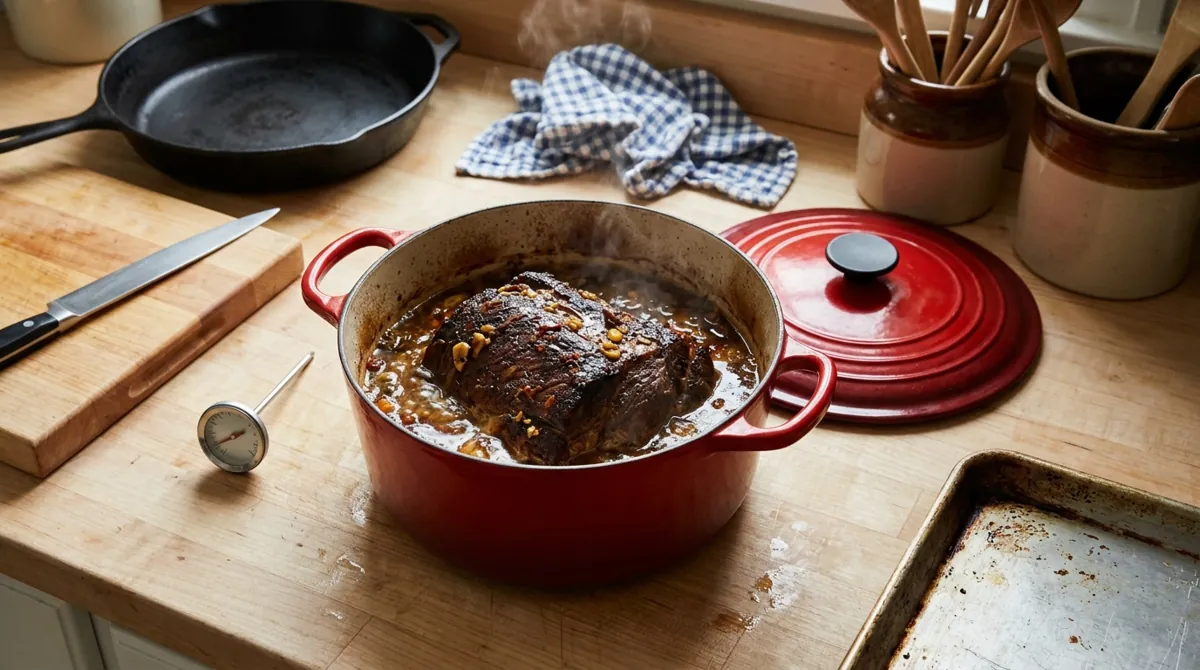
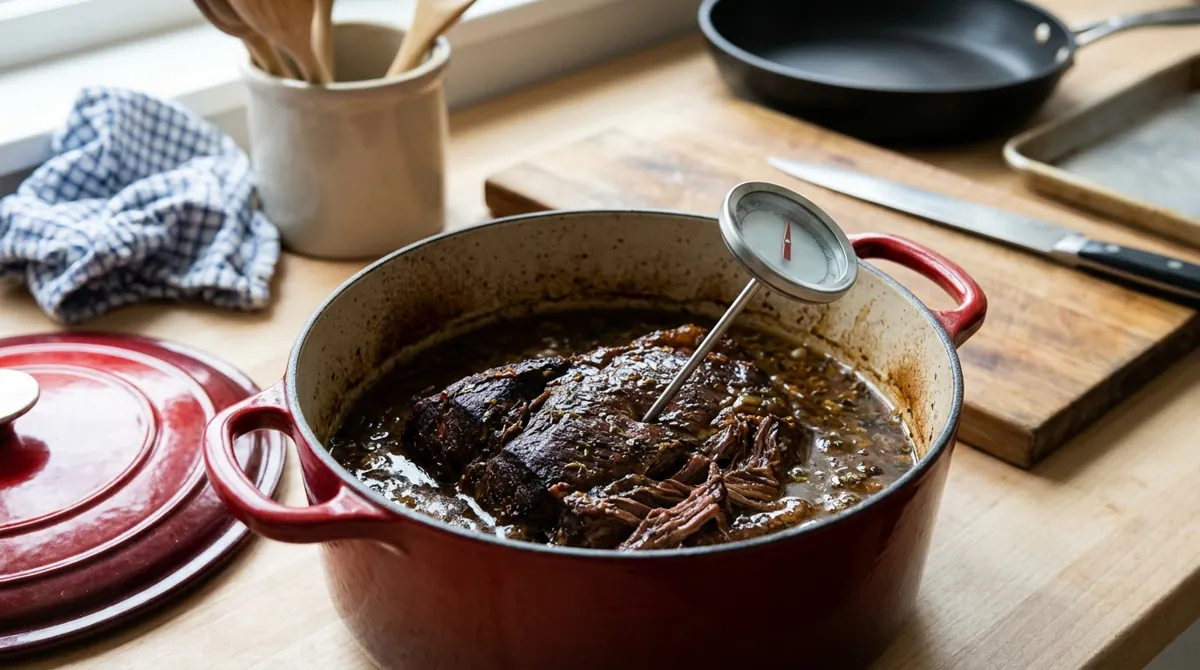
Cover and roast 2 1/2 to 3 hours, until the beef is fork-tender and an instant-read thermometer reads about 190°F.
✓ What it should look like - Step 3
Rest the roast in its juices for 1 hour, then slice it as thin as you can across the grain. Slicing it cold from the fridge gives paper-thin slices.
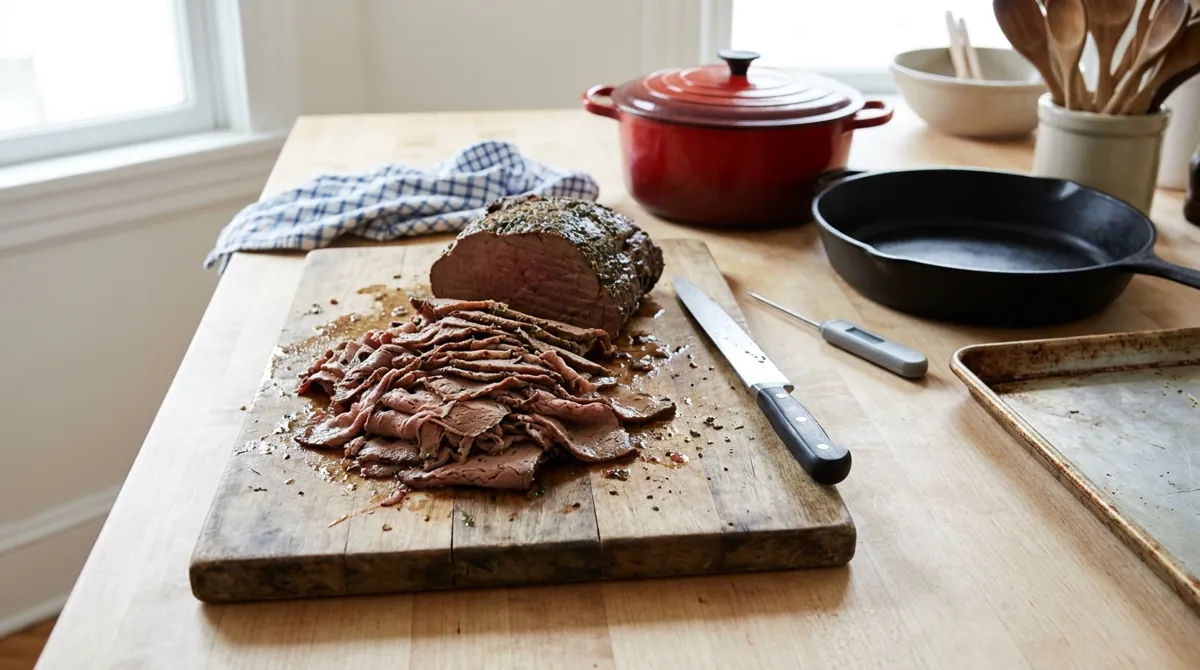
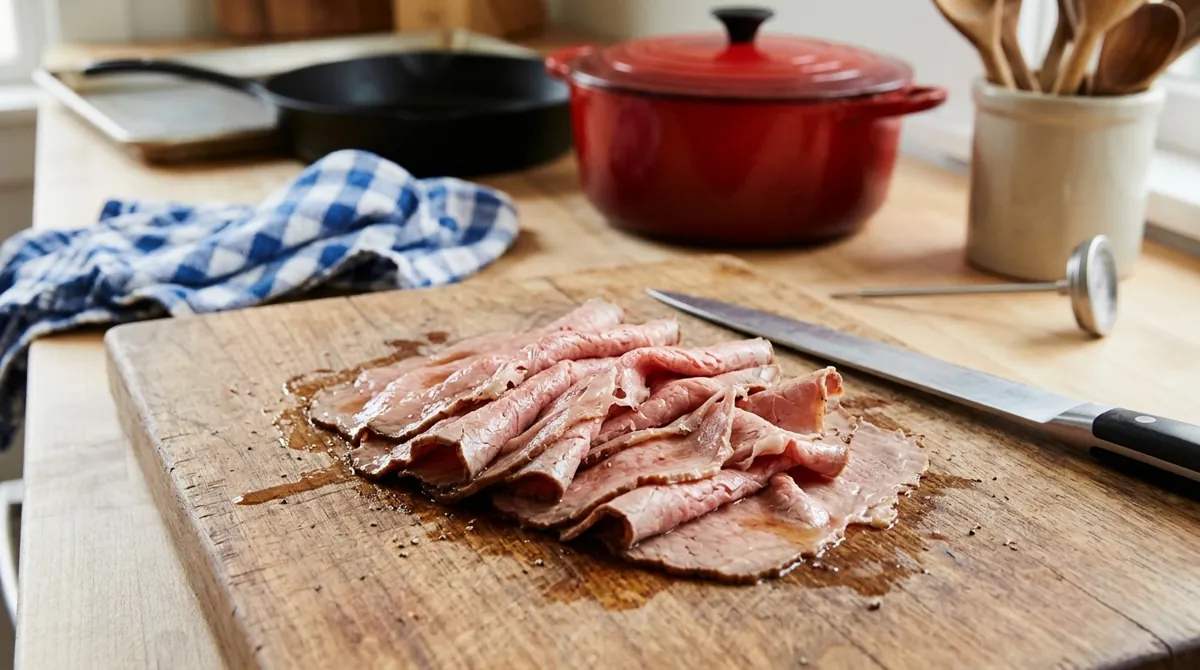
✓ What it should look like - Step 4
Skim the fat from the juice and warm the juice on the stove. Return the sliced beef to it for 10 minutes. Meanwhile cook the green pepper strips in a skillet over medium heat for 8 minutes, until soft.
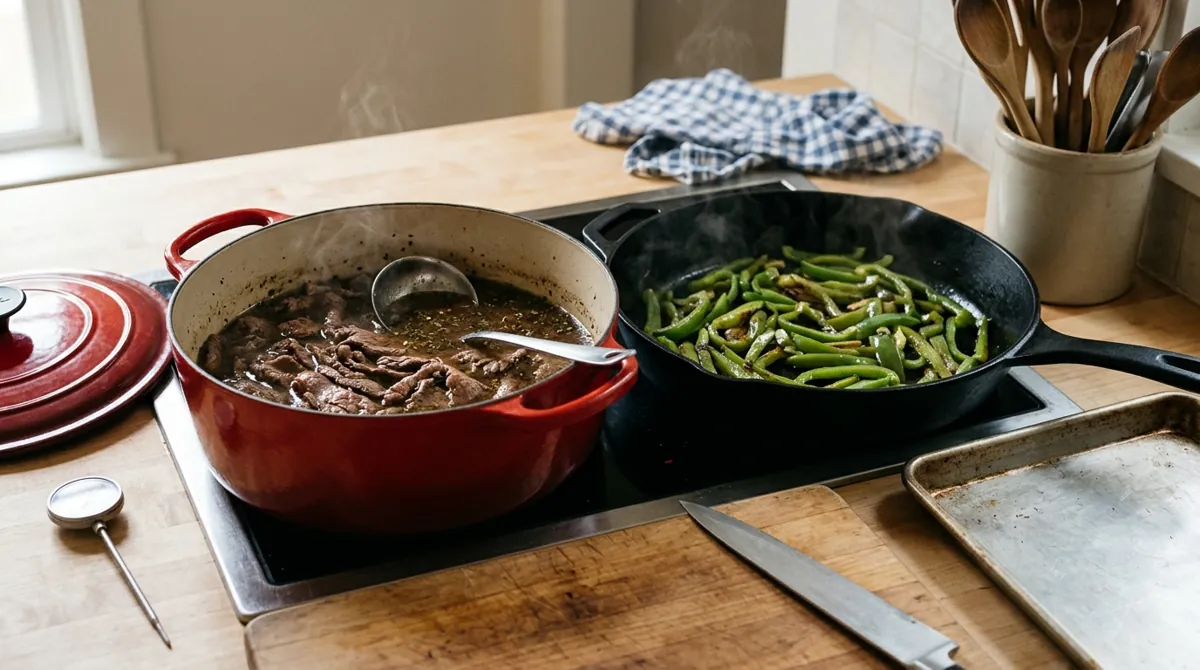
- Step 5
Split the rolls, toast the cut sides on a sheet pan under the broiler for 1 minute, and pile each with beef.
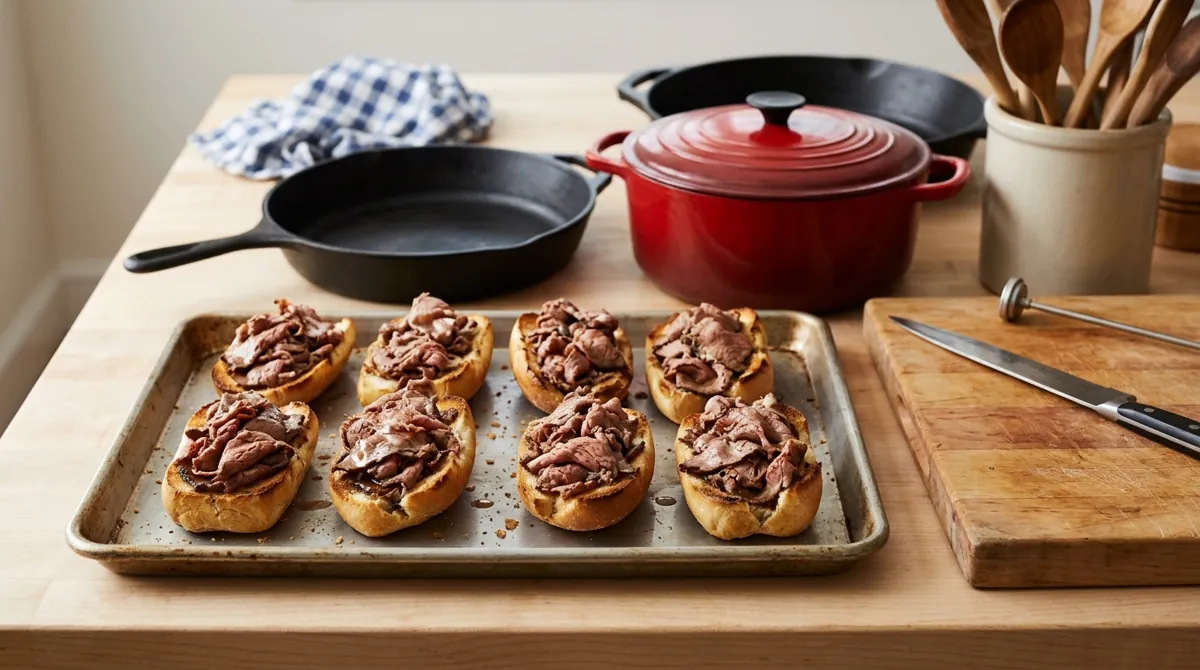
- Step 6
Top with sweet peppers, hot giardiniera, or both, add a slice of provolone and melt it under the broiler if you like, and spoon extra juice over the beef. Serve right away.
Copycat Italian Beef (Portillo's)
Serves 8 · 8 sandwiches · 4 hr 20 min total
Beef
- 3 lb boneless top sirloin or inside round roast (1360 g)
- 1 tbsp kosher salt
- 1 tsp black pepper
- 1 tbsp dried oregano
- 1 tsp red pepper flakes
- 4 cloves garlic (12 g), smashed
- 2 bay leaves
- 4 cups beef broth (960 g)
Sandwiches
- 8 crusty Italian or French rolls (480 g)
- 2 green bell peppers (300 g), sliced into strips
- 1 cup hot giardiniera (150 g), drained
- 8 slices provolone (160 g), optional
Equipment: Oven, Rimmed baking sheet, Dutch oven, Skillet, Instant-read thermometer, Chef's knife and cutting board, Measuring cups and spoons
Method
- Heat the oven to 325°F. Rub the roast with salt, black pepper and oregano and set it in a Dutch oven. Add the broth, garlic, red pepper flakes and bay leaves.
- Cover and roast 2 1/2 to 3 hours, until the beef is fork-tender and an instant-read thermometer reads about 190°F.
- Rest the roast in its juices for 1 hour, then slice it as thin as you can across the grain. Slicing it cold from the fridge gives paper-thin slices.
- Skim the fat from the juice and warm the juice on the stove. Return the sliced beef to it for 10 minutes. Meanwhile cook the green pepper strips in a skillet over medium heat for 8 minutes, until soft.
- Split the rolls, toast the cut sides on a sheet pan under the broiler for 1 minute, and pile each with beef.
- Top with sweet peppers, hot giardiniera, or both, add a slice of provolone and melt it under the broiler if you like, and spoon extra juice over the beef. Serve right away.
Americanized house recipe, written for this site. Inspired by, not a copy of, the chain's sandwich. History: Wikipedia, "Italian beef" (origin theories, Scala and Ferreri, 1970s rise, inside round or top sirloin, French bread, sweet and hot, dipped and dry); Wikipedia, "Portillo's" (founded 1963 by Dick Portillo in Villa Park); Portillo's, "Our Story". Doneness: roast to fork-tender at about 190°F, well past the 145°F safe minimum for whole beef. en.wikipedia.org. Ingredient list follows the source; the method is in our own words.
All sources (3)
Tips
- Order it your way at home: "dry" is beef lifted from the juice, "wet" or "dipped" is beef and roll both soaked; shops use the words differently.
- The beef and juice keep 4 days in the fridge and 3 months in the freezer. Reheat gently in the juice, never boil.
- Make it a "combo" by adding a grilled Italian sausage.
The rules people argue about
What the sources agree on, what they don't, and what is just a good story.
- Who invented it. Disputed: Pasquale Scala (1920s weddings) and Tony Ferreri (Al's Beef, 1920s) are both credited; the origin is not settled.
- What "dipped" means. Disputed by restaurant: "dipped", "dunked" and "wet" mean different things in different shops.
Meatballs of the World

Italian-American Meatballs
Big, tender meatballs braised for an hour in red sauce over spaghetti. The one most Americans grew up with.

Pallottine (Abruzzo Meatballs)
Tiny meatballs, smaller than a marble, tossed right through square spaghetti alla chitarra. No bread at all.

Swedish Meatballs (Köttbullar)
Small, soft meatballs browned in butter, in a cream sauce made from the same pan, with lingonberry jam on the plate.

Danish Frikadeller
Pork meatballs shaped with a spoon and fried slowly in butter, crusty outside and soft in the middle.

Königsberger Klopse
German meatballs that are never fried: poached, then served in a creamy white sauce with capers.

Spanish Albóndigas in Almond Saffron Sauce
The tapas bar classic: small meatballs in a golden sauce thickened with fried almonds and bread.

Mexican Albóndigas with Chipotle and Mint
Soft meatballs with rice and fresh mint inside, simmered in a smoky tomato and chipotle broth.

Izgara Köfte (Turkish Grilled Meatballs)
Small, flat meatballs kneaded hard, rested cold, and charred on a hot grill pan.

Lion's Head Meatballs
Big, soft pork meatballs, stirred into a sticky paste, fried to set, then braised in a savory sauce.

Chicken Tsukune
Japan's chicken meatball: kneaded sticky, grilled on skewers, glazed with sweet soy tare, dipped in egg yolk.