
Copycat Panda Express Chow Mein
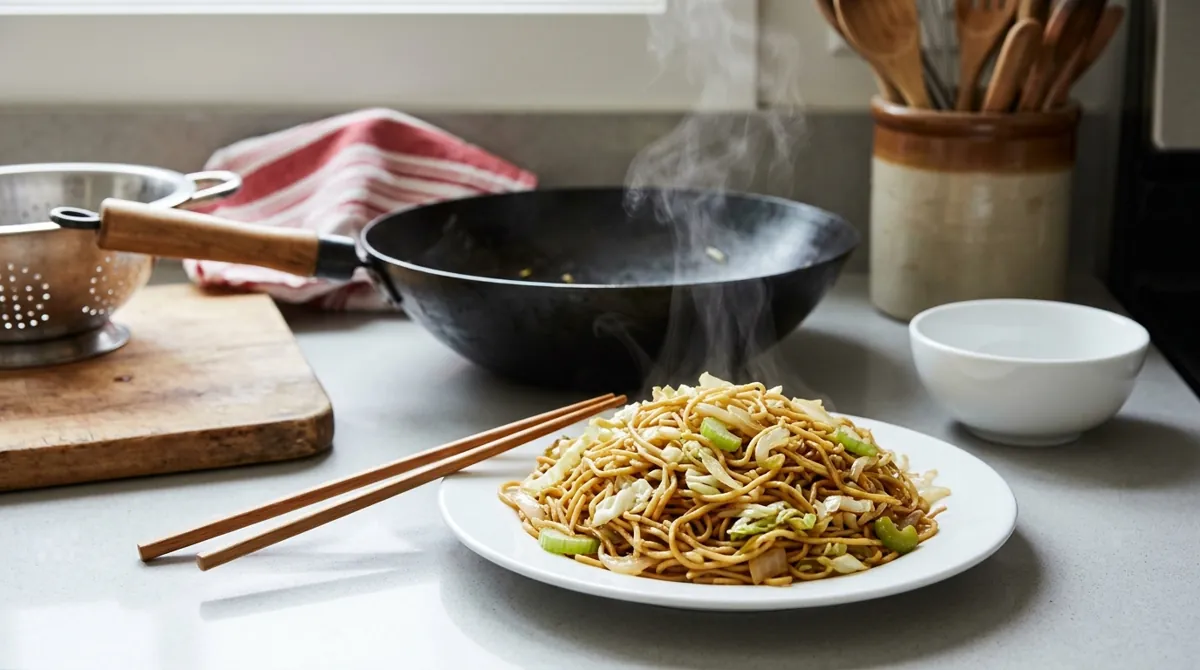
Soft, lightly seared wheat noodles with sweet onion, celery and cabbage in a savory soy glaze: a home version inspired by the side a Chinese American chain has served since its early food court days.
🍳Cook alongOne move at a time, with real timers
 Edited by JP Lambiase
Change the estimate
Swaps change the price only: cook any meat to its own safe temperature. Where these numbers come from
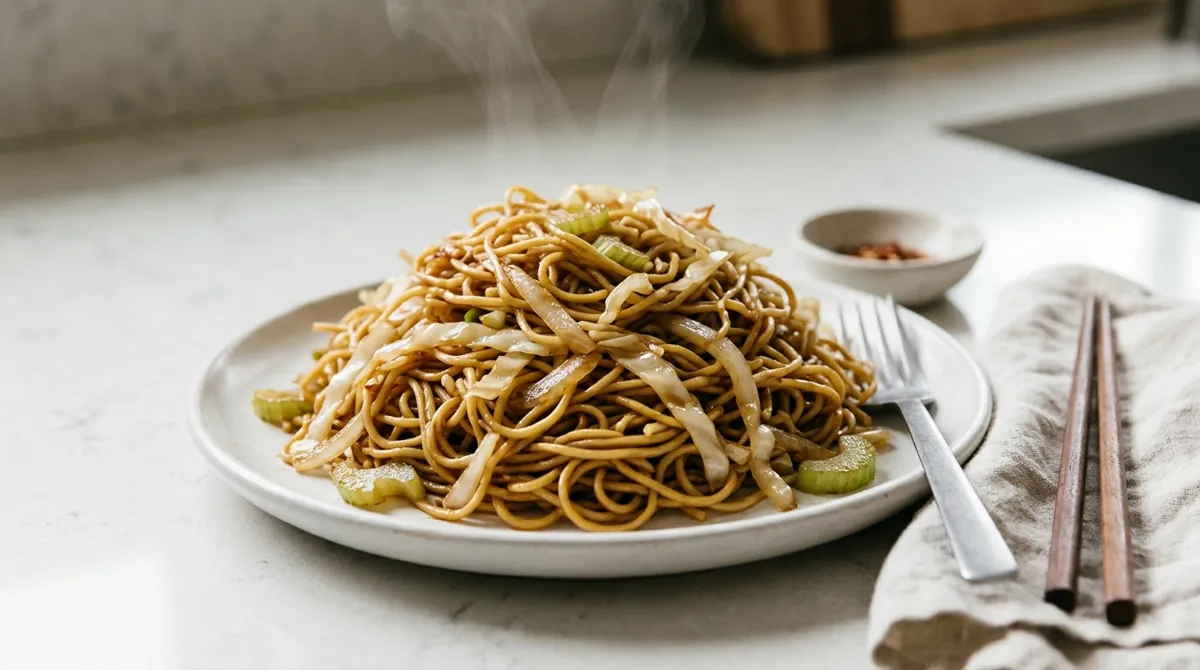
Chow mein means "stir-fried noodles": chow is stir-fried and mein is noodles, spelled the way early Chinese immigrants from Taishan said it. Cantonese immigrants brought it to the United States during the Gold Rush era, the word "chow mien" first shows up in American English in 1890, and by 1903 it was spelled "chow mein". In the US it split into two styles: crispy fried noodles, more common on the East Coast, and soft stir-fried noodles, more common in the West.
Panda Express opened its first location in October 1983 in the Glendale Galleria food court, and chow mein was a menu staple early on: a 1985 menu listed a combo plate of chow mein or fried rice with two entrees for $3.45. The chain's version is the soft style, made with wheat noodles, onion, celery and cabbage. This is an inspired-by version, not the chain's recipe, which is not public.
Why it works the kitchen science
Slightly undercooked noodles
They finish cooking in the sauce and stay springy instead of mushy.
A very hot wok
A little browning on the noodles and onion gives the savory, almost smoky flavor.
Cabbage added late
It stays sweet and crisp-tender.
🧰 You'll need 6 items
Everything the steps call for. Tick off what you have before you start.
Pans and pots
Tools
Step by step
- Step 1
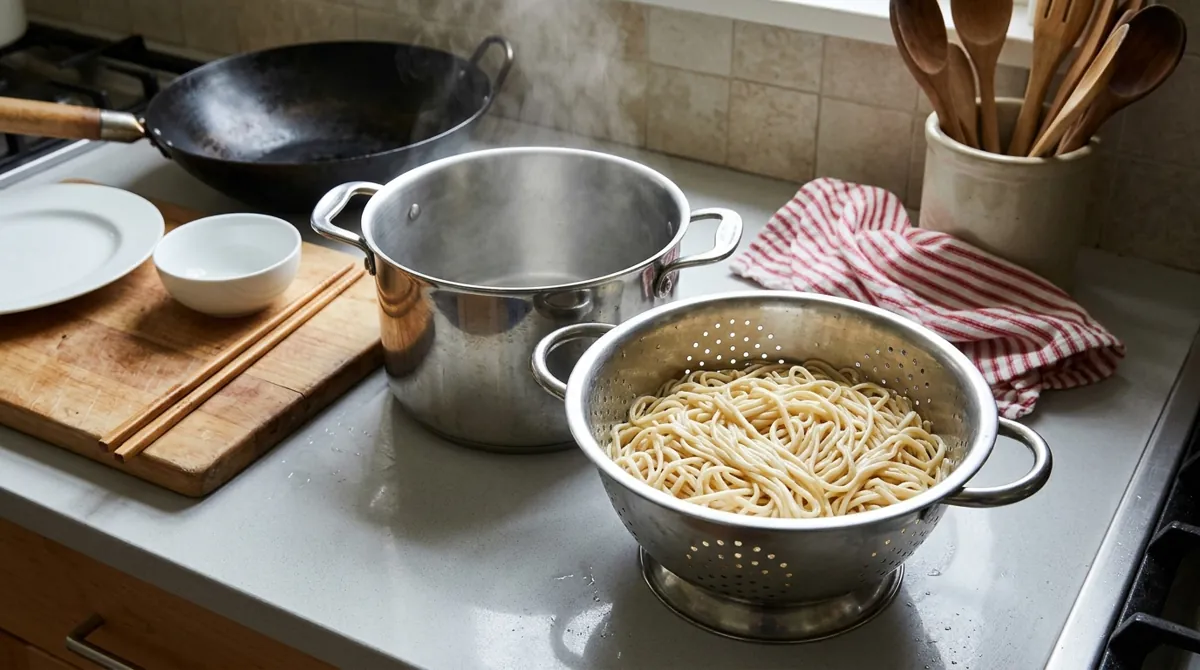
Boil the noodles 1 minute less than the package says, drain, rinse briefly and toss with 1 tbsp of the oil so they do not stick.
- Step 2
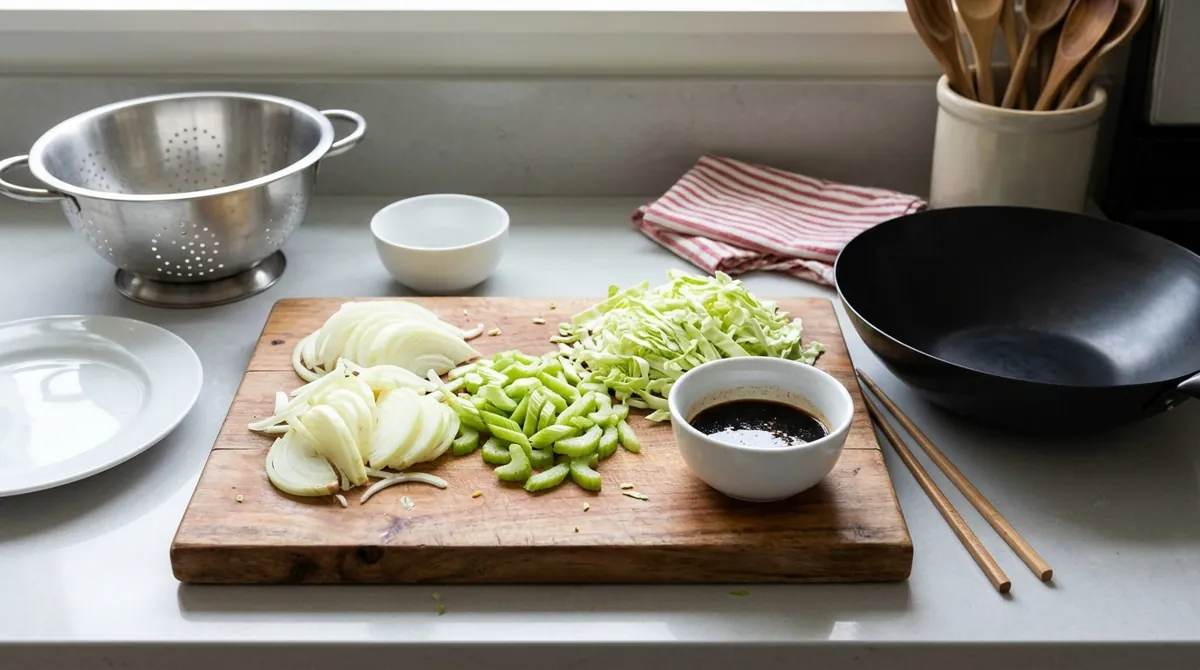
Stir the soy sauce, sugar, sesame oil, water and white pepper together in a small bowl.
- Step 3
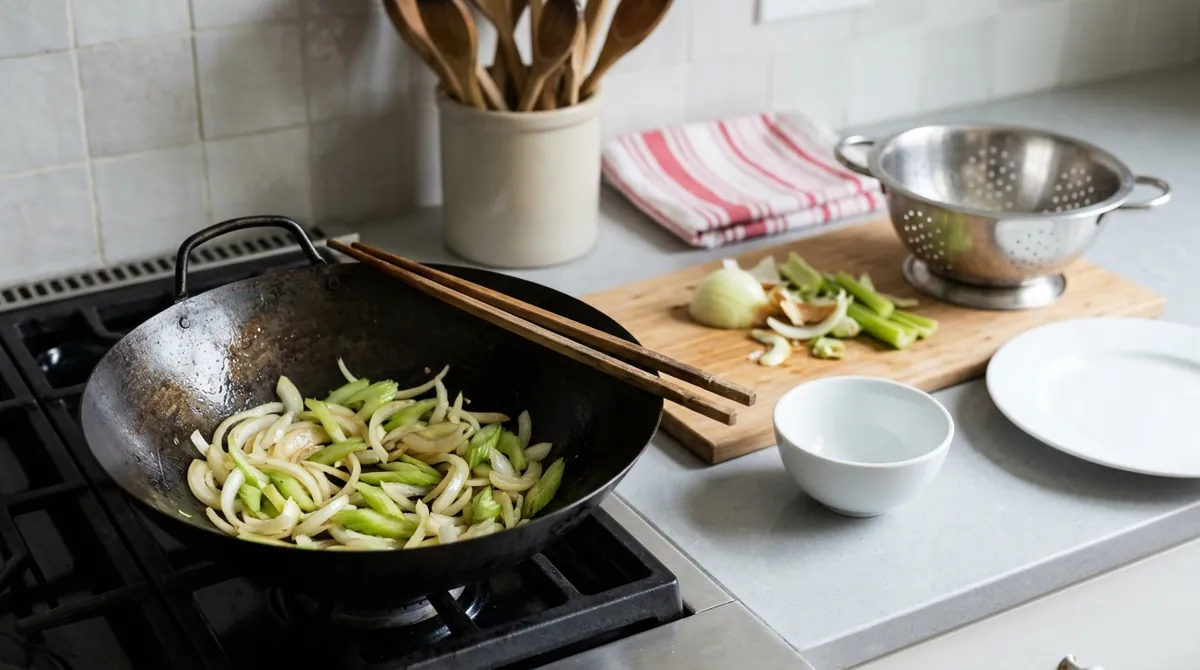
Heat 1 tbsp oil in a large wok or skillet over high heat. Stir-fry the onion and celery 2 minutes, until the onion starts to soften at the edges.
- Step 4
Add the cabbage and garlic and stir-fry 2 minutes more, until the cabbage is wilted but still has some crunch.
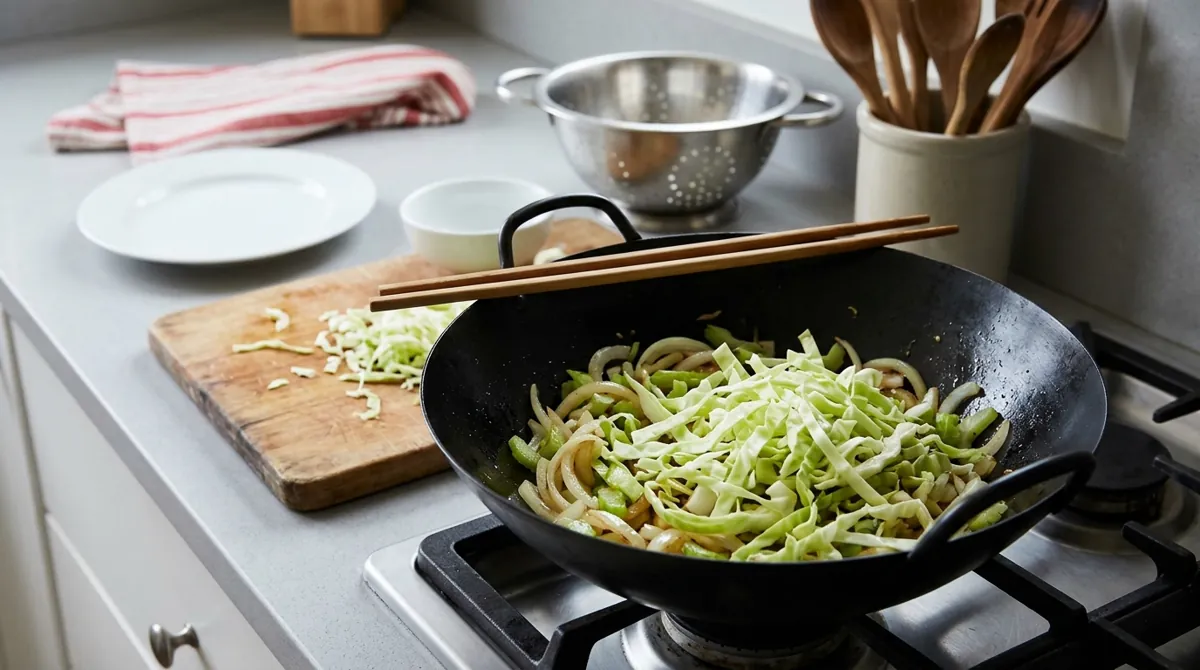
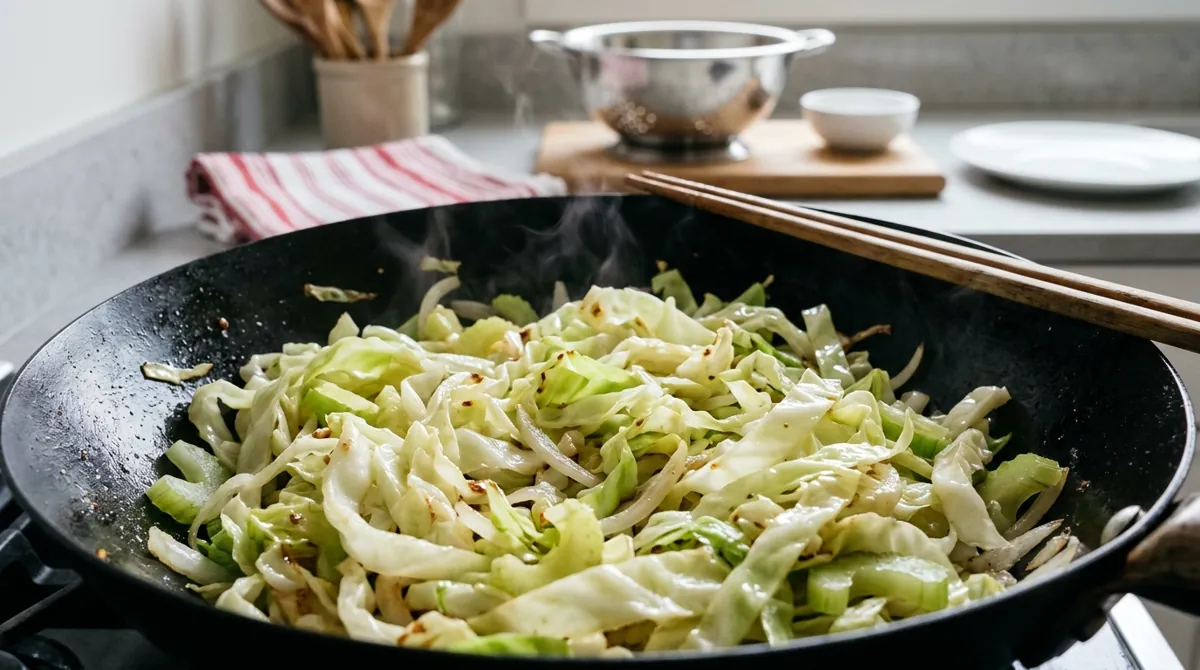
✓ What it should look like - Step 5
Add the last tbsp of oil, the noodles and the sauce. Toss with tongs 2 to 3 minutes, until the noodles are glossy and a few strands are lightly browned.
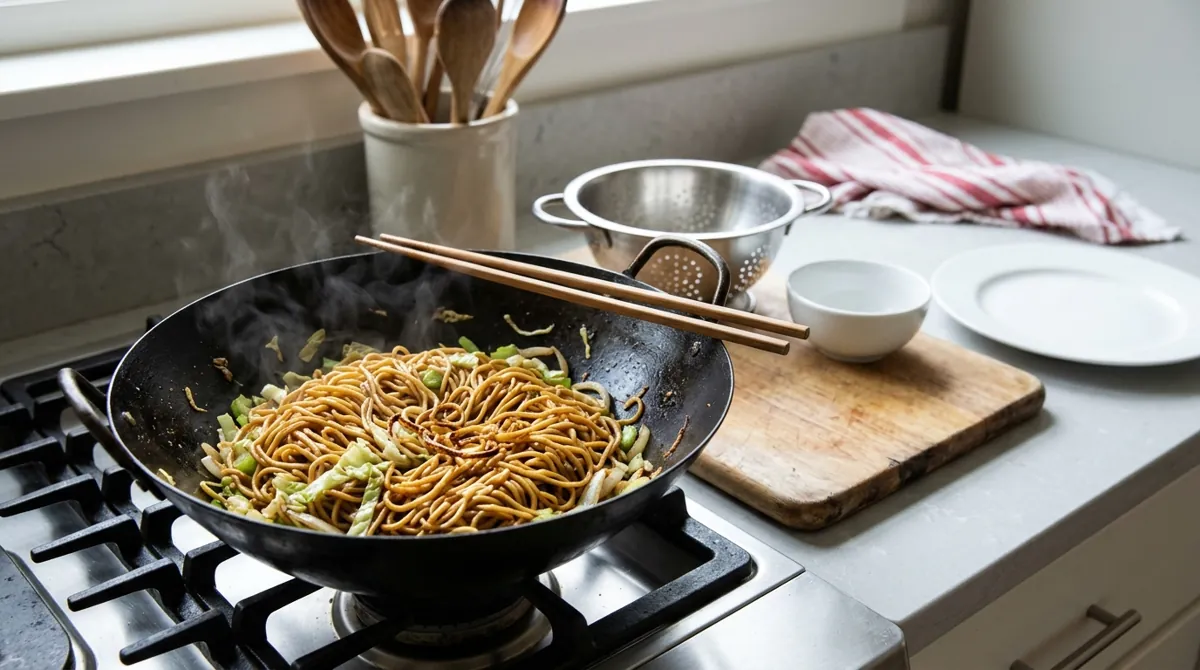
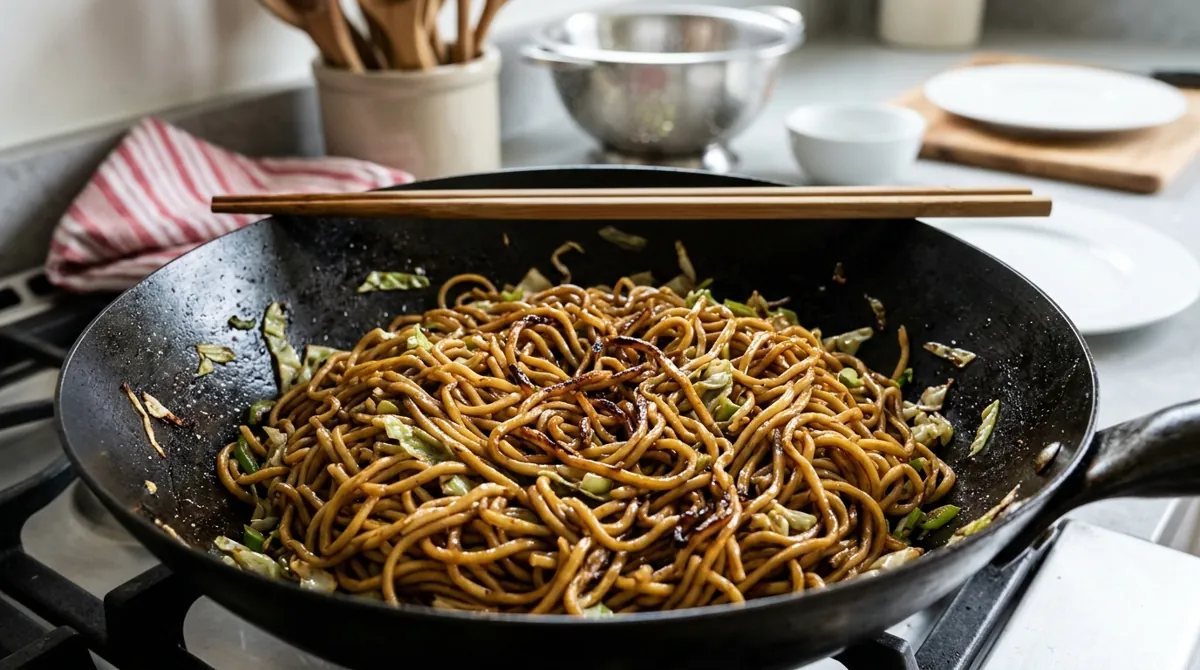
✓ What it should look like - Step 6
Serve hot right away, as a side or under any stir-fry.
Copycat Panda Express Chow Mein
Serves 4 · about 6 cups · 30 min total
Noodles and vegetables
- 8 oz dried wheat noodles, such as chow mein noodles or thin spaghetti (227 g)
- 3 tbsp neutral oil (40 g), divided
- 1/2 medium yellow onion, thinly sliced (75 g)
- 2 celery stalks, sliced thin on the bias (80 g)
- 2 cups shredded green cabbage (140 g)
- 2 cloves garlic, minced (6 g)
Sauce
- 3 tbsp soy sauce (48 g)
- 2 tsp granulated sugar (8 g)
- 1 tsp toasted sesame oil (4.5 g)
- 2 tbsp water
- A pinch of white pepper
Equipment: Skillet, Wok, Chef's knife and cutting board, Measuring cups and spoons, Mixing bowls, Tongs
Method
- Boil the noodles 1 minute less than the package says, drain, rinse briefly and toss with 1 tbsp of the oil so they do not stick.
- Stir the soy sauce, sugar, sesame oil, water and white pepper together in a small bowl.
- Heat 1 tbsp oil in a large wok or skillet over high heat. Stir-fry the onion and celery 2 minutes, until the onion starts to soften at the edges.
- Add the cabbage and garlic and stir-fry 2 minutes more, until the cabbage is wilted but still has some crunch.
- Add the last tbsp of oil, the noodles and the sauce. Toss with tongs 2 to 3 minutes, until the noodles are glossy and a few strands are lightly browned.
- Serve hot right away, as a side or under any stir-fry.
Americanized house recipe, written for this site. It is inspired by, not a copy of, the chain's dish. History: Wikipedia, "Chow mein" (name, Taishan pronunciation, Gold Rush era, 1890 and 1903 first uses, crispy versus soft styles); Wikipedia, "Panda Express" (Panda Inn 1973, first Panda Express October 1983 in the Glendale Galleria); Chowhound, "What The Panda Express Menu Looked Like In 1985" (chow mein among the early staples, $3.45 combo plate); VegNews, "How to Eat Vegan at Panda Express" (noodles, onions, celery and cabbage; no eggs; shared equipment caveat). en.wikipedia.org. Ingredient list follows the source; the method is in our own words.
All sources (4)
Tips
- No wok? A large 12 inch skillet works: cook the noodles in two batches for better browning.
- Add a splash of oyster sauce for a deeper flavor, though that makes it no longer vegan.
- Day-old noodles brown even better. Reheat in a hot skillet, not the microwave.
The rules people argue about
What the sources agree on, what they don't, and what is just a good story.
- Panda's noodles are vegan. Disputed: guides say the ingredients are only noodles and vegetables and no eggs, and the chain's earlier versions reportedly used chicken stock; they are also cooked on shared equipment. Check the chain's current allergen guide.
Meatballs of the World

Italian-American Meatballs
Big, tender meatballs braised for an hour in red sauce over spaghetti. The one most Americans grew up with.

Pallottine (Abruzzo Meatballs)
Tiny meatballs, smaller than a marble, tossed right through square spaghetti alla chitarra. No bread at all.

Swedish Meatballs (Köttbullar)
Small, soft meatballs browned in butter, in a cream sauce made from the same pan, with lingonberry jam on the plate.

Danish Frikadeller
Pork meatballs shaped with a spoon and fried slowly in butter, crusty outside and soft in the middle.

Königsberger Klopse
German meatballs that are never fried: poached, then served in a creamy white sauce with capers.

Spanish Albóndigas in Almond Saffron Sauce
The tapas bar classic: small meatballs in a golden sauce thickened with fried almonds and bread.

Mexican Albóndigas with Chipotle and Mint
Soft meatballs with rice and fresh mint inside, simmered in a smoky tomato and chipotle broth.

Izgara Köfte (Turkish Grilled Meatballs)
Small, flat meatballs kneaded hard, rested cold, and charred on a hot grill pan.

Lion's Head Meatballs
Big, soft pork meatballs, stirred into a sticky paste, fried to set, then braised in a savory sauce.

Chicken Tsukune
Japan's chicken meatball: kneaded sticky, grilled on skewers, glazed with sweet soy tare, dipped in egg yolk.