
Copycat Raising Cane's Chicken Fingers
Chicken tenderloins marinated in seasoned milk, coated in peppery flour and fried deep golden: an inspired-by home version of the chain that sells chicken fingers and little else.
🍳Cook alongOne move at a time, with real timers
 Edited by JP Lambiase
Change the estimate
Swaps change the price only: cook any meat to its own safe temperature. Where these numbers come from
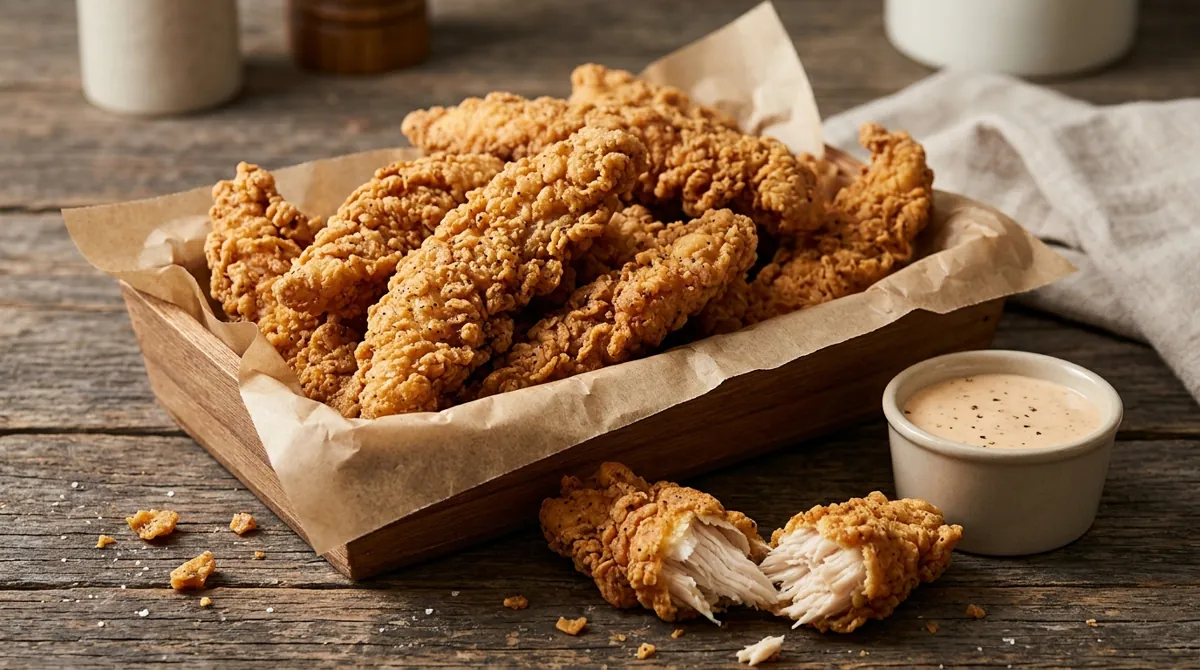
Raising Cane's opened on August 28, 1996, near the North Gate of Louisiana State University in Baton Rouge. Todd Graves and Craig Silvey wrote the business plan while studying at different universities. Investors turned it down, so Graves worked manual jobs to save money, and the pair then got a Small Business Administration loan. The restaurant is named for Graves's yellow Labrador, Cane. The idea was a menu of chicken fingers and nothing else, and the chain says it uses only the tenderloin cut.
Chicken fingers are an American invention of the 20th century, a boneless cousin of fried chicken. The chain says its chicken is marinated and battered, but it does not publish the marinade or breading, so this is an inspired-by version. It pairs well with the home Cane's-style dipping sauce already on this site.
Why it works the kitchen science
Tenderloins
The thin, tender strip of the breast cooks through quickly, before the coating can burn.
Seasoned milk and egg
The marinade seasons the meat and gives the flour a wet surface to grab, so one coat comes out craggy and crunchy.
Pressing the flour on, then a 10 minute rest
The coating hydrates and bonds, so it stays on in the oil.
Oil at 350°f
Crisp outside and cooked through inside, before the coating gets too dark.
🧰 You'll need 8 items
Everything the steps call for. Tick off what you have before you start.
Pans and pots
Tools
Step by step
- Step 1
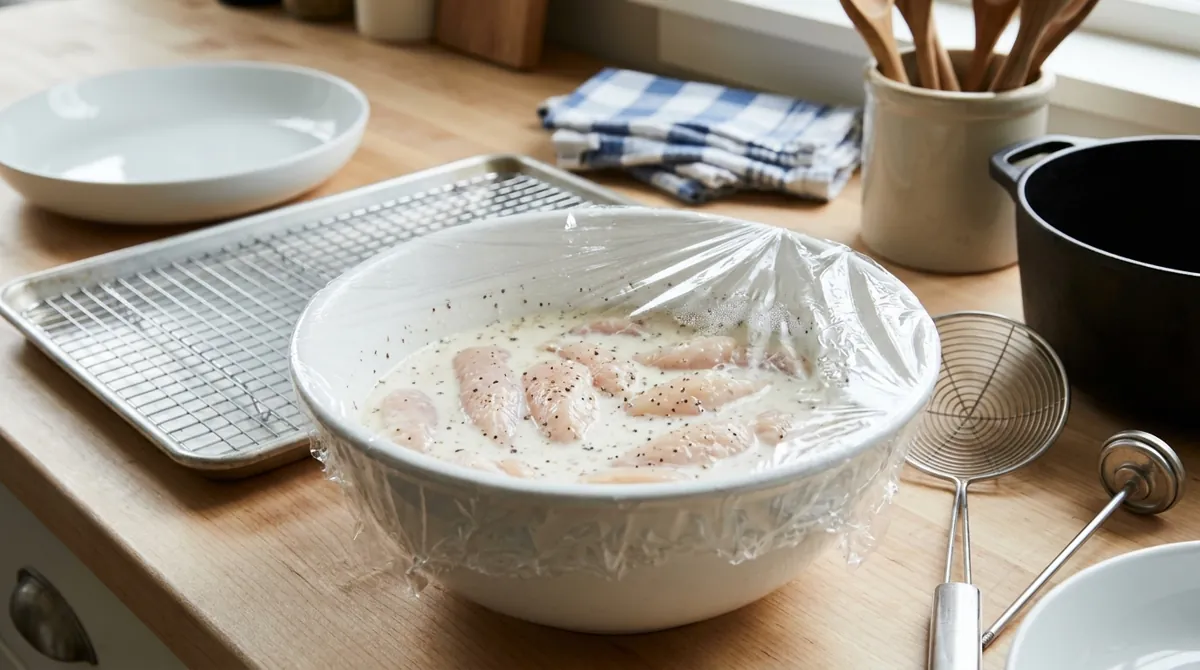
Pat the tenderloins dry and pull out any tough white tendon. In a bowl, whisk the milk, egg, salt, pepper and garlic powder, add the chicken, cover and refrigerate 1 hour, or up to 4 hours.
- Step 2
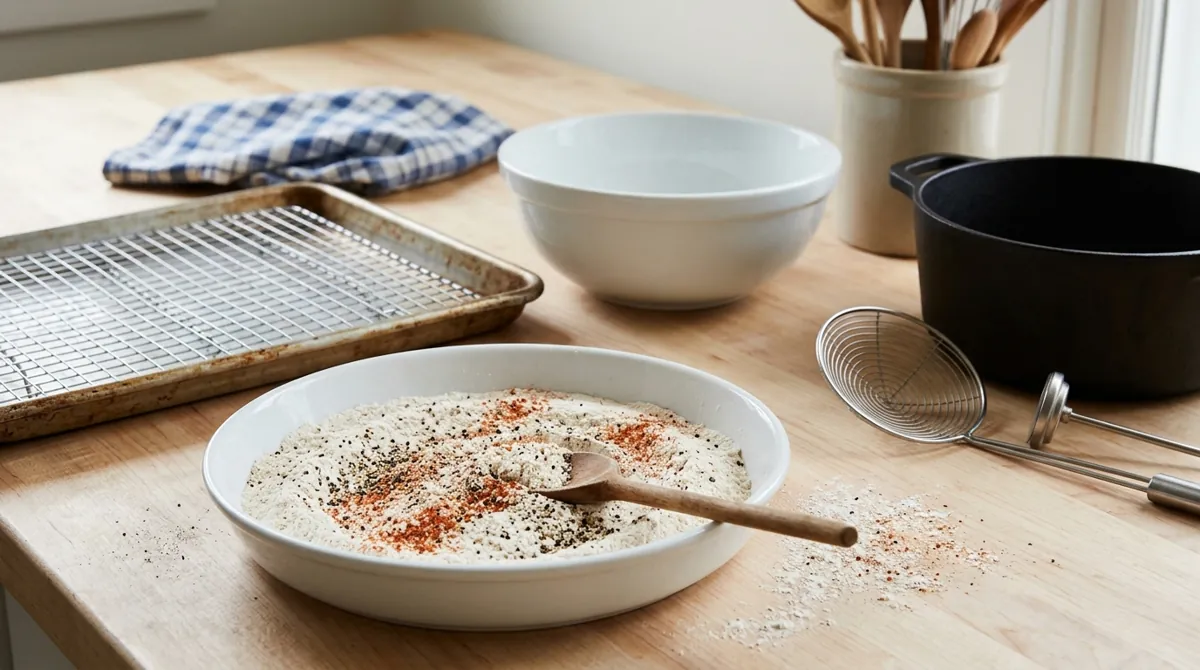
Whisk the flour, salt, pepper, garlic powder and paprika together in a wide shallow dish.
- Step 3
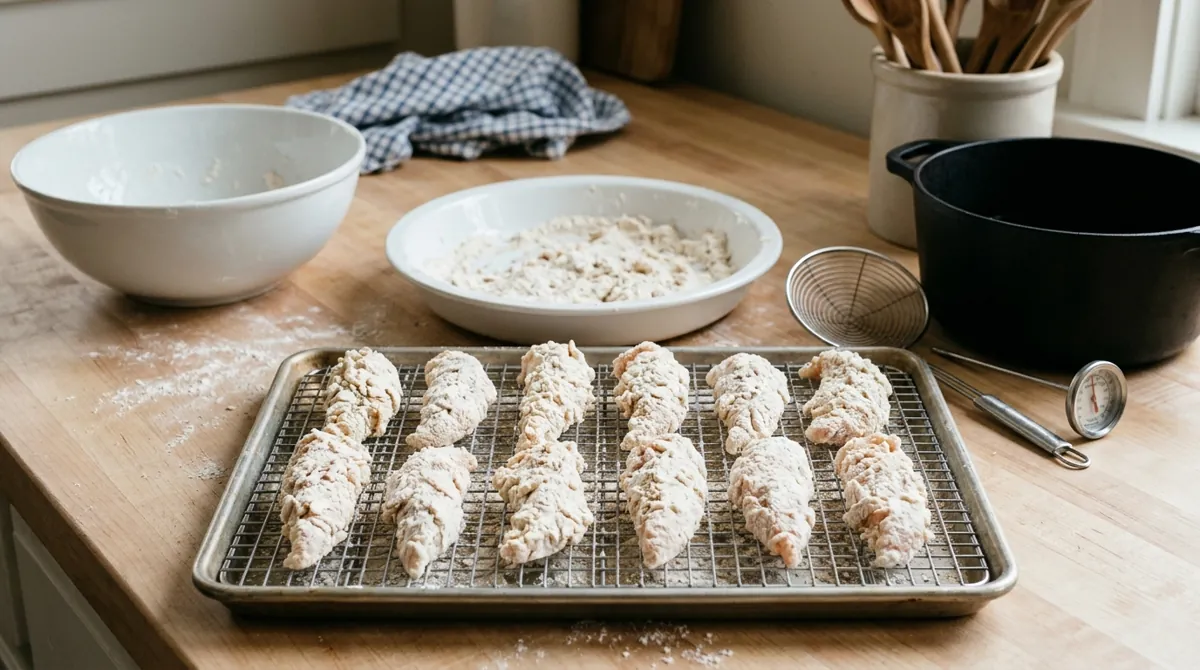
Take each tenderloin from the marinade, let the extra drip off, and press it into the flour on all sides until thickly coated with a craggy surface. Set the coated chicken on a wire rack and let it rest 10 minutes, so the coating sticks.
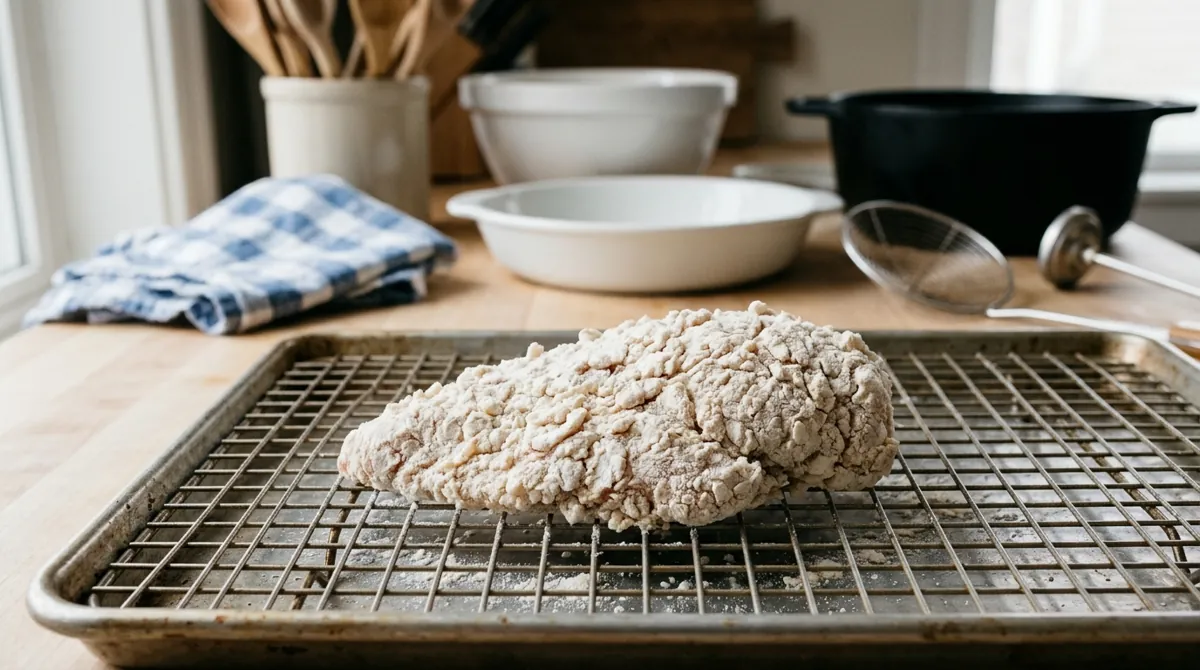
✓ What it should look like - Step 4
Pour the oil into a heavy pot to a depth of 2 inches and heat it to 350°F, checking with a frying thermometer.
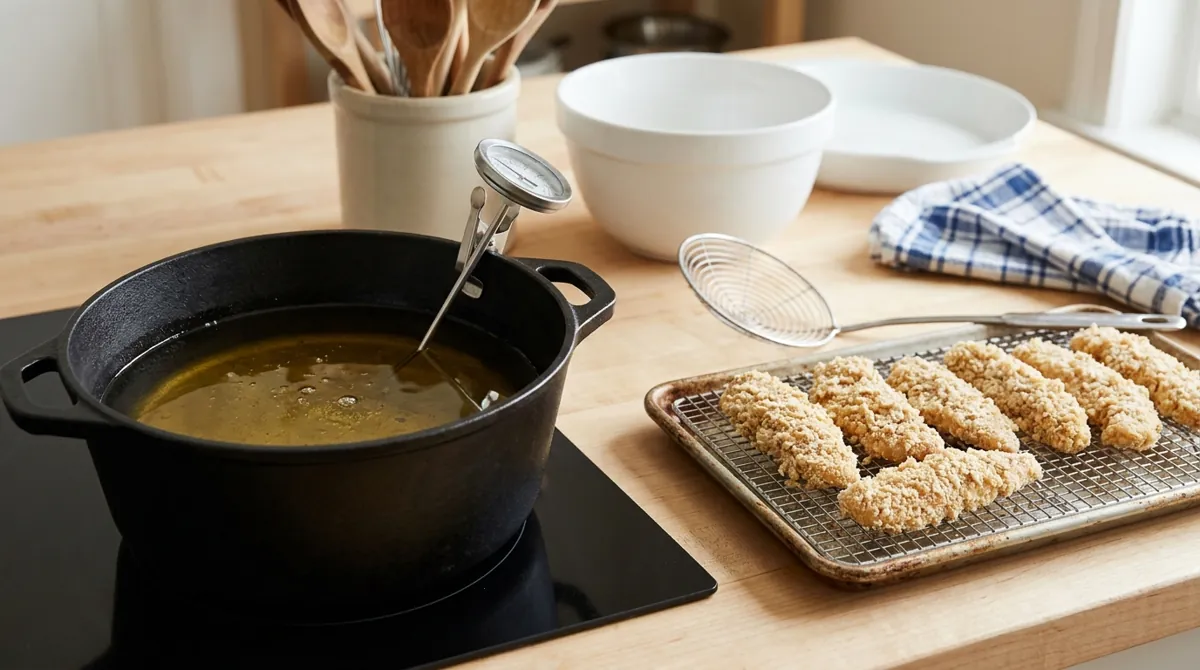
- Step 5
Fry 4 or 5 fingers at a time, turning once, 4 to 5 minutes, until deep golden brown and 165°F in the thickest part. Keep the oil at 340 to 350°F between batches.
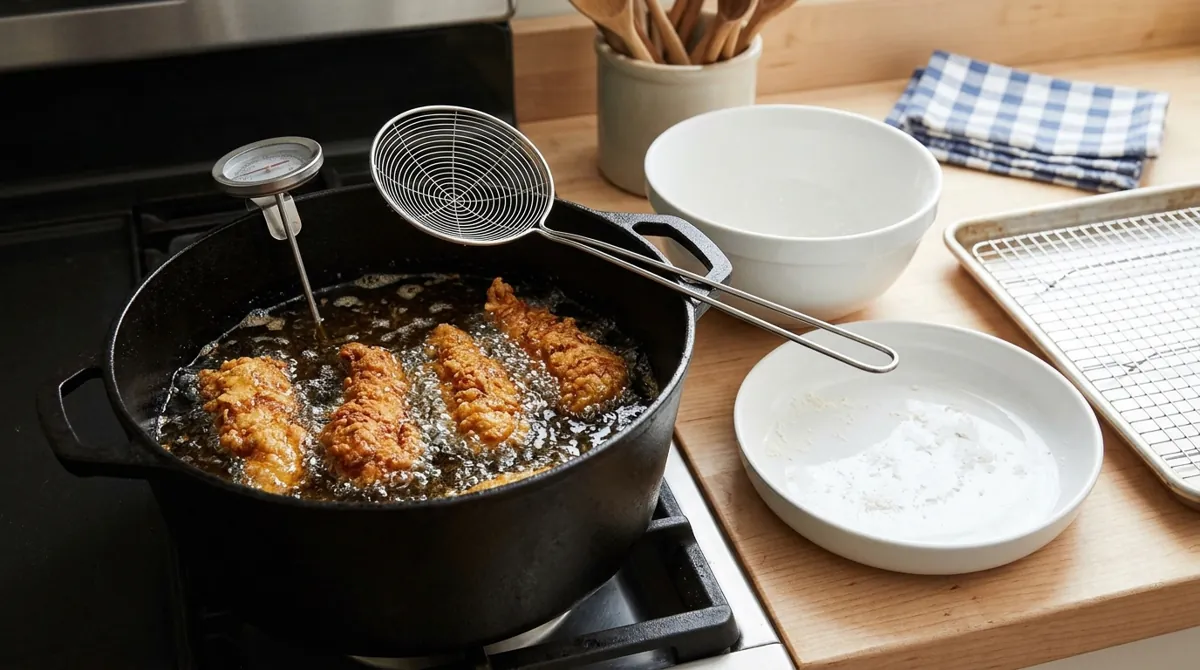
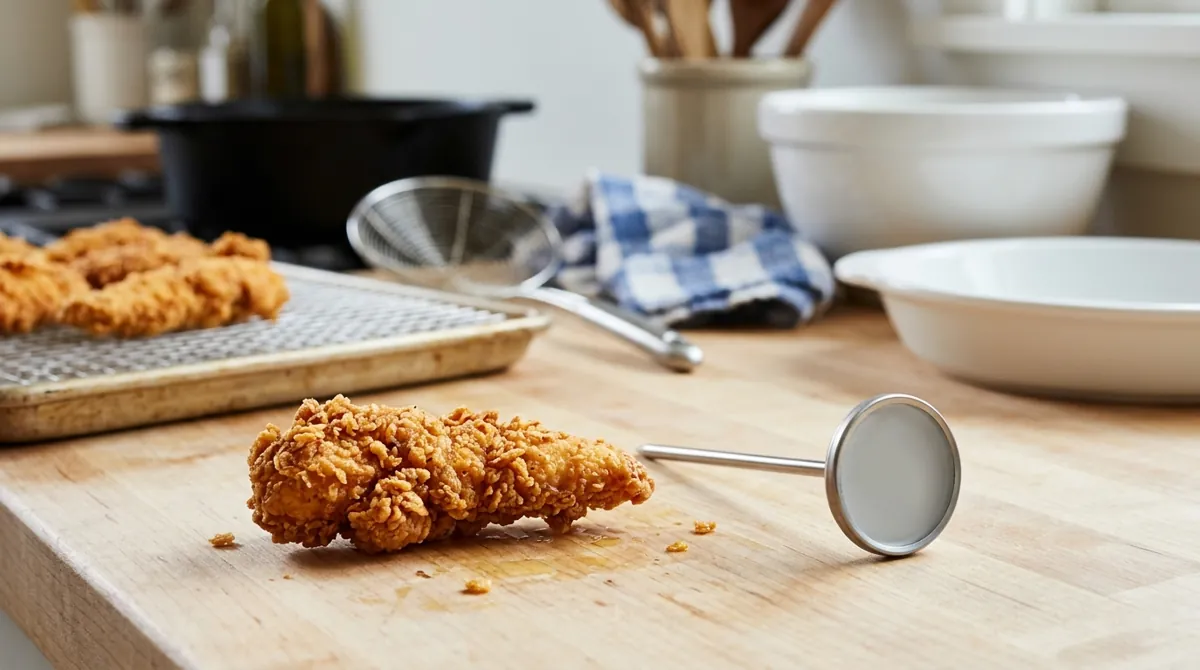
✓ What it should look like - Step 6
Drain the chicken on a clean wire rack set over a sheet pan, sprinkle with a pinch of salt, and serve hot.
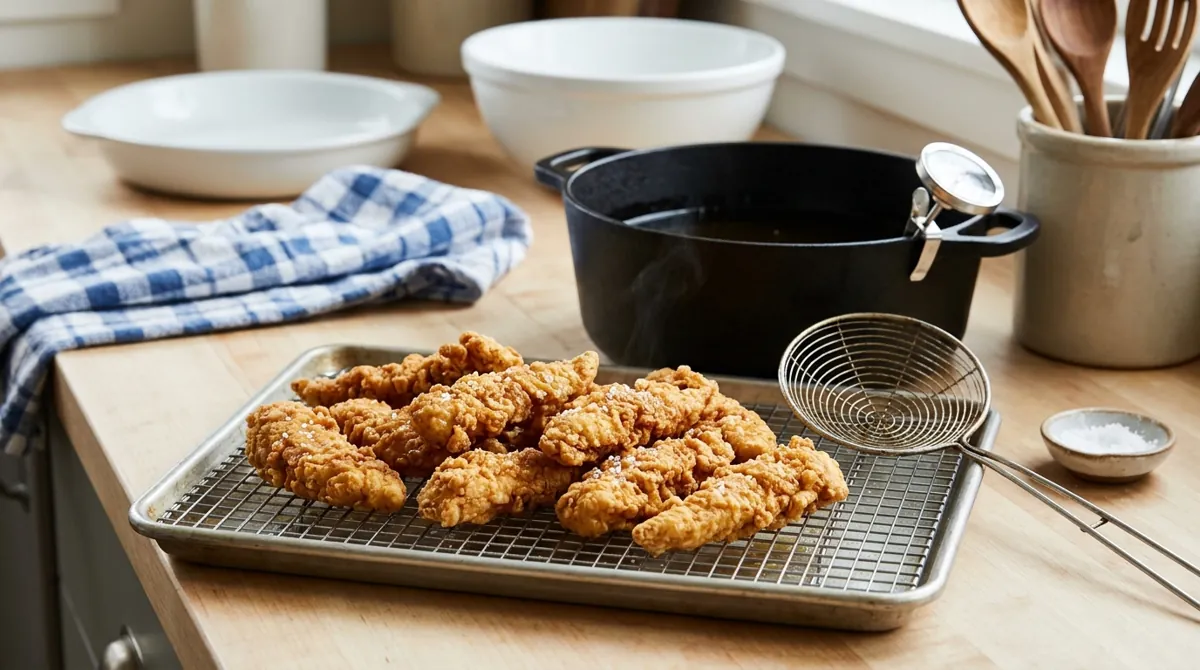
Copycat Raising Cane's Chicken Fingers
Serves 4 · about 12 chicken fingers · 1 hr 35 min total
Marinade
- 1 1/2 lb chicken tenderloins (680 g)
- 3/4 cup whole milk (183 g)
- 1 large egg
- 1 tsp fine salt
- 1 tsp black pepper
- 1/2 tsp garlic powder
Coating
- 1 1/2 cups all-purpose flour (190 g)
- 1 tsp fine salt
- 1 tsp black pepper
- 1 tsp garlic powder
- 1/2 tsp paprika
Frying
- About 6 cups neutral oil, such as canola or peanut, for a 2 inch depth in a heavy pot
Equipment: Rimmed baking sheet, Wire rack, Large pot, Instant-read thermometer, Deep-fry or candy thermometer, Measuring cups and spoons, Mixing bowls, Whisk
Method
- Pat the tenderloins dry and pull out any tough white tendon. In a bowl, whisk the milk, egg, salt, pepper and garlic powder, add the chicken, cover and refrigerate 1 hour, or up to 4 hours.
- Whisk the flour, salt, pepper, garlic powder and paprika together in a wide shallow dish.
- Take each tenderloin from the marinade, let the extra drip off, and press it into the flour on all sides until thickly coated with a craggy surface. Set the coated chicken on a wire rack and let it rest 10 minutes, so the coating sticks.
- Pour the oil into a heavy pot to a depth of 2 inches and heat it to 350°F, checking with a frying thermometer.
- Fry 4 or 5 fingers at a time, turning once, 4 to 5 minutes, until deep golden brown and 165°F in the thickest part. Keep the oil at 340 to 350°F between batches.
- Drain the chicken on a clean wire rack set over a sheet pan, sprinkle with a pinch of salt, and serve hot.
Americanized house recipe, written for this site. It is inspired by, not a copy of, the chain's chicken fingers. History: Wikipedia, "Raising Cane's Chicken Fingers" (August 28, 1996, Baton Rouge, founders Graves and Silvey, SBA loan, the dog Cane, chicken marinated and battered); Wikipedia, "Todd Graves (entrepreneur)"). Safe internal temperature 165°F for poultry per USDA. en.wikipedia.org. Ingredient list follows the source; the method is in our own words.
All sources (2)
Tips
- Add a tablespoon of hot sauce to the marinade for more kick.
- Use chicken breast cut into 1 inch strips if you cannot find tenderloins.
- Reheat leftovers on a rack in a 400°F oven for 8 minutes, not in the microwave.
Meatballs of the World

Italian-American Meatballs
Big, tender meatballs braised for an hour in red sauce over spaghetti. The one most Americans grew up with.

Pallottine (Abruzzo Meatballs)
Tiny meatballs, smaller than a marble, tossed right through square spaghetti alla chitarra. No bread at all.

Swedish Meatballs (Köttbullar)
Small, soft meatballs browned in butter, in a cream sauce made from the same pan, with lingonberry jam on the plate.

Danish Frikadeller
Pork meatballs shaped with a spoon and fried slowly in butter, crusty outside and soft in the middle.

Königsberger Klopse
German meatballs that are never fried: poached, then served in a creamy white sauce with capers.

Spanish Albóndigas in Almond Saffron Sauce
The tapas bar classic: small meatballs in a golden sauce thickened with fried almonds and bread.

Mexican Albóndigas with Chipotle and Mint
Soft meatballs with rice and fresh mint inside, simmered in a smoky tomato and chipotle broth.

Izgara Köfte (Turkish Grilled Meatballs)
Small, flat meatballs kneaded hard, rested cold, and charred on a hot grill pan.

Lion's Head Meatballs
Big, soft pork meatballs, stirred into a sticky paste, fried to set, then braised in a savory sauce.

Chicken Tsukune
Japan's chicken meatball: kneaded sticky, grilled on skewers, glazed with sweet soy tare, dipped in egg yolk.