
Copycat Raising Cane's Sauce
Five pantry ingredients and a one-hour rest: a creamy, peppery, garlicky dipping sauce inspired by the one that comes with every Raising Cane's chicken finger.
🍳Cook alongOne move at a time, with real timers
 Edited by JP Lambiase
Change the estimate
Swaps change the price only: cook any meat to its own safe temperature. Where these numbers come from
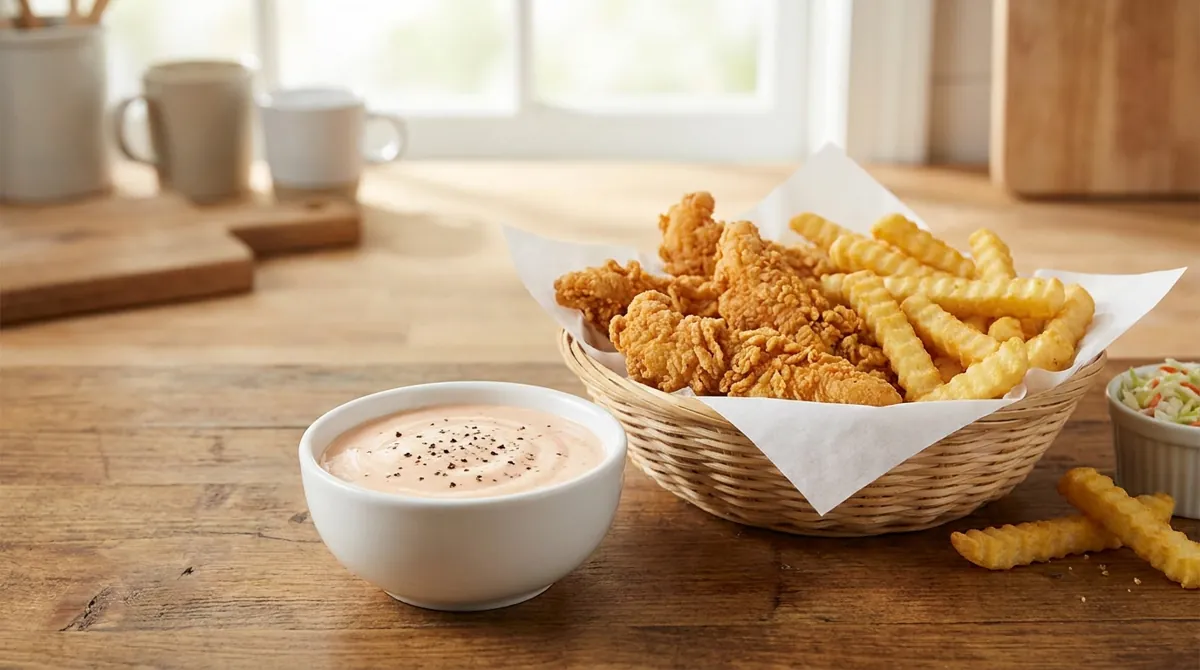
Raising Cane's opened on August 28, 1996, near the North Gate of Louisiana State University in Baton Rouge, in a restaurant now nicknamed "The Mothership". Todd Graves and Craig Silvey had written the business plan for a chicken-finger-only restaurant while studying at different universities; investors turned it down repeatedly, so they earned the money through hard labor and then an SBA loan. Silvey sold his share soon after the second location opened, and Graves became sole CEO. The name honors Graves's yellow Labrador, Cane.
The menu was built around one idea: chicken fingers, crinkle-cut fries, coleslaw, Texas toast and one sauce. The sauce has become the brand's signature. The company keeps the recipe private. Wikipedia says it likely contains mayonnaise, ketchup, Worcestershire sauce, black pepper, salt and garlic powder, and home cooks agree on that list while arguing about the amounts. No reliable public account says who created the sauce or when. So this is an "inspired by" home version, not Cane's recipe.
Why it works the kitchen science
Mayonnaise base, a little ketchup
The mayonnaise gives the richness and the ketchup tints it and adds a touch of sweet tang.
Worcestershire
A spoonful adds savory depth, the "what is that?" flavor.
The rest
Garlic powder and black pepper blend into the fat during the chill; stirred and served right away, the sauce tastes raw and the pepper bites.
🧰 You'll need 3 items
Everything the steps call for. Tick off what you have before you start.
Tools
Step by step
- Step 1
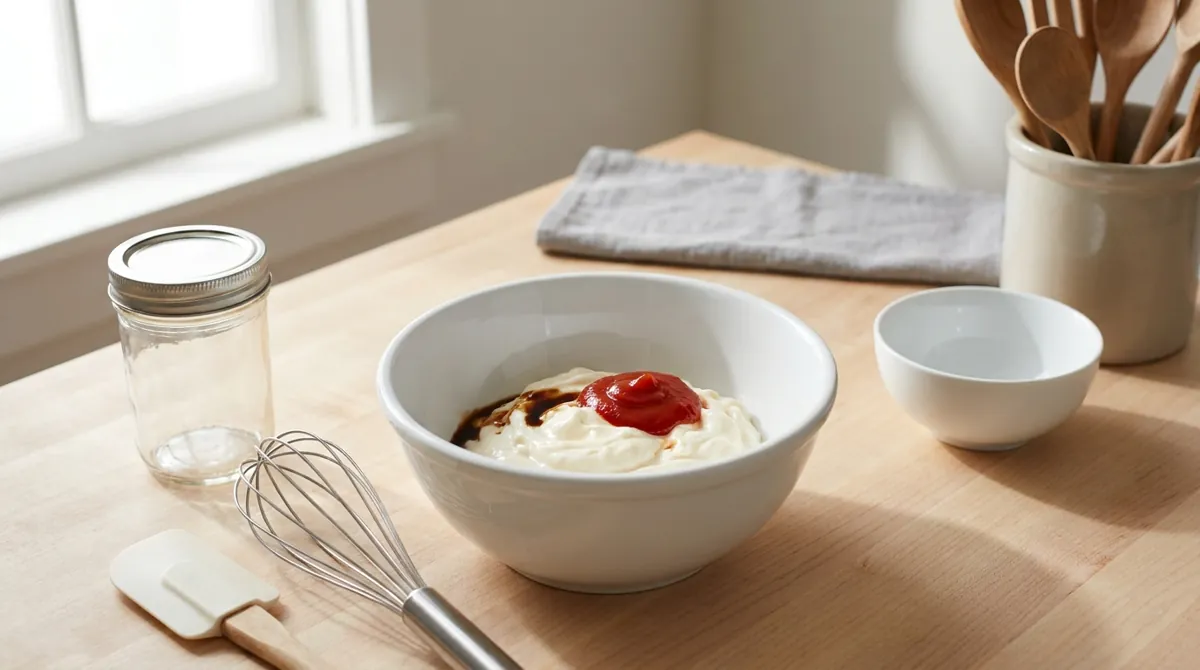
Put the mayonnaise, ketchup and Worcestershire sauce in a medium bowl.
- Step 2
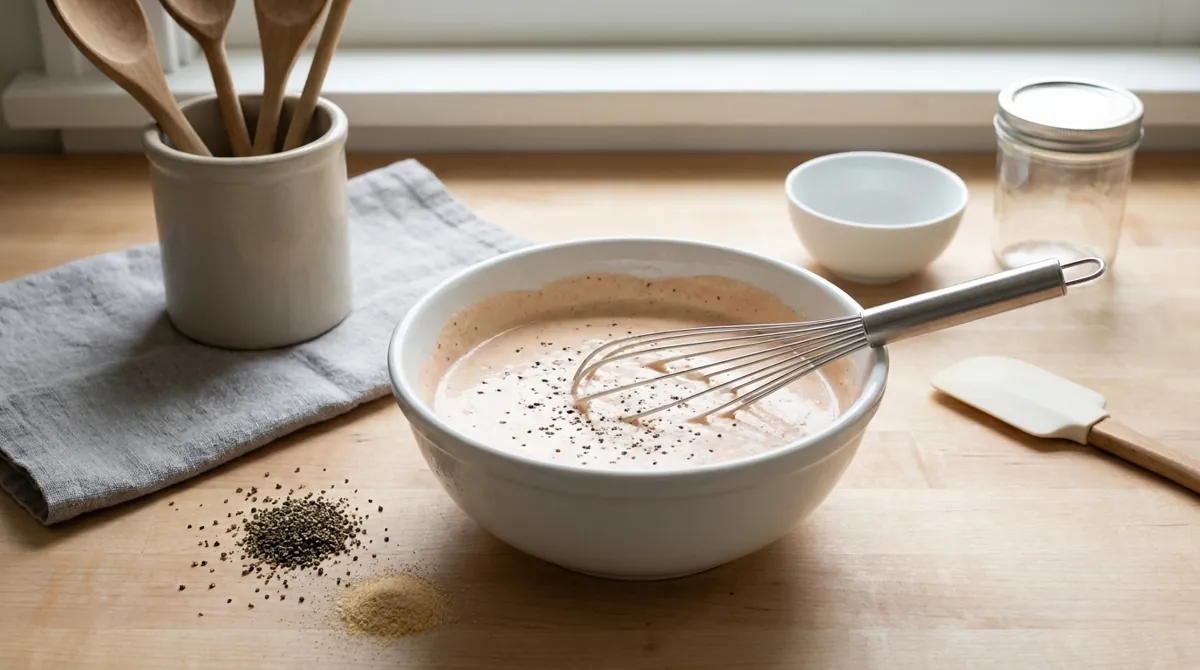
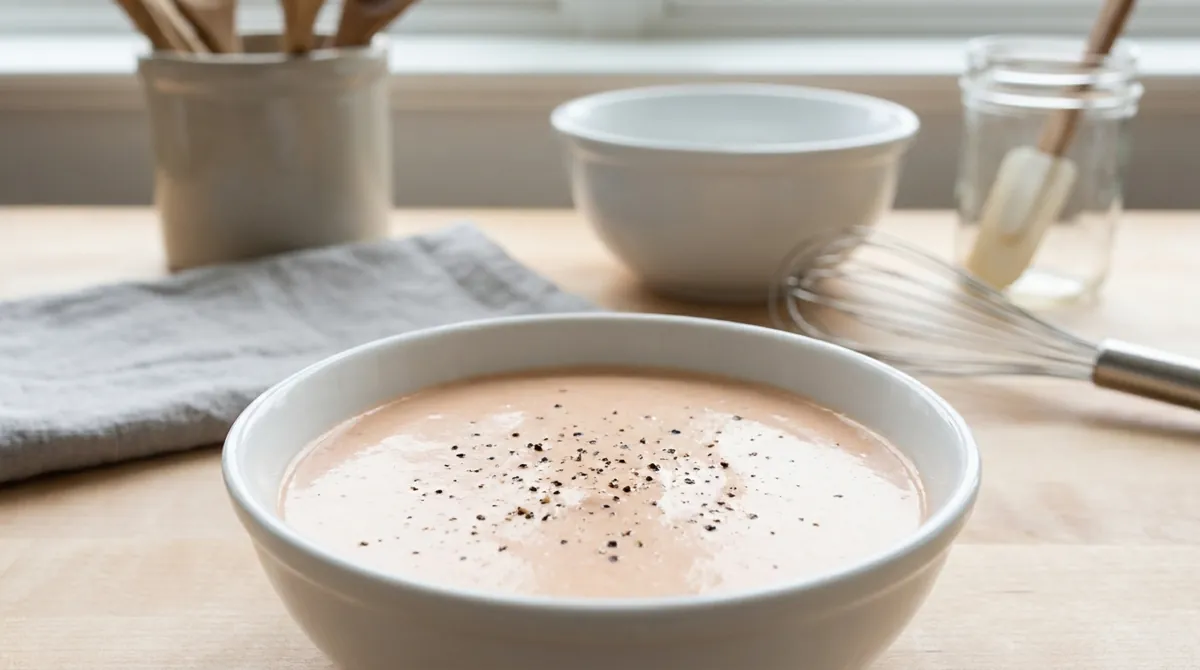
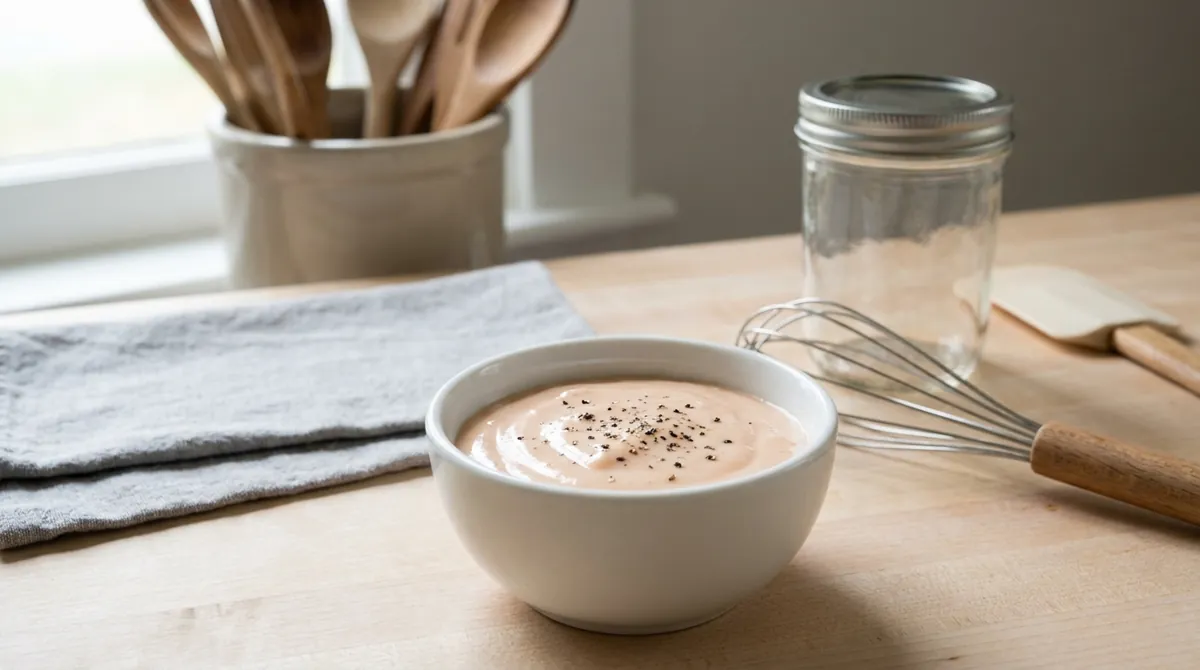
Add the garlic powder, pepper and salt, and whisk until completely smooth, a pale peachy pink with no streaks of ketchup.
✓ What it should look like - Step 3
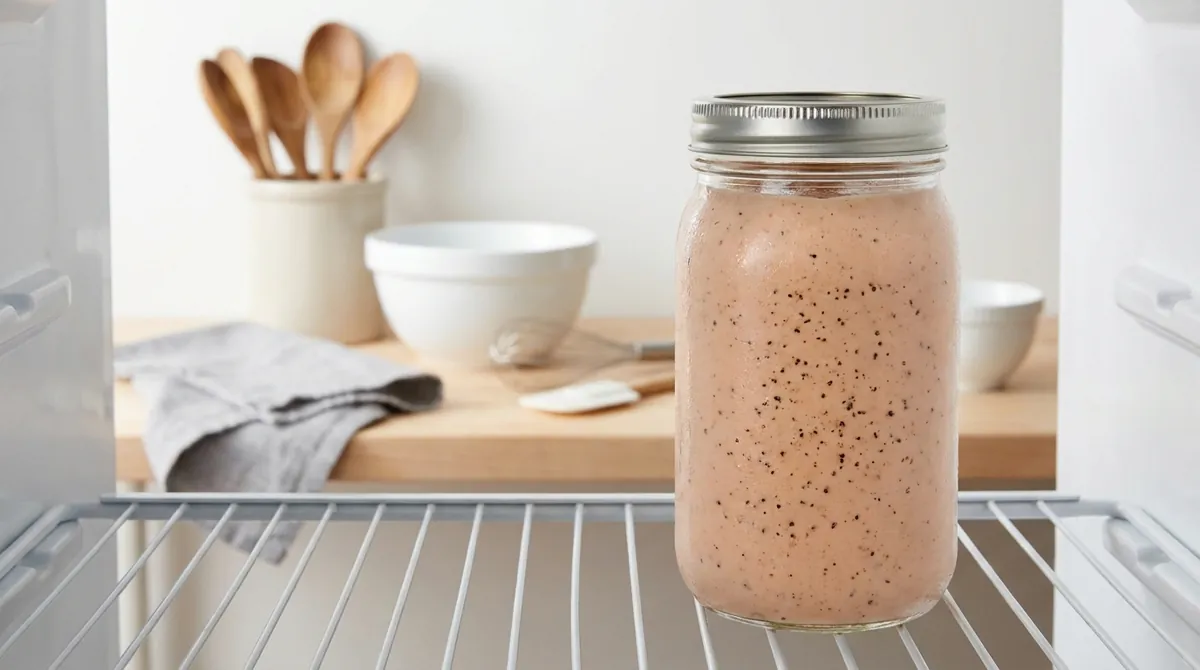
Cover and chill at least 1 hour, ideally 4. The garlic powder and pepper soften and the flavors blend.
- Step 4
Whisk again, taste, and add a little more pepper or salt if you like. Serve cold in a small bowl.
Copycat Raising Cane's Sauce
Serves 8 (2 tbsp each) · about 1 1/3 cups · 1 hr 5 min total
- 1 cup mayonnaise (220 g)
- 1/3 cup ketchup (90 g)
- 1 tbsp Worcestershire sauce (17 g)
- 1 tsp garlic powder
- 1 tsp coarse black pepper
- 1/2 tsp fine salt
Equipment: Measuring cups and spoons, Mixing bowls, Whisk
Method
- Put the mayonnaise, ketchup and Worcestershire sauce in a medium bowl.
- Add the garlic powder, pepper and salt, and whisk until completely smooth, a pale peachy pink with no streaks of ketchup.
- Cover and chill at least 1 hour, ideally 4. The garlic powder and pepper soften and the flavors blend.
- Whisk again, taste, and add a little more pepper or salt if you like. Serve cold in a small bowl.
Americanized house recipe, inspired by Raising Cane's sauce. Not Raising Cane's recipe. History: Wikipedia, "Raising Cane's Chicken Fingers"; Wikipedia, "Todd Graves (entrepreneur)"). Belly Full; One Sweet Appetite. en.wikipedia.org. Ingredient list follows the source; the method is in our own words.
Tips
- Use real full-fat mayonnaise; light mayonnaise makes a thin sauce.
- Coarse or freshly cracked pepper gives the speckled look; fine pepper makes it hotter.
- It keeps 1 week in a jar in the fridge.
The rules people argue about
What the sources agree on, what they don't, and what is just a good story.
- How the first restaurant was paid for. Disputed: Wikipedia says the founders used an SBA loan after repeated rejections by investors; some other accounts say banks rejected him; sources do not agree on the details.
- Who founded it. Disputed: Wikipedia lists Todd Graves and Craig Silvey; other sources credit Graves alone.
Meatballs of the World

Italian-American Meatballs
Big, tender meatballs braised for an hour in red sauce over spaghetti. The one most Americans grew up with.

Pallottine (Abruzzo Meatballs)
Tiny meatballs, smaller than a marble, tossed right through square spaghetti alla chitarra. No bread at all.

Swedish Meatballs (Köttbullar)
Small, soft meatballs browned in butter, in a cream sauce made from the same pan, with lingonberry jam on the plate.

Danish Frikadeller
Pork meatballs shaped with a spoon and fried slowly in butter, crusty outside and soft in the middle.

Königsberger Klopse
German meatballs that are never fried: poached, then served in a creamy white sauce with capers.

Spanish Albóndigas in Almond Saffron Sauce
The tapas bar classic: small meatballs in a golden sauce thickened with fried almonds and bread.

Mexican Albóndigas with Chipotle and Mint
Soft meatballs with rice and fresh mint inside, simmered in a smoky tomato and chipotle broth.

Izgara Köfte (Turkish Grilled Meatballs)
Small, flat meatballs kneaded hard, rested cold, and charred on a hot grill pan.

Lion's Head Meatballs
Big, soft pork meatballs, stirred into a sticky paste, fried to set, then braised in a savory sauce.

Chicken Tsukune
Japan's chicken meatball: kneaded sticky, grilled on skewers, glazed with sweet soy tare, dipped in egg yolk.