
Copycat Red Robin Seasoning
Salt, a little sugar, paprika with a touch of smoke, garlic, onion and a pinch of chili: a five-minute shaker blend inspired by the one on every Red Robin table, made for hot fries and burgers.
 Edited by JP Lambiase
Change the estimate
Swaps change the price only: cook any meat to its own safe temperature. Where these numbers come from
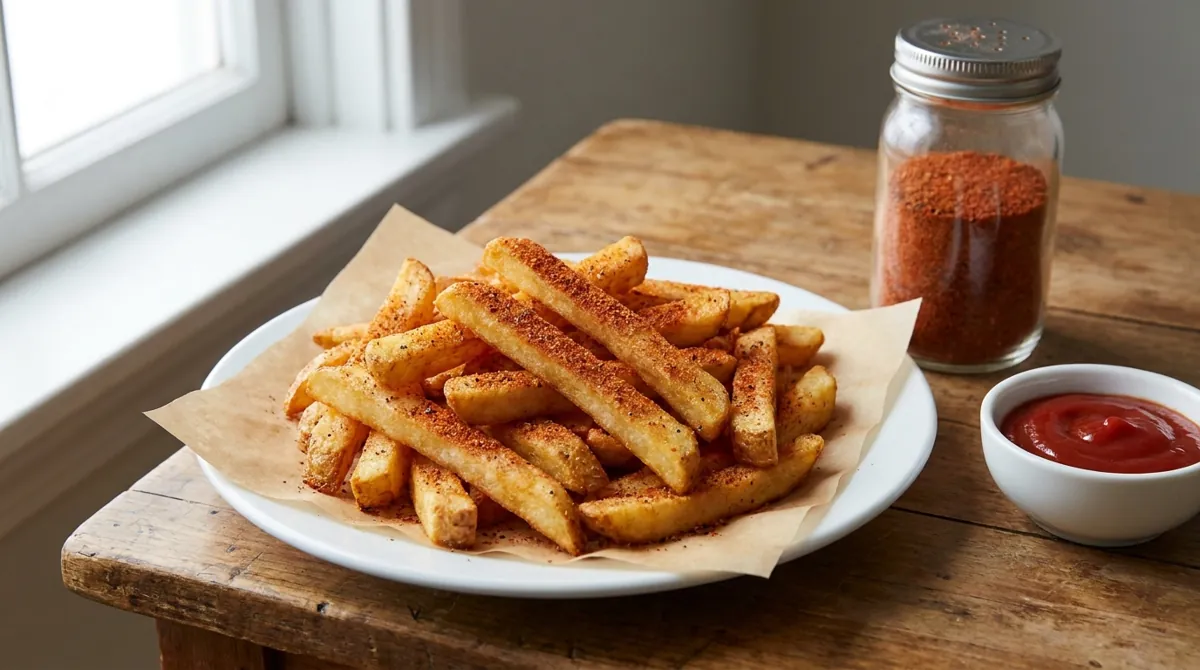
Red Robin started as a Seattle tavern. The building was renamed Sam's Red Robin Tavern in 1942 by its owner, Samuel Caston, who sang in a barbershop quartet. In 1969 Seattle restaurateur Gerry Kingen bought it, dropped the "Sam's", and added hamburgers to the menu, which sent sales up. About ten years later he began franchising, and the chain is now based in Greenwood Village, Colorado, known for burgers and refillable fries.
The seasoning is the shaker on every table, and the company also sells it by the bottle. The current retail label lists salt, cane sugar, sea salt, unnamed spices, dehydrated onion, garlic and tomato, paprika, natural smoke flavor, yeast extract and an anti-caking agent. The exact spices and amounts are not public, so this is an inspired-by home blend built on that label, not Red Robin's recipe.
Why it works the kitchen science
Salt first, sugar second
Salt carries the blend, and a little sugar rounds off the paprika and helps it cling and brown.
Two paprikas
Sweet paprika gives the red color, smoked paprika stands in for the label's natural smoke flavor.
Hot fries
Oil on just-fried potatoes is what holds a dry seasoning; on cold fries it falls off.
🧰 You'll need 4 items
Everything the steps call for. Tick off what you have before you start.
Appliances
Tools
Step by step
- Step 1
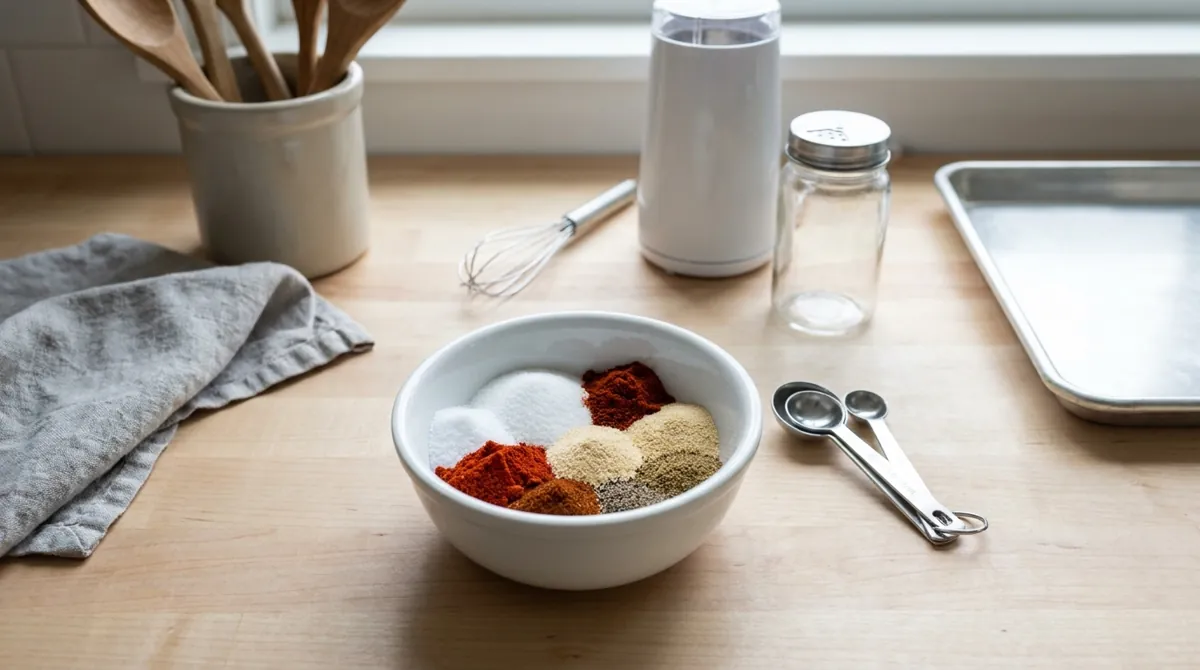
Measure every ingredient into a small bowl.
- Step 2
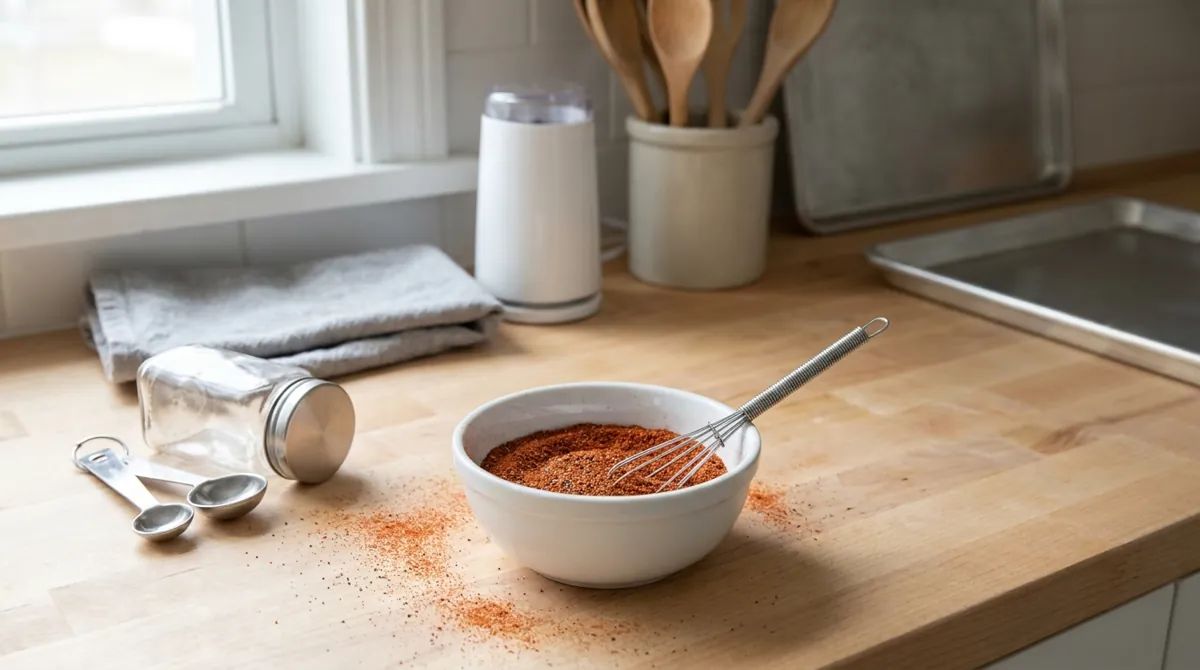
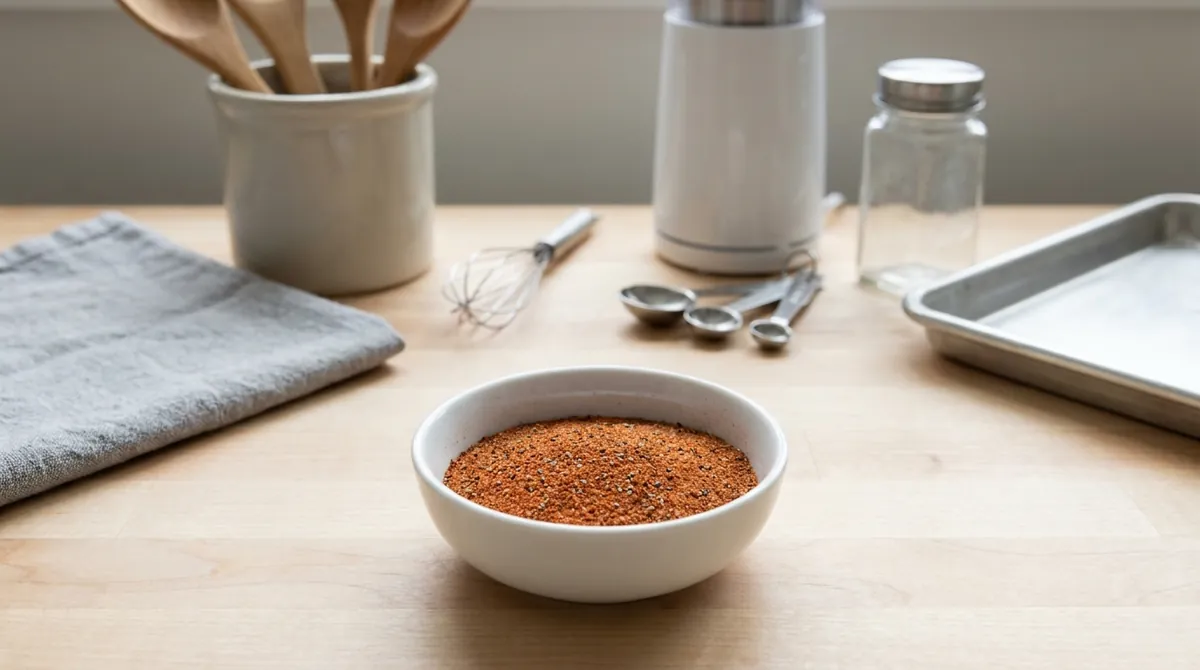
Whisk for about 30 seconds, pressing out any lumps of garlic or onion powder with the back of a spoon, until the blend is one even brick-red color.
✓ What it should look like - Step 3
For a finer, shaker-friendly texture, pulse the blend in a clean spice grinder for 5 seconds. Spoon it into a shaker jar with a lid.
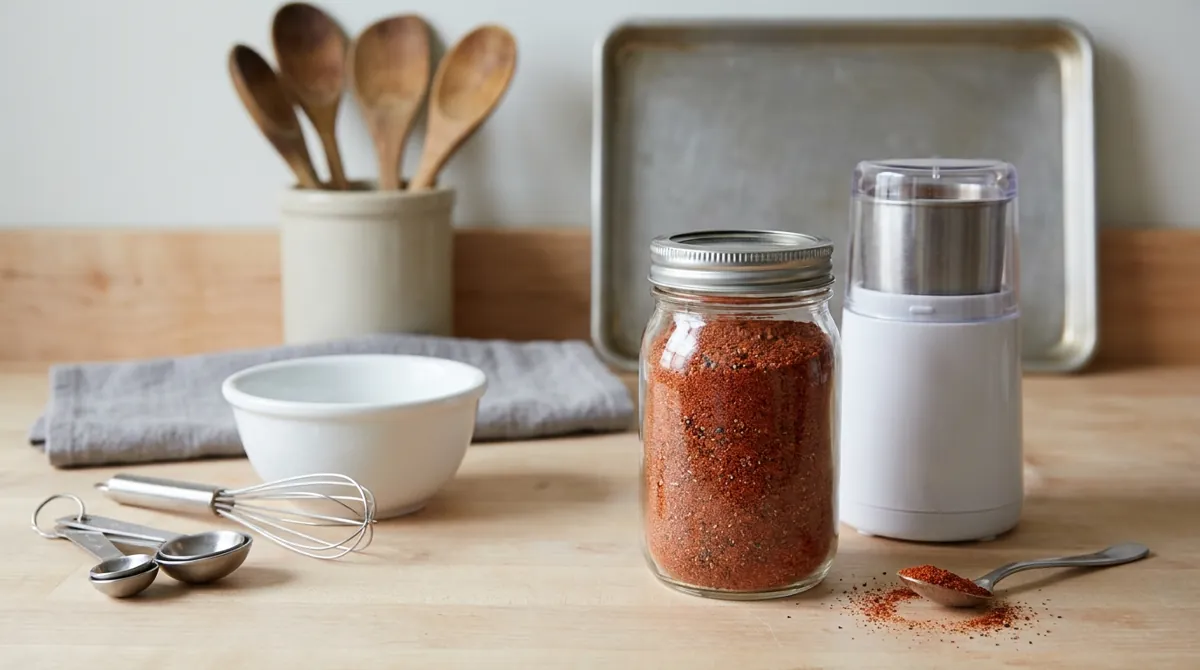
- Step 4
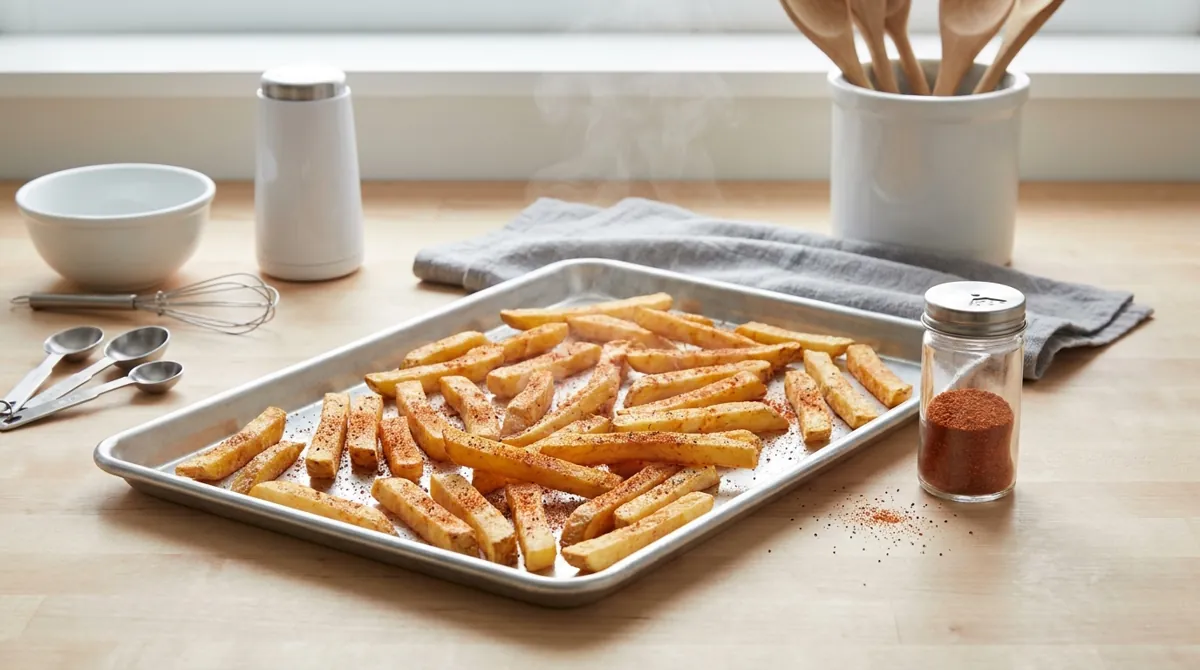
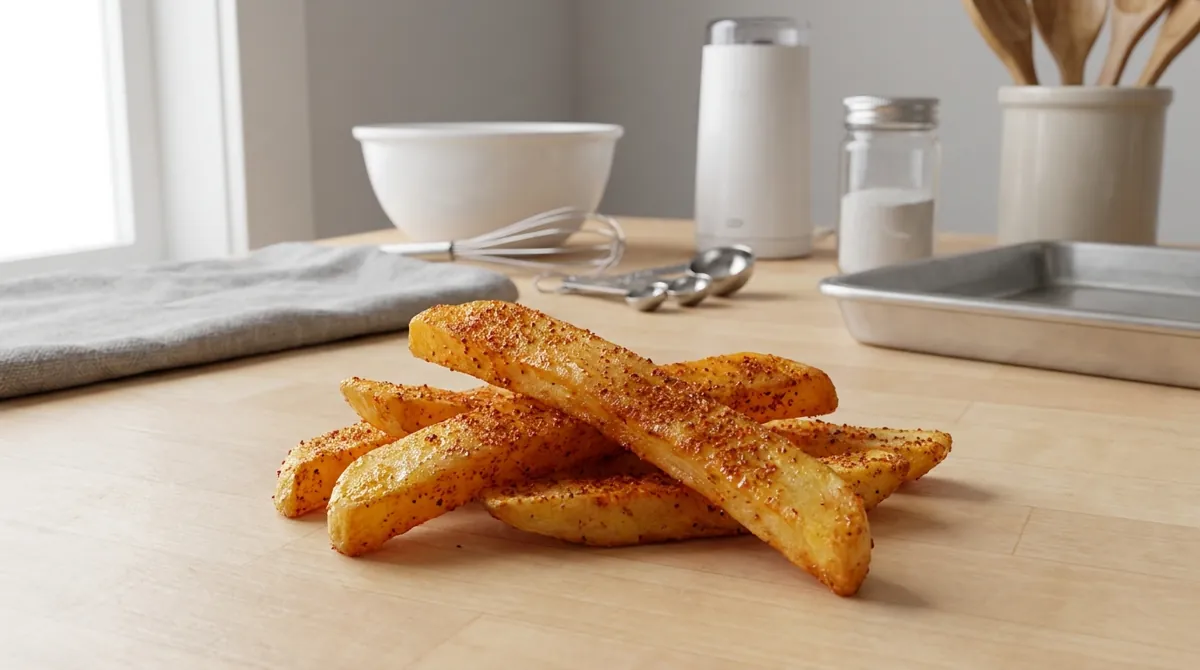
Use it: shake it over fries the moment they come out of the oil or oven, so it sticks, and over burger patties just before they hit the pan.
✓ What it should look like
Copycat Red Robin Seasoning
Serves 40 (1/2 tsp each) (about) · about 1/2 cup · 5 min total
- 2 tbsp fine salt (36 g)
- 1 tbsp granulated sugar (13 g)
- 1 1/2 tbsp sweet paprika (10 g)
- 1/2 tbsp smoked paprika (4 g)
- 1 tbsp garlic powder (9 g)
- 1 tbsp onion powder (7 g)
- 1 tsp chili powder
- 1 tsp finely ground black pepper
- 1/2 tsp celery seed, ground
- 1/4 tsp ground cumin
Equipment: Oven, Measuring cups and spoons, Mixing bowls, Whisk
Method
- Measure every ingredient into a small bowl.
- Whisk for about 30 seconds, pressing out any lumps of garlic or onion powder with the back of a spoon, until the blend is one even brick-red color.
- For a finer, shaker-friendly texture, pulse the blend in a clean spice grinder for 5 seconds. Spoon it into a shaker jar with a lid.
- Use it: shake it over fries the moment they come out of the oil or oven, so it sticks, and over burger patties just before they hit the pan.
Americanized house recipe, written for this site. Inspired by, not a copy of, Red Robin's seasoning. History: Wikipedia, "Red Robin" (1942 tavern, Samuel Caston, Gerry Kingen 1969, burgers, franchising, Greenwood Village HQ, refillable fries). Label: Food Republic, "What Does Red Robin Put In Its Signature Fry Seasoning?"; Giant Food store listing. Food Lovin' Family; Pocket Change Gourmet. en.wikipedia.org. Ingredient list follows the source; the method is in our own words.
Tips
- It keeps 6 months in a sealed jar away from heat. Shake the jar before using; salt settles to the bottom.
- For a closer match to the label, add 1 tsp tomato powder if you can find it.
- Try it on popcorn, roasted potatoes, grilled chicken and corn on the cob.
The rules people argue about
What the sources agree on, what they don't, and what is just a good story.
- Sugar in a fry seasoning. Disputed among copycats: the label lists cane sugar near the top, but many home versions leave it out.
Meatballs of the World

Italian-American Meatballs
Big, tender meatballs braised for an hour in red sauce over spaghetti. The one most Americans grew up with.

Pallottine (Abruzzo Meatballs)
Tiny meatballs, smaller than a marble, tossed right through square spaghetti alla chitarra. No bread at all.

Swedish Meatballs (Köttbullar)
Small, soft meatballs browned in butter, in a cream sauce made from the same pan, with lingonberry jam on the plate.

Danish Frikadeller
Pork meatballs shaped with a spoon and fried slowly in butter, crusty outside and soft in the middle.

Königsberger Klopse
German meatballs that are never fried: poached, then served in a creamy white sauce with capers.

Spanish Albóndigas in Almond Saffron Sauce
The tapas bar classic: small meatballs in a golden sauce thickened with fried almonds and bread.

Mexican Albóndigas with Chipotle and Mint
Soft meatballs with rice and fresh mint inside, simmered in a smoky tomato and chipotle broth.

Izgara Köfte (Turkish Grilled Meatballs)
Small, flat meatballs kneaded hard, rested cold, and charred on a hot grill pan.

Lion's Head Meatballs
Big, soft pork meatballs, stirred into a sticky paste, fried to set, then braised in a savory sauce.

Chicken Tsukune
Japan's chicken meatball: kneaded sticky, grilled on skewers, glazed with sweet soy tare, dipped in egg yolk.