
Crawfish Etouffee
Crawfish tails smothered in a blond roux with onion, bell pepper and celery, spooned over white rice: the Louisiana dish whose name means "smothered".
🍳Cook alongOne move at a time, with real timers
 Edited by JP Lambiase
Change the estimate
Swaps change the price only: cook any meat to its own safe temperature. Where these numbers come from
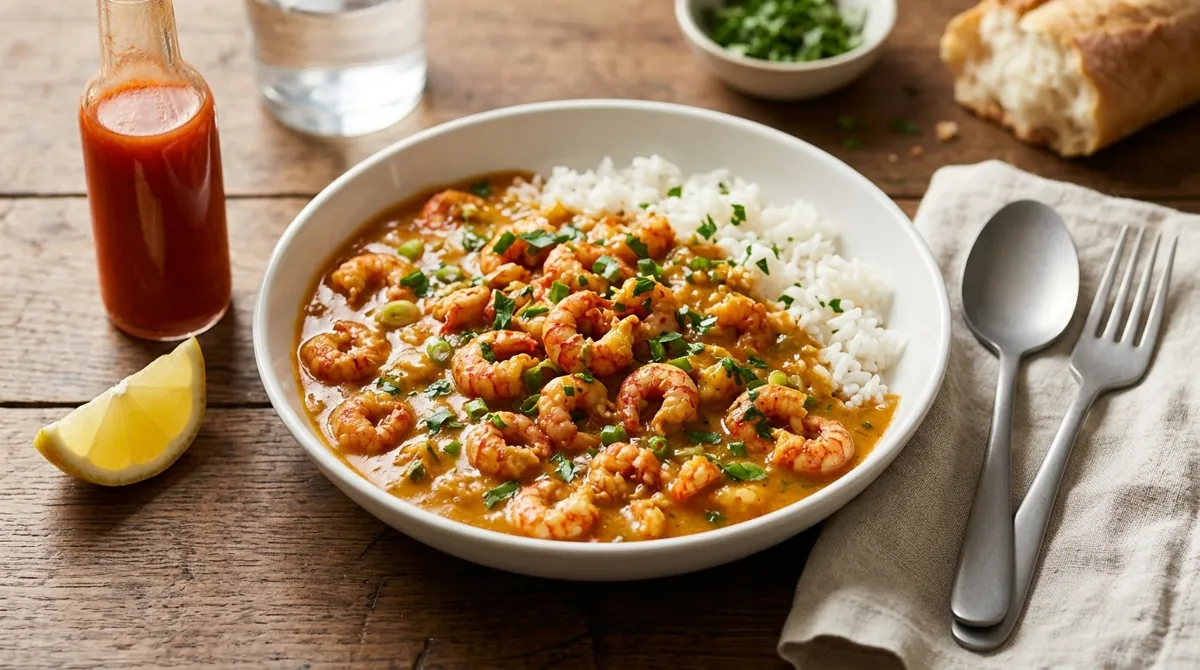
Etouffee is French for "smothered", and it means shellfish or meat cooked down in a thick, savory sauce over rice. Wikipedia says it appears in both Cajun and Creole cooking, and that crawfish etouffee was introduced to restaurant diners in Breaux Bridge, Louisiana, around the 1950s; some sources date it back to the late 1920s. Before that it was a home dish among the Cajuns of the bayous and backwaters.
Breaux Bridge calls itself the Crawfish Capital of the World and holds a crawfish festival each year. Who served it first, and when, is not firmly settled.
Why it works the kitchen science
A blond roux
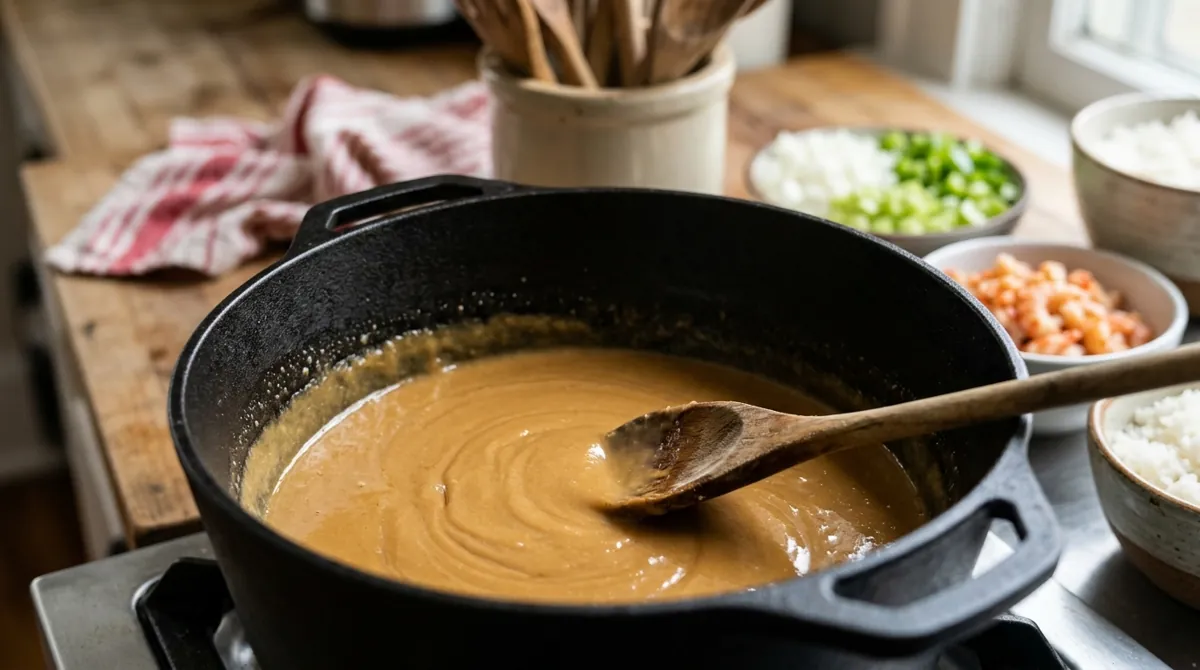
Cooked just to peanut-butter color, it thickens the sauce but keeps a light flavor that lets the crawfish come through, unlike the dark roux of gumbo.
The holy trinity
Onion, bell pepper and celery cooked slowly give the base its sweetness.
Smothering
A low simmer reduces the sauce to a thick, glossy coat.
Crawfish added last
They are already cooked, so they need only to warm through.
🧰 You'll need 5 items
Everything the steps call for. Tick off what you have before you start.
Pans and pots
Tools
Step by step
- Step 1
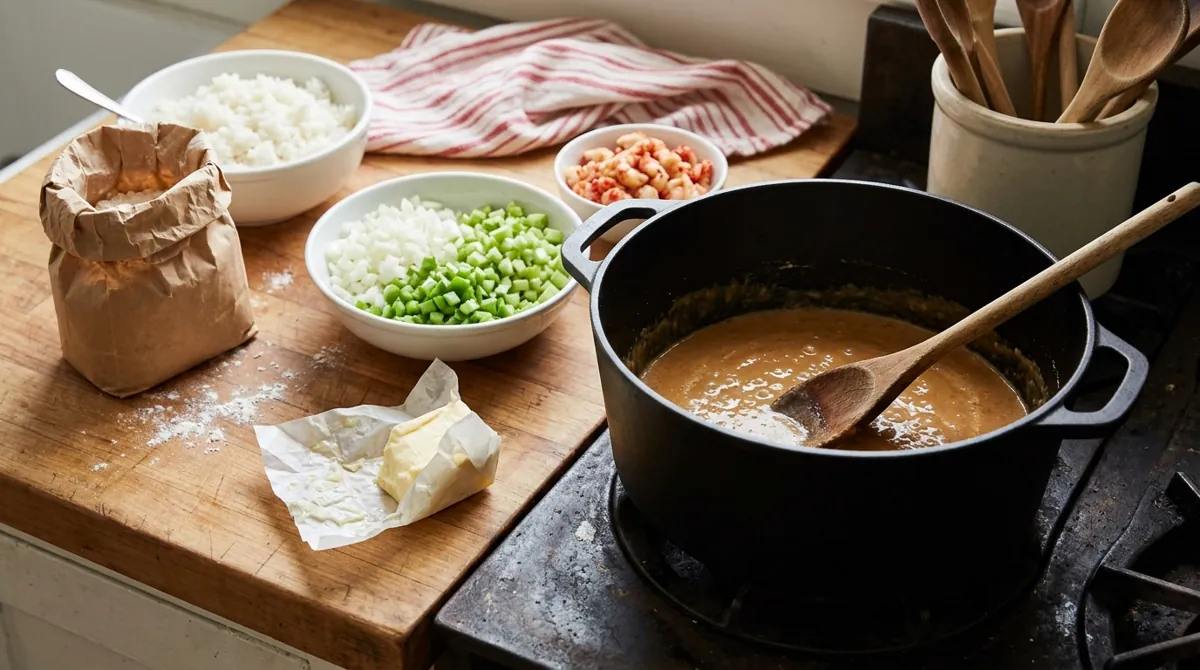
Melt the butter in a large heavy pot or Dutch oven over medium heat. Whisk in the flour and cook, stirring constantly, 5 to 8 minutes, until the roux is the color of peanut butter.
✓ What it should look like - Step 2
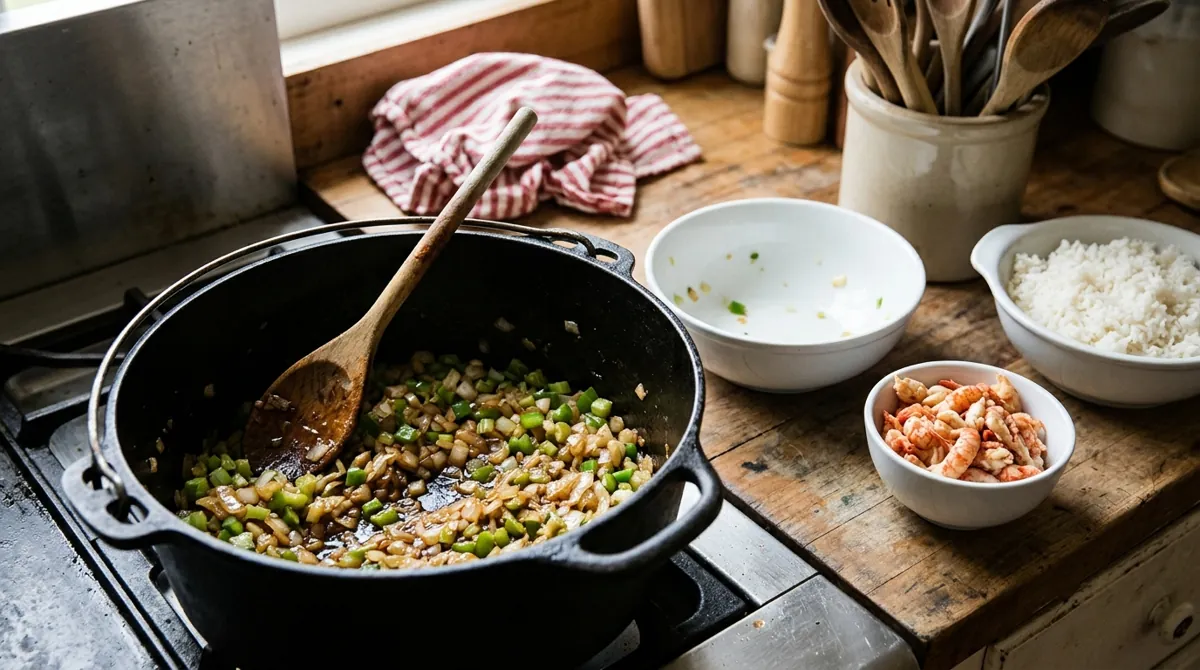
Add the onion, bell pepper and celery and cook 8 to 10 minutes, stirring, until soft and golden.
- Step 3
Stir in the garlic and Cajun seasoning and cook 1 minute, until fragrant.
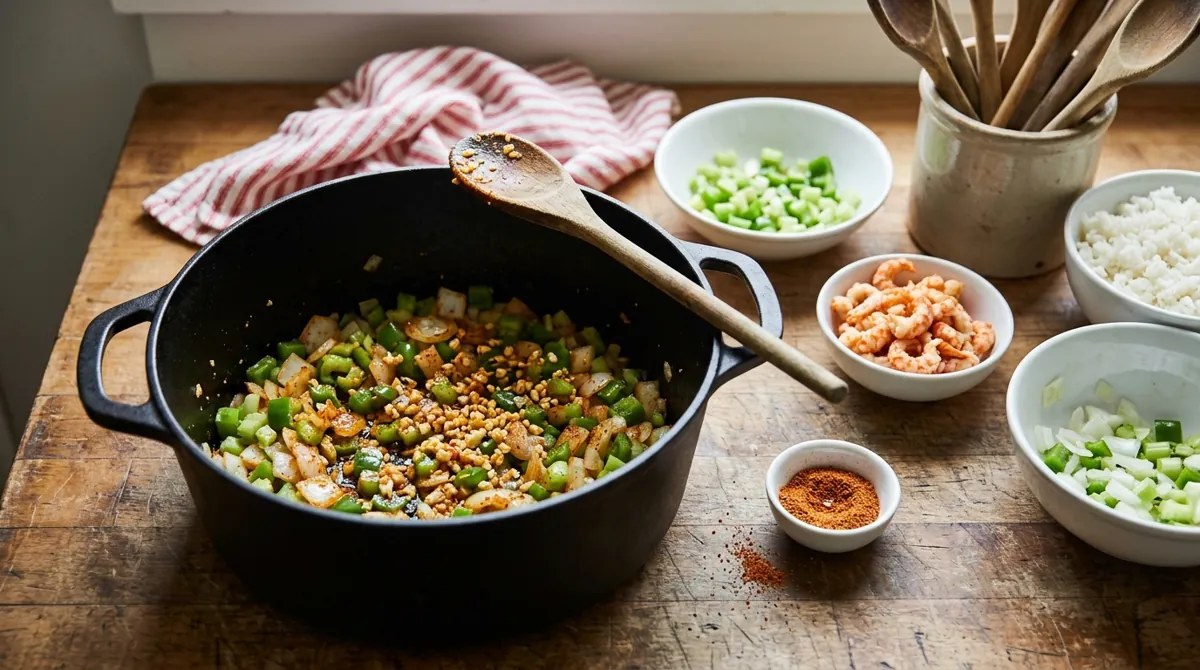
- Step 4
Add the stock slowly while stirring, then simmer over low heat 15 minutes, until thick enough to coat the back of a spoon.
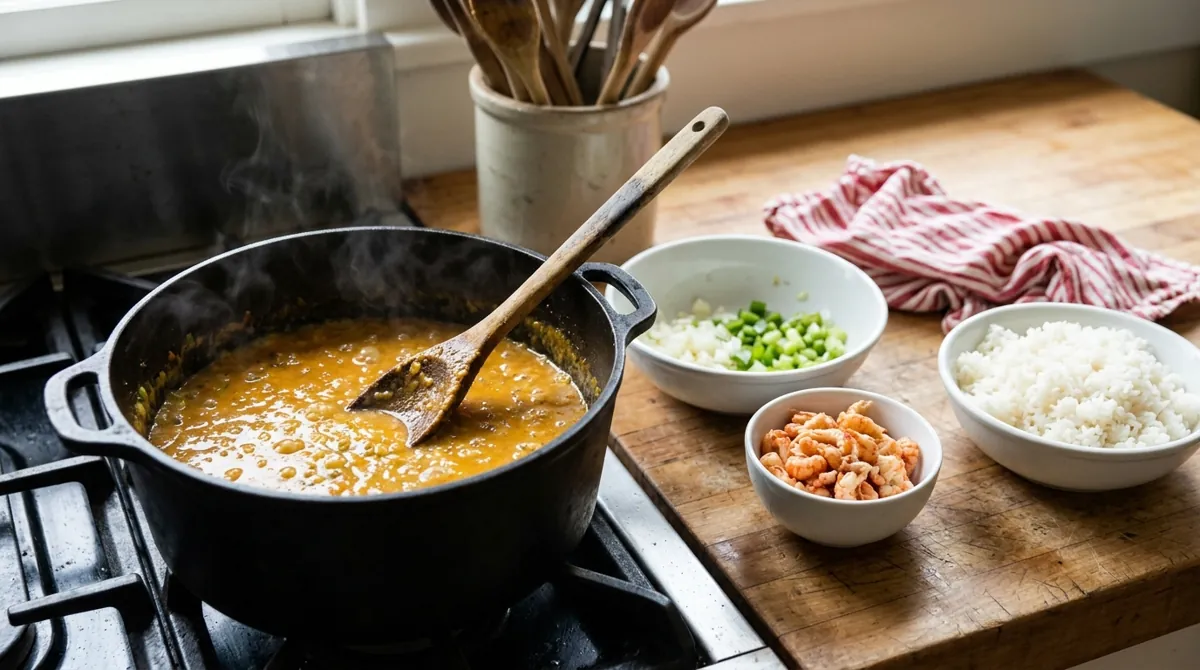
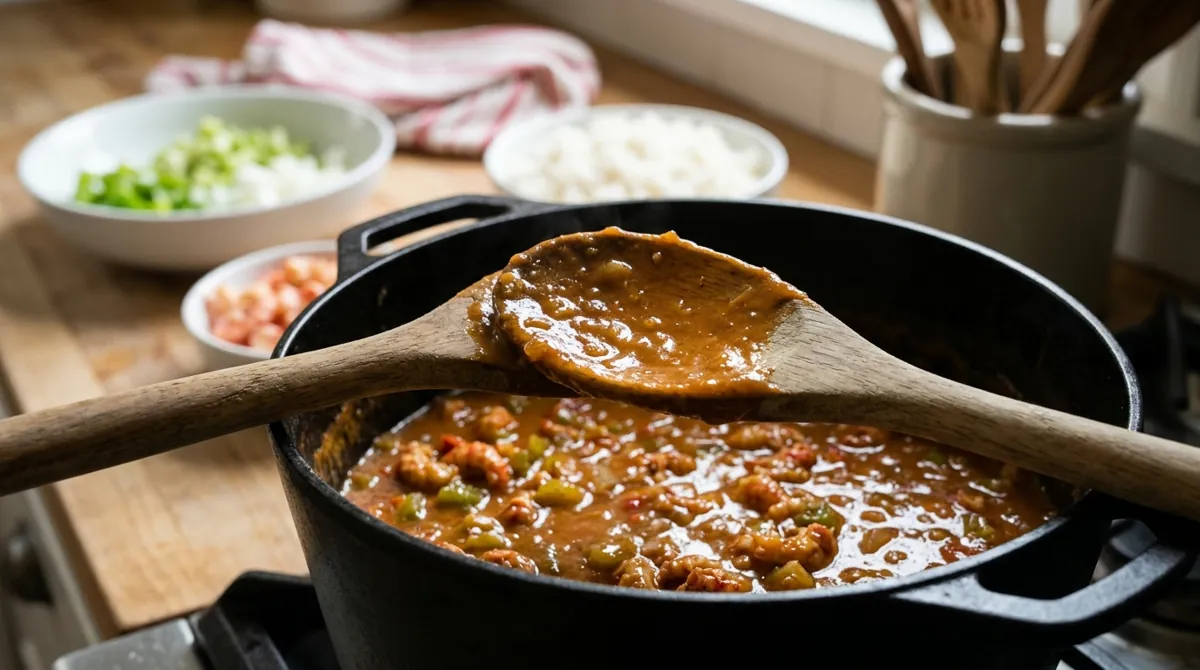
✓ What it should look like - Step 5
Add the crawfish tails and cook 5 minutes, just until hot through; longer toughens them. Stir in half the scallions and parsley. Season with salt, hot sauce and lemon.
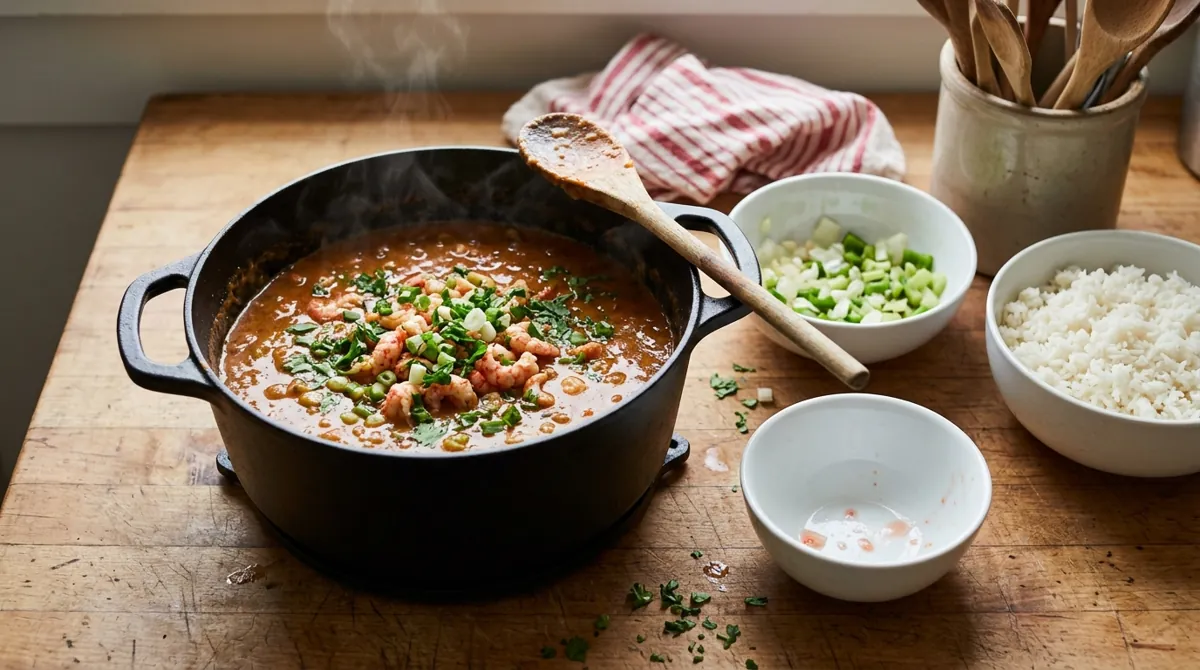
- Step 6
Serve over hot rice, topped with the remaining scallions and parsley.
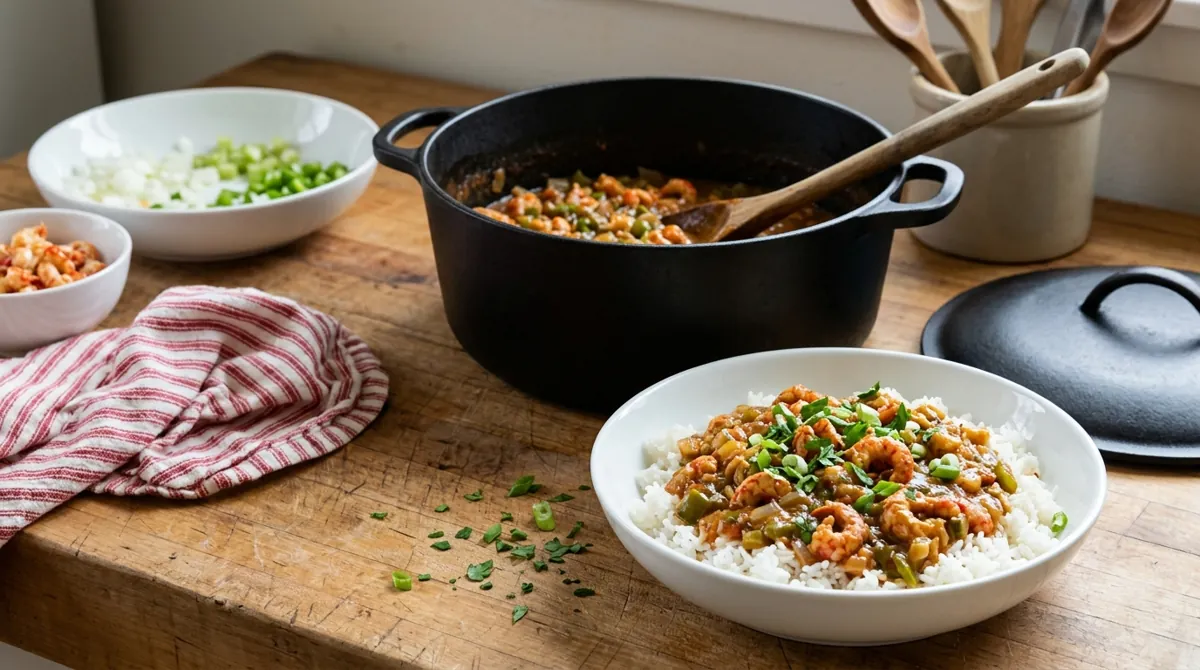
Crawfish Etouffee
Serves 6 · about 6 cups · 1 hr total
Roux and trinity
- 1/2 cup unsalted butter (113 g)
- 1/2 cup all-purpose flour (62 g)
- 1 large yellow onion, finely chopped (about 200 g)
- 1 green bell pepper, finely chopped (about 150 g)
- 2 ribs celery, finely chopped (about 100 g)
- 4 cloves garlic, minced (12 g)
Sauce
- 1 cup seafood or chicken stock (240 g)
- 2 tsp Cajun or Creole seasoning
- 1 pound peeled cooked crawfish tails, with their fat if you can find it (450 g)
- 1/2 cup sliced scallions (50 g)
- 1/4 cup chopped parsley (15 g)
- Hot sauce and lemon juice, to taste
- Salt, to taste
To serve
- Hot cooked white rice
Equipment: Dutch oven, Large pot, Chef's knife and cutting board, Measuring cups and spoons, Whisk
Method
- Melt the butter in a large heavy pot or Dutch oven over medium heat. Whisk in the flour and cook, stirring constantly, 5 to 8 minutes, until the roux is the color of peanut butter.
- Add the onion, bell pepper and celery and cook 8 to 10 minutes, stirring, until soft and golden.
- Stir in the garlic and Cajun seasoning and cook 1 minute, until fragrant.
- Add the stock slowly while stirring, then simmer over low heat 15 minutes, until thick enough to coat the back of a spoon.
- Add the crawfish tails and cook 5 minutes, just until hot through; longer toughens them. Stir in half the scallions and parsley. Season with salt, hot sauce and lemon.
- Serve over hot rice, topped with the remaining scallions and parsley.
Americanized house recipe, written for this site, in the common ratio of equal parts butter and flour for a blond roux, the Holy Trinity of onion, bell pepper and celery, and about a pound of crawfish tails for six (as compared across Louisiana-style recipes, e.g. Chef John Folse, and Emeril Lagasse. History: Wikipedia, "Etouffee" (smothered, Cajun and Creole, Breaux Bridge, 1920s to 1950s). jfolse.com. Ingredient list follows the source; the method is in our own words.
All sources (3)
Tips
- Use frozen Louisiana crawfish tails if fresh are not available; thaw and keep the fat, which carries the flavor.
- Taste before salting; Cajun seasoning and stock may be salty enough.
- Out of crawfish? Use peeled shrimp, added 3 to 4 minutes before serving.
- The sauce, without crawfish, keeps 3 days refrigerated; reheat and add the crawfish at the end.
The rules people argue about
What the sources agree on, what they don't, and what is just a good story.
- Etouffee began in Breaux Bridge in the 1950s. Disputed: Wikipedia gives around the 1950s for restaurants there, with some sources saying the late 1920s, and it was a home dish earlier.
- Roux or no roux. Disputed: many Cajun cooks make it with a blond roux, others only with butter and the crawfish fat; this recipe uses a roux.
Meatballs of the World

Italian-American Meatballs
Big, tender meatballs braised for an hour in red sauce over spaghetti. The one most Americans grew up with.

Pallottine (Abruzzo Meatballs)
Tiny meatballs, smaller than a marble, tossed right through square spaghetti alla chitarra. No bread at all.

Swedish Meatballs (Köttbullar)
Small, soft meatballs browned in butter, in a cream sauce made from the same pan, with lingonberry jam on the plate.

Danish Frikadeller
Pork meatballs shaped with a spoon and fried slowly in butter, crusty outside and soft in the middle.

Königsberger Klopse
German meatballs that are never fried: poached, then served in a creamy white sauce with capers.

Spanish Albóndigas in Almond Saffron Sauce
The tapas bar classic: small meatballs in a golden sauce thickened with fried almonds and bread.

Mexican Albóndigas with Chipotle and Mint
Soft meatballs with rice and fresh mint inside, simmered in a smoky tomato and chipotle broth.

Izgara Köfte (Turkish Grilled Meatballs)
Small, flat meatballs kneaded hard, rested cold, and charred on a hot grill pan.

Lion's Head Meatballs
Big, soft pork meatballs, stirred into a sticky paste, fried to set, then braised in a savory sauce.

Chicken Tsukune
Japan's chicken meatball: kneaded sticky, grilled on skewers, glazed with sweet soy tare, dipped in egg yolk.