
Cuban Sandwich
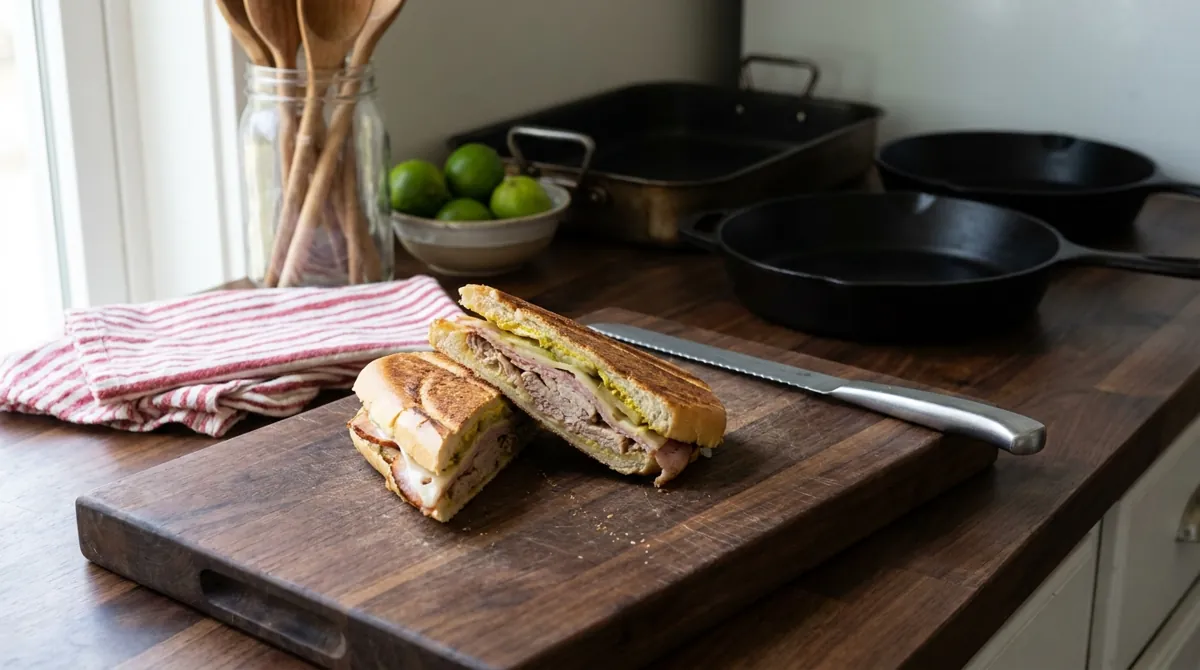
Mojo-roasted pork, ham, Swiss, pickles and yellow mustard on Cuban bread, pressed flat until the crust crackles: the Florida sandwich Tampa and Miami still argue over.
🍳Cook alongOne move at a time, with real timers
 Edited by JP Lambiase
Change the estimate
Swaps change the price only: cook any meat to its own safe temperature. Where these numbers come from
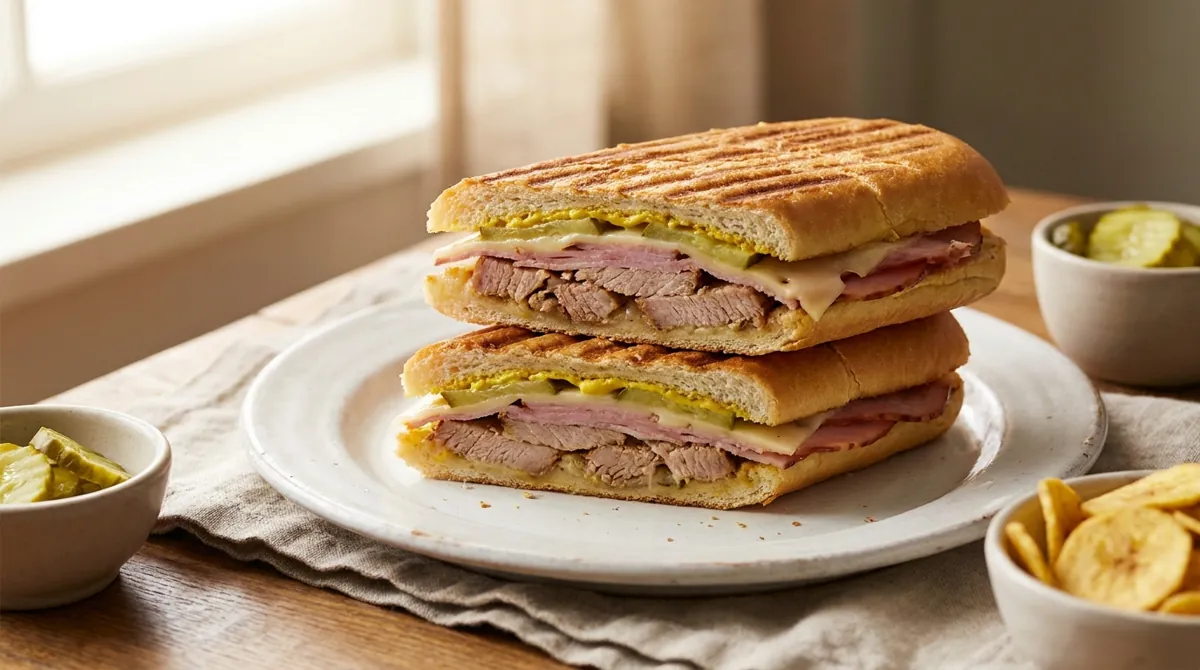
The Cuban sandwich is a Florida sandwich with Cuban roots. Some accounts have it as a lunch for Cuban and Key West cigar-factory and sugar-mill workers by the 1860s; the earliest recorded mentions of a distinct Cuban sandwich are from workers' cafes in Ybor City and West Tampa around 1900. One historian's line, that it was "born in Cuba and educated in Key West", sums up how muddy the trail is. After 1959 Cuban exiles brought it to Miami, where it was on menus by the 1960s.
Tampa and Miami have each claimed it. In 2012 the Tampa City Council named the "Historic Tampa Cuban Sandwich" the city's signature sandwich, and the argument has been loud ever since.
Why it works the kitchen science
Mojo marinade
The garlic and citrus acid season the pork and help break down a tough cut so it roasts to tenderness.
Swiss on the outside layers
The cheese melts into the meat and holds the sandwich together under pressure.
Pressing
Flattens the loaf, crisps the crust and welds the layers.
🧰 You'll need 8 items
Everything the steps call for. Tick off what you have before you start.
Appliances
Pans and pots
Tools
Supplies
Step by step
- Step 1
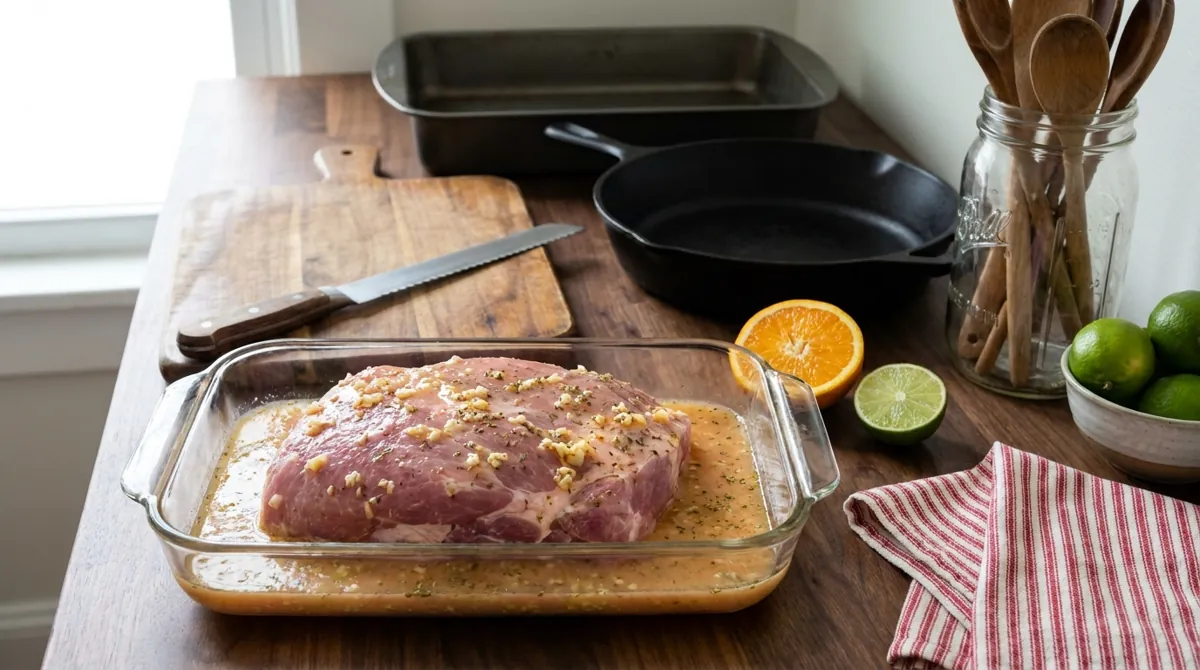
Whisk the garlic, orange juice, lime juice, olive oil, oregano, cumin, salt and pepper. Put the pork in a dish, pour the mojo over it and marinate in the refrigerator at least 2 hours, or overnight.
- Step 2
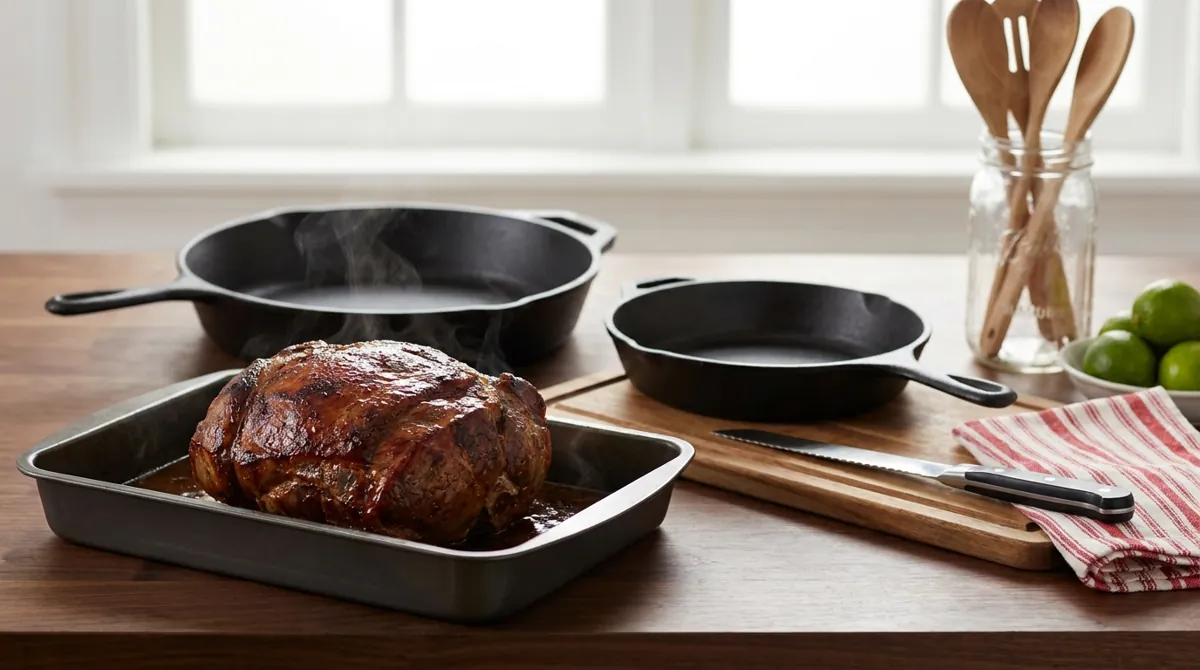
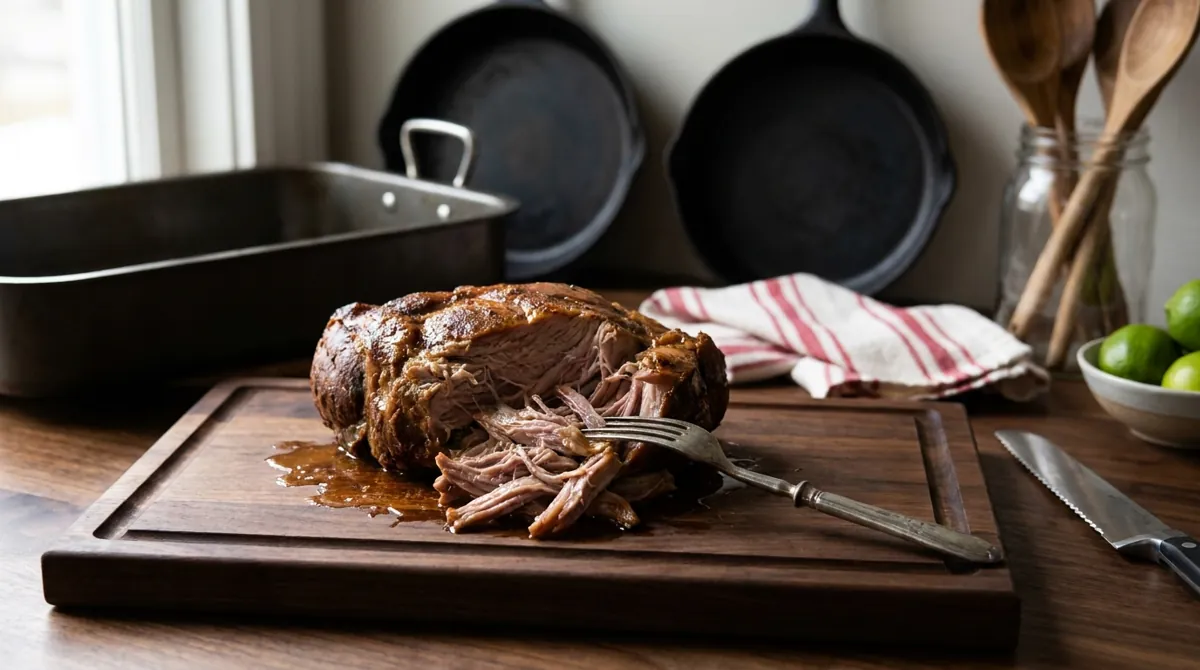
Heat the oven to 325°F. Put the pork and marinade in a small roasting pan and cover tightly with foil. Roast about 2 1/2 hours, until the pork is very tender and shreds easily (195°F inside).
✓ What it should look like - Step 3
Rest the pork 15 minutes, then slice it thinly or shred it, and moisten it with a few spoonfuls of the pan juices.
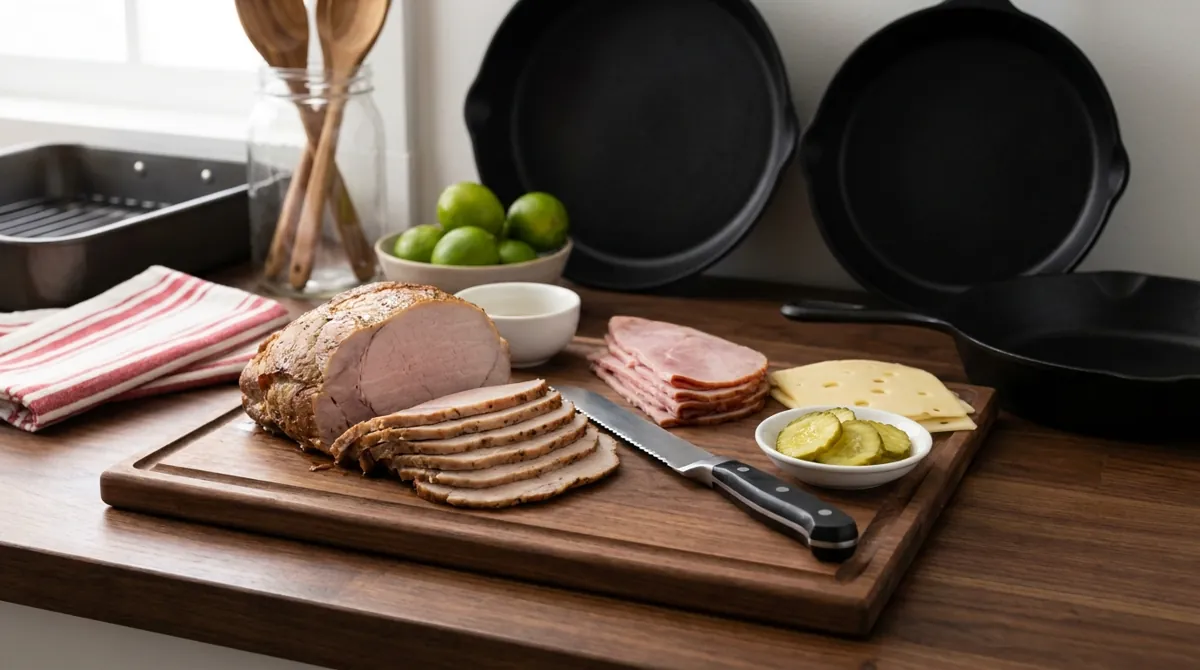
- Step 4
Split the bread lengthwise. Spread the cut sides with mustard. Layer ham, pork, Swiss, pickles and salami if using, ending with cheese so it glues the sandwich together.
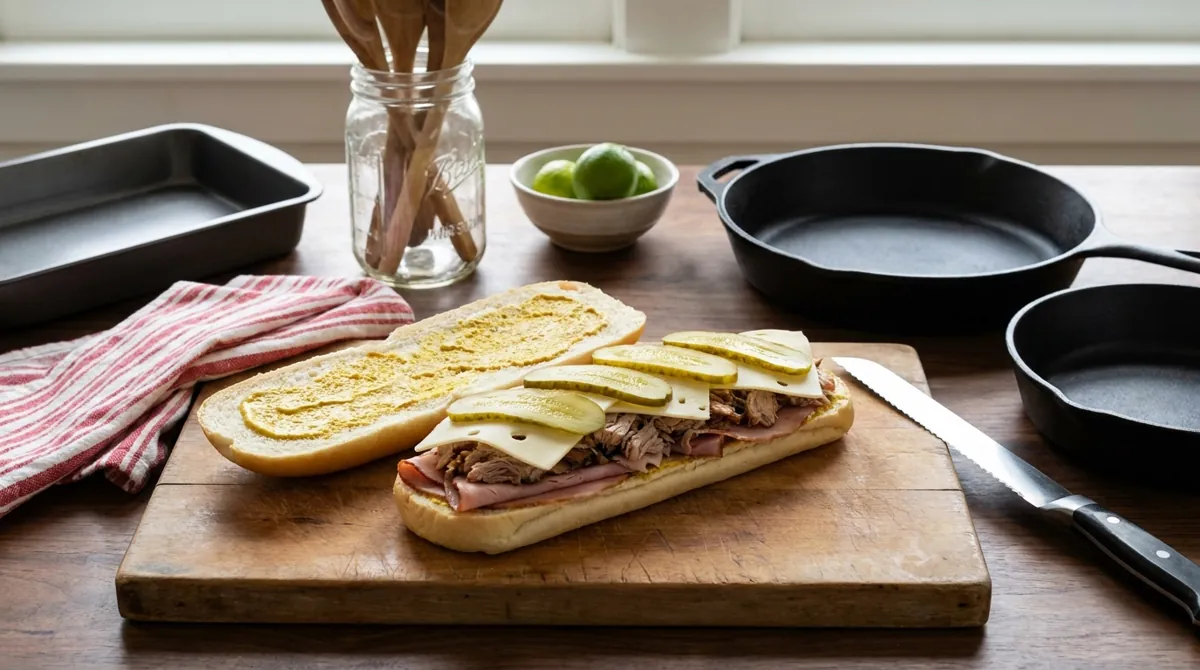
- Step 5
Spread the outside of the bread with butter. Heat a heavy skillet or griddle over medium heat and set the sandwiches in it. Press them down hard with a second heavy pan or a sandwich press.
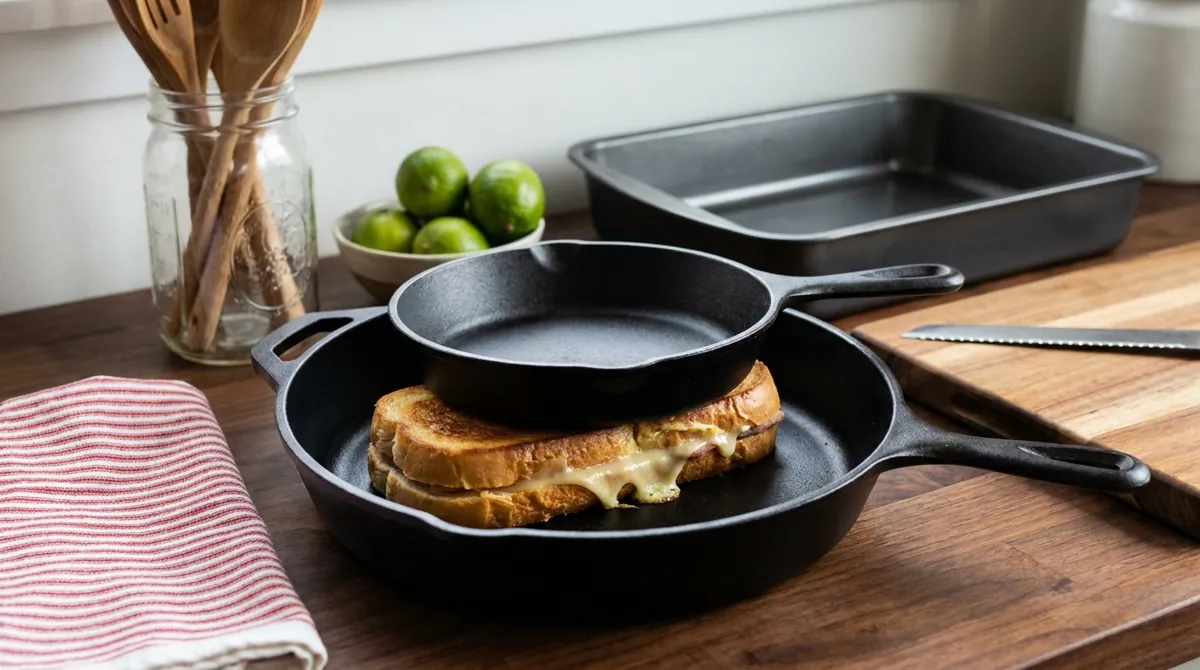
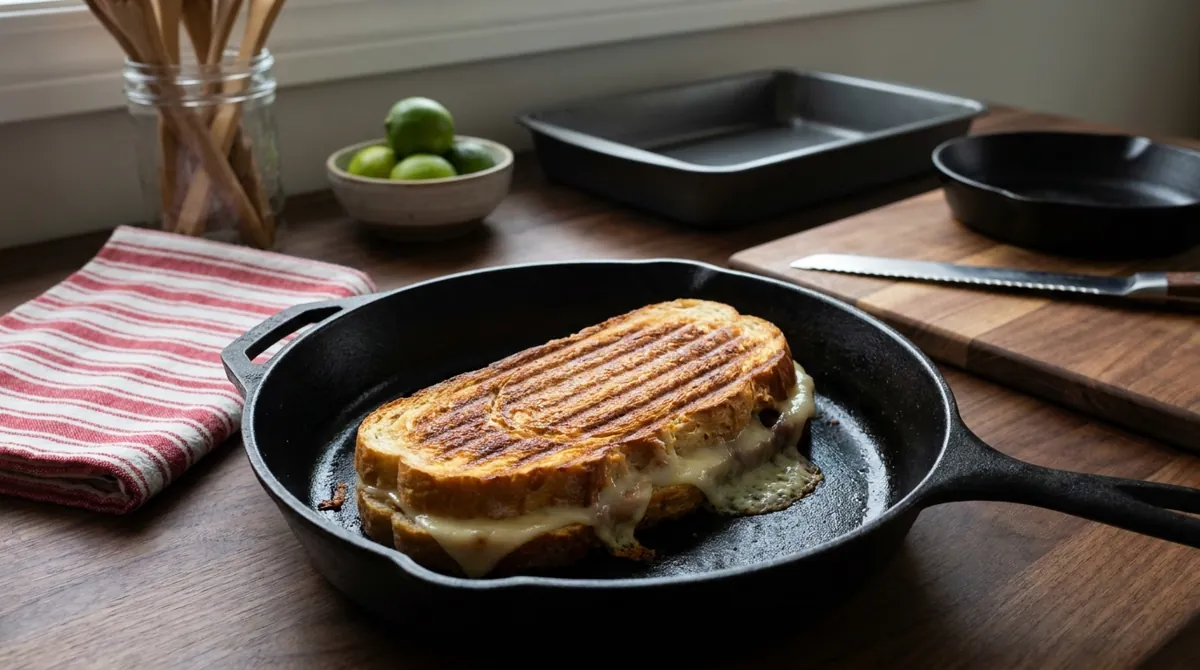
✓ What it should look like - Step 6
Cook 3 to 4 minutes a side, pressing again after the flip, until the bread is flat, golden and crisp and the cheese has melted. Cut each on the diagonal and serve hot.
Cuban Sandwich
Serves 4 · 4 sandwiches · 3 hr 5 min total
Mojo pork
- 2 lb boneless pork shoulder (900 g)
- 8 cloves garlic, minced (24 g)
- 1/2 cup fresh orange juice (125 g)
- 1/4 cup fresh lime juice (60 g)
- 2 tablespoons olive oil (27 g)
- 1 1/2 teaspoons dried oregano
- 1 teaspoon ground cumin
- 1 1/2 teaspoons kosher salt, 1/2 teaspoon black pepper
Sandwiches
- 4 pieces Cuban bread or soft French bread, each about 8 inches long (about 400 g total)
- 4 tablespoons yellow mustard (60 g)
- 8 ounces sliced sweet ham (225 g)
- 8 ounces sliced Swiss cheese (225 g)
- 16 dill pickle slices (60 g)
- 4 ounces thinly sliced Genoa salami, optional, Tampa style (115 g)
- 4 tablespoons butter, softened (56 g)
Equipment: Oven, Roasting pan, Heavy skillet, Griddle, Chef's knife and cutting board, Measuring cups and spoons, Whisk, Aluminum foil
Method
- Whisk the garlic, orange juice, lime juice, olive oil, oregano, cumin, salt and pepper. Put the pork in a dish, pour the mojo over it and marinate in the refrigerator at least 2 hours, or overnight.
- Heat the oven to 325°F. Put the pork and marinade in a small roasting pan and cover tightly with foil. Roast about 2 1/2 hours, until the pork is very tender and shreds easily (195°F inside).
- Rest the pork 15 minutes, then slice it thinly or shred it, and moisten it with a few spoonfuls of the pan juices.
- Split the bread lengthwise. Spread the cut sides with mustard. Layer ham, pork, Swiss, pickles and salami if using, ending with cheese so it glues the sandwich together.
- Spread the outside of the bread with butter. Heat a heavy skillet or griddle over medium heat and set the sandwiches in it. Press them down hard with a second heavy pan or a sandwich press.
- Cook 3 to 4 minutes a side, pressing again after the flip, until the bread is flat, golden and crisp and the cheese has melted. Cut each on the diagonal and serve hot.
Americanized house recipe, written for this site. History: Wikipedia, "Cuban sandwich" (cigar-factory lunch, Key West, Ybor City and West Tampa cafes around 1900, Miami exiles, Tampa's Genoa salami, rejection of lettuce, tomato and mayonnaise by traditionalists, the 2012 Tampa council proclamation, the plancha press). Method checked against: Food Network, Cuban sandwich recipe (pork shoulder in a citrus-garlic marinade overnight, roasted covered in foil until very tender, sandwiches pressed under a weight about 6 minutes total with a turn). Food Network roasts at 400°F for about 3 hours; this recipe uses a gentler 325°F for 2 1/2 hours with a 195°F doneness check, a common low-and-slow alternative. en.wikipedia.org. Ingredient list follows the source; the method is in our own words.
All sources (2)
Tips
- Cuban bread is light and slightly sweet, with a crisp crust. Soft French or Italian loaf, not a baguette, is the nearest substitute.
- Leftover roast pork from a dinner works; the sandwich is a classic leftovers lunch.
- Roasted pork keeps 4 days in the refrigerator and freezes well for 3 months.
The rules people argue about
What the sources agree on, what they don't, and what is just a good story.
- Tampa's Cuban has salami and Miami's does not. Disputed: Tampa's version traditionally includes Genoa salami, often explained by Italian immigrants in Ybor City, but the explanation is a common account, not a documented rule, and some Tampa shops serve it without.
- It was invented in Key West, Tampa or Cuba. Disputed: the earliest recorded mentions are Tampa-area cafes around 1900, but records are sparse and travel between Cuba and Florida was constant.
- It takes lettuce, tomato and mayonnaise. Folklore as a rule: traditionalists in both Tampa and Miami reject them; they belong to the Key West "Cuban mix".
Meatballs of the World

Italian-American Meatballs
Big, tender meatballs braised for an hour in red sauce over spaghetti. The one most Americans grew up with.

Pallottine (Abruzzo Meatballs)
Tiny meatballs, smaller than a marble, tossed right through square spaghetti alla chitarra. No bread at all.

Swedish Meatballs (Köttbullar)
Small, soft meatballs browned in butter, in a cream sauce made from the same pan, with lingonberry jam on the plate.

Danish Frikadeller
Pork meatballs shaped with a spoon and fried slowly in butter, crusty outside and soft in the middle.

Königsberger Klopse
German meatballs that are never fried: poached, then served in a creamy white sauce with capers.

Spanish Albóndigas in Almond Saffron Sauce
The tapas bar classic: small meatballs in a golden sauce thickened with fried almonds and bread.

Mexican Albóndigas with Chipotle and Mint
Soft meatballs with rice and fresh mint inside, simmered in a smoky tomato and chipotle broth.

Izgara Köfte (Turkish Grilled Meatballs)
Small, flat meatballs kneaded hard, rested cold, and charred on a hot grill pan.

Lion's Head Meatballs
Big, soft pork meatballs, stirred into a sticky paste, fried to set, then braised in a savory sauce.

Chicken Tsukune
Japan's chicken meatball: kneaded sticky, grilled on skewers, glazed with sweet soy tare, dipped in egg yolk.