
Cupcakes
Soft, tender vanilla cupcakes with a swirl of fluffy vanilla buttercream: the little cake America has baked in cups since the 1700s.
🍳Cook alongOne move at a time, with real timers
 Edited by JP Lambiase
Change the estimate
Swaps change the price only: cook any meat to its own safe temperature. Where these numbers come from
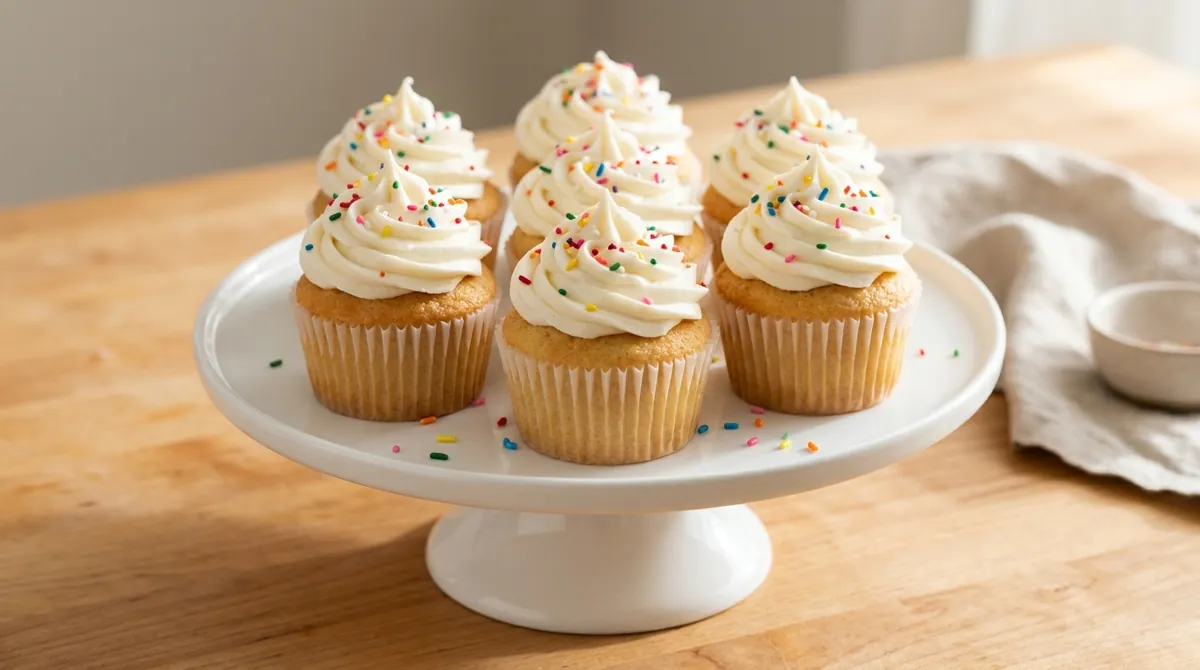
The cupcake is an American idea with a long paper trail. Amelia Simmons's American Cookery (1796) includes "a light cake to bake in small cups," the earliest recipe usually cited for what we now call a cupcake. The word itself shows up in print later: Eliza Leslie's Seventy-five Receipts for Pastry, Cakes, and Sweetmeats (1828) is the earliest surviving use of "cup cake" that Wikipedia lists, and it says "extant," so it may not be the first.
"Cup cake" meant two things in the early 1800s. It could be a small cake baked in a cup, ramekin or mold, which is the sense that survived. It could also be a cake measured by the cup instead of weighed, in contrast with a pound cake; the later "1234 cake" (1 cup butter, 2 sugar, 3 flour, 4 eggs) is the usual example. Both stories are told, and which came first is not settled. Muffin tins and paper liners later made the small cake easy for every home baker.
Why it works the kitchen science
Creaming the butter and sugar
The sugar crystals beat tiny air pockets into the butter, which the baking powder then expands for a light crumb.
Room-temperature eggs and milk
They blend smoothly into the butter without curdling or breaking the batter.
Alternating flour and milk
It keeps the batter smooth with the least mixing, so the cupcakes stay tender instead of tough.
Filling liners two-thirds full
It gives a gently domed top instead of a spill or a flat disk.
🧰 You'll need 8 items
Everything the steps call for. Tick off what you have before you start.
Appliances
Pans and pots
Tools
Supplies
Step by step
- Step 1
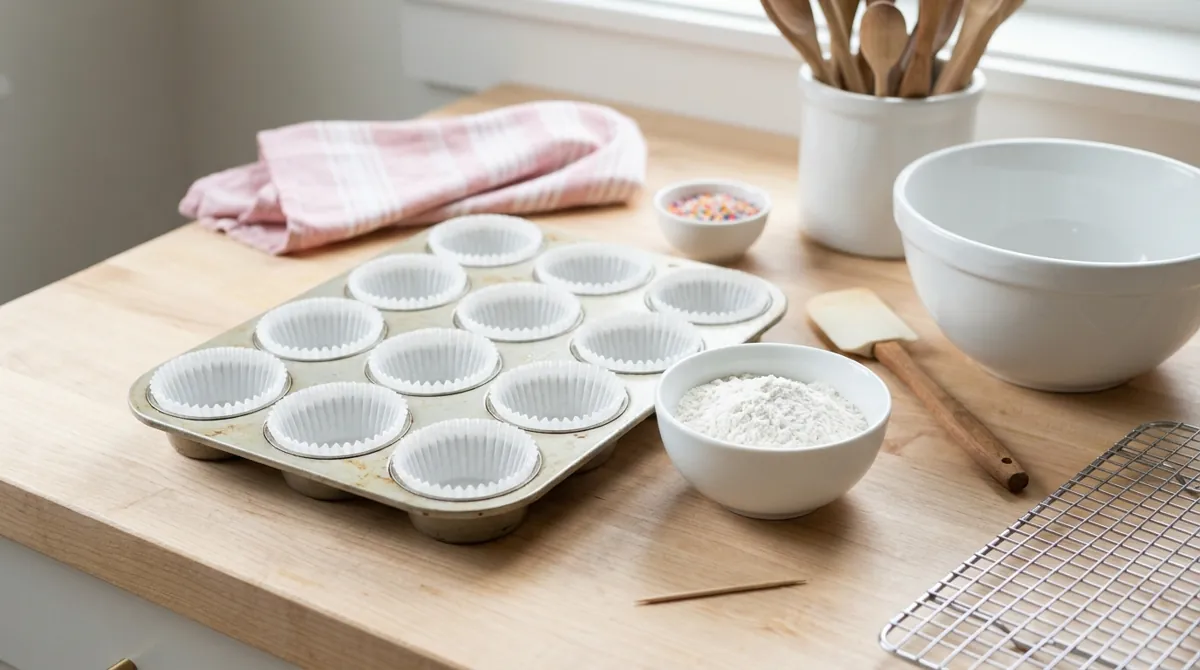
Heat the oven to 350°F with a rack in the middle. Line a 12-cup muffin tin with paper liners. Whisk the flour, baking powder and salt in a bowl.
- Step 2
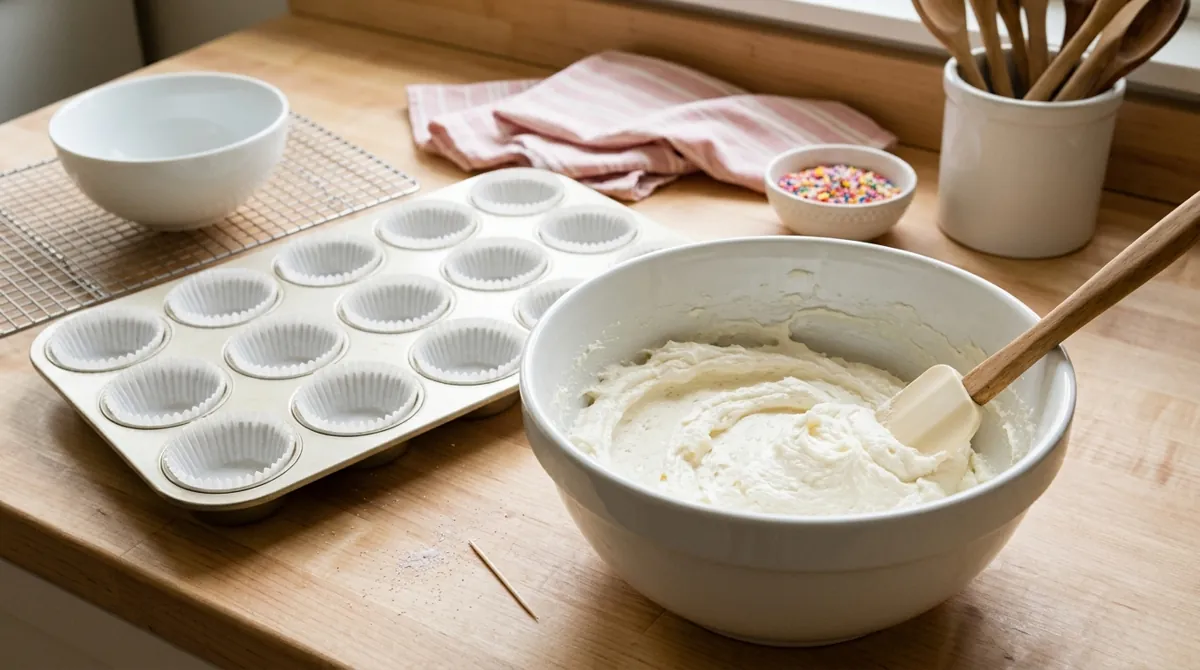
Beat the softened butter and granulated sugar with a mixer for 3 minutes, until pale and fluffy.
- Step 3
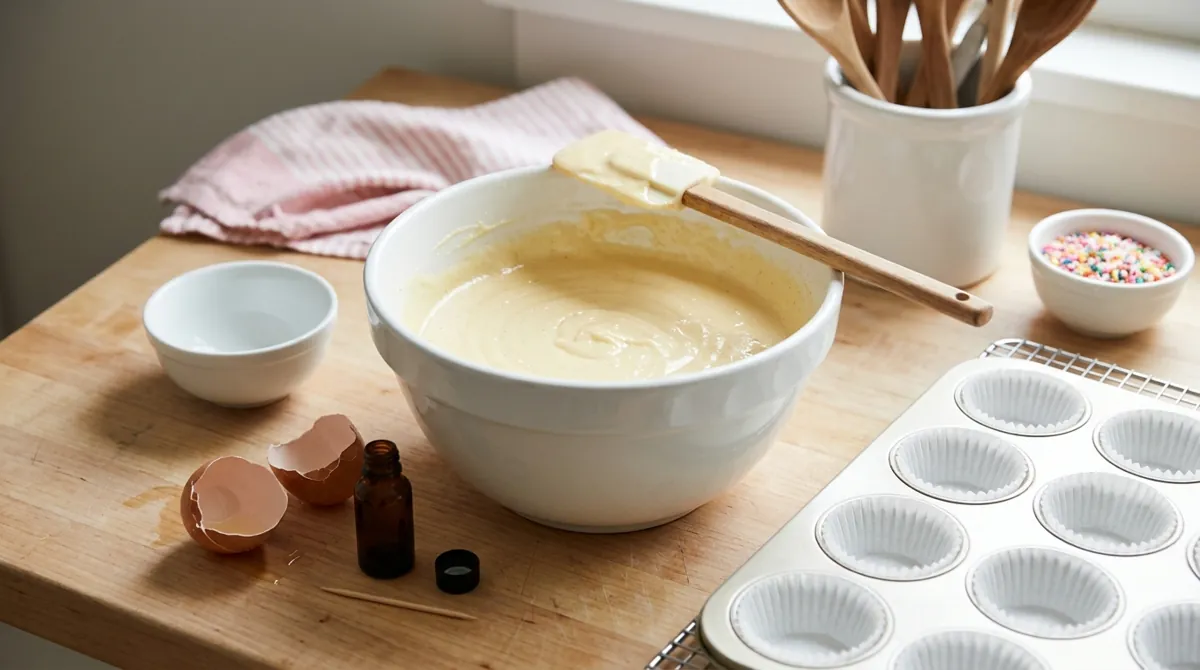
Beat in the eggs one at a time, then the vanilla, scraping the bowl between additions.
- Step 4
Add the flour mixture in three parts, alternating with the milk, beating on low just until the batter is smooth. Do not overmix.
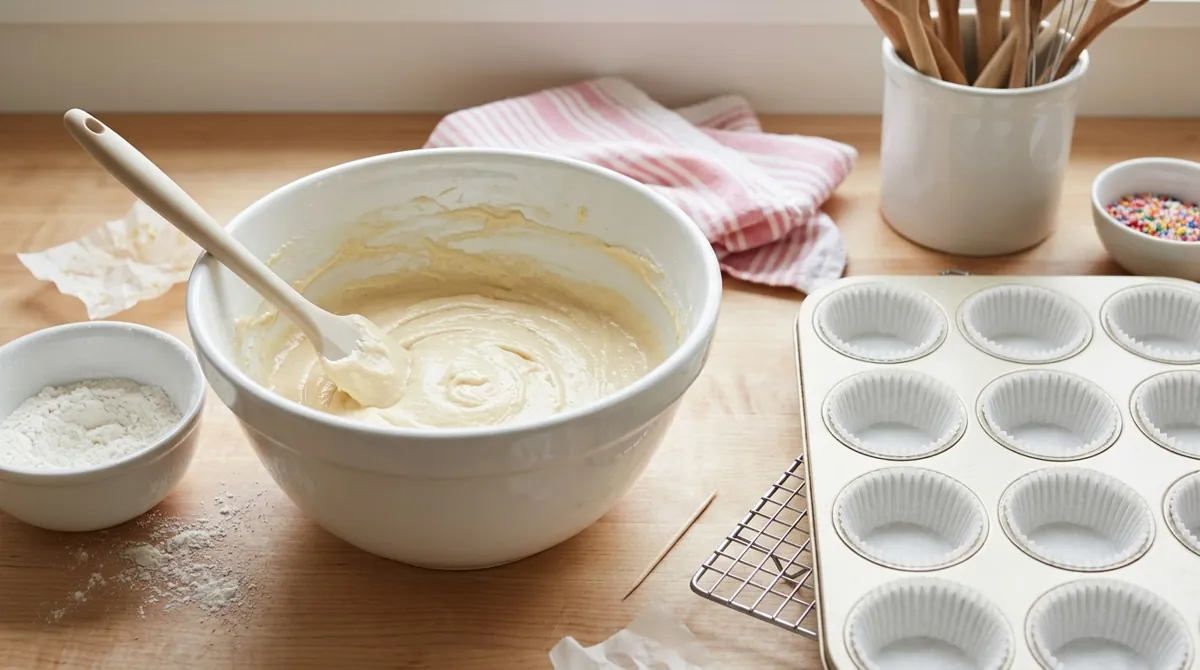
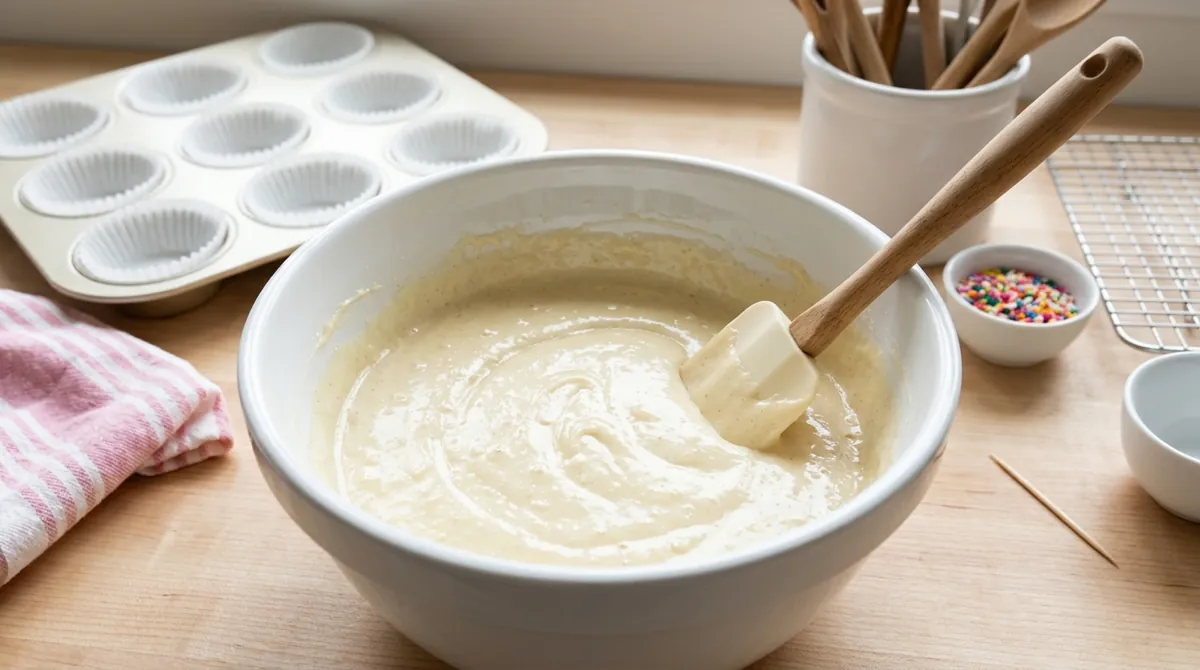
✓ What it should look like - Step 5
Divide the batter among the liners, about two-thirds full. Bake 18 to 22 minutes, until the tops spring back when pressed and a toothpick in the center comes out clean.
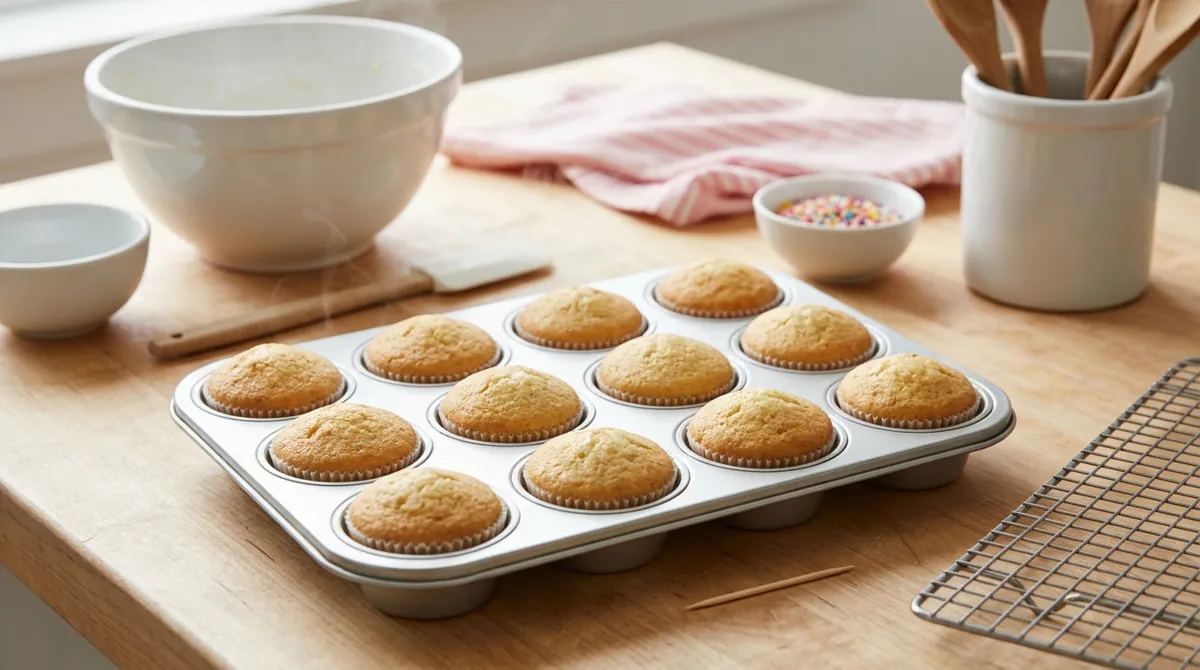
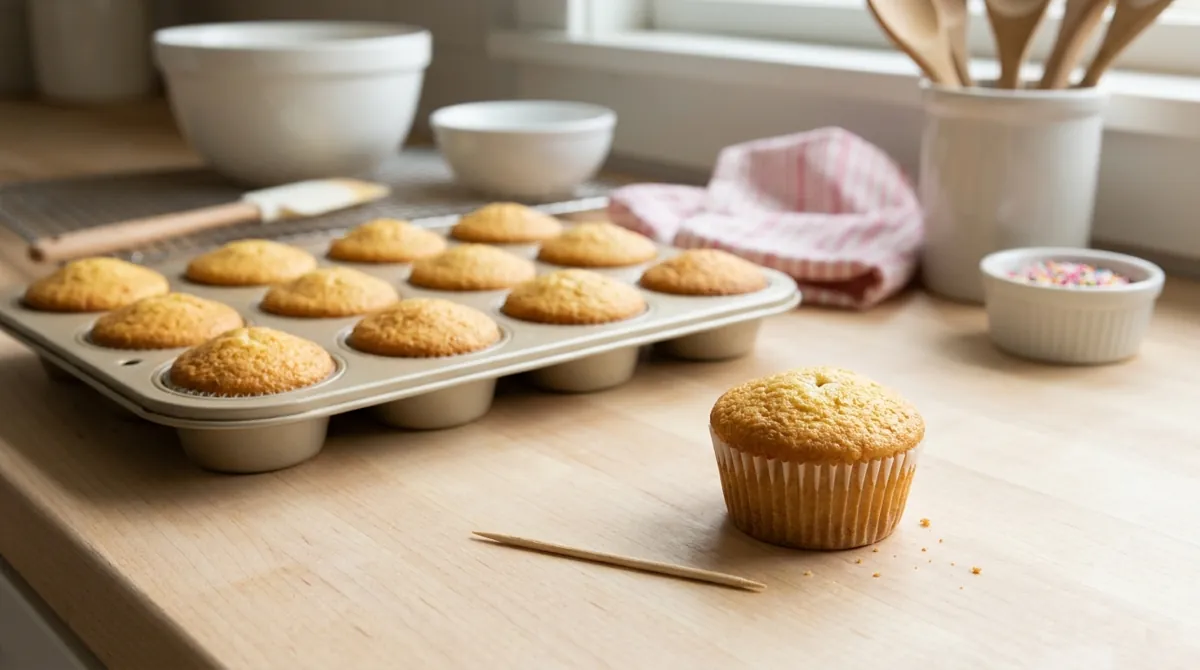
✓ What it should look like - Step 6
Cool in the tin 5 minutes, then move to a wire rack and cool completely, at least 30 minutes.
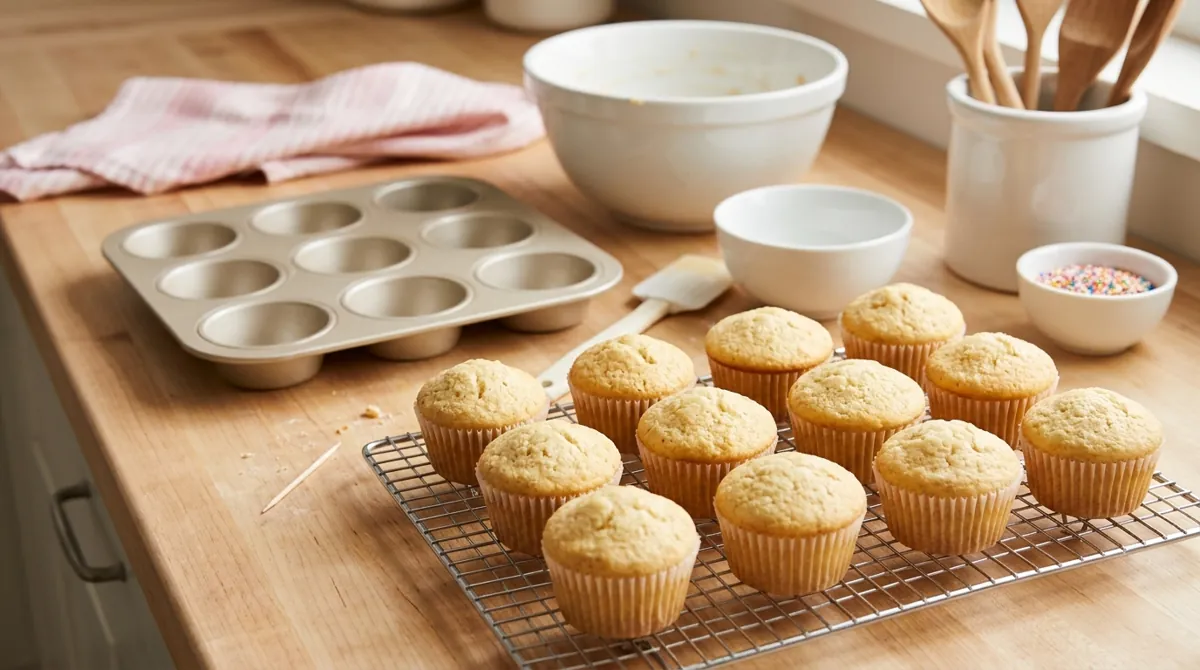
- Step 7
Beat the buttercream butter for 2 minutes until creamy, add the powdered sugar, vanilla, salt and 2 tablespoons milk, and beat 3 minutes until fluffy, adding more milk if it is stiff. Swirl it onto the cooled cupcakes.
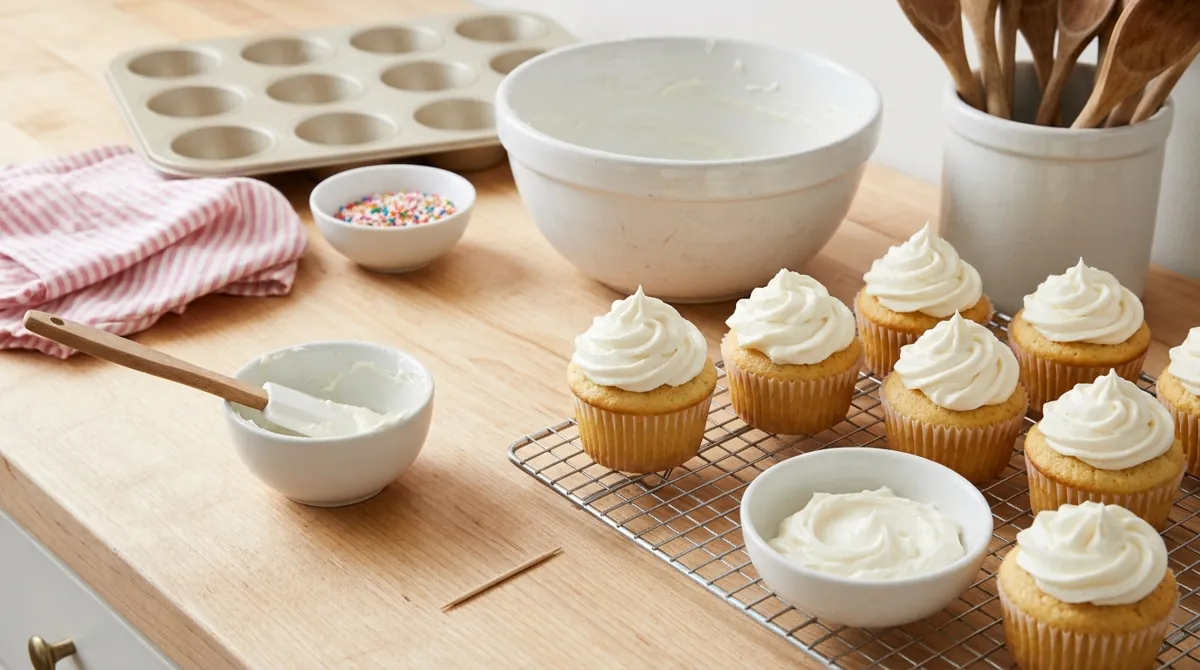
Cupcakes
Serves 12 cupcakes · one 12-cup muffin tin · 1 hr 20 min total
Cupcakes
- 1 1/2 cups all-purpose flour (190 g)
- 1 1/2 tsp baking powder
- 1/4 tsp fine salt
- 1/2 cup unsalted butter (113 g), softened to cool room temperature
- 3/4 cup granulated sugar (150 g)
- 2 large eggs (100 g), room temperature
- 2 tsp vanilla extract
- 1/2 cup whole milk (120 g), room temperature
Vanilla buttercream
- 1 cup unsalted butter (227 g), softened
- 3 cups powdered sugar (360 g)
- 1 tsp vanilla extract
- 2 to 3 tbsp whole milk (30 g)
- pinch of fine salt
Equipment: Oven, Hand or stand mixer, Muffin tin, Wire rack, Measuring cups and spoons, Mixing bowls, Whisk, Toothpicks
Method
- Heat the oven to 350°F with a rack in the middle. Line a 12-cup muffin tin with paper liners. Whisk the flour, baking powder and salt in a bowl.
- Beat the softened butter and granulated sugar with a mixer for 3 minutes, until pale and fluffy.
- Beat in the eggs one at a time, then the vanilla, scraping the bowl between additions.
- Add the flour mixture in three parts, alternating with the milk, beating on low just until the batter is smooth. Do not overmix.
- Divide the batter among the liners, about two-thirds full. Bake 18 to 22 minutes, until the tops spring back when pressed and a toothpick in the center comes out clean.
- Cool in the tin 5 minutes, then move to a wire rack and cool completely, at least 30 minutes.
- Beat the buttercream butter for 2 minutes until creamy, add the powdered sugar, vanilla, salt and 2 tablespoons milk, and beat 3 minutes until fluffy, adding more milk if it is stiff. Swirl it onto the cooled cupcakes.
Americanized house recipe, written for this site, within the common ratios for a simple butter cupcake (about 1 1/2 cups flour, 1/2 cup butter, 3/4 cup sugar and 2 eggs for 12). Serious Eats' classic vanilla cupcakes, and King Arthur Baking's vanilla cupcakes could not be fetched. History: Wikipedia, "Cupcake" (Simmons 1796, Leslie 1828, the two meanings of "cup cake"). Serious Eats. Ingredient list follows the source; the method is in our own words.
All sources (2)
Tips
- Frost only when completely cool, or the buttercream melts and slides off.
- Unfrosted cupcakes keep 2 days airtight at room temperature or 2 months frozen. Frosted ones are best the day they are made.
- Add a drop of food coloring or 2 tablespoons of cocoa powder to the buttercream, or swap 2 tablespoons of the flour for cocoa in the cake for a chocolate version.
- A toothpick with a few moist crumbs is fine; wet batter means bake 2 more minutes.
The rules people argue about
What the sources agree on, what they don't, and what is just a good story.
- The first cupcake recipe was Amelia Simmons's in 1796. Disputed: it is the earliest recipe usually cited for a cake baked in small cups, but the word "cupcake" is first documented in Eliza Leslie's 1828 book, and Wikipedia gives the invention date as 1796 or 1828.
- A cupcake is named for the cup it was baked in. Disputed: that is one early sense; the other is a cake measured by the cup instead of weighed, and both were in use.
Meatballs of the World

Italian-American Meatballs
Big, tender meatballs braised for an hour in red sauce over spaghetti. The one most Americans grew up with.

Pallottine (Abruzzo Meatballs)
Tiny meatballs, smaller than a marble, tossed right through square spaghetti alla chitarra. No bread at all.

Swedish Meatballs (Köttbullar)
Small, soft meatballs browned in butter, in a cream sauce made from the same pan, with lingonberry jam on the plate.

Danish Frikadeller
Pork meatballs shaped with a spoon and fried slowly in butter, crusty outside and soft in the middle.

Königsberger Klopse
German meatballs that are never fried: poached, then served in a creamy white sauce with capers.

Spanish Albóndigas in Almond Saffron Sauce
The tapas bar classic: small meatballs in a golden sauce thickened with fried almonds and bread.

Mexican Albóndigas with Chipotle and Mint
Soft meatballs with rice and fresh mint inside, simmered in a smoky tomato and chipotle broth.

Izgara Köfte (Turkish Grilled Meatballs)
Small, flat meatballs kneaded hard, rested cold, and charred on a hot grill pan.

Lion's Head Meatballs
Big, soft pork meatballs, stirred into a sticky paste, fried to set, then braised in a savory sauce.

Chicken Tsukune
Japan's chicken meatball: kneaded sticky, grilled on skewers, glazed with sweet soy tare, dipped in egg yolk.