
Dal
Red lentils simmered until creamy and finished with a sizzling tadka of ghee, cumin, onion, garlic, ginger and tomato: the cheap, comforting everyday dish of India.
🍳Cook alongOne move at a time, with real timers
 Edited by JP Lambiase
Change the estimate
Swaps change the price only: cook any meat to its own safe temperature. Where these numbers come from
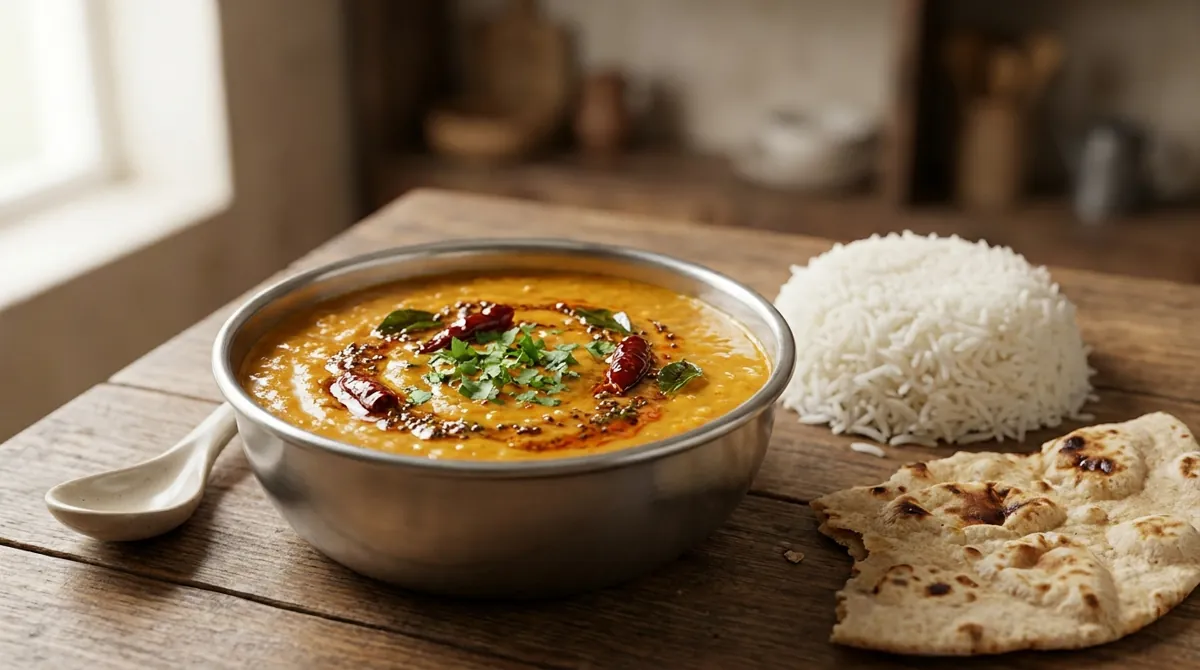
"Dal" means both the dried split pulses (lentils, split peas, split beans) and the stew made from them, and the dish is a daily staple across India, Nepal, Pakistan, Bangladesh and Sri Lanka, usually eaten with rice or flatbread. The word comes from the Sanskrit root dal, meaning "to split."
Lentils are among the most ancient cultivated foods, found in Bronze Age settlements, and dal is named as a staple in old Sanskrit texts such as the Yajurveda, which is part of why it is such a cheap, protein-rich food for millions of people.
What makes a pot of boiled lentils into restaurant dal is the tadka (also called tarka or chaunk), a final seasoning in which whole spices, aromatics and sometimes tomato are fried in hot ghee or oil until fragrant and then poured over the cooked lentils.
Why it works the kitchen science
Red lentils
They are split and skinless, so they need no soaking and cook to a creamy puree in 20 minutes.
Skimming the foam
It removes the scum that can make the dal taste bitter and muddy.
The tadka
Spices bloomed in hot ghee release flavors that boiling in water cannot, and adding them at the end keeps them bright.
🧰 You'll need 6 items
Everything the steps call for. Tick off what you have before you start.
Pans and pots
Tools
Step by step
- Step 1
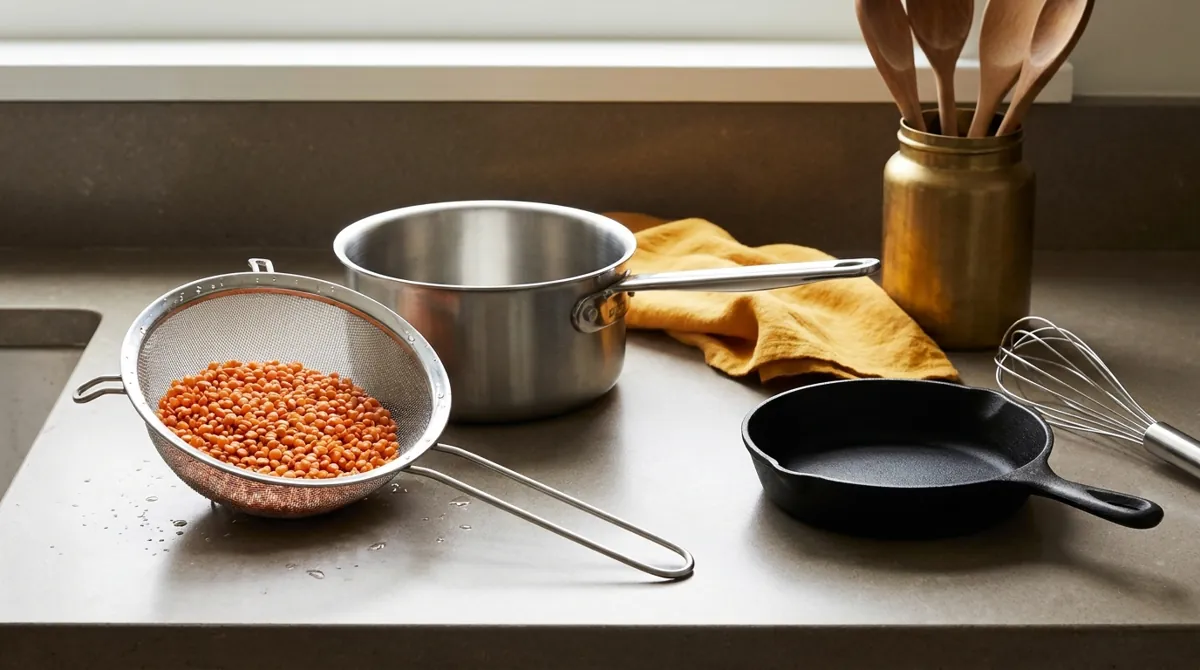
Rinse the lentils in a fine strainer under cold water, swishing, until the water runs mostly clear.
- Step 2
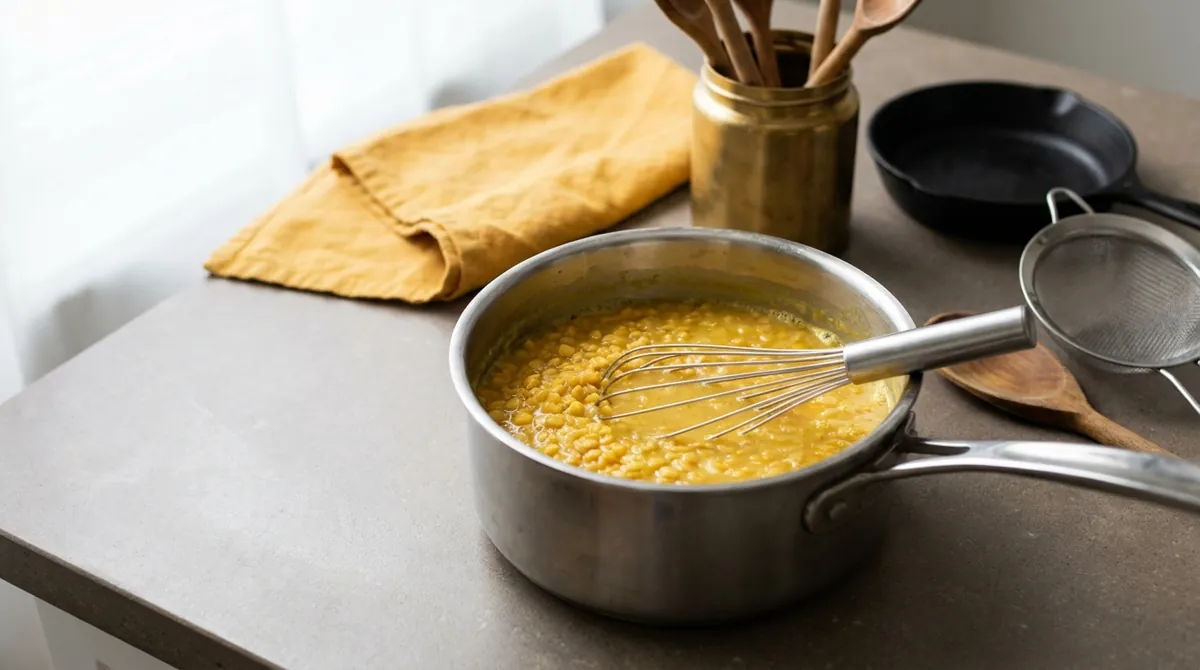
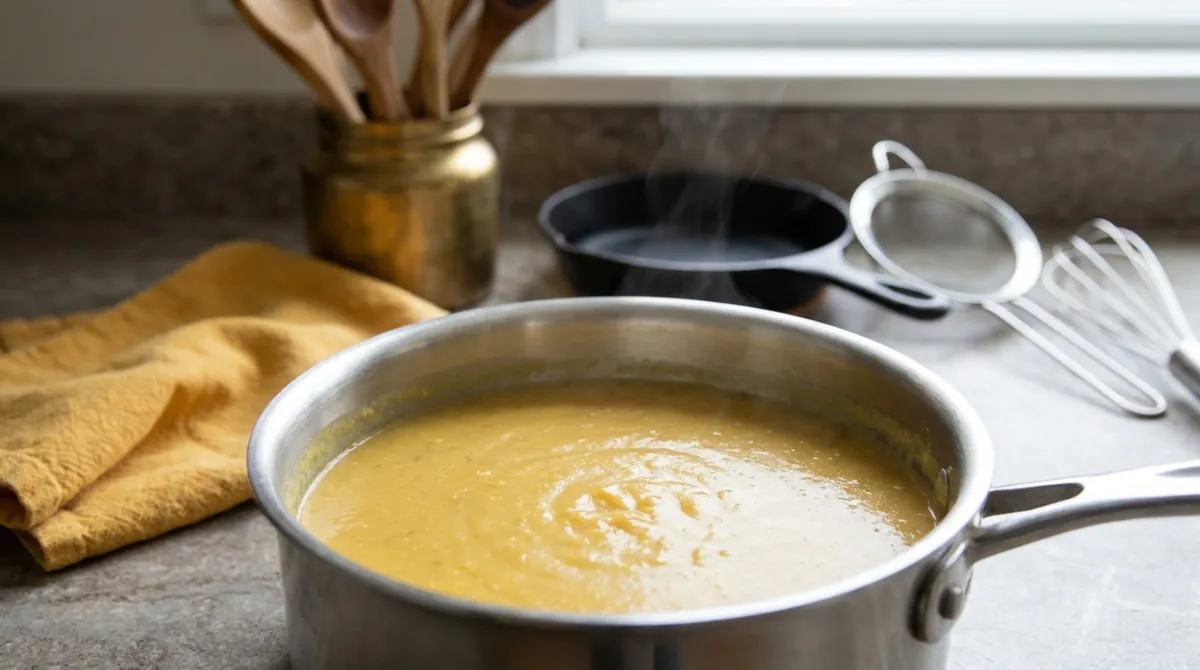
Put the lentils, water and turmeric in a medium saucepan. Bring to a boil, skim off the foam, then reduce the heat and simmer partly covered 20 to 25 minutes, until the lentils are soft and falling apart. Whisk until mostly smooth and stir in the salt.
✓ What it should look like - Step 3
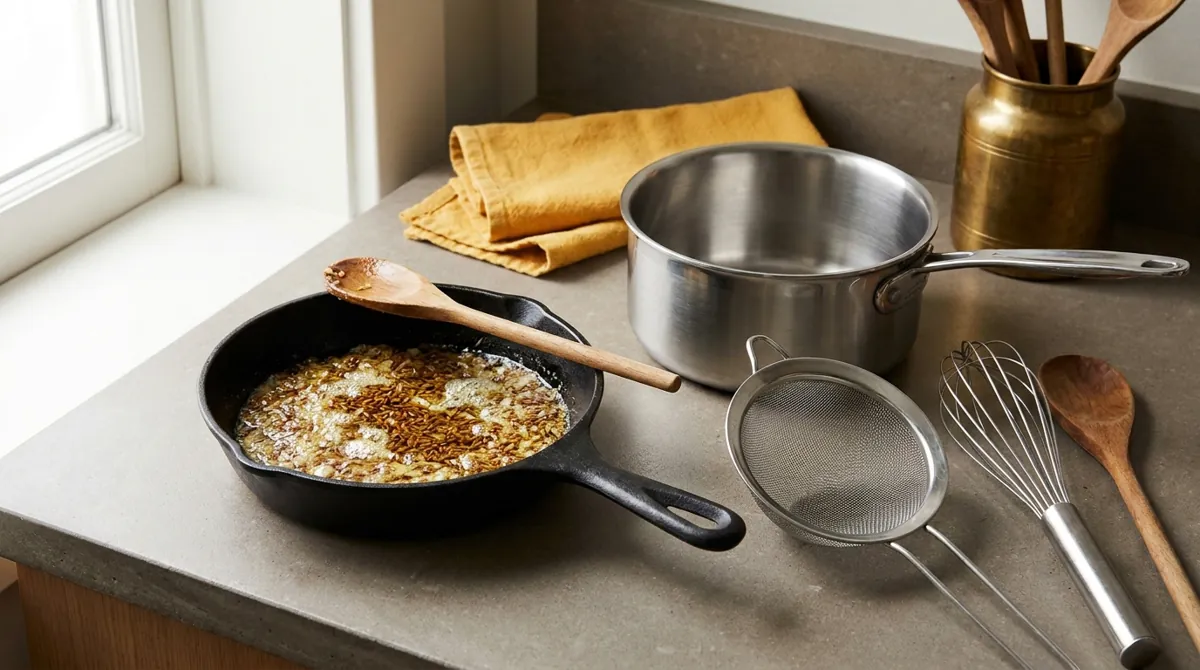
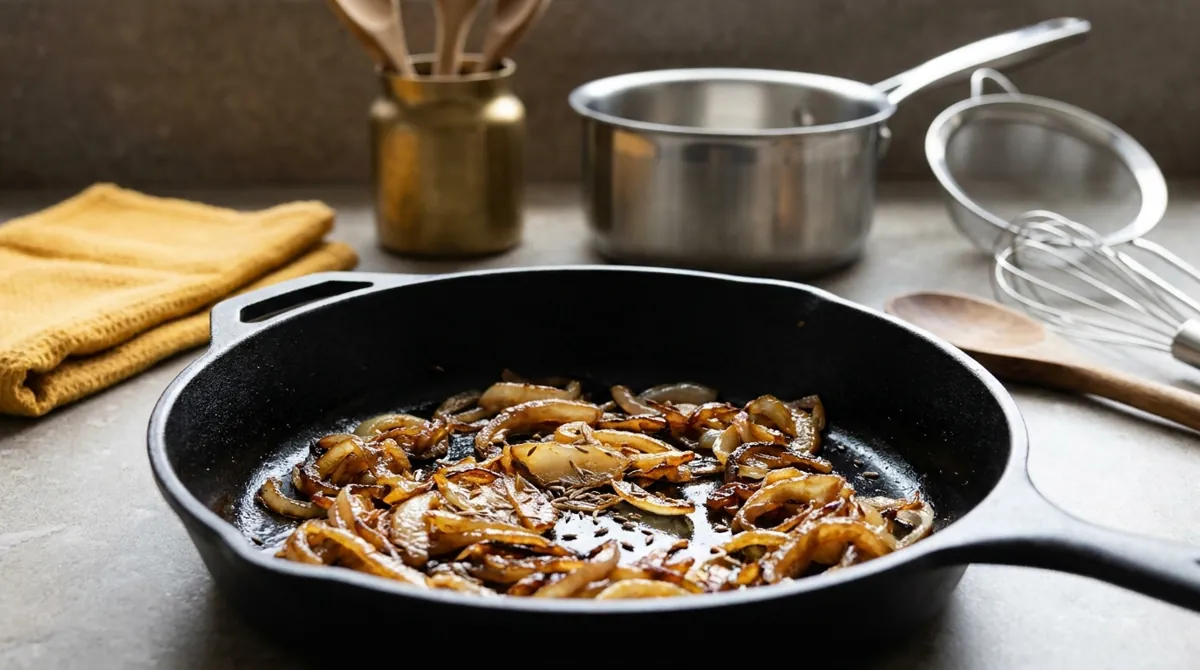
While the lentils cook, heat the ghee in a skillet over medium-high heat. Add the cumin seeds and let them sizzle for about 30 seconds. Add the onion and cook 6 to 8 minutes, until deep golden.
✓ What it should look like - Step 4
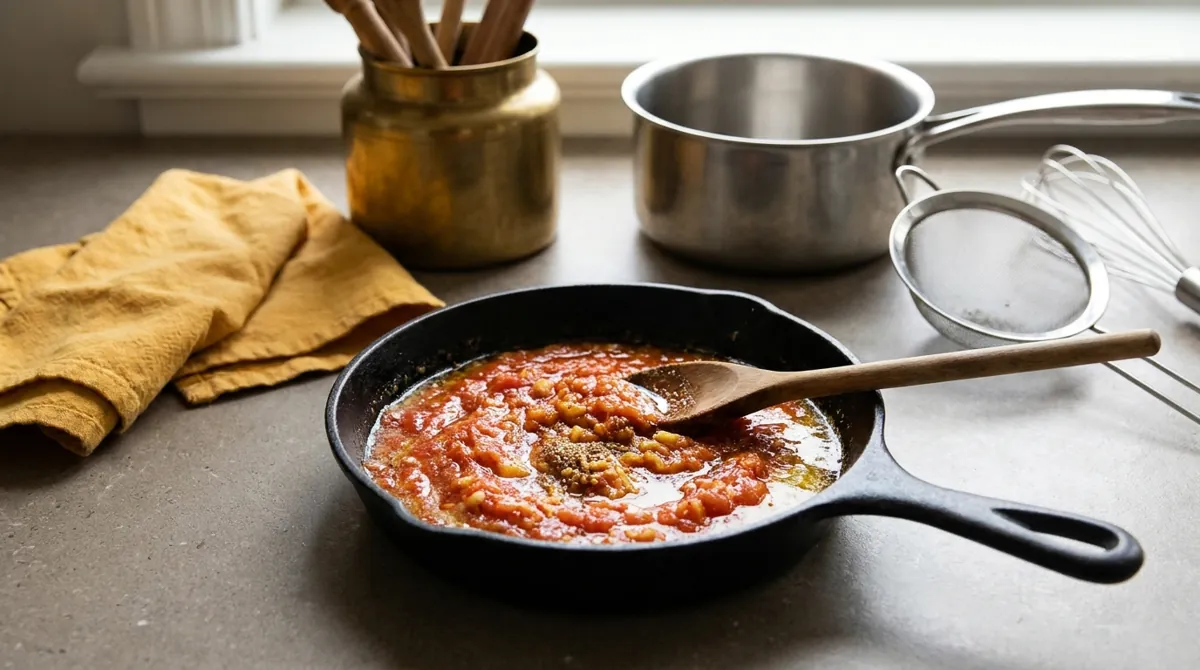
Add the garlic and ginger and cook 1 minute, then add the tomatoes and chili powder and cook 5 minutes, until jammy and the ghee separates at the edges.
- Step 5
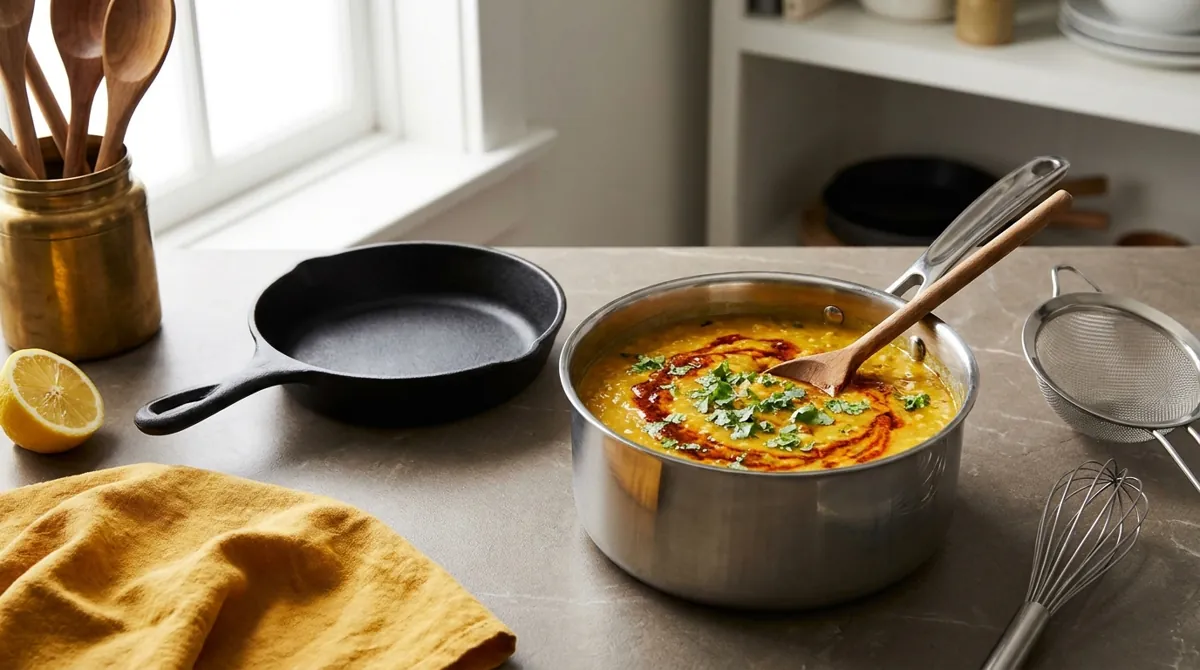
Scrape the tadka into the dal, rinse the skillet with a splash of water and add that too. Simmer 5 minutes, loosening with hot water if it is thick. Add the garam masala, lemon juice and salt to taste, and top with cilantro. Serve with rice or flatbread.
Dal
Serves 5 · about 6 cups · 50 min total
Dal
- 1 1/2 cups red lentils, masoor dal (300 g)
- 5 cups water (1.2 L)
- 1/2 tsp ground turmeric
- 1 tsp fine salt, plus more to taste
Tadka
- 2 tablespoons ghee (28 g)
- 1 tsp cumin seeds
- 1 medium yellow onion (150 g), finely chopped
- 3 cloves garlic (9 g), minced
- 1 tablespoon finely grated fresh ginger (6 g)
- 2 medium tomatoes (240 g), chopped
- 1/2 tsp red chili powder (Kashmiri or mild)
- 1 tsp garam masala (optional)
- 1 tablespoon lemon juice
- 1/4 cup chopped cilantro (10 g)
Equipment: Medium saucepan, Skillet, Chef's knife and cutting board, Measuring cups and spoons, Whisk, Fine-mesh strainer
Method
- Rinse the lentils in a fine strainer under cold water, swishing, until the water runs mostly clear.
- Put the lentils, water and turmeric in a medium saucepan. Bring to a boil, skim off the foam, then reduce the heat and simmer partly covered 20 to 25 minutes, until the lentils are soft and falling apart. Whisk until mostly smooth and stir in the salt.
- While the lentils cook, heat the ghee in a skillet over medium-high heat. Add the cumin seeds and let them sizzle for about 30 seconds. Add the onion and cook 6 to 8 minutes, until deep golden.
- Add the garlic and ginger and cook 1 minute, then add the tomatoes and chili powder and cook 5 minutes, until jammy and the ghee separates at the edges.
- Scrape the tadka into the dal, rinse the skillet with a splash of water and add that too. Simmer 5 minutes, loosening with hot water if it is thick. Add the garam masala, lemon juice and salt to taste, and top with cilantro. Serve with rice or flatbread.
Americanized house recipe, written for this site, a red lentil (masoor) dal tadka within the common ratios (about 1 part lentils to 3 1/2 parts water). History: Wikipedia, "Dal" (Sanskrit root dal-, split pulses and the dish, tadka also called tarka, chaunk and bagar, lentils in Bronze Age settlements, the Yajurveda). Technique checked against BBC Good Food Middle East, "Tarka dhal" (200 g red lentils to 1 litre water, skim the froth, simmer to a thick soupy dal; tarka of ghee, onion, garlic and spices fried separately and spooned on top). That recipe simmers about 65 minutes for a very soft, soupy dal; ours uses a thicker 1 to 4 ratio by weight and 20 to 25 minutes, which is enough for split red lentils to break down. en.wikipedia.org. Ingredient list follows the source; the method is in our own words.
All sources (2)
Tips
- Dal thickens as it sits; thin it with hot water when you reheat it.
- Keeps 5 days in the refrigerator or 3 months frozen.
- For a vegan version, use oil in place of ghee.
- Other dals (toor, chana, moong) need longer cooking, and some benefit from soaking.
The rules people argue about
What the sources agree on, what they don't, and what is just a good story.
- Dal tadka and dal fry are different dishes. Disputed: in many Indian restaurants dal fry means the lentils are cooked with fried onion and tomato, and dal tadka means a spiced tempering poured on top; cooks and menus do not use the names consistently.
- You should add salt only at the end. Folklore as a rule: some cooks say early salt toughens lentils; there is no clear evidence, and salting once the lentils are soft is simply easy to control.
Meatballs of the World

Italian-American Meatballs
Big, tender meatballs braised for an hour in red sauce over spaghetti. The one most Americans grew up with.

Pallottine (Abruzzo Meatballs)
Tiny meatballs, smaller than a marble, tossed right through square spaghetti alla chitarra. No bread at all.

Swedish Meatballs (Köttbullar)
Small, soft meatballs browned in butter, in a cream sauce made from the same pan, with lingonberry jam on the plate.

Danish Frikadeller
Pork meatballs shaped with a spoon and fried slowly in butter, crusty outside and soft in the middle.

Königsberger Klopse
German meatballs that are never fried: poached, then served in a creamy white sauce with capers.

Spanish Albóndigas in Almond Saffron Sauce
The tapas bar classic: small meatballs in a golden sauce thickened with fried almonds and bread.

Mexican Albóndigas with Chipotle and Mint
Soft meatballs with rice and fresh mint inside, simmered in a smoky tomato and chipotle broth.

Izgara Köfte (Turkish Grilled Meatballs)
Small, flat meatballs kneaded hard, rested cold, and charred on a hot grill pan.

Lion's Head Meatballs
Big, soft pork meatballs, stirred into a sticky paste, fried to set, then braised in a savory sauce.

Chicken Tsukune
Japan's chicken meatball: kneaded sticky, grilled on skewers, glazed with sweet soy tare, dipped in egg yolk.