
Deviled Eggs
Steamed eggs, a yolk filling of mayonnaise, mustard and a splash of vinegar, and a dusting of paprika: the picnic appetizer with a family tree that runs from Roman spiced eggs to medieval Spain.
🍳Cook alongOne move at a time, with real timers
 Edited by JP Lambiase
Change the estimate
Swaps change the price only: cook any meat to its own safe temperature. Where these numbers come from
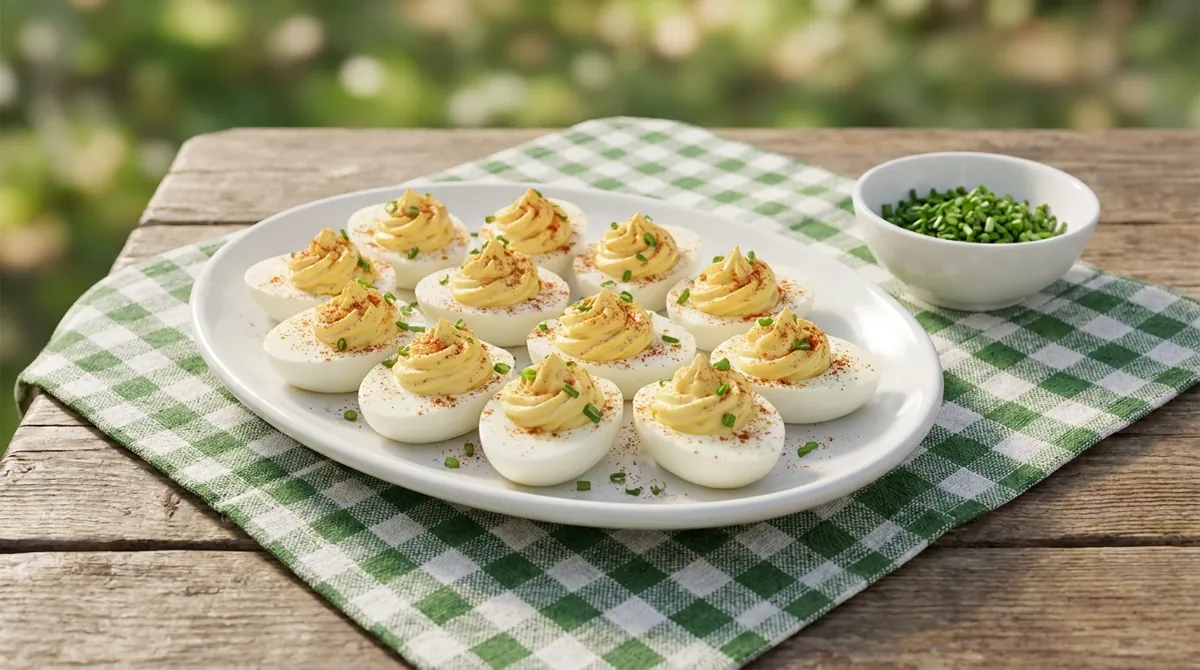
The idea of seasoned boiled eggs as a starter is very old. Roman cooks served eggs at the start of a meal, and the Roman recipe collection credited to Apicius includes boiled eggs with a sauce of pine nuts, pepper and vinegar. Those were spiced eggs, not stuffed ones. The first known recipe for the dish we would recognize, with the yolks mashed, seasoned and put back into the whites, comes from an anonymous 13th-century Andalusian cookbook from Muslim Spain, with coriander, pepper, onion juice, murri (a fermented sauce) and oil.
The name came much later. English cooks started calling highly seasoned foods "devilled" in the 18th century, and "devilled eggs" shows up in print in 1786. The earliest known American recipe was printed in the Montgomery Advertiser in Alabama in 1877, and Fannie Farmer's Boston Cooking-School Cook Book of 1896 is the first known recipe to bind the yolks with mayonnaise. By the 1940s deviled eggs were standard at American picnics, potlucks and church suppers, where some cooks still call them "salad eggs" or "angel eggs" to skip the devil.
Why it works the kitchen science
Steam instead of a cold-water start
The eggs go into steady, known heat, so the timing is repeatable and the shells come away more easily than with eggs brought up slowly from cold water.
🧰 You'll need 6 items
Everything the steps call for. Tick off what you have before you start.
Pans and pots
Tools
Step by step
- Step 1
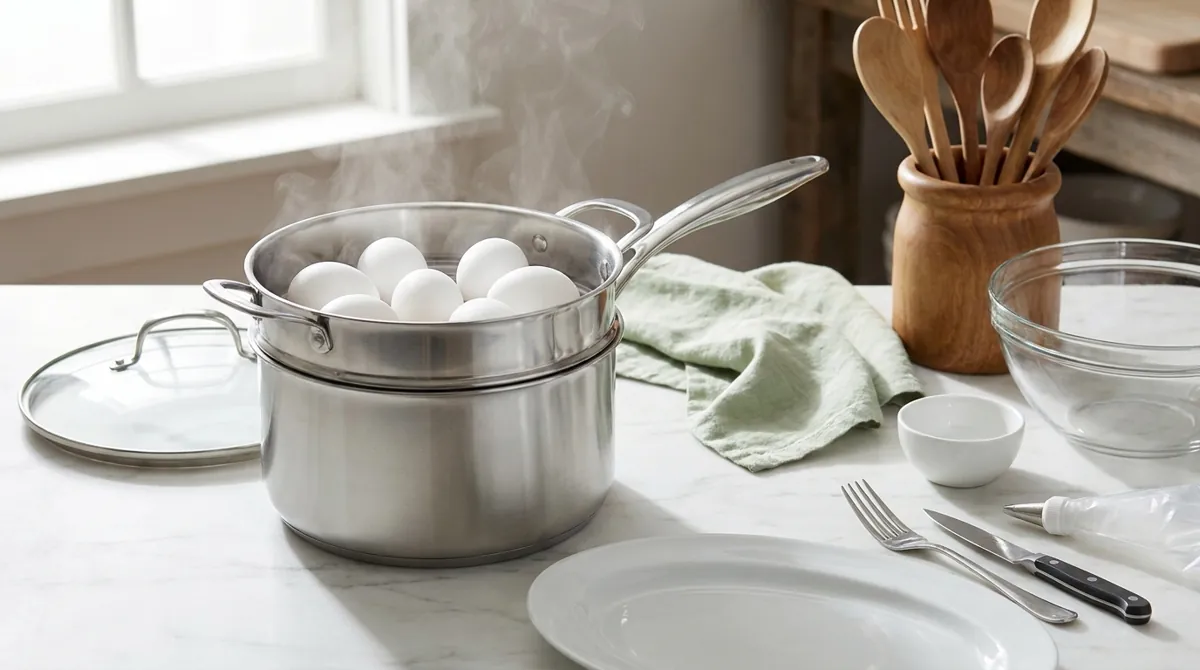
Bring about 1 inch of water to a boil in a large saucepan with a steamer basket set inside. Lay the cold eggs in the basket, cover and steam over medium-high heat for 13 minutes.
- Step 2
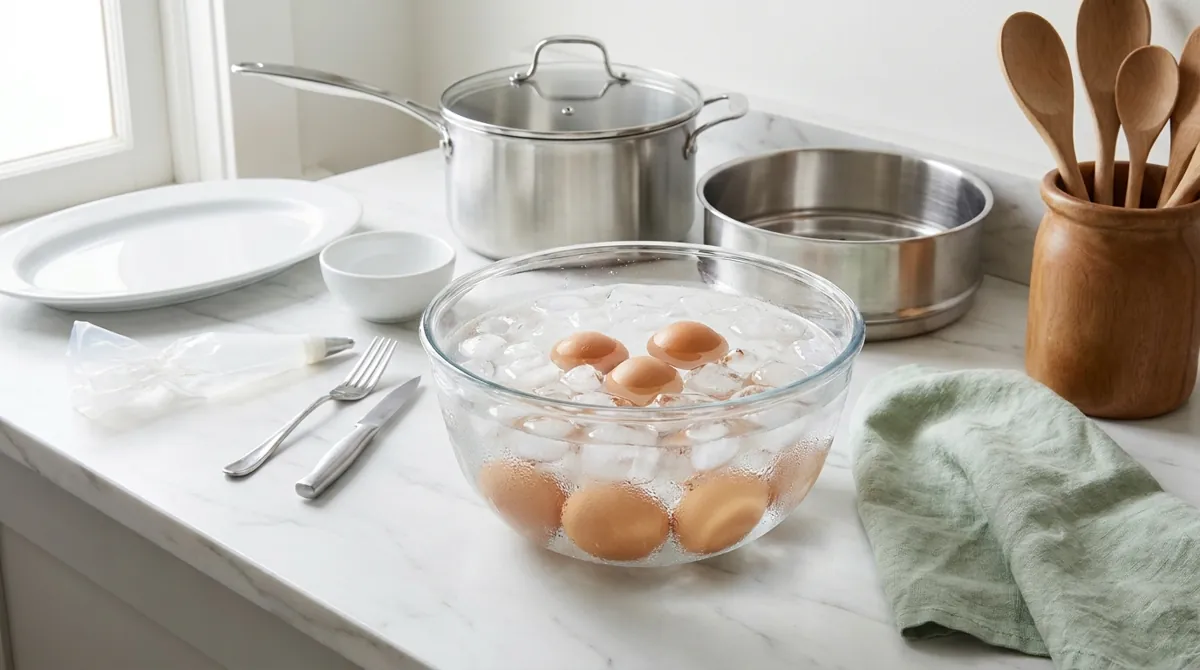
Move the eggs straight into a large bowl of ice water and leave them for 15 minutes, until cold all the way through.
- Step 3
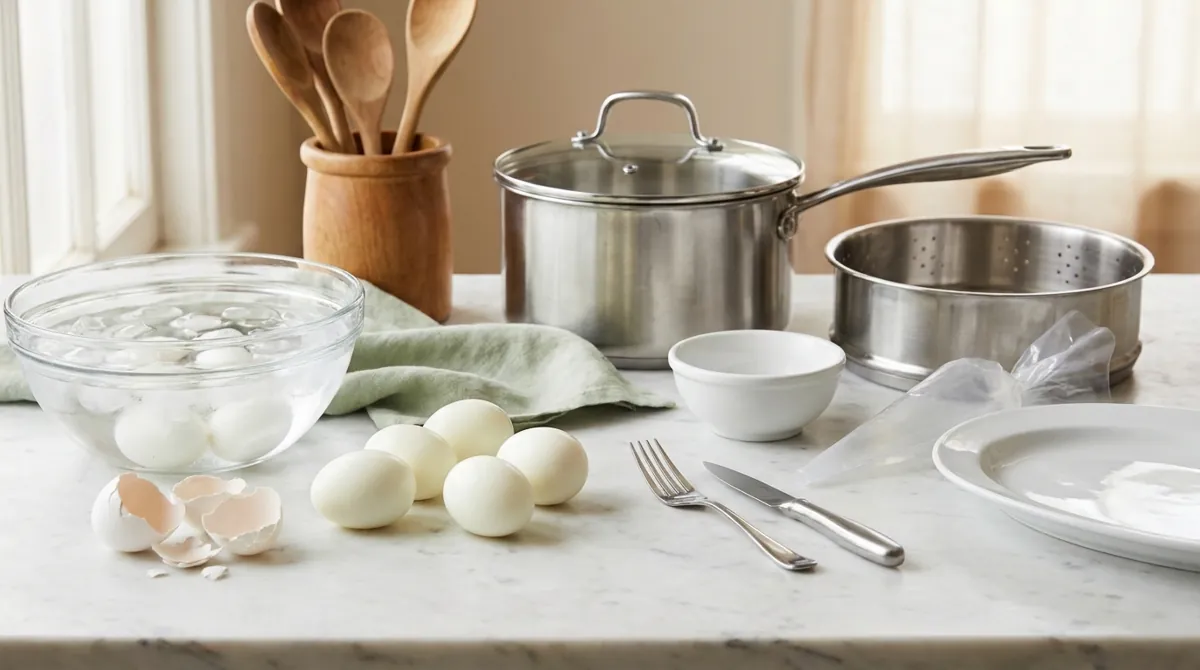
Tap each egg all over on the counter to crack the shell, then peel it under the water in the bowl, starting from the wide end where the air pocket is.
- Step 4
Halve the eggs lengthwise with a paring knife, wiping the blade between cuts, and pop the yolks into a small bowl. Set the whites on a serving platter, hollow side up.
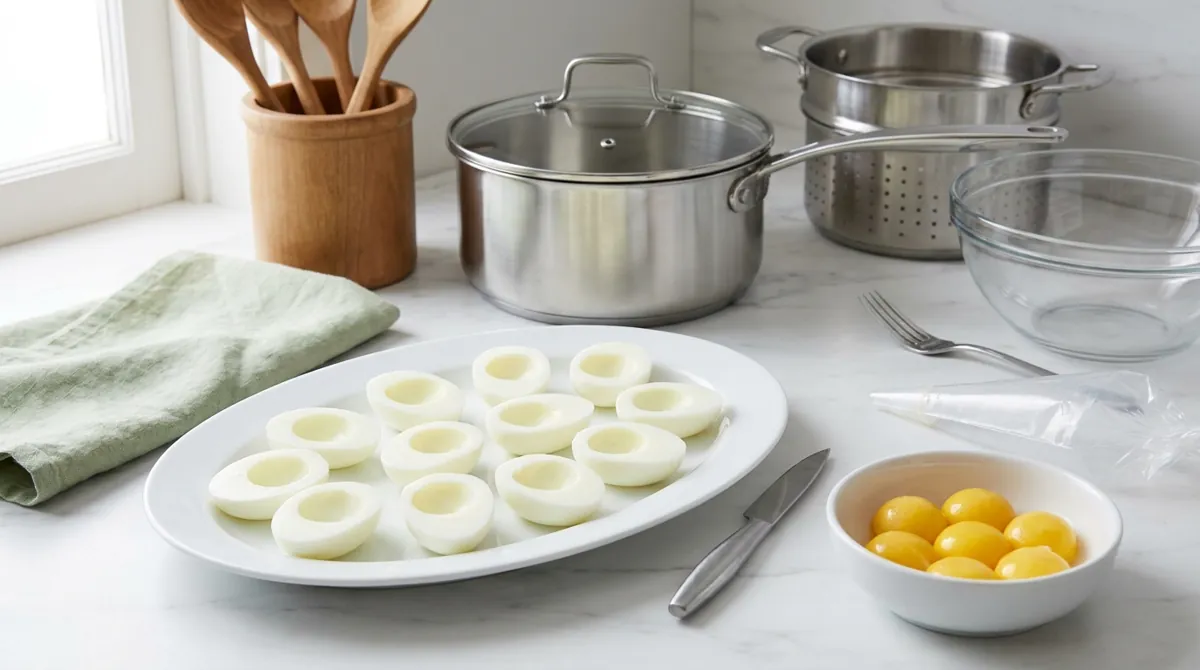
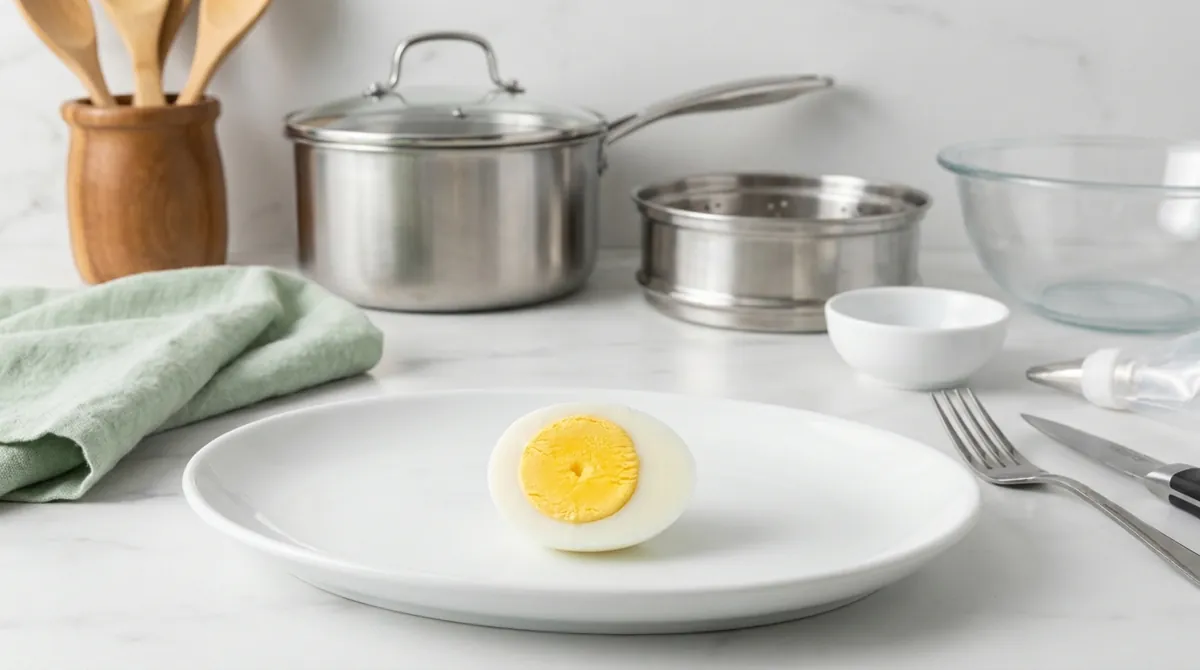
✓ What it should look like - Step 5
Mash the yolks with a fork until fine and sandy, then beat in the mayonnaise, mustard, vinegar, salt and pepper until completely smooth. Taste and add salt or a few more drops of vinegar until it tastes bright.
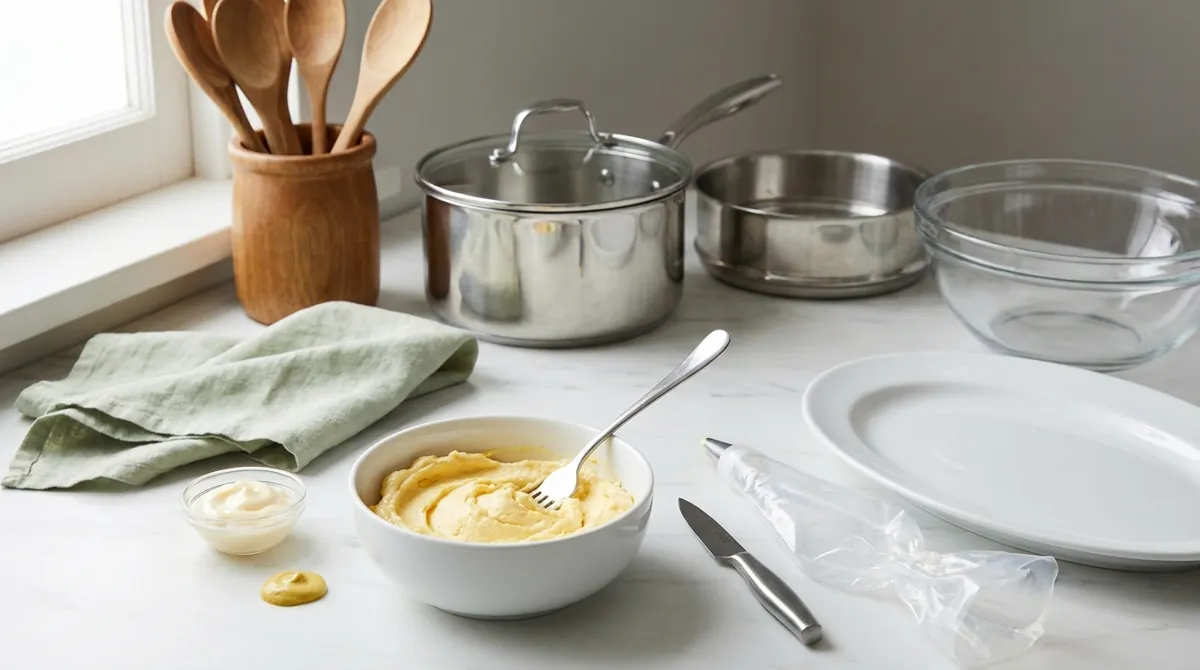
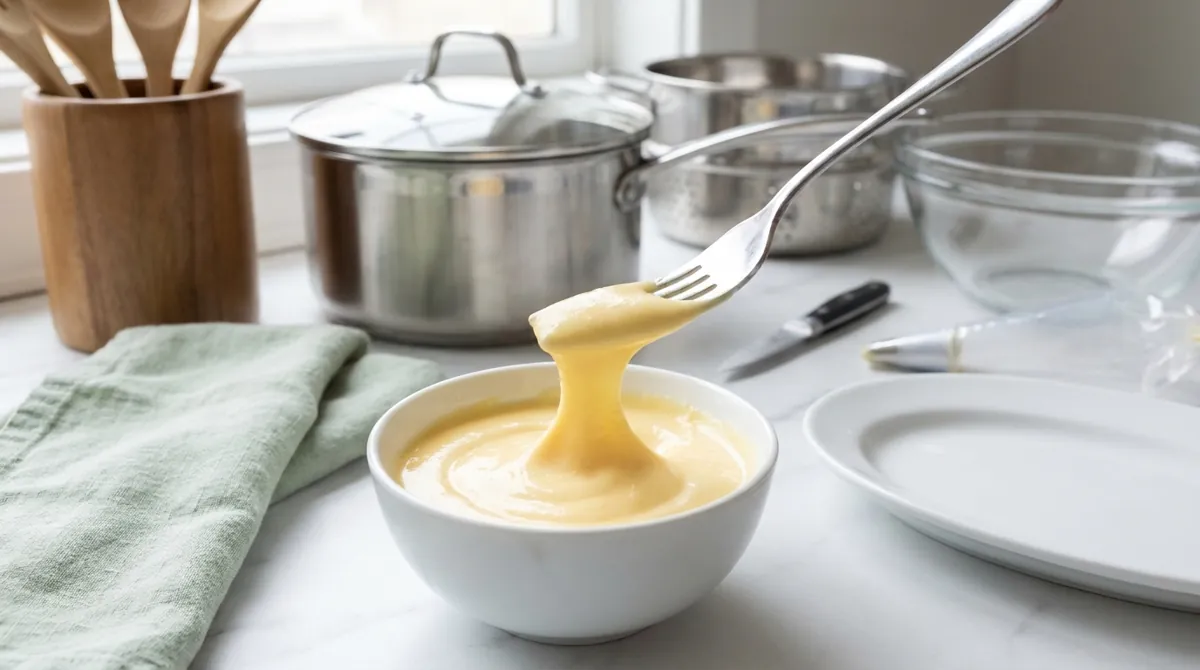
✓ What it should look like - Step 6
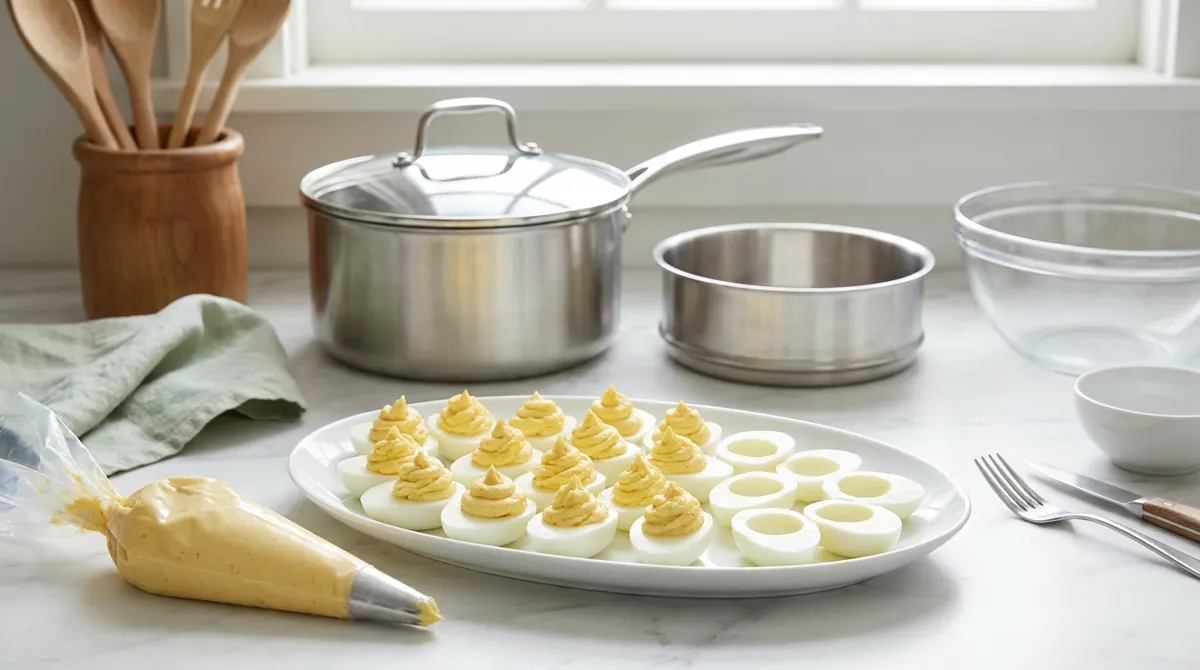
Spoon the filling into a piping bag or a zip-top bag with a corner snipped off and pipe a generous mound into each white.
- Step 7
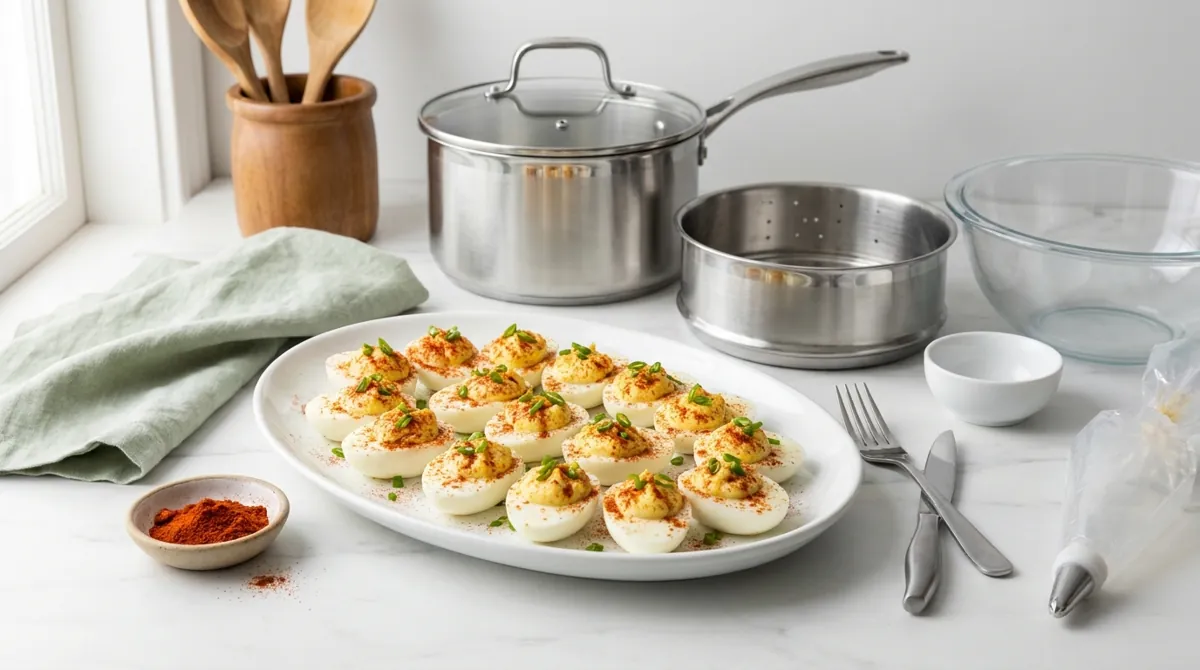
Dust with paprika and scatter the chives. Serve cold, or cover and refrigerate up to a day.
Deviled Eggs
Serves 6 as an appetizer · 12 deviled egg halves · 50 min total
Eggs
- 6 large eggs, straight from the fridge
Filling
- 1/4 cup mayonnaise (60 g)
- 1 tsp yellow mustard (5 g)
- 1 tsp cider vinegar or dill pickle juice (5 g)
- 1/4 tsp fine salt, plus more to taste
- A few grinds of black pepper
To finish
- Sweet or smoked paprika, for dusting (about 1/2 tsp, 1 g)
- 1 tbsp finely sliced fresh chives (3 g)
Equipment: Large saucepan, Steamer, Chef's knife and cutting board, Measuring cups and spoons, Mixing bowls, Piping bag (or a zip-top bag)
Method
- Bring about 1 inch of water to a boil in a large saucepan with a steamer basket set inside. Lay the cold eggs in the basket, cover and steam over medium-high heat for 13 minutes.
- Move the eggs straight into a large bowl of ice water and leave them for 15 minutes, until cold all the way through.
- Tap each egg all over on the counter to crack the shell, then peel it under the water in the bowl, starting from the wide end where the air pocket is.
- Halve the eggs lengthwise with a paring knife, wiping the blade between cuts, and pop the yolks into a small bowl. Set the whites on a serving platter, hollow side up.
- Mash the yolks with a fork until fine and sandy, then beat in the mayonnaise, mustard, vinegar, salt and pepper until completely smooth. Taste and add salt or a few more drops of vinegar until it tastes bright.
- Spoon the filling into a piping bag or a zip-top bag with a corner snipped off and pipe a generous mound into each white.
- Dust with paprika and scatter the chives. Serve cold, or cover and refrigerate up to a day.
Americanized house recipe, written for this site. History: Wikipedia, "Deviled egg" (13th-century Andalusian recipe, 1786 "devilled", 1877 Montgomery Advertiser, 1896 Fannie Farmer mayonnaise, 1940s picnics, "salad eggs" and other names); Tasting Table, "The Centuries-Long Evolution Of Deviled Eggs" (Roman egg starters with pine nut sauce, Andalusian stuffed eggs). en.wikipedia.org. Ingredient list follows the source; the method is in our own words.
All sources (3)
Tips
- Eggs a week or two old usually peel more cleanly than very fresh ones.
- Make the filling and whites up to a day ahead, keep them separate and covered in the fridge, and fill just before serving.
- For a picnic, keep the platter cold and do not leave deviled eggs out longer than 2 hours (1 hour on a very hot day).
- Variations: a pinch of cayenne or a few drops of hot sauce in the filling, crumbled bacon on top, or chopped sweet pickle stirred in.
The rules people argue about
What the sources agree on, what they don't, and what is just a good story.
- An ice bath makes eggs easier to peel. Disputed: some cooks and testers swear by it, others find it makes no difference or even makes peeling slightly harder. Everyone agrees it stops the cooking and keeps the yolk from turning green.
Meatballs of the World

Italian-American Meatballs
Big, tender meatballs braised for an hour in red sauce over spaghetti. The one most Americans grew up with.

Pallottine (Abruzzo Meatballs)
Tiny meatballs, smaller than a marble, tossed right through square spaghetti alla chitarra. No bread at all.

Swedish Meatballs (Köttbullar)
Small, soft meatballs browned in butter, in a cream sauce made from the same pan, with lingonberry jam on the plate.

Danish Frikadeller
Pork meatballs shaped with a spoon and fried slowly in butter, crusty outside and soft in the middle.

Königsberger Klopse
German meatballs that are never fried: poached, then served in a creamy white sauce with capers.

Spanish Albóndigas in Almond Saffron Sauce
The tapas bar classic: small meatballs in a golden sauce thickened with fried almonds and bread.

Mexican Albóndigas with Chipotle and Mint
Soft meatballs with rice and fresh mint inside, simmered in a smoky tomato and chipotle broth.

Izgara Köfte (Turkish Grilled Meatballs)
Small, flat meatballs kneaded hard, rested cold, and charred on a hot grill pan.

Lion's Head Meatballs
Big, soft pork meatballs, stirred into a sticky paste, fried to set, then braised in a savory sauce.

Chicken Tsukune
Japan's chicken meatball: kneaded sticky, grilled on skewers, glazed with sweet soy tare, dipped in egg yolk.