
Empanadas
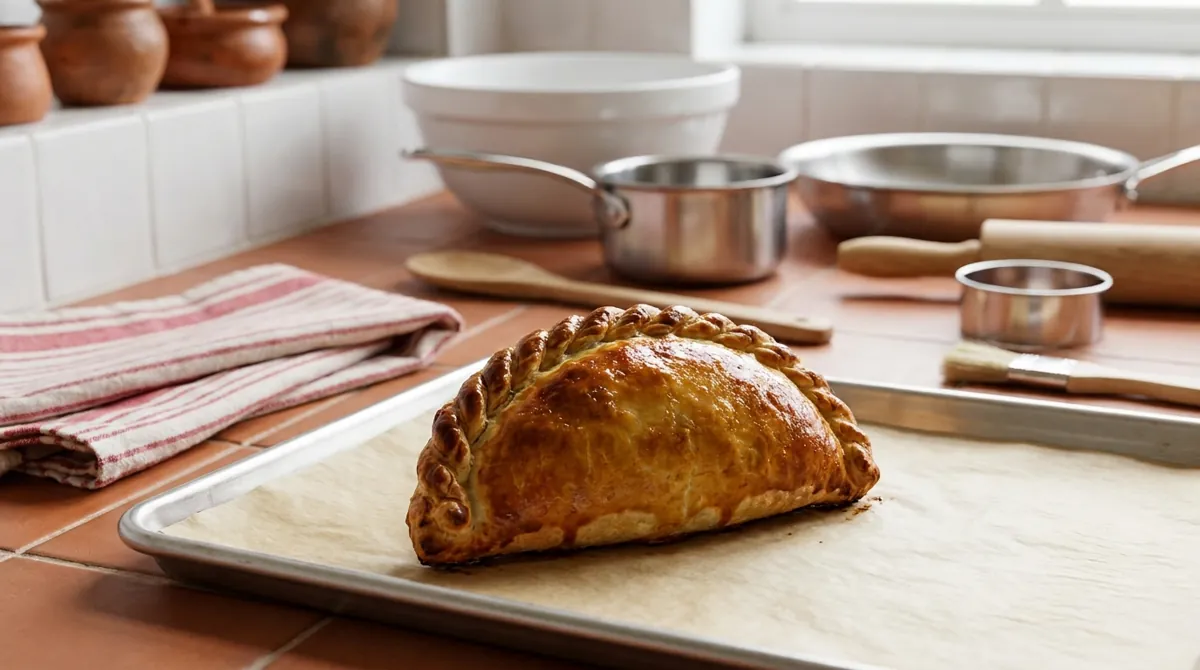
Argentine baked beef empanadas: a buttery homemade dough folded around a cold, juicy filling of beef, onion, paprika and cumin with green onion, hard-boiled egg and olives, crimped shut with the braided repulgue and baked golden.
🍳Cook alongOne move at a time, with real timers
 Edited by JP Lambiase
Change the estimate
Swaps change the price only: cook any meat to its own safe temperature. Where these numbers come from
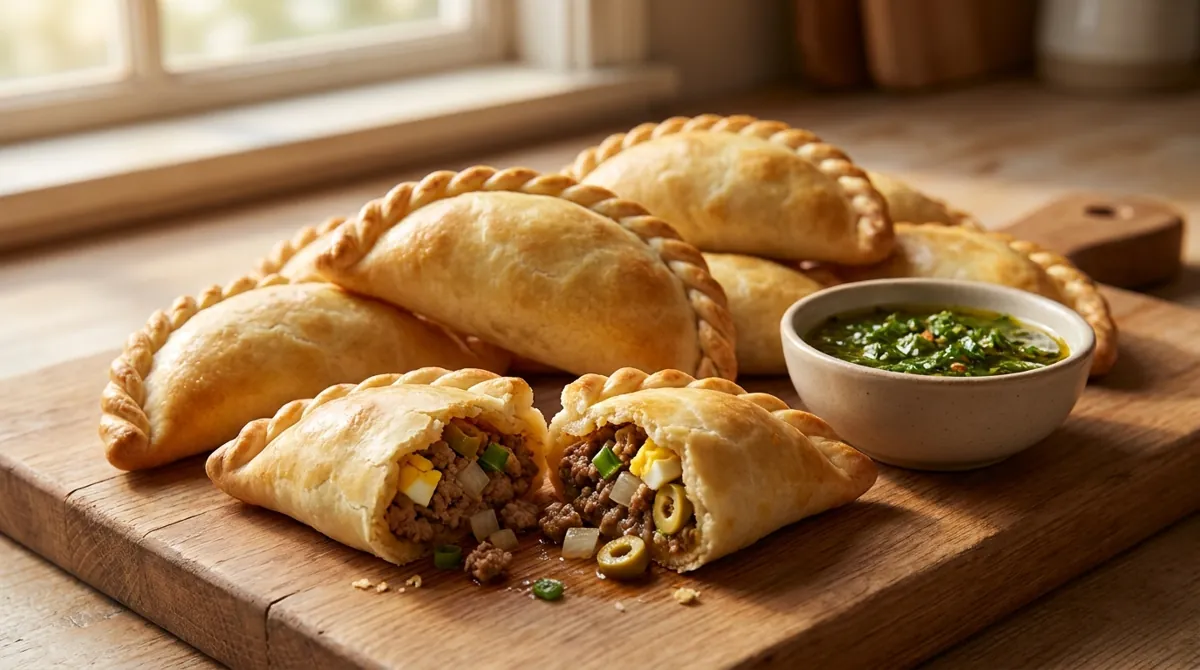
The name says what it is. Empanada comes from the Spanish verb empanar, to wrap or coat in bread: a filling folded inside dough and baked or fried. The dish is old in Spain. Galicia, in the northwest, is the region most often named as its home, an empanada appears in the Cantigas de Santa Maria around 1282, and the Catalan cookbook Llibre del Coch, printed in 1520 and credited to Robert de Nola, has seafood-filled empanadas. A popular theory traces them further back to the stuffed breads of the Arab world through Moorish Spain; that link is often repeated but not well documented.
The Spanish carried empanadas to the Americas, and every Latin American country now has its own. Argentina has a different one almost province by province: small, juicy, spicy salteñas in Salta, often with potato; large ones with olives and garlic in Mendoza; egg, red pepper, olives and raisins in La Rioja; and the empanada criolla of Tucumán, where the town of Famaillá holds a yearly National Empanada Festival. In Buenos Aires the Creole empanada has been declared a Cultural Heritage of Food and Gastronomy.
This recipe is one well-documented home version, Argentine baked beef empanadas in the criolla style. Every Argentine family will tell you theirs is different, and they are right.
Why it works the kitchen science
A cold filling
Chilled until the fat sets, it does not soak or tear the dough while you fold, and the set fat melts back into juice in the oven. That is the juicy empanada Argentines want.
Warm butter-and-water dough with egg
It rolls thin without springing back, stays tender, and bakes up crisp and golden instead of tough.
Egg, olives and raisins go in after chilling
Folded in cold, the egg stays in pieces and the olives stay bright instead of turning to mush in the hot pan.
🧰 You'll need 11 items
Everything the steps call for. Tick off what you have before you start.
Appliances
Pans and pots
Tools
Supplies
Step by step
- Step 1
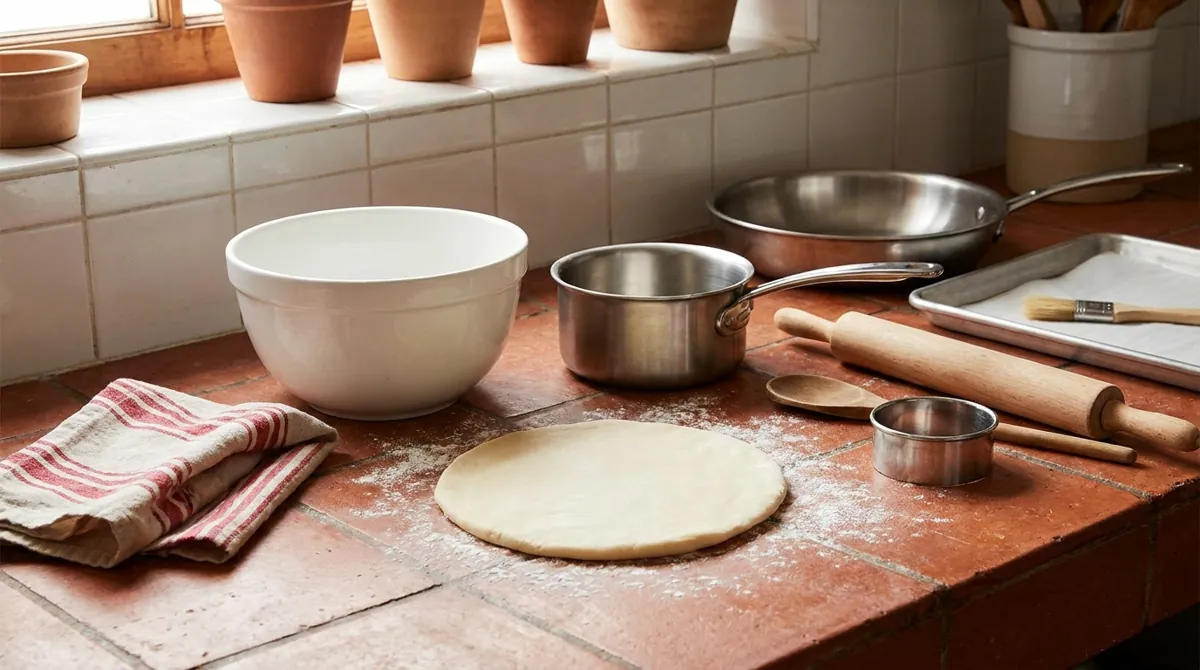
Make the dough. Warm the water, butter and salt in a small saucepan until the butter melts. Put the flour in a large bowl, pour in the warm liquid and the beaten egg and stir to a shaggy dough. Knead on the counter for 3 minutes, until smooth. Flatten to a disc, wrap and refrigerate for at least 30 minutes.
- Step 2
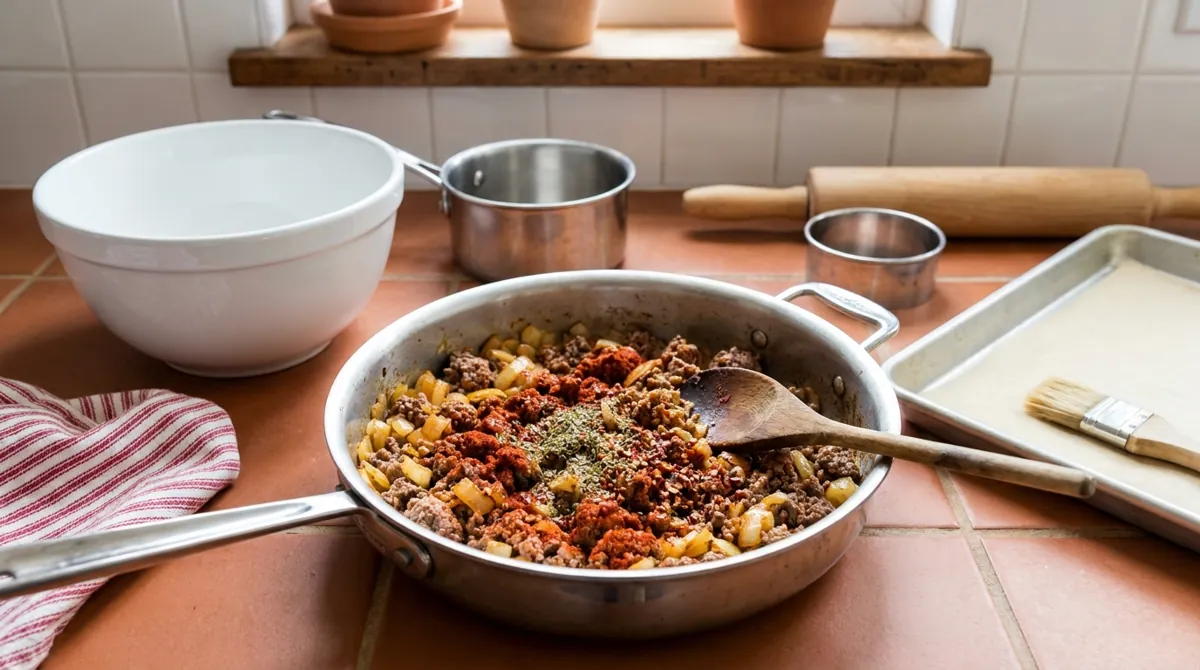
Cook the filling. Heat the olive oil in a large skillet over medium heat and cook the onions for about 10 minutes, until soft and golden. Raise the heat, add the beef and cook, breaking it up, until no pink remains, about 6 minutes. Stir in the paprika, cumin, chile flakes, oregano, salt and pepper and cook 1 minute more.
- Step 3
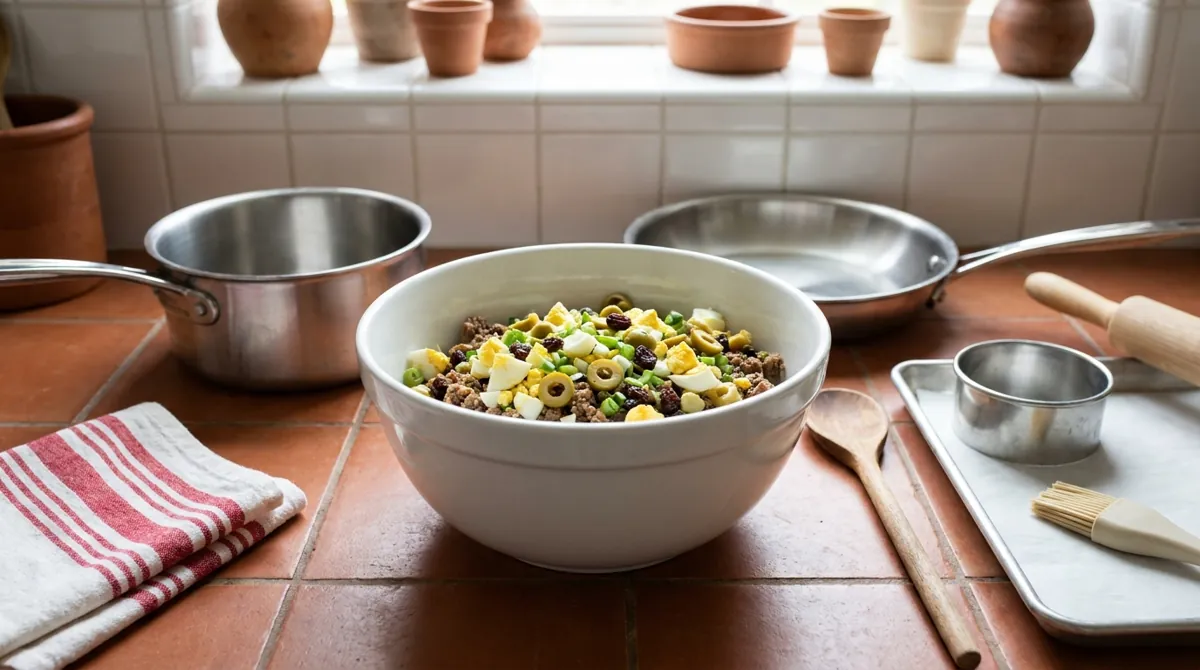
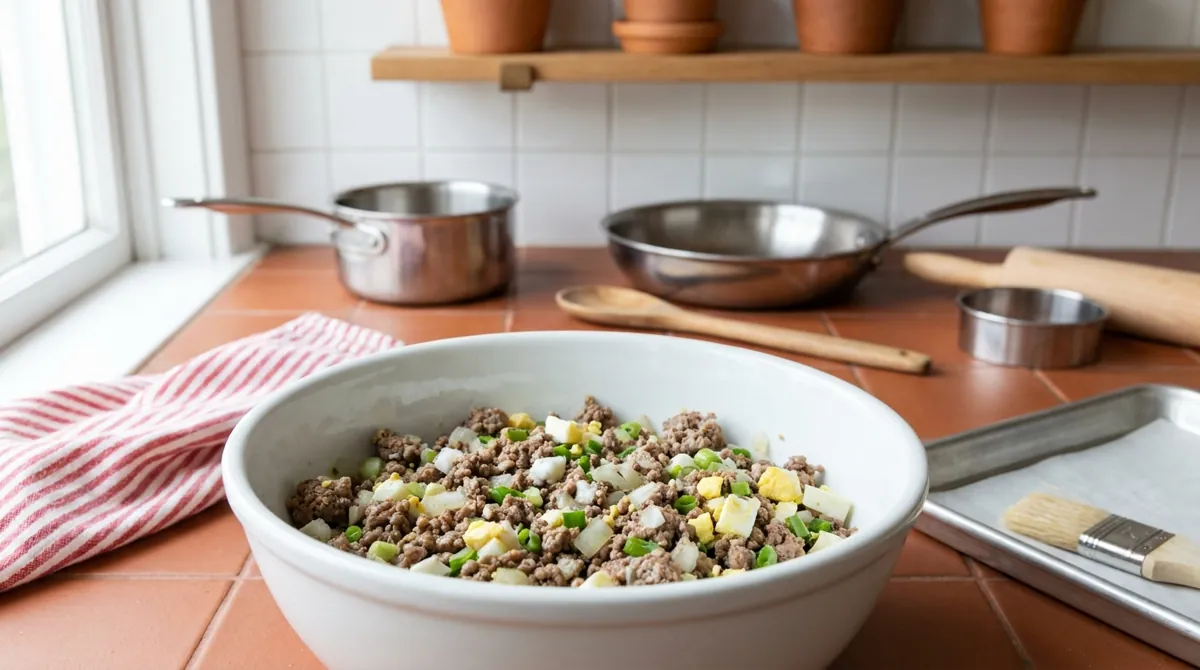
Chill the filling. Take the skillet off the heat and stir in the green onions. Spread the filling in a large bowl and refrigerate until completely cold and the fat has set, at least 1 hour or overnight. Then fold in the chopped eggs, olives and raisins, if using.
✓ What it should look like - Step 4
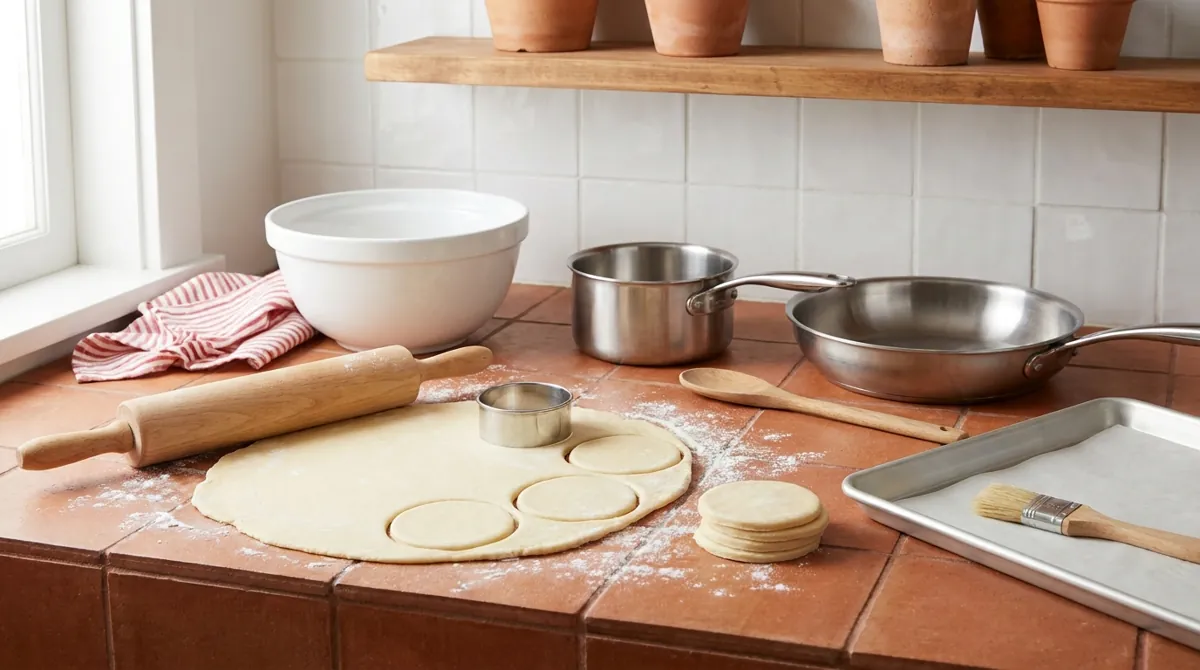
Cut the rounds. Heat the oven to 400°F and line a sheet pan with parchment. Roll the dough on a floured counter about 1/8 inch thick and cut 5 inch rounds with a round cutter. Gather the scraps, reroll once and cut more, for 16 rounds.
- Step 5
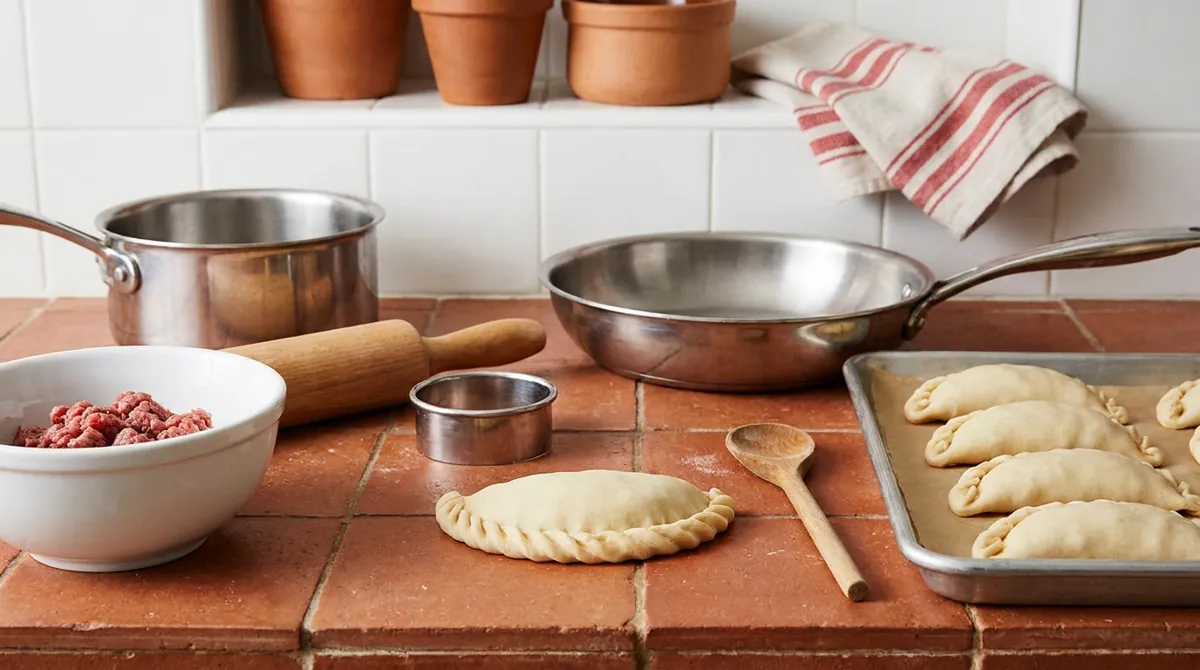
Fill and seal. Put about 3 tablespoons of cold filling in the center of each round. Brush the edge with water, fold into a half moon and press the edges together. Crimp with the repulgue, folding the edge over itself in small overlapping pleats like a rope, or press it with a fork.
- Step 6
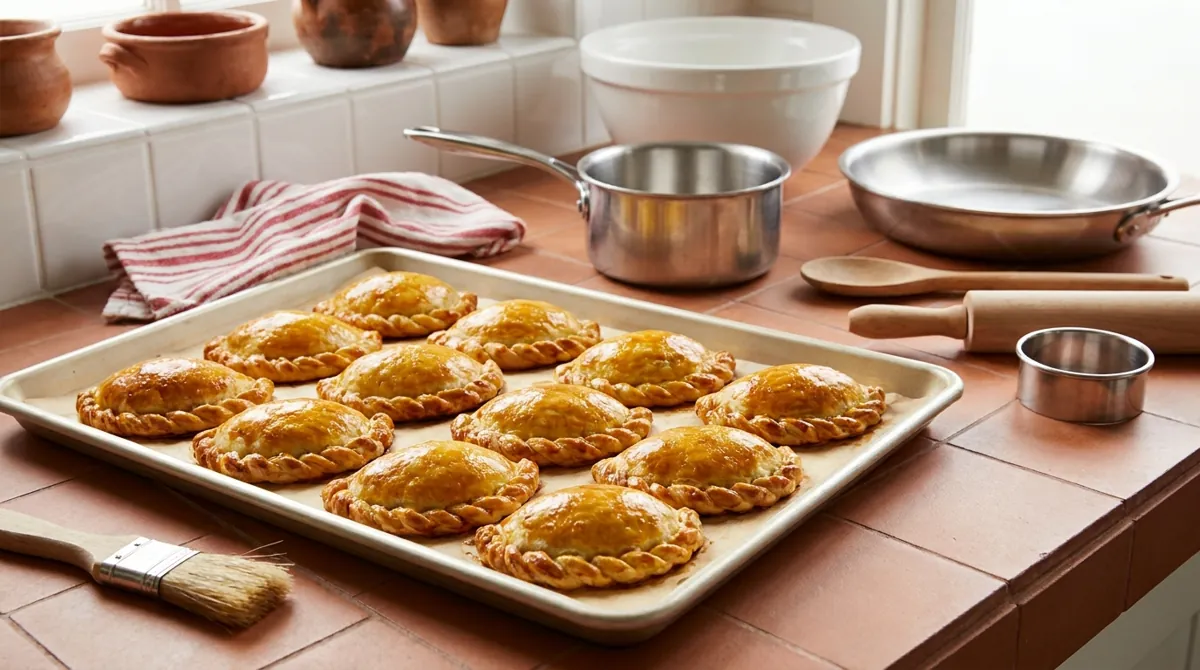
Bake. Set the empanadas on the sheet pan, brush with the egg wash and bake 18 to 22 minutes, until deep golden on top and browned underneath. Rest 5 minutes before eating; the filling is very hot.
✓ What it should look like
Empanadas
Serves 8 (2 each) · 16 empanadas, about 5 inches across · 2 hr 35 min total
Dough
- 3 2/3 cups all-purpose flour (450 g), plus a little for rolling
- 1 1/2 tsp fine salt
- 6 tbsp unsalted butter (85 g), or lard
- 3/4 cup warm water (180 ml)
- 1 large egg, beaten
Filling
- 2 tbsp olive oil (27 g)
- 2 medium onions, finely chopped (300 g)
- 1 lb ground beef, 85% lean (454 g), or hand-cut chuck (see Tips)
- 1 tbsp sweet paprika (7 g)
- 1 tsp ground cumin
- 1/2 tsp red chile flakes
- 1 tsp dried oregano
- 1 tsp fine salt and black pepper to taste
- 4 green onions, sliced (60 g)
- 2 hard-boiled eggs, chopped (100 g)
- 1/2 cup pitted green olives, chopped (70 g)
- 1/4 cup raisins (40 g), optional
To finish
- 1 large egg beaten with 1 tbsp water, for brushing
Equipment: Oven, Rimmed baking sheet, Small saucepan, Large skillet, Chef's knife and cutting board, Measuring cups and spoons, Mixing bowls, Rolling pin, Biscuit or cookie cutter, Pastry brush, Parchment paper
Method
- Make the dough. Warm the water, butter and salt in a small saucepan until the butter melts. Put the flour in a large bowl, pour in the warm liquid and the beaten egg and stir to a shaggy dough. Knead on the counter for 3 minutes, until smooth. Flatten to a disc, wrap and refrigerate for at least 30 minutes.
- Cook the filling. Heat the olive oil in a large skillet over medium heat and cook the onions for about 10 minutes, until soft and golden. Raise the heat, add the beef and cook, breaking it up, until no pink remains, about 6 minutes. Stir in the paprika, cumin, chile flakes, oregano, salt and pepper and cook 1 minute more.
- Chill the filling. Take the skillet off the heat and stir in the green onions. Spread the filling in a large bowl and refrigerate until completely cold and the fat has set, at least 1 hour or overnight. Then fold in the chopped eggs, olives and raisins, if using.
- Cut the rounds. Heat the oven to 400°F and line a sheet pan with parchment. Roll the dough on a floured counter about 1/8 inch thick and cut 5 inch rounds with a round cutter. Gather the scraps, reroll once and cut more, for 16 rounds.
- Fill and seal. Put about 3 tablespoons of cold filling in the center of each round. Brush the edge with water, fold into a half moon and press the edges together. Crimp with the repulgue, folding the edge over itself in small overlapping pleats like a rope, or press it with a fork.
- Bake. Set the empanadas on the sheet pan, brush with the egg wash and bake 18 to 22 minutes, until deep golden on top and browned underneath. Rest 5 minutes before eating; the filling is very hot.
Americanized house recipe, written for this site. Method checked against SBS Food, "Baked Argentinian spiced beef empanadas (empanadas mendocinas)" (warm butter-and-water dough with egg, beef with onion, cumin and paprika, egg and olives, chilled filling, 400°F); and Mission Food, "Argentinian Beef Empanadas Tucumanas" (hand-cut beef, cumin and paprika, filling chilled at least 3 hours, baked). History: Wikipedia, "Empanada" (empanar, Galicia, Cantigas de Santa Maria c. 1282, Llibre del Coch 1520, Argentine regional styles, Famaillá festival, repulgue, Buenos Aires heritage). SBS Food. Ingredient list follows the source; the method is in our own words.
All sources (3)
Tips
- For the Tucumán style, use 1 lb of beef chuck cut by hand into 1/4 inch dice instead of ground beef; cook it a few minutes longer, until tender.
- Make the filling a day ahead. It is better cold from the fridge, and the day goes faster.
- Freeze shaped, unbaked empanadas on the sheet pan, then bag them. Bake from frozen with egg wash, adding 5 to 8 minutes.
- Serve with chimichurri or a simple salsa criolla, or nothing at all.
The rules people argue about
What the sources agree on, what they don't, and what is just a good story.
- Empanadas came to Spain from the Arab world. Disputed: a popular and plausible theory, but the documented record starts in medieval Spain and Portugal, with the Cantigas de Santa Maria around 1282 and the 1520 Llibre del Coch.
- Empanadas began in Galicia. Disputed: Galicia is the region most often named and its empanada gallega is famous, but the early written record is spread across Iberia.
Meatballs of the World

Italian-American Meatballs
Big, tender meatballs braised for an hour in red sauce over spaghetti. The one most Americans grew up with.

Pallottine (Abruzzo Meatballs)
Tiny meatballs, smaller than a marble, tossed right through square spaghetti alla chitarra. No bread at all.

Swedish Meatballs (Köttbullar)
Small, soft meatballs browned in butter, in a cream sauce made from the same pan, with lingonberry jam on the plate.

Danish Frikadeller
Pork meatballs shaped with a spoon and fried slowly in butter, crusty outside and soft in the middle.

Königsberger Klopse
German meatballs that are never fried: poached, then served in a creamy white sauce with capers.

Spanish Albóndigas in Almond Saffron Sauce
The tapas bar classic: small meatballs in a golden sauce thickened with fried almonds and bread.

Mexican Albóndigas with Chipotle and Mint
Soft meatballs with rice and fresh mint inside, simmered in a smoky tomato and chipotle broth.

Izgara Köfte (Turkish Grilled Meatballs)
Small, flat meatballs kneaded hard, rested cold, and charred on a hot grill pan.

Lion's Head Meatballs
Big, soft pork meatballs, stirred into a sticky paste, fried to set, then braised in a savory sauce.

Chicken Tsukune
Japan's chicken meatball: kneaded sticky, grilled on skewers, glazed with sweet soy tare, dipped in egg yolk.