
Fajitas
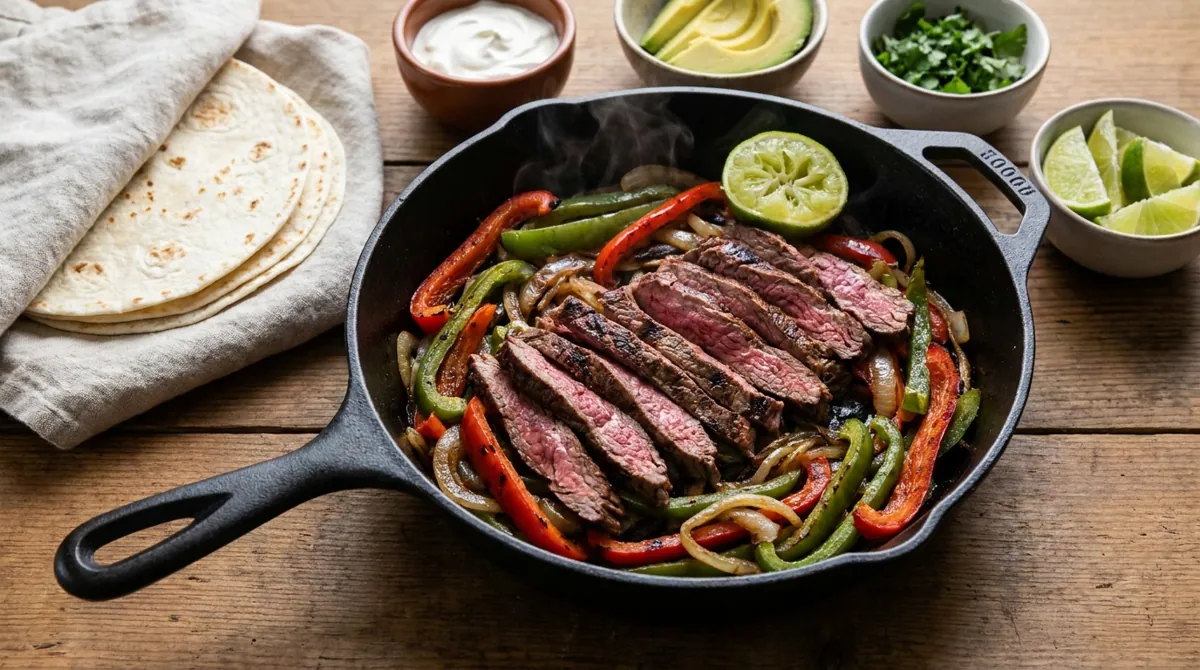
Skirt steak marinated in lime, soy and garlic, seared hard in a cast-iron skillet, sliced across the grain and returned to the pan with charred peppers and onions, served sizzling with warm flour tortillas: the ranch-hand cut that became the loudest plate in Tex-Mex.
🍳Cook alongOne move at a time, with real timers
 Edited by JP Lambiase
Change the estimate
Swaps change the price only: cook any meat to its own safe temperature. Where these numbers come from
Fajitas started as a cut of meat, not a dish. Faja is Spanish for strip or belt, and "fajita" is a Tejano diminutive for the little strips cut from the beef skirt, the diaphragm muscle. In the 1984 study that first took the dish seriously, Texas A&M animal science graduate student Homero Recio found anecdotal evidence that by the 1930s, on ranches in South and West Texas, the skirt was one of the scrap cuts given to Mexican vaqueros as part of their pay at roundups and cooked over the fire. The word itself is not known in print until 1971, according to the Oxford English Dictionary.
Selling it came next, and the record has several starting points, all in Texas. In September 1969 Sonny Falcón, an Austin meat market manager, ran what is described as the first commercial fajita taco stand at a Diez y Seis celebration in Kyle. The same year Otilia Garza put fajitas on the menu of her Round-Up Restaurant in Pharr, in the Rio Grande Valley, and she is credited with serving them on a sizzling plate. In 1973 Ninfa Rodriguez Laurenzo sold them as "tacos al carbon" at Ninfa's in Houston. Then in 1982 George Weidmann, the opening chef of the Hyatt Regency Austin, put "sizzling fajitas" on the hotel menu, and the dish became one of the chain's most profitable. By the mid-1980s fajitas were on most Mexican restaurant menus, and demand pushed the price of skirt steak up so sharply that it set Recio off on his research.
This is a home skillet version true to the original idea: real skirt steak, high heat, sliced thin, eaten in a flour tortilla.
Why it works the kitchen science
Skirt steak
A thin, loose-grained cut with lots of beefy flavor that takes a marinade fast and cooks in minutes, the reason it was the vaqueros' cut and is still the classic.
Soy and lime
The salt in the soy seasons the meat and helps it stay juicy; the lime adds the bright flavor, but hours longer in acid turns the surface mushy, so keep it to 3 hours.
Dry steak in a smoking-hot pan
Moisture on the surface steams instead of browning. Patting dry and cooking in two batches keeps the skillet hot enough to brown before the thin steak overcooks.
🧰 You'll need 9 items
Everything the steps call for. Tick off what you have before you start.
Appliances
Pans and pots
Tools
Supplies
Step by step
- Step 1
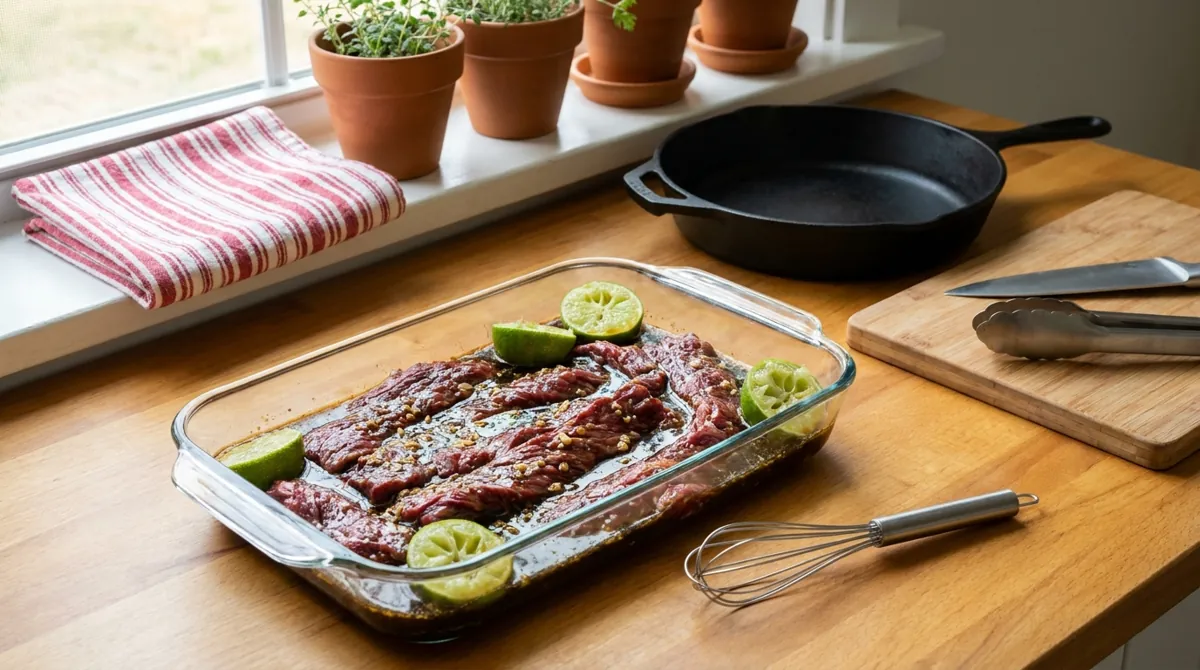
Whisk the 1/4 cup lime juice, soy sauce, 2 tbsp oil, garlic, cumin, chili powder, brown sugar and salt together in a glass baking dish. Cut the skirt steak into pieces about 6 inches long so it fits the skillet, turn it in the marinade and refrigerate 1 to 3 hours, turning once.
- Step 2
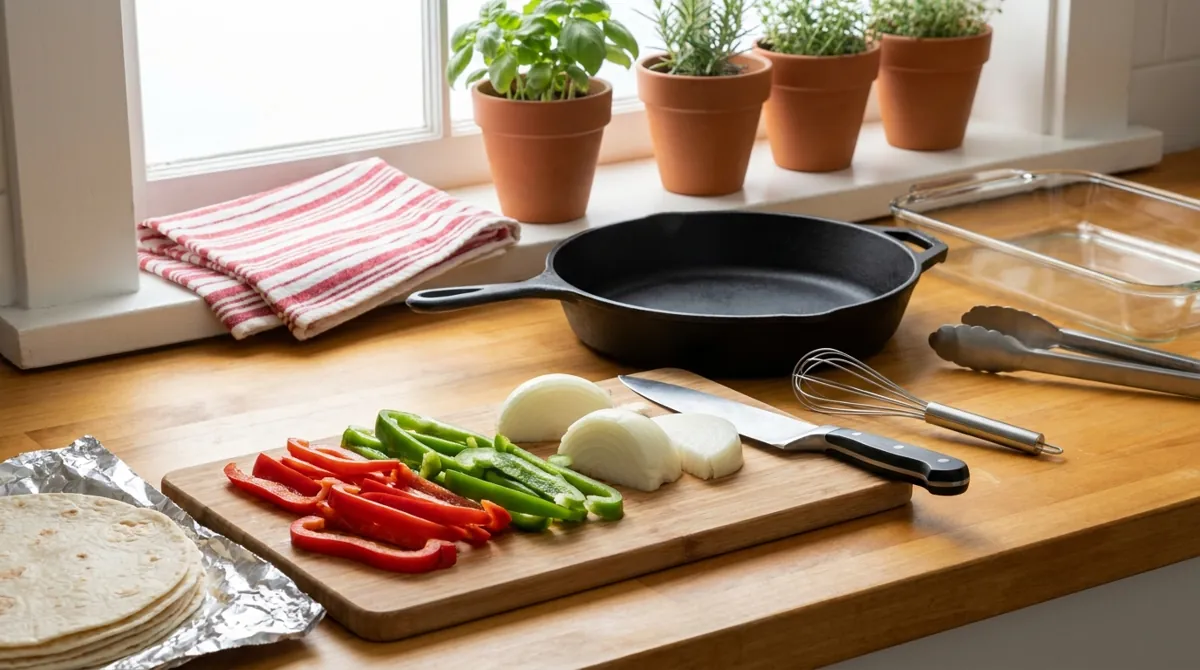
Cut the peppers into strips and slice the onion. Heat the oven to 250°F, wrap the tortillas in foil and warm them in the oven for 15 minutes while you cook.
- Step 3
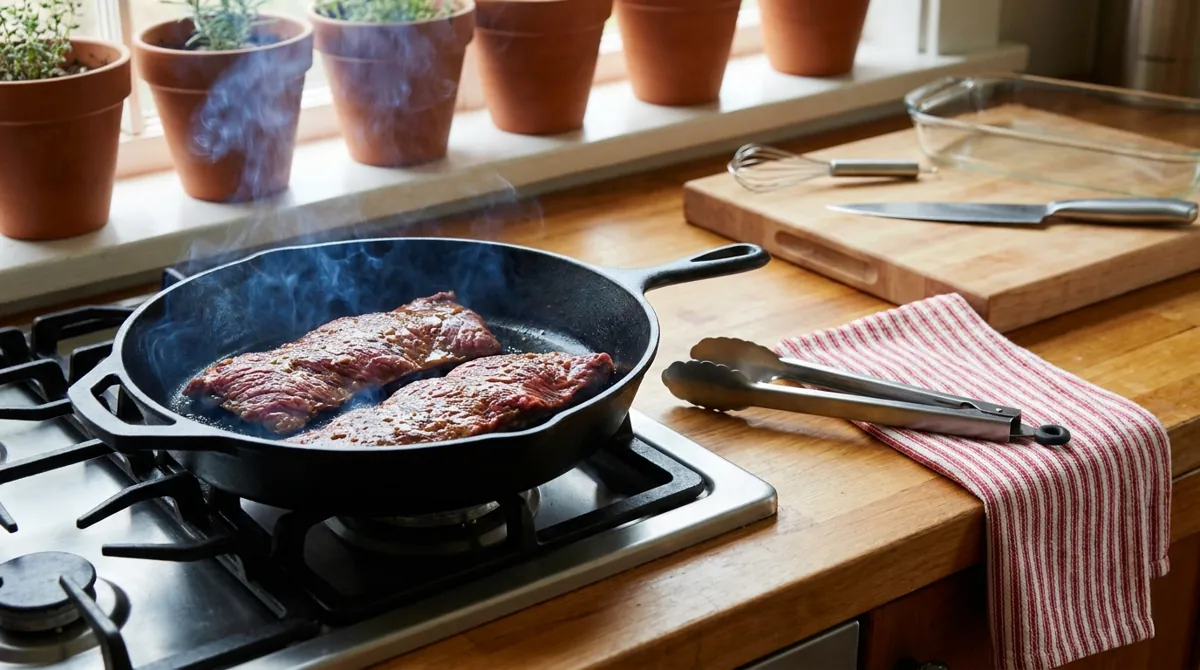
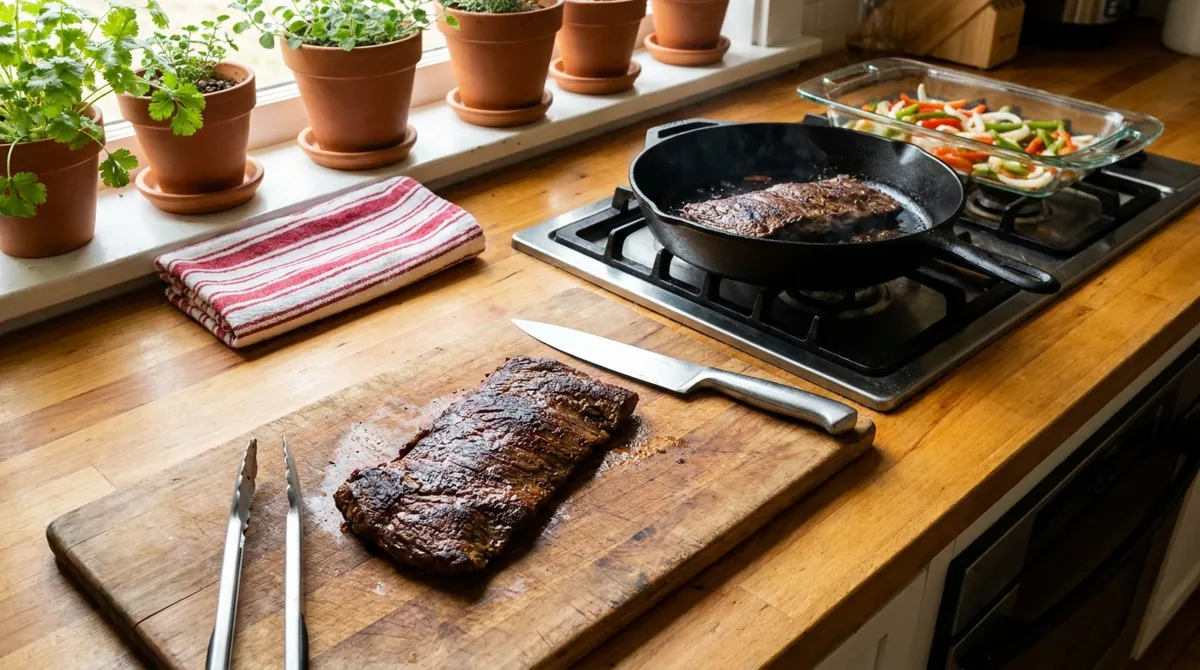
Take the steak out of the marinade and pat it very dry with paper towels. Heat the cast-iron skillet over high heat until it just starts to smoke, add 1 tbsp of the oil and lay in half the steak.
- Step 4
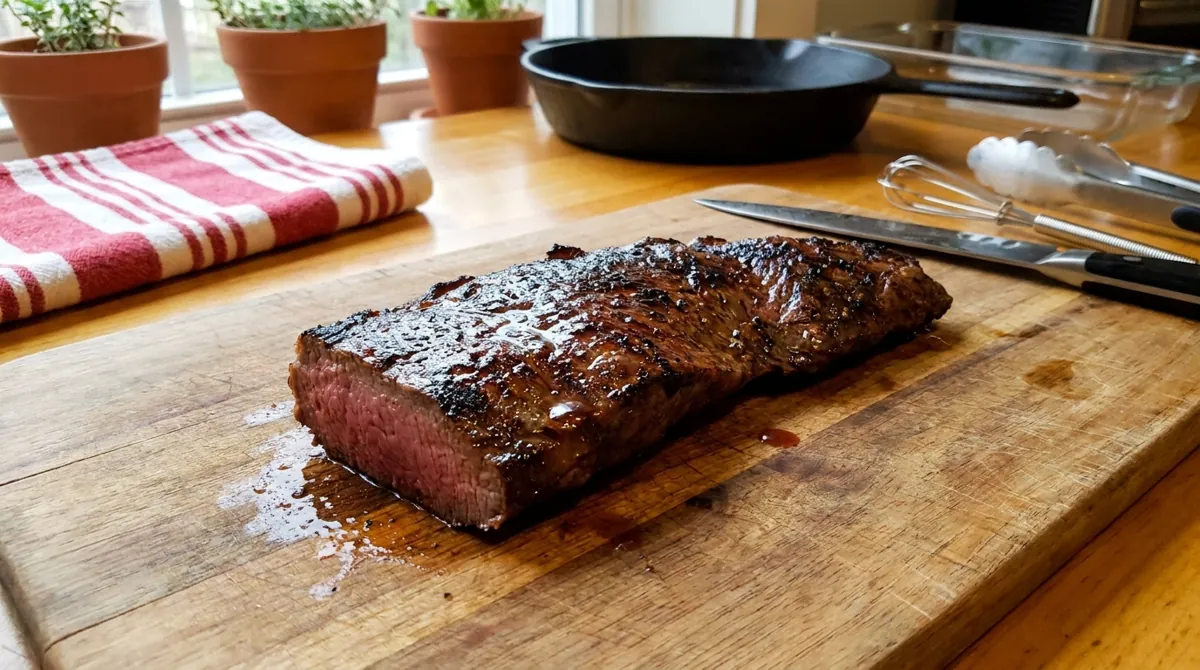
Sear 2 to 4 minutes per side, until deeply browned outside and 130°F in the thickest part for medium-rare (USDA recommends 145°F), then move it to the cutting board. Repeat with the rest of the steak. Rest it 5 minutes.
✓ What it should look like - Step 5
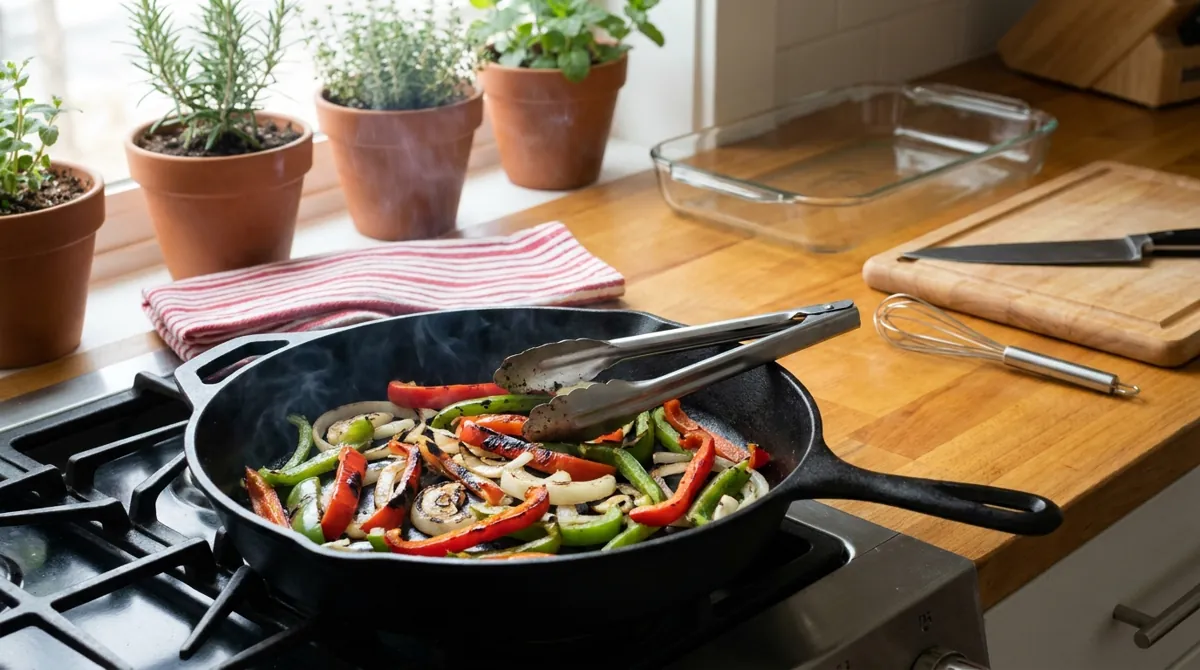
While the steak rests, add the last 1 tbsp oil to the hot skillet and cook the peppers and onion, tossing only now and then, 6 to 8 minutes, until charred at the edges but still a little crisp.
- Step 6
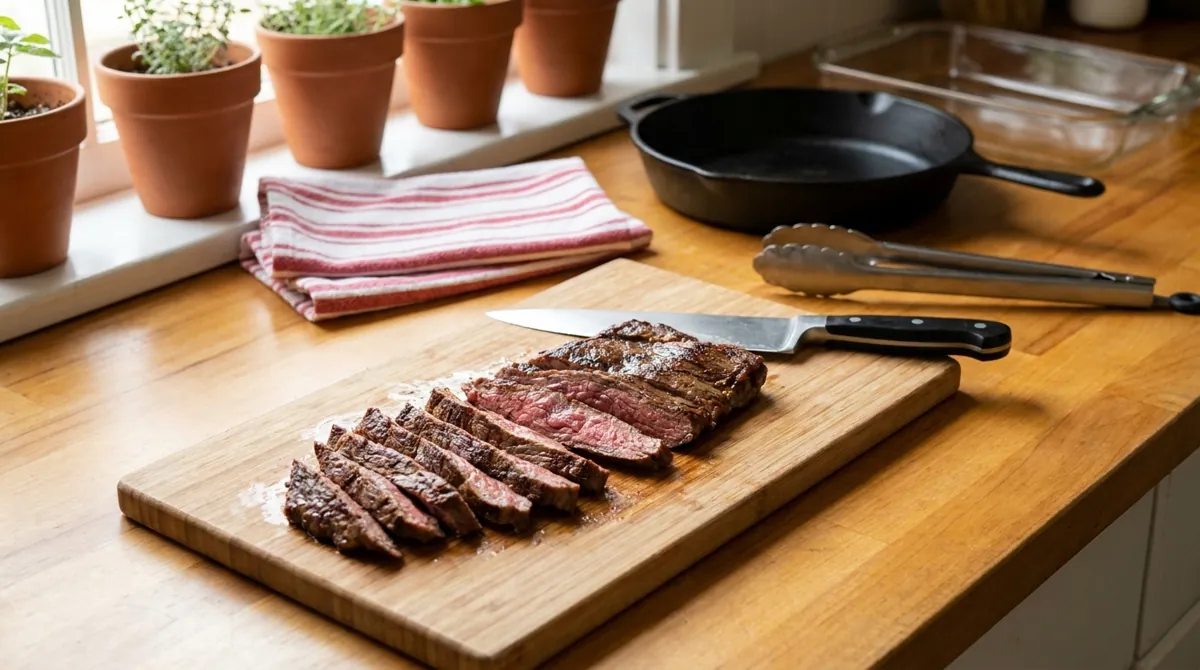
Slice the steak against the grain into thin strips: skirt grain runs across the width of the strip, so slice parallel to the long side.
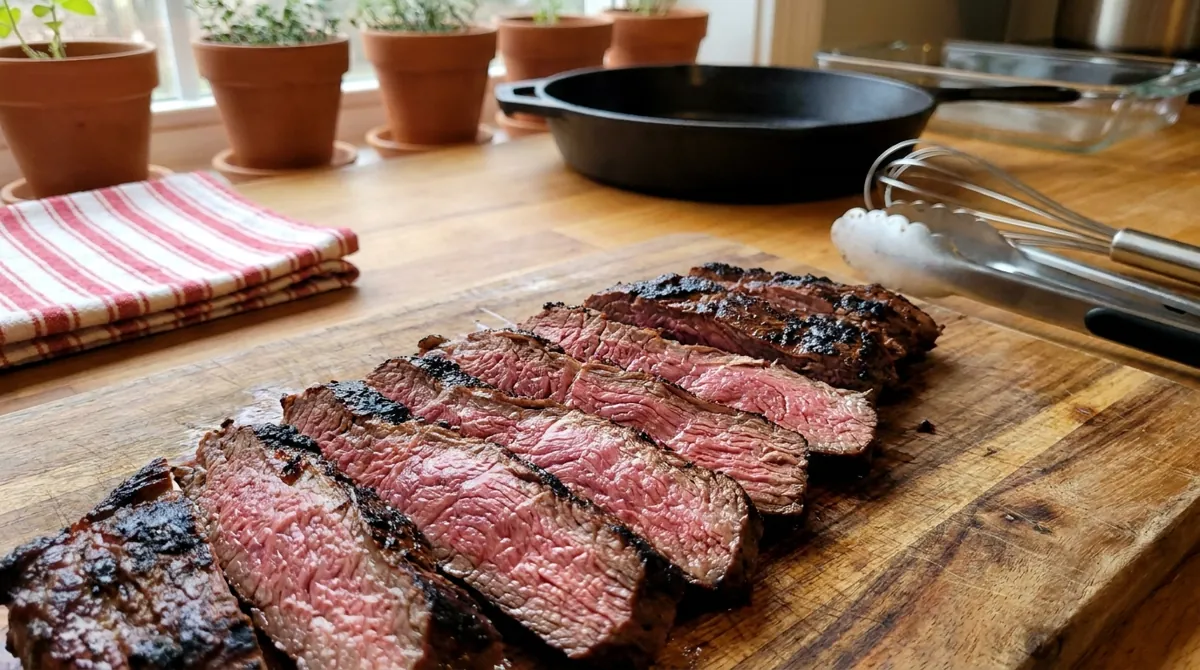
✓ What it should look like - Step 7
Return the sliced steak and its juices to the skillet on top of the vegetables, squeeze over the last 1 tbsp lime juice so it sizzles, and bring the skillet to the table with the warm tortillas, sour cream, avocado, cilantro and lime wedges.
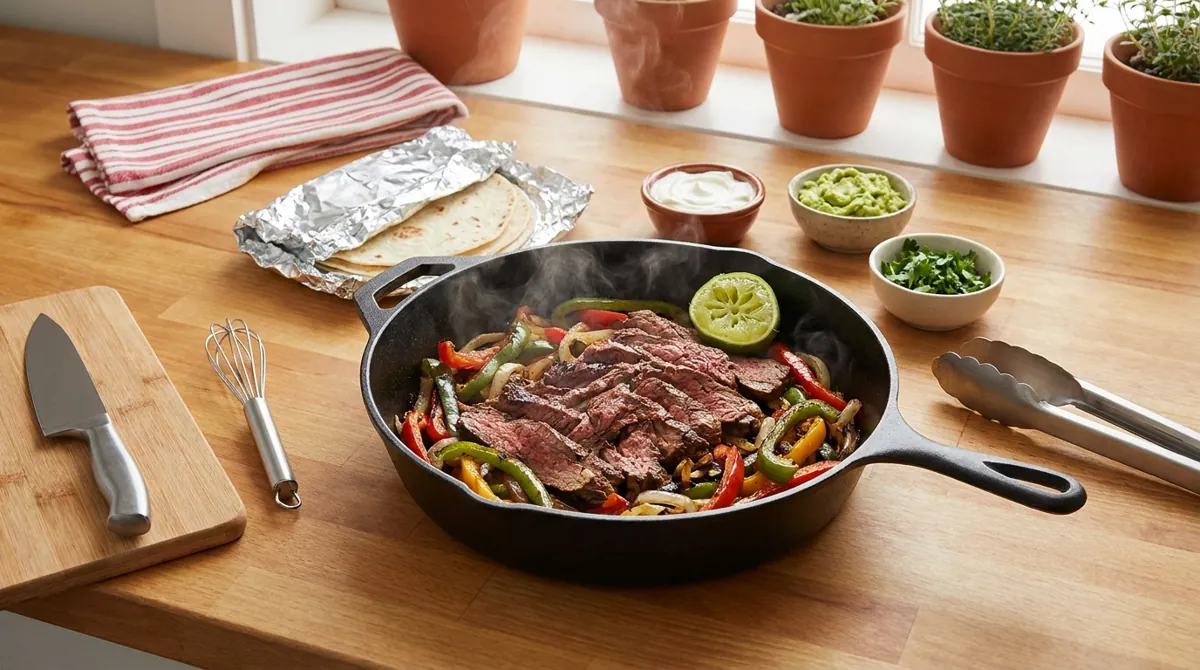
Fajitas
Serves 4 · one 12-inch cast-iron skillet, about 12 small tortillas · 1 hr 40 min total
Marinade
- 1/4 cup fresh lime juice (60 g), from about 3 limes, plus 1 tbsp (15 g) to finish
- 2 tbsp soy sauce (32 g)
- 2 tbsp canola oil (28 g)
- 3 garlic cloves, grated (9 g)
- 1 tsp ground cumin
- 1 tsp chili powder
- 1 tsp light brown sugar
- 1/2 tsp kosher salt
Fajitas
- 1 1/2 lb skirt steak, outside skirt if you can get it (680 g)
- 1 large red bell pepper, cut in 1/2 inch strips (165 g)
- 1 large green bell pepper, cut in 1/2 inch strips (165 g)
- 1 large white onion, halved and sliced 1/2 inch thick (200 g)
- 2 tbsp canola oil (28 g), for cooking
- 12 small (6 inch) flour tortillas (about 360 g)
To serve
- 1/2 cup sour cream (115 g)
- 1 ripe avocado, sliced (150 g)
- 1/4 cup chopped fresh cilantro (8 g)
- Lime wedges
Equipment: Oven, Baking dish, Cast-iron skillet, Instant-read thermometer, Chef's knife and cutting board, Measuring cups and spoons, Whisk, Aluminum foil, Paper towels
Method
- Whisk the 1/4 cup lime juice, soy sauce, 2 tbsp oil, garlic, cumin, chili powder, brown sugar and salt together in a glass baking dish. Cut the skirt steak into pieces about 6 inches long so it fits the skillet, turn it in the marinade and refrigerate 1 to 3 hours, turning once.
- Cut the peppers into strips and slice the onion. Heat the oven to 250°F, wrap the tortillas in foil and warm them in the oven for 15 minutes while you cook.
- Take the steak out of the marinade and pat it very dry with paper towels. Heat the cast-iron skillet over high heat until it just starts to smoke, add 1 tbsp of the oil and lay in half the steak.
- Sear 2 to 4 minutes per side, until deeply browned outside and 130°F in the thickest part for medium-rare (USDA recommends 145°F), then move it to the cutting board. Repeat with the rest of the steak. Rest it 5 minutes.
- While the steak rests, add the last 1 tbsp oil to the hot skillet and cook the peppers and onion, tossing only now and then, 6 to 8 minutes, until charred at the edges but still a little crisp.
- Slice the steak against the grain into thin strips: skirt grain runs across the width of the strip, so slice parallel to the long side.
- Return the sliced steak and its juices to the skillet on top of the vegetables, squeeze over the last 1 tbsp lime juice so it sizzles, and bring the skillet to the table with the warm tortillas, sour cream, avocado, cilantro and lime wedges.
Americanized house recipe, written for this site. History: Wikipedia, "Fajita" (faja, the 1930s ranch evidence, skirt given to vaqueros, the 1971 OED first print date, Sonny Falcón in Kyle in September 1969, Otilia Garza at the Round-Up in Pharr and the sizzling plate, Ninfa's, the Hyatt Regency Austin, "Texas fajitas", Lisa Fain on chicken fajitas); Austin Chronicle, Virginia B. Wood, fajita history (Homero Recio's 1984 Texas A&M study and the skirt steak price spike, vaqueros paid in trimmings, Falcón in Kyle, Garza in Pharr per John Morthland's 1993 Texas Monthly story, Ninfa's on Navigation Boulevard in 1973 as "tacos al carbon", George Weidmann's "sizzling fajitas" at the Hyatt Regency Austin in 1982, made with sirloin, mid-1980s spread). Technique: J. Safe temperature: USDA FSIS recommends 145°F with a 3 minute rest for beef steaks. en.wikipedia.org. Ingredient list follows the source; the method is in our own words.
All sources (2)
Tips
- No skirt? Flank steak works; cook it a little longer and slice it very thin.
- On a grill, cook the steak over the hottest part of a charcoal fire, the original way, and char the vegetables in a grill basket.
- For the restaurant sizzle, heat a second cast-iron skillet or a cast-iron fajita plate in a 500°F oven, then pile the cooked steak and vegetables onto it.
- Leftovers make good breakfast tacos with scrambled eggs.
The rules people argue about
What the sources agree on, what they don't, and what is just a good story.
- Fajitas go back to 1930s vaqueros. Documented, but thin: Recio's evidence is anecdotal ranch memory; the word is not in print until 1971.
- Sonny Falcón sold the first fajitas. Disputed: Falcón in Kyle and Otilia Garza in Pharr both date to 1969, and Ninfa's in Houston claims 1973. The Austin Chronicle notes Garza never claimed to have invented the dish, and that every credible story has roots in the Rio Grande Valley.
- The Hyatt Regency Austin invented the sizzling platter. Disputed: George Weidmann made "sizzling fajitas" famous there in 1982 (some accounts say 1983), but Wikipedia credits Otilia Garza with the sizzling plate, after she was served queso flameado on a cast-iron plate in Acapulco.
Meatballs of the World

Italian-American Meatballs
Big, tender meatballs braised for an hour in red sauce over spaghetti. The one most Americans grew up with.

Pallottine (Abruzzo Meatballs)
Tiny meatballs, smaller than a marble, tossed right through square spaghetti alla chitarra. No bread at all.

Swedish Meatballs (Köttbullar)
Small, soft meatballs browned in butter, in a cream sauce made from the same pan, with lingonberry jam on the plate.

Danish Frikadeller
Pork meatballs shaped with a spoon and fried slowly in butter, crusty outside and soft in the middle.

Königsberger Klopse
German meatballs that are never fried: poached, then served in a creamy white sauce with capers.

Spanish Albóndigas in Almond Saffron Sauce
The tapas bar classic: small meatballs in a golden sauce thickened with fried almonds and bread.

Mexican Albóndigas with Chipotle and Mint
Soft meatballs with rice and fresh mint inside, simmered in a smoky tomato and chipotle broth.

Izgara Köfte (Turkish Grilled Meatballs)
Small, flat meatballs kneaded hard, rested cold, and charred on a hot grill pan.

Lion's Head Meatballs
Big, soft pork meatballs, stirred into a sticky paste, fried to set, then braised in a savory sauce.

Chicken Tsukune
Japan's chicken meatball: kneaded sticky, grilled on skewers, glazed with sweet soy tare, dipped in egg yolk.