
Falafel
Soaked, never cooked, dried chickpeas ground with a big bunch of parsley and cilantro, onion, garlic, cumin and coriander, then fried until deep brown and shatteringly crisp outside and bright green inside, with a lemony tahini sauce.
🍳Cook alongOne move at a time, with real timers
 Edited by JP Lambiase
Change the estimate
Swaps change the price only: cook any meat to its own safe temperature. Where these numbers come from
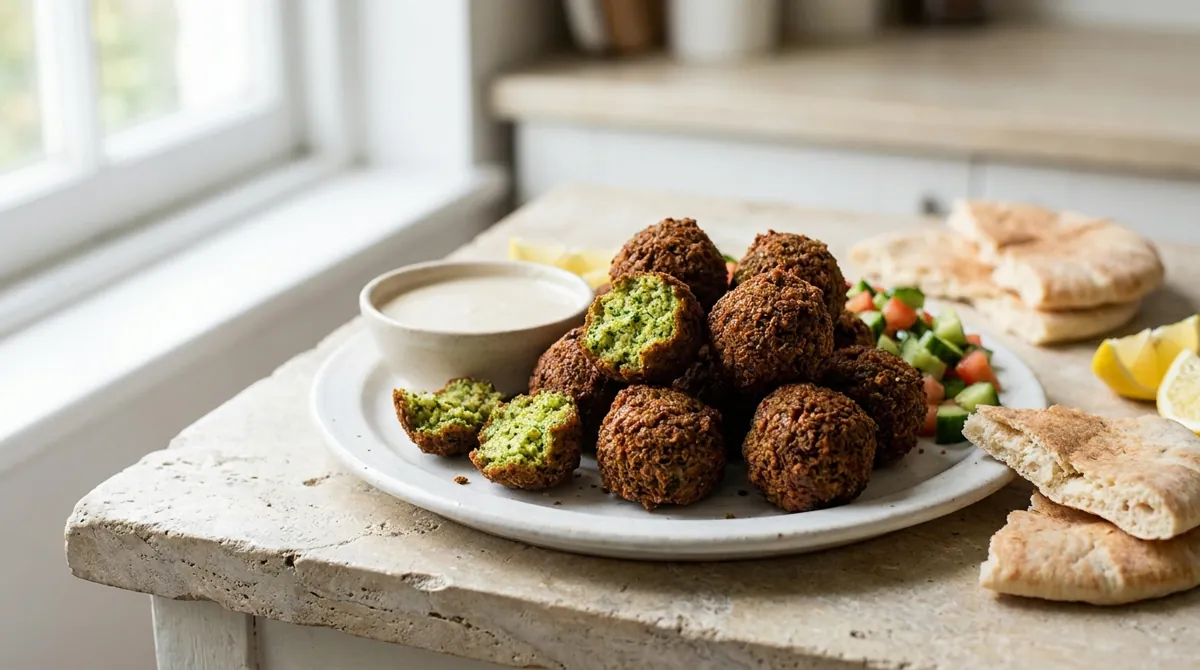
Falafel most likely began in Egypt, where it is still called ta'meya ("a little piece of food") and is made from dried fava beans, not chickpeas. Wikipedia's account has it spreading from the port city of Alexandria, first south within Egypt and then across the Eastern Mediterranean. Claims that it goes back to the pharaohs are speculation: the earliest written Egyptian references are from the 19th century. Another theory, that British soldiers from India missing their own fried snacks prompted it, rests only on circumstantial evidence.
In the Levant, cooks swapped the favas for chickpeas, and that is the falafel most of the world knows. A falafel shop was open in Beirut by 1933, the word first shows up in English in 1936, and a 1939 article in The Palestine Post is the first mention of falafel sold in pita as street food. Chickpea falafel is now widely called a national dish of Israel, a label Palestinians and other Arabs have criticized, and both sides claim it.
This version follows the Levantine chickpea style, with America's Test Kitchen's method for a crisp shell and a tender, green interior.
Why it works the kitchen science
Soaked, not cooked
Raw soaked chickpeas still have their starch, which binds as it fries. Cooked or canned chickpeas turn to mush and fall apart in the oil (Wikipedia, America's Test Kitchen).
Sesame-seed texture
Coarse bits leave tiny gaps for steam and crunch. Grind to a paste and the falafel turn dense and heavy.
A cooked flour paste
It binds the loose mixture like glue without making it doughy, and baking powder lightens the inside.
325°f, two batches
Hot enough to crisp, gentle enough to cook the center through before the outside burns. A crowded pot drops the temperature and makes greasy falafel.
🧰 You'll need 16 items
Everything the steps call for. Tick off what you have before you start.
Appliances
Pans and pots
Tools
Supplies
Step by step
- Step 1
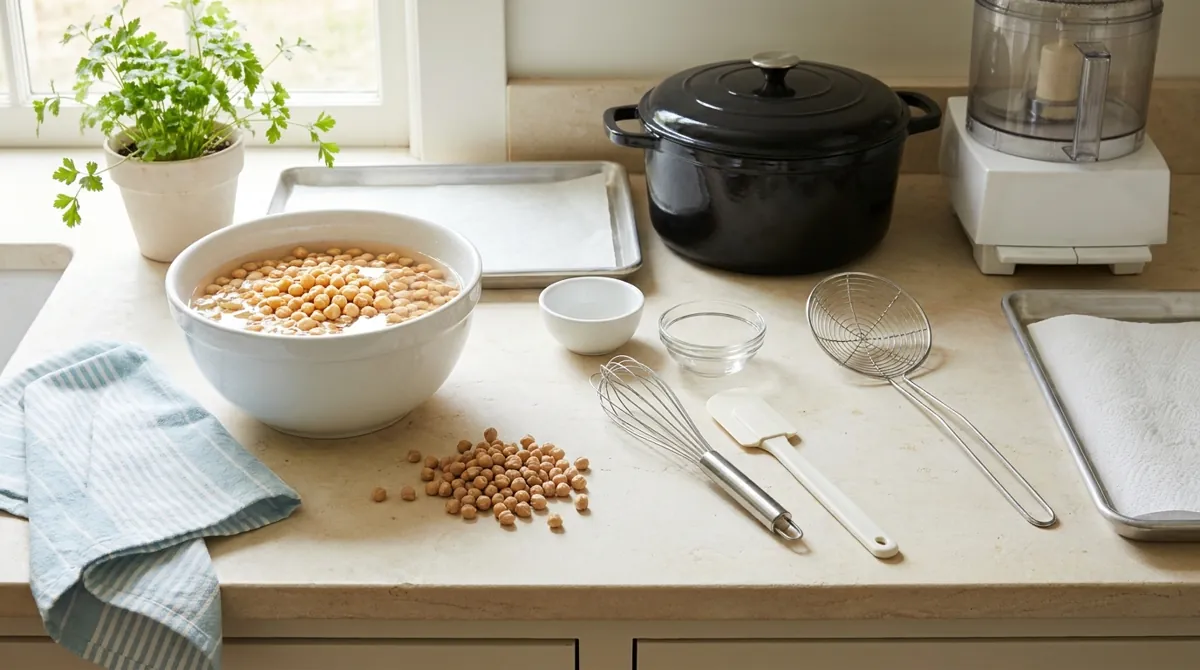
Cover the chickpeas with 2 to 3 inches of water in a large bowl and soak at room temperature for 8 to 24 hours, until they have doubled in size. Drain well and pat dry.
- Step 2
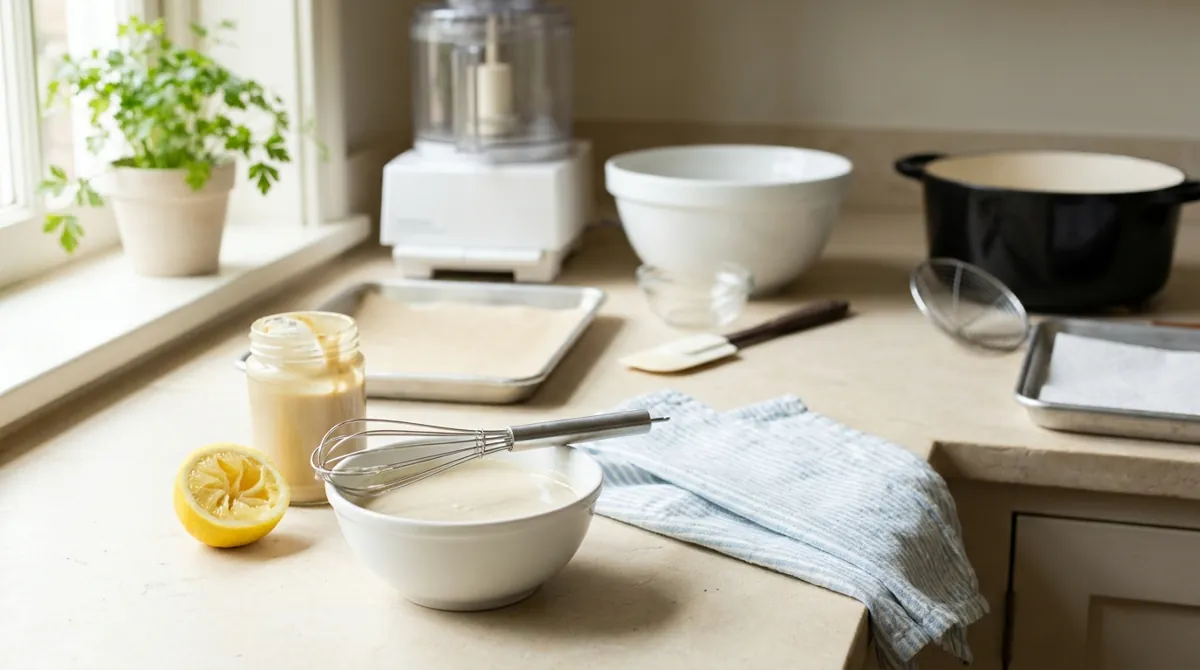
Make the tahini sauce: whisk the tahini, yogurt and lemon juice in a small bowl until smooth, whisk in the water to the thickness you like and season with salt. Set aside.
- Step 3
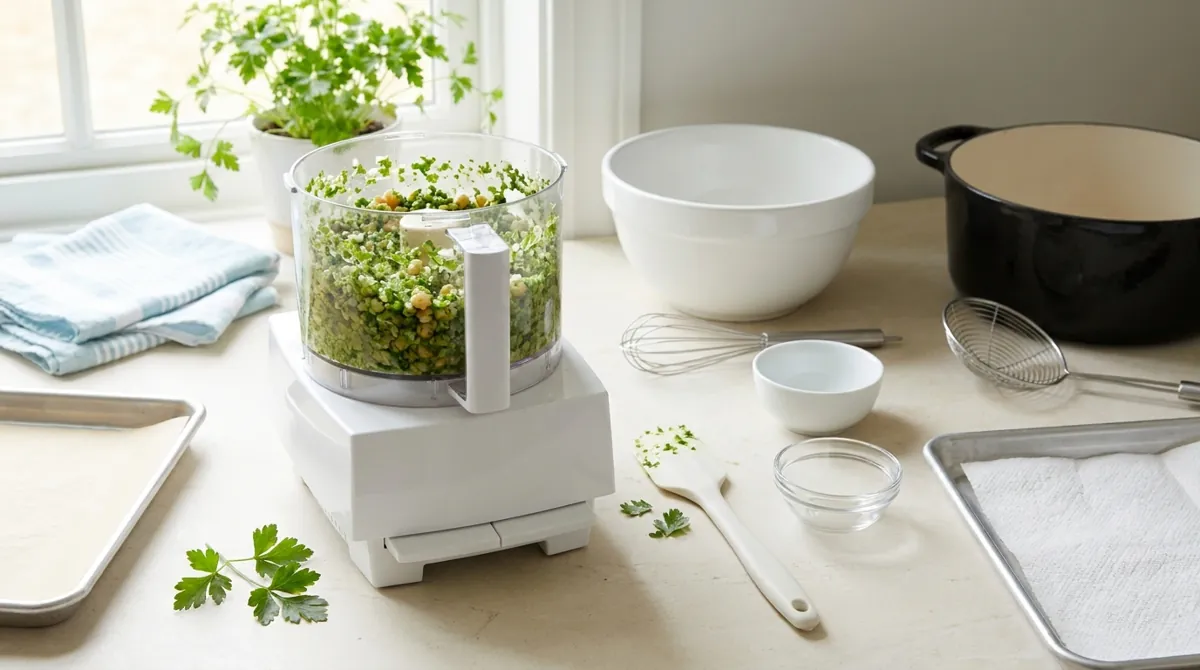
Pulse the cilantro, parsley, onion, garlic, coriander, cumin, salt and cayenne in a food processor until it looks like pesto, about 10 seconds, scraping down the sides once. Add the drained chickpeas and pulse about 12 times, scraping down once, until they are finely chopped to about the size of sesame seeds but not a paste. Scrape into a large bowl.
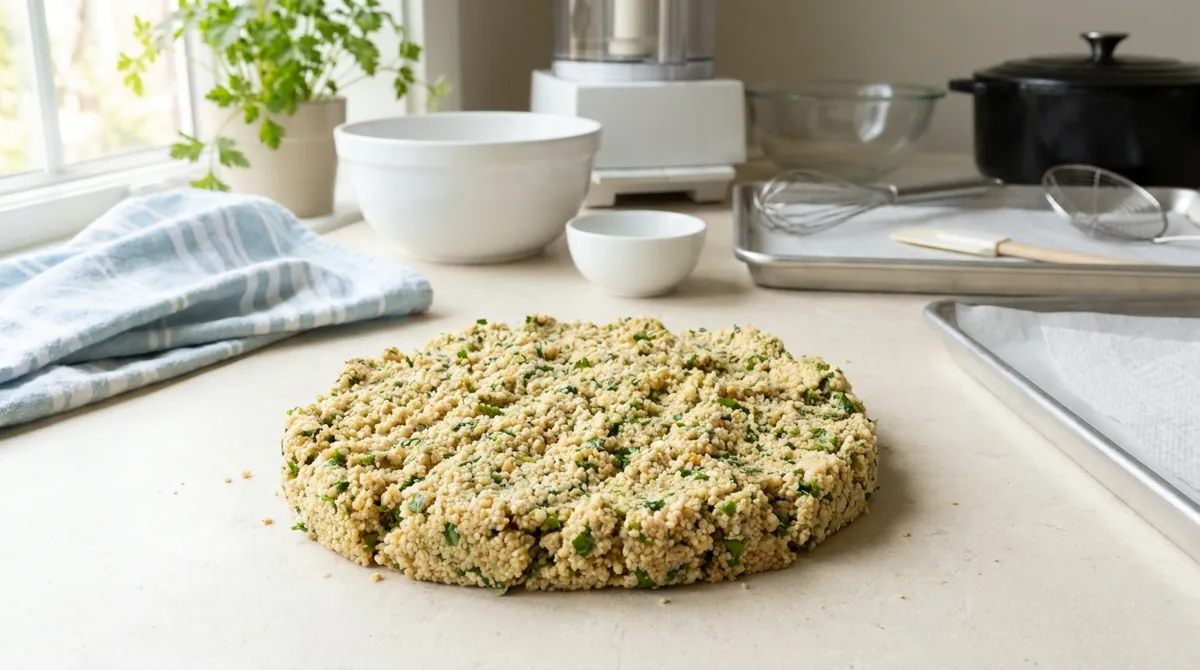
✓ What it should look like - Step 4
Whisk the flour and 1/3 cup water in a small microwave-safe bowl until smooth. Microwave in 10-second bursts, whisking between, until it turns into a stiff, smooth paste, 40 to 80 seconds. Stir in the baking powder, then mix the warm paste into the chickpea mixture with a rubber spatula until no streaks remain.
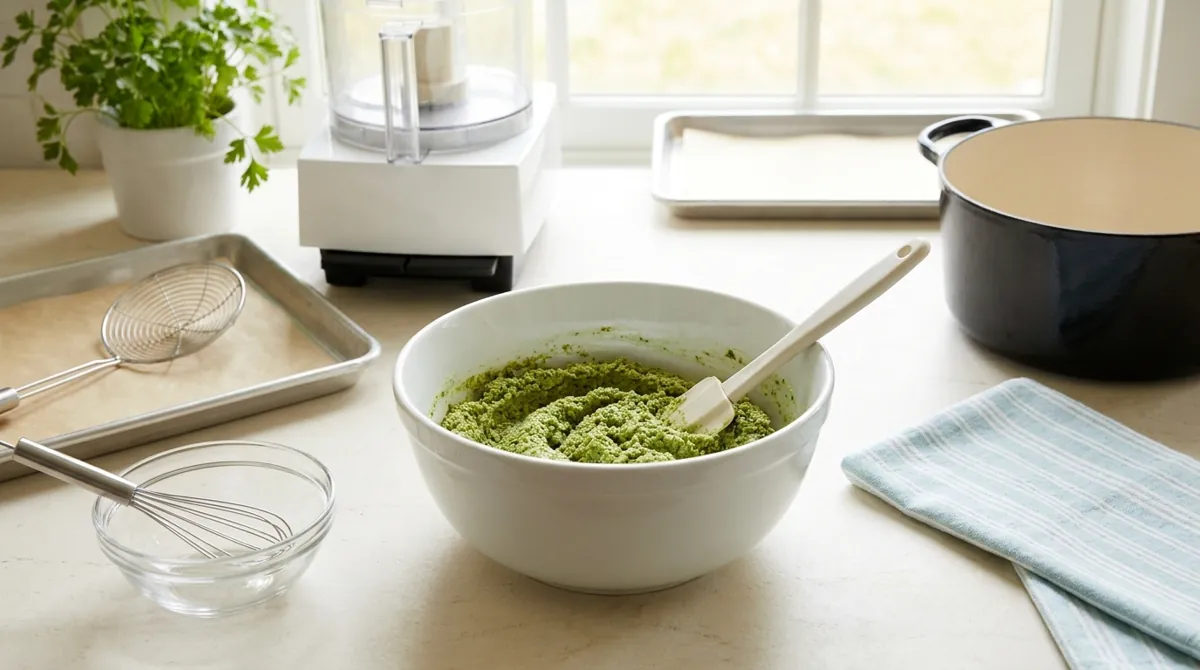
- Step 5
Divide the mixture into 24 portions, roll each into a ball the size of a golf ball and set them on a parchment-lined rimmed baking sheet. They keep, covered, in the fridge for up to 2 hours.
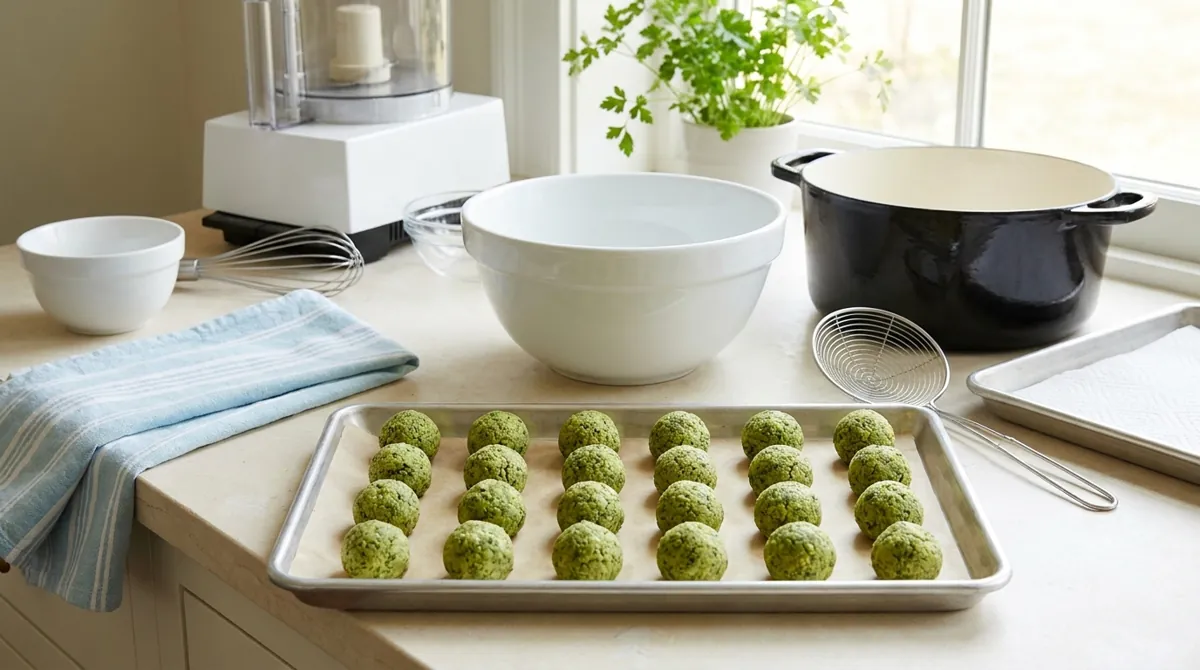
- Step 6
Heat the oil in a large Dutch oven over medium-high heat to 325°F. Fry half the falafel, turning them now and then, until deep brown all over, about 5 minutes, adjusting the burner to hold 325°F. Move them with a wire skimmer to a paper towel-lined baking sheet. Bring the oil back to 325°F and fry the rest.
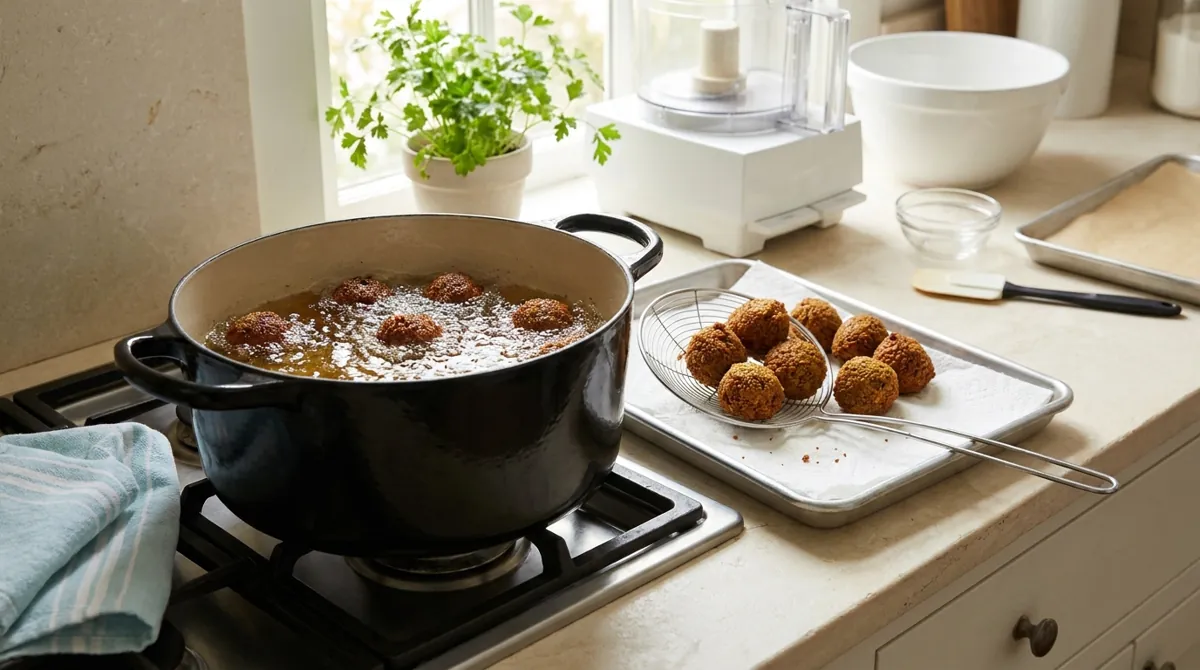
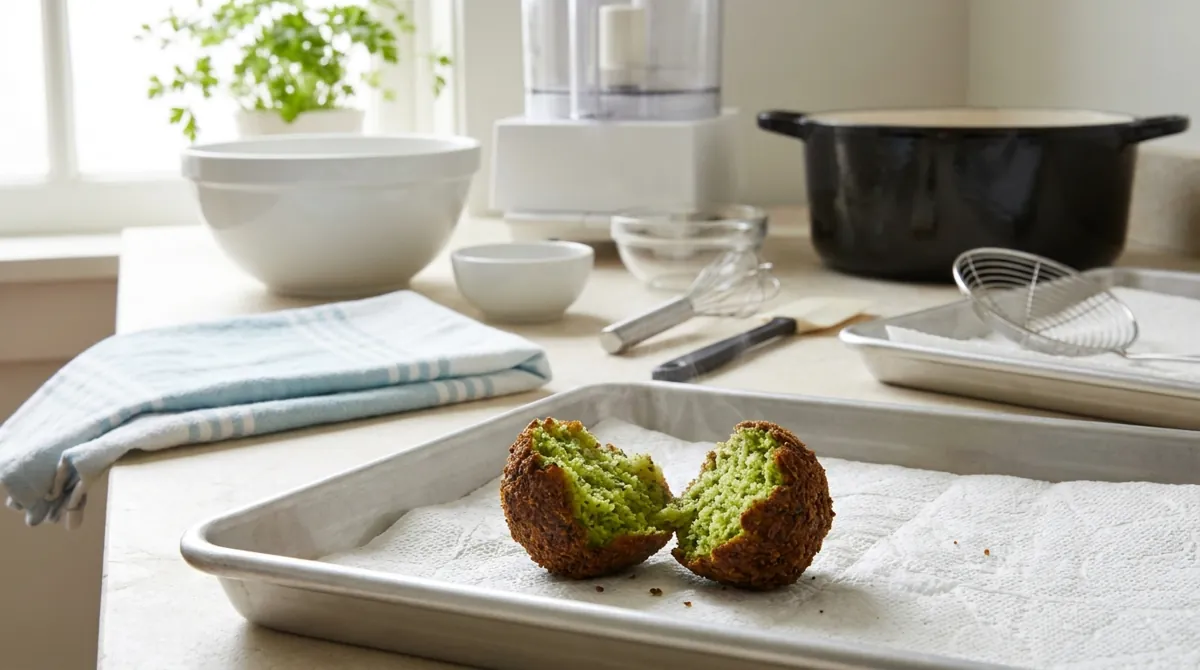
✓ What it should look like - Step 7
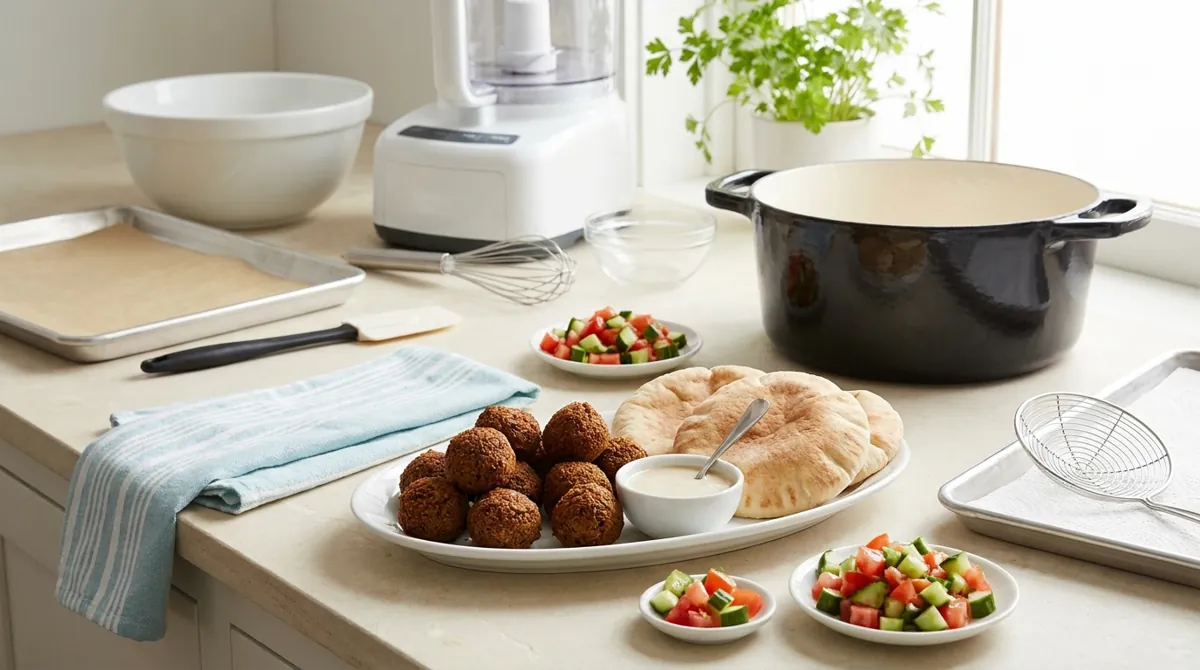
Serve hot with the tahini sauce, as they are or tucked into warm pita with tomato, cucumber, lettuce and pickles. Keep the first batch warm in a 200°F oven while the second fries.
Falafel
Serves 4 to 6 · about 24 falafel · 8 hr 50 min total
Falafel
- 8 oz dried chickpeas (227 g), picked over and rinsed; not canned
- 3/4 cup fresh cilantro leaves and tender stems (12 g)
- 3/4 cup fresh parsley leaves (45 g)
- 1/2 onion, chopped (75 g)
- 2 garlic cloves (6 g)
- 1 1/2 tsp ground coriander
- 1 tsp ground cumin
- 1 tsp fine salt
- 1/4 tsp cayenne pepper
- 1/4 cup all-purpose flour (31 g)
- 1/3 cup water
- 2 tsp baking powder (9 g)
- 2 quarts vegetable oil, for frying (about 3 tbsp, 45 g, stays in the falafel)
Tahini sauce
- 1/3 cup tahini (80 g)
- 1/3 cup plain whole-milk Greek yogurt (80 g)
- 1/4 cup fresh lemon juice (60 g), about 2 lemons
- 1/4 cup water, plus more to thin
- Fine salt to taste
To serve
- Warm pita, chopped tomato and cucumber, lettuce and pickled turnips, optional
Equipment: Oven, Microwave, Food processor, Rimmed baking sheet, Dutch oven, Deep-fry or candy thermometer, Chef's knife and cutting board, Measuring cups and spoons, Mixing bowls, Whisk, Spatula, Slotted spoon or spider, Colander, Rolling pin, Parchment paper, Paper towels
Method
- Cover the chickpeas with 2 to 3 inches of water in a large bowl and soak at room temperature for 8 to 24 hours, until they have doubled in size. Drain well and pat dry.
- Make the tahini sauce: whisk the tahini, yogurt and lemon juice in a small bowl until smooth, whisk in the water to the thickness you like and season with salt. Set aside.
- Pulse the cilantro, parsley, onion, garlic, coriander, cumin, salt and cayenne in a food processor until it looks like pesto, about 10 seconds, scraping down the sides once. Add the drained chickpeas and pulse about 12 times, scraping down once, until they are finely chopped to about the size of sesame seeds but not a paste. Scrape into a large bowl.
- Whisk the flour and 1/3 cup water in a small microwave-safe bowl until smooth. Microwave in 10-second bursts, whisking between, until it turns into a stiff, smooth paste, 40 to 80 seconds. Stir in the baking powder, then mix the warm paste into the chickpea mixture with a rubber spatula until no streaks remain.
- Divide the mixture into 24 portions, roll each into a ball the size of a golf ball and set them on a parchment-lined rimmed baking sheet. They keep, covered, in the fridge for up to 2 hours.
- Heat the oil in a large Dutch oven over medium-high heat to 325°F. Fry half the falafel, turning them now and then, until deep brown all over, about 5 minutes, adjusting the burner to hold 325°F. Move them with a wire skimmer to a paper towel-lined baking sheet. Bring the oil back to 325°F and fry the rest.
- Serve hot with the tahini sauce, as they are or tucked into warm pita with tomato, cucumber, lettuce and pickles. Keep the first batch warm in a 200°F oven while the second fries.
Americanized house recipe, written for this site. History: Wikipedia, "Falafel" (most likely Egyptian, ta'meya and fava beans, Alexandria, Pharaonic origin speculative, 19th-century written references, the Indian-soldier theory as circumstantial, chickpeas in the Levant, the 1933 Beirut shop, 1936 English attestation, the 1939 Palestine Post pita mention, the Israeli national-dish dispute, soaked not cooked chickpeas). Technique: America's Test Kitchen, "Falafel" (8 oz dried chickpeas soaked 8 to 24 hours, no canned or quick-soaked chickpeas, pulse to the size of sesame seeds, a cooked flour paste as binder, 2 tsp baking powder, fry at 325°F about 5 minutes in two batches, tahini and Greek yogurt sauce); the same recipe as published by PBS SoCal. en.wikipedia.org. Ingredient list follows the source; the method is in our own words.
All sources (3)
Tips
- Short on time? There is no shortcut on the soak: quick-soaked chickpeas make stodgy falafel.
- For Egyptian ta'meya, use skinned split dried fava beans in place of the chickpeas and add another 1/2 cup of herbs; the inside turns an even deeper green.
- Baking works but is not the same: brush the balls with oil and bake at 400°F on an oiled sheet for 25 to 30 minutes, turning once.
- Leftover falafel recrisp in a 375°F oven in about 8 minutes.
The rules people argue about
What the sources agree on, what they don't, and what is just a good story.
- Falafel is Israeli. Disputed: chickpea falafel is widely called a national dish of Israel; Palestinians and other Arabs criticize that label, and the dish most likely came from Egypt in the first place.
- Falafel goes back to the pharaohs. Folklore: Wikipedia calls it speculation; the earliest written Egyptian references are from the 19th century.
Meatballs of the World

Italian-American Meatballs
Big, tender meatballs braised for an hour in red sauce over spaghetti. The one most Americans grew up with.

Pallottine (Abruzzo Meatballs)
Tiny meatballs, smaller than a marble, tossed right through square spaghetti alla chitarra. No bread at all.

Swedish Meatballs (Köttbullar)
Small, soft meatballs browned in butter, in a cream sauce made from the same pan, with lingonberry jam on the plate.

Danish Frikadeller
Pork meatballs shaped with a spoon and fried slowly in butter, crusty outside and soft in the middle.

Königsberger Klopse
German meatballs that are never fried: poached, then served in a creamy white sauce with capers.

Spanish Albóndigas in Almond Saffron Sauce
The tapas bar classic: small meatballs in a golden sauce thickened with fried almonds and bread.

Mexican Albóndigas with Chipotle and Mint
Soft meatballs with rice and fresh mint inside, simmered in a smoky tomato and chipotle broth.

Izgara Köfte (Turkish Grilled Meatballs)
Small, flat meatballs kneaded hard, rested cold, and charred on a hot grill pan.

Lion's Head Meatballs
Big, soft pork meatballs, stirred into a sticky paste, fried to set, then braised in a savory sauce.

Chicken Tsukune
Japan's chicken meatball: kneaded sticky, grilled on skewers, glazed with sweet soy tare, dipped in egg yolk.