
Fish and Chips
Thick cod in a crisp, bubbly batter and chunky double-fried chips, with salt, malt vinegar and a lemon wedge: the British chip-shop meal that took over two nations' tables.
🍳Cook alongOne move at a time, with real timers
 Edited by JP Lambiase
Change the estimate
Swaps change the price only: cook any meat to its own safe temperature. Where these numbers come from
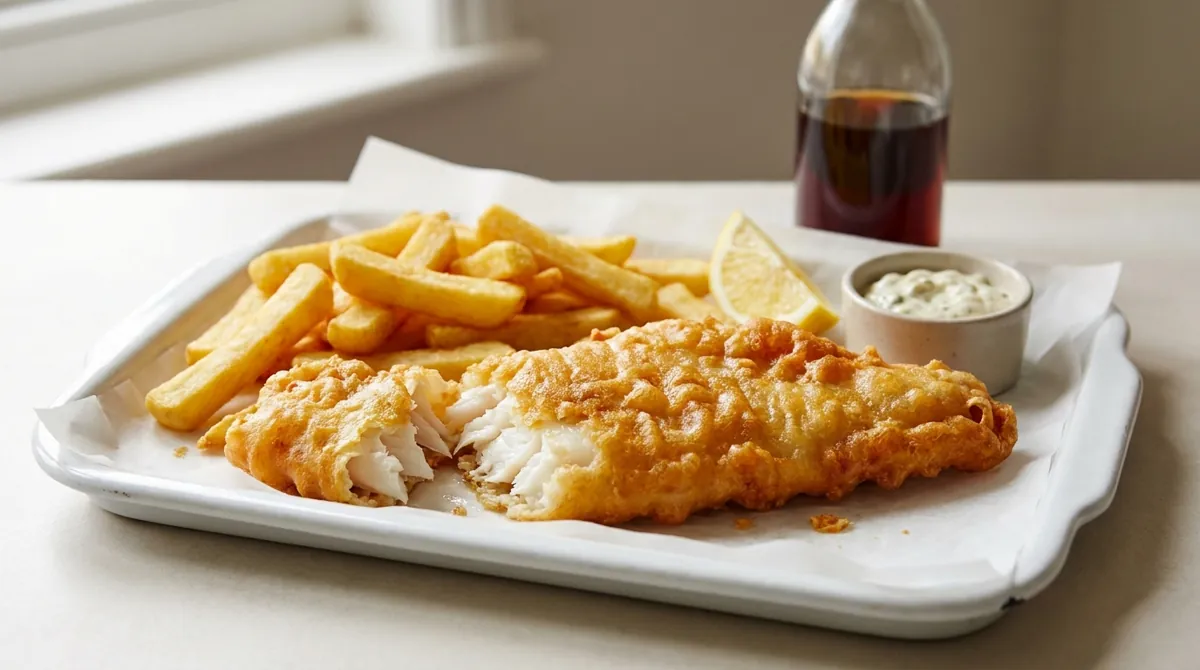
Fish and chips is two older things that met in the 1800s. Fried fish was already sold in Britain, and Wikipedia credits Sephardic and other Jewish immigrants with bringing battered fried fish; chips (fried potato) are in print by the 1850s, with Dickens using the word in A Tale of Two Cities in 1859. The pair sold together first in the mid-19th century.
Two shops claim to have started it: Joseph Malin, a Jewish immigrant, sold fish with chips from a shop in Bow, East London around 1860, and the National Federation of Fish Friers names it the first; John Lees is credited with a shop in Mossley, Lancashire in 1863. Fish and chips stayed off the rationing list in both World Wars, and Churchill called them "the good companions".
Why it works the kitchen science
Cold, carbonated batter
Bubbles lighten it and the cold slows gluten, so it fries crisp and airy.
Cornstarch with the flour
Less gluten, a crisper, less chewy crust.
Double-fried chips
The first fry cooks the inside soft, the second dries and crisps the outside.
Steam inside the batter
The shell cooks the cod gently in its own steam, so the fish stays flaky.
🧰 You'll need 8 items
Everything the steps call for. Tick off what you have before you start.
Appliances
Pans and pots
Tools
Step by step
- Step 1
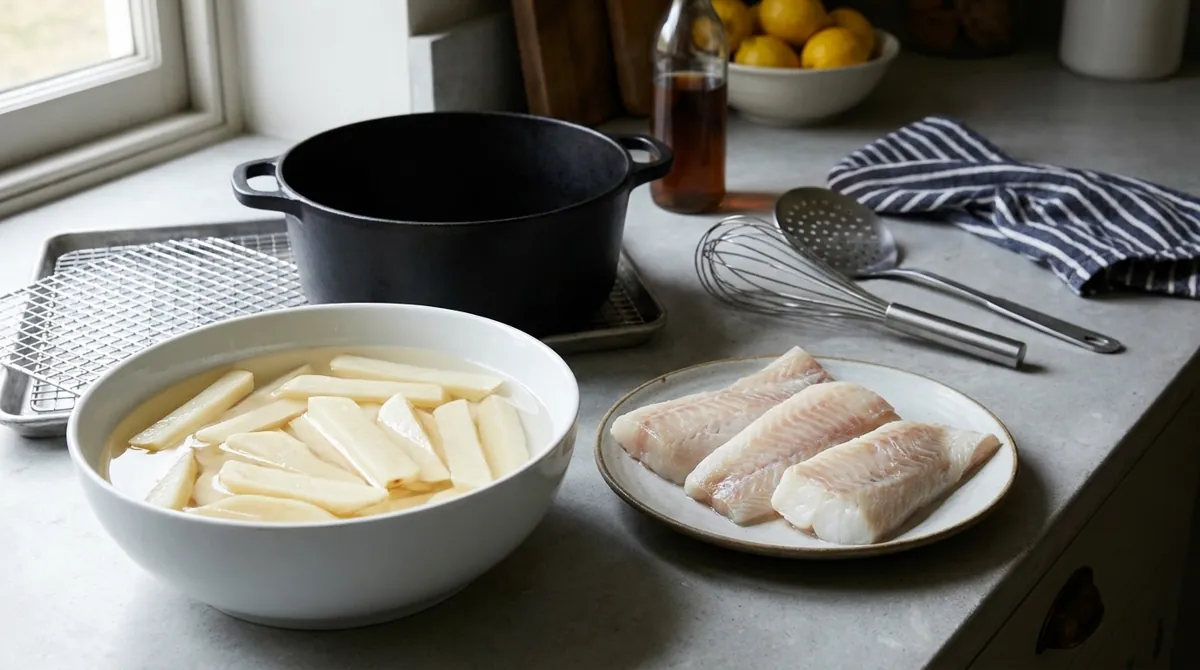
Soak the cut potatoes in cold water 30 minutes, then drain and dry them very well with a towel. Fill a heavy pot with 3 inches of oil.
- Step 2
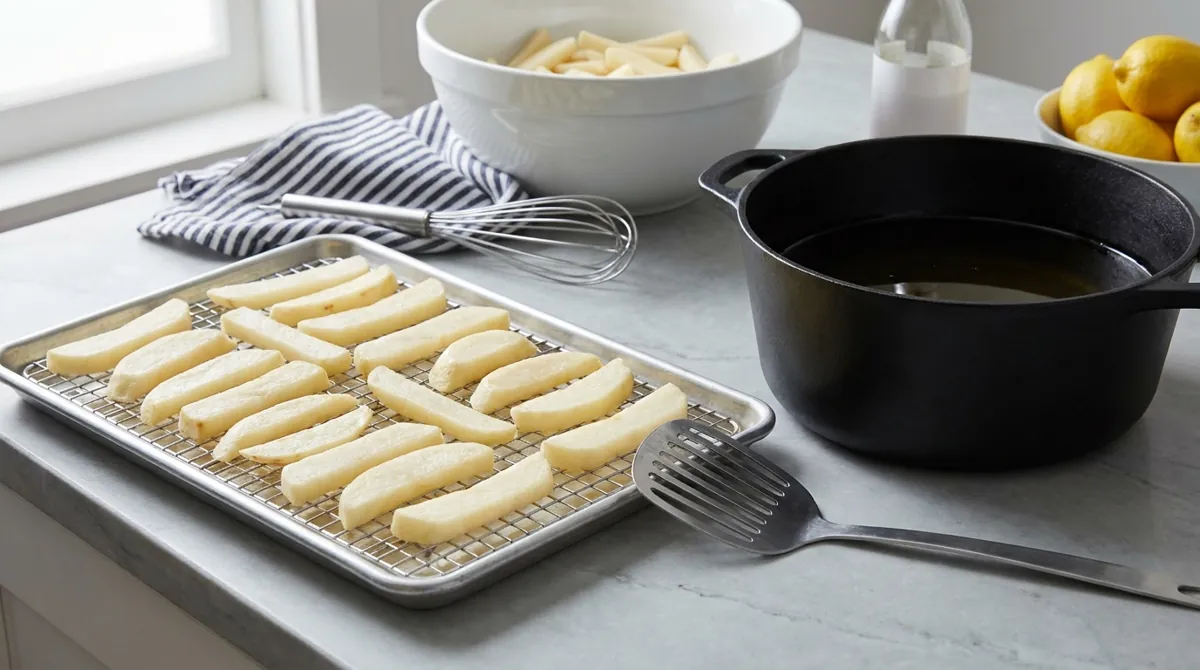
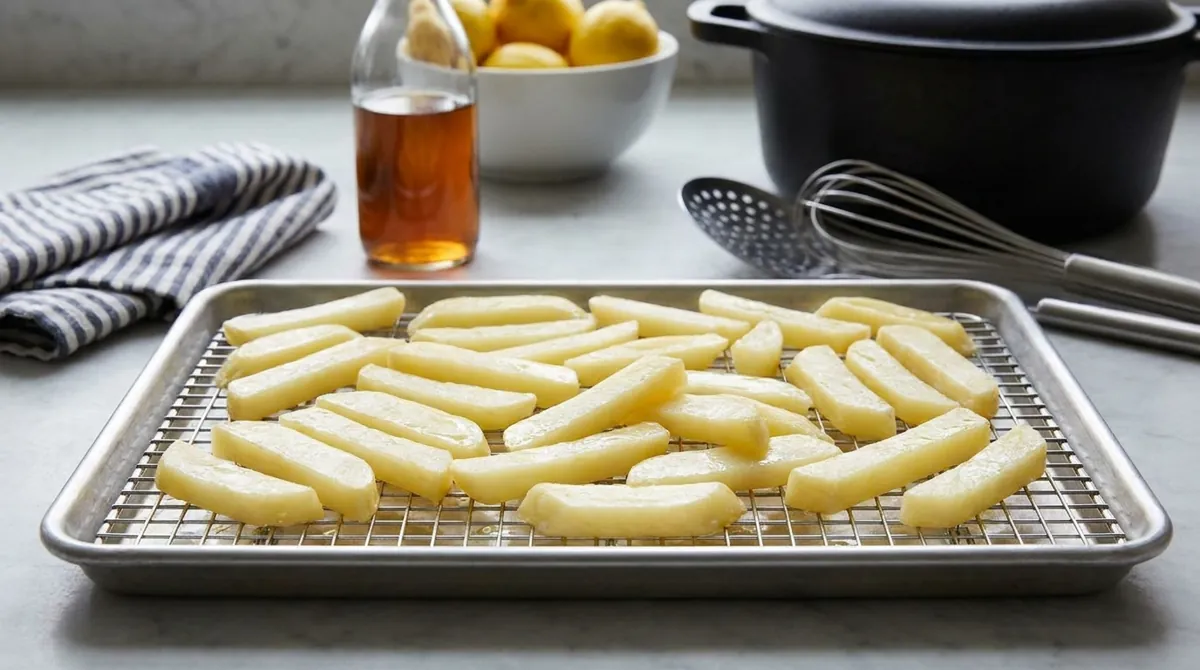
Heat the oil to 325°F. Fry the chips in two batches 6 to 8 minutes, until soft and pale but not browned. Drain on a wire rack. Keep the oil.
✓ What it should look like - Step 3
Pat the fish dry and salt it lightly. Whisk the flour, cornstarch, baking powder and salt in a bowl, then whisk in the cold club soda just until smooth. A few lumps are fine.
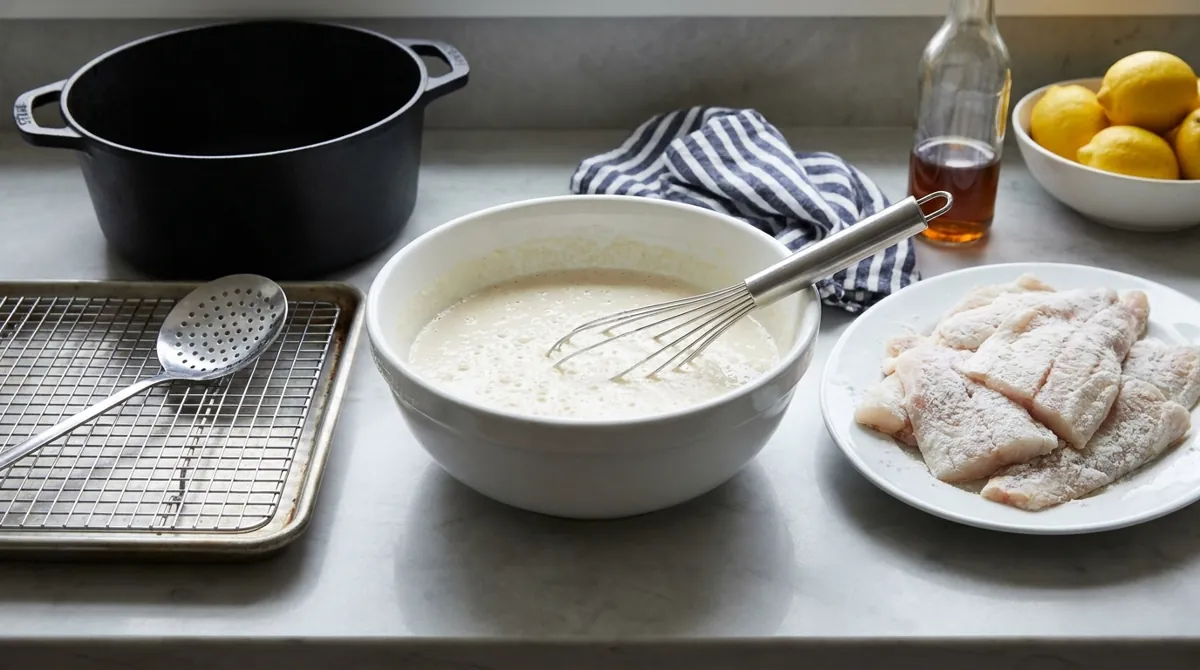
- Step 4
Heat the oil to 375°F. Dust each fillet with a little flour, dip it in the batter and lay it in the oil. Fry two fillets at a time, 6 to 8 minutes, turning once, until the batter is deep golden and crisp. Drain on the rack and keep warm in a 200°F oven.
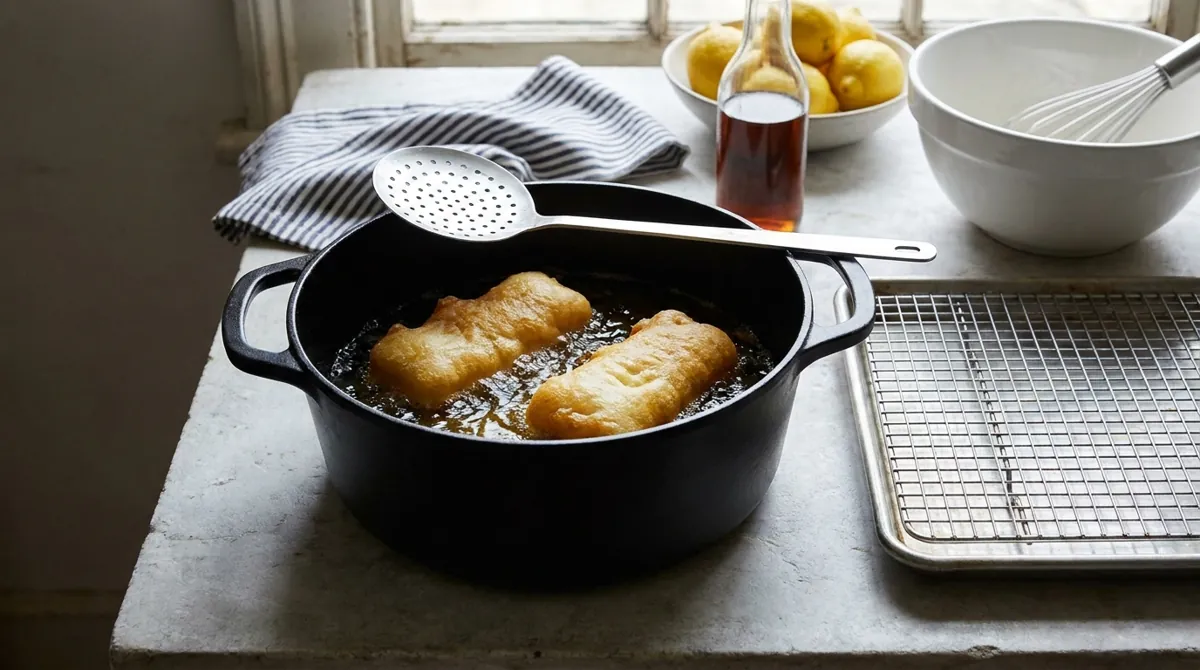
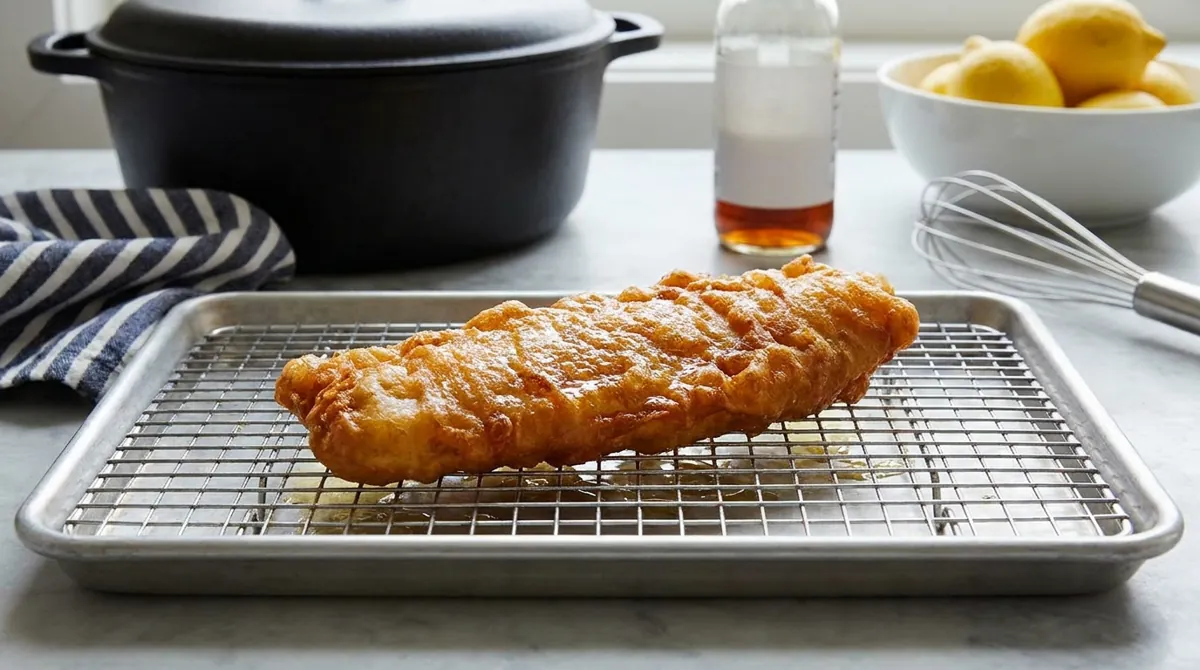
✓ What it should look like - Step 5
Bring the oil back to 375°F. Fry the chips again in two batches 3 to 5 minutes, until deep golden and crisp. Drain and salt them at once.
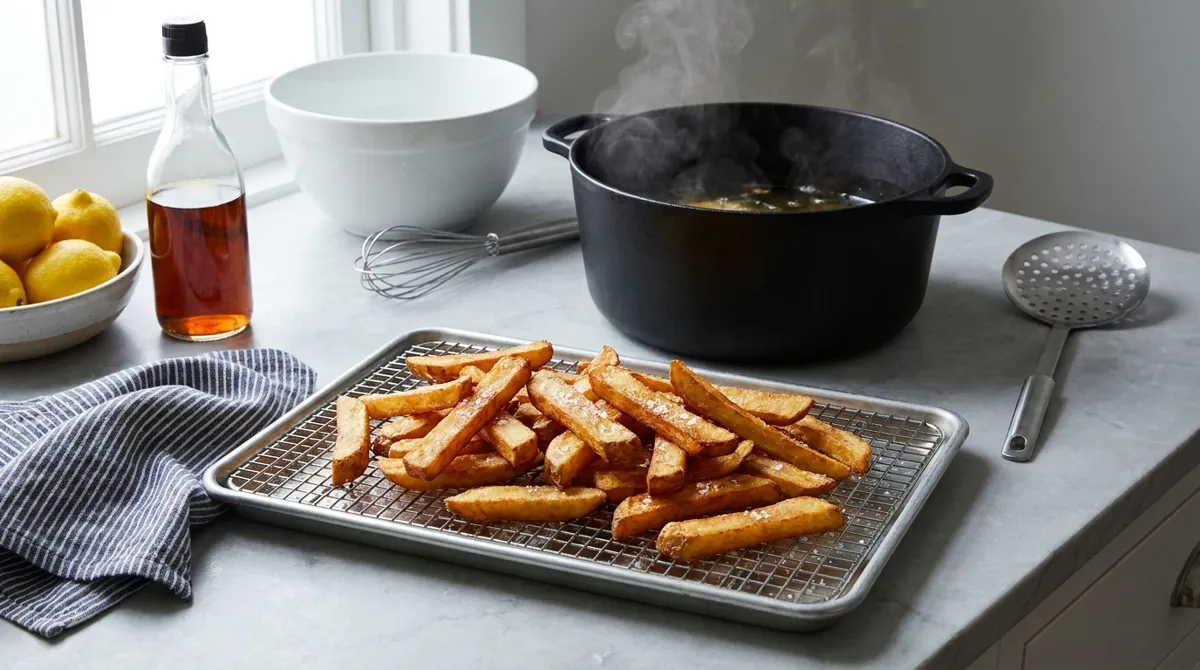
- Step 6
Serve the fish and chips together right away with malt vinegar, lemon wedges and tartar sauce.
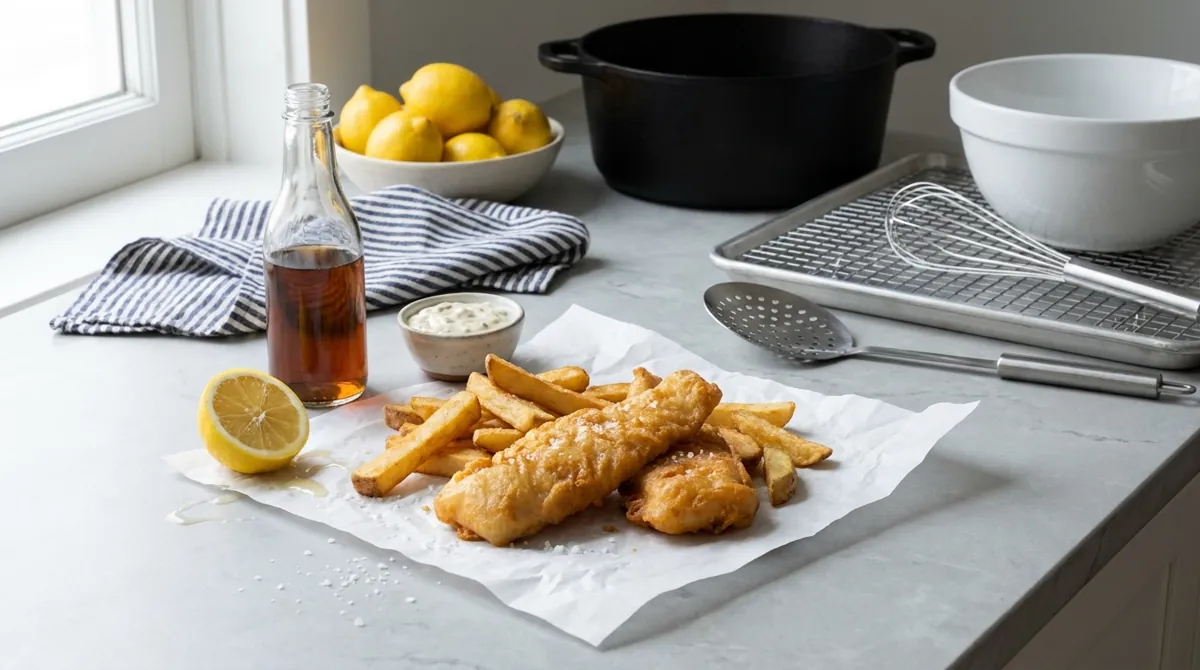
Fish and Chips
Serves 4 · 4 fillets and about 4 cups of chips · 55 min total
Chips
- 2 lb russet potatoes (900 g), scrubbed, cut into 3/4 inch thick chips
- Peanut or vegetable oil for frying, about 8 cups (not counted in calories)
- Fine salt
Fish and batter
- 4 skinless cod fillets, 6 ounces each (680 g), about 1 inch thick
- 1 1/2 cups all-purpose flour (190 g), plus a little for dusting
- 1/4 cup cornstarch (30 g)
- 1 teaspoon baking powder (4 g)
- 1 teaspoon fine salt
- 1 cup very cold club soda or cold lager (240 g)
To serve
- Malt vinegar, lemon wedges, tartar sauce or mushy peas
Equipment: Oven, Wire rack, Large pot, Deep-fry or candy thermometer, Chef's knife and cutting board, Measuring cups and spoons, Mixing bowls, Whisk
Method
- Soak the cut potatoes in cold water 30 minutes, then drain and dry them very well with a towel. Fill a heavy pot with 3 inches of oil.
- Heat the oil to 325°F. Fry the chips in two batches 6 to 8 minutes, until soft and pale but not browned. Drain on a wire rack. Keep the oil.
- Pat the fish dry and salt it lightly. Whisk the flour, cornstarch, baking powder and salt in a bowl, then whisk in the cold club soda just until smooth. A few lumps are fine.
- Heat the oil to 375°F. Dust each fillet with a little flour, dip it in the batter and lay it in the oil. Fry two fillets at a time, 6 to 8 minutes, turning once, until the batter is deep golden and crisp. Drain on the rack and keep warm in a 200°F oven.
- Bring the oil back to 375°F. Fry the chips again in two batches 3 to 5 minutes, until deep golden and crisp. Drain and salt them at once.
- Serve the fish and chips together right away with malt vinegar, lemon wedges and tartar sauce.
Americanized house recipe, written for this site. History: Wikipedia, "Fish and chips" (Joseph Malin c. 1860 in Bow, John Lees 1863 in Mossley, Oldham's Tommyfield Market claim, the Jewish fried-fish background and the dispute over it, Dickens 1859, exempt from rationing in WWII, newspaper wrapping). Method checked against: Food Network Kitchen, "Fish and Chips" (cod fried in a leavened batter, oil at 360°F kept between batches, chips soaked 30 minutes and dried well). This recipe fries thick fillets rather than strips, so 375°F with 6 to 8 minutes allows for the oil dropping when the fish goes in, and double-fries thicker chips; the cold club soda and cornstarch are a common crisp-batter technique. en.wikipedia.org. Ingredient list follows the source; the method is in our own words.
All sources (2)
Tips
- Keep the oil near 375°F: too cool and the batter turns greasy, too hot and it browns before the fish cooks (about 140°F inside).
- Thick fillets of haddock, pollock or halibut also work.
- Fish and chips do not reheat well; the best way to keep leftovers crisp is a 400°F oven on a rack, about 10 minutes.
The rules people argue about
What the sources agree on, what they don't, and what is just a good story.
- Joseph Malin opened the first fish and chip shop in 1860. Disputed: the National Federation of Fish Friers names his Bow shop the first, but John Lees' 1863 Mossley shop and an Oldham market claim compete.
- Fish and chips is a Jewish invention. Disputed: battered fried fish was brought by Jewish immigrants, but "Jewish-style" fish in many old English cookbooks meant fried then pickled, and the claim that the whole dish is a Jewish invention is contested.
- It must be wrapped in newspaper. Folklore as a rule: newspaper was the old wrapping, with clean paper inside; it has mostly ended for hygiene.
Meatballs of the World

Italian-American Meatballs
Big, tender meatballs braised for an hour in red sauce over spaghetti. The one most Americans grew up with.

Pallottine (Abruzzo Meatballs)
Tiny meatballs, smaller than a marble, tossed right through square spaghetti alla chitarra. No bread at all.

Swedish Meatballs (Köttbullar)
Small, soft meatballs browned in butter, in a cream sauce made from the same pan, with lingonberry jam on the plate.

Danish Frikadeller
Pork meatballs shaped with a spoon and fried slowly in butter, crusty outside and soft in the middle.

Königsberger Klopse
German meatballs that are never fried: poached, then served in a creamy white sauce with capers.

Spanish Albóndigas in Almond Saffron Sauce
The tapas bar classic: small meatballs in a golden sauce thickened with fried almonds and bread.

Mexican Albóndigas with Chipotle and Mint
Soft meatballs with rice and fresh mint inside, simmered in a smoky tomato and chipotle broth.

Izgara Köfte (Turkish Grilled Meatballs)
Small, flat meatballs kneaded hard, rested cold, and charred on a hot grill pan.

Lion's Head Meatballs
Big, soft pork meatballs, stirred into a sticky paste, fried to set, then braised in a savory sauce.

Chicken Tsukune
Japan's chicken meatball: kneaded sticky, grilled on skewers, glazed with sweet soy tare, dipped in egg yolk.