
Flan
A silky, chilled egg custard baked in a water bath over amber caramel, turned out so the dark sauce pours over the top: the dessert of Spanish tables and Latin American celebrations.
🍳Cook alongOne move at a time, with real timers
 Edited by JP Lambiase
Change the estimate
Swaps change the price only: cook any meat to its own safe temperature. Where these numbers come from
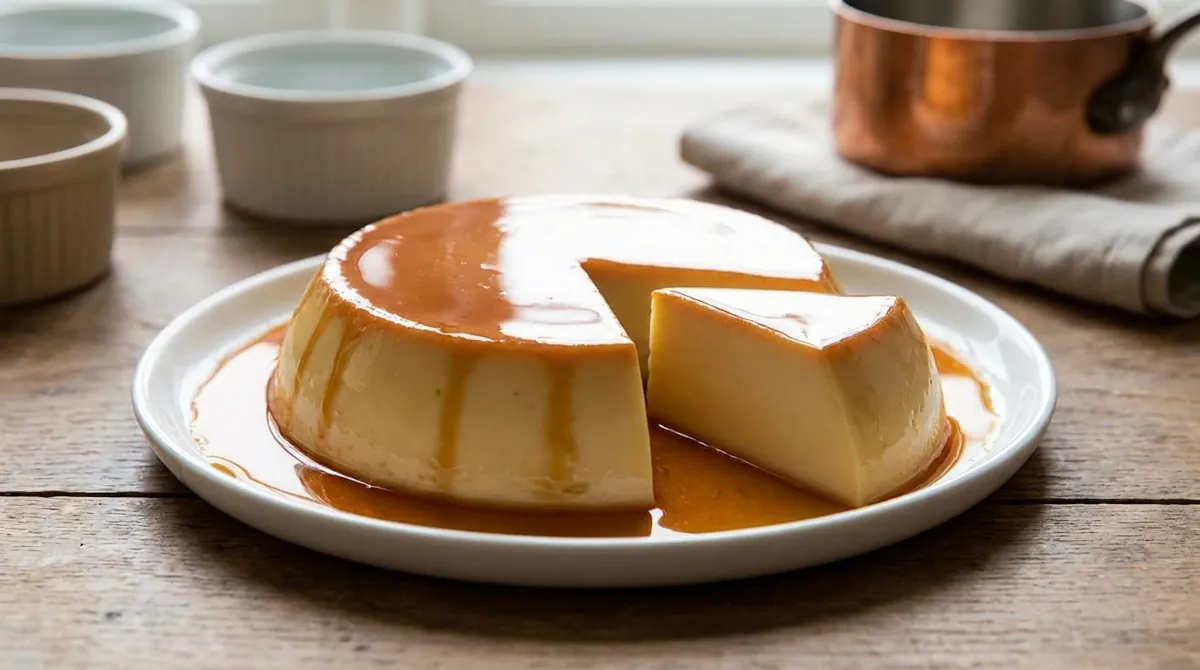
Flan is one of the oldest desserts there is: a custard of eggs and milk. Popular accounts trace baked egg custards back to ancient Rome, where they were often savory, and say sugar and later the caramel topping made them a dessert in medieval and early modern Spain. The Moorish influence in Spain, with citrus, almonds and sugar, is often added to the story.
From Spain, the caramel-topped flan crossed the Atlantic with colonization and became a staple across Latin America, where each country made it its own: condensed milk in Venezuela and Brazil, dulce de leche or whipped cream in Argentina and Uruguay, egg yolks only in the Dominican Republic, a cinnamon stick in Cuba, and flan napolitano with cream cheese in Mexico. The modern form of a caramel-topped custard cooked in a water bath is first documented in a French cookbook of 1897, which is why the French call it creme caramel. The stories of nuns using up spare yolks are popular but not documented history.
Why it works the kitchen science
The water bath
It keeps the heat gentle and even, so the eggs set into a smooth custard instead of curdling or puffing.
Straining
It removes the bits of white and any lumps, for a silky texture.
A bare wobble
The custard keeps cooking as it cools, so pulling it while the center still wobbles avoids a grainy, overcooked flan.
Chilling overnight
The custard firms and the hard caramel melts into sauce, which is what pours out when you flip it.
🧰 You'll need 9 items
Everything the steps call for. Tick off what you have before you start.
Appliances
Pans and pots
Tools
Step by step
- Step 1
Heat the oven to 325°F with a rack in the middle. Cook the caramel sugar and water in a small saucepan over medium heat without stirring until it turns deep amber, about 8 minutes, then quickly tip it into the 8 inch round cake pan and tilt the pan so it coats the bottom.
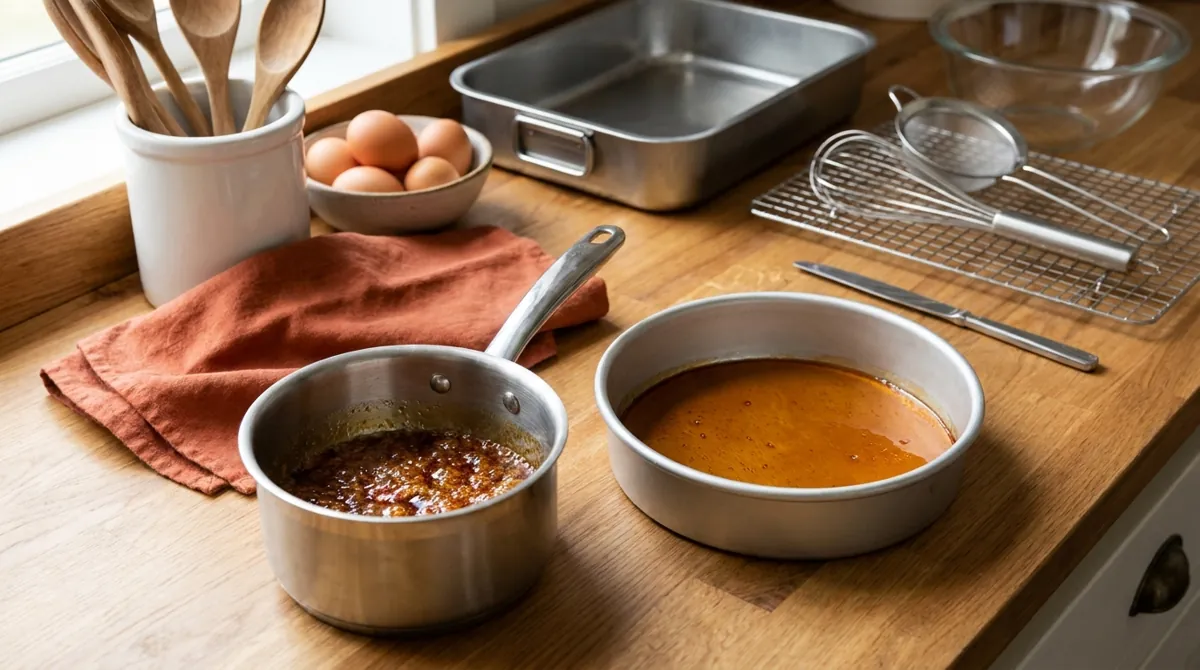
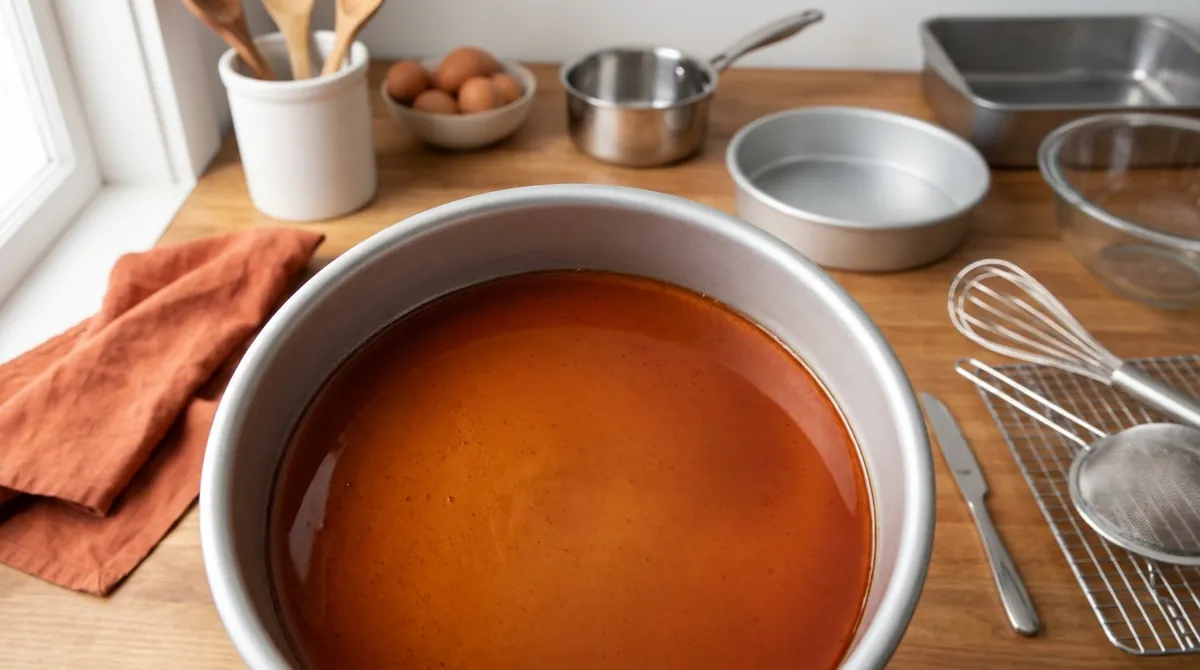
✓ What it should look like - Step 2
Warm the milk with the vanilla and salt in a saucepan until steaming, not boiling.
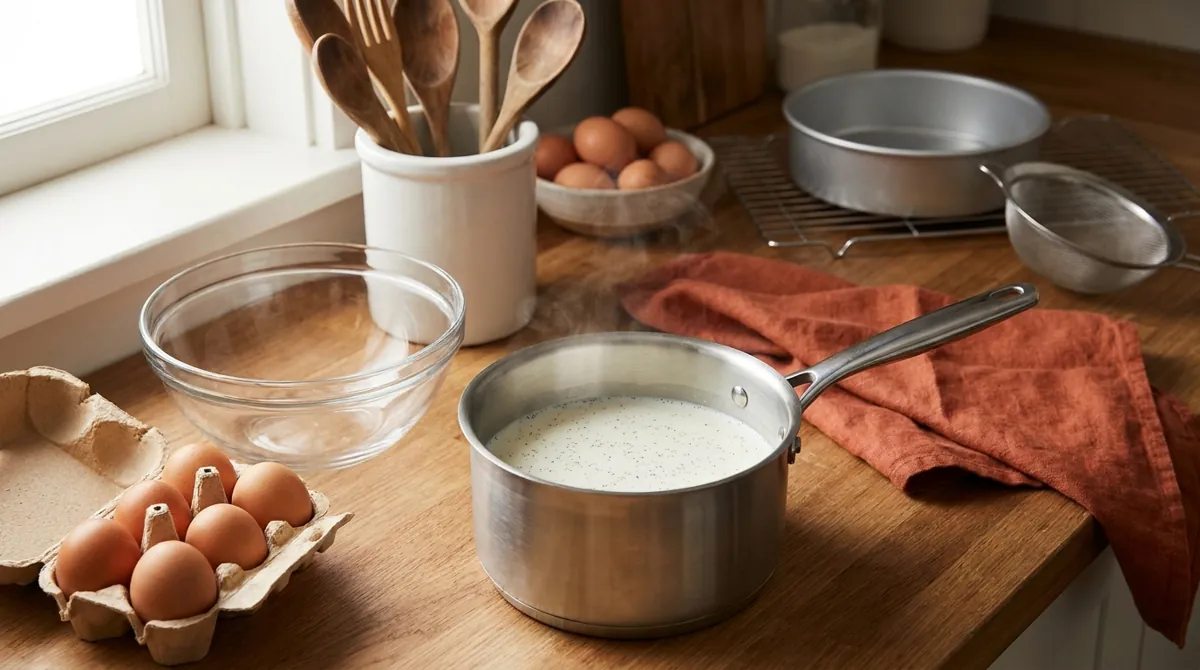
- Step 3
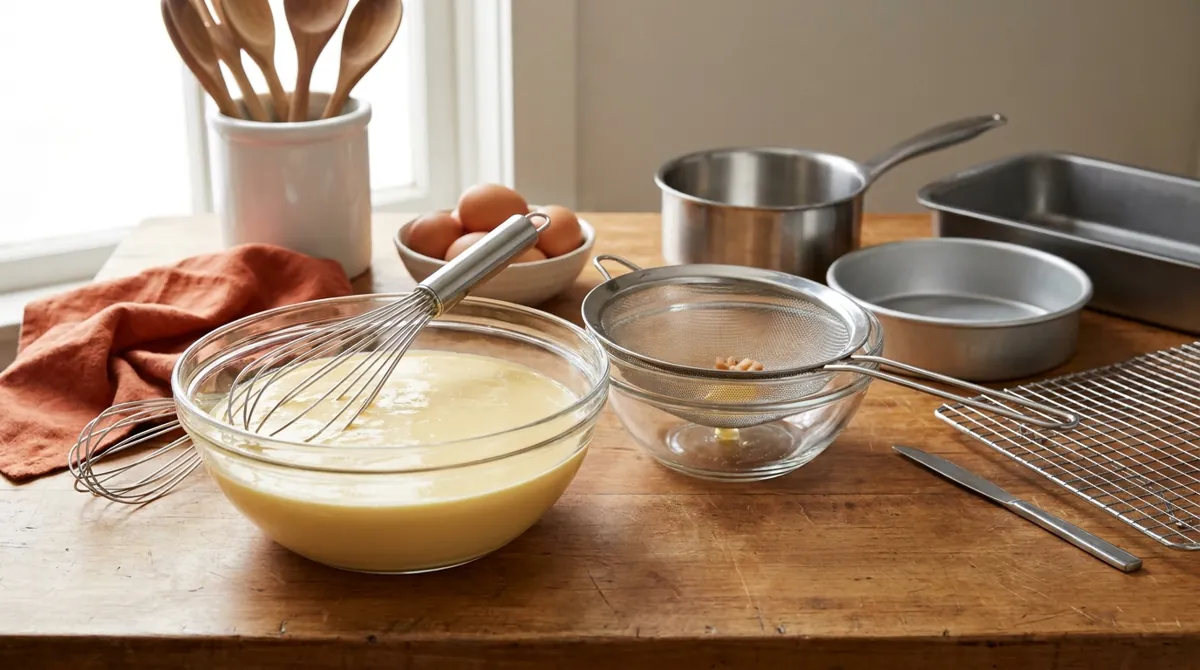
Whisk the eggs, yolks and 1/2 cup sugar in a bowl just until blended, with as little foam as possible. Whisk in the warm milk in a thin stream, and strain through a fine-mesh sieve.
- Step 4
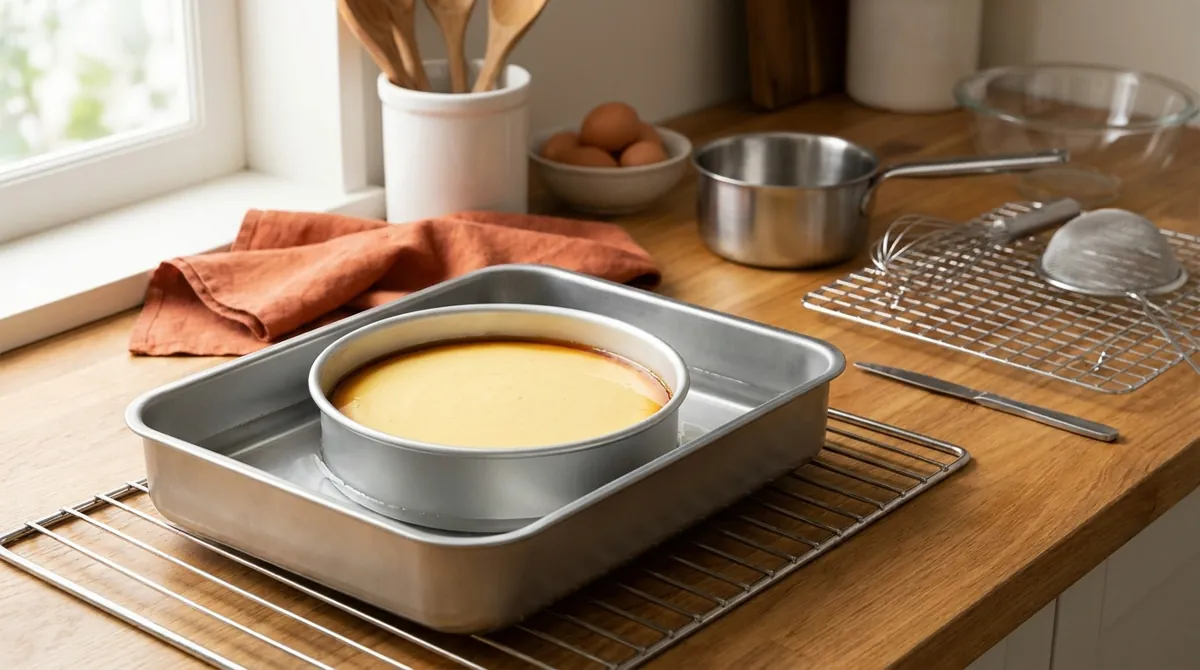
Pour the custard over the hardened caramel. Set the cake pan in a deep roasting pan and pour boiling water into the roasting pan until it comes halfway up the sides of the cake pan.
- Step 5
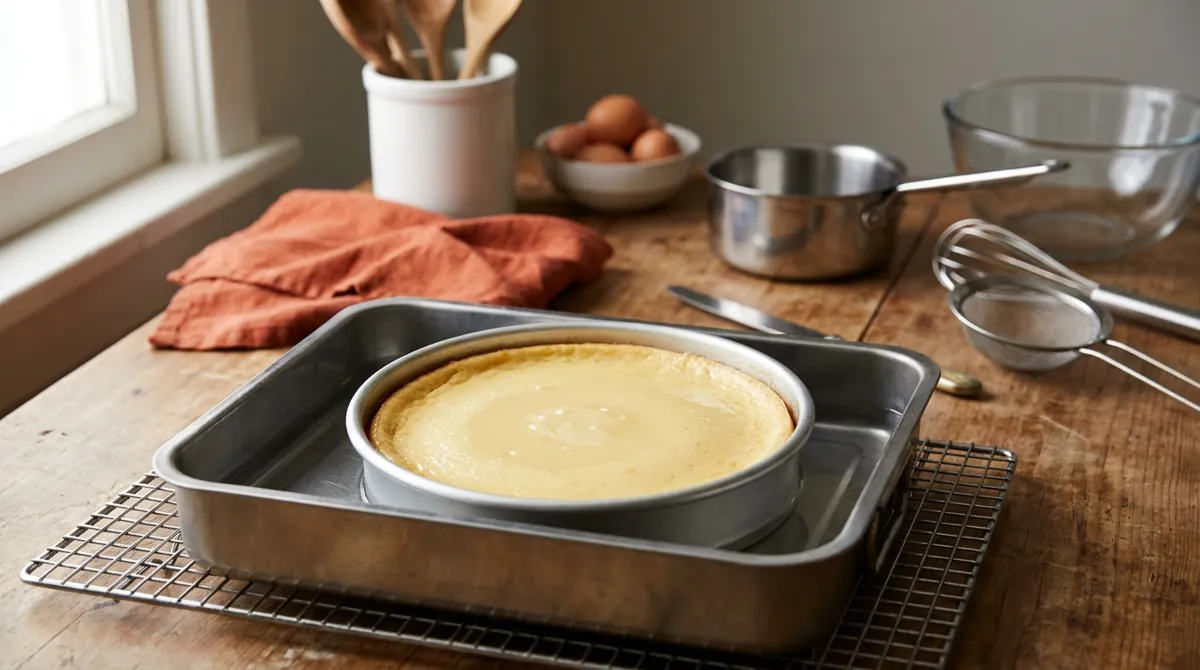
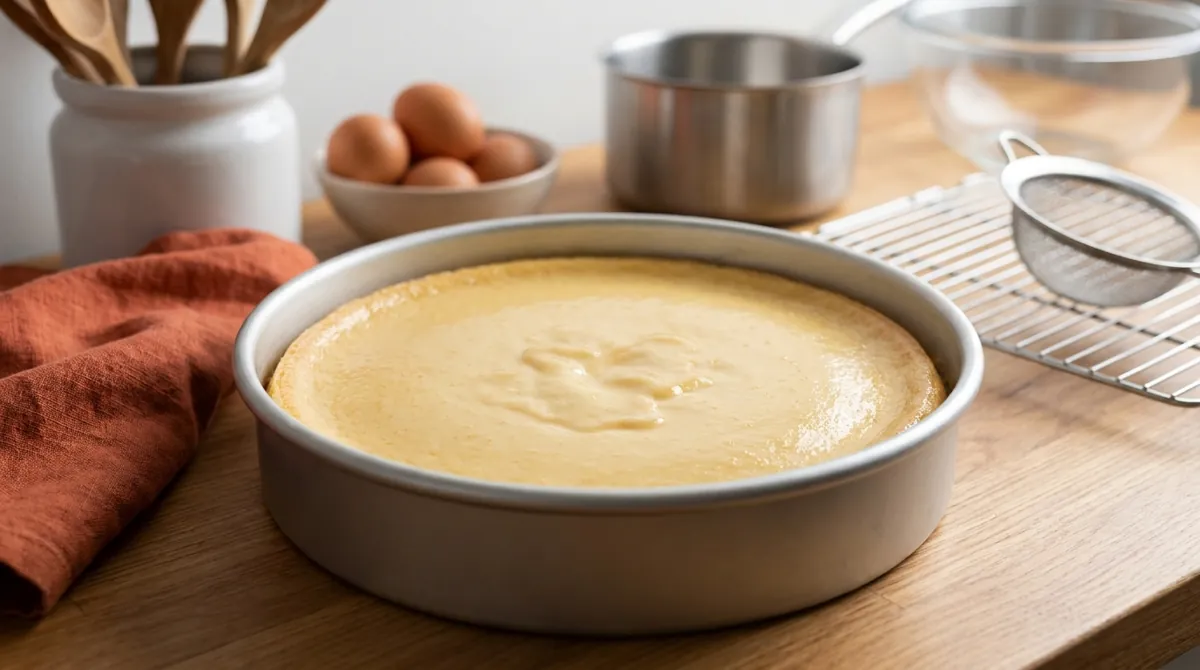
Bake 50 to 60 minutes, until the edges are set and the center still wobbles like gelatin when you nudge the pan (about 170°F in the middle). Lift the pan out of the water and cool on a rack for 1 hour.
✓ What it should look like - Step 6
Cover and chill at least 4 hours or overnight. Run a thin knife around the edge, set a rimmed plate over the pan, flip it, and wait a minute for the caramel to flow down. Slice into 8 wedges and spoon the caramel over them.
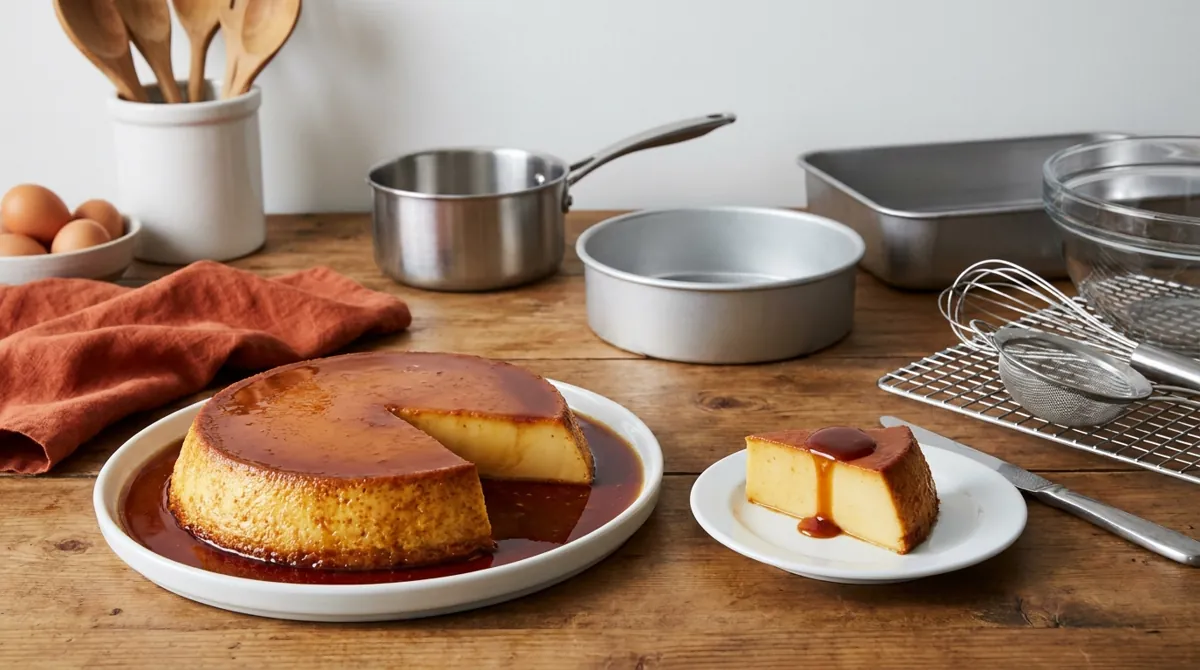
Flan
Serves 8 slices · one 8 inch round flan · 5 hr 25 min total
Caramel
- 3/4 cup granulated sugar (150 g)
- 3 tbsp water
Custard
- 2 cups whole milk (488 g)
- 4 large eggs (200 g)
- 2 large egg yolks (34 g)
- 1/2 cup granulated sugar (100 g)
- 2 tsp vanilla extract
- Pinch of fine salt
Equipment: Oven, Roasting pan, Small saucepan, Instant-read thermometer, Chef's knife and cutting board, Measuring cups and spoons, Mixing bowls, Whisk, Fine-mesh strainer
Method
- Heat the oven to 325°F with a rack in the middle. Cook the caramel sugar and water in a small saucepan over medium heat without stirring until it turns deep amber, about 8 minutes, then quickly tip it into the 8 inch round cake pan and tilt the pan so it coats the bottom.
- Warm the milk with the vanilla and salt in a saucepan until steaming, not boiling.
- Whisk the eggs, yolks and 1/2 cup sugar in a bowl just until blended, with as little foam as possible. Whisk in the warm milk in a thin stream, and strain through a fine-mesh sieve.
- Pour the custard over the hardened caramel. Set the cake pan in a deep roasting pan and pour boiling water into the roasting pan until it comes halfway up the sides of the cake pan.
- Bake 50 to 60 minutes, until the edges are set and the center still wobbles like gelatin when you nudge the pan (about 170°F in the middle). Lift the pan out of the water and cool on a rack for 1 hour.
- Cover and chill at least 4 hours or overnight. Run a thin knife around the edge, set a rimmed plate over the pan, flip it, and wait a minute for the caramel to flow down. Slice into 8 wedges and spoon the caramel over them.
Americanized house recipe, written for this site: a classic Spanish-style egg flan with a gentle water-bath bake. History: Wikipedia, "Creme caramel" (the 1897 La cuisiniere provencale mention, Spanish flan de huevo, Latin American variants, water bath); Latin Post, "Flan: The History of the Latin World's Favorite Dessert" (Roman roots, Spanish caramel, spread through the Spanish colonies). The Roman link is repeated by popular sources and is not firmly documented. en.wikipedia.org. Ingredient list follows the source; the method is in our own words.
All sources (2)
Tips
- Do not stir the caramel; swirl the pan if one side darkens faster. Pull it when it is the color of a copper penny; a darker color tastes bitter.
- Work fast with the caramel; it hardens within seconds.
- Run hot water on the outside bottom of the pan for 15 seconds if the flan will not release.
- Keeps 4 days in the refrigerator, covered.
- For a Cuban style, steep a cinnamon stick in the milk; for a richer one, replace 1 cup of milk with a can of evaporated milk.
The rules people argue about
What the sources agree on, what they don't, and what is just a good story.
- Flan comes from ancient Rome. Disputed: baked egg custards are documented in the ancient world, but the line from Roman dishes to Spanish caramel flan is told in popular sources and is not firmly documented.
Meatballs of the World

Italian-American Meatballs
Big, tender meatballs braised for an hour in red sauce over spaghetti. The one most Americans grew up with.

Pallottine (Abruzzo Meatballs)
Tiny meatballs, smaller than a marble, tossed right through square spaghetti alla chitarra. No bread at all.

Swedish Meatballs (Köttbullar)
Small, soft meatballs browned in butter, in a cream sauce made from the same pan, with lingonberry jam on the plate.

Danish Frikadeller
Pork meatballs shaped with a spoon and fried slowly in butter, crusty outside and soft in the middle.

Königsberger Klopse
German meatballs that are never fried: poached, then served in a creamy white sauce with capers.

Spanish Albóndigas in Almond Saffron Sauce
The tapas bar classic: small meatballs in a golden sauce thickened with fried almonds and bread.

Mexican Albóndigas with Chipotle and Mint
Soft meatballs with rice and fresh mint inside, simmered in a smoky tomato and chipotle broth.

Izgara Köfte (Turkish Grilled Meatballs)
Small, flat meatballs kneaded hard, rested cold, and charred on a hot grill pan.

Lion's Head Meatballs
Big, soft pork meatballs, stirred into a sticky paste, fried to set, then braised in a savory sauce.

Chicken Tsukune
Japan's chicken meatball: kneaded sticky, grilled on skewers, glazed with sweet soy tare, dipped in egg yolk.