
Flour Tortillas
Flour, lard, salt and warm water, rested, rolled thin and blistered in a dry skillet: the soft, stretchy tortilla of northern Mexico that wraps every burrito.
🍳Cook alongOne move at a time, with real timers
 Edited by JP Lambiase
Change the estimate
Swaps change the price only: cook any meat to its own safe temperature. Where these numbers come from
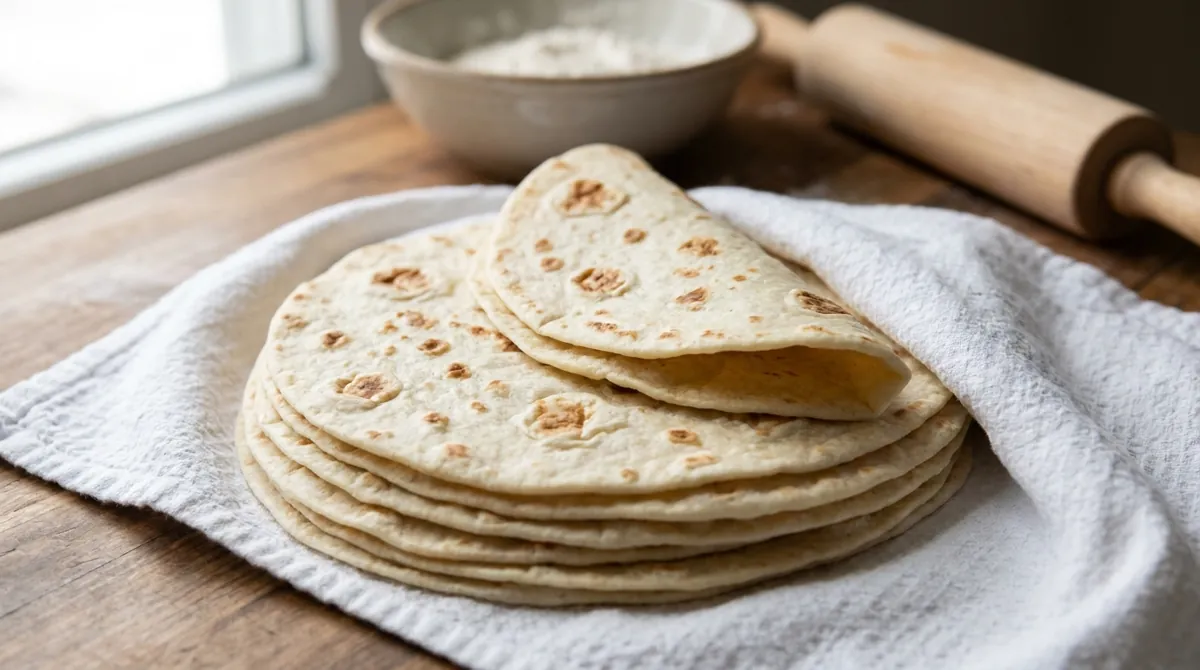
Wheat did not grow in Mexico until the Spanish brought it in the 1500s, so the flour tortilla is a mixed dish by birth: a Mexican flatbread made from a European grain. Today it is the everyday bread of northern Mexico, especially Sonora, Sinaloa and Chihuahua, where tortillas de harina are rolled very thin, nearly see-through in Sonora, and used for tacos, quesadillas and burritos.
Where it started is not settled. The popular story says it began in the north, because that dry country suited wheat better than corn. Some historians doubt that, noting that corn was still the staple in Sonora in the 1700s and that wheat was grown mostly around central and southern Mexico early on. What is not in doubt is that flour tortillas crossed the border with northern Mexican cooks and became a staple of the American Southwest.
Why it works the kitchen science
Lard
Fat rubbed into the flour shortens the gluten strands, so the tortilla is tender but still stretchy.
Warm water
It makes the dough soft and easy to knead.
The 30 minute rest
Relaxed dough rolls out thin without springing back.
A hot, dry skillet
Quick, high heat puffs the tortilla and browns it in spots before it can dry into a cracker.
Stacking in a towel
Trapped steam keeps them soft and foldable.
🧰 You'll need 6 items
Everything the steps call for. Tick off what you have before you start.
Pans and pots
Tools
Step by step
- Step 1
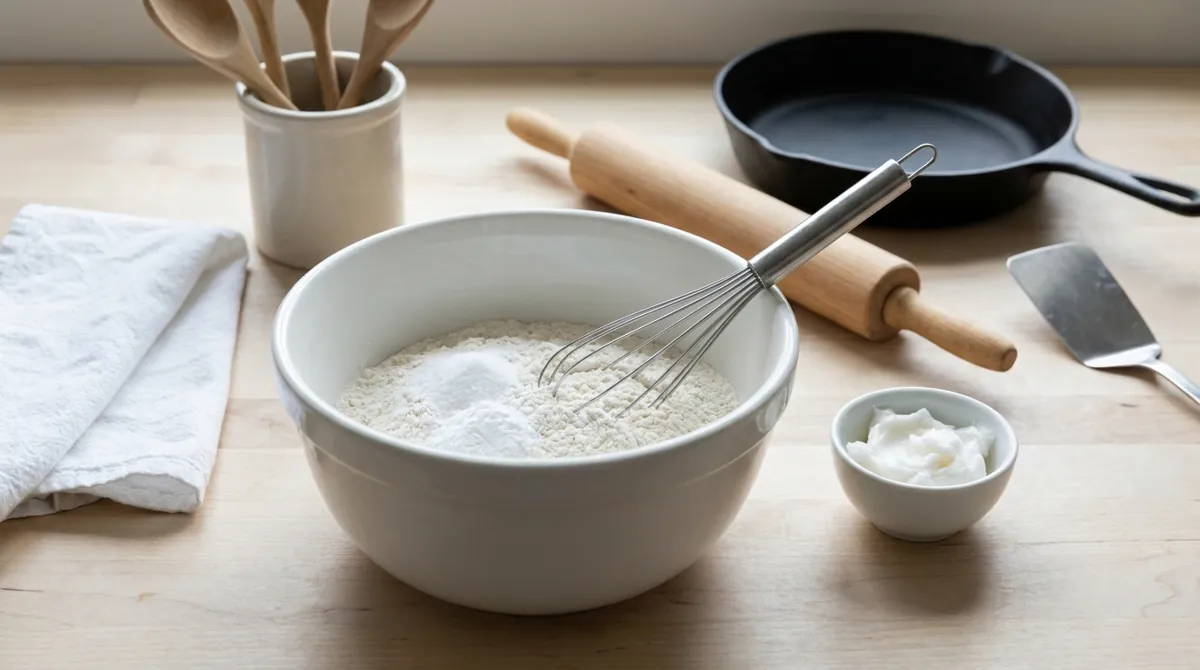
Whisk the flour, baking powder and salt together in a large bowl.
- Step 2
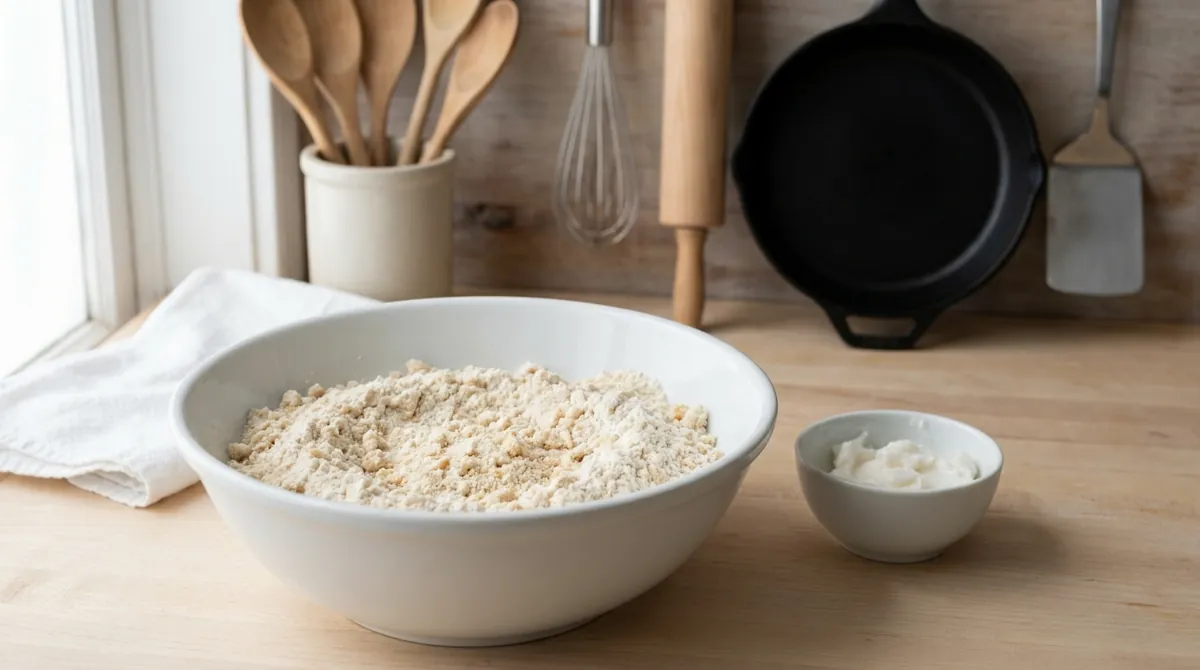
Rub the lard into the flour with your fingertips until it looks like coarse, sandy crumbs with no big lumps.
- Step 3
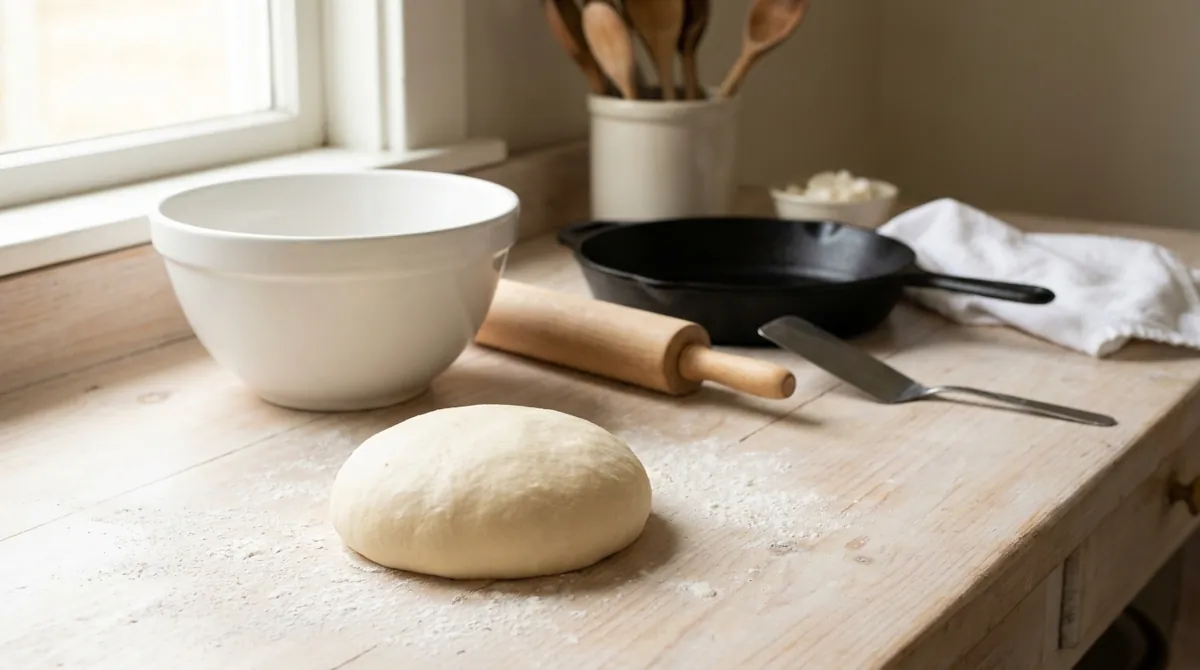
Add the warm water and stir until a shaggy dough forms. Knead on the counter about 2 minutes, until smooth and soft, not sticky.
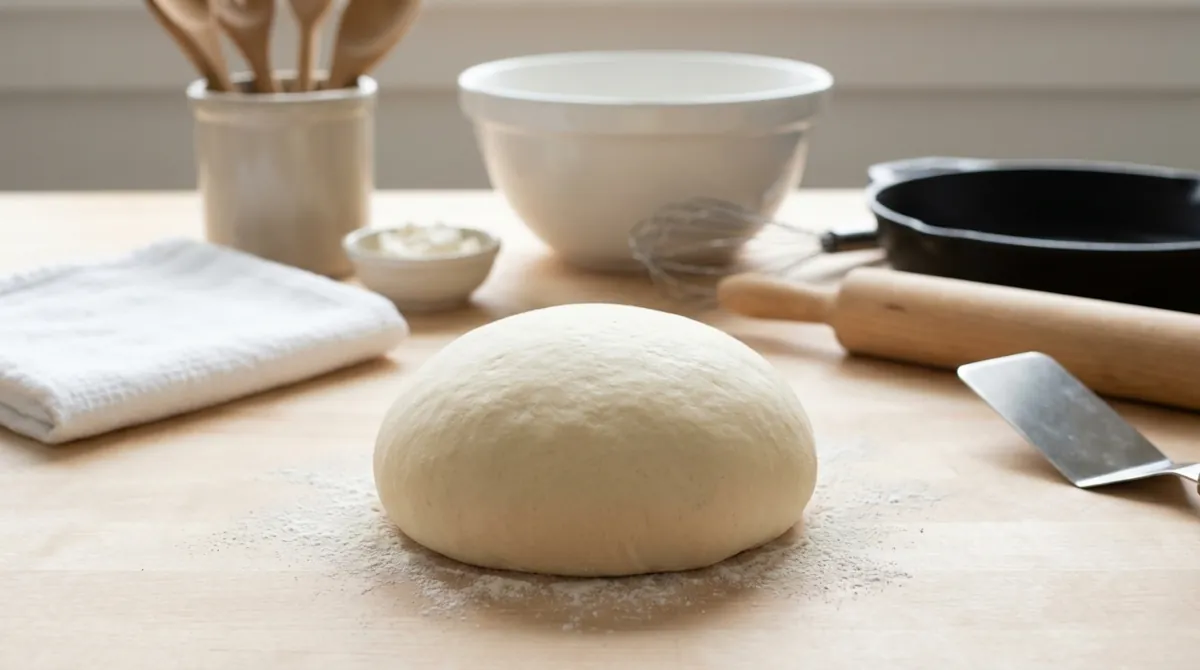
✓ What it should look like - Step 4
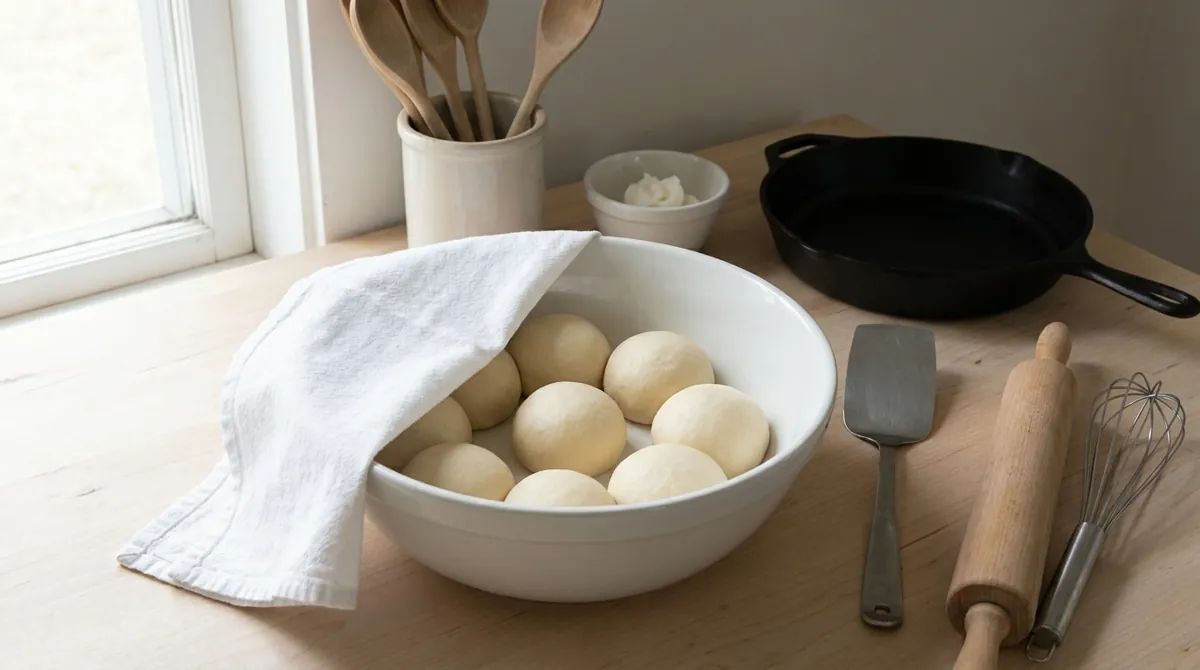
Divide into 8 equal balls, set them in the bowl, cover with a towel and rest 30 minutes. The rest relaxes the gluten so they roll thin.
- Step 5
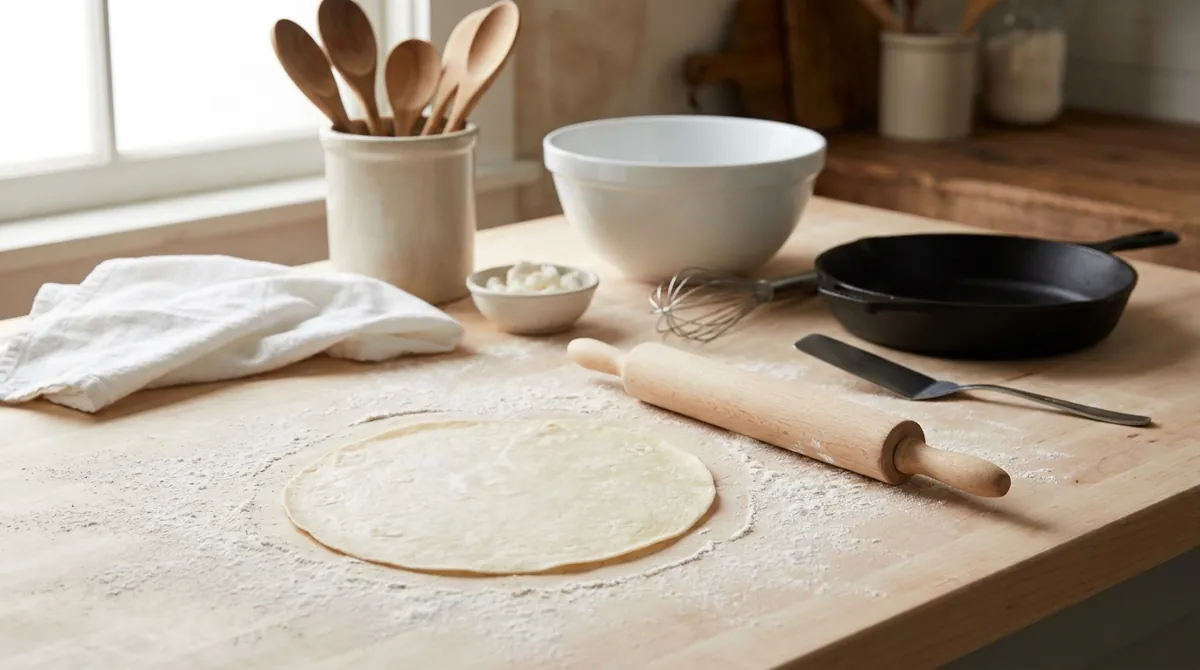
On a lightly floured counter, roll each ball into a thin round about 8 inches across, turning it a quarter turn after each pass for an even circle.
- Step 6
Heat a dry cast iron skillet over medium-high. Cook each tortilla 30 to 45 seconds a side, until it puffs and has light brown spots. Stack them in a clean towel so they steam soft.
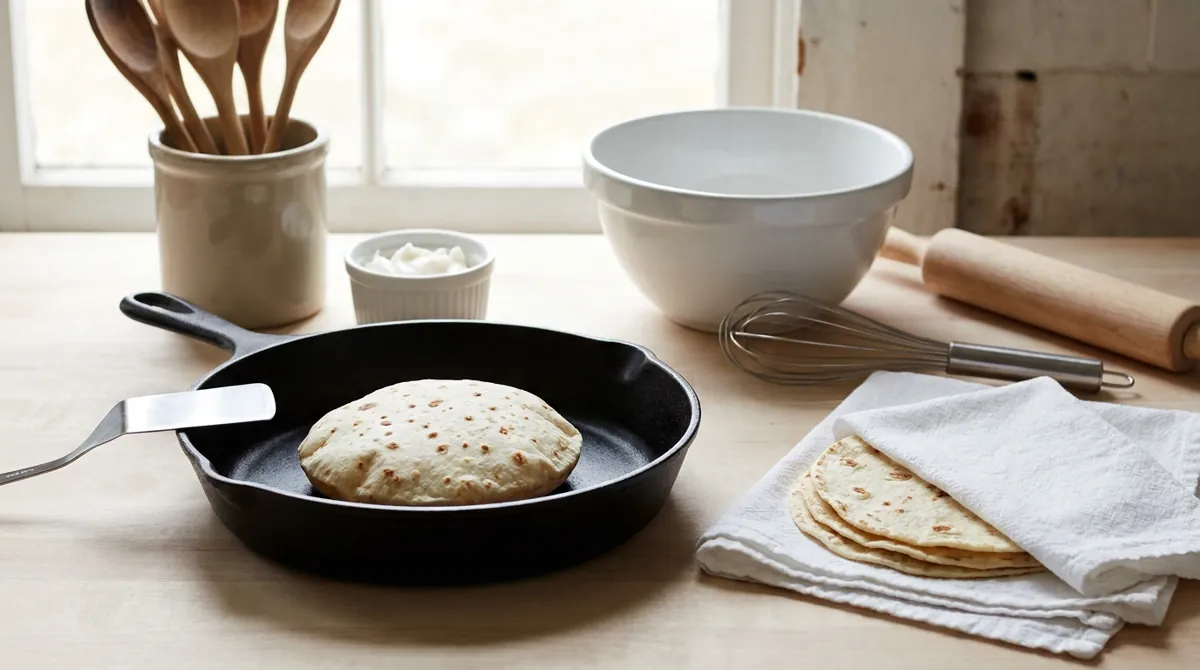
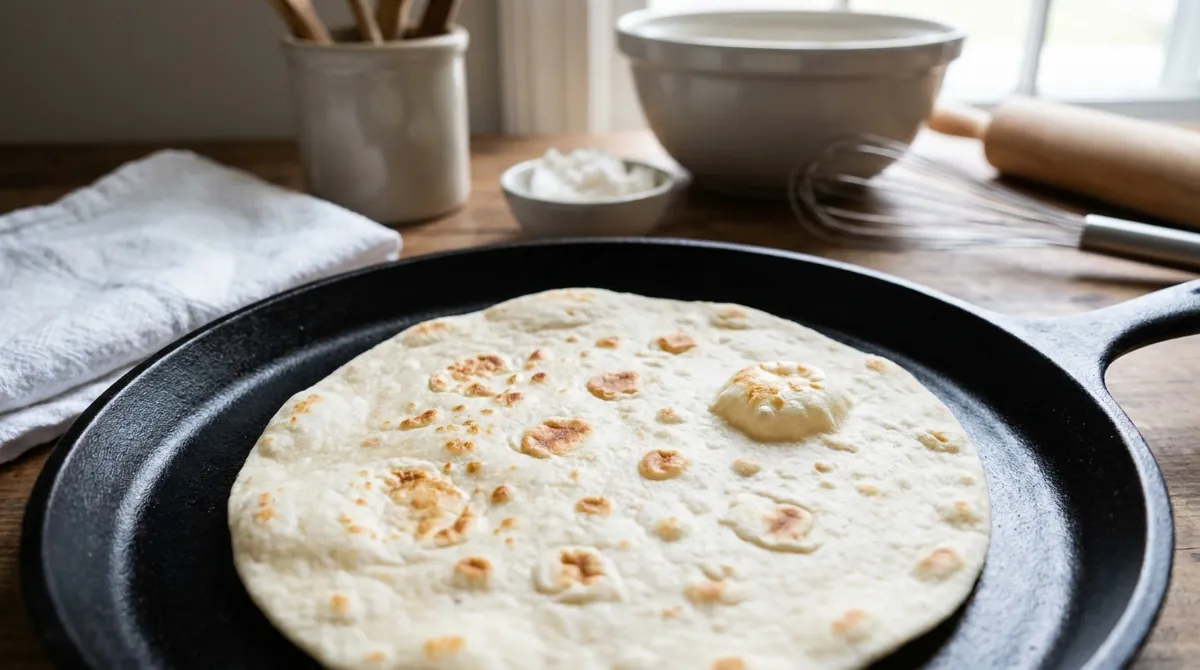
✓ What it should look like
Flour Tortillas
Serves 8 tortillas · eight 8 inch tortillas · 1 hr 5 min total
- 2 cups all-purpose flour (250 g), plus more for rolling
- 1 tsp baking powder
- 1 tsp fine salt
- 1/4 cup lard (60 g), or vegetable shortening
- 2/3 cup warm water (about 160 g), plus 1 to 2 tbsp if needed
Equipment: Cast-iron skillet, Chef's knife and cutting board, Measuring cups and spoons, Mixing bowls, Whisk, Rolling pin
Method
- Whisk the flour, baking powder and salt together in a large bowl.
- Rub the lard into the flour with your fingertips until it looks like coarse, sandy crumbs with no big lumps.
- Add the warm water and stir until a shaggy dough forms. Knead on the counter about 2 minutes, until smooth and soft, not sticky.
- Divide into 8 equal balls, set them in the bowl, cover with a towel and rest 30 minutes. The rest relaxes the gluten so they roll thin.
- On a lightly floured counter, roll each ball into a thin round about 8 inches across, turning it a quarter turn after each pass for an even circle.
- Heat a dry cast iron skillet over medium-high. Cook each tortilla 30 to 45 seconds a side, until it puffs and has light brown spots. Stack them in a clean towel so they steam soft.
Americanized house recipe, written for this site: the four-ingredient method (flour, lard, salt, water, plus a little baking powder) common to Sonoran-style recipes, for example. History: Wikipedia, "Flour tortilla" (Spanish wheat in the 1500s, the northern origin story and its doubters, lard versus shortening); NPR The Salt, "Why Thick Flour Tortillas Never Made It Big And Thin Tortillas Did". mysliceofmexico.ca. Ingredient list follows the source; the method is in our own words.
All sources (3)
Tips
- Keep the skillet hot; a cool pan makes stiff, dry tortillas.
- Cover rolled and cooked tortillas so they do not dry out.
- Keeps 3 days in a zip bag at room temperature, or freeze with paper between them for 2 months. Warm 10 seconds a side in a dry pan.
- Shortening or oil works in place of lard, with a slightly different flavor.
The rules people argue about
What the sources agree on, what they don't, and what is just a good story.
- Flour tortillas were invented in Sonora. Disputed: the northern states are where they are the daily bread, but historians point out that corn was still the Sonoran staple in the 1700s and wheat was grown mostly farther south early on; no first tortilla is documented.
- They were invented as a matzah substitute by Jewish converts. Folklore: repeated often, but there is no firm evidence, and records show the same families eating corn tortillas.
Meatballs of the World

Italian-American Meatballs
Big, tender meatballs braised for an hour in red sauce over spaghetti. The one most Americans grew up with.

Pallottine (Abruzzo Meatballs)
Tiny meatballs, smaller than a marble, tossed right through square spaghetti alla chitarra. No bread at all.

Swedish Meatballs (Köttbullar)
Small, soft meatballs browned in butter, in a cream sauce made from the same pan, with lingonberry jam on the plate.

Danish Frikadeller
Pork meatballs shaped with a spoon and fried slowly in butter, crusty outside and soft in the middle.

Königsberger Klopse
German meatballs that are never fried: poached, then served in a creamy white sauce with capers.

Spanish Albóndigas in Almond Saffron Sauce
The tapas bar classic: small meatballs in a golden sauce thickened with fried almonds and bread.

Mexican Albóndigas with Chipotle and Mint
Soft meatballs with rice and fresh mint inside, simmered in a smoky tomato and chipotle broth.

Izgara Köfte (Turkish Grilled Meatballs)
Small, flat meatballs kneaded hard, rested cold, and charred on a hot grill pan.

Lion's Head Meatballs
Big, soft pork meatballs, stirred into a sticky paste, fried to set, then braised in a savory sauce.

Chicken Tsukune
Japan's chicken meatball: kneaded sticky, grilled on skewers, glazed with sweet soy tare, dipped in egg yolk.