
Focaccia
A tall, airy, olive-oil-soaked flatbread with a crisp golden bottom, dimpled fingertip pockets and flaky salt: made the easy way with an overnight rest in the refrigerator.
🍳Cook alongOne move at a time, with real timers
 Edited by JP Lambiase
Change the estimate
Swaps change the price only: cook any meat to its own safe temperature. Where these numbers come from
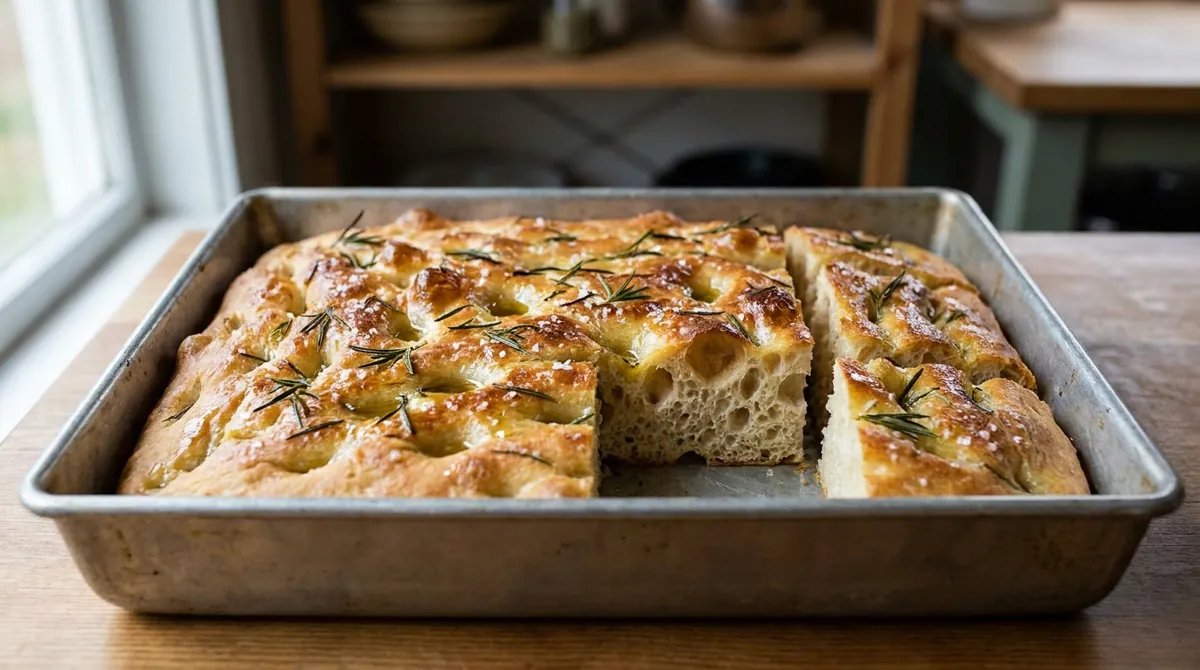
Focaccia is one of the oldest breads still baked the way it started: flat, on a hot surface, with oil. The name goes back to the Latin panis focacius, bread baked on the focus, the hearth. The word focaccia itself is first written down in the 1300s, and some say the Etruscans made something like it even earlier.
Today the bread is most tied to Liguria, the coastal region around Genoa, where focaccia genovese is dimpled, glossy with olive oil and scattered with coarse salt, and eaten for breakfast, dipped in coffee or milk. Other regions have their own: cheese-stuffed focaccia di Recco, potato-and-tomato focaccia in Puglia, sweet egg-and-butter versions at Easter in Venice. The tall pan focaccia with rosemary that Americans bake at home is closer to the Genoese idea with a lot more height.
Why it works the kitchen science
Wet dough (80 percent water)
Lots of steam in the oven makes the big open holes and a tender, chewy crumb.
The overnight cold rise
Slow fermentation builds flavor and lets you skip kneading.
Oil in the pan
The dough fries as it bakes, giving the crisp golden bottom.
Deep dimples
They keep the bread from puffing into a dome and hold pools of oil and salt.
🧰 You'll need 6 items
Everything the steps call for. Tick off what you have before you start.
Appliances
Tools
Step by step
- Step 1
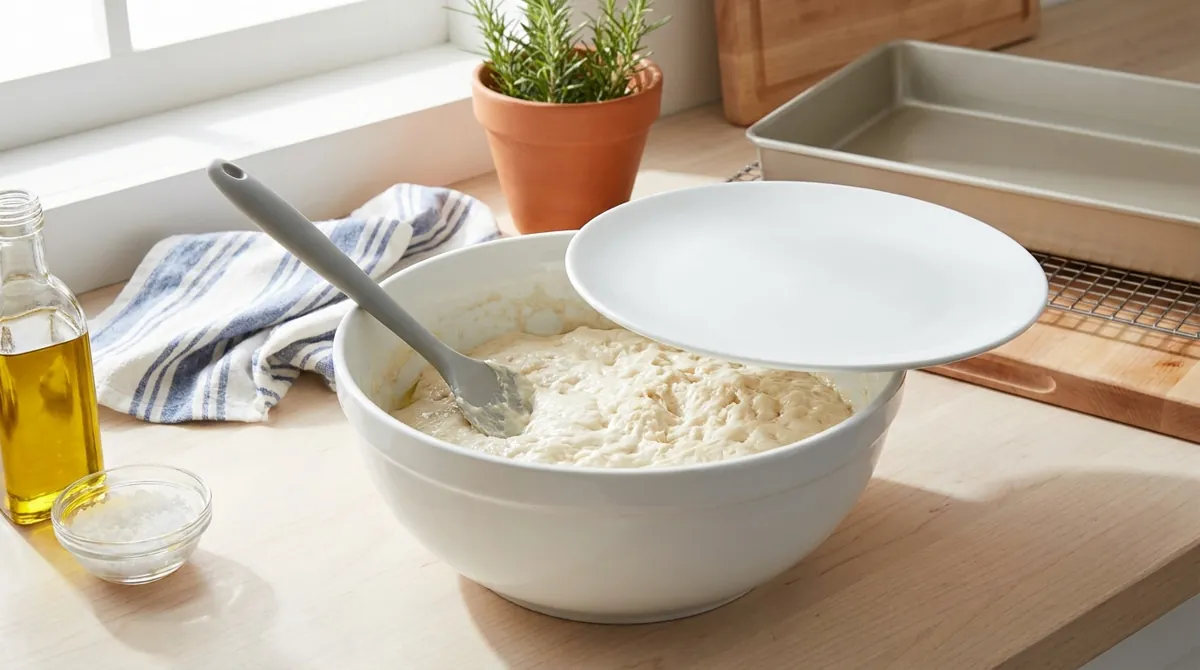
Stir the flour, fine salt and yeast together in a large bowl. Add the water and 2 tablespoons olive oil and mix with a wet hand or spatula until no dry flour remains. The dough will be very wet and sticky. Cover and rest 30 minutes.
- Step 2
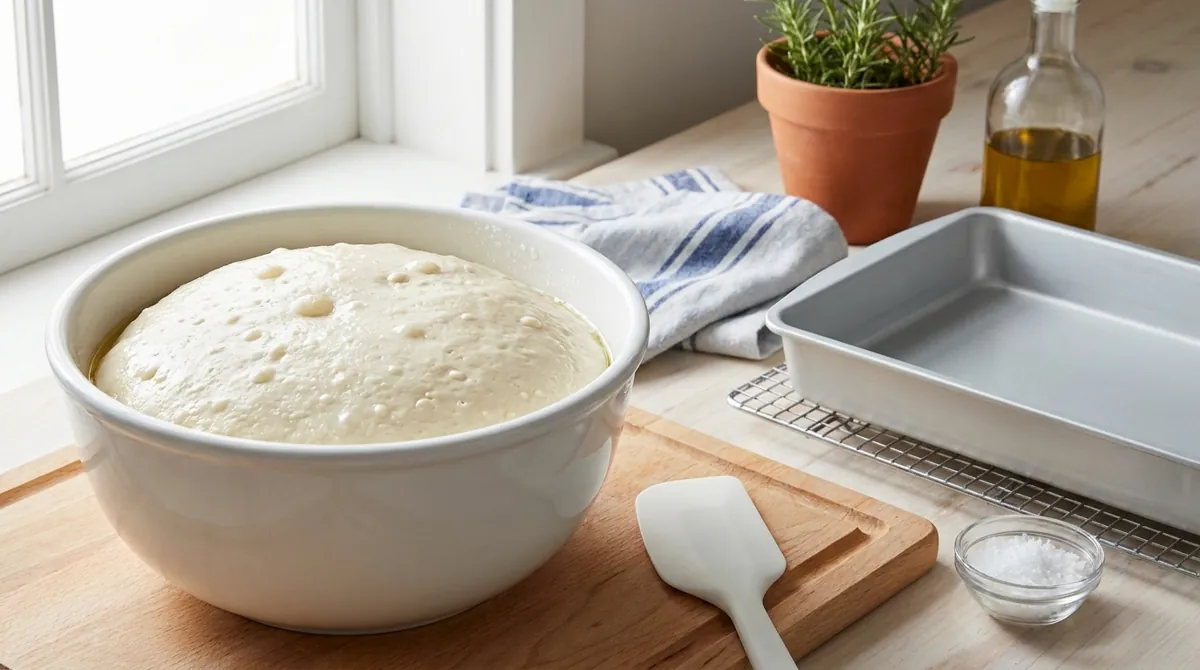
With a wet hand, fold the dough over on itself from the four sides, turning the bowl, 4 to 6 times. Cover and refrigerate 12 to 24 hours; it should roughly double and show bubbles.
- Step 3
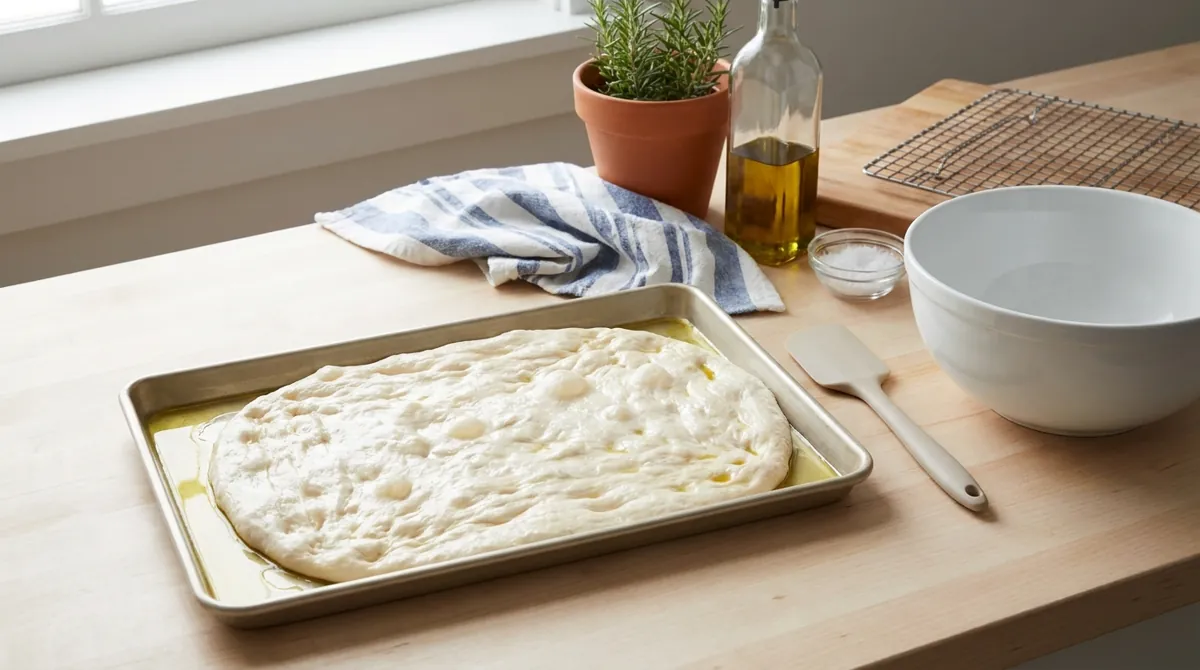
Pour 3 tablespoons olive oil into a 9 by 13 inch metal pan. Slide the cold dough in, turn it once to coat, and gently stretch it toward the corners. If it springs back, rest 15 minutes and stretch again.
- Step 4
Cover and let it proof 1 to 1 1/2 hours at room temperature, until puffy, jiggly and full of bubbles. Heat the oven to 450°F with a rack in the lower third.
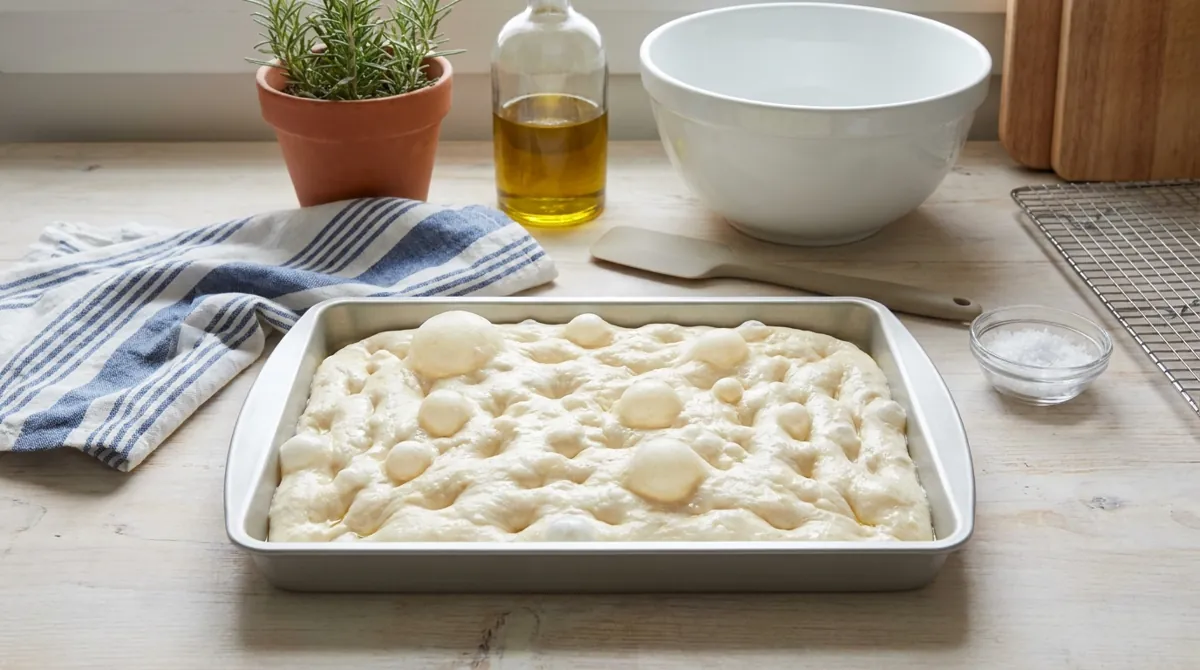
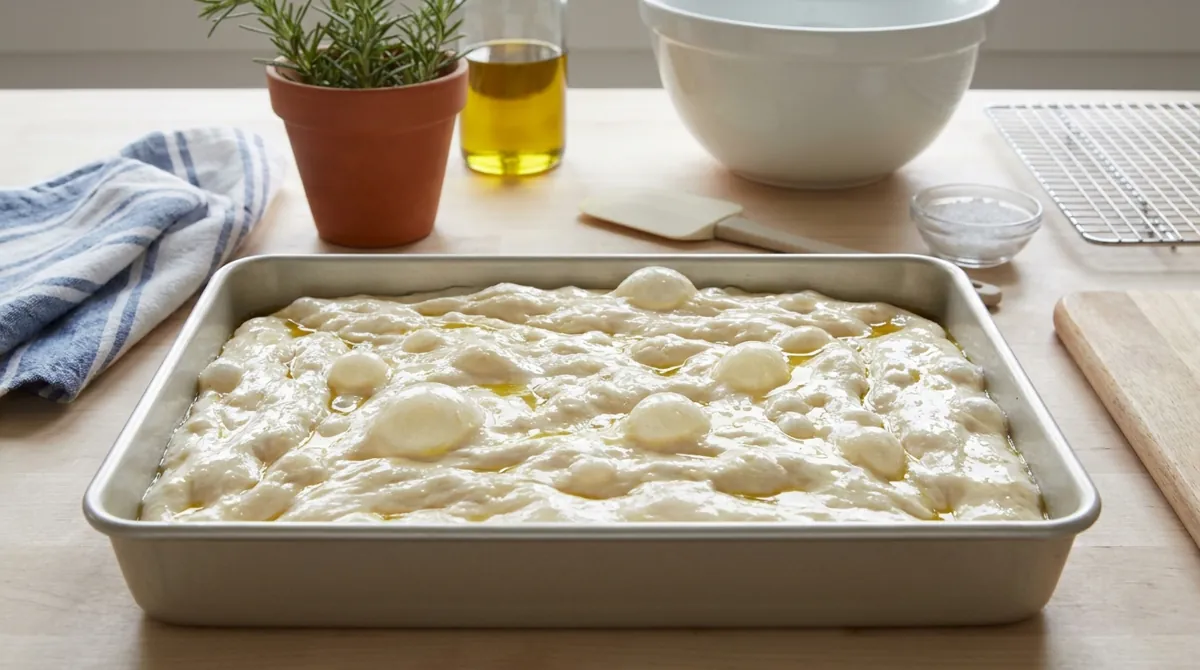
✓ What it should look like - Step 5
Spread a little more olive oil over the top. Press your oiled fingertips straight down to the bottom of the pan all over to make deep dimples. Scatter on the rosemary and flaky salt.
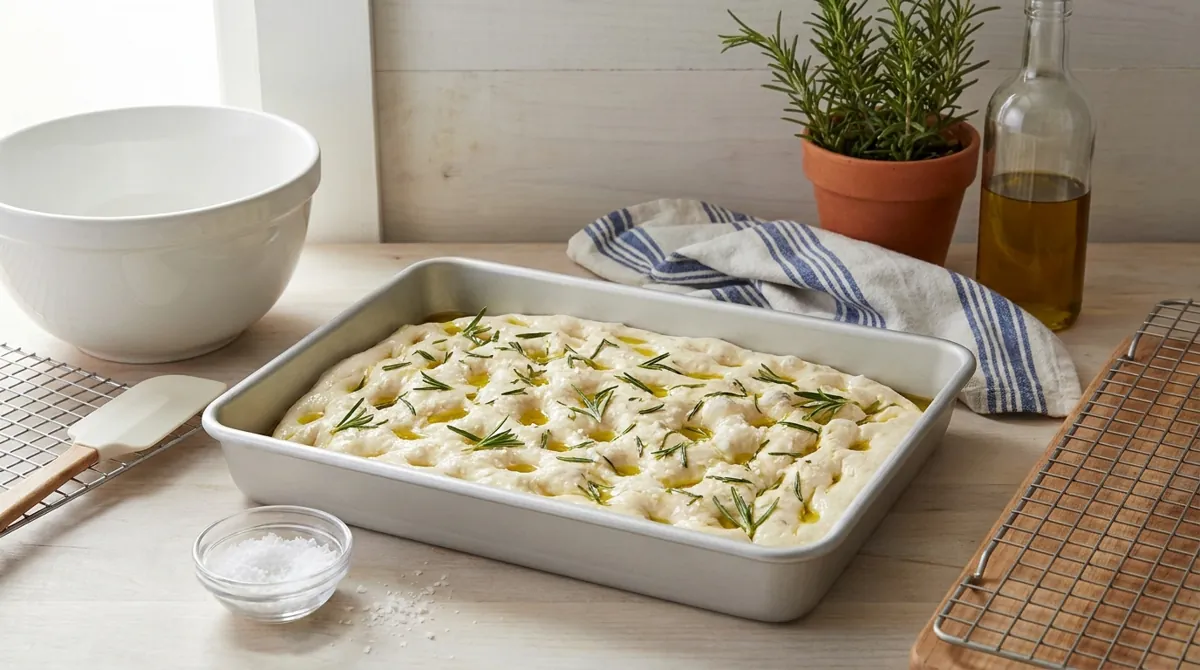
- Step 6
Bake 22 to 28 minutes, until deep golden on top and the bottom is crisp and golden when you lift a corner. Slide it out onto a rack right away, brush with a last spoon of olive oil and cool 15 minutes before cutting into squares.
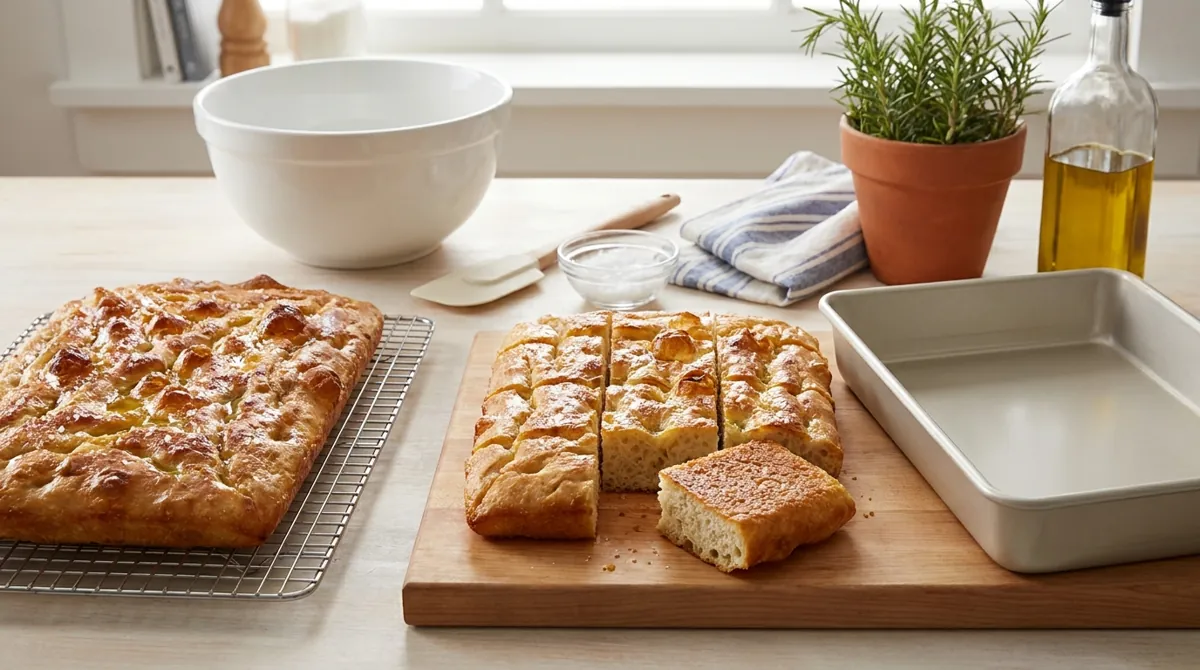
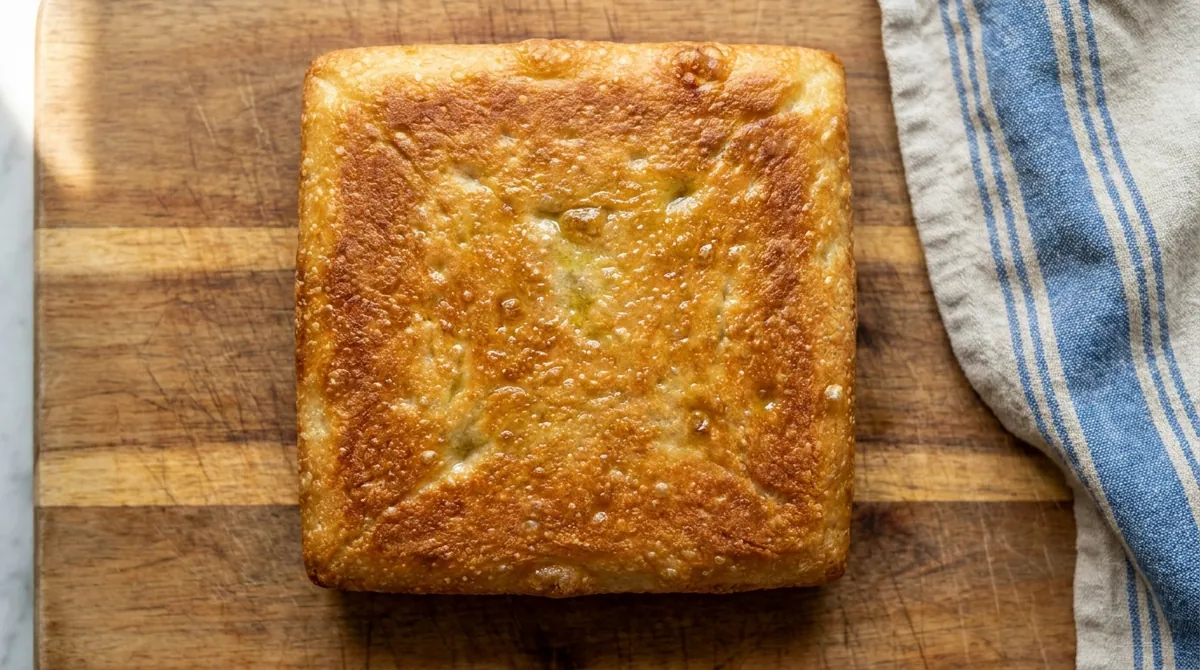
✓ What it should look like
Focaccia
Serves 12 squares · one 9 by 13 inch pan · 14 hr total
Dough
- 500 g bread flour (about 4 cups)
- 400 g lukewarm water (1 3/4 cups)
- 10 g fine salt (2 tsp)
- 4 g instant yeast (1 1/4 tsp)
- 2 tbsp olive oil (28 g) in the dough
For the pan and top
- 1/3 cup olive oil (72 g), divided: some in the pan, some on top
- 1 tsp flaky sea salt
- 2 sprigs fresh rosemary, leaves only
Equipment: Oven, Chef's knife and cutting board, Measuring cups and spoons, Mixing bowls, Spatula, Pastry brush
Method
- Stir the flour, fine salt and yeast together in a large bowl. Add the water and 2 tablespoons olive oil and mix with a wet hand or spatula until no dry flour remains. The dough will be very wet and sticky. Cover and rest 30 minutes.
- With a wet hand, fold the dough over on itself from the four sides, turning the bowl, 4 to 6 times. Cover and refrigerate 12 to 24 hours; it should roughly double and show bubbles.
- Pour 3 tablespoons olive oil into a 9 by 13 inch metal pan. Slide the cold dough in, turn it once to coat, and gently stretch it toward the corners. If it springs back, rest 15 minutes and stretch again.
- Cover and let it proof 1 to 1 1/2 hours at room temperature, until puffy, jiggly and full of bubbles. Heat the oven to 450°F with a rack in the lower third.
- Spread a little more olive oil over the top. Press your oiled fingertips straight down to the bottom of the pan all over to make deep dimples. Scatter on the rosemary and flaky salt.
- Bake 22 to 28 minutes, until deep golden on top and the bottom is crisp and golden when you lift a corner. Slide it out onto a rack right away, brush with a last spoon of olive oil and cool 15 minutes before cutting into squares.
Americanized house recipe, written for this site, following the high-hydration overnight method used by Serious Eats and King Arthur Baking for pan focaccia (about 80 percent water, long cold rise, 450°F bake). History: Wikipedia, "Focaccia" (panis focacius, from Latin focus, hearth; first attested in the 14th century; Etruscan origin suggested by some; Ligurian and regional variants). King Arthur Baking. Ingredient list follows the source; the method is in our own words.
All sources (2)
Tips
- Use a metal pan; glass browns the bottom less.
- Oil your hands, not flour them. Flour just sticks to this dough.
- Best the day it is baked. Wrap tightly for 2 days, or freeze for a month and rewarm at 350°F.
- Try cherry tomatoes and olives pressed in, or thin slices of onion.
The rules people argue about
What the sources agree on, what they don't, and what is just a good story.
- Real focaccia is thin. Disputed: Ligurian focaccia genovese is fairly thin and eaten for breakfast; the tall, airy pan focaccia common in America is a modern home-baking style.
Meatballs of the World

Italian-American Meatballs
Big, tender meatballs braised for an hour in red sauce over spaghetti. The one most Americans grew up with.

Pallottine (Abruzzo Meatballs)
Tiny meatballs, smaller than a marble, tossed right through square spaghetti alla chitarra. No bread at all.

Swedish Meatballs (Köttbullar)
Small, soft meatballs browned in butter, in a cream sauce made from the same pan, with lingonberry jam on the plate.

Danish Frikadeller
Pork meatballs shaped with a spoon and fried slowly in butter, crusty outside and soft in the middle.

Königsberger Klopse
German meatballs that are never fried: poached, then served in a creamy white sauce with capers.

Spanish Albóndigas in Almond Saffron Sauce
The tapas bar classic: small meatballs in a golden sauce thickened with fried almonds and bread.

Mexican Albóndigas with Chipotle and Mint
Soft meatballs with rice and fresh mint inside, simmered in a smoky tomato and chipotle broth.

Izgara Köfte (Turkish Grilled Meatballs)
Small, flat meatballs kneaded hard, rested cold, and charred on a hot grill pan.

Lion's Head Meatballs
Big, soft pork meatballs, stirred into a sticky paste, fried to set, then braised in a savory sauce.

Chicken Tsukune
Japan's chicken meatball: kneaded sticky, grilled on skewers, glazed with sweet soy tare, dipped in egg yolk.