
Spinach and Parmesan Frittata
Eight eggs, soft onion, spinach and Parmesan, set on the stove and finished in the oven: the Italian skillet egg dish that turns leftovers into brunch.
🍳Cook alongOne move at a time, with real timers
 Edited by JP Lambiase
Change the estimate
Swaps change the price only: cook any meat to its own safe temperature. Where these numbers come from
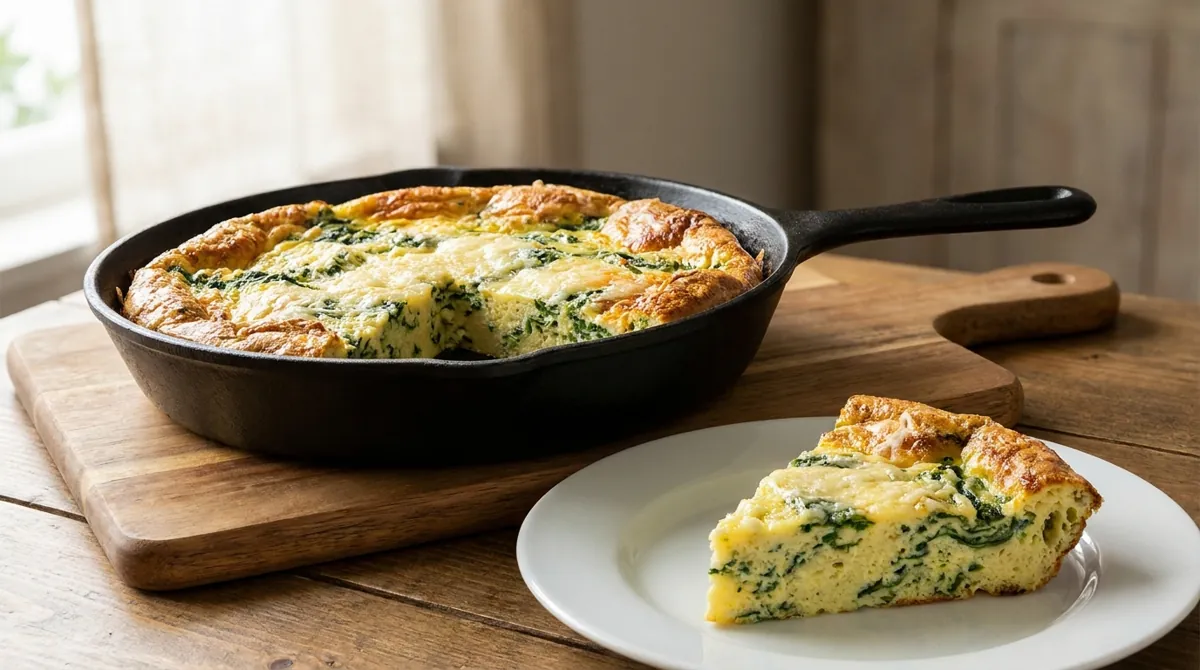
Frittata comes from the Italian verb friggere, to fry. For a long time that word covered almost any egg dish cooked in a pan in Italy, and the frittata is the open-faced, firm, sliceable version of it: beaten eggs with whatever is on hand, cooked slowly and served warm or at room temperature, often as a lunch or a picnic.
Where it started is not settled. Naples claims it as a local invention, and some writers link it to much older Roman egg dishes, but no one can point to a first recipe, a date or a single inventor. What is clear is that it is a dish of thrift: vegetables, cheese, cooked pasta or bread that need using up.
Why it works the kitchen science
Cooking the vegetables first
Spinach and onion hold a lot of water, and getting it out in the pan keeps the frittata from turning soggy.
Starting on the stove, finishing in the oven
The bottom sets gently while the oven cooks the top without a flip.
A splash of half-and-half
The extra fat makes the eggs creamy and tender rather than rubbery.
🧰 You'll need 7 items
Everything the steps call for. Tick off what you have before you start.
Appliances
Pans and pots
Tools
Step by step
- Step 1
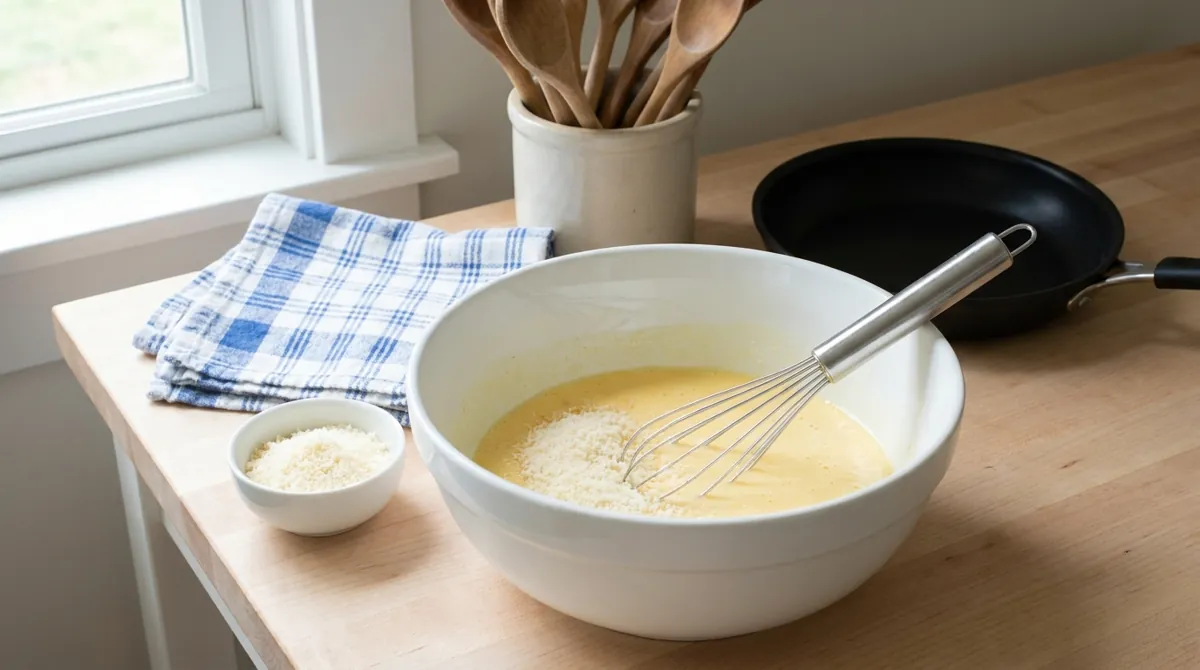
Heat the oven to 375°F. Whisk the eggs, half-and-half, Parmesan, salt and pepper in a bowl until no streaks of white remain.
- Step 2
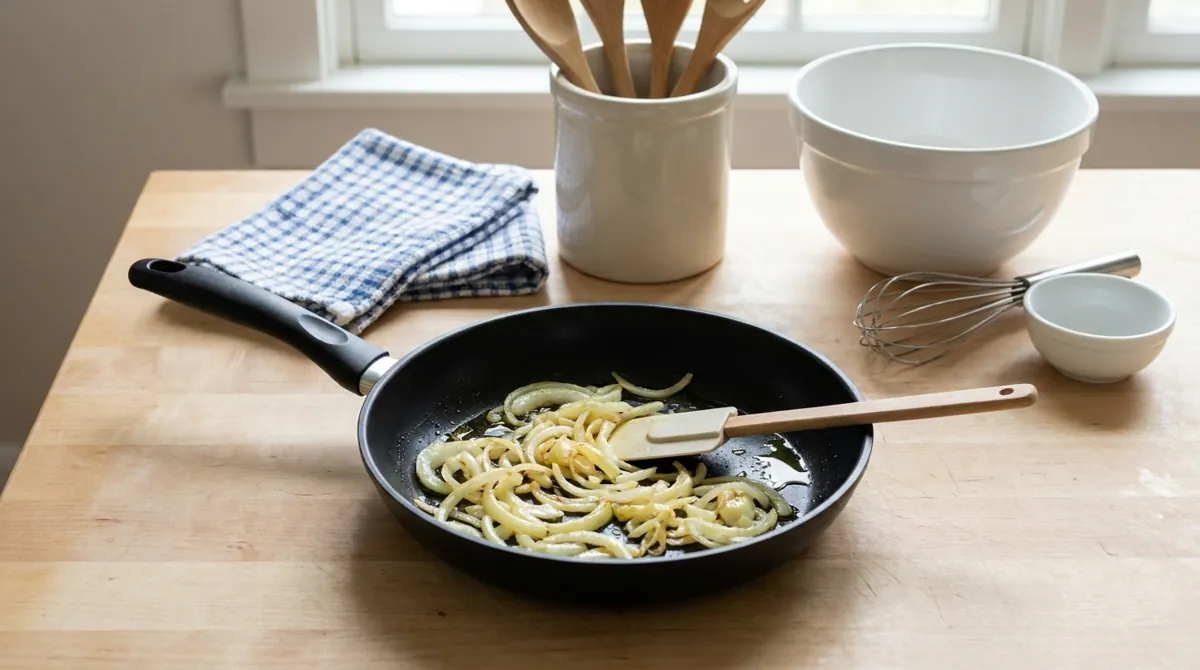
Heat the olive oil in a 10 inch ovenproof nonstick skillet over medium heat. Cook the onion 5 to 6 minutes, until soft and just starting to turn golden.
- Step 3
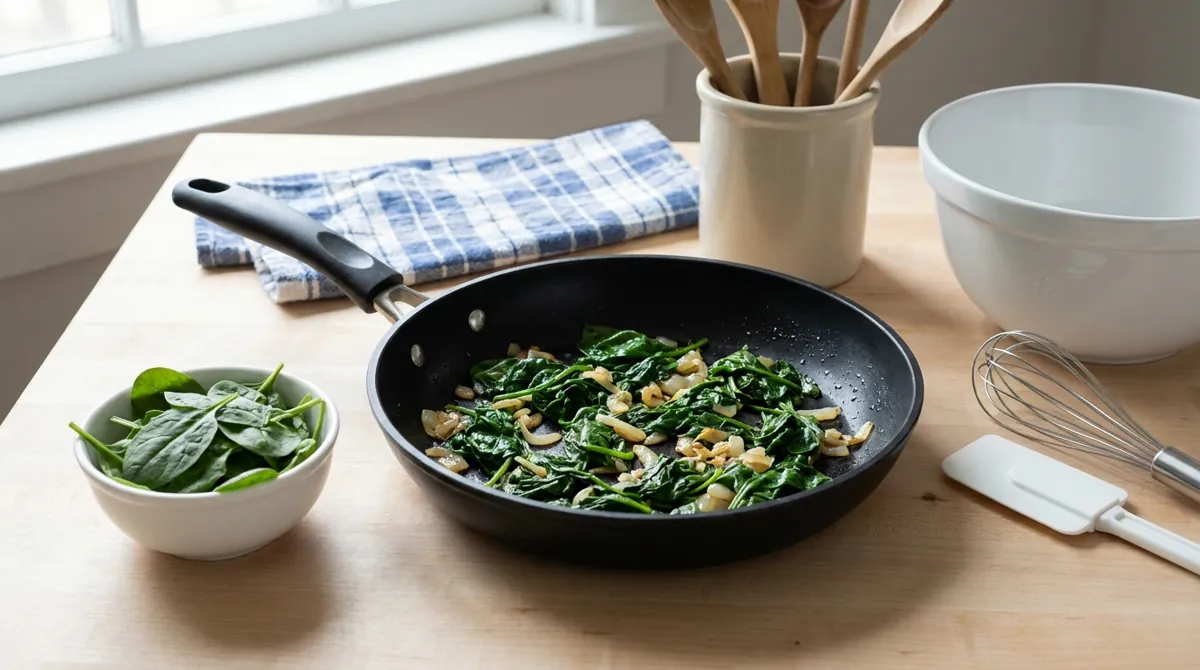
Add the spinach by handfuls and cook, turning, until fully wilted and the pan is nearly dry, about 2 minutes.
- Step 4
Pour in the egg mixture and tilt the pan so it spreads evenly. Cook, without stirring, 3 to 4 minutes, until the edges are set and the center is still wet.
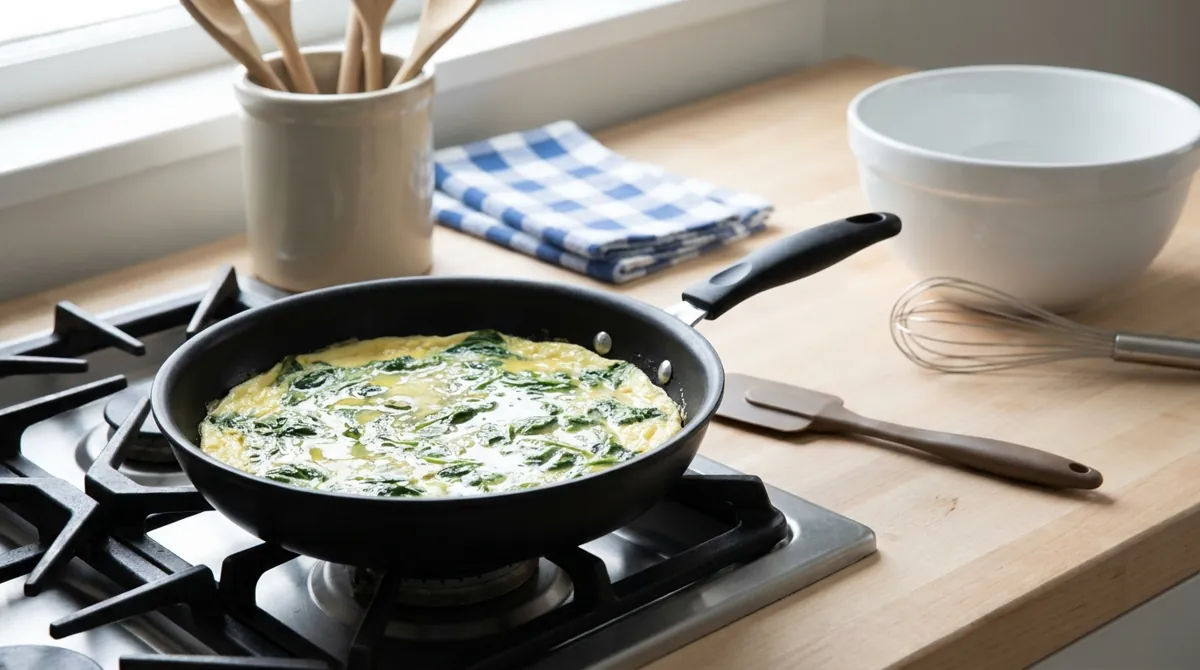
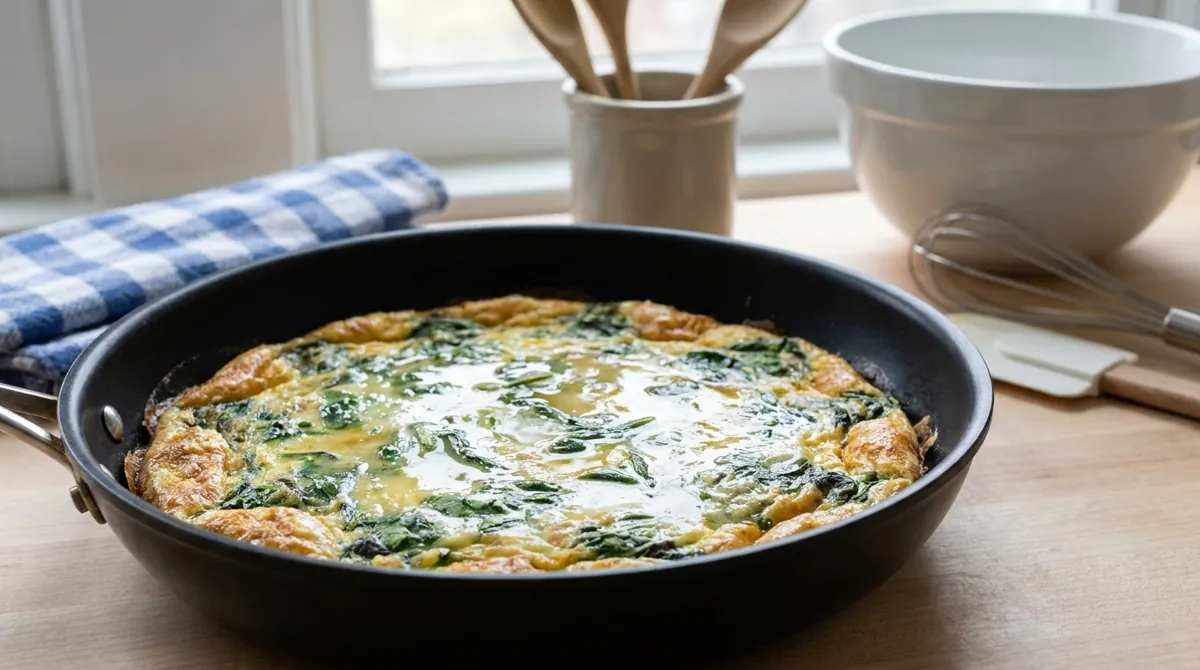
✓ What it should look like - Step 5
Move the skillet to the oven and bake 12 to 15 minutes, until the top is puffed and lightly golden and the center no longer jiggles (160°F inside).
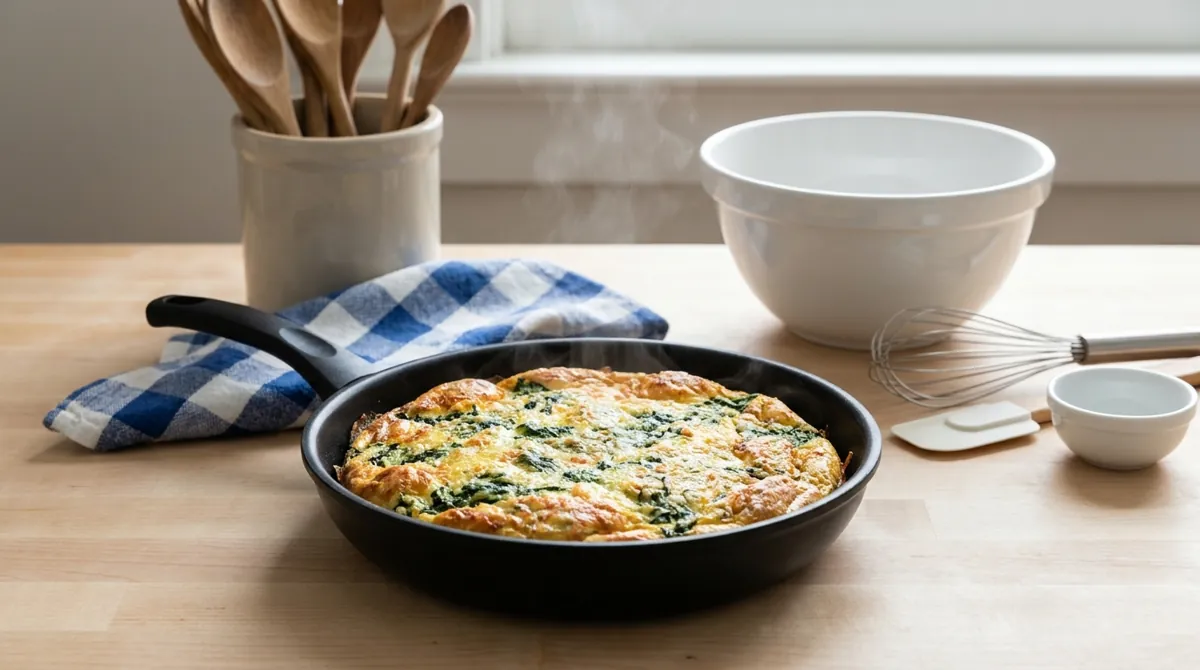
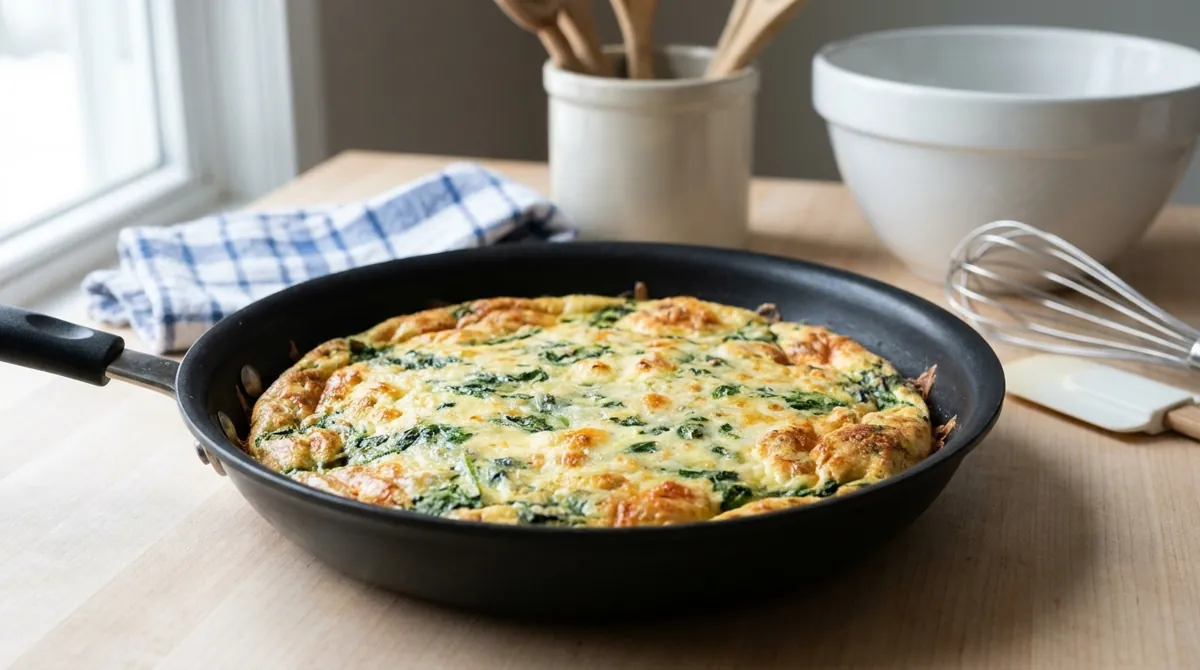
✓ What it should look like - Step 6
Rest it 5 minutes in the pan, run a spatula around the edge, slide it onto a board and cut into wedges. Serve warm or at room temperature.
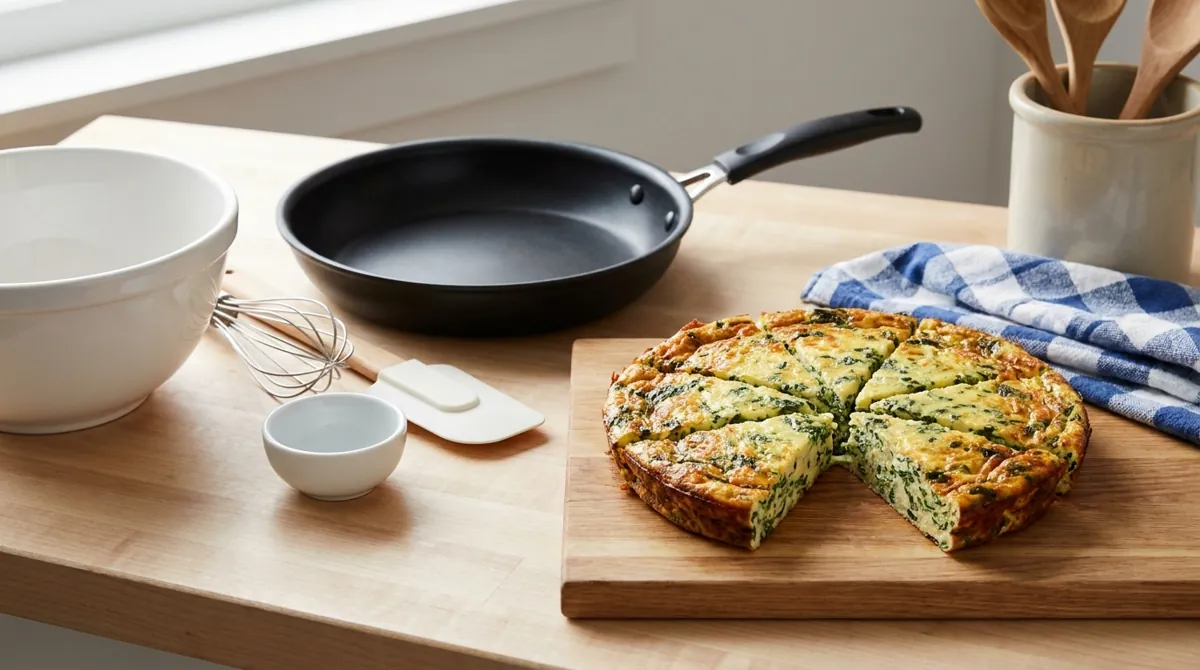
Spinach and Parmesan Frittata
Serves 6 wedges · one 10 inch frittata · 35 min total
- 8 large eggs (400 g)
- 1/2 cup half-and-half (120 g)
- 1/2 cup finely grated Parmesan (50 g)
- 3/4 tsp fine salt and plenty of black pepper
- 1 tbsp olive oil (14 g)
- 1 small yellow onion (100 g), thinly sliced
- 5 oz baby spinach (142 g)
Equipment: Oven, Nonstick skillet, Chef's knife and cutting board, Measuring cups and spoons, Mixing bowls, Whisk, Spatula
Method
- Heat the oven to 375°F. Whisk the eggs, half-and-half, Parmesan, salt and pepper in a bowl until no streaks of white remain.
- Heat the olive oil in a 10 inch ovenproof nonstick skillet over medium heat. Cook the onion 5 to 6 minutes, until soft and just starting to turn golden.
- Add the spinach by handfuls and cook, turning, until fully wilted and the pan is nearly dry, about 2 minutes.
- Pour in the egg mixture and tilt the pan so it spreads evenly. Cook, without stirring, 3 to 4 minutes, until the edges are set and the center is still wet.
- Move the skillet to the oven and bake 12 to 15 minutes, until the top is puffed and lightly golden and the center no longer jiggles (160°F inside).
- Rest it 5 minutes in the pan, run a spatula around the edge, slide it onto a board and cut into wedges. Serve warm or at room temperature.
Americanized house recipe, written for this site. History: Wikipedia, "Frittata"; Food Network, "What Is a Frittata?"; Recipes from Italy, "Traditional Italian Frittata". en.wikipedia.org. Ingredient list follows the source; the method is in our own words.
All sources (3)
Tips
- A rule of thumb is about one egg per inch of pan: eight eggs for a 10 inch skillet.
- Swap the filling for roasted peppers, zucchini, ham, leftover potatoes or cooked pasta, as long as it is cooked and dry.
- Do not overbake; carryover heat finishes it, and overcooked frittata turns dry and spongy.
- Leftovers keep 3 days in the fridge and are good cold in a sandwich.
The rules people argue about
What the sources agree on, what they don't, and what is just a good story.
- You must add milk or cream. Disputed: some Italian cooks use eggs alone for a denser result; dairy is optional and gives a softer, creamier one.
- It originated in Naples. Disputed: Naples has a claim, but no source proves a first place or date.
Meatballs of the World

Italian-American Meatballs
Big, tender meatballs braised for an hour in red sauce over spaghetti. The one most Americans grew up with.

Pallottine (Abruzzo Meatballs)
Tiny meatballs, smaller than a marble, tossed right through square spaghetti alla chitarra. No bread at all.

Swedish Meatballs (Köttbullar)
Small, soft meatballs browned in butter, in a cream sauce made from the same pan, with lingonberry jam on the plate.

Danish Frikadeller
Pork meatballs shaped with a spoon and fried slowly in butter, crusty outside and soft in the middle.

Königsberger Klopse
German meatballs that are never fried: poached, then served in a creamy white sauce with capers.

Spanish Albóndigas in Almond Saffron Sauce
The tapas bar classic: small meatballs in a golden sauce thickened with fried almonds and bread.

Mexican Albóndigas with Chipotle and Mint
Soft meatballs with rice and fresh mint inside, simmered in a smoky tomato and chipotle broth.

Izgara Köfte (Turkish Grilled Meatballs)
Small, flat meatballs kneaded hard, rested cold, and charred on a hot grill pan.

Lion's Head Meatballs
Big, soft pork meatballs, stirred into a sticky paste, fried to set, then braised in a savory sauce.

Chicken Tsukune
Japan's chicken meatball: kneaded sticky, grilled on skewers, glazed with sweet soy tare, dipped in egg yolk.