
Garlic Bread
A crusty loaf split lengthwise, spread with garlic butter and parsley, baked in foil and broiled with Parmesan: the Italian-American side that grew out of Italy's olive oil toast.
🍳Cook alongOne move at a time, with real timers
 Edited by JP Lambiase
Change the estimate
Swaps change the price only: cook any meat to its own safe temperature. Where these numbers come from
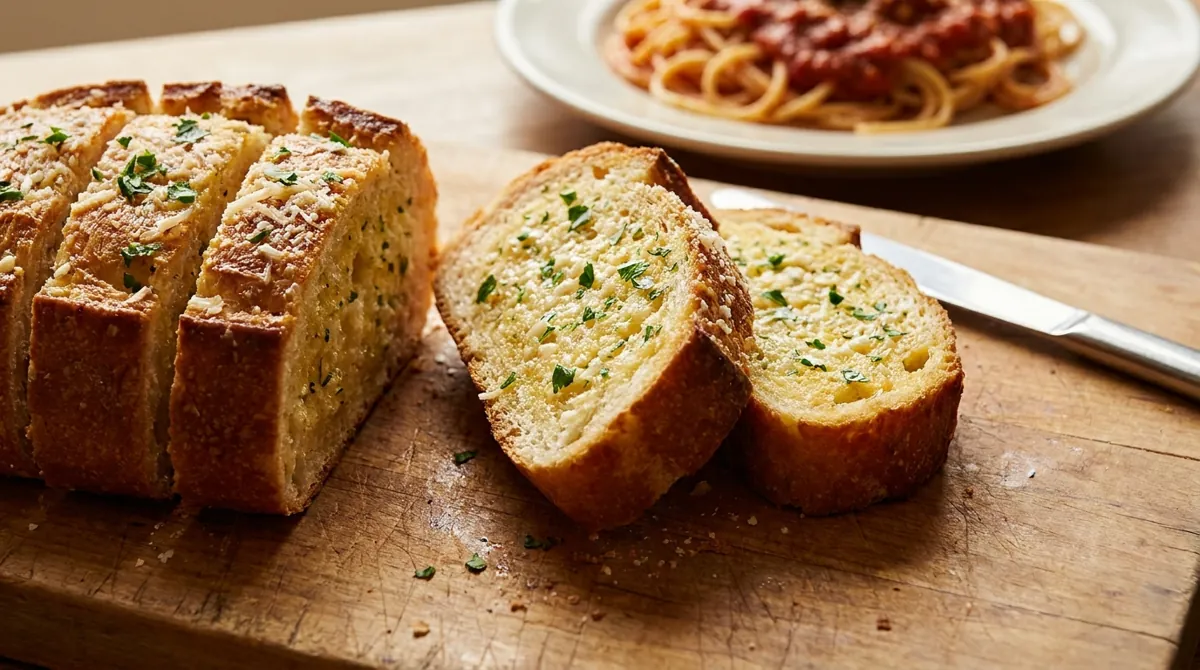
Garlic bread starts in Italy as bruschetta: a slice of bread toasted over coals, rubbed with garlic and soaked in olive oil. The name comes from the Roman dialect verb bruscare, to toast over coals, and the cookbook writer Marcella Hazan thought the idea was probably nearly as old as olive oil itself. In Tuscany it is called fettunta, "greasy slice", and it is still eaten plain each November to taste the season's new oil.
The soft, buttery loaf most Americans know is an American dish. One explanation is that Italian immigrants swapped butter for olive oil, which was scarce and expensive in the US in the first half of the 20th century. Garlic bread has been on American restaurant menus since at least the 1950s, usually next to a plate of spaghetti, and Cole's Quality Foods of Muskegon, Michigan, developed frozen garlic bread in the 1970s. Its relatives followed the same path: garlic knots came out of Brooklyn in the 1940s, and Texas toast was born in Texas in the same decade.
Why it works the kitchen science
Softened butter, not melted
It stays on the surface and soaks in slowly instead of running straight through and leaving the bread greasy.
🧰 You'll need 6 items
Everything the steps call for. Tick off what you have before you start.
Appliances
Pans and pots
Tools
Supplies
Step by step
- Step 1
Heat the oven to 350°F with a rack in the middle and another at the top. Leave the butter out until it is soft enough to spread.
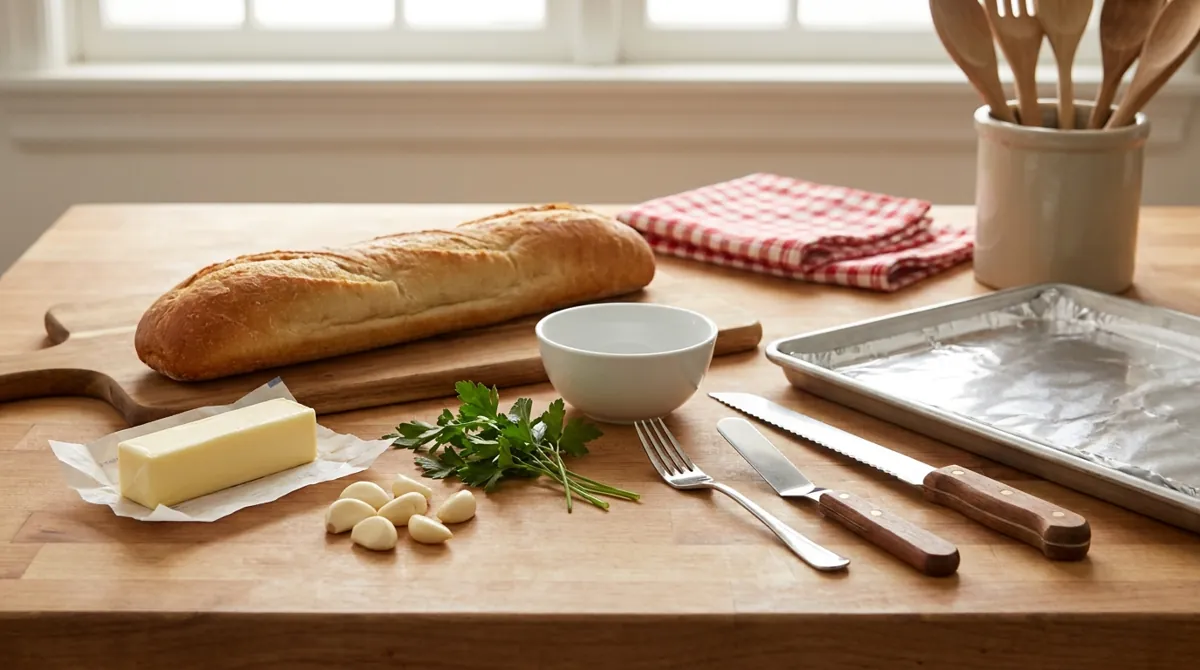
- Step 2
In a small bowl, mash the butter, olive oil, garlic, parsley, salt and pepper together with a fork until evenly mixed and spreadable.
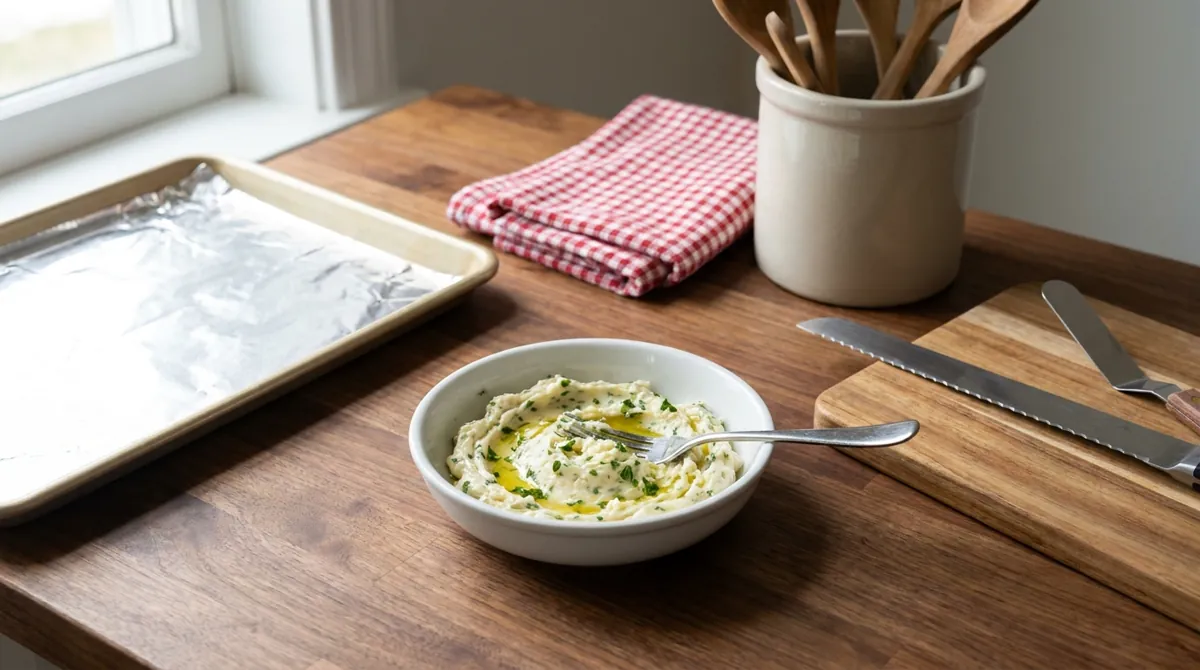
- Step 3
Split the loaf in half lengthwise with a serrated bread knife, so you have two long planks.
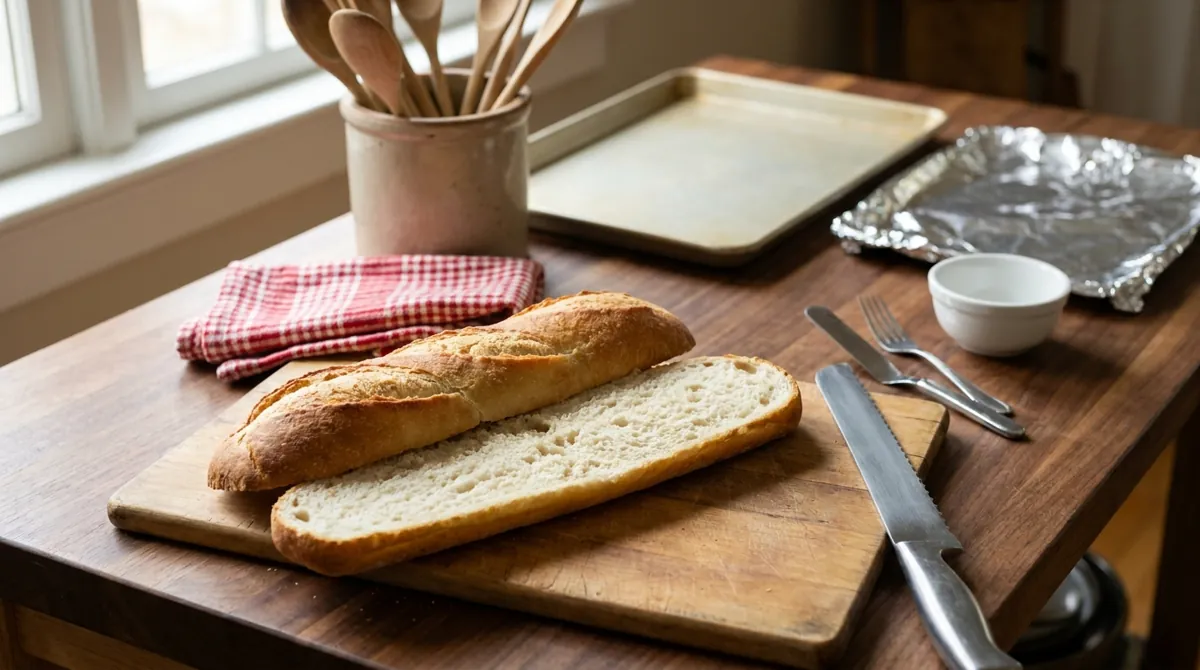
- Step 4
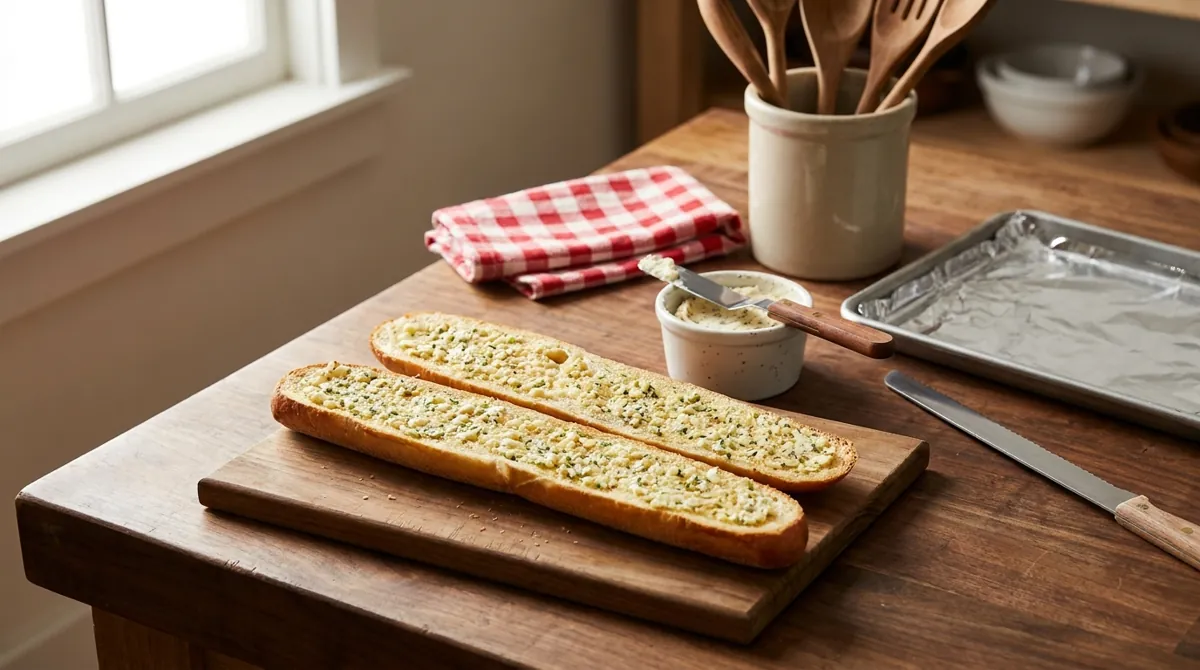
Spread the garlic butter over both cut sides, right out to the crust.
- Step 5
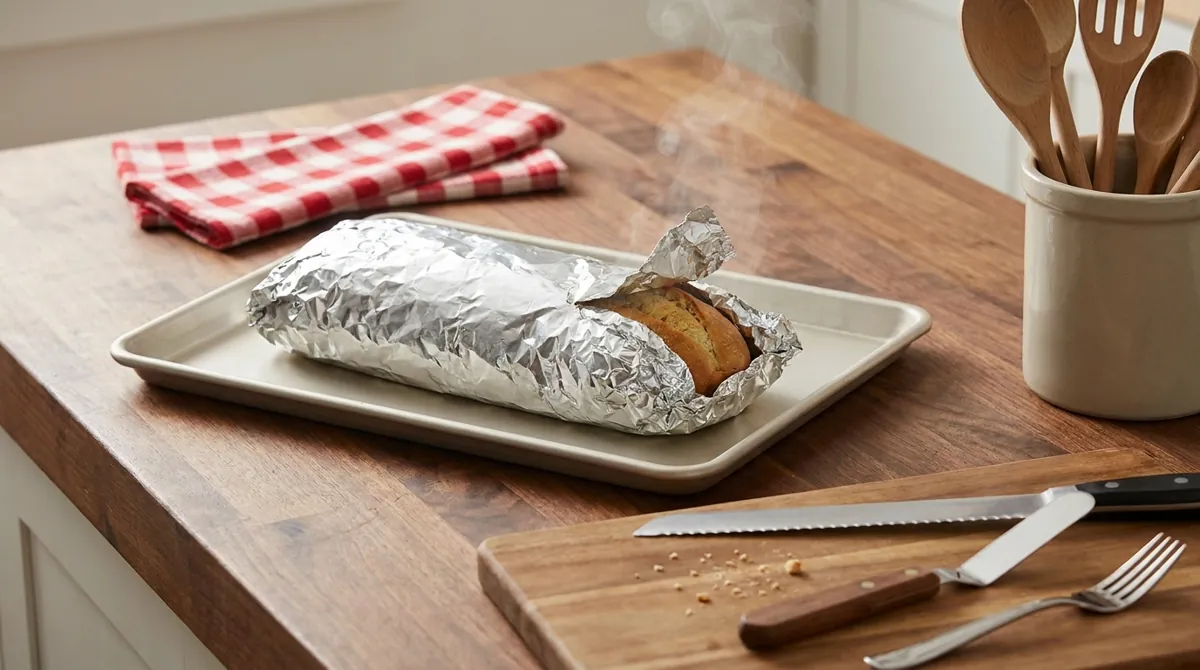
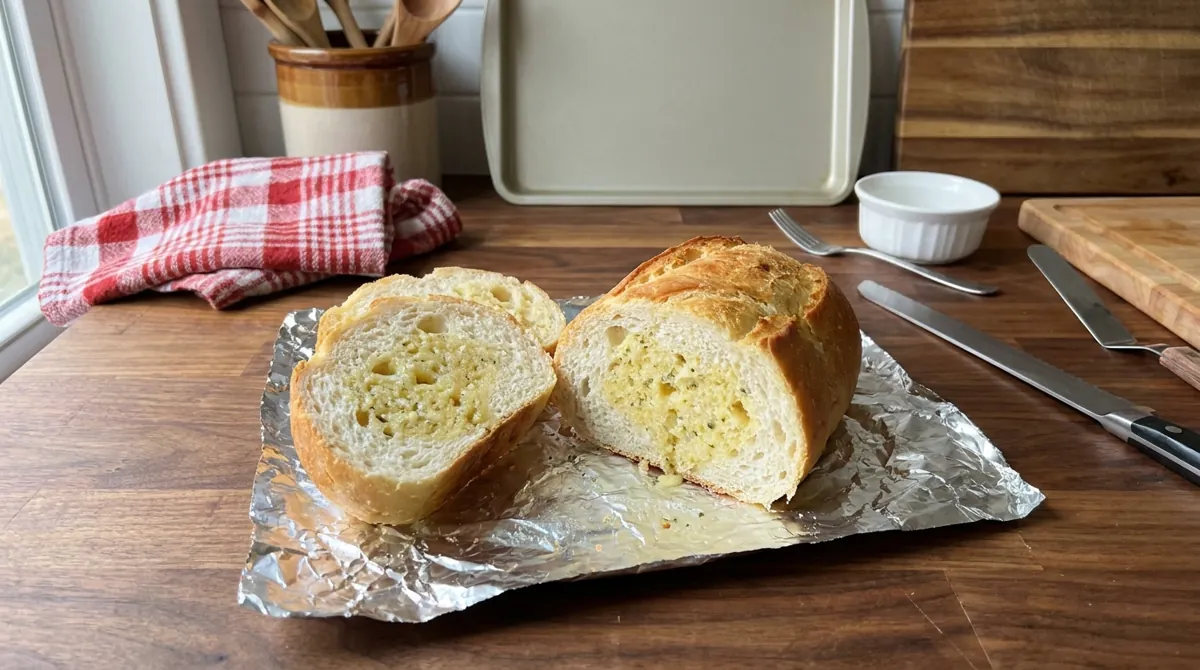
Press the halves back together, buttered sides in, wrap the loaf in foil and set it on a rimmed sheet pan. Bake on the middle rack for 10 minutes, until the butter has melted into the crumb.
✓ What it should look like - Step 6
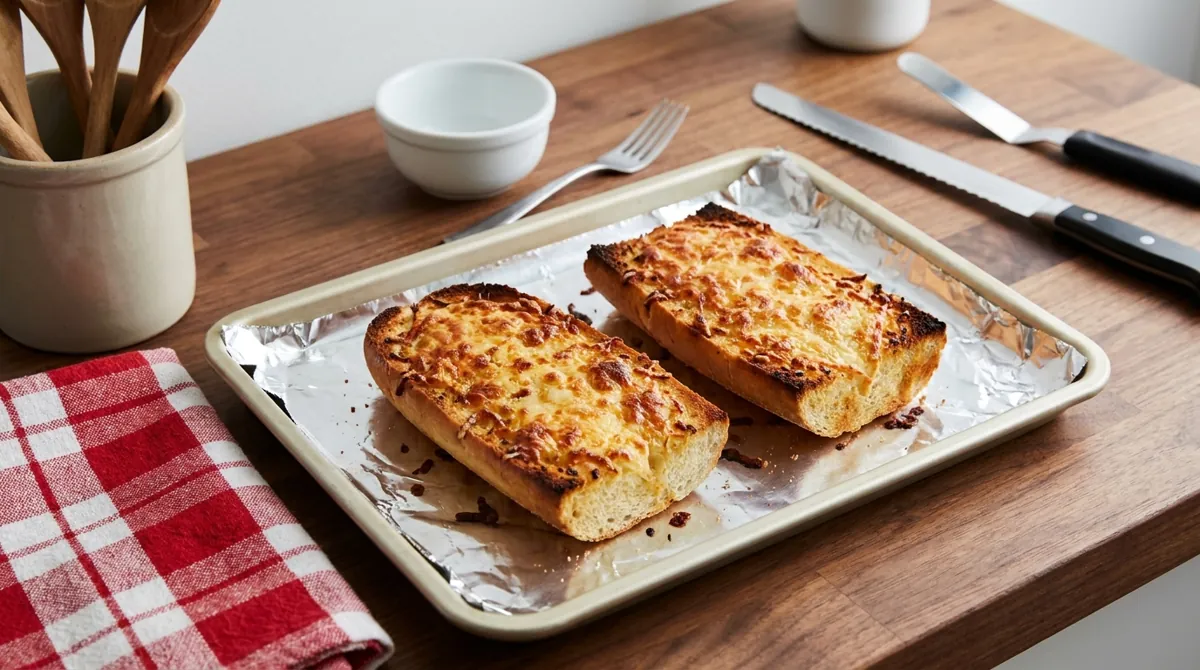
Unwrap the loaf, lay the halves cut side up on the foil and sprinkle with the Parmesan and pepper flakes. Turn the oven to broil and broil on the top rack for 2 to 3 minutes, until the edges are deep golden brown and crisp. Watch it the whole time; it goes from golden to burnt fast.
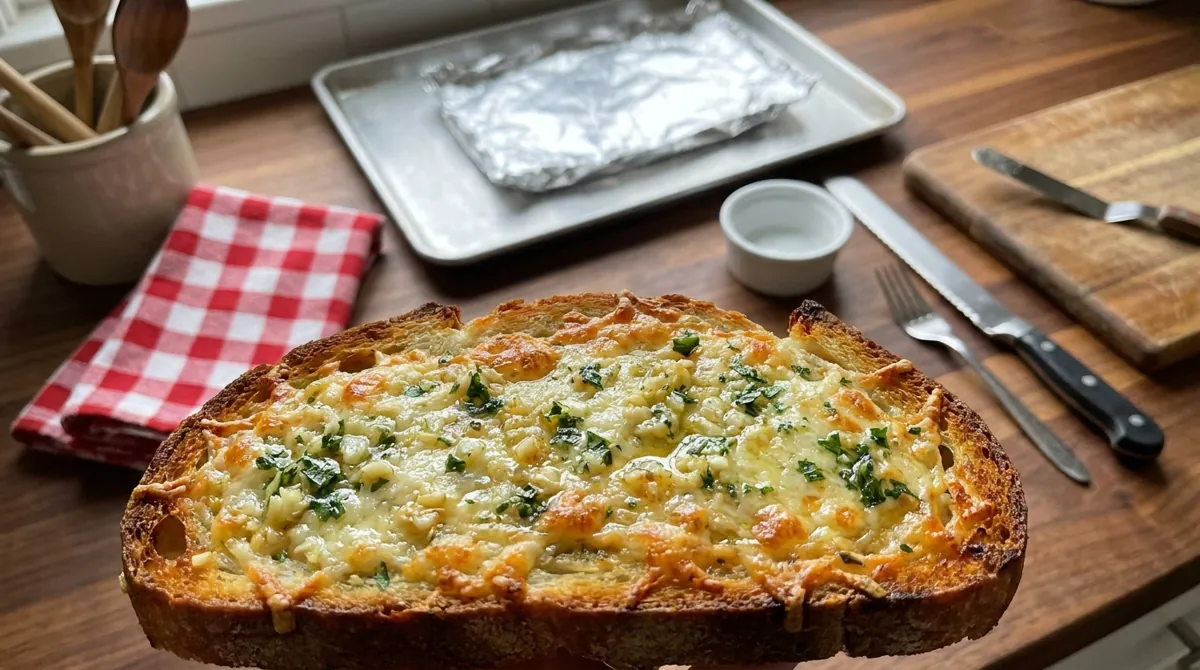
✓ What it should look like - Step 7
Move to a cutting board, cut each half crosswise into 8 thick pieces and serve hot.
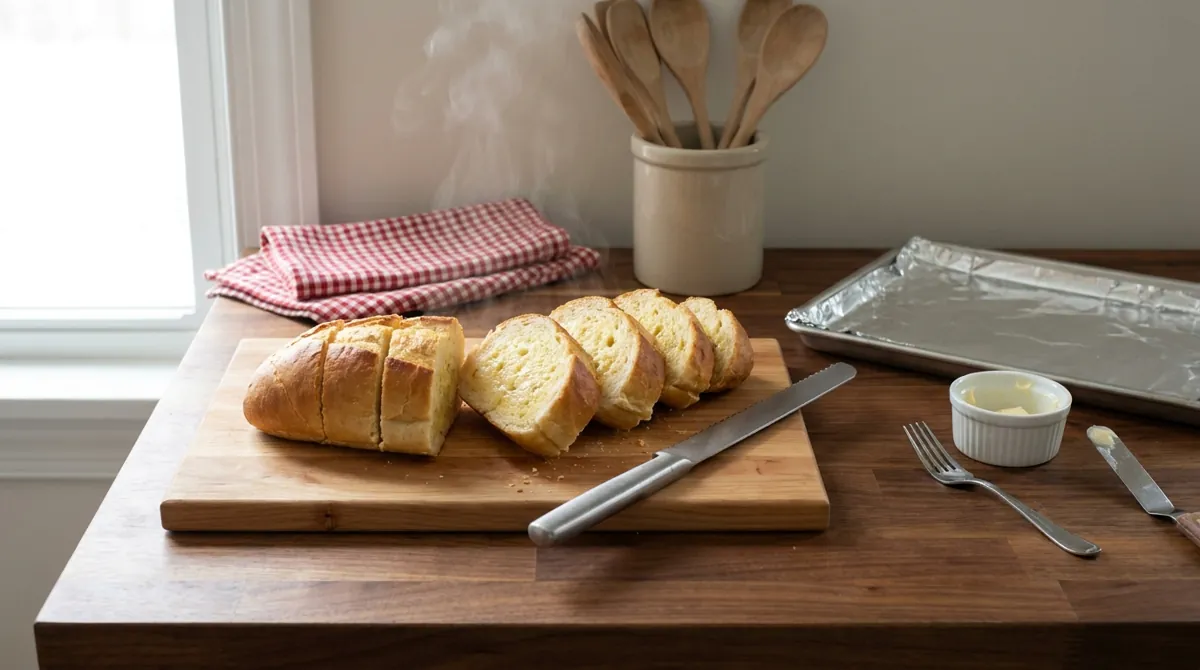
Garlic Bread
Serves 8 · one loaf, 16 thick pieces · 25 min total
Garlic butter
- 1/2 cup unsalted butter (113 g), softened
- 1 tbsp extra-virgin olive oil (14 g)
- 6 large garlic cloves, finely minced or grated (about 2 tbsp, 18 g)
- 2 tbsp finely chopped flat-leaf parsley (8 g)
- 1/2 tsp fine salt
- A few grinds of black pepper
Bread
- 1 loaf crusty Italian or French bread, about 16 inches long (about 1 lb, 450 g)
- 1/4 cup finely grated Parmesan (25 g)
- Red pepper flakes, optional
Equipment: Oven, Rimmed baking sheet, Chef's knife and cutting board, Measuring cups and spoons, Mixing bowls, Aluminum foil
Method
- Heat the oven to 350°F with a rack in the middle and another at the top. Leave the butter out until it is soft enough to spread.
- In a small bowl, mash the butter, olive oil, garlic, parsley, salt and pepper together with a fork until evenly mixed and spreadable.
- Split the loaf in half lengthwise with a serrated bread knife, so you have two long planks.
- Spread the garlic butter over both cut sides, right out to the crust.
- Press the halves back together, buttered sides in, wrap the loaf in foil and set it on a rimmed sheet pan. Bake on the middle rack for 10 minutes, until the butter has melted into the crumb.
- Unwrap the loaf, lay the halves cut side up on the foil and sprinkle with the Parmesan and pepper flakes. Turn the oven to broil and broil on the top rack for 2 to 3 minutes, until the edges are deep golden brown and crisp. Watch it the whole time; it goes from golden to burnt fast.
- Move to a cutting board, cut each half crosswise into 8 thick pieces and serve hot.
Americanized house recipe, written for this site, adapted from King Arthur Baking's foil-then-broil method: King Arthur Baking, "Supreme Garlic Bread". History: Wikipedia, "Garlic bread" (descends from bruschetta, contemporary garlic bread originated in the US, butter for olive oil as one proposed origin, menus since at least the 1950s, Cole's frozen garlic bread in the 1970s, garlic knots and Texas toast in the 1940s); Wikipedia, "Bruschetta" (bruscare, Marcella Hazan, fettunta and the new oil). King Arthur Baking. Ingredient list follows the source; the method is in our own words.
All sources (3)
Tips
- Grate the garlic on a fine grater or mash it with salt for a smoother butter with no harsh raw bits.
- Make the garlic butter up to a week ahead and keep it in the fridge; soften it before spreading.
- To freeze, spread and wrap the loaf in foil, then freeze up to 2 months. Bake from frozen in the foil for about 20 minutes, then unwrap and broil.
- Use a soft supermarket Italian loaf for the classic pizzeria style, or a baguette for more crunch.
The rules people argue about
What the sources agree on, what they don't, and what is just a good story.
- It was invented when Italian immigrants used butter because olive oil was hard to find. Disputed: it is the most often repeated origin and fits the history, but it is a proposed explanation, not a documented one.
- Raw garlic or cooked garlic. Disputed: some cooks gently cook the garlic in the butter first for a sweeter, milder flavor; others keep it raw for more bite. Baking in foil softens raw garlic enough for most people.
Meatballs of the World

Italian-American Meatballs
Big, tender meatballs braised for an hour in red sauce over spaghetti. The one most Americans grew up with.

Pallottine (Abruzzo Meatballs)
Tiny meatballs, smaller than a marble, tossed right through square spaghetti alla chitarra. No bread at all.

Swedish Meatballs (Köttbullar)
Small, soft meatballs browned in butter, in a cream sauce made from the same pan, with lingonberry jam on the plate.

Danish Frikadeller
Pork meatballs shaped with a spoon and fried slowly in butter, crusty outside and soft in the middle.

Königsberger Klopse
German meatballs that are never fried: poached, then served in a creamy white sauce with capers.

Spanish Albóndigas in Almond Saffron Sauce
The tapas bar classic: small meatballs in a golden sauce thickened with fried almonds and bread.

Mexican Albóndigas with Chipotle and Mint
Soft meatballs with rice and fresh mint inside, simmered in a smoky tomato and chipotle broth.

Izgara Köfte (Turkish Grilled Meatballs)
Small, flat meatballs kneaded hard, rested cold, and charred on a hot grill pan.

Lion's Head Meatballs
Big, soft pork meatballs, stirred into a sticky paste, fried to set, then braised in a savory sauce.

Chicken Tsukune
Japan's chicken meatball: kneaded sticky, grilled on skewers, glazed with sweet soy tare, dipped in egg yolk.