
Greek Salad
Ripe tomatoes, cucumber, onion, olives and a slab of feta, dressed with olive oil and oregano: the village salad, with no lettuce.
🍳Cook alongOne move at a time, with real timers
 Edited by JP Lambiase
Change the estimate
Swaps change the price only: cook any meat to its own safe temperature. Where these numbers come from
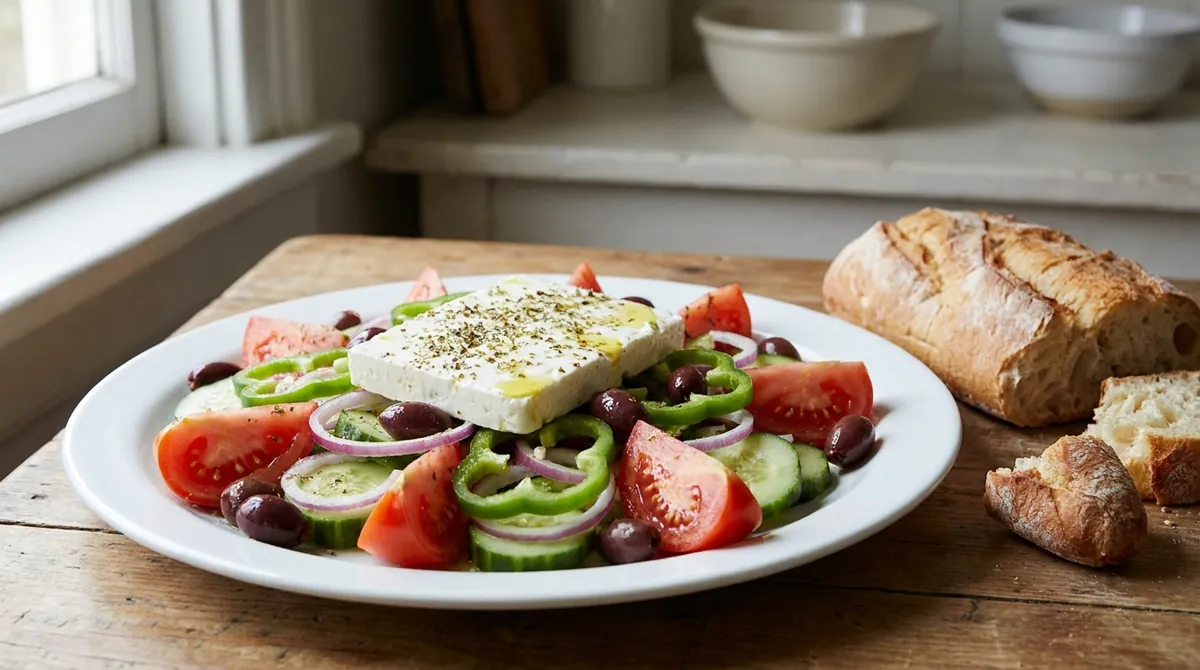
In Greece the salad is horiatiki, "village salad": summer tomatoes, cucumber, onion, olives and feta, salted and dressed with olive oil and oregano. It is imagined as what a farmer would have on hand for breakfast or lunch. The popular story says it became a restaurant staple during the tourism boom of the 1960s and 70s, when tavern owners facing price controls put a slab of feta on the vegetables; that is a retold tradition, not a documented fact. Tomatoes themselves only reached Greece in the early 19th century.
Outside Greece the name often means something different: a lettuce salad with cubed feta. In Greece, the lack of lettuce is the point.
Why it works the kitchen science
Ripe tomatoes
The whole dish is the tomato, so it is a summer salad and weak in winter.
Salt before oil
Salt draws juice from the tomatoes and cucumber, which blends with the oil into the dressing.
Feta in a slab
It stays creamy and does not crumble into the salad.
🧰 You'll need 3 items
Everything the steps call for. Tick off what you have before you start.
Tools
Step by step
- Step 1
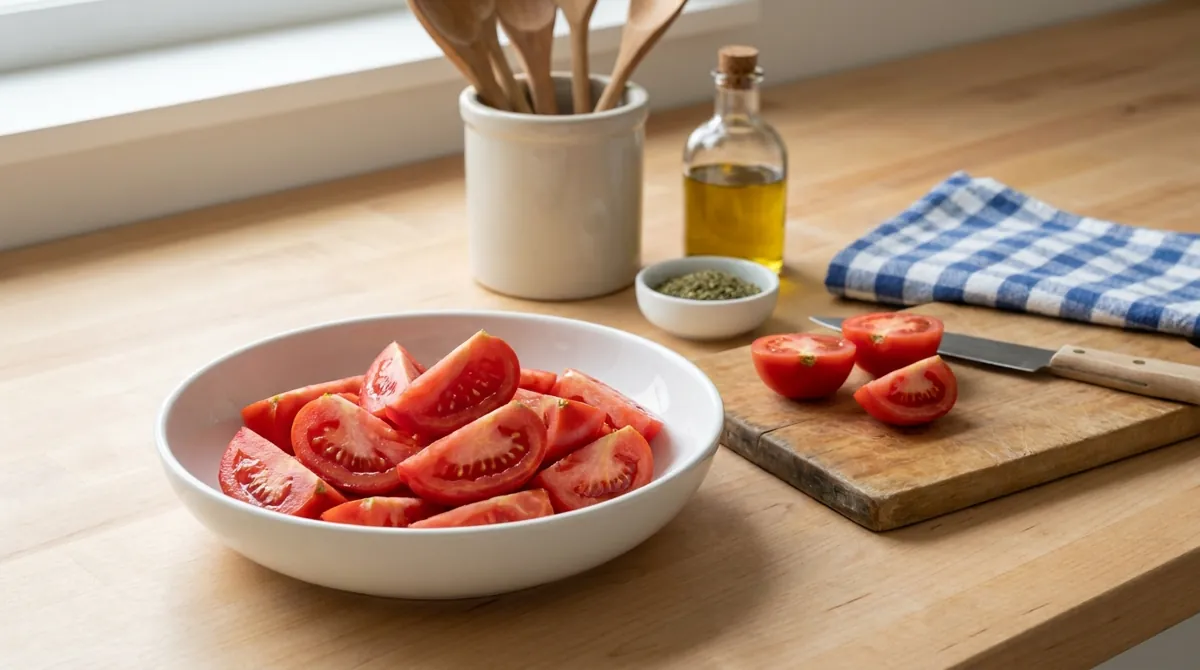
Cut the tomatoes into thick wedges and put them in a wide shallow bowl.
- Step 2
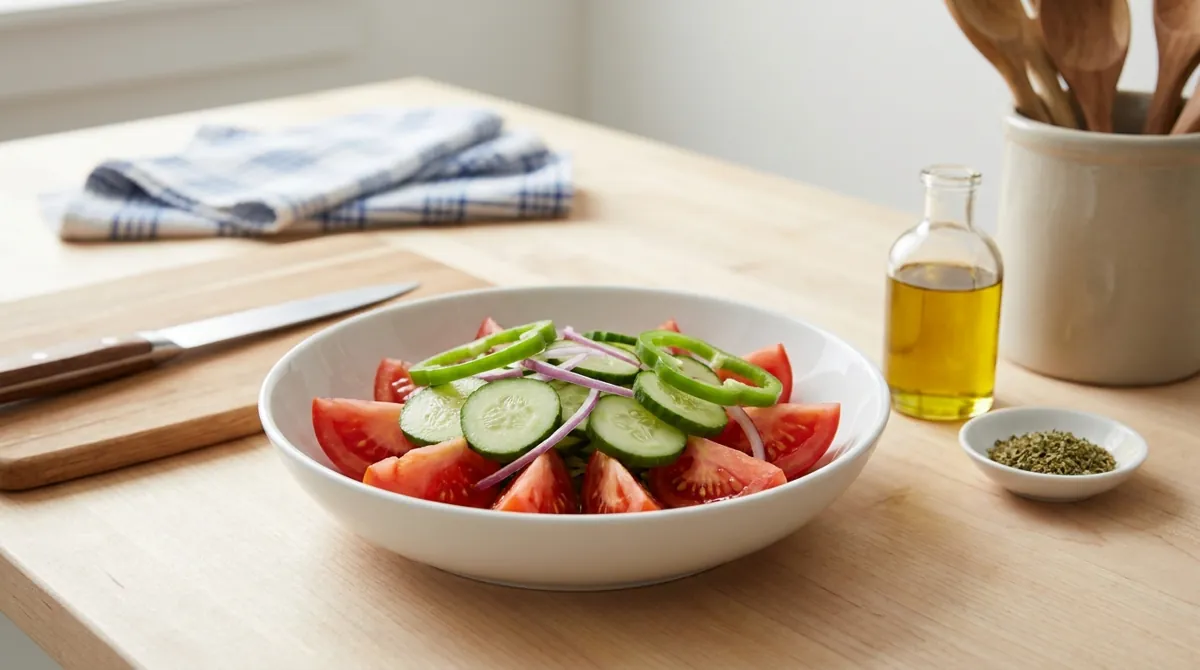
Add the cucumber, onion and pepper rings.
- Step 3
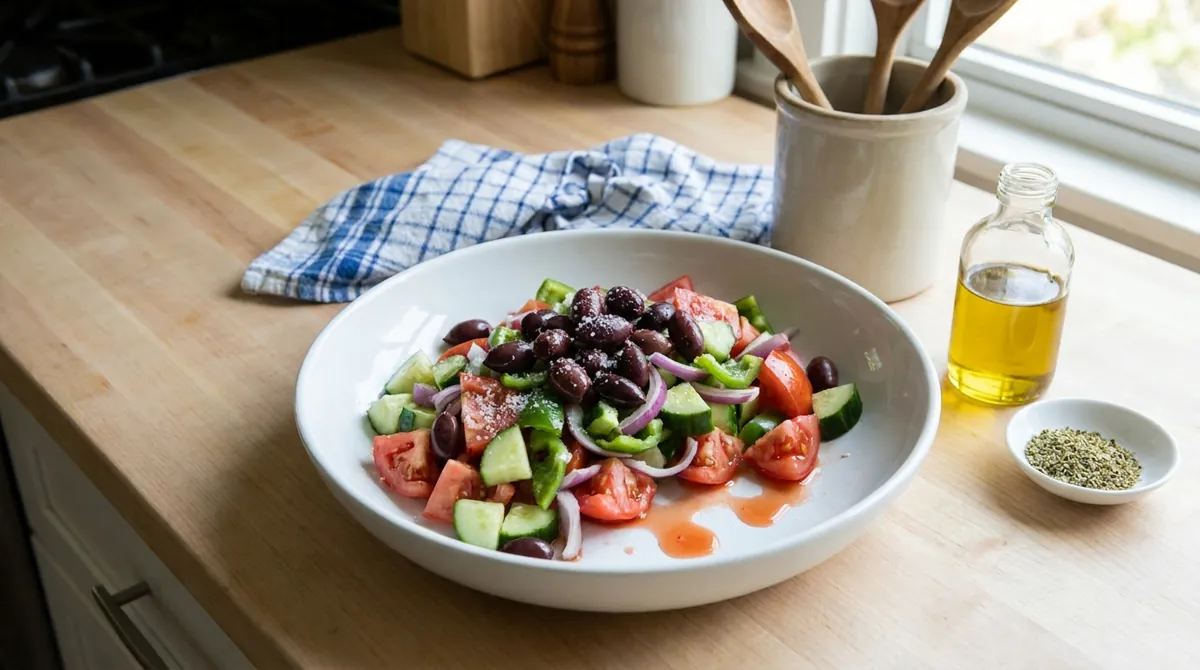
Scatter the olives over, sprinkle with the salt and toss once. The tomatoes will start to release juice.
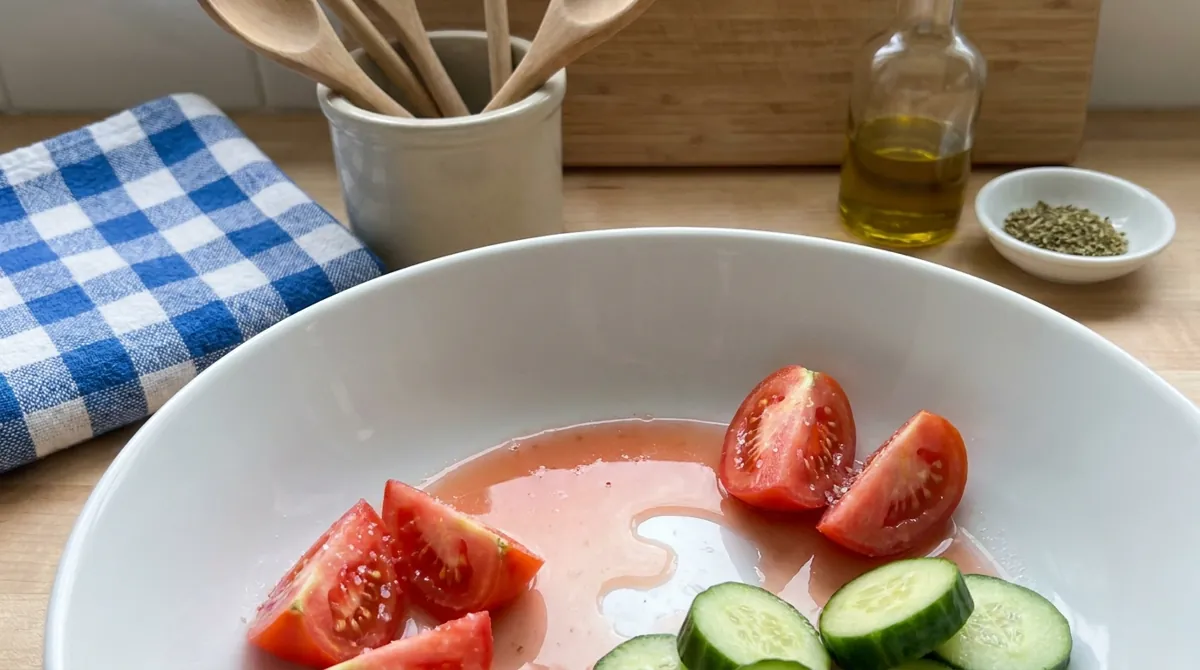
✓ What it should look like - Step 4
Drizzle the olive oil over, and the vinegar if you use it, and sprinkle half the oregano.
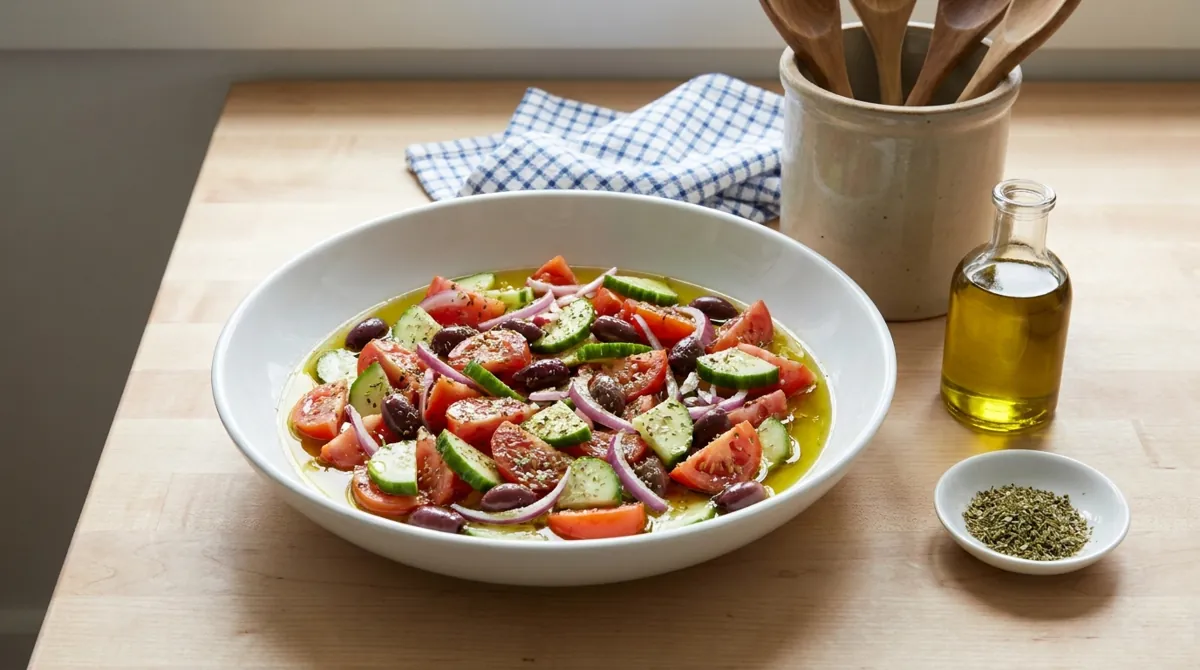
- Step 5
Lay the whole slab of feta on top, sprinkle with the rest of the oregano and a last thread of olive oil.
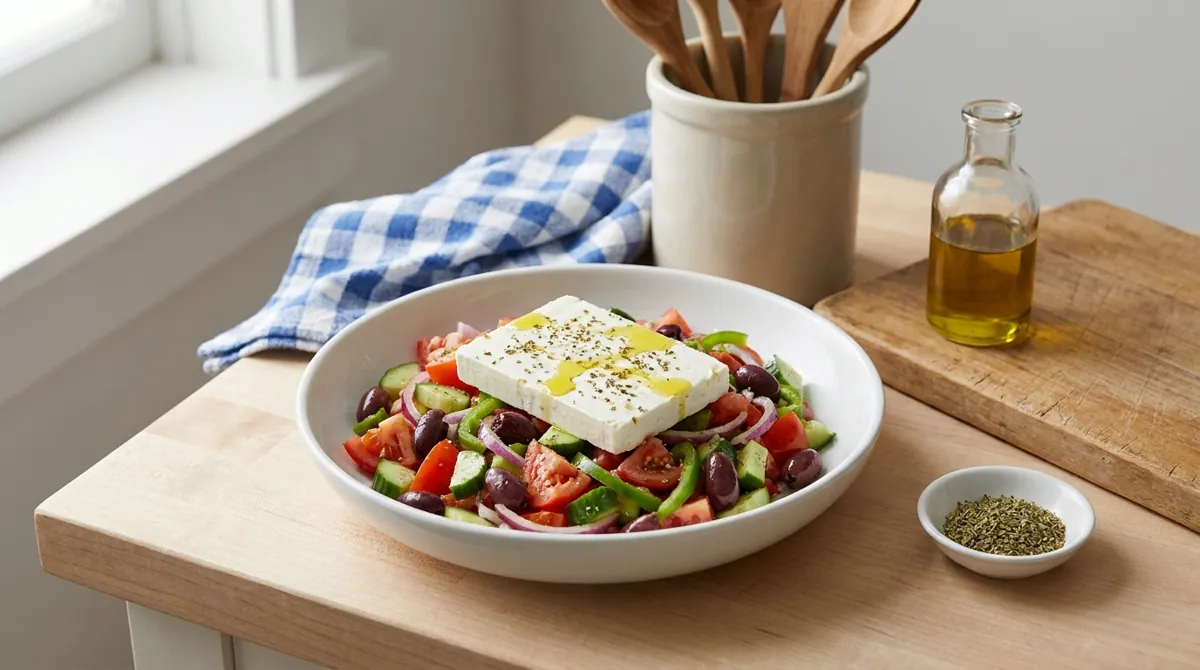
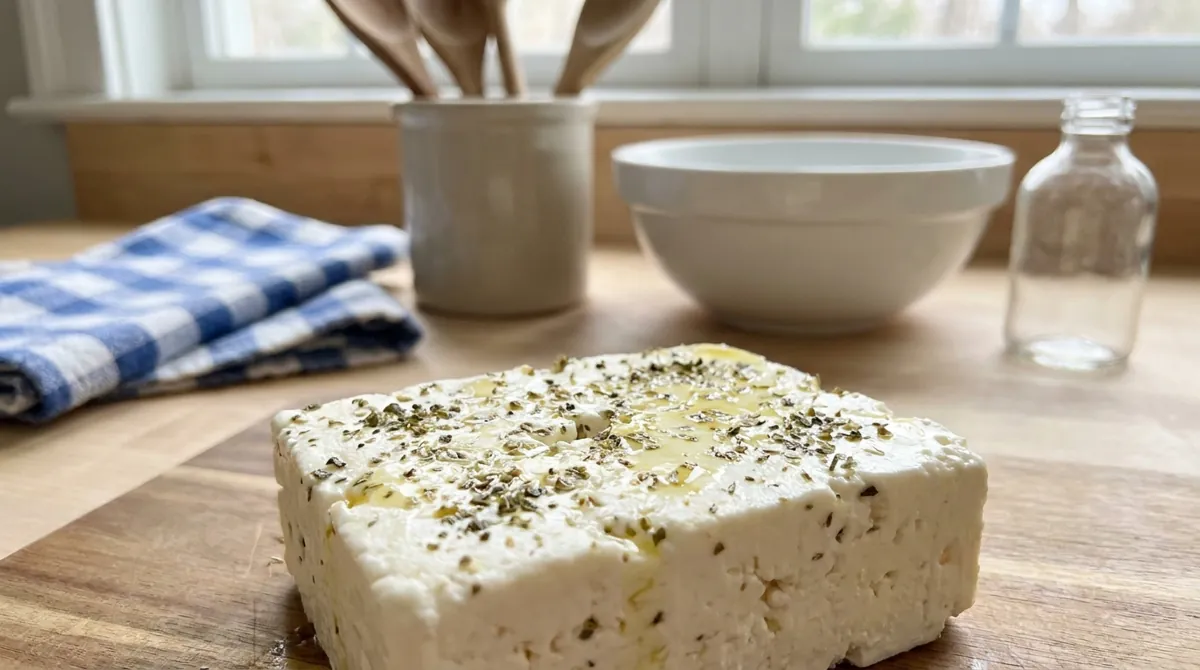
✓ What it should look like - Step 6
Let it sit 10 minutes, then serve with crusty bread for the juices.
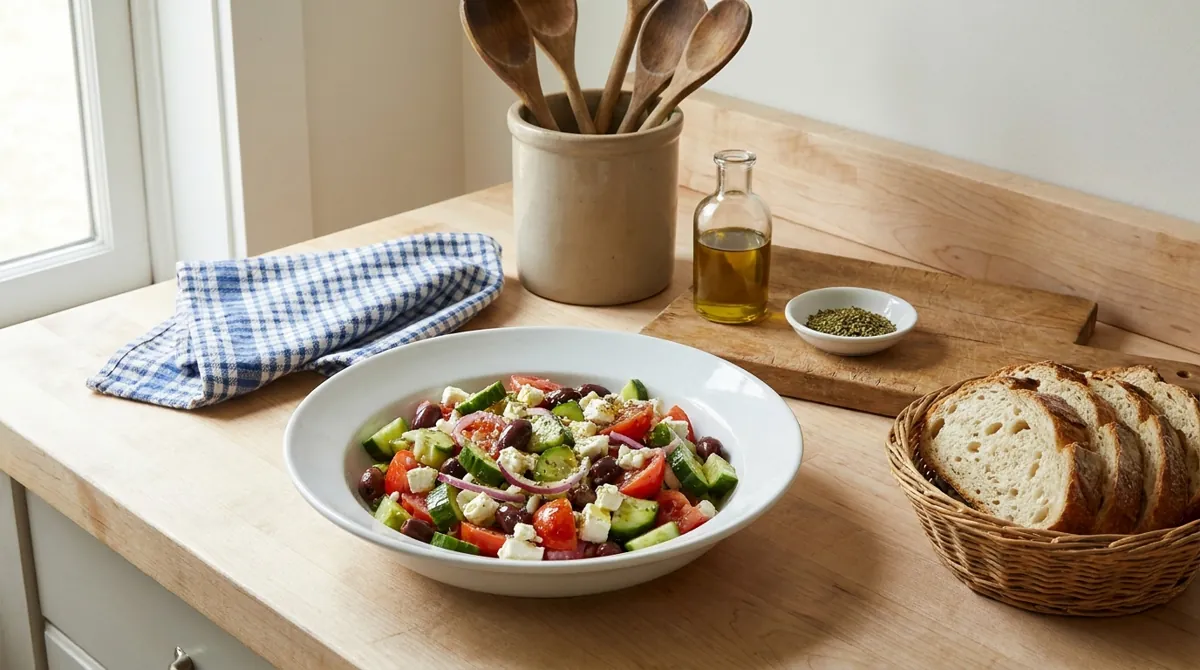
Greek Salad
Serves 4 · one large platter · 30 min total
- 4 ripe medium tomatoes (about 600 g), cut in wedges
- 1 English cucumber (about 300 g), peeled in stripes and sliced thick
- 1/2 red onion (about 80 g), sliced thin
- 1 small green bell pepper (about 100 g), sliced in rings
- 1/3 cup Kalamata olives (60 g)
- 5 oz block of feta (150 g), left whole
- 3 tbsp extra-virgin olive oil (41 g), plus more to finish
- 1 tsp dried Greek oregano
- 1/2 tsp flaky salt
- Optional: 1 tsp red wine vinegar
Equipment: Chef's knife and cutting board, Measuring cups and spoons, Mixing bowls
Method
- Cut the tomatoes into thick wedges and put them in a wide shallow bowl.
- Add the cucumber, onion and pepper rings.
- Scatter the olives over, sprinkle with the salt and toss once. The tomatoes will start to release juice.
- Drizzle the olive oil over, and the vinegar if you use it, and sprinkle half the oregano.
- Lay the whole slab of feta on top, sprinkle with the rest of the oregano and a last thread of olive oil.
- Let it sit 10 minutes, then serve with crusty bread for the juices.
Americanized house recipe, written for this site. Facts: Wikipedia, "Greek salad" (horiatiki, "village salad", core ingredients, no lettuce in the original, green pepper and caper berries as additions, served unmixed). Also: Aglaia Kremezi, "Horiatiki, the peasant roots of Greek Salad". The 1960s tourism and price-control story appears in food writing but no primary source was found: labeled folklore here. en.wikipedia.org. Ingredient list follows the source; the method is in our own words.
All sources (2)
Tips
- Use room-temperature tomatoes, never refrigerated ones.
- Skip the lettuce, or you are making a different salad.
- Serve right away or within an hour; it gets watery as it sits.
The rules people argue about
What the sources agree on, what they don't, and what is just a good story.
- The feta slab was invented to dodge price controls. Folklore: widely retold, no primary source found.
- No vinegar. Disputed: many Greek cooks use only oil, salt and oregano, but some add a splash of vinegar or lemon juice.
Meatballs of the World

Italian-American Meatballs
Big, tender meatballs braised for an hour in red sauce over spaghetti. The one most Americans grew up with.

Pallottine (Abruzzo Meatballs)
Tiny meatballs, smaller than a marble, tossed right through square spaghetti alla chitarra. No bread at all.

Swedish Meatballs (Köttbullar)
Small, soft meatballs browned in butter, in a cream sauce made from the same pan, with lingonberry jam on the plate.

Danish Frikadeller
Pork meatballs shaped with a spoon and fried slowly in butter, crusty outside and soft in the middle.

Königsberger Klopse
German meatballs that are never fried: poached, then served in a creamy white sauce with capers.

Spanish Albóndigas in Almond Saffron Sauce
The tapas bar classic: small meatballs in a golden sauce thickened with fried almonds and bread.

Mexican Albóndigas with Chipotle and Mint
Soft meatballs with rice and fresh mint inside, simmered in a smoky tomato and chipotle broth.

Izgara Köfte (Turkish Grilled Meatballs)
Small, flat meatballs kneaded hard, rested cold, and charred on a hot grill pan.

Lion's Head Meatballs
Big, soft pork meatballs, stirred into a sticky paste, fried to set, then braised in a savory sauce.

Chicken Tsukune
Japan's chicken meatball: kneaded sticky, grilled on skewers, glazed with sweet soy tare, dipped in egg yolk.