
Guacamole
Ripe avocados mashed chunky in a molcajete with white onion, serrano, cilantro, lime and salt: the Aztec "avocado sauce" that became America's biggest game-day dip.
🍳Cook alongOne move at a time, with real timers
 Edited by JP Lambiase
Change the estimate
Swaps change the price only: cook any meat to its own safe temperature. Where these numbers come from
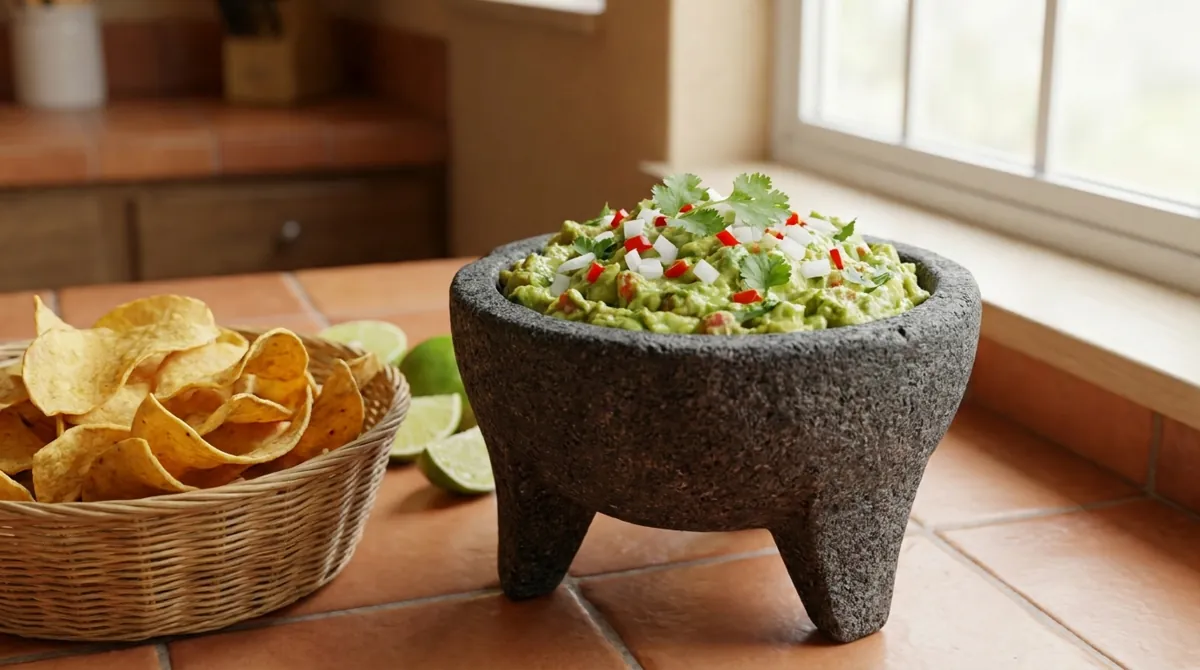
The name is older than the dish's fame by about five centuries. Guacamole comes from the Nahuatl word āhuacamōlli, "avocado sauce", from āhuacatl (avocado) and mōlli (sauce). Avocados themselves go back much further: seeds found in Mexico's Tehuacán Valley are around 9,000 to 10,000 years old, and people in Mesoamerica had domesticated the fruit by about 5000 BCE.
The classic way to make it is still the old one: avocado and salt crushed in a molcajete, the volcanic-stone mortar, with a stone pestle called a tejolote. Lime, onion, chile and cilantro are the usual additions today.
In the United States guacamole took off much later, after a long ban on Mexican avocado imports was lifted in the 1990s, and it is now the dip of Super Bowl Sunday. Mexican growers shipped roughly 110,000 tonnes of avocados to the US for the February 2025 game, by industry counts.
Why it works the kitchen science
🧰 You'll need 4 items
Everything the steps call for. Tick off what you have before you start.
Tools
Supplies
Step by step
- Step 1
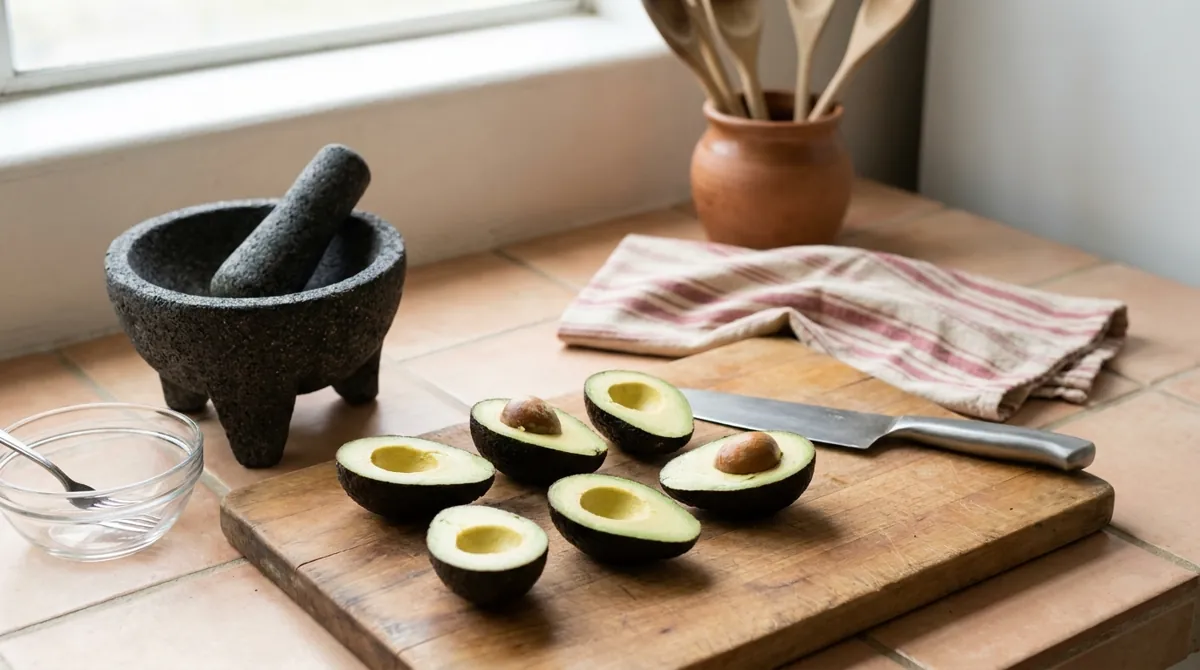
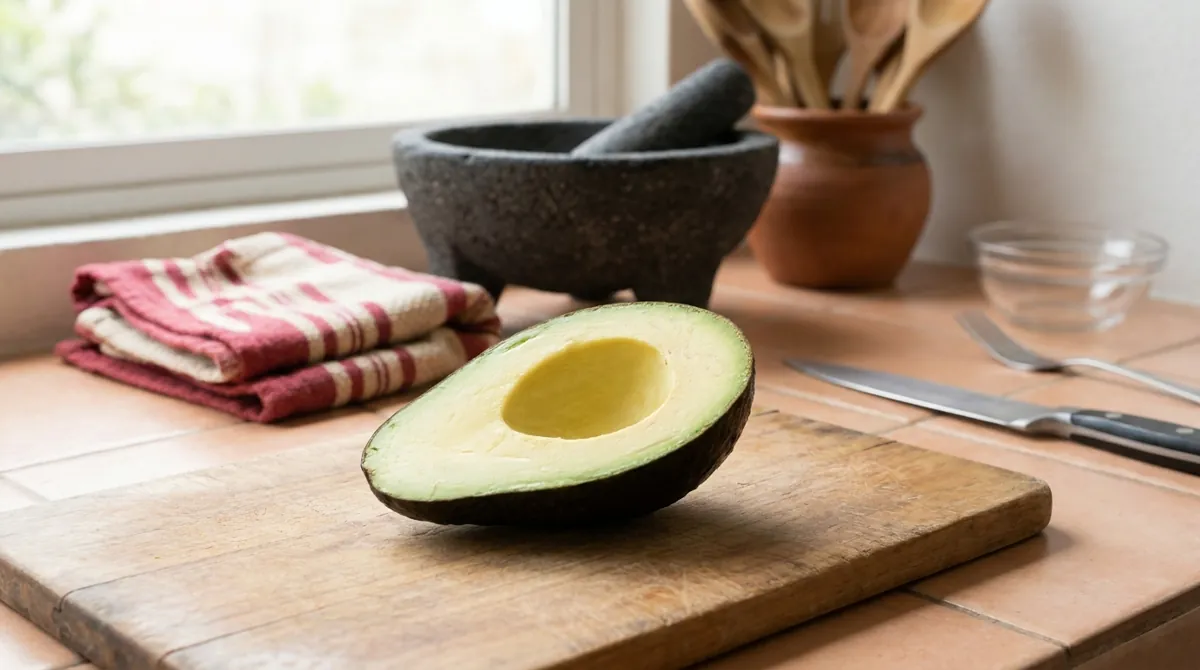
Check the avocados: a ripe Hass has a dark peel and gives a little when pressed gently near the stem. Halve them around the pit, twist apart and remove the pits.
✓ What it should look like - Step 2
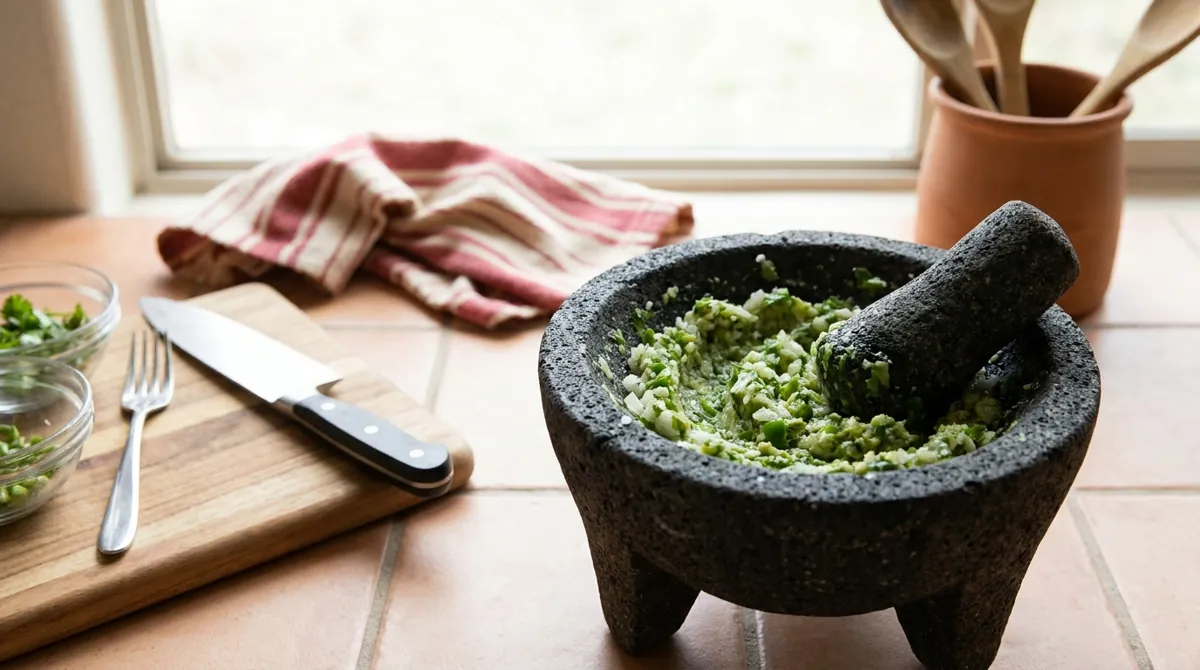
Put the onion, chile, half the cilantro and the salt in a molcajete (or a wide bowl) and grind them to a rough, wet paste. In a bowl, crush them with the back of a fork.
- Step 3
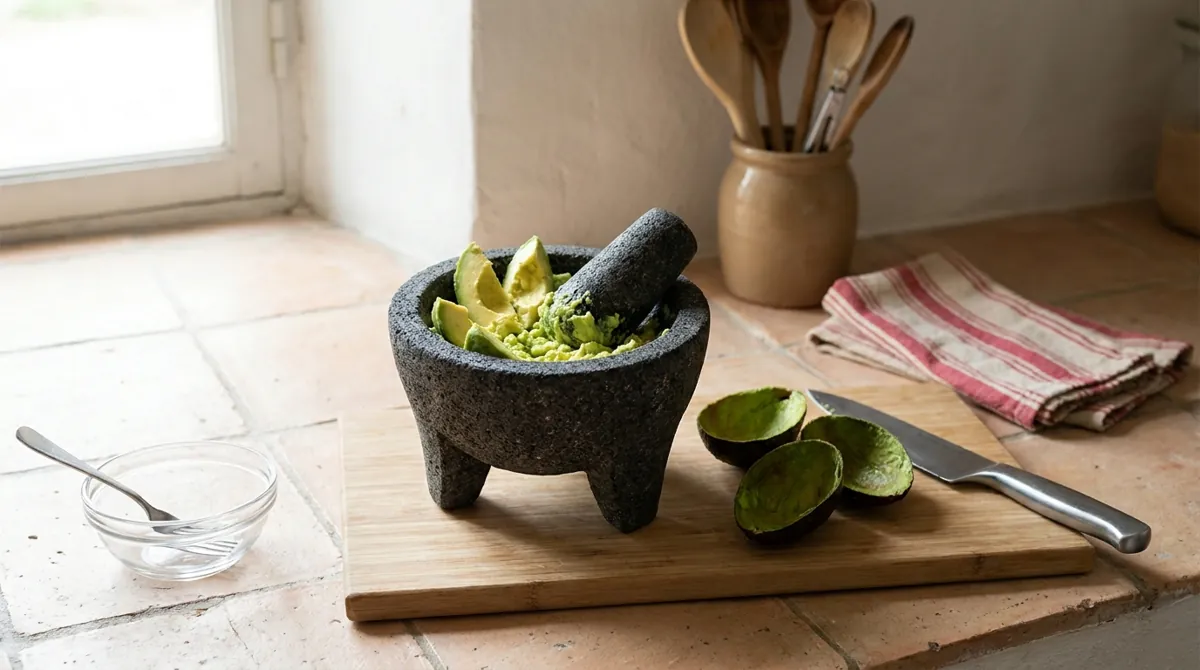
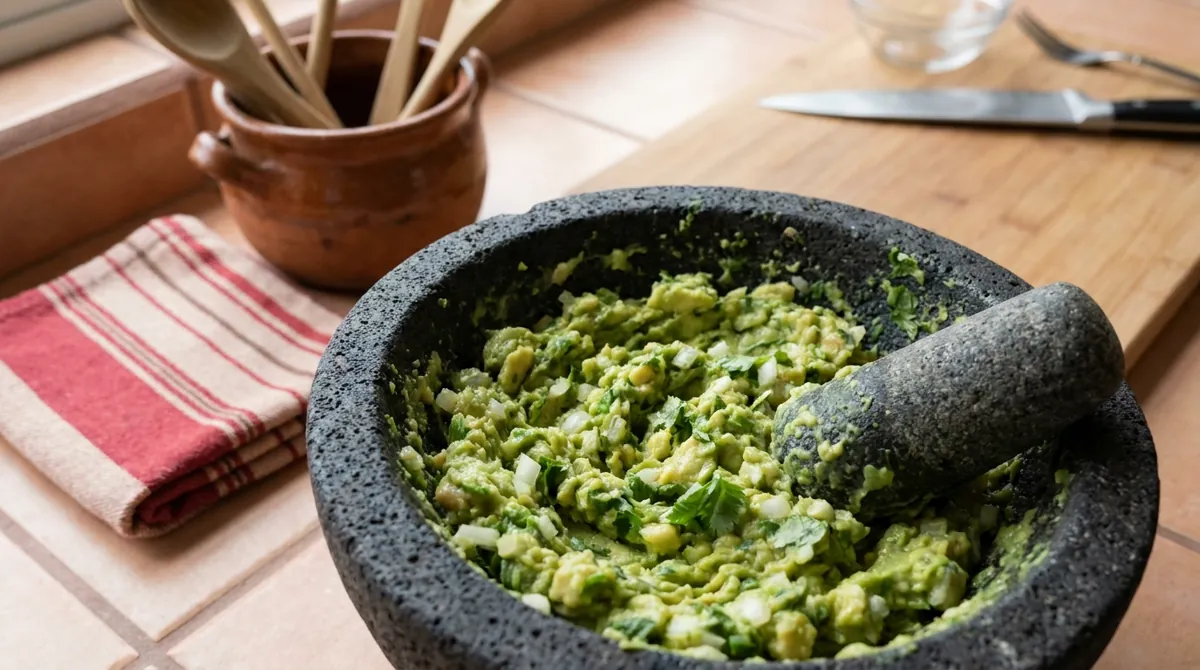
Scoop the avocado flesh in and mash it with the pestle or a fork, leaving plenty of small chunks.
✓ What it should look like - Step 4
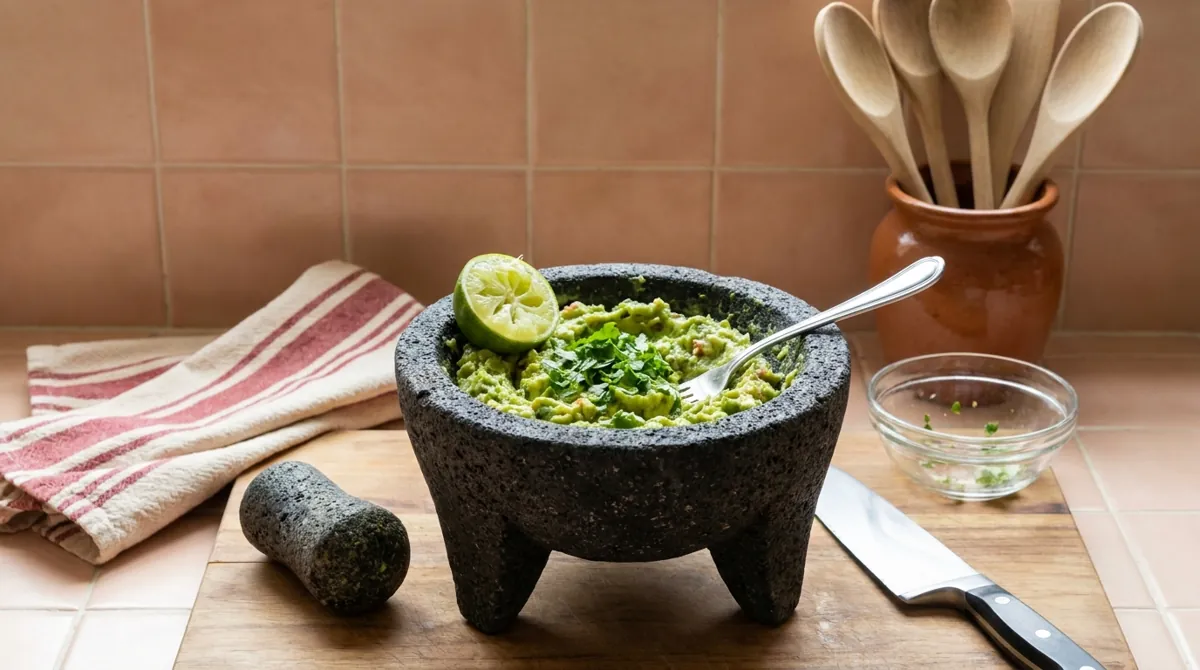
Stir in the lime juice and the rest of the cilantro. Taste and add salt and lime until it tastes bright.
- Step 5
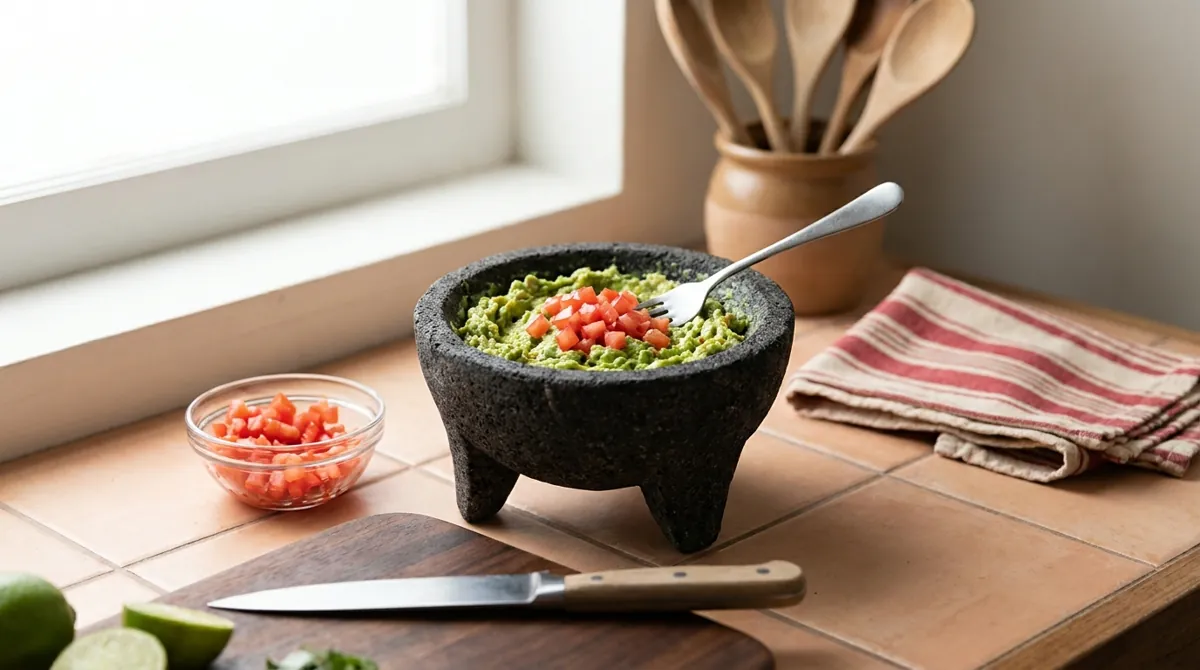
If you like tomato, fold it in now, gently, so it does not turn watery.
- Step 6
Serve right away with tortilla chips, sprinkled with a little cilantro. To keep leftovers green, press plastic wrap flat against the surface.
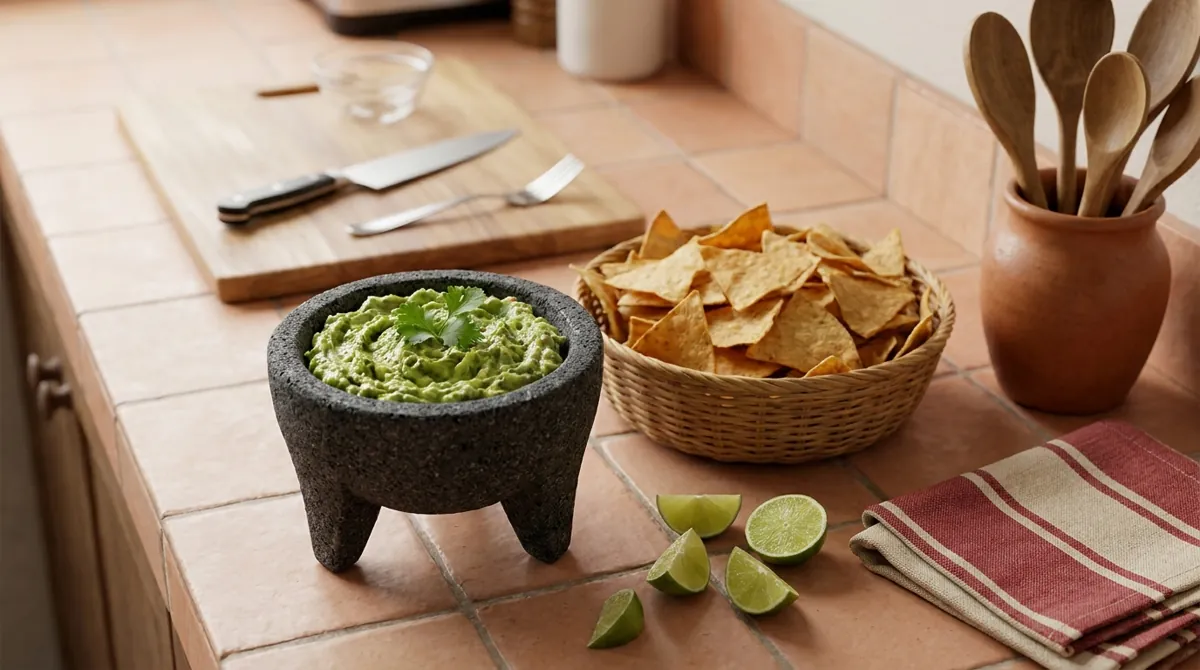
Guacamole
Serves 6 as a dip · about 2 cups · 15 min total
- 3 ripe Hass avocados (about 600 g whole, 400 g flesh)
- 1/4 cup finely chopped white onion (40 g)
- 1 serrano chile, seeded if you like it mild, finely chopped (or half a jalapeño)
- 1/4 cup chopped fresh cilantro (8 g), plus a little for the top
- 1 1/2 to 2 tbsp fresh lime juice (1 lime)
- 3/4 tsp kosher salt, plus more to taste
- Optional: 1 small Roma tomato, seeded and diced (60 g)
- Tortilla chips, to serve
Equipment: Chef's knife and cutting board, Measuring cups and spoons, Mixing bowls, Plastic wrap
Method
- Check the avocados: a ripe Hass has a dark peel and gives a little when pressed gently near the stem. Halve them around the pit, twist apart and remove the pits.
- Put the onion, chile, half the cilantro and the salt in a molcajete (or a wide bowl) and grind them to a rough, wet paste. In a bowl, crush them with the back of a fork.
- Scoop the avocado flesh in and mash it with the pestle or a fork, leaving plenty of small chunks.
- Stir in the lime juice and the rest of the cilantro. Taste and add salt and lime until it tastes bright.
- If you like tomato, fold it in now, gently, so it does not turn watery.
- Serve right away with tortilla chips, sprinkled with a little cilantro. To keep leftovers green, press plastic wrap flat against the surface.
Americanized house recipe, written for this site. History and browning: Wikipedia, "Guacamole" (āhuacamōlli, Tehuacán Valley seeds, domestication by 5000 BCE, molcajete, 1990s import ban, polyphenol oxidase). Super Bowl volume: Mexico News Daily, "Mexican producers exported over 110,000 tonnes of avocados for Super Bowl guac", (industry figures; treat as estimates). en.wikipedia.org. Ingredient list follows the source; the method is in our own words.
All sources (2)
Tips
- Hard avocados ripen in 2 to 4 days on the counter, faster in a paper bag with a banana.
- Make it no more than an hour ahead.
- Rinse chopped onion under cold water if it is very sharp.
The rules people argue about
What the sources agree on, what they don't, and what is just a good story.
- Leaving the pit in the bowl keeps guacamole green. Folklore: browning is the avocado's enzymes reacting with air, so the pit only shields the patch it covers. Plastic wrap pressed on the surface works better.
- Real guacamole has no tomato. Disputed: many Mexican cooks add it, many leave it out. Tomato is fine; it just adds water.
Meatballs of the World

Italian-American Meatballs
Big, tender meatballs braised for an hour in red sauce over spaghetti. The one most Americans grew up with.

Pallottine (Abruzzo Meatballs)
Tiny meatballs, smaller than a marble, tossed right through square spaghetti alla chitarra. No bread at all.

Swedish Meatballs (Köttbullar)
Small, soft meatballs browned in butter, in a cream sauce made from the same pan, with lingonberry jam on the plate.

Danish Frikadeller
Pork meatballs shaped with a spoon and fried slowly in butter, crusty outside and soft in the middle.

Königsberger Klopse
German meatballs that are never fried: poached, then served in a creamy white sauce with capers.

Spanish Albóndigas in Almond Saffron Sauce
The tapas bar classic: small meatballs in a golden sauce thickened with fried almonds and bread.

Mexican Albóndigas with Chipotle and Mint
Soft meatballs with rice and fresh mint inside, simmered in a smoky tomato and chipotle broth.

Izgara Köfte (Turkish Grilled Meatballs)
Small, flat meatballs kneaded hard, rested cold, and charred on a hot grill pan.

Lion's Head Meatballs
Big, soft pork meatballs, stirred into a sticky paste, fried to set, then braised in a savory sauce.

Chicken Tsukune
Japan's chicken meatball: kneaded sticky, grilled on skewers, glazed with sweet soy tare, dipped in egg yolk.