
Gumbo
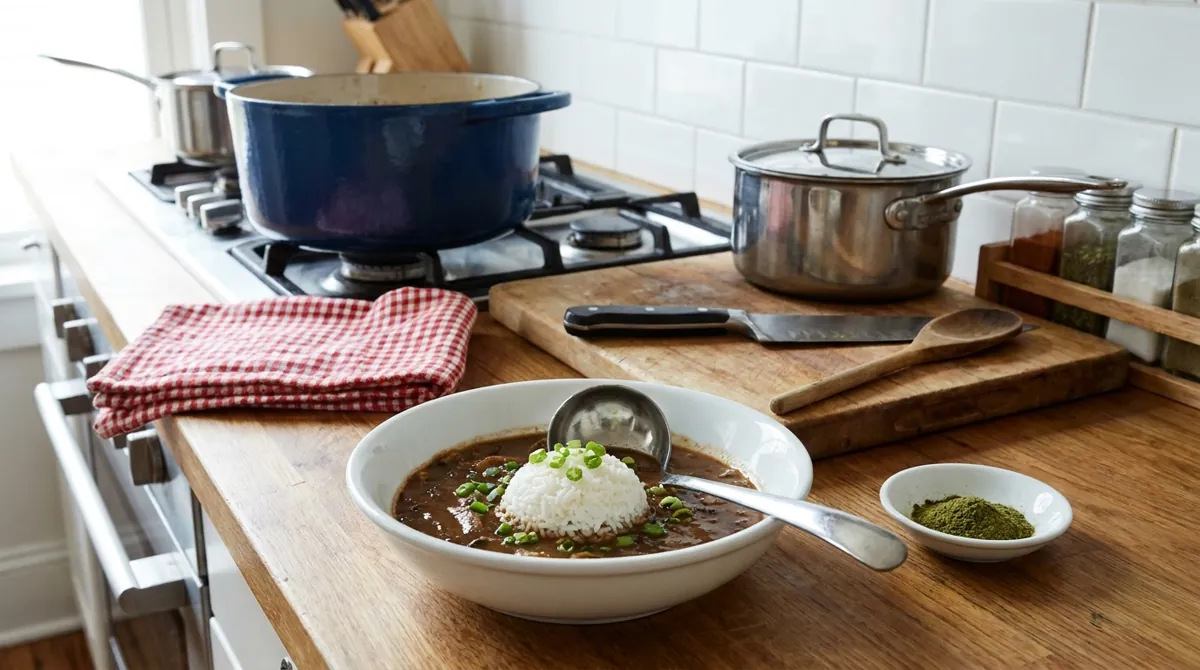
A chocolate-brown roux stirred slowly in a Dutch oven, the holy trinity of onion, celery and bell pepper, browned chicken thighs and smoky andouille simmered in stock, served over white rice with filé at the table: Louisiana's official state cuisine, built from West African okra, a French roux and Choctaw filé.
🍳Cook alongOne move at a time, with real timers
 Edited by JP Lambiase
Change the estimate
Swaps change the price only: cook any meat to its own safe temperature. Where these numbers come from
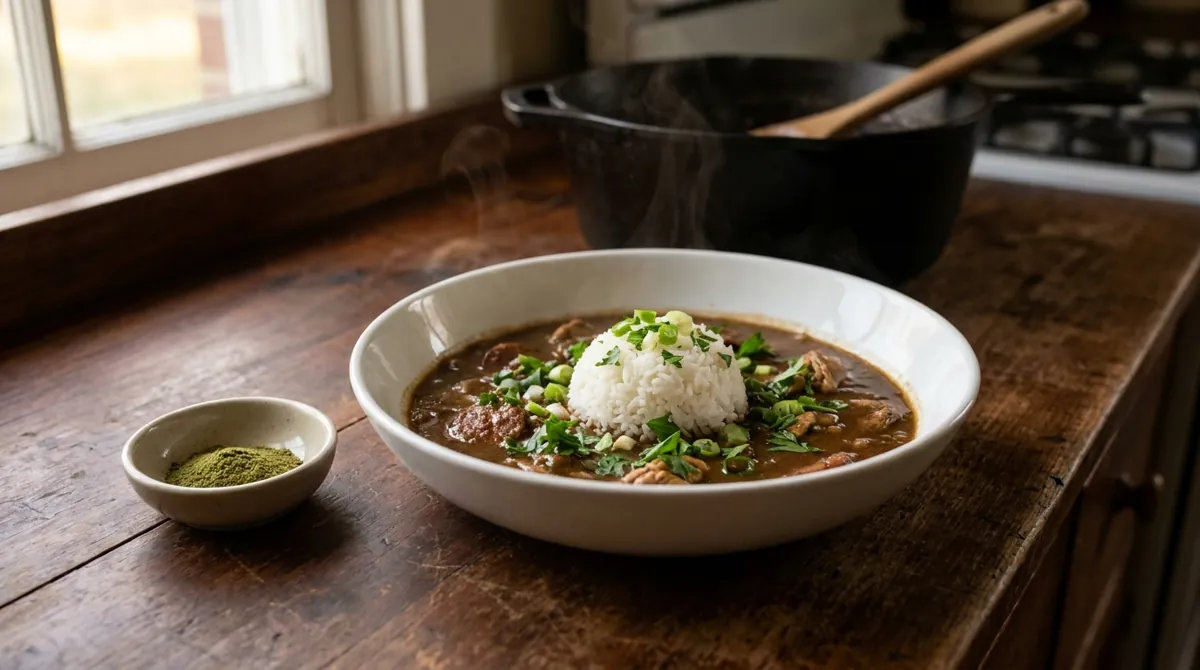
Gumbo's name points to Africa. Linguists trace it to West and Central African words for okra: gombo in Bambara and ki ngombo or quingombo in the Bantu language Kimbundu. Some linguists instead link it to kombo, said to be the Choctaw word for filé, the ground sassafras leaves the Choctaw used to thicken soups and stews. The Southern Foodways Alliance puts it simply: the word is of African origin and means okra.
The dish itself took shape in Louisiana in the early 18th century, scholars agree, but no conclusive evidence shows exactly how. It may draw on West African okra stews, Choctaw stews and French soups such as bouillabaisse, with German and Spanish cooks adding to it; the thickener that defines most gumbo today, a roux of flour and fat, is French. Records from 1764 show Africans in New Orleans mixing cooked okra with rice. In 1802 John Sibley wrote of "the dish they call gumbo which is made principally of the ochre," and in 1803 Governor Pierre Clément de Laussat held a party where 24 different gumbos were served. By 1885 La Cuisine Creole printed eight kinds.
In 2004 the Louisiana Legislature made it law: "The official state cuisine shall be gumbo." This is a home chicken and andouille gumbo in the Cajun style, dark roux and no tomato, with filé passed at the table.
Why it works the kitchen science
A dark roux
Long cooking toasts the flour for the deep, nutty flavor gumbo is known for; the darker it gets, the less it thickens, which is why the gumbo stays brothy.
Oil, not butter, for a dark roux
Oil can cook for 45 minutes without the milk solids in butter burning.
Browning the meat first
The browned bits and rendered sausage fat flavor the pot before the roux goes in.
Filé at the end
Added off the heat, it thickens and seasons; boiled, it turns the gumbo stringy.
🧰 You'll need 6 items
Everything the steps call for. Tick off what you have before you start.
Pans and pots
Tools
Step by step
- Step 1
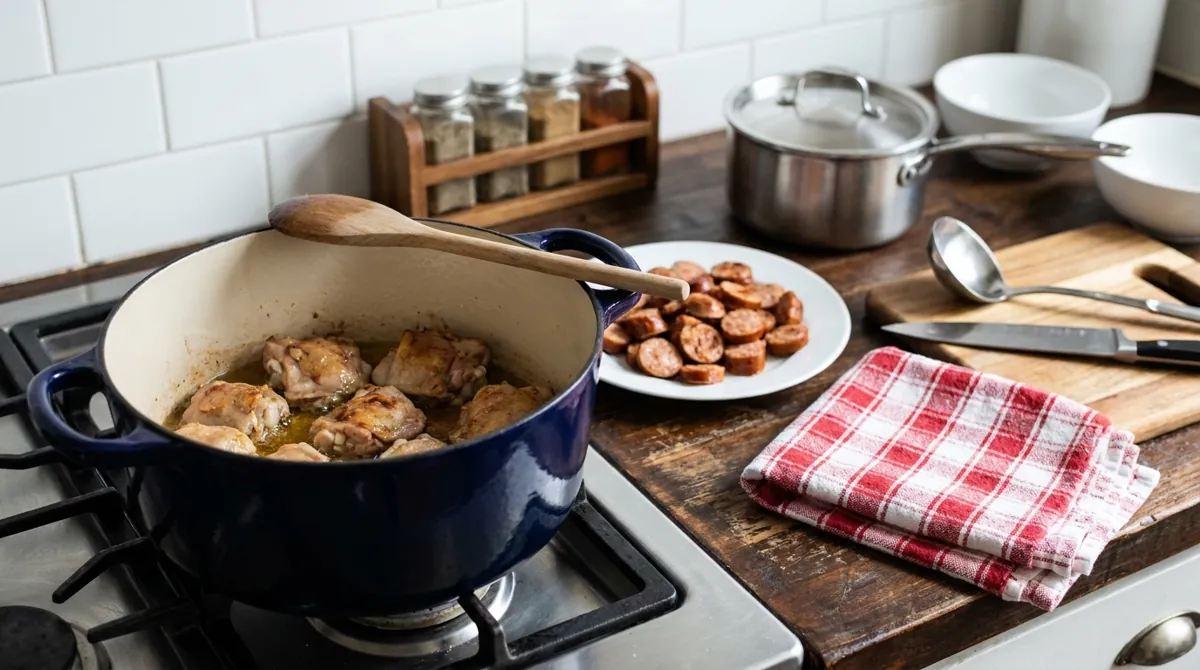
Season the chicken with the salt and pepper. Heat the 2 tbsp oil in the Dutch oven over medium-high heat, brown the andouille 5 minutes and lift it out to a plate, then brown the chicken in two batches, about 6 minutes each, and add it to the plate.
- Step 2
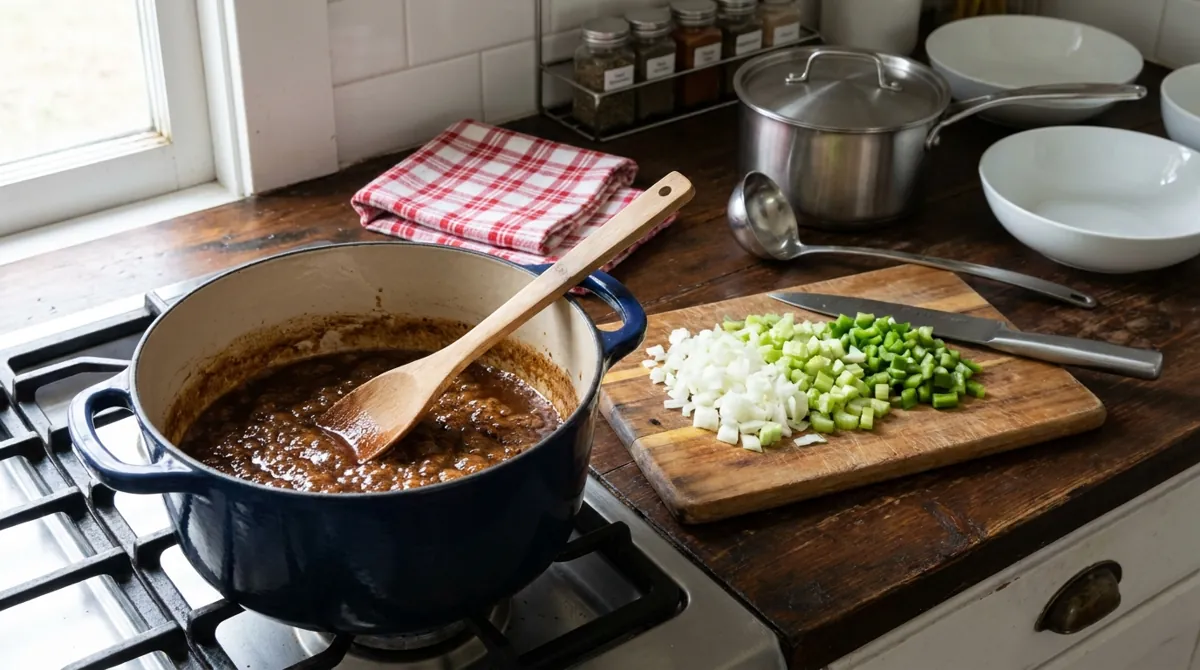
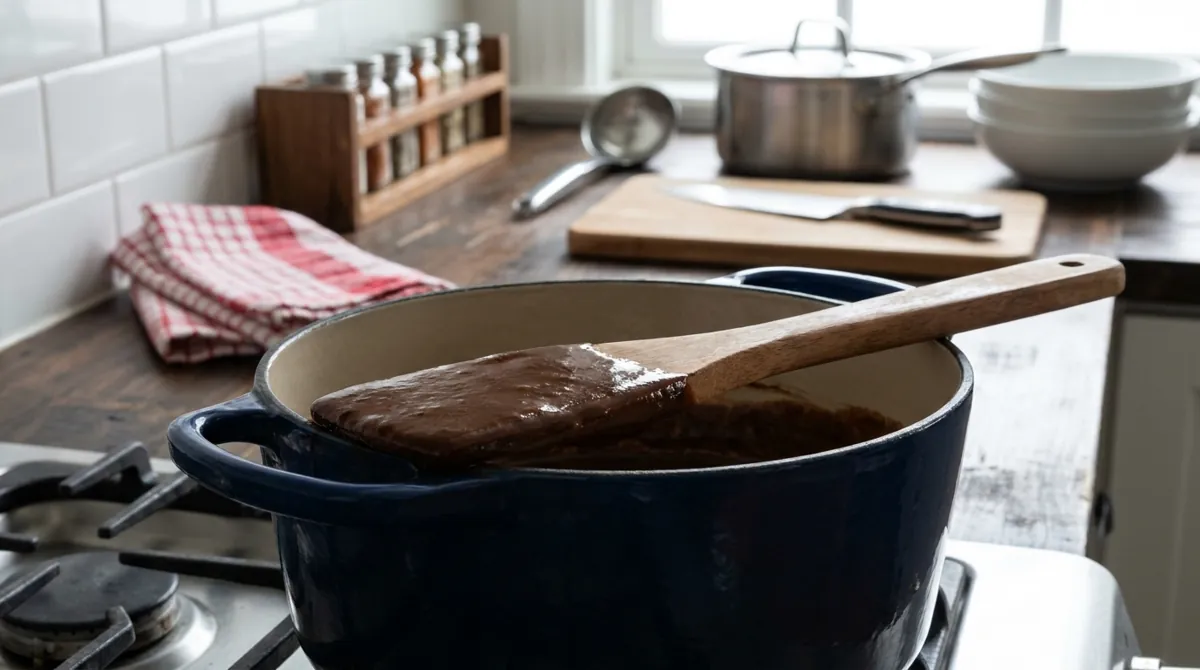
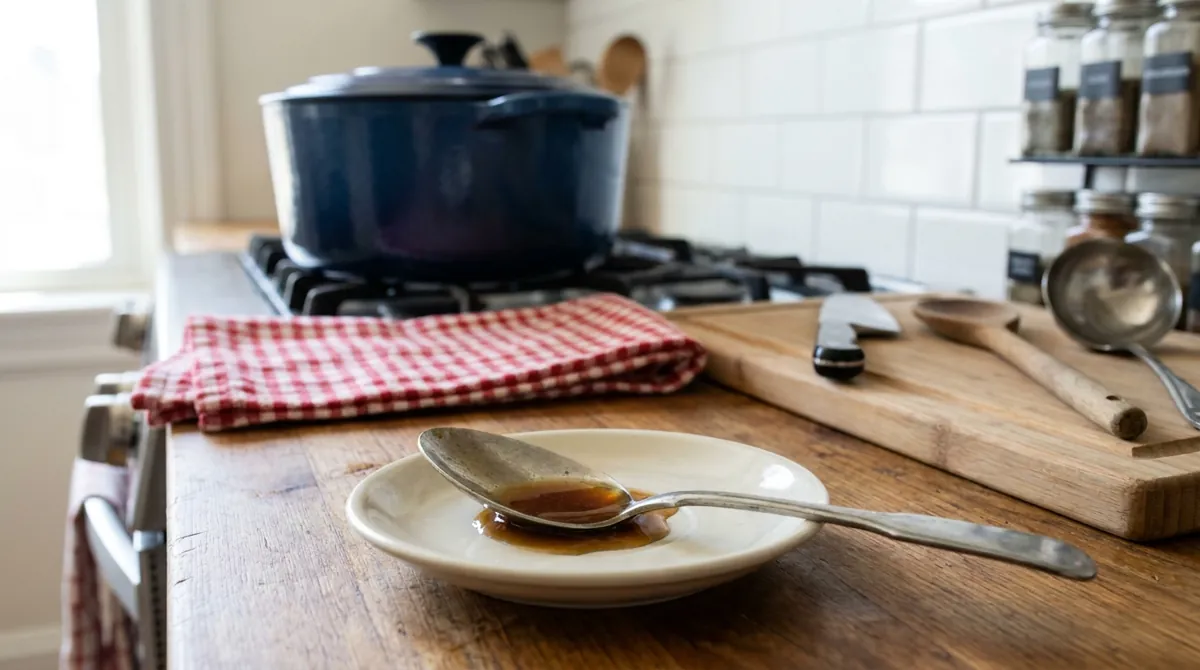
Lower the heat to medium. Add the 3/4 cup oil to the pot, whisk in the flour, and stir constantly with a flat-edged wooden spoon, scraping the whole bottom, for 30 to 45 minutes, until the roux is the color of dark chocolate and smells toasty. If you see black specks or smell burning, start over.
✓ What it should look like - Step 3
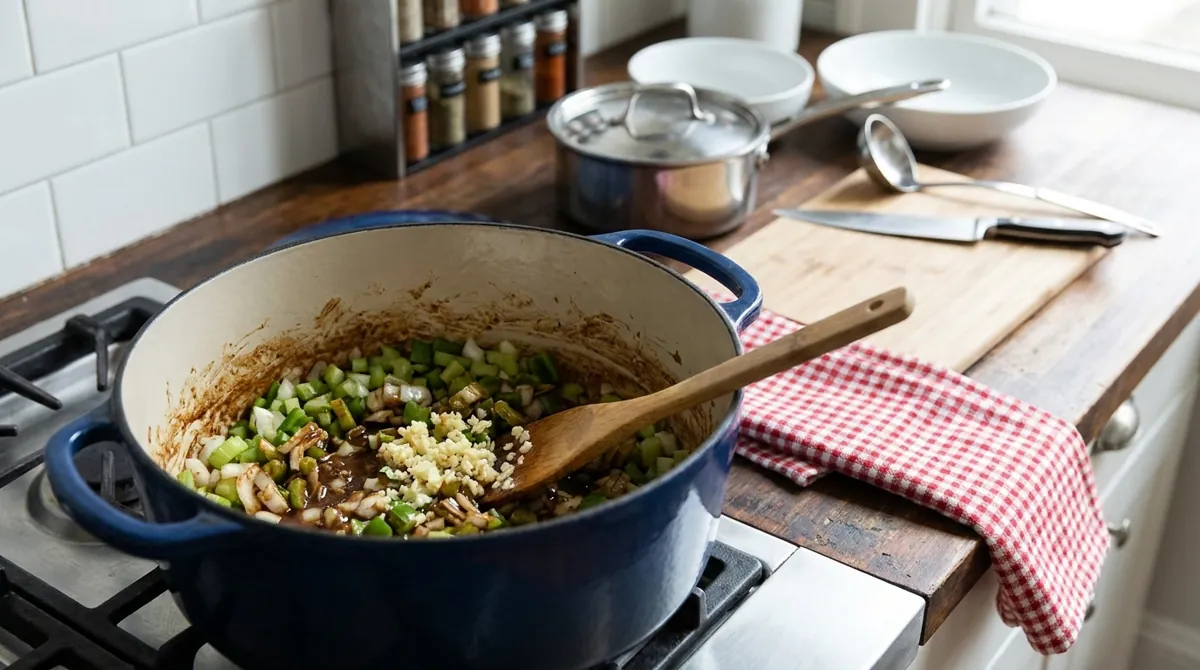
Add the onions, celery and bell pepper all at once (the roux will hiss and darken) and cook, stirring, 8 minutes, until soft. Stir in the garlic, thyme and cayenne for 1 minute.
- Step 4
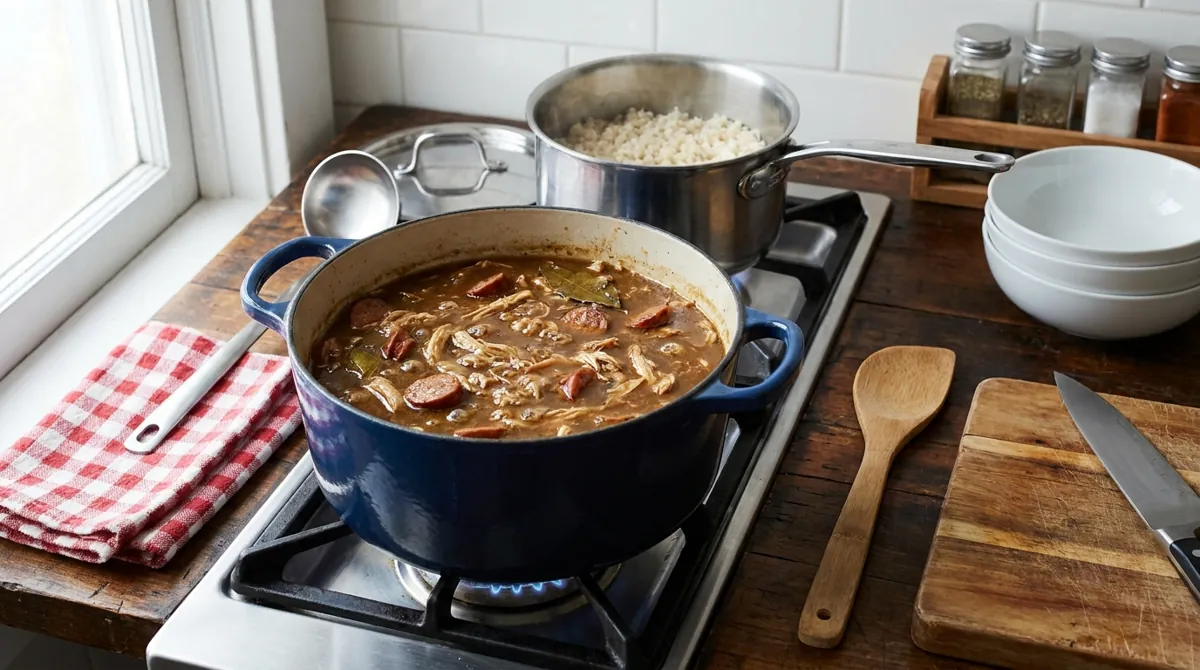
Pour in the stock a ladle at a time at first, stirring until smooth, then the rest. Add the bay leaves, chicken and andouille, bring to a boil, and simmer uncovered 75 minutes, stirring now and then and skimming off the oil that rises. Cook the rice while it simmers.
- Step 5
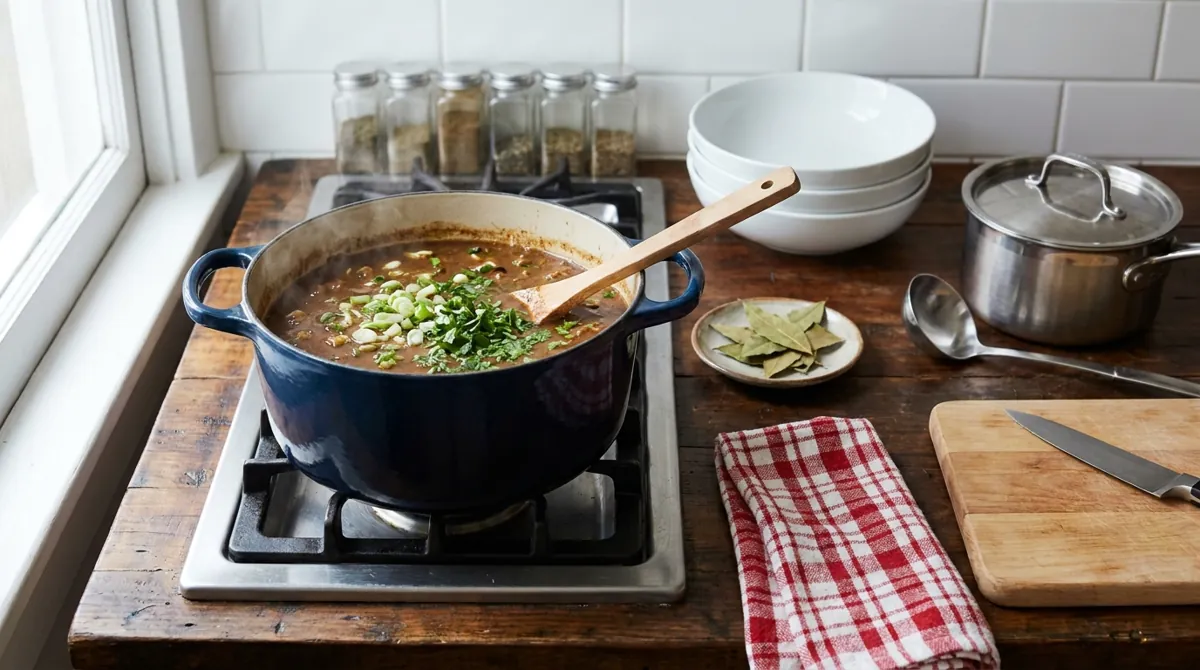
Taste and season with salt and more cayenne. The gumbo should be a dark brown, silky broth that lightly coats a spoon, not thick like gravy. Remove the bay leaves and stir in most of the green onions and parsley.
✓ What it should look like - Step 6
Ladle into wide bowls over a scoop of rice, top with the rest of the green onions and parsley, and pass filé at the table for each person to sprinkle on, about 1/4 tsp a bowl.
Gumbo
Serves 8 · about 4 quarts · 2 hr 30 min total
Meat
- 2 lb boneless, skinless chicken thighs, cut into 1 1/2 inch pieces (900 g)
- 1 lb andouille sausage, sliced 1/4 inch thick (454 g)
- 2 tbsp canola oil (27 g), for browning
- 1 tsp kosher salt and 1/2 tsp black pepper, for the chicken
Roux
- 3/4 cup canola oil (165 g)
- 3/4 cup all-purpose flour (94 g)
The pot
- 2 medium onions, chopped (300 g)
- 3 celery ribs, chopped (120 g)
- 1 large green bell pepper, chopped (150 g)
- 6 garlic cloves, minced (18 g)
- 1 tsp dried thyme
- 1/2 tsp cayenne pepper, or to taste
- 2 bay leaves
- 8 cups chicken stock (1.9 kg)
- Kosher salt to taste
To serve
- 2 cups long-grain white rice (370 g), cooked
- 4 green onions, sliced (60 g)
- 1/4 cup chopped fresh parsley (15 g)
- Filé powder, at the table
Equipment: Dutch oven, Chef's knife and cutting board, Measuring cups and spoons, Mixing bowls, Whisk, Ladle
Method
- Season the chicken with the salt and pepper. Heat the 2 tbsp oil in the Dutch oven over medium-high heat, brown the andouille 5 minutes and lift it out to a plate, then brown the chicken in two batches, about 6 minutes each, and add it to the plate.
- Lower the heat to medium. Add the 3/4 cup oil to the pot, whisk in the flour, and stir constantly with a flat-edged wooden spoon, scraping the whole bottom, for 30 to 45 minutes, until the roux is the color of dark chocolate and smells toasty. If you see black specks or smell burning, start over.
- Add the onions, celery and bell pepper all at once (the roux will hiss and darken) and cook, stirring, 8 minutes, until soft. Stir in the garlic, thyme and cayenne for 1 minute.
- Pour in the stock a ladle at a time at first, stirring until smooth, then the rest. Add the bay leaves, chicken and andouille, bring to a boil, and simmer uncovered 75 minutes, stirring now and then and skimming off the oil that rises. Cook the rice while it simmers.
- Taste and season with salt and more cayenne. The gumbo should be a dark brown, silky broth that lightly coats a spoon, not thick like gravy. Remove the bay leaves and stir in most of the green onions and parsley.
- Ladle into wide bowls over a scoop of rice, top with the rest of the green onions and parsley, and pass filé at the table for each person to sprinkle on, about 1/4 tsp a bowl.
Americanized house recipe, written for this site. History: Wikipedia, "Gumbo" (Bambara gombo and Kimbundu ki ngombo, the Choctaw kombo theory, Choctaw filé from sassafras, early 18th-century Louisiana origin with "no conclusive evidence", the bouillabaisse, West African and Choctaw influences, 1764 okra with rice, John Sibley in 1802, Laussat's 24 gumbos in 1803, Mary Randolph's 1824 recipe, La Cuisine Creole in 1885, Creole and Cajun styles, filé added off the heat, okra and filé traditionally not together, the 2004 state cuisine law, potato salad); Southern Foodways Alliance, "Southern Gumbo Trail" (the word is of African origin and means okra; "so many versions, so many cooks, so many contradictions"); Food Network, "What Is Gumbo?" (the holy trinity, roux, okra and filé as thickeners, darker roux has more flavor but thickens less). Roux timing (30 to 45 minutes to chocolate brown over medium heat) is the consensus of the home recipes checked. en.wikipedia.org. Ingredient list follows the source; the method is in our own words.
All sources (3)
Tips
- Have the trinity chopped before you start the roux; once it is dark you cannot step away.
- Gumbo is better the next day. Cool it, refrigerate it covered for up to 3 days, and lift off the fat before reheating. It freezes well without the rice.
- For okra gumbo, add 1 lb sliced okra with the trinity and skip the filé.
- Some Cajun families serve gumbo over potato salad instead of rice, or with a scoop on the side.
The rules people argue about
What the sources agree on, what they don't, and what is just a good story.
- The name comes from the African word for okra. Disputed: most sources, including the Southern Foodways Alliance, say gombo or ki ngombo (okra); some linguists link it to the Choctaw kombo (filé).
- The darker the roux, the better. Disputed: dark roux is the general mark of gumbo, but cooks disagree on how dark, and darker roux thickens less.
Meatballs of the World

Italian-American Meatballs
Big, tender meatballs braised for an hour in red sauce over spaghetti. The one most Americans grew up with.

Pallottine (Abruzzo Meatballs)
Tiny meatballs, smaller than a marble, tossed right through square spaghetti alla chitarra. No bread at all.

Swedish Meatballs (Köttbullar)
Small, soft meatballs browned in butter, in a cream sauce made from the same pan, with lingonberry jam on the plate.

Danish Frikadeller
Pork meatballs shaped with a spoon and fried slowly in butter, crusty outside and soft in the middle.

Königsberger Klopse
German meatballs that are never fried: poached, then served in a creamy white sauce with capers.

Spanish Albóndigas in Almond Saffron Sauce
The tapas bar classic: small meatballs in a golden sauce thickened with fried almonds and bread.

Mexican Albóndigas with Chipotle and Mint
Soft meatballs with rice and fresh mint inside, simmered in a smoky tomato and chipotle broth.

Izgara Köfte (Turkish Grilled Meatballs)
Small, flat meatballs kneaded hard, rested cold, and charred on a hot grill pan.

Lion's Head Meatballs
Big, soft pork meatballs, stirred into a sticky paste, fried to set, then braised in a savory sauce.

Chicken Tsukune
Japan's chicken meatball: kneaded sticky, grilled on skewers, glazed with sweet soy tare, dipped in egg yolk.