
Hot and Sour Soup
A glossy, peppery, tangy broth thick with mushrooms, bamboo shoots, tofu and ribbons of egg: the soup that starts nearly every American Chinese takeout order, ready in 30 minutes.
🍳Cook alongOne move at a time, with real timers
 Edited by JP Lambiase
Change the estimate
Swaps change the price only: cook any meat to its own safe temperature. Where these numbers come from
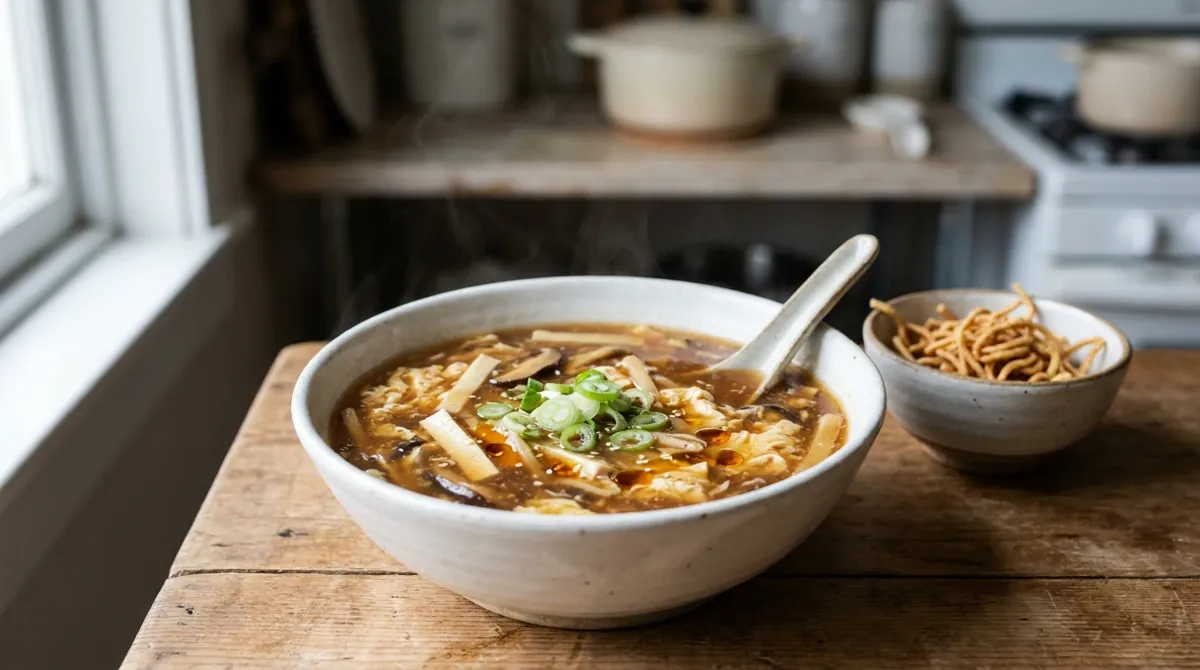
Hot and sour soup, suan la tang in Mandarin, is a thick, dark, peppery-sour soup. The usual story says it came from Sichuan, but the sources do not agree. Wikipedia calls it a variant of hulatang, the "pepper hot soup" of Henan cuisine, says the popular Sichuan origin is a myth (the form "can barely be found in Sichuan"), and notes that Beijing cuisine claims it too. The related Sichuan dish suan la fen, hot and sour glass noodles, is a different dish.
The heat in the classic soup comes from white pepper, not chiles, and the sourness from Chinkiang (Zhenjiang) black vinegar. Typical Chinese versions use pork, day lily buds, wood ear fungus, bamboo shoots and tofu. The American Chinese restaurant version, Wikipedia says, runs on chicken or pork broth, cornstarch, egg, mushrooms, bamboo shoots and white pepper, and is thicker than the Chinese versions. It became a takeout staple in the United States, though no single restaurant or date for that is reliably documented.
Why it works the kitchen science
Cornstarch slurry
The starch swells and thickens the broth to the silky body this soup needs, and holds the egg ribbons and tofu in suspension.
Egg into barely moving soup
A thin stream on low heat sets into soft ribbons; a rolling boil breaks it into small bits and clouds the broth.
Vinegar and pepper tasted at the end
Both lose punch the longer they cook, so adjusting off the heat gives a bright finish.
🧰 You'll need 5 items
Everything the steps call for. Tick off what you have before you start.
Pans and pots
Tools
Step by step
- Step 1
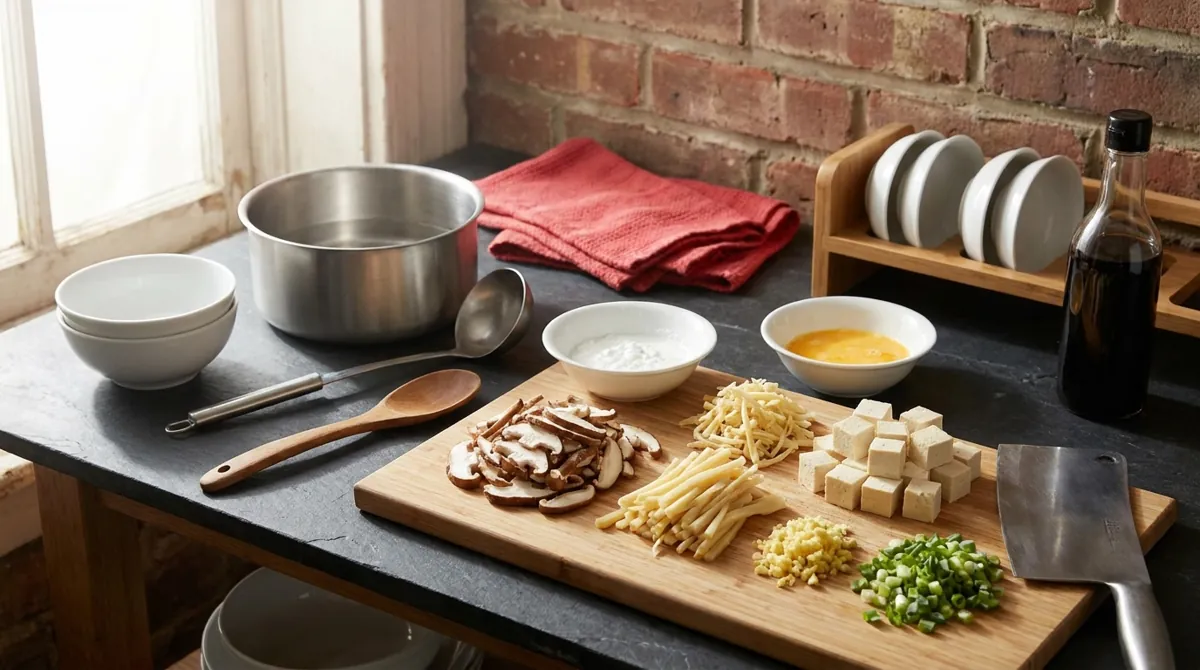
Slice the mushrooms, cut the bamboo shoots and tofu into thin strips, mince the ginger and slice the scallions. Beat the eggs in a small bowl and stir the cornstarch into the cold water.
- Step 2
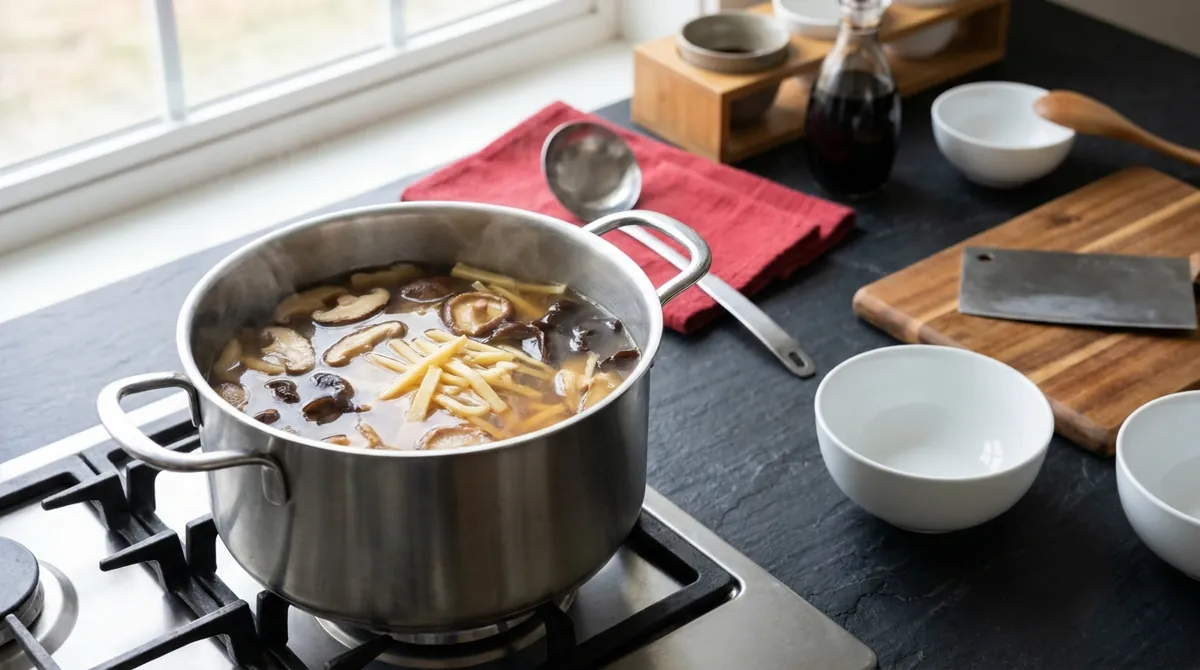
In a large pot, bring the broth, mushrooms, bamboo shoots, ginger and soy sauce to a simmer over medium heat and cook 5 minutes.
- Step 3
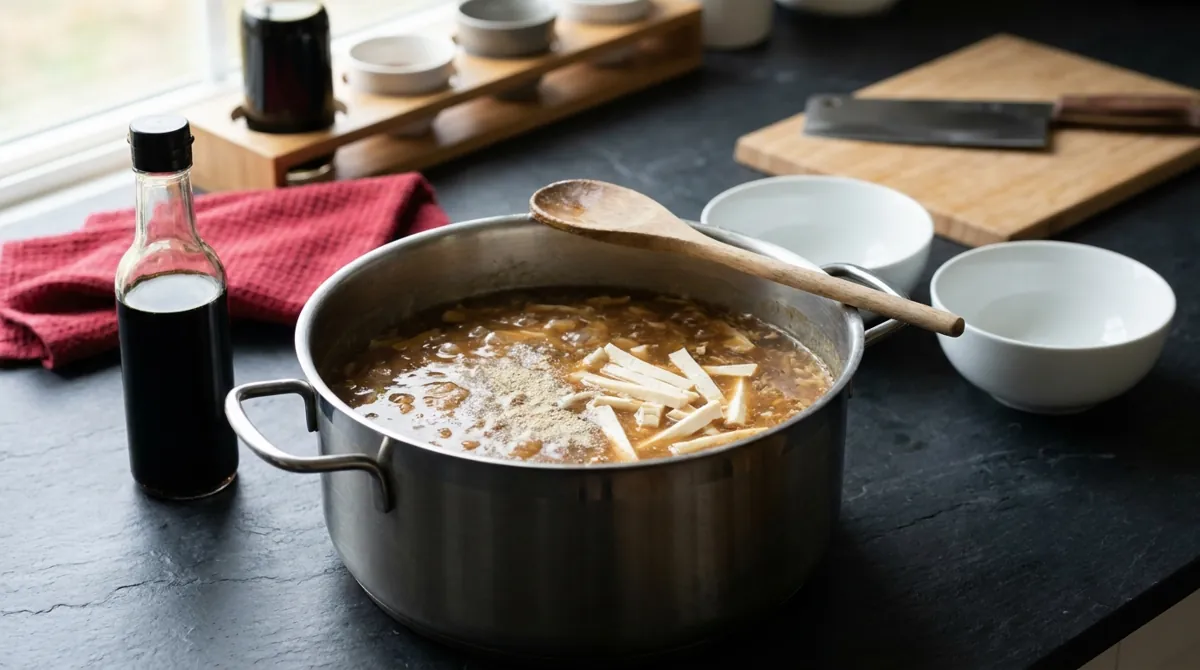
Add the tofu, vinegar and white pepper and simmer gently 2 minutes.
- Step 4
Stir the cornstarch mixture again, then add it to the simmering soup while stirring, and cook about 1 minute until the soup turns glossy and thickens enough to coat the back of a spoon.
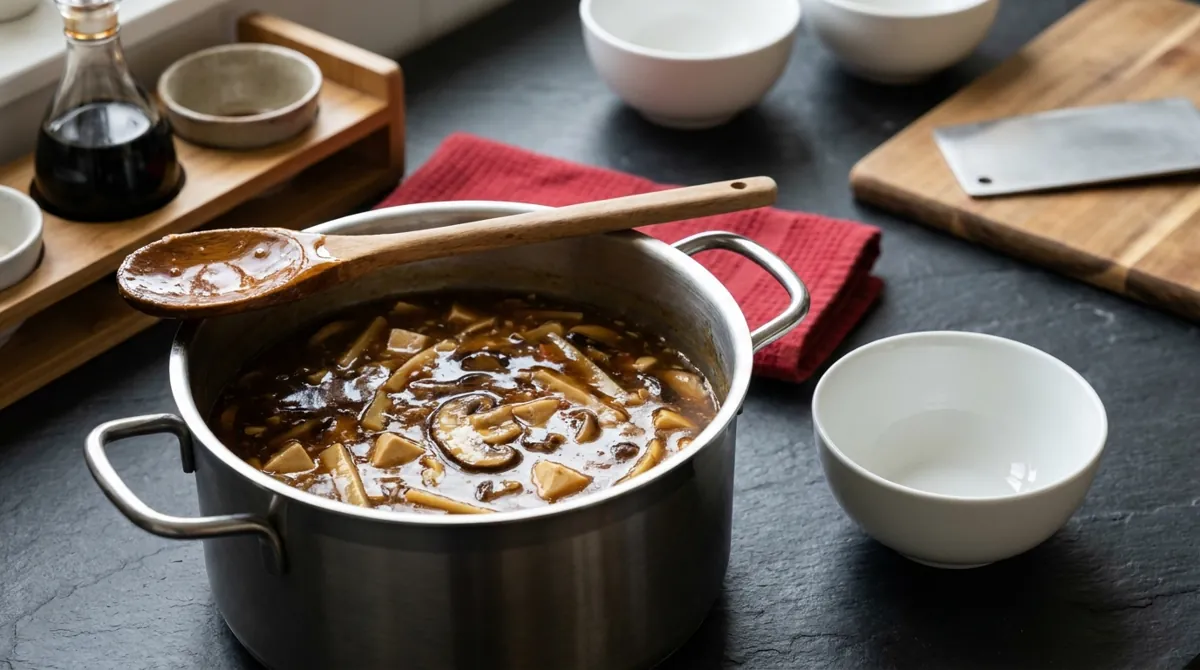
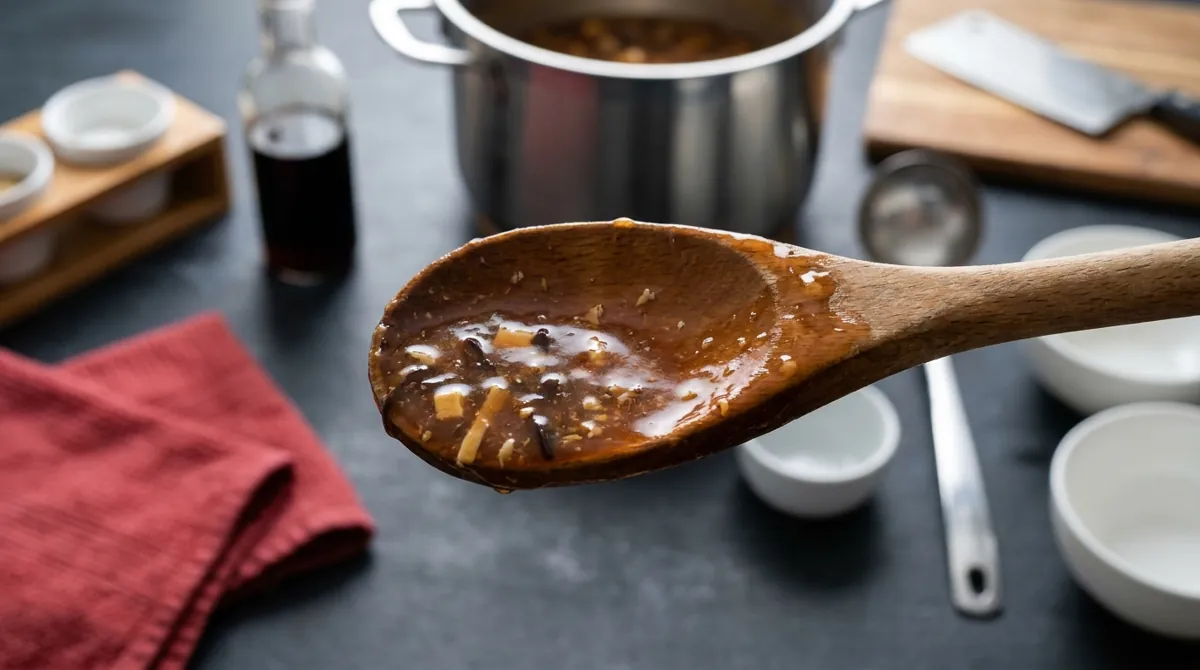
✓ What it should look like - Step 5
Turn the heat to low so the soup barely bubbles. Slowly drizzle in the beaten egg in a thin stream, in a circle, and wait 30 seconds without stirring; give it one slow stir to break the egg into ribbons.
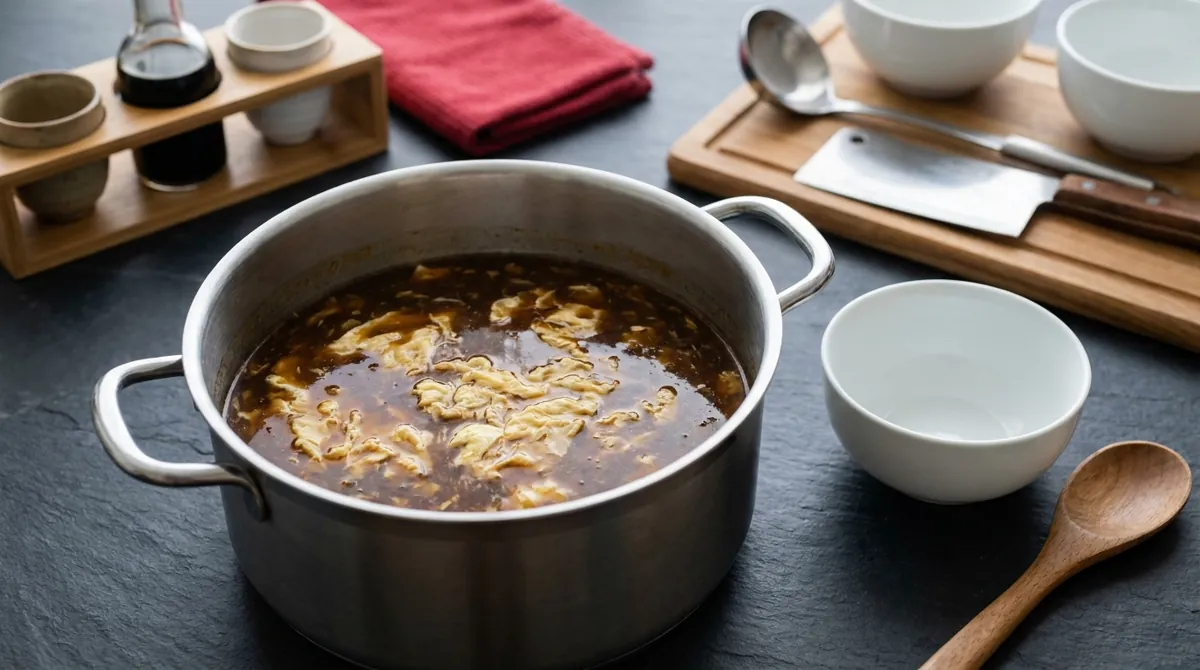
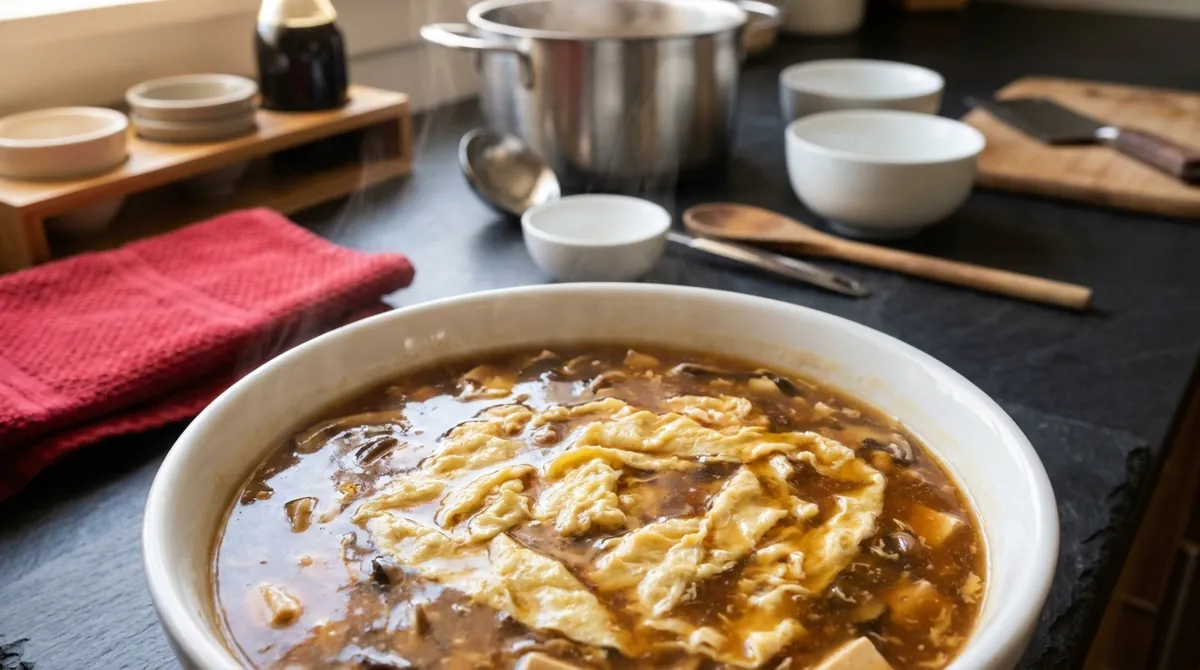
✓ What it should look like - Step 6
Take the pot off the heat. Add the sesame oil, then taste and add more vinegar or white pepper until it is both sour and peppery. Ladle into bowls and top with the scallions.
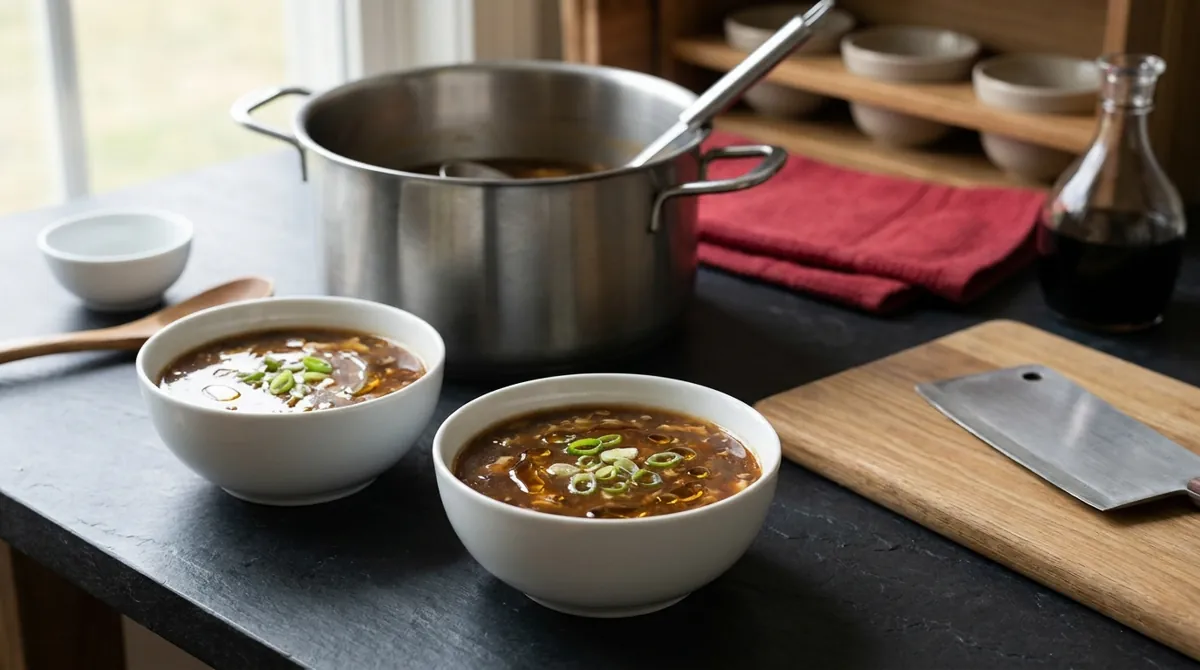
Hot and Sour Soup
Serves 4 bowls · about 6 cups · 30 min total
Broth
- 4 cups chicken broth (960 g)
- 3.5 oz fresh shiitake or white mushrooms (100 g), thinly sliced
- 1/2 cup canned bamboo shoots, cut into thin strips (70 g)
- 1 tbsp fresh ginger (6 g), minced
- 2 tbsp soy sauce (36 g)
Soup
- 6 oz firm tofu (170 g), cut into thin strips
- 1/4 cup rice vinegar or Chinkiang black vinegar, plus more to taste
- 1 tsp ground white pepper, plus more to taste
- 3 tbsp cornstarch (24 g) mixed with 1/4 cup cold water
- 2 large eggs (100 g), beaten
- 1 tsp toasted sesame oil (4.5 g)
- 2 scallions (30 g), thinly sliced
Equipment: Large pot, Chef's knife and cutting board, Measuring cups and spoons, Mixing bowls, Ladle
Method
- Slice the mushrooms, cut the bamboo shoots and tofu into thin strips, mince the ginger and slice the scallions. Beat the eggs in a small bowl and stir the cornstarch into the cold water.
- In a large pot, bring the broth, mushrooms, bamboo shoots, ginger and soy sauce to a simmer over medium heat and cook 5 minutes.
- Add the tofu, vinegar and white pepper and simmer gently 2 minutes.
- Stir the cornstarch mixture again, then add it to the simmering soup while stirring, and cook about 1 minute until the soup turns glossy and thickens enough to coat the back of a spoon.
- Turn the heat to low so the soup barely bubbles. Slowly drizzle in the beaten egg in a thin stream, in a circle, and wait 30 seconds without stirring; give it one slow stir to break the egg into ribbons.
- Take the pot off the heat. Add the sesame oil, then taste and add more vinegar or white pepper until it is both sour and peppery. Ladle into bowls and top with the scallions.
Americanized house recipe, written for this site, built from the ingredient and method elements common to the sources below. History: Wikipedia, "Hot and sour soup" (hulatang from Henan, Sichuan origin called a myth, Beijing claim, Chinese and American Chinese ingredients, thicker American version); Wikipedia, "Hot and sour noodles" and "Suan la fen" (the separate Sichuan dish). Ingredient notes: Healthy World Cuisine, "Suan La Tang". Not used for history: commercial food-blog pages that give Sichuan dates as early as the 4th century BCE, which look unreliable. en.wikipedia.org. Ingredient list follows the source; the method is in our own words.
All sources (3)
Tips
- White pepper is the heat. Black pepper tastes different and leaves specks; use it only if you have no white.
- Black vinegar (Chinkiang) gives a deeper, slightly sweet sourness than rice vinegar.
- Add 4 oz thinly sliced pork loin to the broth in step 2 for a meaty version, or dried wood ear and lily buds (soaked 20 minutes) for a more traditional one.
- The soup thickens as it sits; thin it with a splash of broth when reheating. Keeps 3 days refrigerated.
The rules people argue about
What the sources agree on, what they don't, and what is just a good story.
- Hot and sour soup is a Sichuan dish. Disputed: this is the popular story, but Wikipedia calls it a myth and traces the soup to Henan's hulatang, with Beijing also claiming it; the soup's form is hard to find in Sichuan itself.
Meatballs of the World

Italian-American Meatballs
Big, tender meatballs braised for an hour in red sauce over spaghetti. The one most Americans grew up with.

Pallottine (Abruzzo Meatballs)
Tiny meatballs, smaller than a marble, tossed right through square spaghetti alla chitarra. No bread at all.

Swedish Meatballs (Köttbullar)
Small, soft meatballs browned in butter, in a cream sauce made from the same pan, with lingonberry jam on the plate.

Danish Frikadeller
Pork meatballs shaped with a spoon and fried slowly in butter, crusty outside and soft in the middle.

Königsberger Klopse
German meatballs that are never fried: poached, then served in a creamy white sauce with capers.

Spanish Albóndigas in Almond Saffron Sauce
The tapas bar classic: small meatballs in a golden sauce thickened with fried almonds and bread.

Mexican Albóndigas with Chipotle and Mint
Soft meatballs with rice and fresh mint inside, simmered in a smoky tomato and chipotle broth.

Izgara Köfte (Turkish Grilled Meatballs)
Small, flat meatballs kneaded hard, rested cold, and charred on a hot grill pan.

Lion's Head Meatballs
Big, soft pork meatballs, stirred into a sticky paste, fried to set, then braised in a savory sauce.

Chicken Tsukune
Japan's chicken meatball: kneaded sticky, grilled on skewers, glazed with sweet soy tare, dipped in egg yolk.