
Japchae
Chewy, glossy sweet potato glass noodles tossed with beef, spinach, carrots, onion and shiitake in a sweet soy and sesame sauce: the Korean party dish that began at a king's table.
 Edited by JP Lambiase
Change the estimate
Swaps change the price only: cook any meat to its own safe temperature. Where these numbers come from
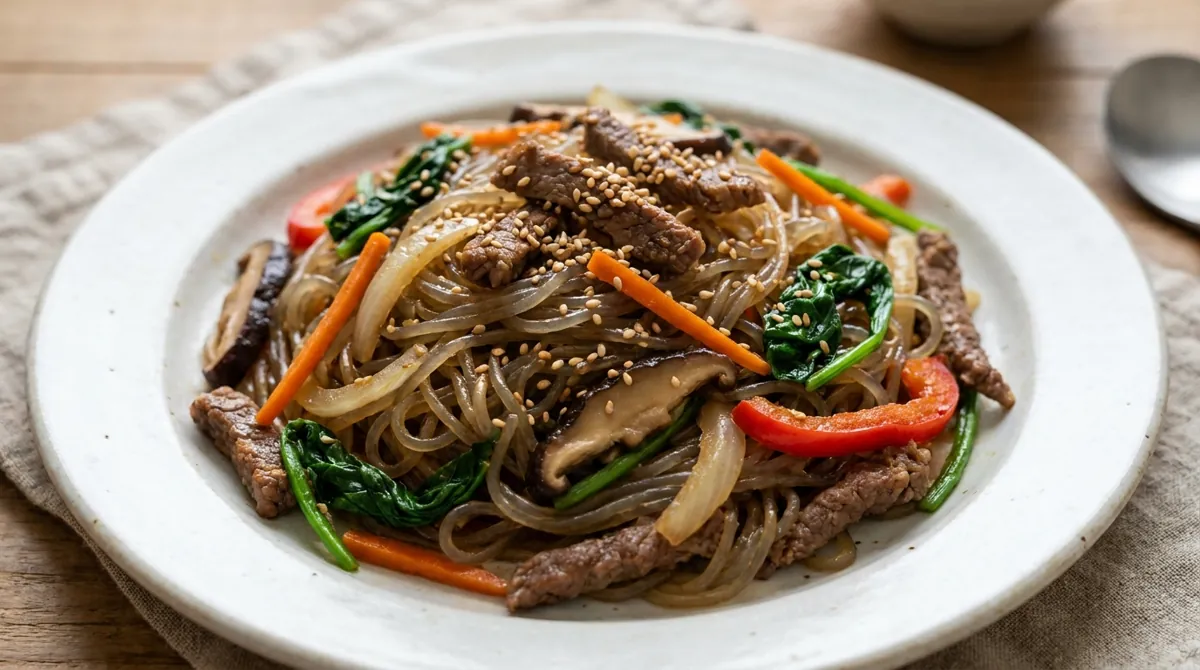
Japchae began in the Joseon royal court. According to the Veritable Records of the Joseon Dynasty, as summarized on Wikipedia, it was first made in the early 17th century by Yi Chung (1568 to 1619) for a palace banquet of King Gwanghaegun. The king liked it so much that he promoted Yi to a high post.
That first japchae had neither noodles nor meat: it was a stir-fry of vegetables and mushrooms such as cucumber, radish and shiitake, a luxury for royalty and senior officials. The glass noodles made from sweet potato starch, brought from China in the 20th century, made it popular with ordinary Koreans, and beef was added. Today it is a standard at birthdays, holidays and potlucks.
Why it works the kitchen science
Cooking each vegetable separately
Carrot, onion and mushroom cook at different speeds, so each stays bright and crisp-tender instead of everything turning to one mush.
Seasoning the noodles first
Glass noodles do not absorb flavor from a sauce poured at the end, so they are seasoned right after draining.
Sweet potato starch noodles
Their springy, chewy bite stays through reheating, unlike wheat noodles.
🧰 You'll need 5 items
Everything the steps call for. Tick off what you have before you start.
Pans and pots
Tools
Step by step
- Step 1
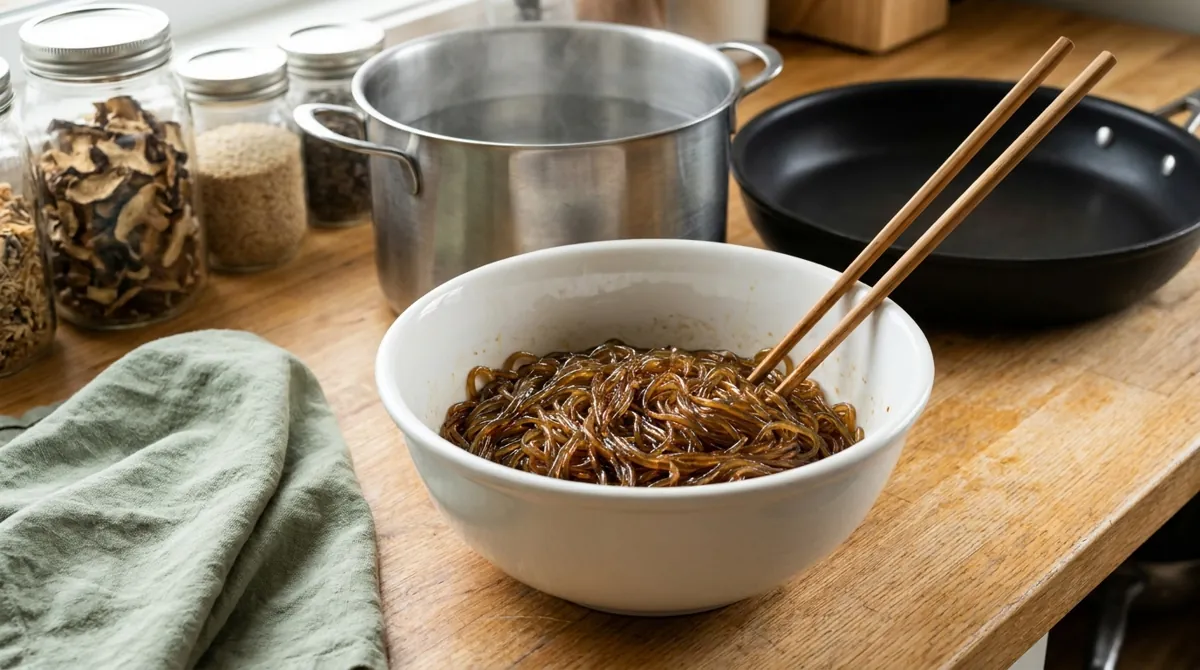
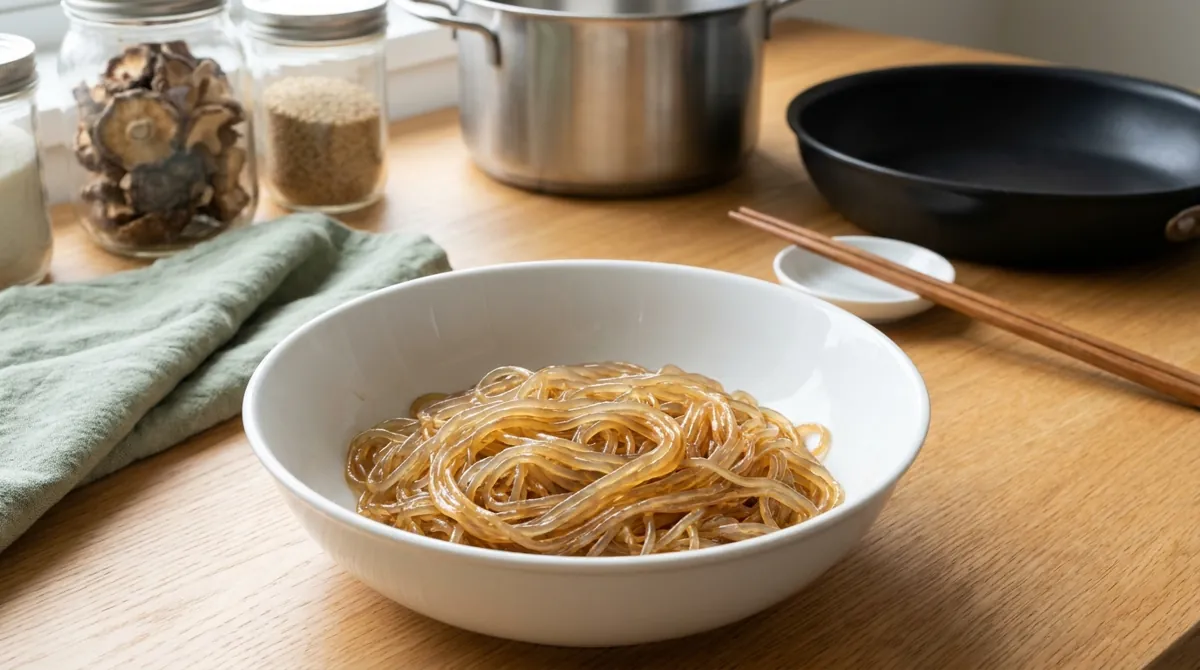
Boil the noodles in a large pot of water for 6 to 7 minutes, until chewy and fully clear. Drain, rinse briefly and snip them into shorter lengths. Toss with 2 tbsp soy sauce, 1 tbsp sugar and 1 tbsp sesame oil.
✓ What it should look like - Step 2
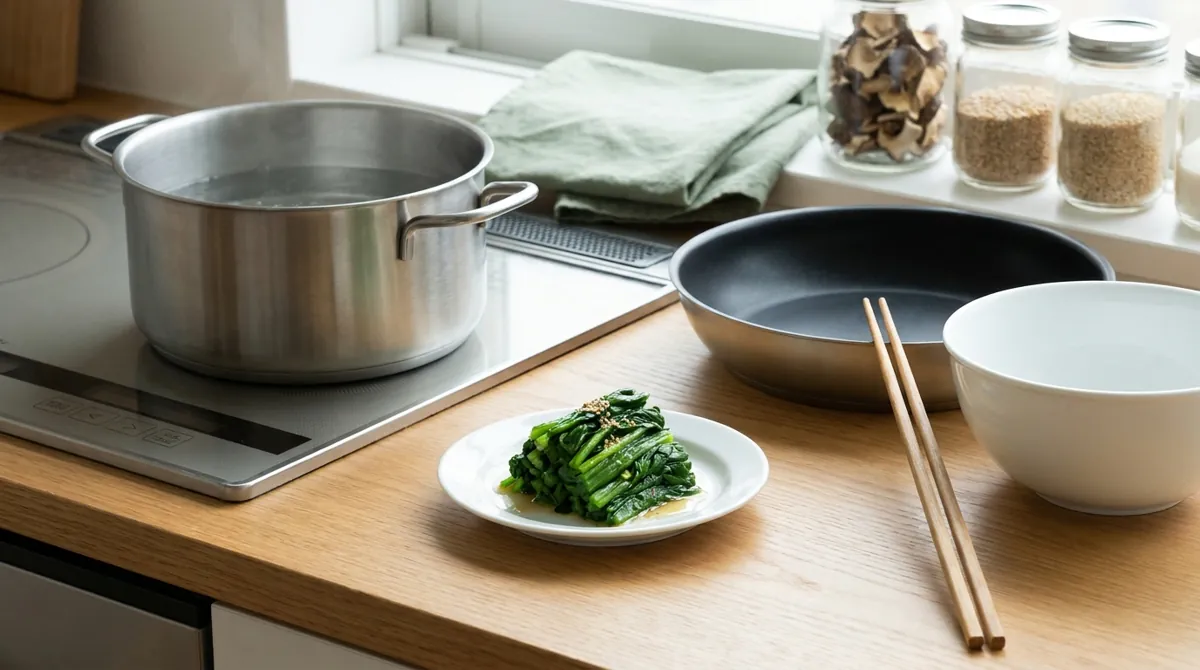
Blanch the spinach in the same pot for 30 seconds, drain and squeeze dry. Season it with a pinch of salt and 1 tbsp sesame oil.
- Step 3
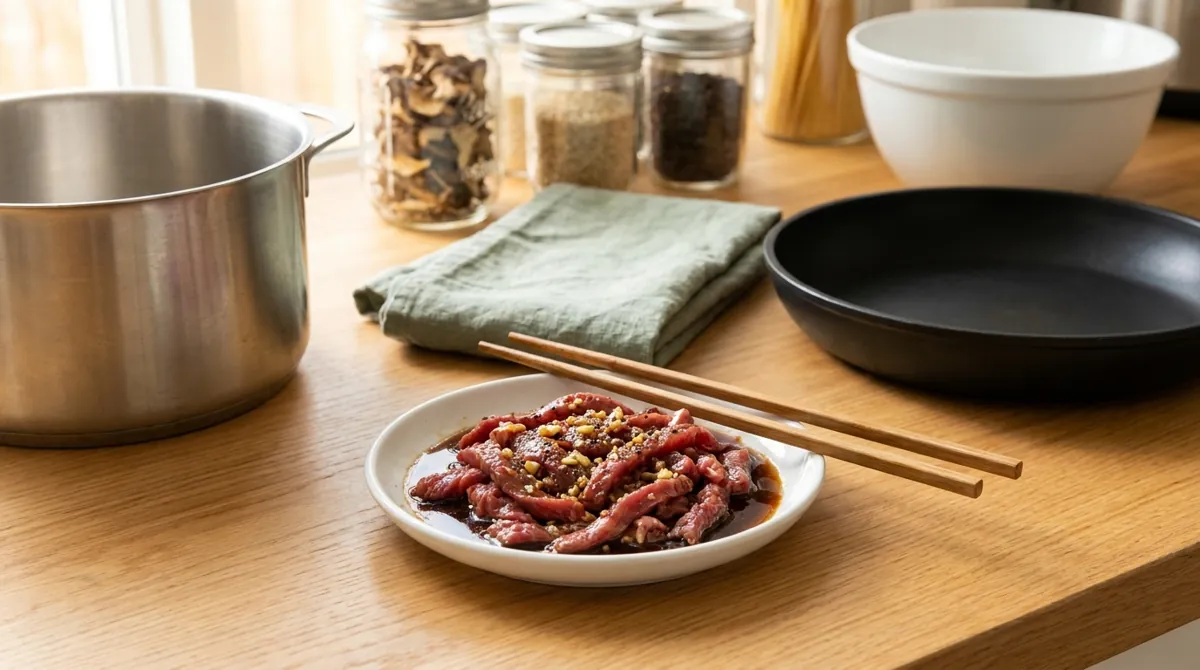
Mix the sliced beef with 2 tbsp soy sauce, 1 tbsp sugar, the 3 garlic cloves and the pepper.
- Step 4
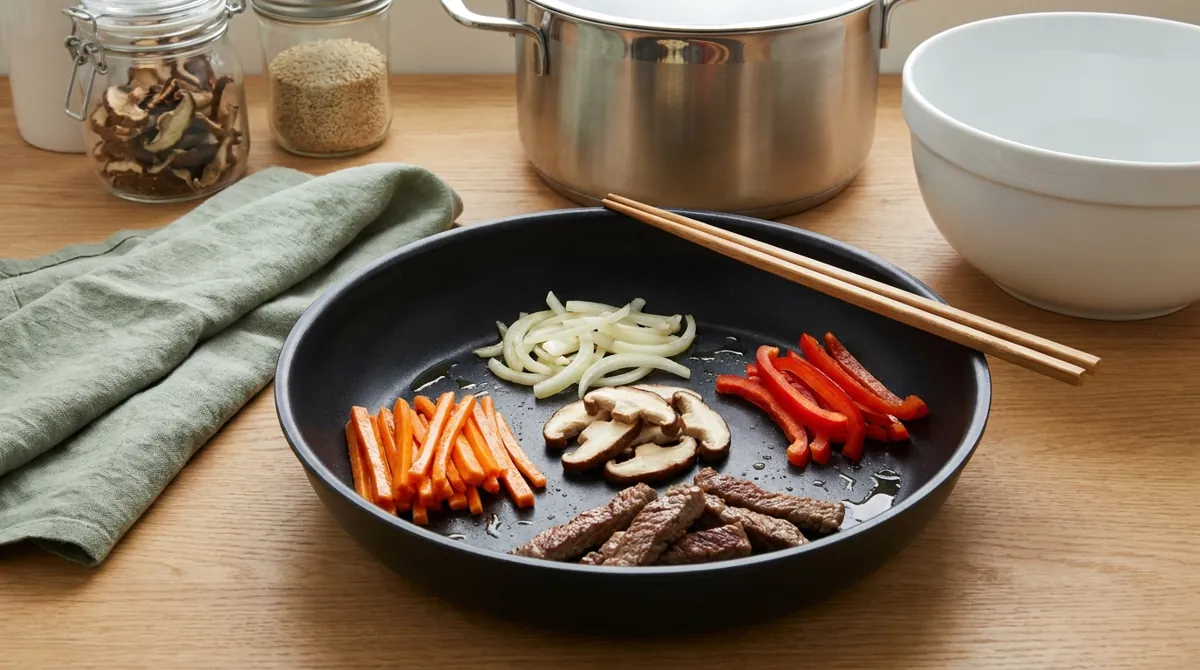
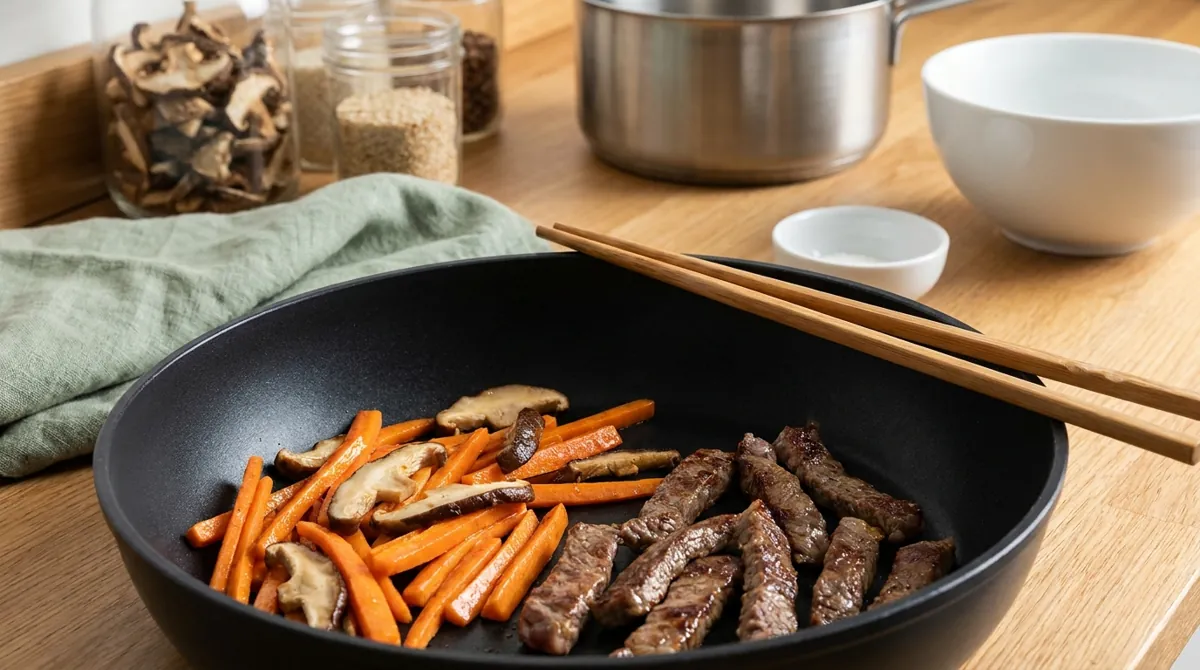
Heat 1 tbsp oil in a large skillet over medium-high heat. Cook the carrot, onion, mushrooms and bell pepper one at a time for 2 to 3 minutes each with a pinch of salt, moving each to a big bowl as it finishes. Cook the beef in the last of the oil for 2 to 3 minutes until just browned.
✓ What it should look like - Step 5
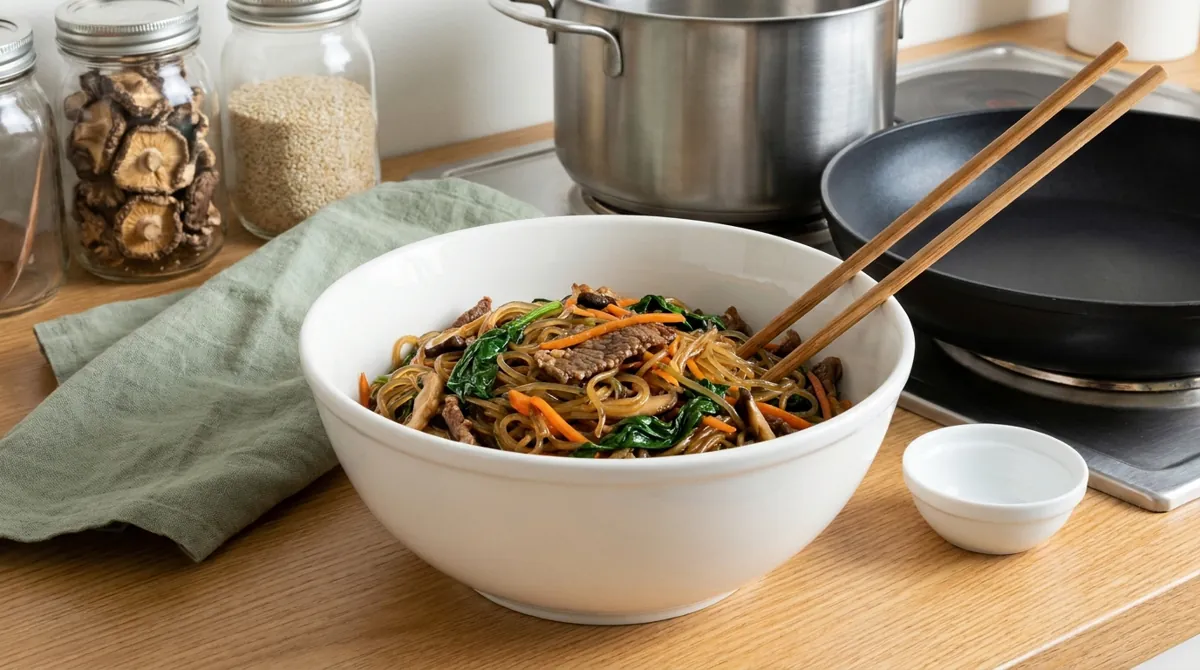
Add the noodles, spinach, beef and vegetables to the big bowl. Add the final 2 tbsp soy sauce, 1 tbsp sugar, the last clove of garlic and 1 tbsp sesame oil, and toss until every noodle is glossy.
- Step 6
Sprinkle with the sesame seeds. Serve warm or at room temperature.
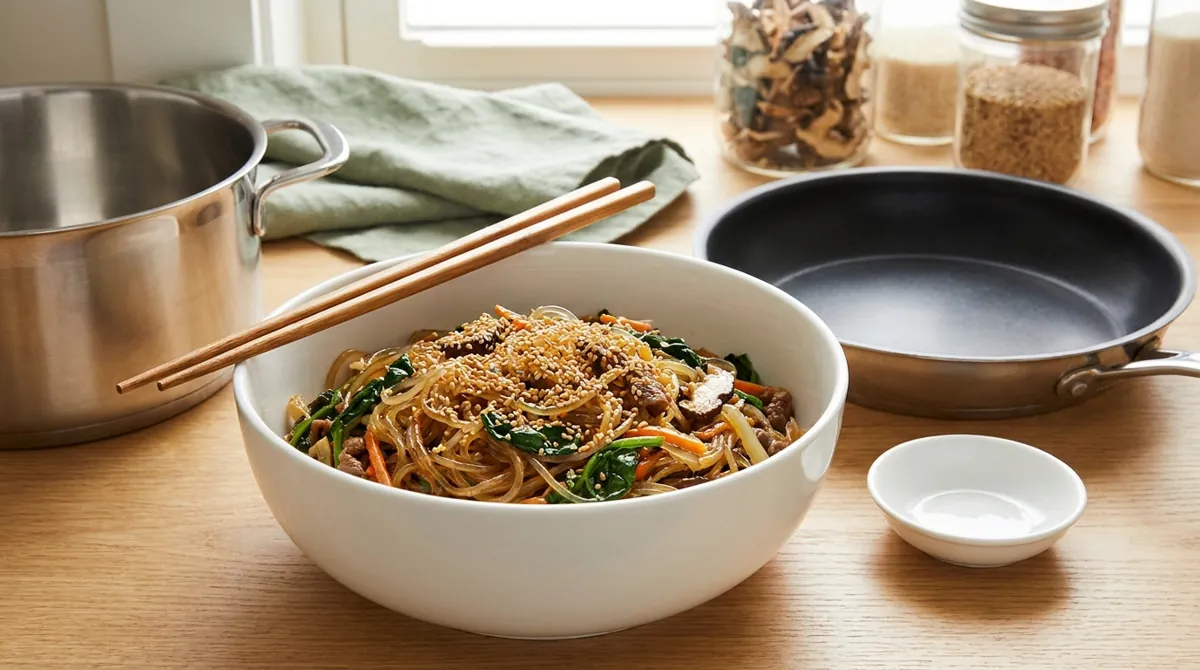
Japchae
Serves 6 · about 8 cups · 1 hr total
Noodles
- 8 oz dried Korean sweet potato starch noodles, dangmyeon (227 g)
- 2 tbsp soy sauce (32 g)
- 1 tbsp sugar (13 g)
- 1 tbsp toasted sesame oil (13 g)
Beef and vegetables
- 8 oz thinly sliced sirloin or ribeye, cut into thin strips (225 g)
- 2 tbsp soy sauce (32 g)
- 1 tbsp sugar (13 g)
- 3 cloves garlic, minced (9 g)
- 1/4 tsp black pepper
- 8 oz fresh spinach (225 g)
- 1 tbsp toasted sesame oil, for the spinach (13 g)
- 1 large carrot, cut into thin matchsticks (100 g)
- 1 medium onion, thinly sliced (150 g)
- 4 oz shiitake mushrooms, sliced (100 g)
- 1 red bell pepper, thinly sliced (100 g)
- 2 tbsp neutral oil (27 g)
- 1 tsp salt
To finish
- 2 tbsp soy sauce (32 g)
- 1 tbsp sugar (13 g)
- 1 tbsp toasted sesame oil (13 g)
- 1 clove garlic, minced (3 g)
- 1 tbsp toasted sesame seeds (9 g)
Equipment: Large pot, Large skillet, Chef's knife and cutting board, Measuring cups and spoons, Mixing bowls
Method
- Boil the noodles in a large pot of water for 6 to 7 minutes, until chewy and fully clear. Drain, rinse briefly and snip them into shorter lengths. Toss with 2 tbsp soy sauce, 1 tbsp sugar and 1 tbsp sesame oil.
- Blanch the spinach in the same pot for 30 seconds, drain and squeeze dry. Season it with a pinch of salt and 1 tbsp sesame oil.
- Mix the sliced beef with 2 tbsp soy sauce, 1 tbsp sugar, the 3 garlic cloves and the pepper.
- Heat 1 tbsp oil in a large skillet over medium-high heat. Cook the carrot, onion, mushrooms and bell pepper one at a time for 2 to 3 minutes each with a pinch of salt, moving each to a big bowl as it finishes. Cook the beef in the last of the oil for 2 to 3 minutes until just browned.
- Add the noodles, spinach, beef and vegetables to the big bowl. Add the final 2 tbsp soy sauce, 1 tbsp sugar, the last clove of garlic and 1 tbsp sesame oil, and toss until every noodle is glossy.
- Sprinkle with the sesame seeds. Serve warm or at room temperature.
Americanized house recipe, written for this site. History: Wikipedia, "Japchae" (Yi Chung, Gwanghaegun, early 17th century, the noodle-free original, the 20th-century sweet potato noodles). en.wikipedia.org. Ingredient list follows the source; the method is in our own words.
All sources (1)
Tips
- Use real dangmyeon, which you can find in Korean markets. Mung bean glass noodles will work, but are less chewy.
- Japchae is better made ahead. It keeps in the fridge for 3 days; reheat in a skillet with a splash of water.
- Leave out the beef for a vegetarian version, which is closer to the court original.
The rules people argue about
What the sources agree on, what they don't, and what is just a good story.
- Japchae has always been a noodle dish. Disputed: the court original in the early 1600s is described as a noodle-free stir-fry of vegetables and mushrooms; sweet potato noodles came in the 20th century.
- Japchae was invented by Yi Chung. Documented: Wikipedia cites the Joseon royal records for Yi Chung and the early 17th-century date; we have not read the records themselves.
Meatballs of the World

Italian-American Meatballs
Big, tender meatballs braised for an hour in red sauce over spaghetti. The one most Americans grew up with.

Pallottine (Abruzzo Meatballs)
Tiny meatballs, smaller than a marble, tossed right through square spaghetti alla chitarra. No bread at all.

Swedish Meatballs (Köttbullar)
Small, soft meatballs browned in butter, in a cream sauce made from the same pan, with lingonberry jam on the plate.

Danish Frikadeller
Pork meatballs shaped with a spoon and fried slowly in butter, crusty outside and soft in the middle.

Königsberger Klopse
German meatballs that are never fried: poached, then served in a creamy white sauce with capers.

Spanish Albóndigas in Almond Saffron Sauce
The tapas bar classic: small meatballs in a golden sauce thickened with fried almonds and bread.

Mexican Albóndigas with Chipotle and Mint
Soft meatballs with rice and fresh mint inside, simmered in a smoky tomato and chipotle broth.

Izgara Köfte (Turkish Grilled Meatballs)
Small, flat meatballs kneaded hard, rested cold, and charred on a hot grill pan.

Lion's Head Meatballs
Big, soft pork meatballs, stirred into a sticky paste, fried to set, then braised in a savory sauce.

Chicken Tsukune
Japan's chicken meatball: kneaded sticky, grilled on skewers, glazed with sweet soy tare, dipped in egg yolk.