
Key Lime Pie
Tart lime juice, egg yolks and a can of sweetened condensed milk set into a silky custard in a buttery graham cracker crust: Florida's official state pie, cold and topped with lightly sweetened whipped cream.
🍳Cook alongOne move at a time, with real timers
 Edited by JP Lambiase
Change the estimate
Swaps change the price only: cook any meat to its own safe temperature. Where these numbers come from
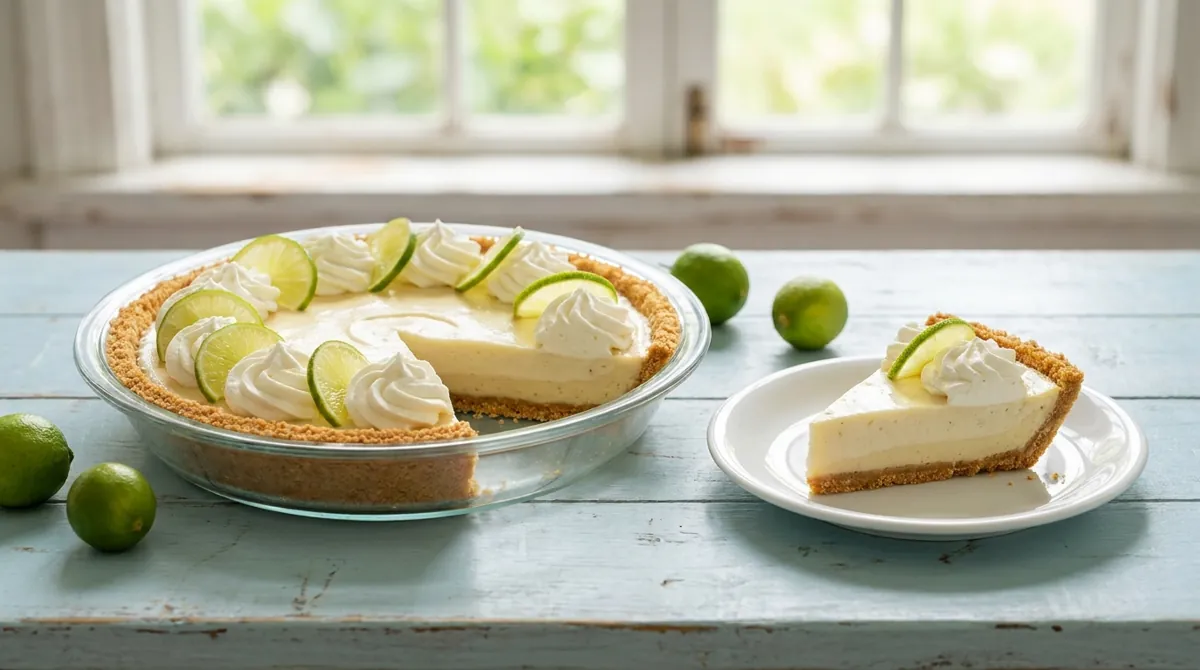
Key lime pie needs almost no cooking, and that is the trick behind it. Lime juice is acidic enough to thicken sweetened condensed milk and egg yolks on its own, so the filling sets with a short bake or even none. The Key lime itself is small, very tart and aromatic, with yellow juice, which is why a true Key lime pie is pale yellow, not green.
Where it came from is unsettled. In the 1980s the food writer John Egerton dated the pie in the Florida Keys to at least the 1890s, and Jean Anderson found that credible, but nobody has found a printed recipe that old. A 1927 Key West Women's Club cookbook has no such pie. What the record does show is Borden's "Magic Lemon Cream Pie" in a 1931 condensed milk brochure, a "Tropical Lime Chiffon Pie" with condensed milk and yolks in the Miami Herald in 1933, an "icebox lime pie" described as a Keys specialty in 1935, and a recipe called Key Lime Pie by 1940. Wikipedia concludes the pie probably comes from Borden's lemon version. The popular story that a cook called Aunt Sally invented it for the Key West millionaire William Curry first appears in 1995, in promotion for a bed and breakfast in Curry's old house.
Key limes have not been grown commercially in the United States since the 1926 Miami hurricane, so most pies today use bottled Key lime juice or ordinary Persian limes. In 1965 a Florida legislator proposed a $100 fine for selling "Key lime pie" made with other limes; the bill failed. In 2006 Florida made key lime pie its official state pie.
Why it works the kitchen science
Acid sets the filling
Lime juice thickens sweetened condensed milk and egg yolks with no cooking at all. The short bake firms it a little more (Wikipedia; King Arthur Baking). It only reaches about 145°F, short of the 160°F USDA gives for fully cooked eggs, so use pasteurized eggs if you're serving anyone pregnant, very young, elderly or with a weak immune system.
Zest into the yolks first
Whisking the zest with the yolks before the milk goes in draws out the lime oil, so the pie tastes of lime and not only of sour (America's Test Kitchen).
The 10 minute rest
The filling thickens in the bowl before it bakes, so it sets evenly instead of running at the edges.
Pull it while it wobbles
Like any custard, it keeps setting as it cools. Bake until it is firm and it turns grainy and cracked.
Prebaked crust
Baking the crumbs first sets the butter and sugar into a crisp shell that stays crisp under a wet filling.
🧰 You'll need 8 items
Everything the steps call for. Tick off what you have before you start.
Appliances
Pans and pots
Tools
Step by step
- Step 1
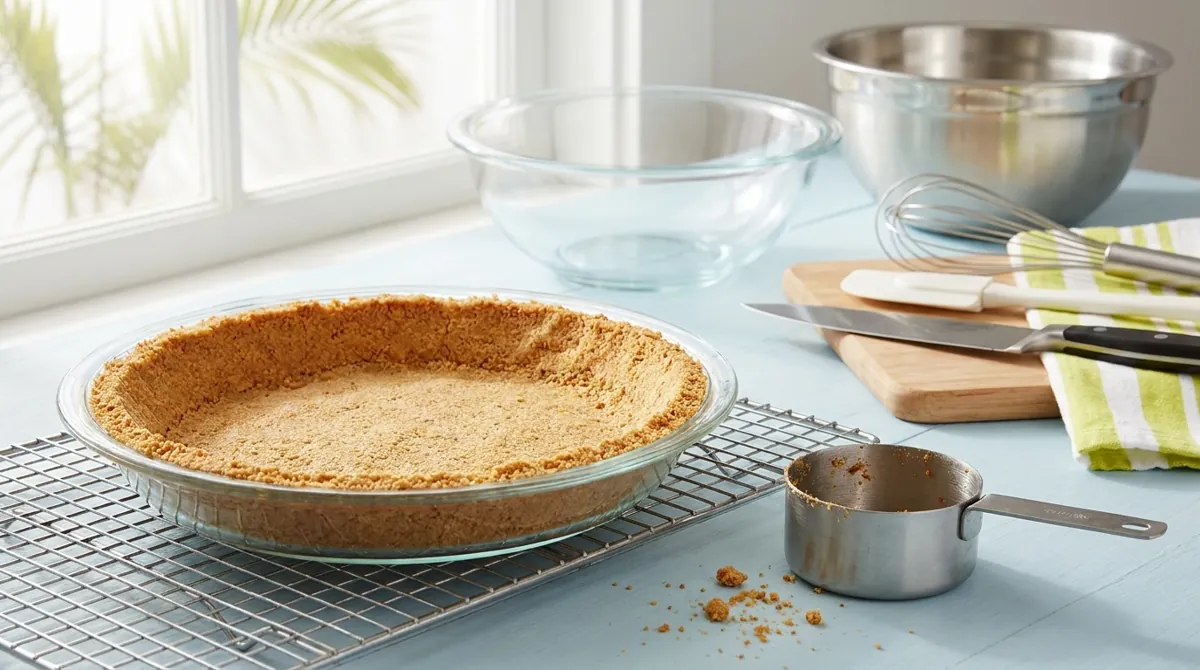
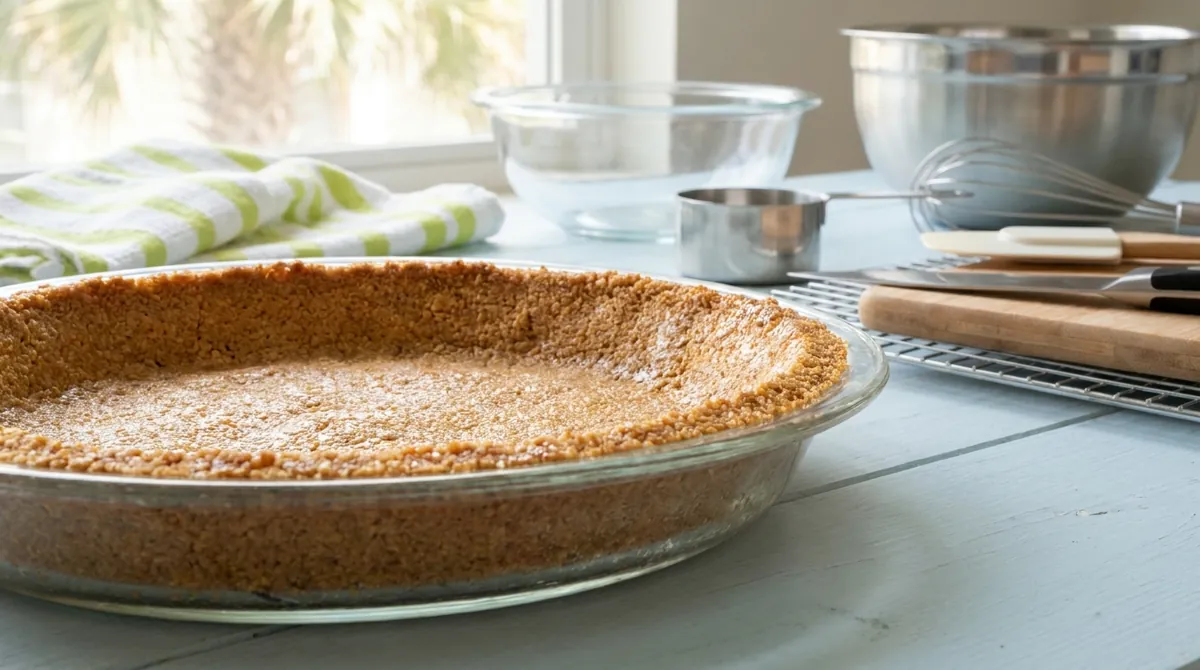
Heat the oven to 325°F with a rack in the middle. Stir the graham cracker crumbs, sugar, salt and melted butter together in a medium bowl until they look like wet sand. Press them evenly over the bottom and up the sides of a 9 inch glass pie plate with the bottom of a measuring cup. Bake about 15 minutes, until fragrant and a shade darker, and cool on a wire rack while you make the filling.
✓ What it should look like - Step 2
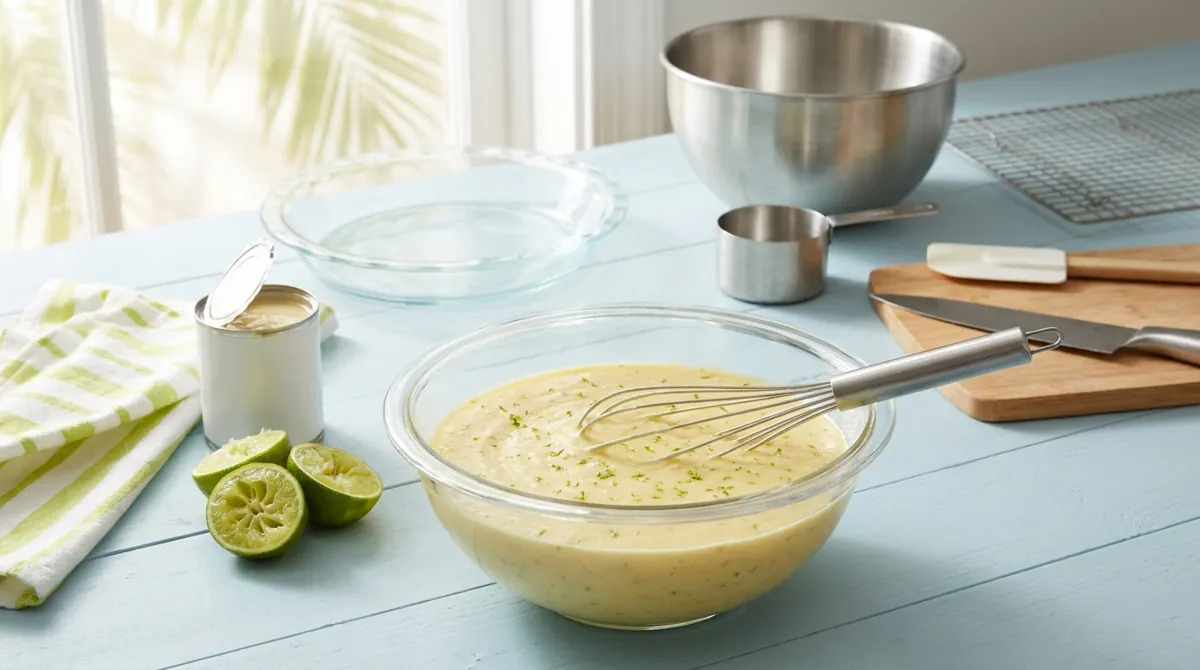
Whisk the lime zest and egg yolks in a medium bowl for about 2 minutes, until pale and slightly thickened. Whisk in the condensed milk, then the lime juice, until smooth. Let it stand 10 minutes at room temperature; it will thicken noticeably as the acid sets the milk.
- Step 3
Spread the filling in the crust and bake 15 to 17 minutes, until the edges are set and the center still wobbles like gelatin when you nudge the plate (about 145°F in the center).
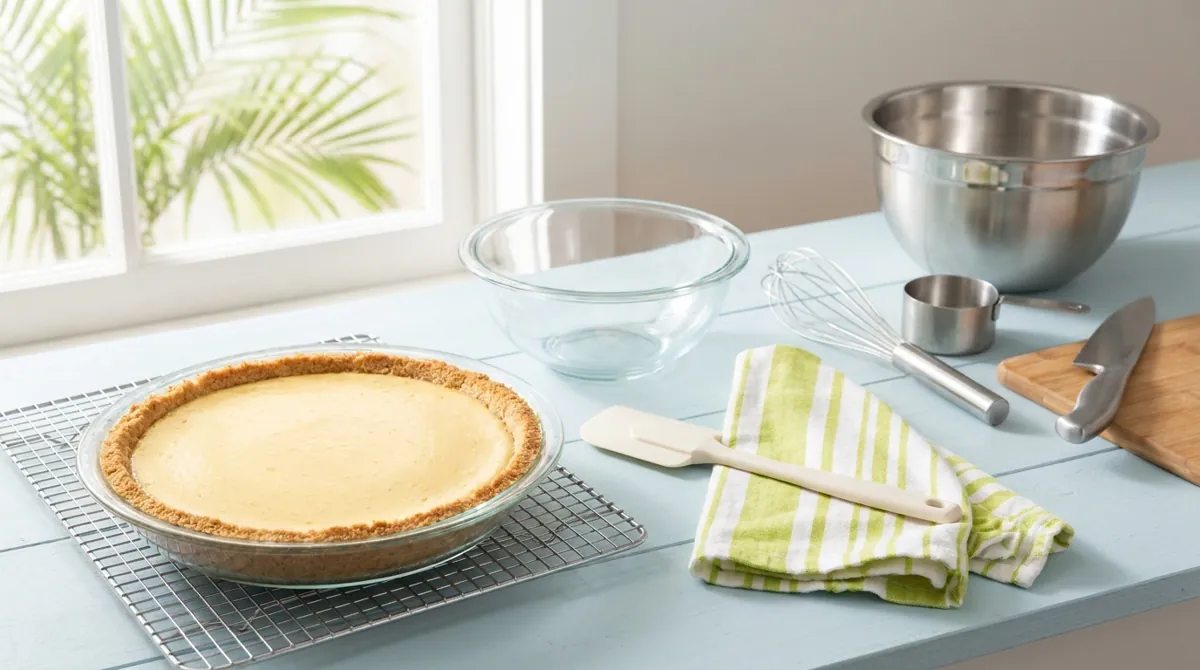
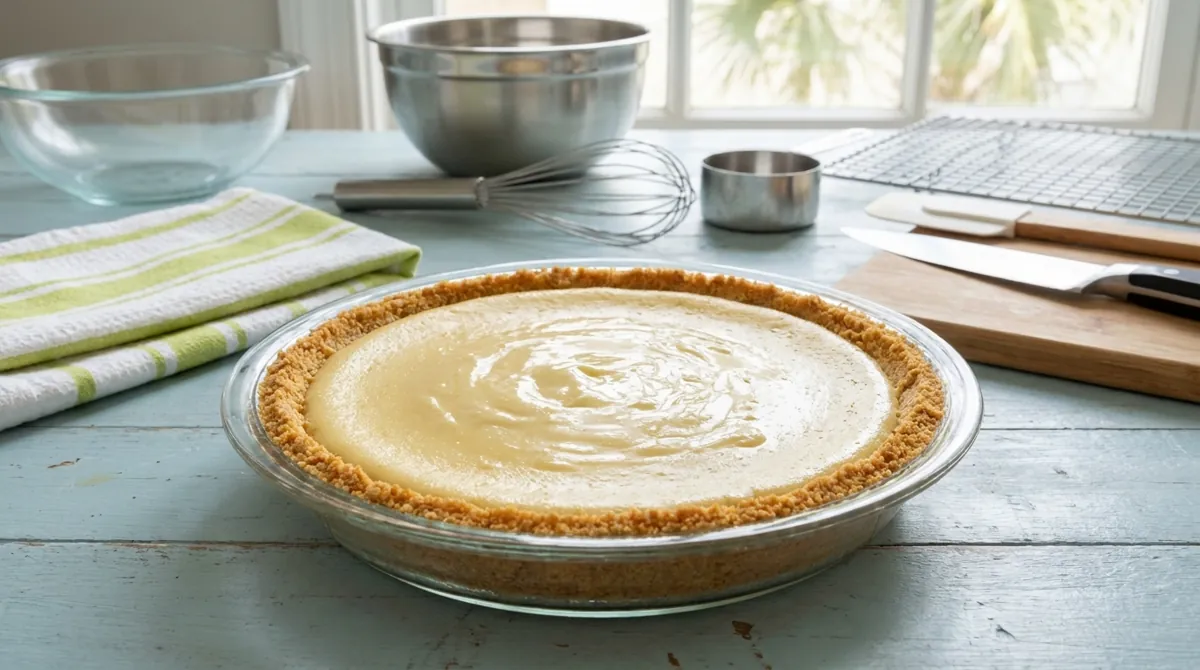
✓ What it should look like - Step 4
Cool on the wire rack to room temperature, about 1 hour, then refrigerate at least 3 hours, until cold and firm.
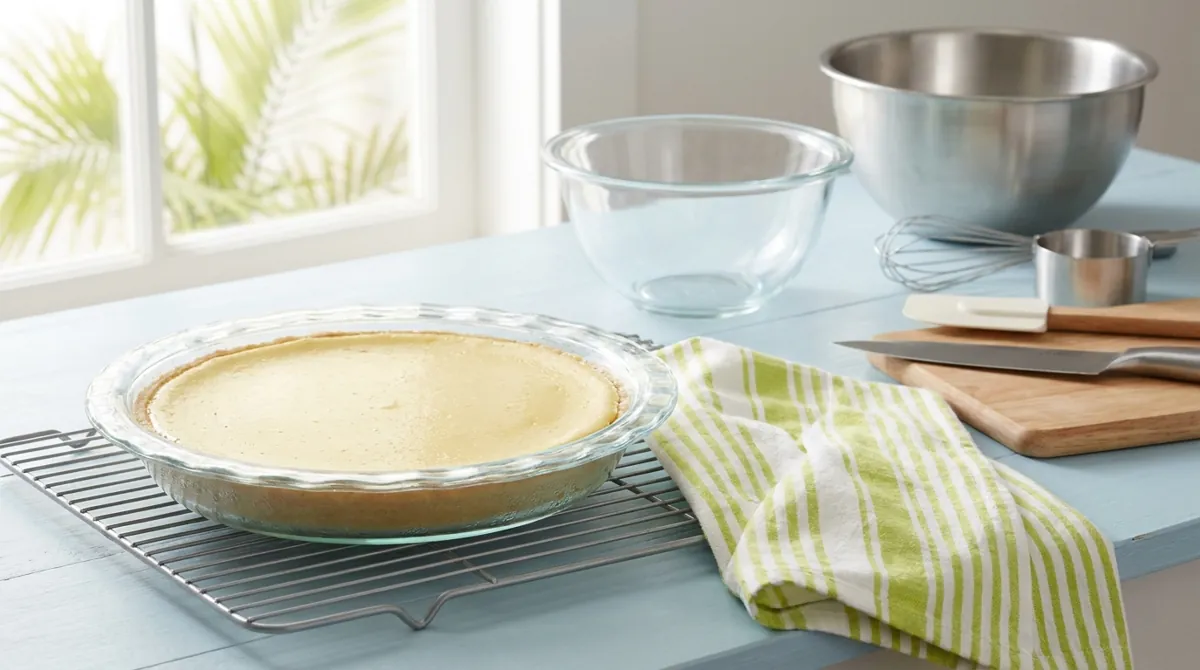
- Step 5
Whip the cream in a chilled bowl until it thickens, then add the powdered sugar a spoonful at a time and whip to just-stiff peaks. Spread it over the cold pie, add lime slices if you like, and cut with a knife wiped clean between slices.
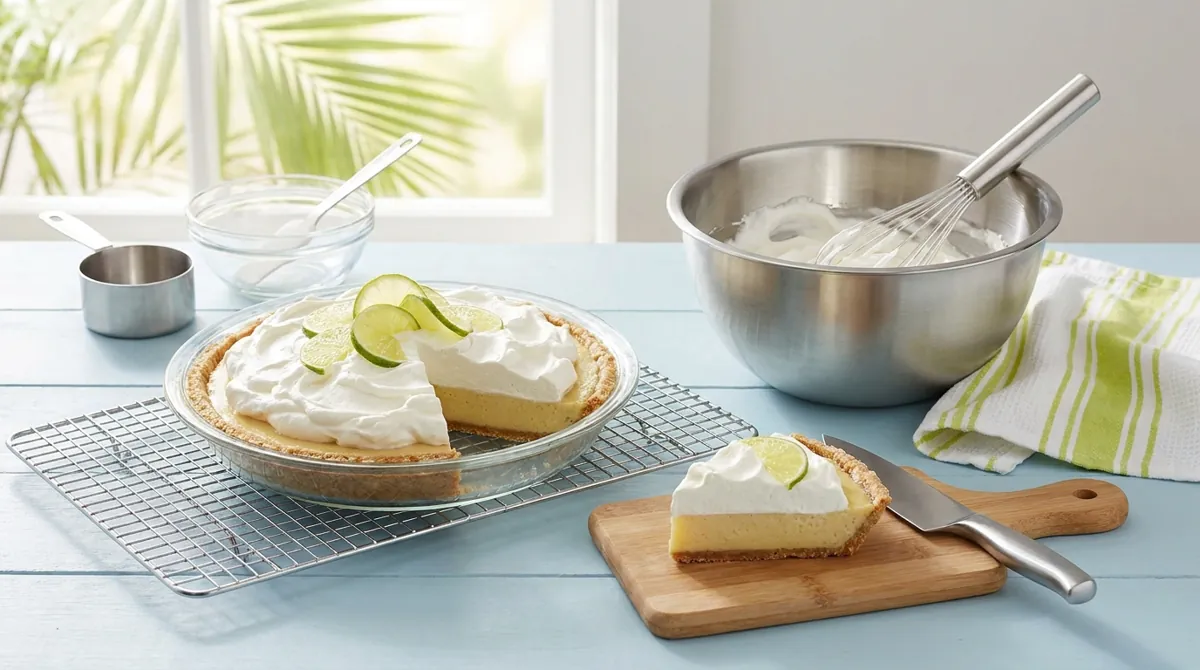
Key Lime Pie
Serves 8 · one 9 inch pie · 5 hr 5 min total
Graham cracker crust
- 11 whole graham crackers, crushed fine (1 1/4 cups crumbs, 140 g)
- 3 tbsp granulated sugar (38 g)
- 5 tbsp unsalted butter, melted (71 g)
- Pinch of fine salt
Filling
- 4 tsp finely grated lime zest (from 2 limes)
- 4 large egg yolks (68 g)
- 1 can (14 oz) sweetened condensed milk (397 g)
- 1/2 cup Key lime juice, fresh or bottled, or fresh Persian lime juice from 3 to 4 limes (120 g)
Whipped cream topping
- 3/4 cup cold heavy cream (180 g)
- 1/4 cup powdered sugar (30 g)
- Thin lime slices, optional
Equipment: Oven, Pie plate, Wire rack, Instant-read thermometer, Chef's knife and cutting board, Measuring cups and spoons, Mixing bowls, Whisk
Method
- Heat the oven to 325°F with a rack in the middle. Stir the graham cracker crumbs, sugar, salt and melted butter together in a medium bowl until they look like wet sand. Press them evenly over the bottom and up the sides of a 9 inch glass pie plate with the bottom of a measuring cup. Bake about 15 minutes, until fragrant and a shade darker, and cool on a wire rack while you make the filling.
- Whisk the lime zest and egg yolks in a medium bowl for about 2 minutes, until pale and slightly thickened. Whisk in the condensed milk, then the lime juice, until smooth. Let it stand 10 minutes at room temperature; it will thicken noticeably as the acid sets the milk.
- Spread the filling in the crust and bake 15 to 17 minutes, until the edges are set and the center still wobbles like gelatin when you nudge the plate (about 145°F in the center).
- Cool on the wire rack to room temperature, about 1 hour, then refrigerate at least 3 hours, until cold and firm.
- Whip the cream in a chilled bowl until it thickens, then add the powdered sugar a spoonful at a time and whip to just-stiff peaks. Spread it over the cold pie, add lime slices if you like, and cut with a knife wiped clean between slices.
Americanized house recipe, written for this site. History: Wikipedia, "Key lime pie" (Egerton and the 1890s, Jean Anderson, Borden's 1931 Magic Lemon Cream Pie, the 1933 Miami Herald Tropical Lime Chiffon Pie, the 1935 icebox lime pie, the 1940 recipe, the 1927 Key West Women's Club cookbook, the Aunt Sally story traced to 1995, the 1926 hurricane, the failed 1965 bill, Florida statute 15.052 in 2006, crust and topping variants, how the filling thickens). Technique: America's Test Kitchen, "Key Lime Pie" (zest whisked into the yolks, the filling rested to thicken, crust baked at 325°F for 15 minutes, filling baked 15 to 17 minutes until set but wiggly, at least 3 hours chilling, bottled juice tasted off); King Arthur Baking, "Classic Key Lime Pie" (Key lime or fresh Persian lime juice, bake until set at the edges and a bit wobbly in the center, about 145°F, whipped cream topping optional). en.wikipedia.org. Ingredient list follows the source; the method is in our own words.
All sources (3)
Tips
- Real Key limes are tiny and seedy, so juicing 1/2 cup takes a lot of them. Bottled Key lime juice works, but America's Test Kitchen found bottled juice could taste off, so taste it first. Fresh Persian limes make a slightly milder, very good pie.
- For a meringue topping instead of cream, whip the 4 leftover egg whites with 1/2 cup sugar to stiff peaks, spread them to the crust edge on the hot pie and bake at 350°F about 15 minutes, until golden.
- The pie keeps, covered and refrigerated, up to 2 days with whipped cream, longer without. Add the cream close to serving.
The rules people argue about
What the sources agree on, what they don't, and what is just a good story.
- Key lime pie dates to the 1890s Keys. Disputed: John Egerton dated it to at least the 1890s and Jean Anderson found that credible, but the oldest solid sources are the 1930s, and Wikipedia says it probably derives from Borden's 1931 Magic Lemon Cream Pie.
- Aunt Sally, William Curry's cook, invented it. Folklore: Wikipedia finds no supporting evidence, and the story first appears in 1995 bed and breakfast promotion.
- It must be made with Key limes. Disputed: Florida once tried to fine pies made with other limes (the 1965 bill failed). Key limes have not been grown commercially in the US since 1926, and King Arthur Baking and America's Test Kitchen both accept fresh Persian lime juice.
- Never bake it. Disputed: the filling will set from the acid alone, and early icebox pies were not baked, but most recipes now bake it briefly to firm the filling.
Meatballs of the World

Italian-American Meatballs
Big, tender meatballs braised for an hour in red sauce over spaghetti. The one most Americans grew up with.

Pallottine (Abruzzo Meatballs)
Tiny meatballs, smaller than a marble, tossed right through square spaghetti alla chitarra. No bread at all.

Swedish Meatballs (Köttbullar)
Small, soft meatballs browned in butter, in a cream sauce made from the same pan, with lingonberry jam on the plate.

Danish Frikadeller
Pork meatballs shaped with a spoon and fried slowly in butter, crusty outside and soft in the middle.

Königsberger Klopse
German meatballs that are never fried: poached, then served in a creamy white sauce with capers.

Spanish Albóndigas in Almond Saffron Sauce
The tapas bar classic: small meatballs in a golden sauce thickened with fried almonds and bread.

Mexican Albóndigas with Chipotle and Mint
Soft meatballs with rice and fresh mint inside, simmered in a smoky tomato and chipotle broth.

Izgara Köfte (Turkish Grilled Meatballs)
Small, flat meatballs kneaded hard, rested cold, and charred on a hot grill pan.

Lion's Head Meatballs
Big, soft pork meatballs, stirred into a sticky paste, fried to set, then braised in a savory sauce.

Chicken Tsukune
Japan's chicken meatball: kneaded sticky, grilled on skewers, glazed with sweet soy tare, dipped in egg yolk.