
Kimchi Mandu (Korean King-Size Kimchi Dumplings)
Big homemade wrappers pleated around a juicy filling of seasoned ground beef, chopped kimchi, tofu, sweet potato glass noodles and garlic chives, steamed and served with a sharp soy, vinegar and chile dipping sauce.
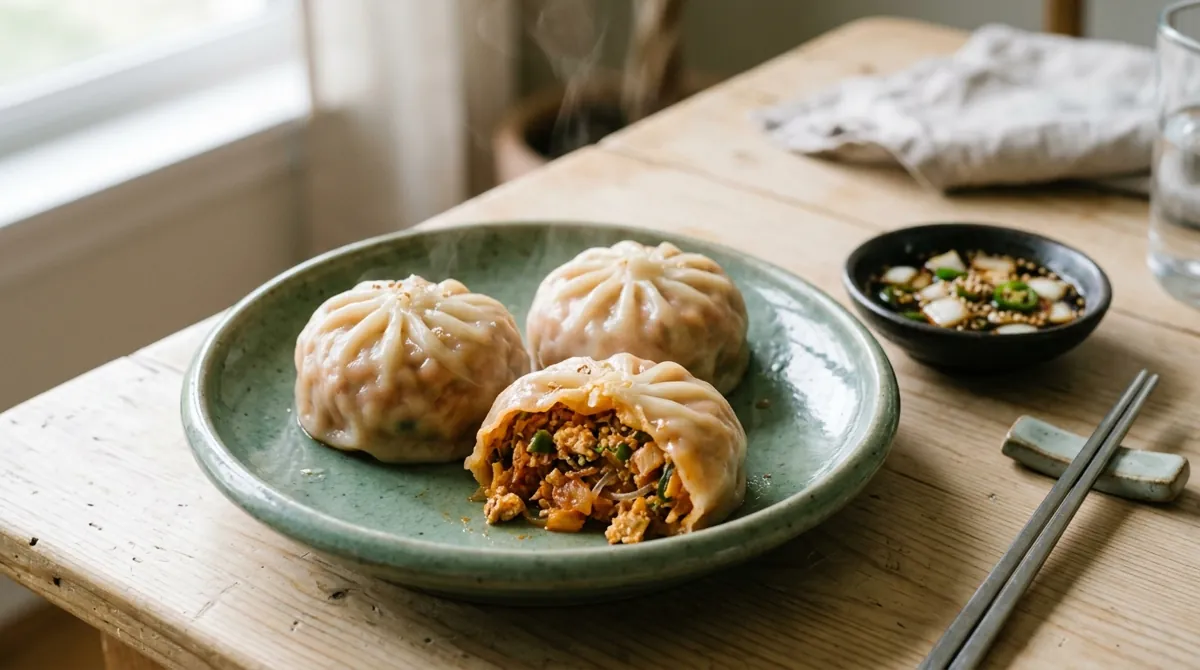
Mandu is the Korean word for dumplings, and Wikipedia says they are believed to have come to Korea from the Yuan dynasty in the 14th century, during the Goryeo dynasty, when Mongol rule relaxed the Buddhist court's ban on meat). A Goryeo folk song, "Ssanghwajeom," is about a dumpling shop run by a foreigner. Other accounts say dumplings came much earlier over the Silk Road. The name is a cousin of Turkish manti and Chinese mantou, which tells you how far the dumpling traveled.
Korean cooks steam them (jjin-mandu), boil them (mul-mandu), pan-fry them (gun-mandu) and make them king-size (wang-mandu). This recipe is from Maangchi, the Korean-born home cook whose YouTube channel and website teach Korean home cooking. She calls kimchi mandu "authentically Korean" and says she worked and reworked the ratio until she was fully satisfied. Two or three of these big dumplings, she says, make a meal.
Why it works the kitchen science
Precooking the beef
Browned meat with its juices seasons the whole filling, and the raw vegetables and kimchi stay fresh and bright in the steamer.
Noodles and tofu
Chopped glass noodles and crumbled tofu soak up the kimchi and meat juices, so the big dumplings stay juicy without leaking.
Step by step
- Step 1
Mix the flour, salt and water with a wooden spoon into a lump, knead a few minutes, then seal it in a plastic bag and rest 10 to 30 minutes. Knead again 5 to 7 minutes, until smooth and elastic. Cut into 16 pieces and roll each into a 5 1/2- to 6-inch circle, thinner at the edge; keep them covered.
- Step 2
Mix the beef, garlic and ginger with the soy sauce, sugar, 2 tsp of the sesame oil and 1/2 tsp of the pepper. Heat the vegetable oil in a skillet over medium-high heat and stir-fry the beef until it is no longer pink and reads 160°F, about 4 minutes. Scrape it, with its juices, into a large bowl.
- Step 3
Bring 7 to 8 cups of water to a boil over medium-high heat, add the noodles, cover and cook 7 to 8 minutes, until completely soft. Rinse under cold water, drain and chop into small pieces.
- Step 4
Add the noodles, onion, chives and kimchi to the beef. Squeeze the tofu lightly by hand, crumble it in, and add the kosher salt and the remaining 1 tsp sesame oil and 1/2 tsp pepper. Mix well.
- Step 5
Put 2 or 3 spoonfuls of filling in the center of a wrapper. Fold it loosely in half, pinch the bottom of the fold, then push one side in to make a pleat, pinch it and keep pleating from alternate sides up to the top. Seal the end.
- Step 6
Bring water to a boil in a steamer and line the rack with parchment. Steam the mandu in batches, spaced apart because they swell, covered, 15 minutes, until the wrappers are cooked through and the center reads 165°F.
- Step 7
Stir together the dipping sauce and serve the mandu hot.
Kimchi Mandu (Korean King-Size Kimchi Dumplings)
Serves 6 · 16 large mandu · 1 hr 45 min total
Wrappers
- 2 cups all-purpose flour, plus 1/4 cup for dusting
- 1/2 tsp kosher salt
- 2/3 cup water
Filling
- 1/2 lb ground beef brisket (or ground pork belly or pork shoulder)
- 3 garlic cloves, minced
- 1 tsp minced fresh ginger
- 2 tsp soy sauce
- 1 tbsp sugar
- 1 tbsp toasted sesame oil, divided
- 1 tsp ground black pepper, divided
- 1 tsp vegetable oil
- 2 oz dangmyeon (sweet potato starch noodles)
- 1 cup minced onion (1/2 large onion)
- 1 1/2 cups chopped buchu (garlic chives), or 8 to 10 green onions
- 1 cup chopped kimchi
- About 3 1/2 oz (100 g) medium-firm tofu
- 1 tsp kosher salt
Dipping sauce
- 2 tbsp soy sauce
- 1 tbsp white vinegar
- 1/4 cup onion chunks
- 1 jalapeño or Korean green chile, chopped
- 1 tsp sugar (optional)
Method
- Mix the flour, salt and water with a wooden spoon into a lump, knead a few minutes, then seal it in a plastic bag and rest 10 to 30 minutes. Knead again 5 to 7 minutes, until smooth and elastic. Cut into 16 pieces and roll each into a 5 1/2- to 6-inch circle, thinner at the edge; keep them covered.
- Mix the beef, garlic and ginger with the soy sauce, sugar, 2 tsp of the sesame oil and 1/2 tsp of the pepper. Heat the vegetable oil in a skillet over medium-high heat and stir-fry the beef until it is no longer pink and reads 160°F, about 4 minutes. Scrape it, with its juices, into a large bowl.
- Bring 7 to 8 cups of water to a boil over medium-high heat, add the noodles, cover and cook 7 to 8 minutes, until completely soft. Rinse under cold water, drain and chop into small pieces.
- Add the noodles, onion, chives and kimchi to the beef. Squeeze the tofu lightly by hand, crumble it in, and add the kosher salt and the remaining 1 tsp sesame oil and 1/2 tsp pepper. Mix well.
- Put 2 or 3 spoonfuls of filling in the center of a wrapper. Fold it loosely in half, pinch the bottom of the fold, then push one side in to make a pleat, pinch it and keep pleating from alternate sides up to the top. Seal the end.
- Bring water to a boil in a steamer and line the rack with parchment. Steam the mandu in batches, spaced apart because they swell, covered, 15 minutes, until the wrappers are cooked through and the center reads 165°F.
- Stir together the dipping sauce and serve the mandu hot.
Adapted from Maangchi, "King-size kimchi dumplings (Kimchi-wangmandu)" (posted September 9, 2014; updated June 24, 2023), 16 large dumplings: with the wrappers from Maangchi, "Dumpling wrappers (Mandu-pi)" (posted August 29, 2014; updated April 26, 2026), 16 large wrappers. We follow both as written: 2 cups flour, 1/2 tsp kosher salt and 2/3 cup water, rested 10 to 30 minutes, kneaded 5 to 7 minutes and rolled to 5 1/2 to 6 inches; 1/2 lb ground beef brisket (or pork belly or shoulder) stir-fried with garlic, ginger, soy, sugar and sesame oil; dangmyeon boiled 7 to 8 minutes; and 15 minutes in the steamer. Maangchi cooks the meat until it is no longer pink; our 160°F check and the 6 servings are ours. Maangchi. Ingredient list follows the source; the method is in our own words.
All sources (3)
Tips
- Maangchi's alternative: pan-fry them in 2 tbsp oil over medium heat, turning until golden, then cover over low heat for a few more minutes.
- Freeze raw mandu on a tray lined with plastic wrap about 8 hours, then bag them for up to 3 months.
- Use well-fermented, sour kimchi; it gives the filling its savory kick.
- Store-bought large mandu wrappers work, but Maangchi says homemade ones taste better.
The rules people argue about
What the sources agree on, what they don't, and what is just a good story.
- Mandu came to Korea with the Mongols. Disputed: Wikipedia gives the Yuan dynasty in the 14th century, an older Silk Road route, and a dumpling record in the Goryeosa tied to the year 1185.
- Mandu, manti and mantou are the same word. Documented as Wikipedia's account: the names are considered cognates.
- Steamed mandu beat fried mandu. Folklore: a matter of taste; Maangchi gives both methods.
- Kimchi mandu are spicier than other mandu. Documented as Wikipedia's account.
Every other dumpling
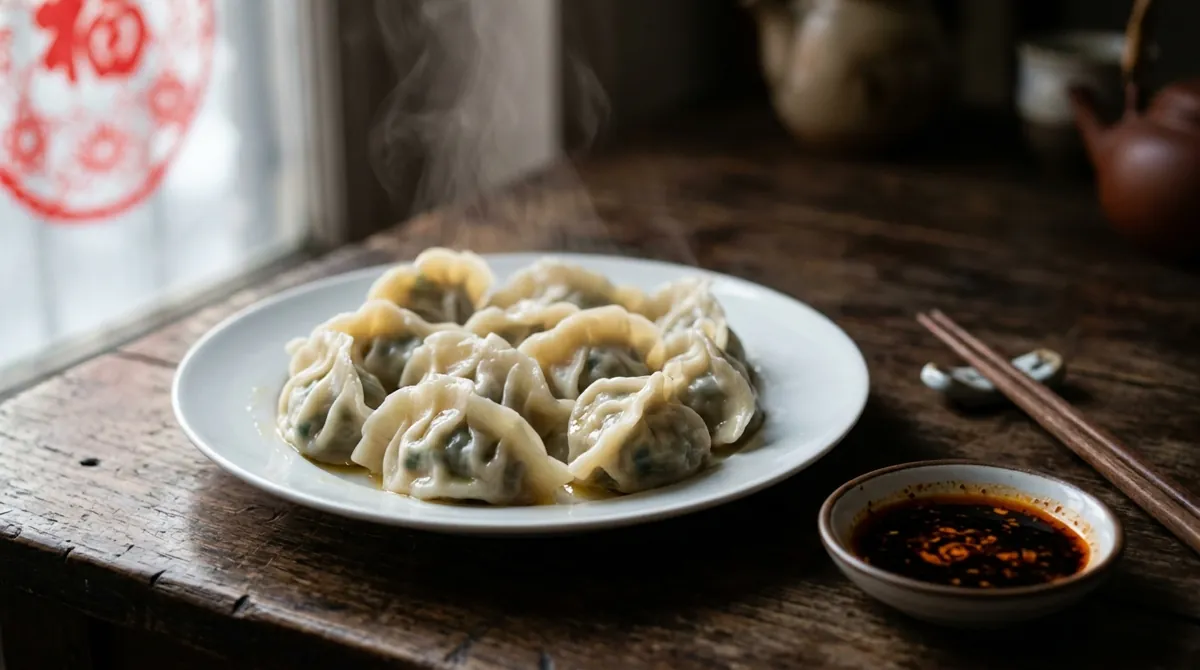
Jiaozi (Boiled Pork and Napa Cabbage Dumplings)
Hand-rolled wheat wrappers pleated around a silky filling of ground pork, blanched napa cabbage, Shaoxing wine and sesame oil, boiled in a big pot and served with black vinegar and soy sauce for dipping.
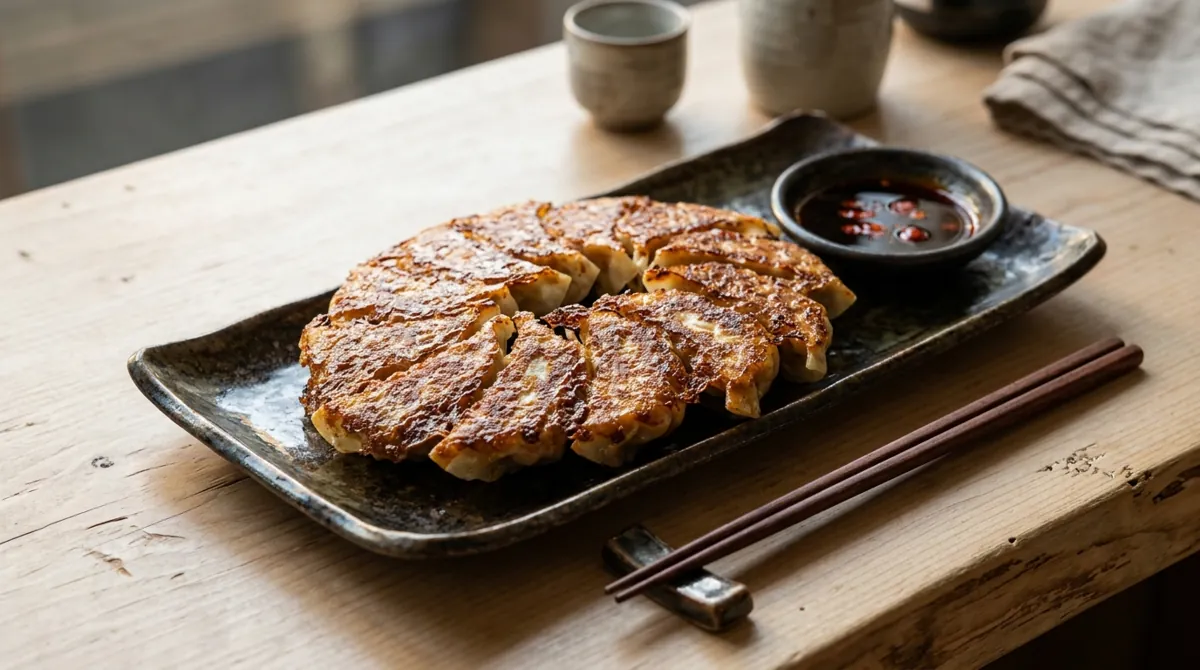
Gyoza (Japanese Pan-Fried Pork and Cabbage Dumplings)
Thin store-bought wrappers pleated around pork, salted cabbage, shiitake, garlic and ginger, browned on one side, steamed under a lid and crisped with sesame oil, with a soy, rice vinegar and chili oil dip.
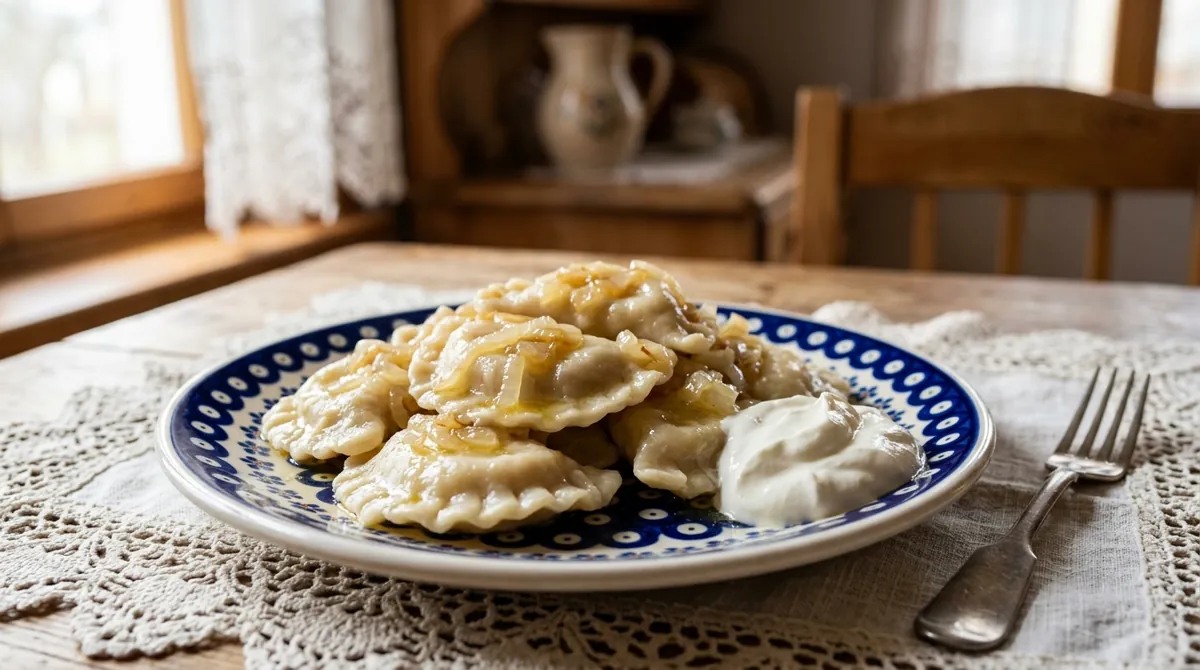
Pierogi Ruskie (Polish Potato and Twaróg Pierogi)
Soft hot-water dough folded around mashed potatoes and crumbled twaróg cheese with black pepper and glassy onion, boiled until they float and served with onion softened in butter and a spoon of sour cream.
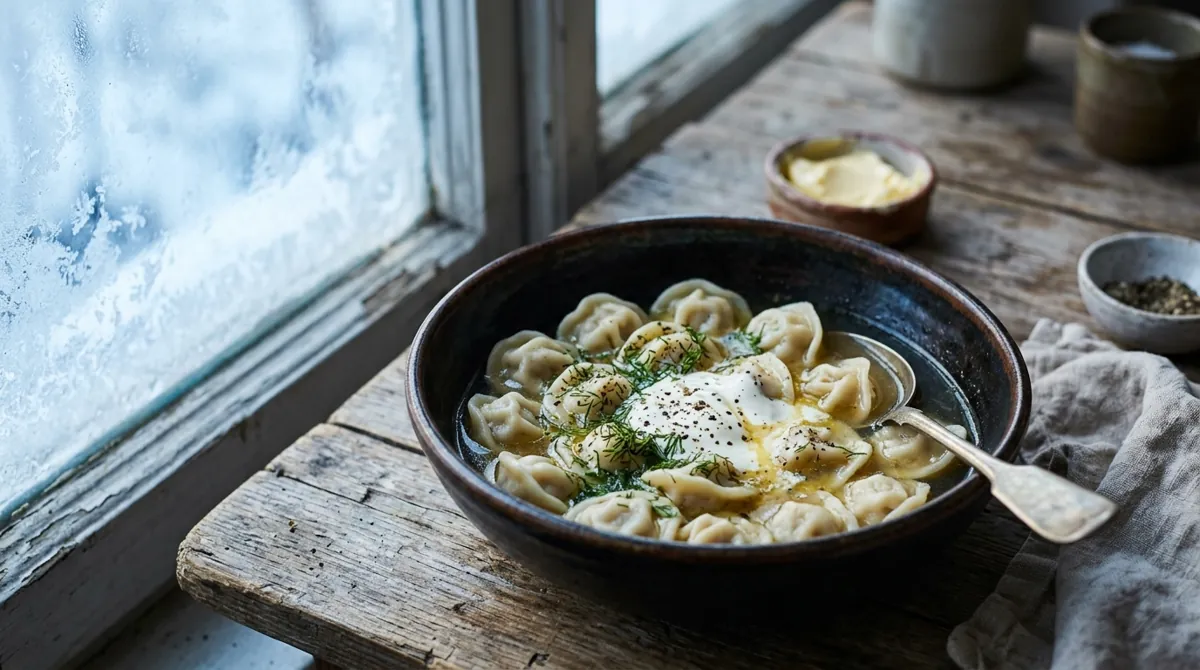
Pelmeni (Siberian Pork and Beef Dumplings)
Tiny dumplings of thin egg dough folded around raw ground pork, beef and onion with plenty of black pepper, boiled in bay-scented broth and served with butter, sour cream, fresh herbs and more pepper.
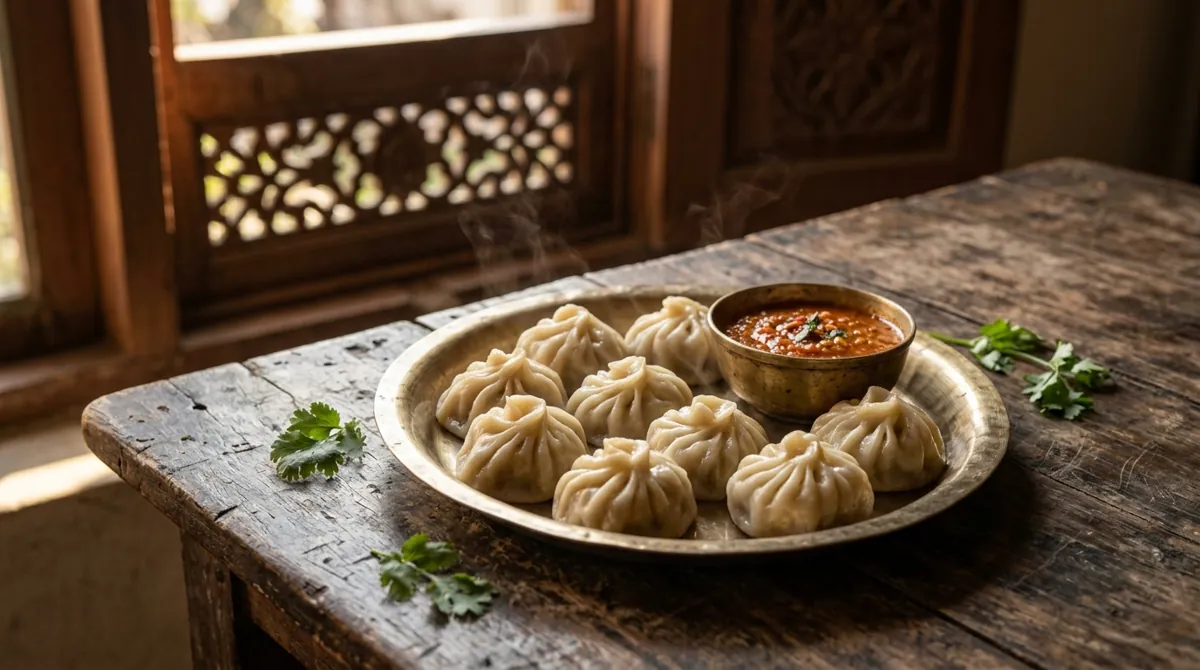
Nepali Momos with Tomato-Cilantro Achar
Round wrappers gathered into topknots around ground turkey spiced with coriander, cumin, cardamom, cinnamon and nutmeg, steamed and served with a smoky blender sauce of charred tomatoes, cilantro and Sichuan peppercorns.
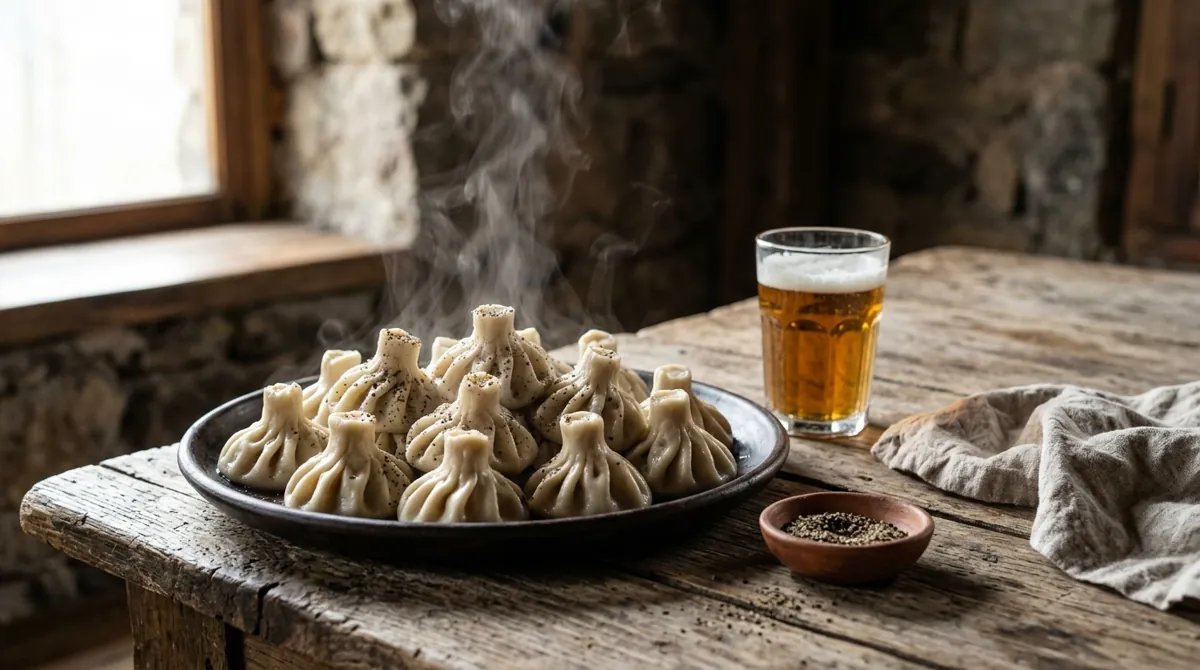
Khinkali (Georgian Soup Dumplings)
Big pleated dumplings twisted into a knot at the top, filled with beef and pork loosened with stock and butter and spiced with cilantro, chile, caraway, coriander and cumin, boiled so the filling turns to broth inside, then eaten by hand with black pepper.
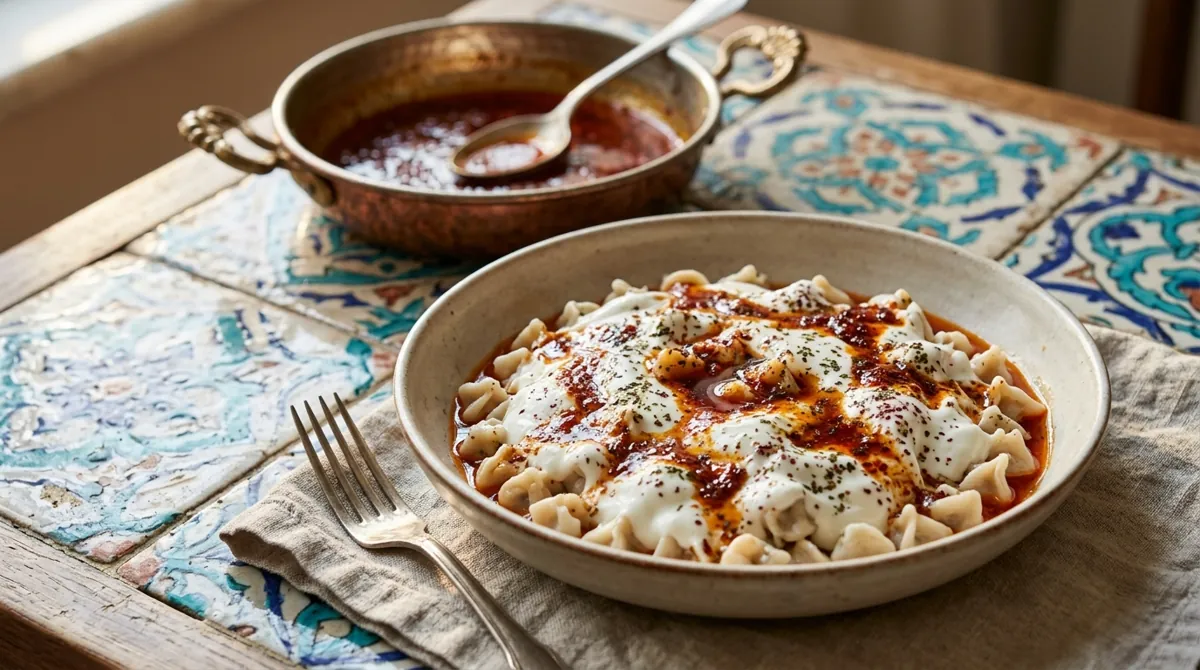
Kayseri Manti (Turkish Dumplings with Garlic Yogurt)
Tiny squares of egg dough pinched around a spoonful of spiced ground beef and onion, boiled, simmered with a tomato butter sauce, and served under cold garlic yogurt with dried mint, sumac and red pepper.
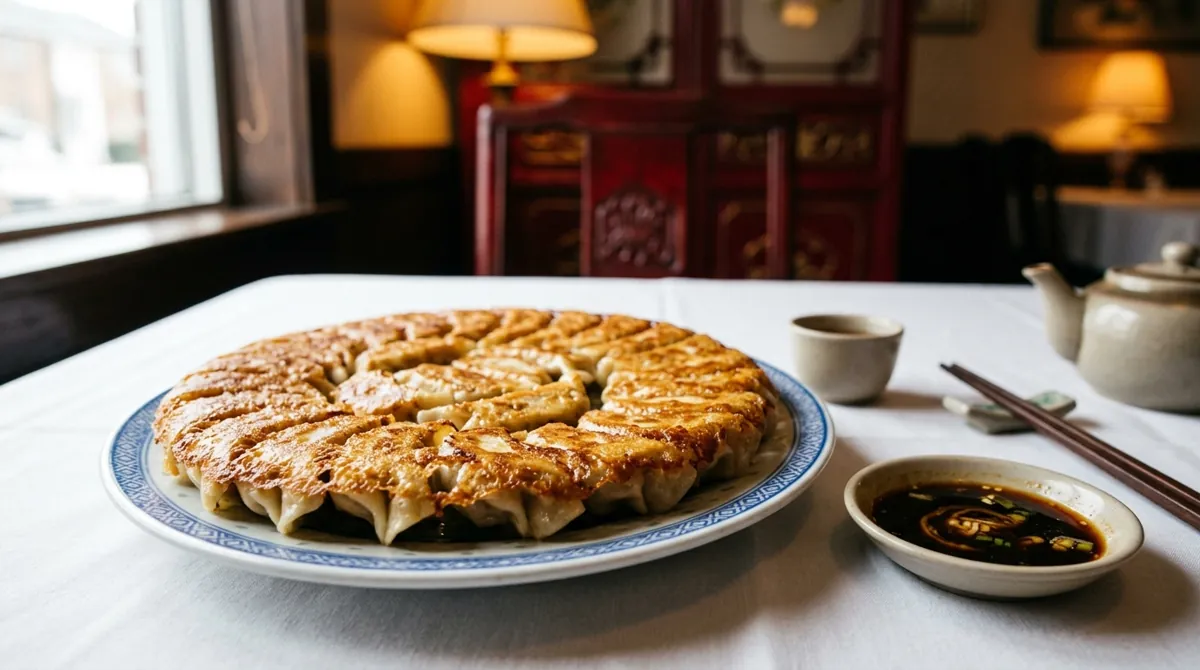
Peking Ravioli (Boston Pan-Fried Pork Dumplings)
Joyce Chen's chiao-tzu: homemade wrappers around pork and salted napa cabbage with soy, sherry and sesame oil, steamed and fried in concentric rings, flipped out golden side up and dipped in soy sauce and rice vinegar.
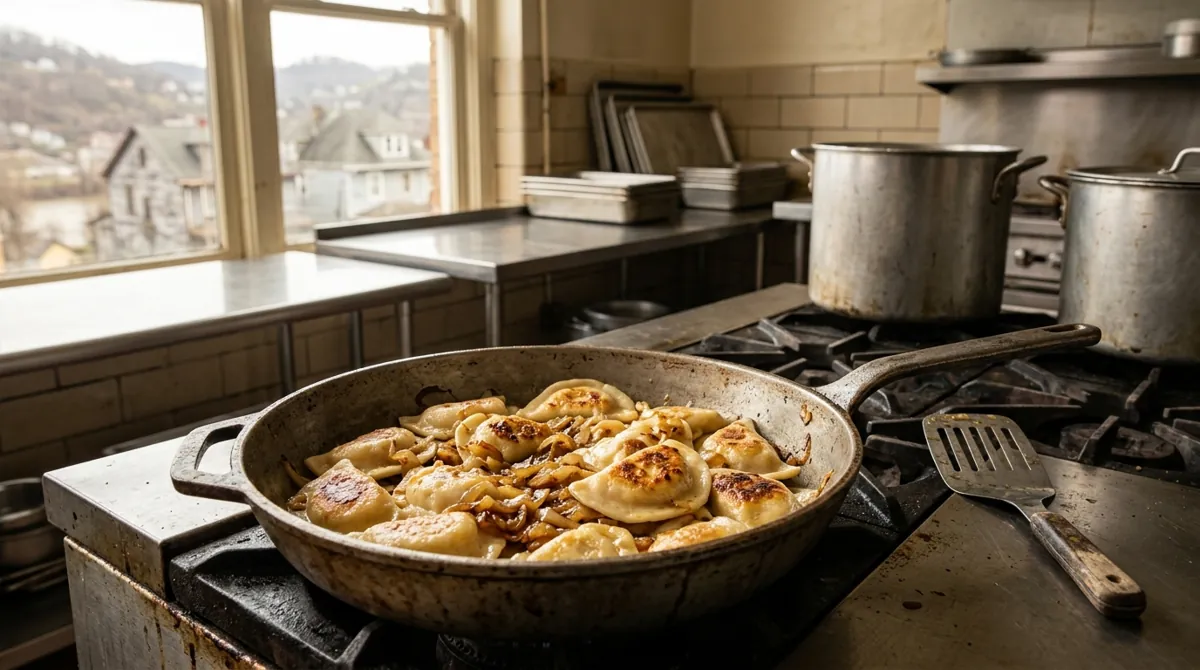
Pittsburgh Potato-Cheddar Pierogi with Butter and Onions
Tender sour cream dough wrapped around smooth mashed russets with sharp cheddar and butter, boiled and tossed in a skillet of onions caramelized in butter, the way western Pennsylvania serves them.
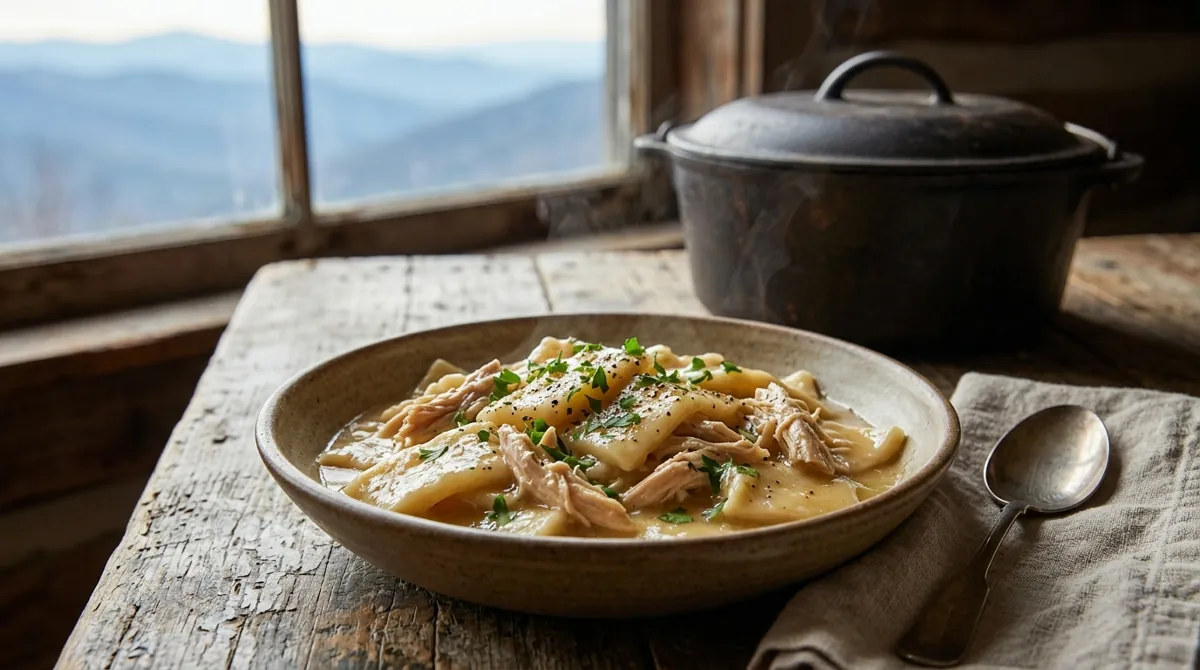
Chicken and Slicks (Appalachian Rolled Chicken and Dumplings)
Browned chicken thighs and breasts simmered in broth with onion, thyme and bay, then flat strips of rolled chicken-fat dough cooked right in the pot and the broth thickened with toasted flour, finished with shredded chicken and parsley.
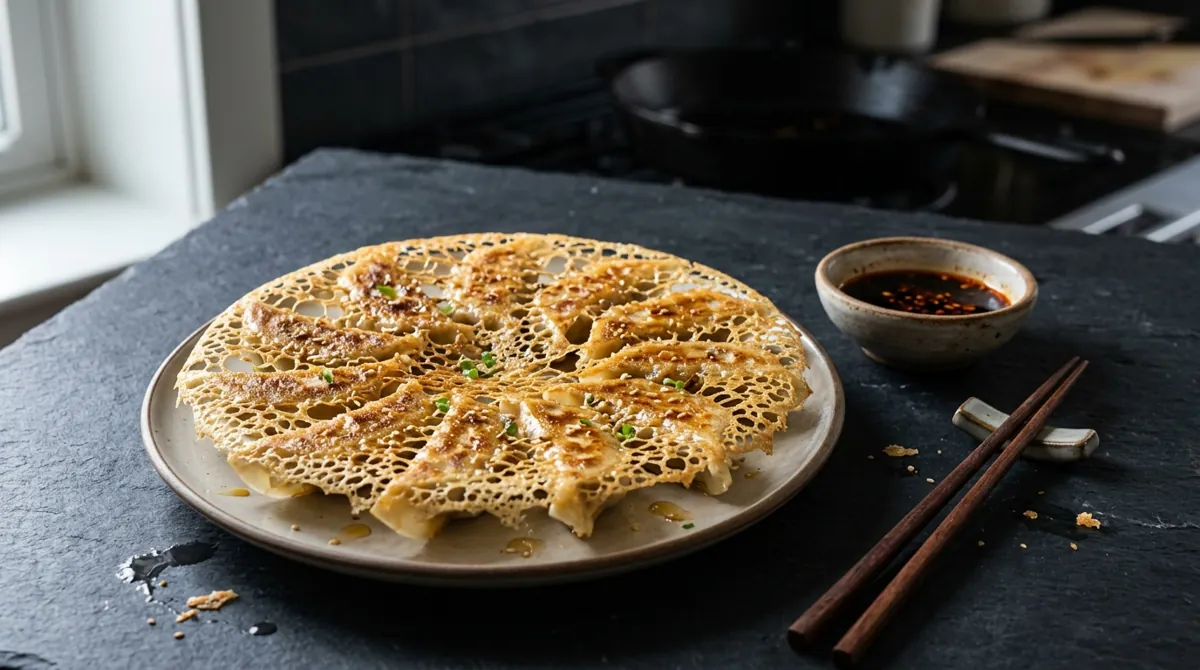
Crispy Lace Frozen Dumplings (Skillet Potstickers with a Golden Skirt)
A bag of frozen pork potstickers browned in a nonstick skillet, steamed under a thin flour-and-water slurry that fries into one lacy golden skirt, flipped onto a plate and served with soy sauce, sesame oil and chile flakes, in 25 minutes.
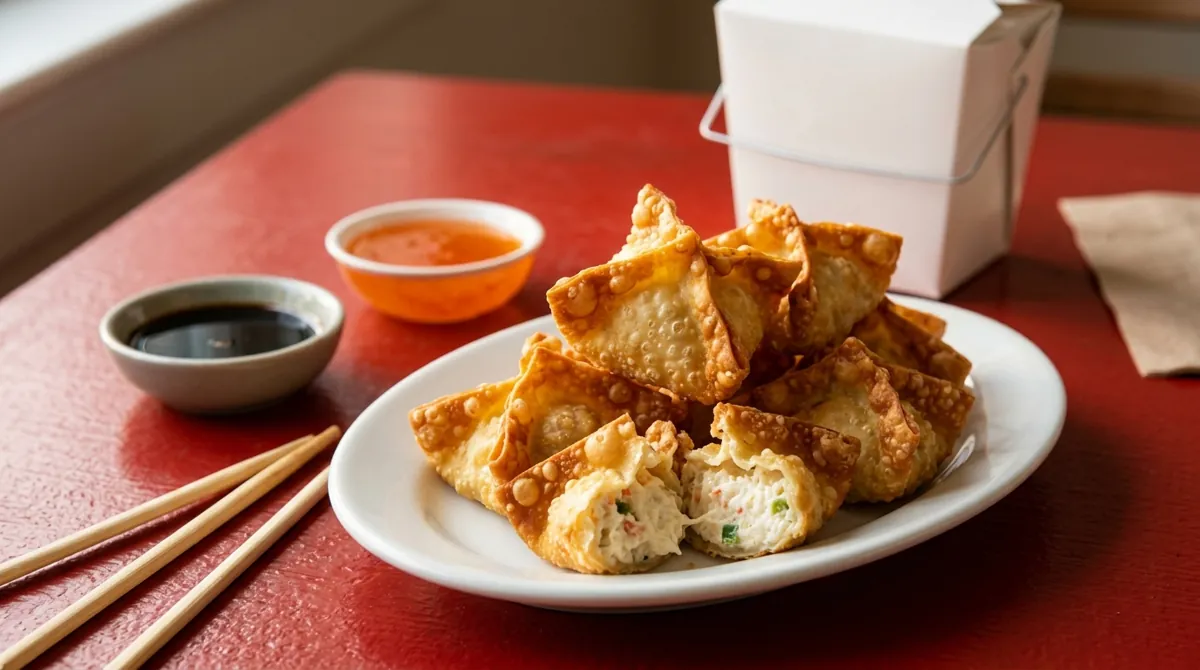
Takeout-Style Crab Rangoon (Fried Cream Cheese Wontons)
Takeout style, not any one restaurant's recipe: wonton wrappers folded into points around sweetened cream cheese, scallions and chopped crab, fried golden at 375°F and served hot with a soy, honey and sesame dipping sauce.
Meatballs of the World

Italian-American Meatballs
Big, tender meatballs braised for an hour in red sauce over spaghetti. The one most Americans grew up with.

Pallottine (Abruzzo Meatballs)
Tiny meatballs, smaller than a marble, tossed right through square spaghetti alla chitarra. No bread at all.

Swedish Meatballs (Köttbullar)
Small, soft meatballs browned in butter, in a cream sauce made from the same pan, with lingonberry jam on the plate.

Danish Frikadeller
Pork meatballs shaped with a spoon and fried slowly in butter, crusty outside and soft in the middle.

Königsberger Klopse
German meatballs that are never fried: poached, then served in a creamy white sauce with capers.

Spanish Albóndigas in Almond Saffron Sauce
The tapas bar classic: small meatballs in a golden sauce thickened with fried almonds and bread.

Mexican Albóndigas with Chipotle and Mint
Soft meatballs with rice and fresh mint inside, simmered in a smoky tomato and chipotle broth.

Izgara Köfte (Turkish Grilled Meatballs)
Small, flat meatballs kneaded hard, rested cold, and charred on a hot grill pan.

Lion's Head Meatballs
Big, soft pork meatballs, stirred into a sticky paste, fried to set, then braised in a savory sauce.

Chicken Tsukune
Japan's chicken meatball: kneaded sticky, grilled on skewers, glazed with sweet soy tare, dipped in egg yolk.