
Lo Mein
Chewy Chinese egg noodles tossed in a hot wok with chicken, shiitake, napa cabbage, carrot, bean sprouts and scallions in an oyster and soy sauce: the takeout box at home, in 35 minutes.
🍳Cook alongOne move at a time, with real timers
 Edited by JP Lambiase
Change the estimate
Swaps change the price only: cook any meat to its own safe temperature. Where these numbers come from
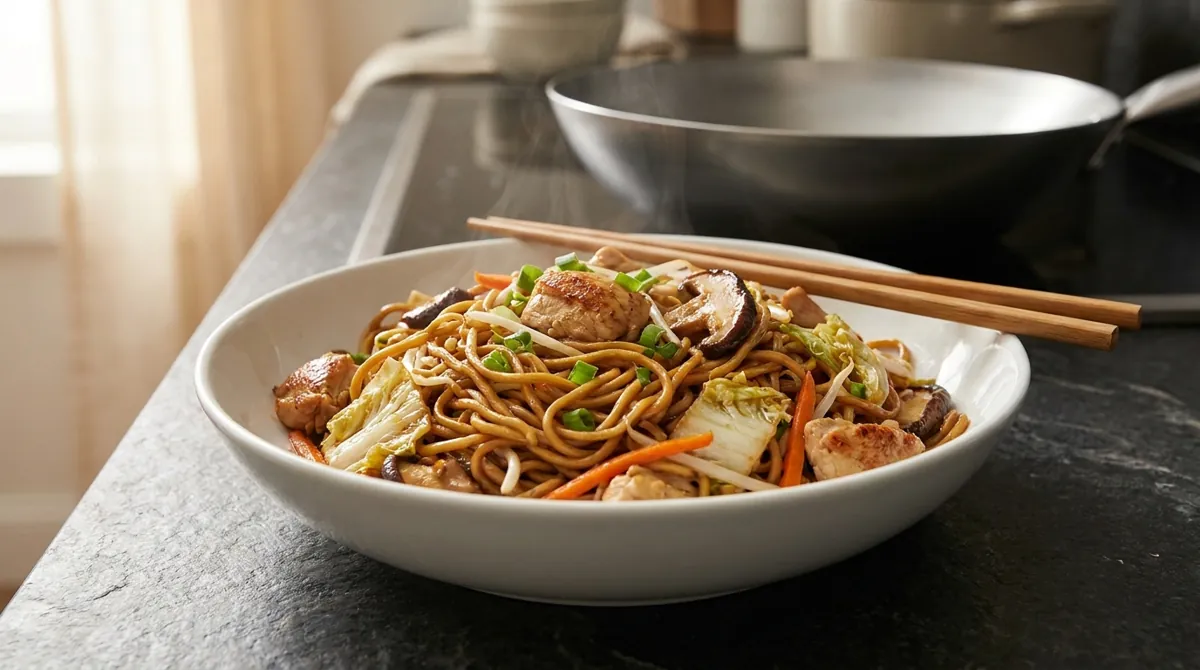
The name is Cantonese. Lo mein comes from 撈麵, "stirred noodles": in casual Cantonese 撈 means to stir or mix, while in Mandarin the same character means to scoop out of water. In Guangdong and Hong Kong, lo mein is usually thin, springy wheat and egg noodles boiled and then tossed with a sauce such as oyster sauce, or served with the sauce on the side, often topped with wontons, char siu or beef brisket. It is not traditionally stir-fried; the fried noodle is chow mein, 炒麵, "stir-fried noodles."
The American version came out of the Cantonese restaurants that Chinese immigrants, most of them from the Toisan (Taishan) district, opened from the Gold Rush on. Chinese restaurants became an immigration route after 1915, when restaurant owners became eligible for merchant visas under the Exclusion Act, and they helped start American takeout and delivery. Somewhere along the way lo mein changed: in American Chinese restaurants the boiled noodles are stir-fried in soy-based sauce with vegetables and meat, saucier and softer than chow mein, and the two names are sometimes used for the same plate. It went home in a folded paper pail first patented in the 1890s for oysters, adopted for Chinese takeout after World War II, and rarely seen in China.
This is the American takeout version, made the way a Cantonese home cook would: noodles boiled just to chewy, a very hot wok, and the sauce mixed before the heat goes on.
Why it works the kitchen science
Boil, then rinse
Noodles taken off a minute early and rinsed stop cooking and lose their surface starch, so they stay chewy and separate in the wok instead of clumping.
Sauce mixed ahead
Once the wok is hot there is no time to measure; a premixed sauce coats every noodle at once. Dark soy gives the takeout color, oyster sauce the savory sweetness.
Cornstarch on the chicken
A thin coating keeps the thin slices juicy over high heat.
Cooking in stages
The chicken comes out so it does not overcook, and the wok is not crowded, so the vegetables sear instead of stewing.
🧰 You'll need 6 items
Everything the steps call for. Tick off what you have before you start.
Pans and pots
Tools
Step by step
- Step 1
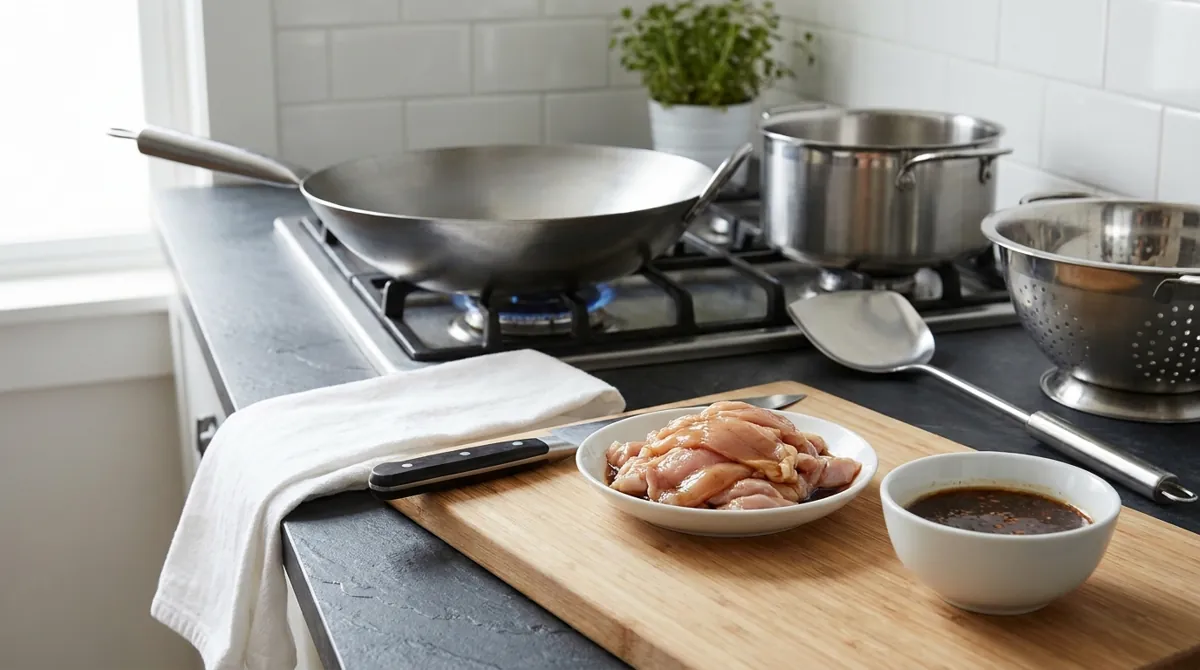
Toss the chicken with the 1 tsp soy sauce, 1 tsp Shaoxing wine and the cornstarch in a small bowl. Stir all the sauce ingredients together in a second small bowl until the sugar dissolves.
- Step 2
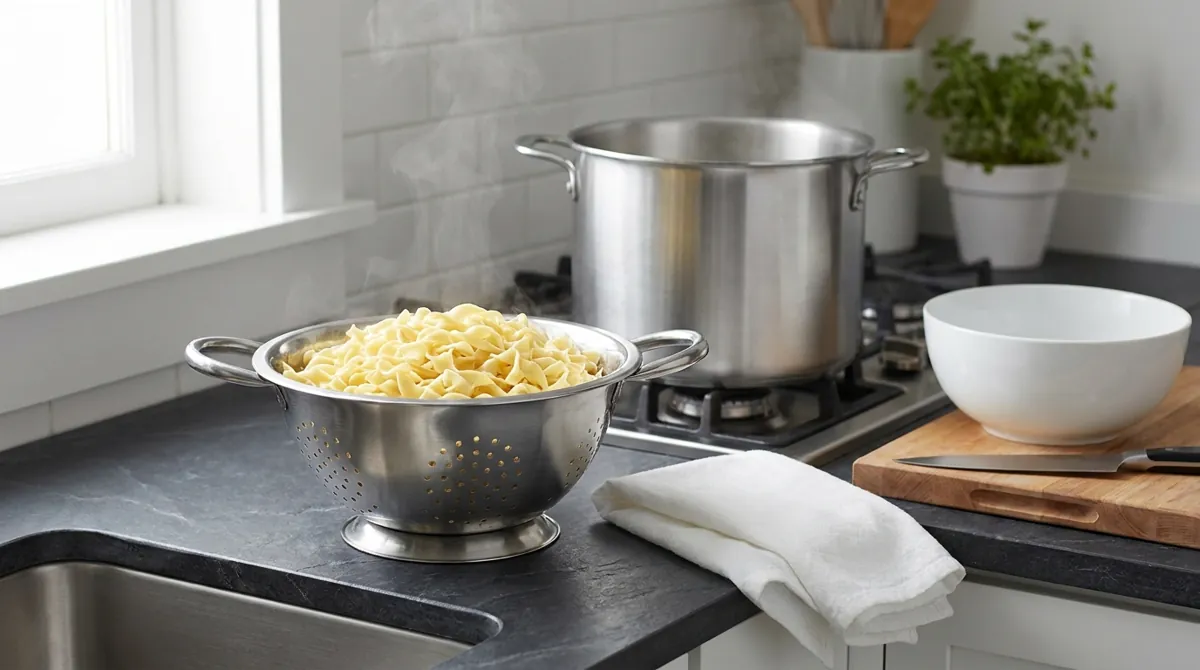
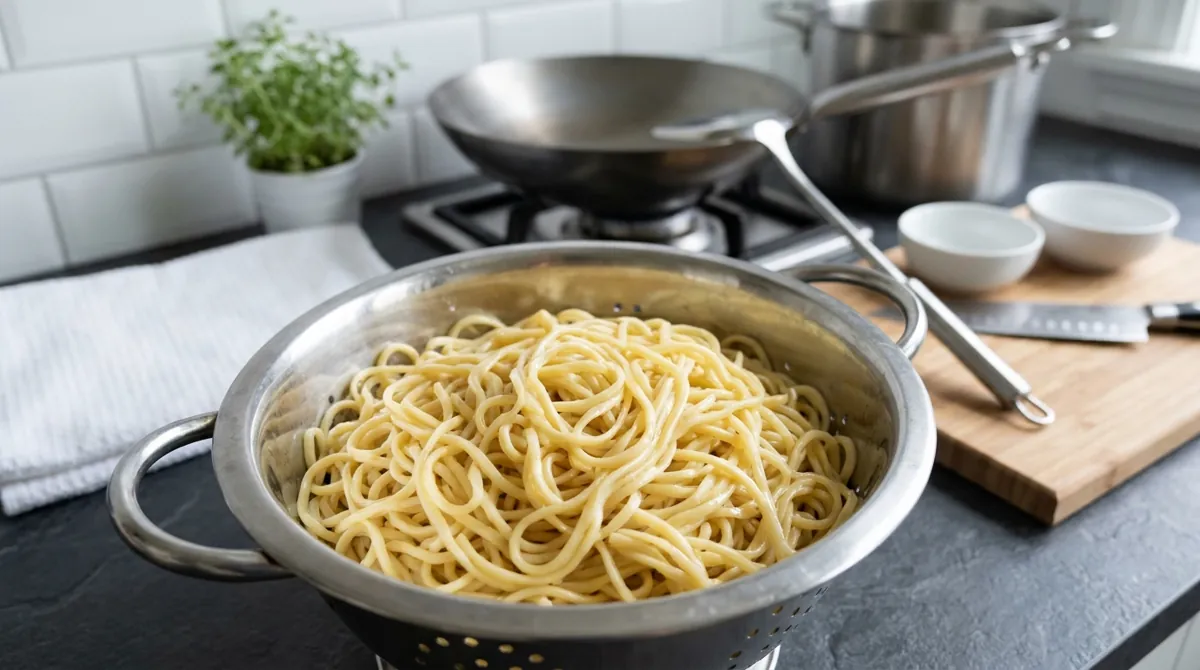
Bring a large pot of water to a boil, cook the noodles until just tender with a little chew (about 1 minute less than the package says), drain in a colander, rinse under cool running water, shake dry and toss with the 1 tsp sesame oil.
✓ What it should look like - Step 3
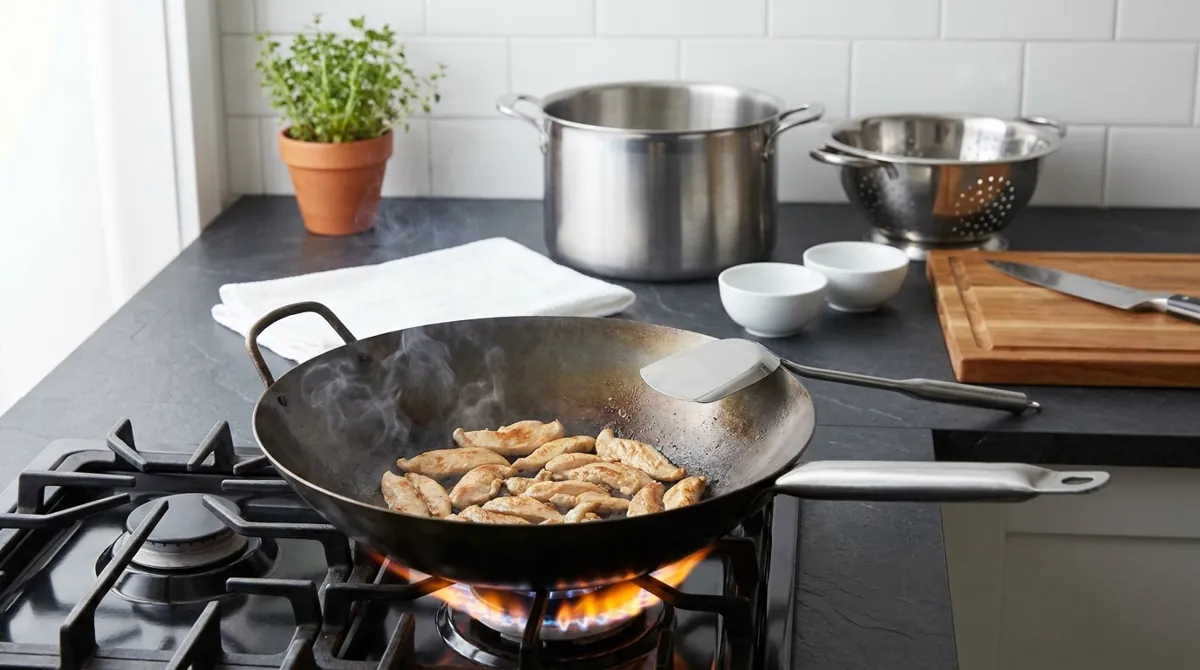
Heat the wok over high heat until it just starts to smoke. Add 1 tbsp of the oil, spread the chicken out and sear 1 minute without moving it, then stir-fry until just cooked through, 2 to 3 minutes more. Tip it onto a plate.
- Step 4
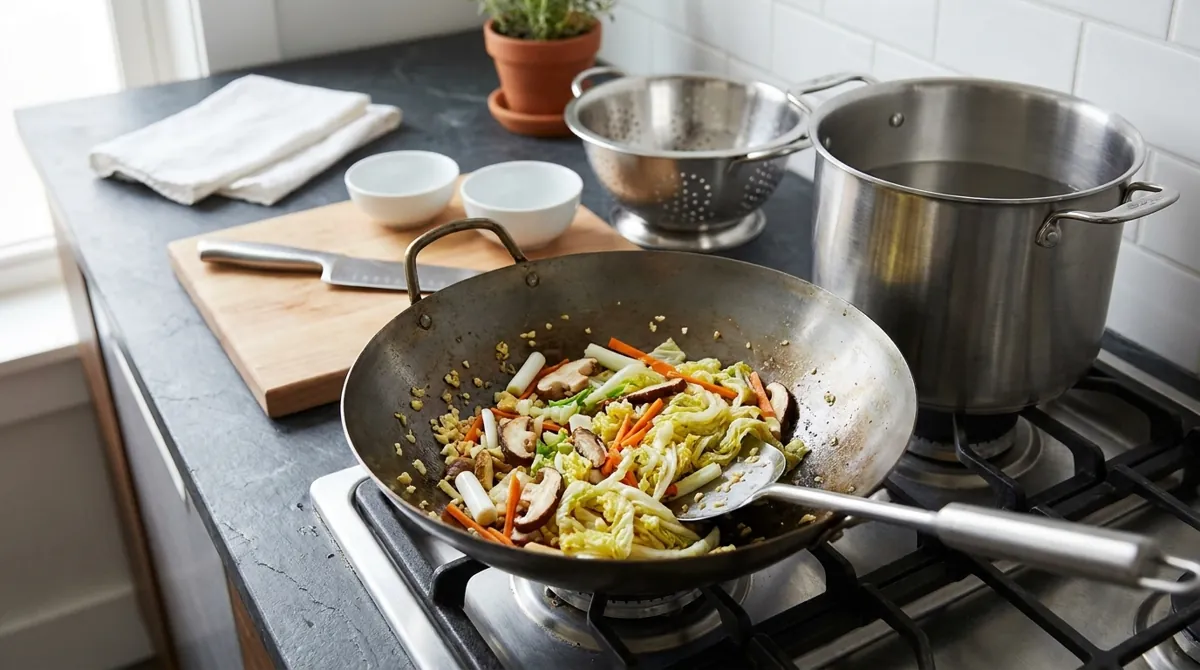
Add the remaining 2 tbsp oil, then the garlic, ginger and scallion whites; stir 15 seconds. Add the shiitake and carrot and stir-fry 1 minute, then the cabbage for 1 minute, until it just wilts. Splash the 1 tbsp Shaoxing wine around the side of the wok.
- Step 5
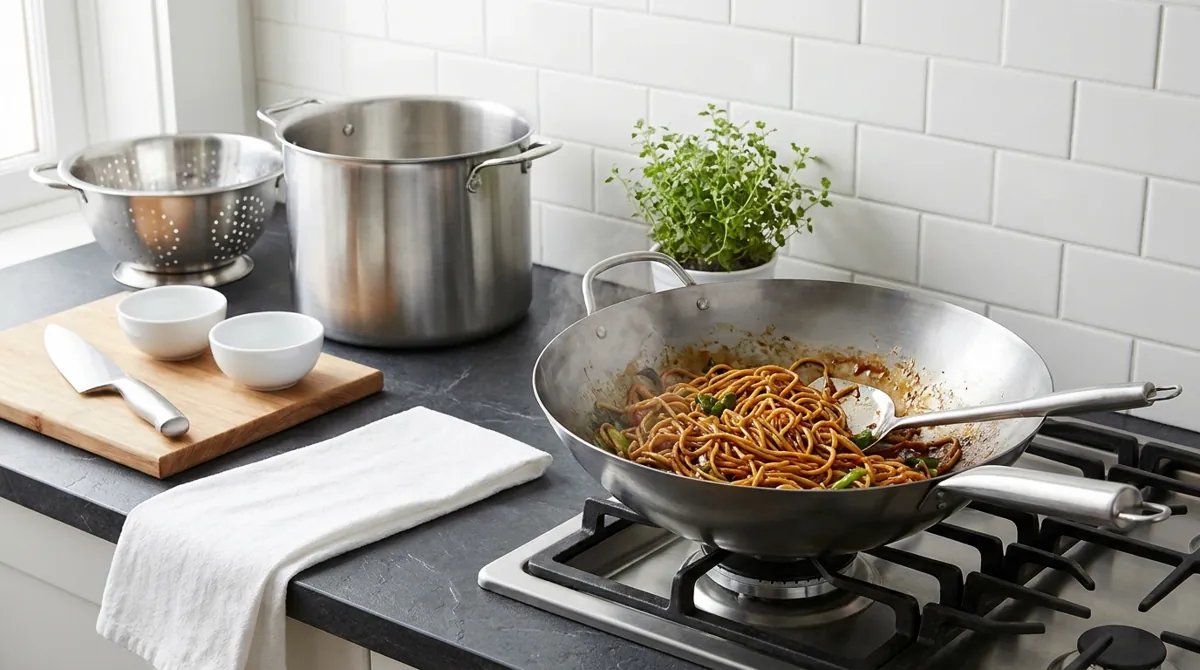
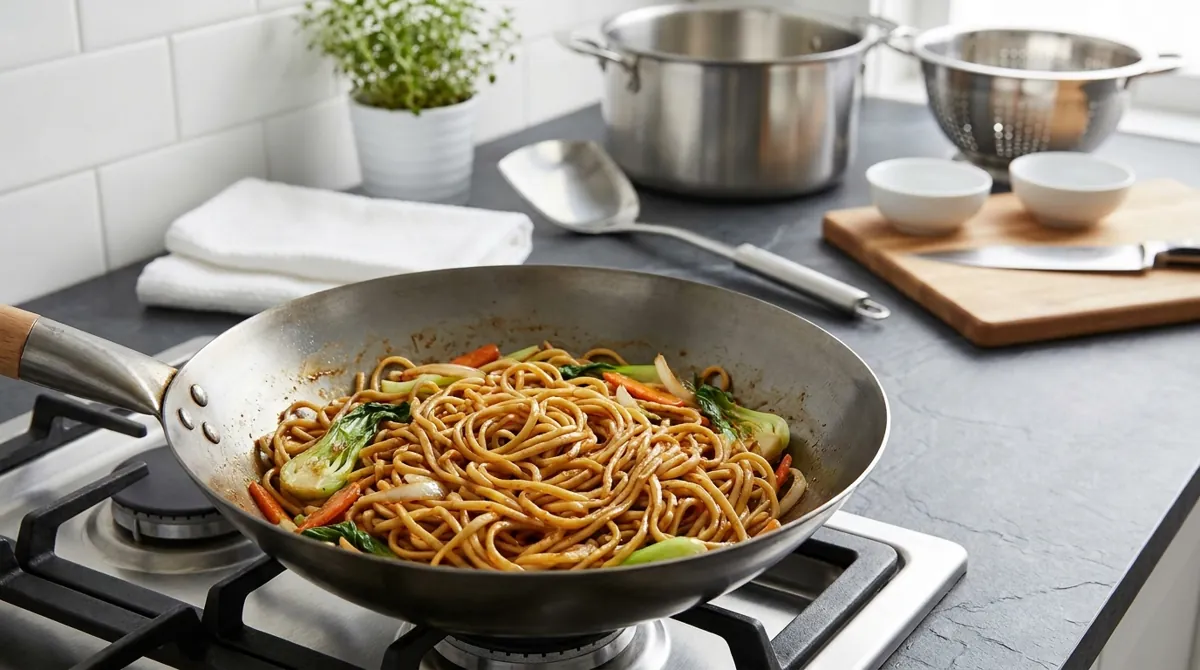
Add the noodles and pour the sauce over them. Toss with a scooping motion, lifting from the bottom, for about 2 minutes, until every noodle is evenly brown and glossy and hot through. If they start to stick or look dry, add another tablespoon or two of hot water.
✓ What it should look like - Step 6
Return the chicken with its juices, add the bean sprouts and scallion greens, toss 30 seconds more, and serve right away.
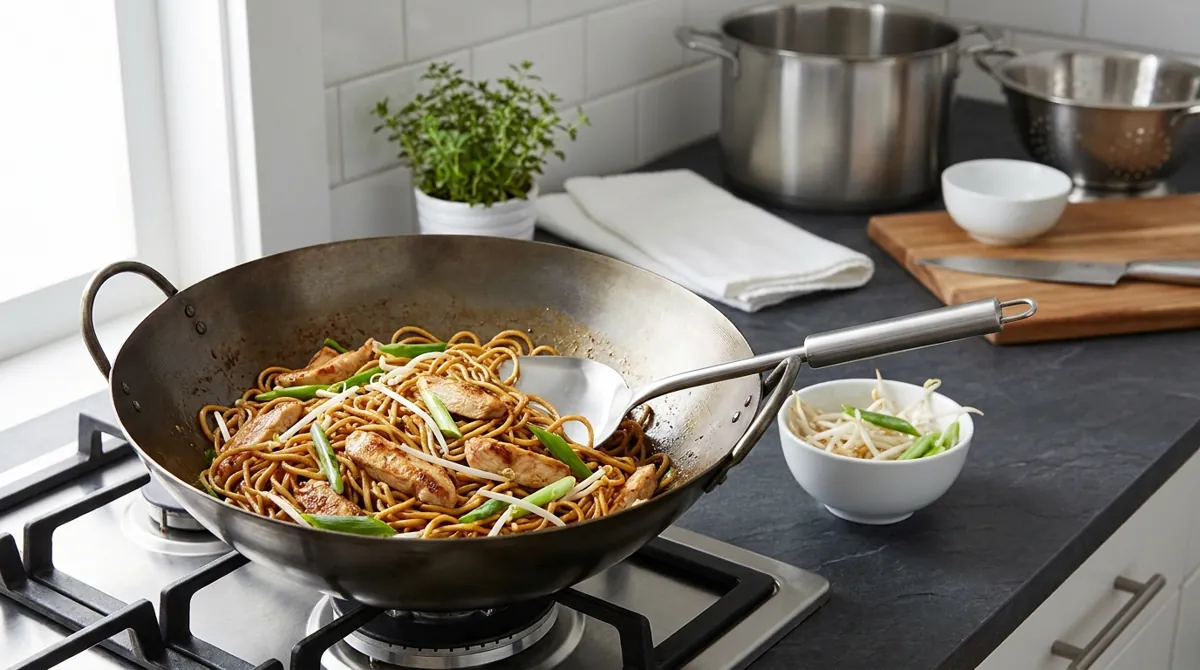
Lo Mein
Serves 4 · one 14-inch wok, about 8 cups · 35 min total
Chicken
- 12 oz boneless, skinless chicken thighs, sliced thin (340 g)
- 1 tsp soy sauce (5 g)
- 1 tsp Shaoxing wine (5 g)
- 1 tsp cornstarch
Sauce
- 2 tbsp oyster sauce (36 g)
- 1 1/2 tbsp light or regular soy sauce (24 g)
- 1 tbsp dark soy sauce (18 g)
- 1 tsp toasted sesame oil (4.5 g)
- 1 tsp sugar
- 1/8 tsp ground white pepper
- 2 tbsp hot water
Noodles and vegetables
- 8 oz dried Chinese egg noodles (227 g), or 1 lb fresh lo mein noodles
- 1 tsp toasted sesame oil (4.5 g), for the noodles
- 3 tbsp canola oil (42 g)
- 3 garlic cloves, minced (9 g)
- 1 tbsp minced fresh ginger (6 g)
- 4 scallions, cut in 2 inch pieces, white and green parts separated (60 g)
- 4 oz fresh shiitake mushrooms, stems removed, sliced (115 g)
- 1 medium carrot, cut in thin matchsticks (60 g)
- 3 cups shredded napa cabbage (210 g)
- 1 tbsp Shaoxing wine (15 g)
- 2 cups mung bean sprouts (100 g)
Equipment: Large pot, Wok, Chef's knife and cutting board, Measuring cups and spoons, Mixing bowls, Colander
Method
- Toss the chicken with the 1 tsp soy sauce, 1 tsp Shaoxing wine and the cornstarch in a small bowl. Stir all the sauce ingredients together in a second small bowl until the sugar dissolves.
- Bring a large pot of water to a boil, cook the noodles until just tender with a little chew (about 1 minute less than the package says), drain in a colander, rinse under cool running water, shake dry and toss with the 1 tsp sesame oil.
- Heat the wok over high heat until it just starts to smoke. Add 1 tbsp of the oil, spread the chicken out and sear 1 minute without moving it, then stir-fry until just cooked through, 2 to 3 minutes more. Tip it onto a plate.
- Add the remaining 2 tbsp oil, then the garlic, ginger and scallion whites; stir 15 seconds. Add the shiitake and carrot and stir-fry 1 minute, then the cabbage for 1 minute, until it just wilts. Splash the 1 tbsp Shaoxing wine around the side of the wok.
- Add the noodles and pour the sauce over them. Toss with a scooping motion, lifting from the bottom, for about 2 minutes, until every noodle is evenly brown and glossy and hot through. If they start to stick or look dry, add another tablespoon or two of hot water.
- Return the chicken with its juices, add the bean sprouts and scallion greens, toss 30 seconds more, and serve right away.
Americanized house recipe, written for this site. History: Wikipedia, "Lo mein" (撈麵, "stirred noodles", the Cantonese stir versus the Mandarin scoop, Cantonese lo mein boiled and tossed with oyster sauce or sauce on the side, wontons, char siu or brisket, not traditionally stir-fried, the American stir-fried takeout version sometimes treated as chow mein; its American section is flagged as poorly sourced); Wikipedia, "American Chinese cuisine" (Gold Rush, Toisan immigrants, merchant visas for restaurant owners from 1915, takeout and delivery, lo mein as "stirred noodles" sometimes called chow mein); Wikipedia, "Oyster pail" (patents of 1890, 1894 and 1908, made for oysters, adopted for Chinese takeout after World War II, rarely seen in China); Mental Floss, chow mein versus lo mein (lo mein noodles fully boiled then tossed, more sauce, vegetables and protein). Technique and sauce proportions: The Woks of Life, "Lo Mein" (oyster, light and dark soy, sesame oil, sugar and white pepper; rinse the boiled noodles; smoking wok; spaghetti as a stand-in). en.wikipedia.org. Ingredient list follows the source; the method is in our own words.
Tips
- No lo mein noodles? Use 8 oz dried spaghetti, cooked al dente, as The Woks of Life suggests.
- Swap the chicken for thin-sliced flank steak, peeled shrimp or char siu, or leave it out and double the mushrooms.
- On a home stove, cook in two batches if your wok is smaller than 14 inches: crowding is what makes lo mein soggy.
- Leftovers reheat best in a hot skillet with a splash of water, not the microwave.
The rules people argue about
What the sources agree on, what they don't, and what is just a good story.
- What 撈 means. Disputed in translation: Wikipedia gives "stirred noodles", other sources say "tossed", and The Woks of Life says "stirred, mixed, or scooped"; the Cantonese and Mandarin senses of the character differ.
- It has to be real lo mein noodles. Disputed: purists say so; The Woks of Life, a Cantonese family cooking site, says spaghetti is fine.
Meatballs of the World

Italian-American Meatballs
Big, tender meatballs braised for an hour in red sauce over spaghetti. The one most Americans grew up with.

Pallottine (Abruzzo Meatballs)
Tiny meatballs, smaller than a marble, tossed right through square spaghetti alla chitarra. No bread at all.

Swedish Meatballs (Köttbullar)
Small, soft meatballs browned in butter, in a cream sauce made from the same pan, with lingonberry jam on the plate.

Danish Frikadeller
Pork meatballs shaped with a spoon and fried slowly in butter, crusty outside and soft in the middle.

Königsberger Klopse
German meatballs that are never fried: poached, then served in a creamy white sauce with capers.

Spanish Albóndigas in Almond Saffron Sauce
The tapas bar classic: small meatballs in a golden sauce thickened with fried almonds and bread.

Mexican Albóndigas with Chipotle and Mint
Soft meatballs with rice and fresh mint inside, simmered in a smoky tomato and chipotle broth.

Izgara Köfte (Turkish Grilled Meatballs)
Small, flat meatballs kneaded hard, rested cold, and charred on a hot grill pan.

Lion's Head Meatballs
Big, soft pork meatballs, stirred into a sticky paste, fried to set, then braised in a savory sauce.

Chicken Tsukune
Japan's chicken meatball: kneaded sticky, grilled on skewers, glazed with sweet soy tare, dipped in egg yolk.