
French Macarons
Two crisp, chewy almond meringue shells with ruffled "feet" around a soft buttercream filling: the Paris tea-salon cookie, made at home with a scale, patience and a rested tray.
🍳Cook alongOne move at a time, with real timers
 Edited by JP Lambiase
Change the estimate
Swaps change the price only: cook any meat to its own safe temperature. Where these numbers come from
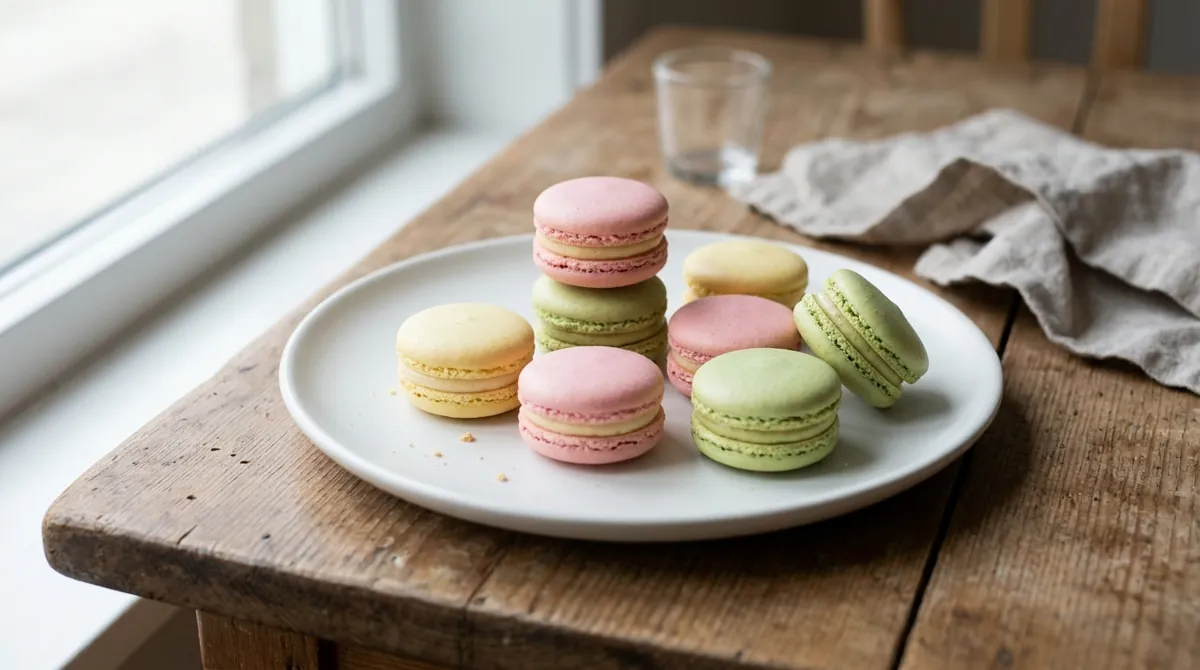
The macaron most people mean today is the Paris macaron: two almond meringue shells sandwiching a filling. It is much younger than the name. Almond-and-sugar macaroons were being made in France and Italy for centuries, and the oldest known printed recipe in English, "To make French Macaroones", dates to 1617. The filled, two-shell version came in the early 20th century. Wikipedia reports that Pierre Desfontaines of the Parisian tearoom Ladurée is sometimes credited with it, while the baker Claude Gerbet also claims the invention; the filled style was first called the "Gerbet" or "Paris macaron". The 1930s date is the one usually given for Desfontaines.
The popular origin stories are weaker than the pastry. The tale that Catherine de' Medici's Italian chefs brought the macaron to France is Folklore: researchers found no record of Italian chefs in her household. The 1790s "Macaron Sisters" of Nancy, nuns who sold plain macarons during the Revolution, are real in local tradition but they sold the single almond cookie, not the filled sandwich.
Why it works the kitchen science
Meringue plus almond flour
The whipped whites make the rise and the structure, the almond flour makes the chew, so measuring both by weight matters more than any other step.
The resting skin
The dry skin forces the steam out the bottom edge as the shell bakes, which makes the ruffled feet and keeps the tops smooth rather than cracked.
Maturing in the fridge
Moisture from the filling soaks into the shell for a day or two and turns a crisp, dry cookie into the chewy one.
🧰 You'll need 10 items
Everything the steps call for. Tick off what you have before you start.
Appliances
Pans and pots
Tools
Supplies
Step by step
- Step 1
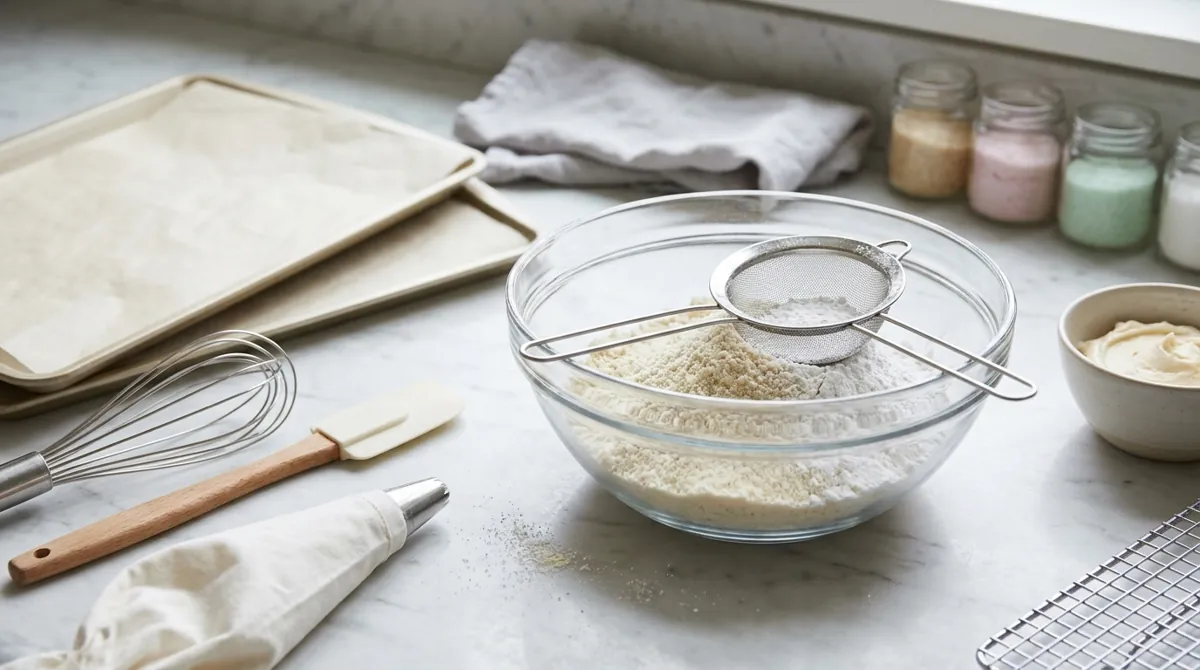
Line two baking sheets with parchment or silicone mats. Sift the confectioners' sugar and almond flour together twice and set aside; throw out any coarse almond bits.
- Step 2
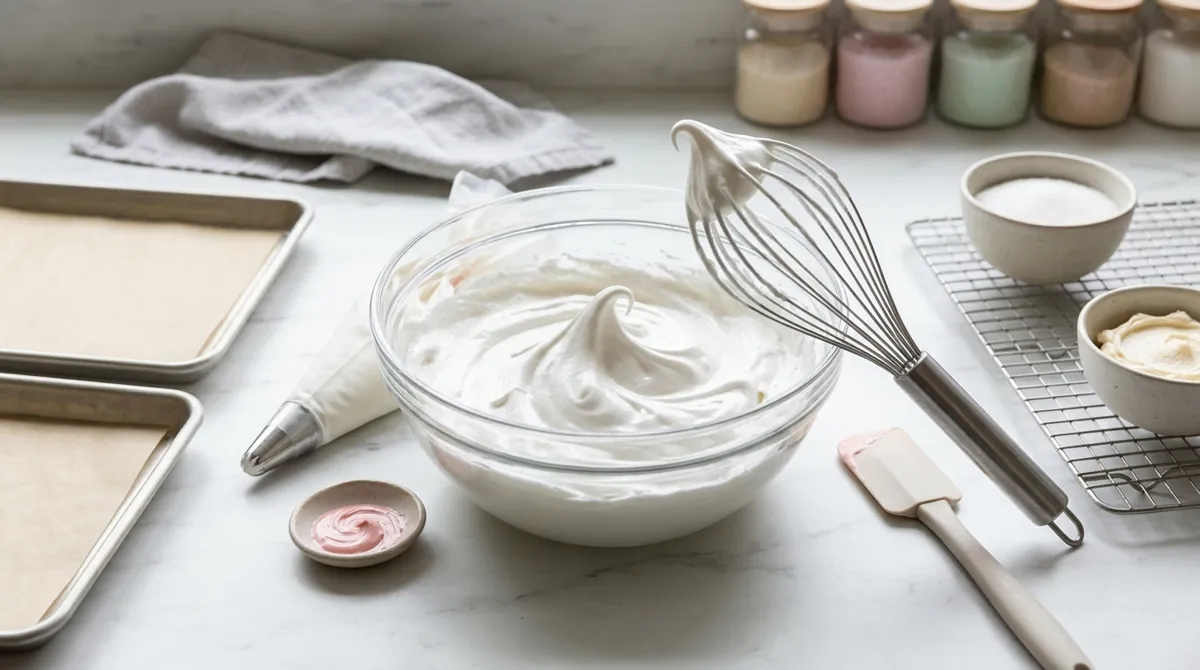
Whisk the egg whites, granulated sugar and cream of tartar in a clean, dry bowl set over a pan of barely simmering water until the sugar dissolves, then whip with a mixer for 5 to 6 minutes until the meringue is glossy and holds medium to stiff peaks that curl slightly at the tip. Whip in a tiny bit of gel color if you like.
- Step 3
Add the sifted dry mix and fold it in with a rubber spatula, smearing the batter against the side of the bowl and gathering it back, until it is smooth and glossy and sinks back into itself in about 10 seconds when you draw a ribbon through it. Stop there: too little leaves lumpy shells, too much makes thin, flat ones.
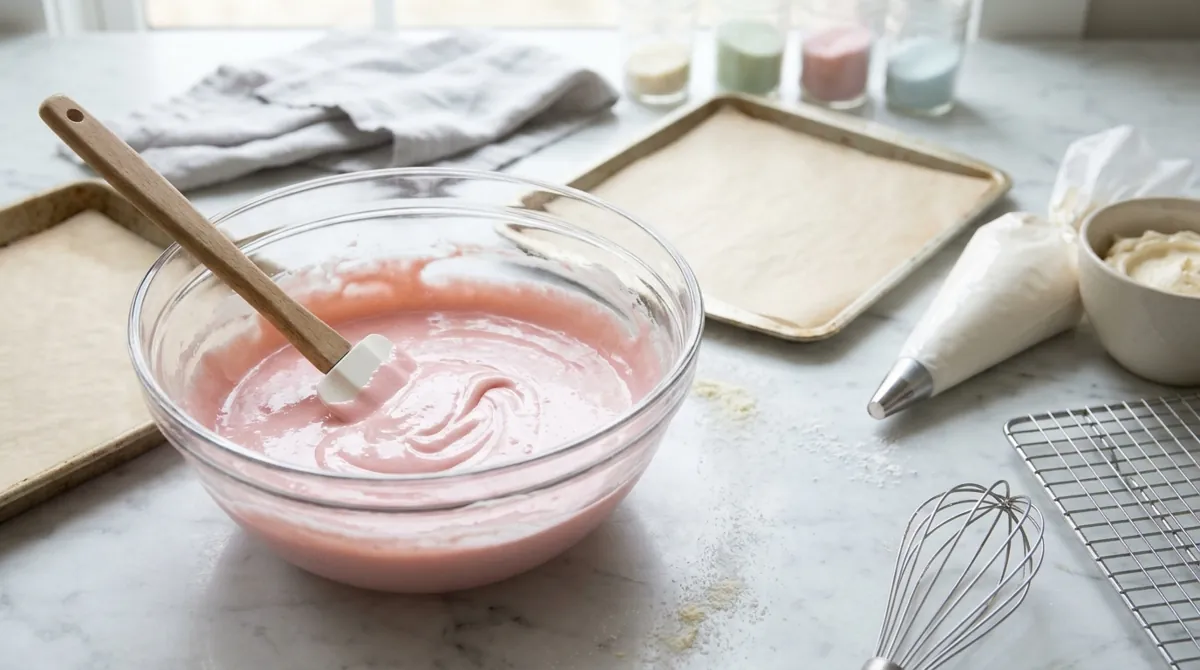
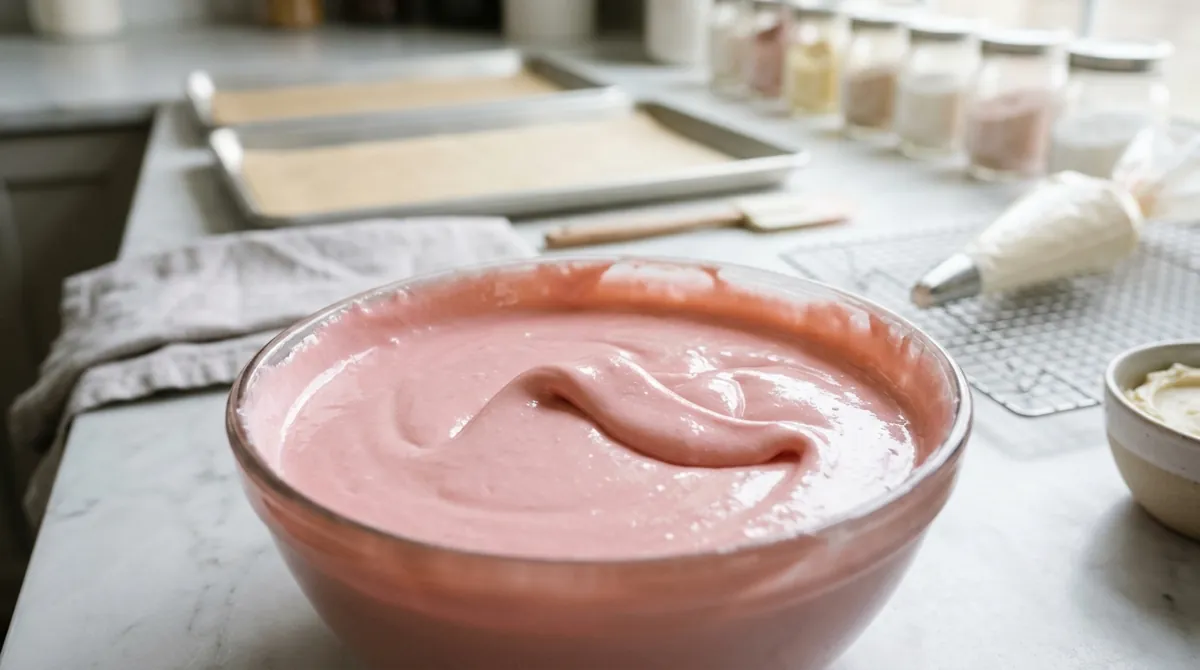
✓ What it should look like - Step 4
Scoop the batter into a piping bag with a 1/2 inch round tip. Pipe 1 3/4 inch rounds about 1 inch apart, holding the bag straight up. Rap each tray firmly on the counter 3 or 4 times, and pop any bubbles with a toothpick.
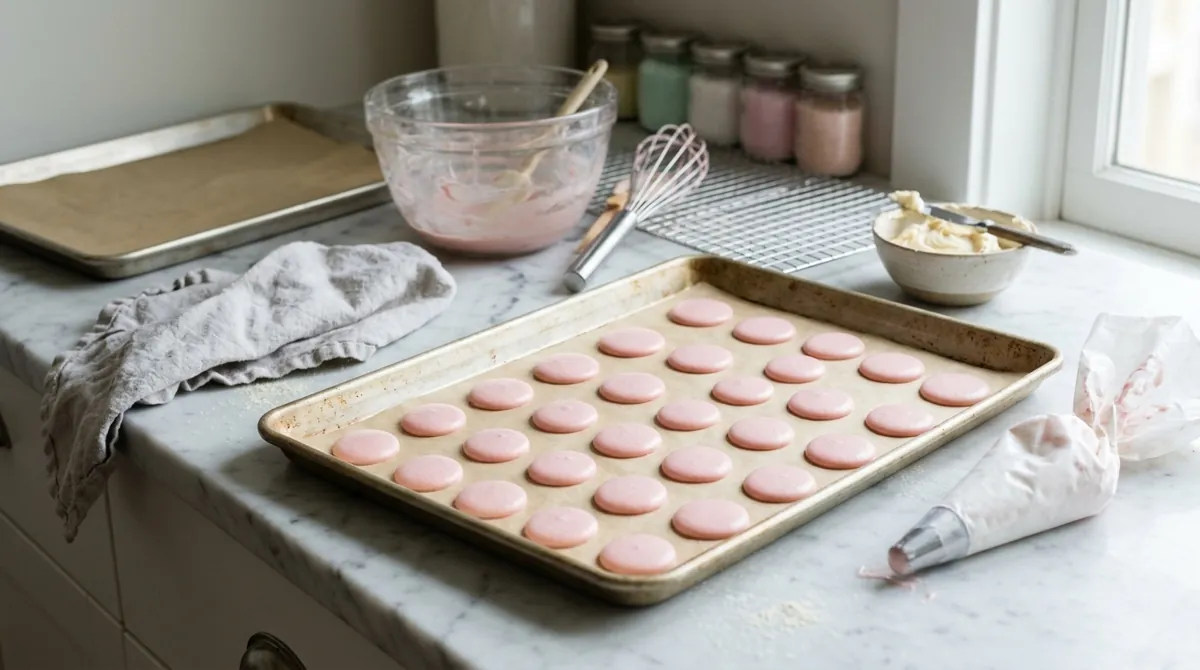
- Step 5
Rest the trays uncovered at room temperature for 30 minutes (up to 2 hours in a humid kitchen), until a dry skin forms and a fingertip touches the top without sticking. Heat the oven to 320°F in the meantime.
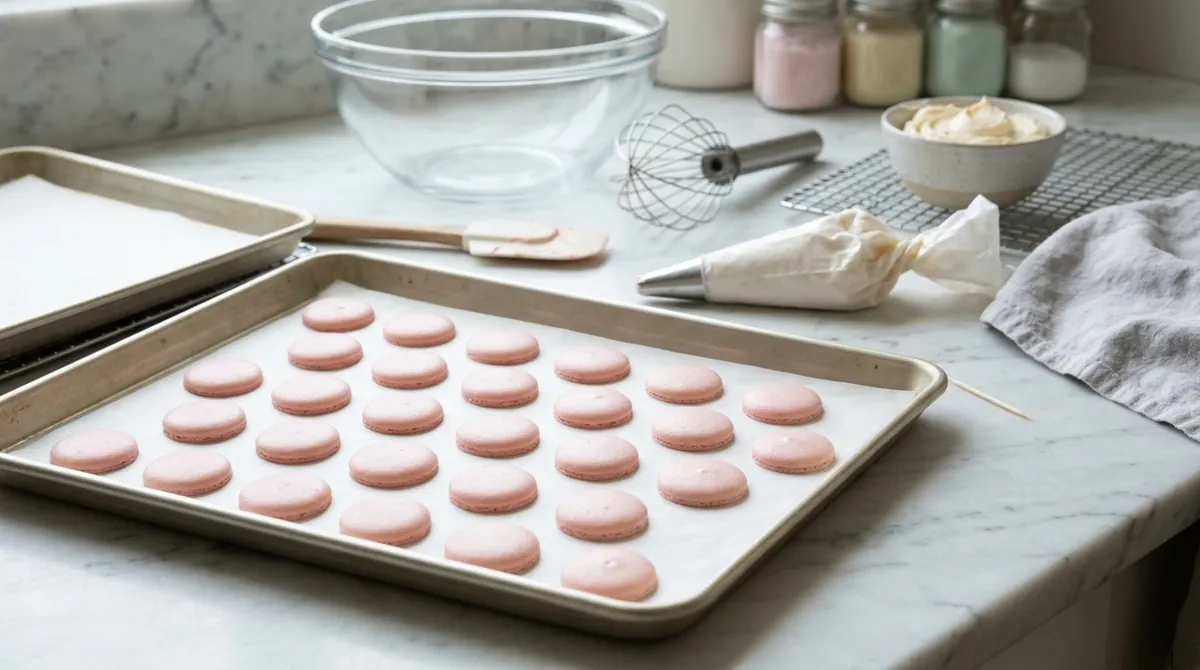
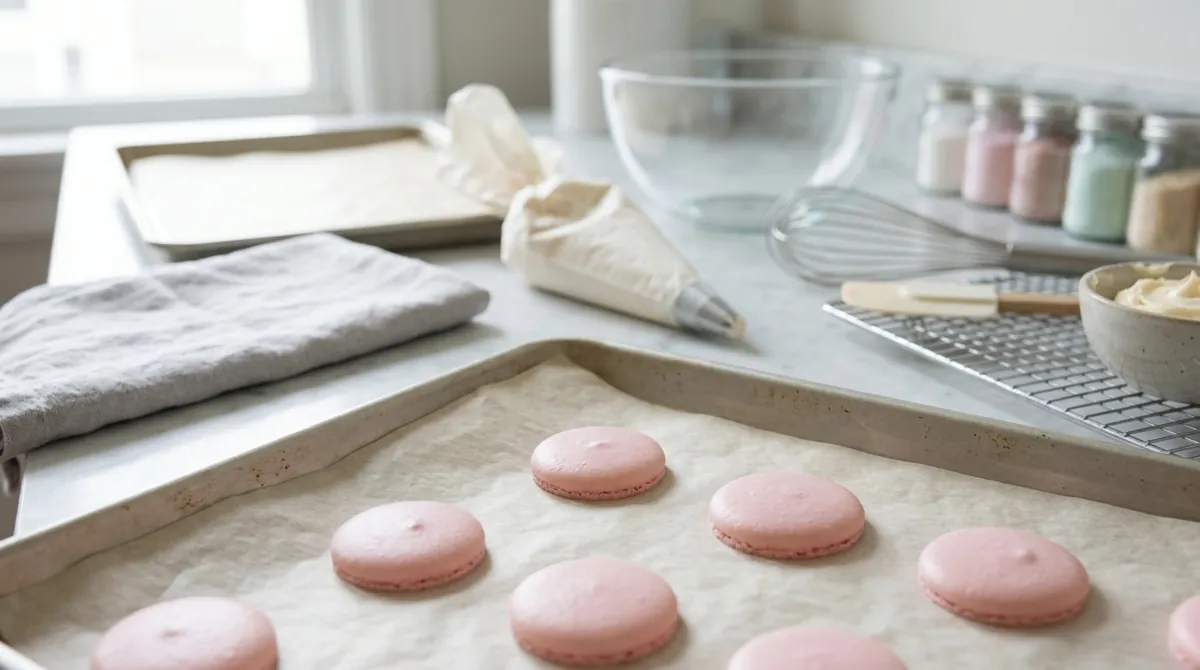
✓ What it should look like - Step 6
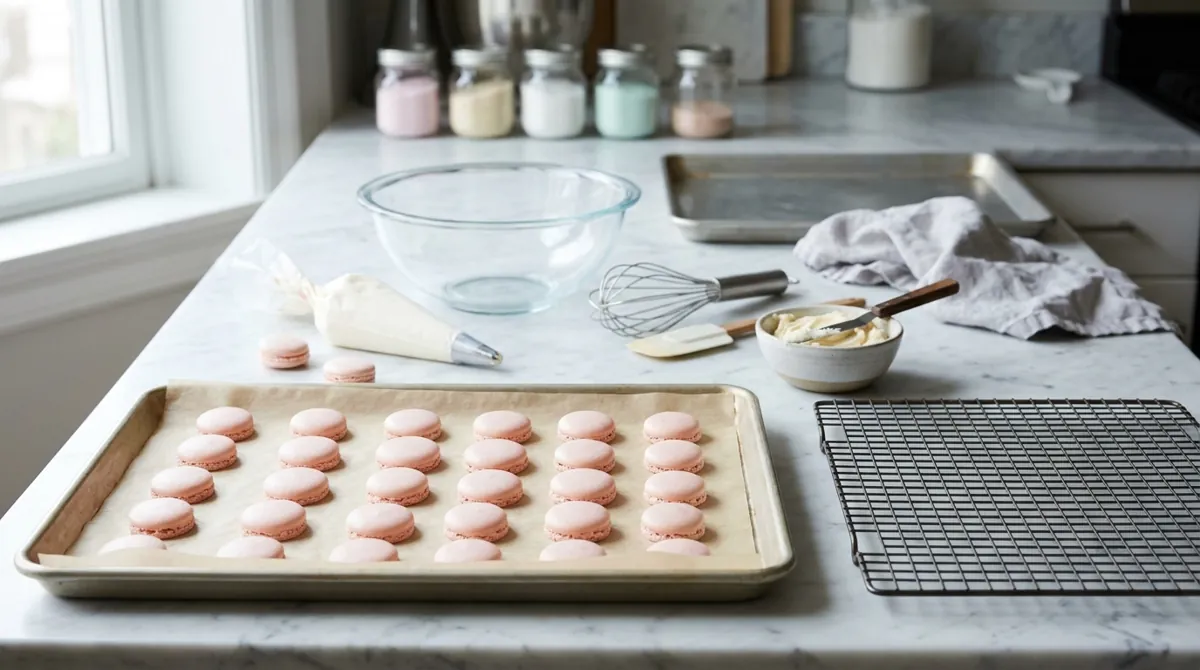
Bake one tray at a time on the middle rack for 15 to 20 minutes, until the shells are set and the ruffled feet have risen. If the tops brown, drop the oven to 300°F for the last minutes. Cool completely on the tray, then peel the shells off.
- Step 7
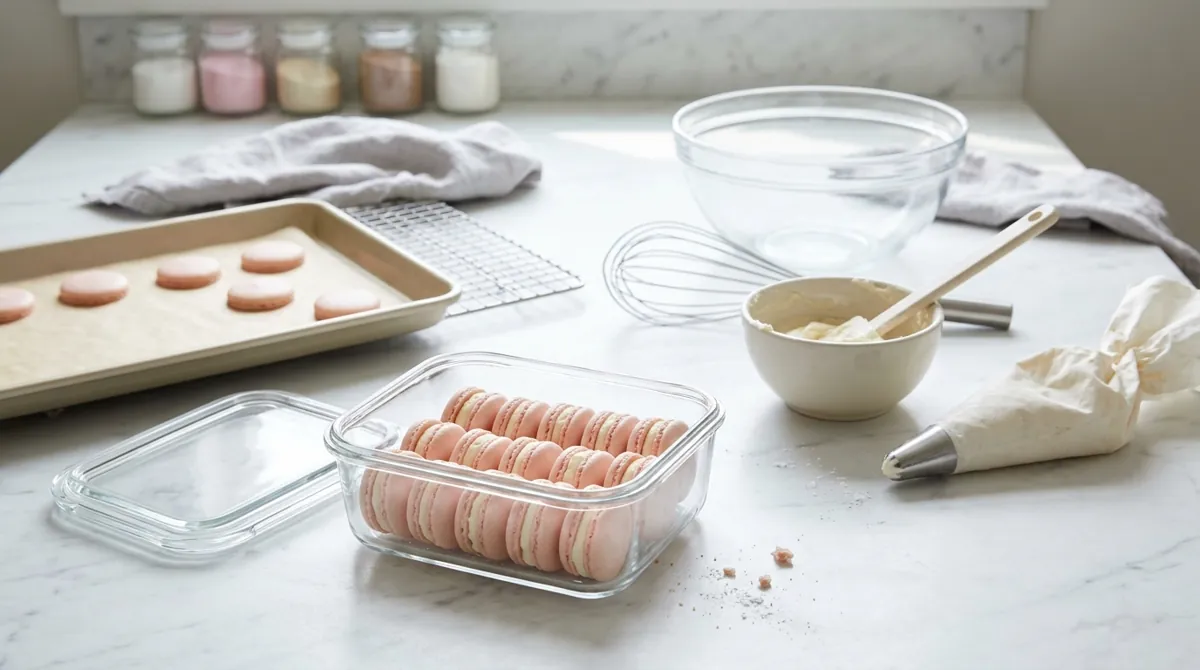
Beat the butter, confectioners' sugar, cream, vanilla and salt until fluffy. Pair the shells by size and sandwich with a heaping teaspoon of buttercream. Refrigerate in an airtight container 24 to 48 hours, then bring to room temperature for an hour before serving.
French Macarons
Serves 12 · about 24 filled macarons (a little over 2 dozen shells' worth of 1 3/4 inch rounds) · 2 hr 30 min total
Shells
- 75 g egg whites (2 to 3 large eggs), at room temperature
- 75 g granulated sugar (1/4 cup plus 2 tbsp)
- 1/4 tsp cream of tartar
- 100 g confectioners' sugar (3/4 cup plus 2 tbsp)
- 85 g finely ground blanched almond flour (3/4 cup plus 2 tbsp)
- Gel food coloring, optional
Vanilla buttercream
- 113 g unsalted butter (1/2 cup), soft
- 120 g confectioners' sugar (1 cup)
- 1 tbsp heavy cream
- 1 tsp vanilla extract and a pinch of salt
Equipment: Oven, Hand or stand mixer, Rimmed baking sheet, Measuring cups and spoons, Mixing bowls, Whisk, Spatula, Piping bag (or a zip-top bag), Parchment paper, Toothpicks
Method
- Line two baking sheets with parchment or silicone mats. Sift the confectioners' sugar and almond flour together twice and set aside; throw out any coarse almond bits.
- Whisk the egg whites, granulated sugar and cream of tartar in a clean, dry bowl set over a pan of barely simmering water until the sugar dissolves, then whip with a mixer for 5 to 6 minutes until the meringue is glossy and holds medium to stiff peaks that curl slightly at the tip. Whip in a tiny bit of gel color if you like.
- Add the sifted dry mix and fold it in with a rubber spatula, smearing the batter against the side of the bowl and gathering it back, until it is smooth and glossy and sinks back into itself in about 10 seconds when you draw a ribbon through it. Stop there: too little leaves lumpy shells, too much makes thin, flat ones.
- Scoop the batter into a piping bag with a 1/2 inch round tip. Pipe 1 3/4 inch rounds about 1 inch apart, holding the bag straight up. Rap each tray firmly on the counter 3 or 4 times, and pop any bubbles with a toothpick.
- Rest the trays uncovered at room temperature for 30 minutes (up to 2 hours in a humid kitchen), until a dry skin forms and a fingertip touches the top without sticking. Heat the oven to 320°F in the meantime.
- Bake one tray at a time on the middle rack for 15 to 20 minutes, until the shells are set and the ruffled feet have risen. If the tops brown, drop the oven to 300°F for the last minutes. Cool completely on the tray, then peel the shells off.
- Beat the butter, confectioners' sugar, cream, vanilla and salt until fluffy. Pair the shells by size and sandwich with a heaping teaspoon of buttercream. Refrigerate in an airtight container 24 to 48 hours, then bring to room temperature for an hour before serving.
Americanized house recipe, written for this site. Method, weights, temperature and maturing time follow King Arthur Baking, "French Macarons" (75 g egg whites, 75 g sugar, 100 g confectioners' sugar, 85 g almond flour, bake at 320°F for 15 to 20 minutes, mature 24 to 48 hours). History: Wikipedia, "Macaron" (1617 English recipe, the Desfontaines and Gerbet claims, the Medici legend, the Nancy nuns). The buttercream amounts are the site's own simple filling. King Arthur Baking. Ingredient list follows the source; the method is in our own words.
All sources (2)
Tips
- Weigh everything on a scale; macarons do not forgive cup measures.
- Use a clean, grease-free bowl. One drop of egg yolk or oil keeps the whites from whipping.
- Oven temperatures vary. Bake one test tray first and adjust: hollow shells mean the oven is too hot, no feet means the batter was too wet or the skin too thin.
- Shells keep 1 month in the freezer; filled macarons keep 1 week in the fridge.
The rules people argue about
What the sources agree on, what they don't, and what is just a good story.
- Catherine de' Medici brought the macaron to France. Folklore: Wikipedia notes research found no Italian chefs in her household; the almond cookie in France is older and has several origin stories.
- Pierre Desfontaines of Ladurée invented the filled Paris macaron in the 1930s. Disputed: he is the commonly given inventor, but the baker Claude Gerbet also claims it, and the filled style was first called the "Gerbet".
- French meringue is the right method for beginners. Disputed: French meringue (raw whites whipped with sugar) is simplest, but many bakers prefer Italian meringue (hot sugar syrup) as more stable; this recipe uses a warmed French meringue.
- You must age the egg whites for days. Disputed: some bakers swear by it; King Arthur's method uses room-temperature whites with no aging.
Meatballs of the World

Italian-American Meatballs
Big, tender meatballs braised for an hour in red sauce over spaghetti. The one most Americans grew up with.

Pallottine (Abruzzo Meatballs)
Tiny meatballs, smaller than a marble, tossed right through square spaghetti alla chitarra. No bread at all.

Swedish Meatballs (Köttbullar)
Small, soft meatballs browned in butter, in a cream sauce made from the same pan, with lingonberry jam on the plate.

Danish Frikadeller
Pork meatballs shaped with a spoon and fried slowly in butter, crusty outside and soft in the middle.

Königsberger Klopse
German meatballs that are never fried: poached, then served in a creamy white sauce with capers.

Spanish Albóndigas in Almond Saffron Sauce
The tapas bar classic: small meatballs in a golden sauce thickened with fried almonds and bread.

Mexican Albóndigas with Chipotle and Mint
Soft meatballs with rice and fresh mint inside, simmered in a smoky tomato and chipotle broth.

Izgara Köfte (Turkish Grilled Meatballs)
Small, flat meatballs kneaded hard, rested cold, and charred on a hot grill pan.

Lion's Head Meatballs
Big, soft pork meatballs, stirred into a sticky paste, fried to set, then braised in a savory sauce.

Chicken Tsukune
Japan's chicken meatball: kneaded sticky, grilled on skewers, glazed with sweet soy tare, dipped in egg yolk.