
Mango Sticky Rice
Chewy steamed glutinous rice soaked in sweet, salty coconut milk, served with ripe sliced mango and a coconut drizzle: khao niao mamuang, Thailand's best-known dessert.
🍳Cook alongOne move at a time, with real timers
 Edited by JP Lambiase
Change the estimate
Swaps change the price only: cook any meat to its own safe temperature. Where these numbers come from
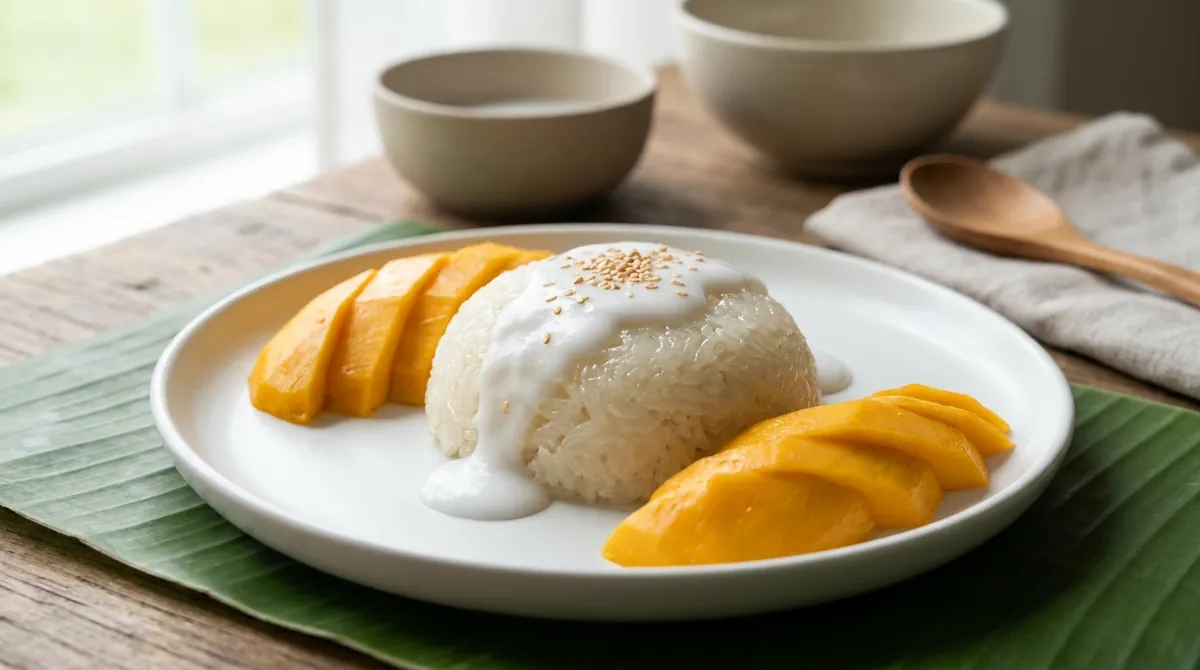
Mango sticky rice is khao niao mamuang in Thai: glutinous rice steamed, soaked with sweetened coconut milk and served with ripe mango. It is usually eaten in Thailand at the peak of mango season, around April and May, and a sprinkle of crisp yellow mung beans or toasted sesame seeds is common.
Its age is a matter of some debate. Wikipedia says the dish is believed to date to the late Ayutthaya period and cites a written record from that era that describes a fondness for sweets and mentions the ok rong mango, and that during the reign of King Chulalongkorn sticky rice cooked in coconut milk was eaten with ripe mango. It does not describe "poems," and it flags the claim of a Thai origin as needing more sourcing, so the Ayutthaya story is repeated more firmly than the evidence supports.
Why it works the kitchen science
Soaking
Glutinous rice hydrates evenly overnight, so steaming cooks it through without gumminess.
Steaming, not boiling
The grains stay separate and chewy instead of turning to porridge.
Pouring warm coconut milk onto hot rice
The hot grains drink it in and stay glossy.
A pinch of salt
It makes the coconut sweeter and the mango taste brighter.
🧰 You'll need 7 items
Everything the steps call for. Tick off what you have before you start.
Pans and pots
Tools
Supplies
Step by step
- Step 1
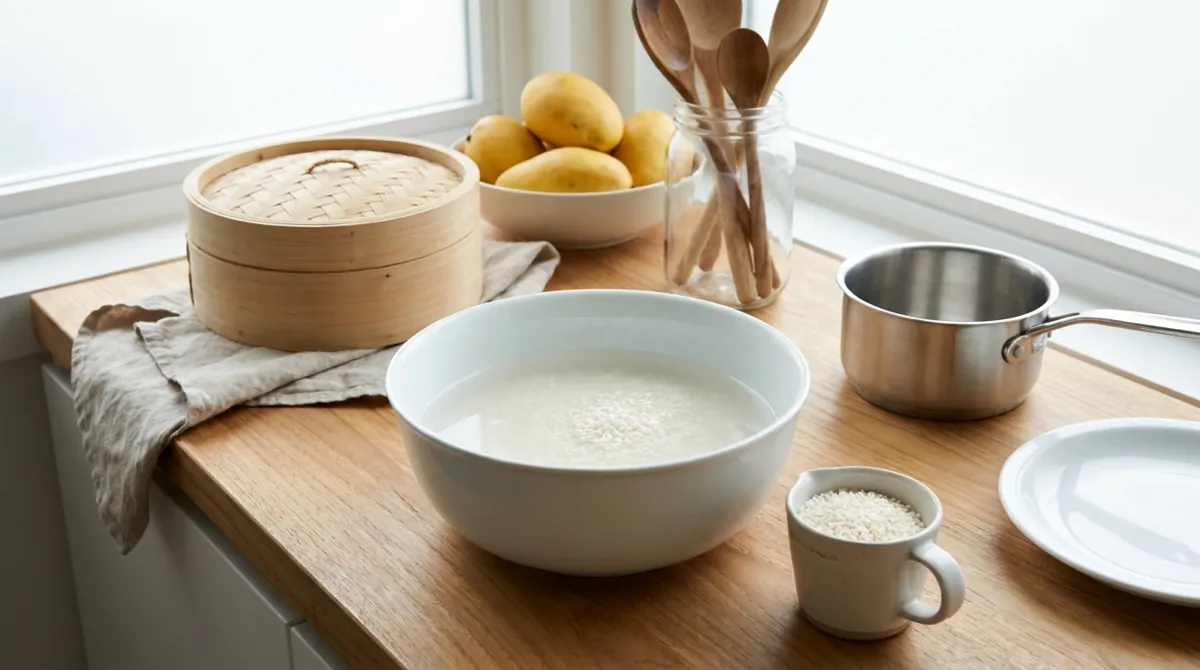
Rinse the rice in a bowl of cold water, pouring it off and refilling until the water runs almost clear. Cover with fresh cold water and soak at least 4 hours, or overnight. Drain very well.
- Step 2
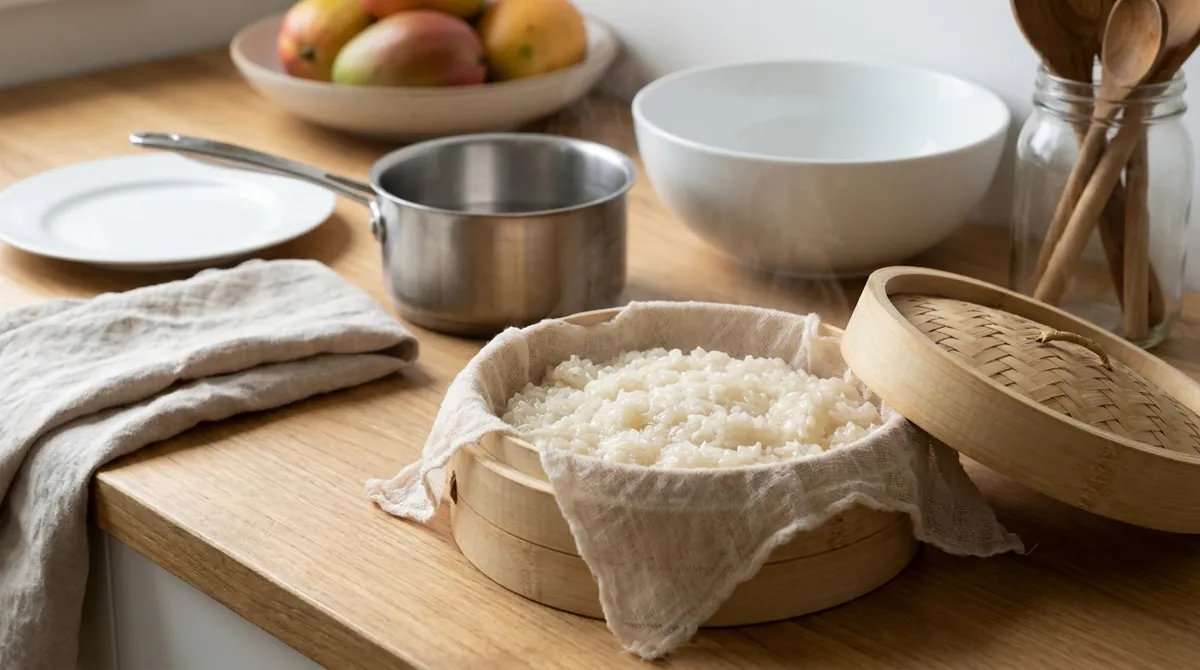
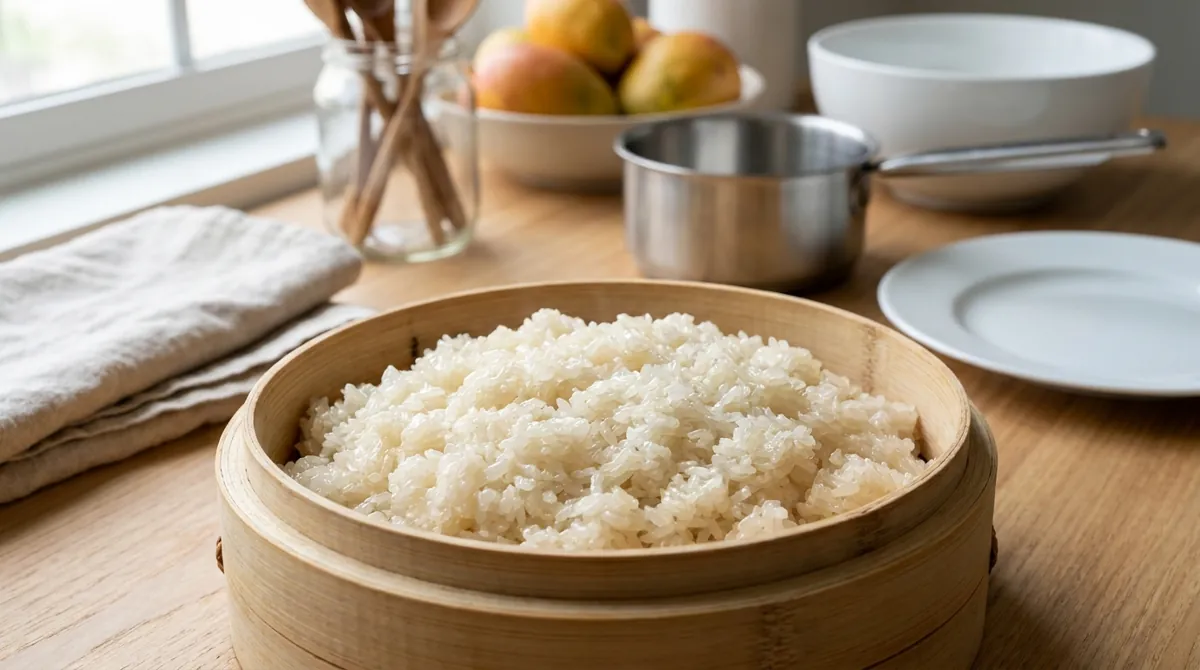
Line a steamer basket with damp cheesecloth or perforated parchment and spread the rice in an even layer. Steam over simmering water, covered, 25 to 35 minutes (thicker layers take longer), until the grains are translucent, tender and chewy all the way through; taste a grain to check.
✓ What it should look like - Step 3
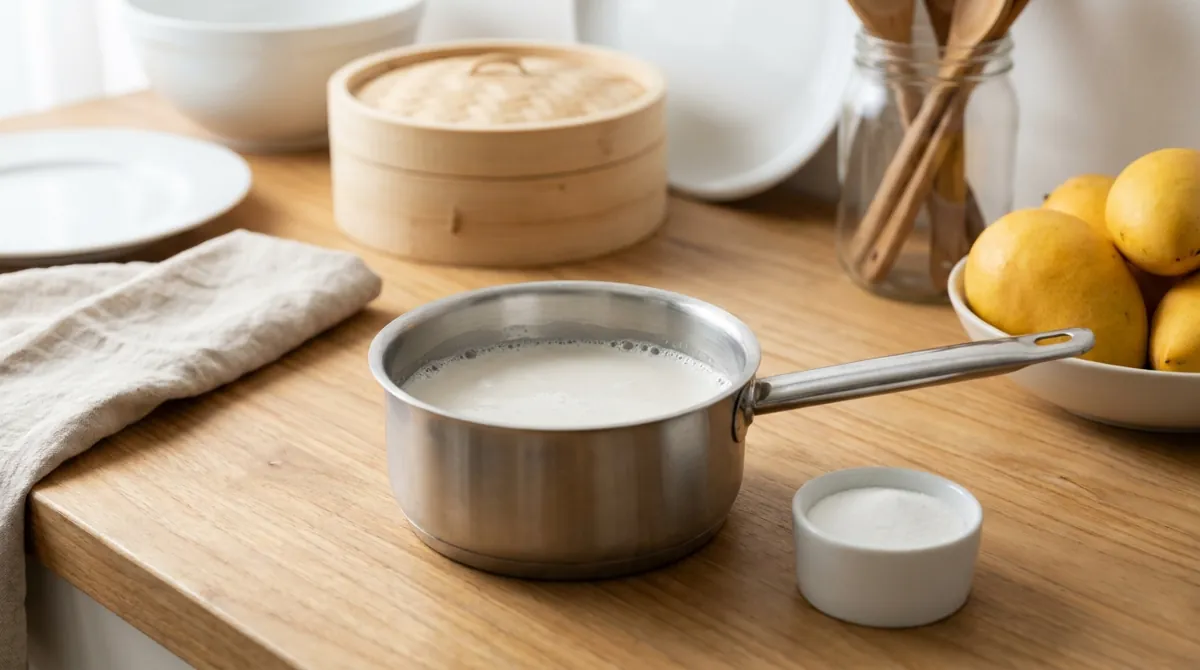
While it steams, warm 1 cup of the coconut milk with 1/3 cup of the sugar and 3/4 teaspoon of the salt in a small saucepan over low heat, just until the sugar dissolves. Do not let it boil.
- Step 4
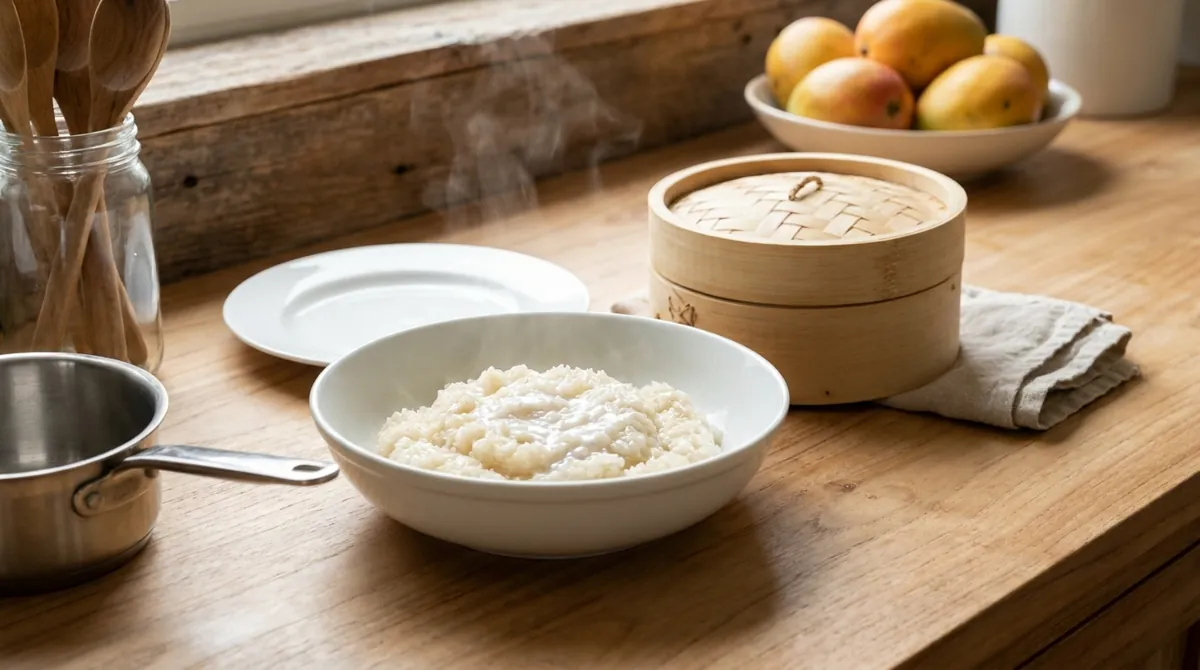
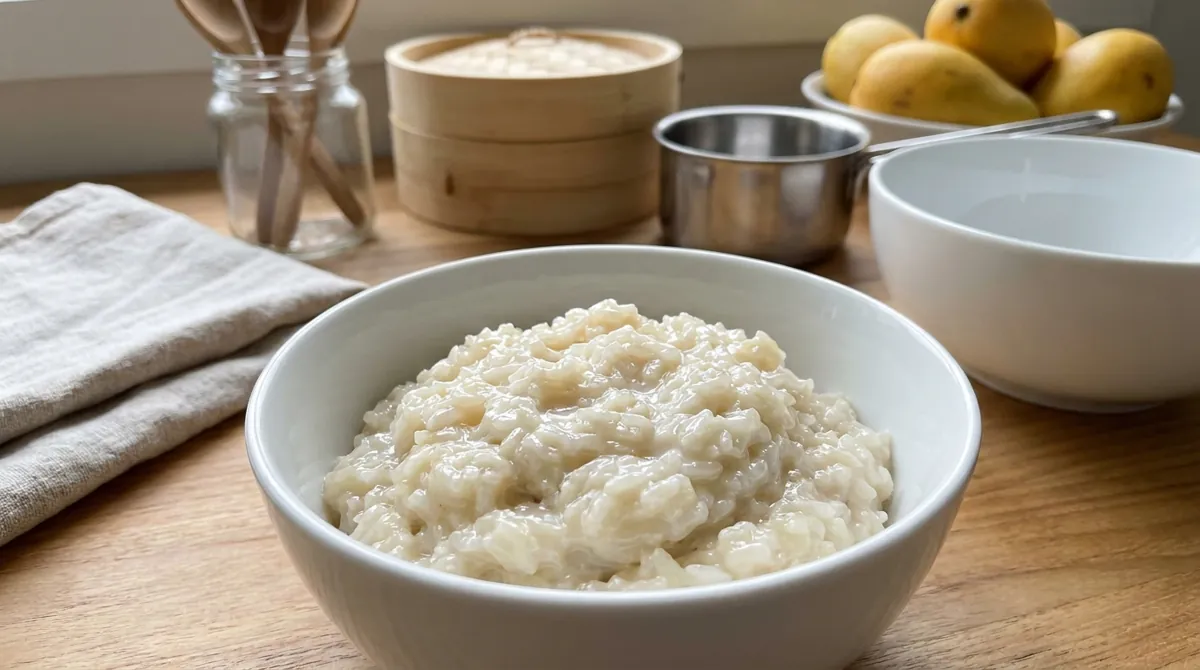
Tip the hot rice into a bowl, pour the warm coconut milk over it and fold gently to coat. Cover and leave 20 to 30 minutes, until the rice has absorbed nearly all the liquid and looks glossy.
✓ What it should look like - Step 5
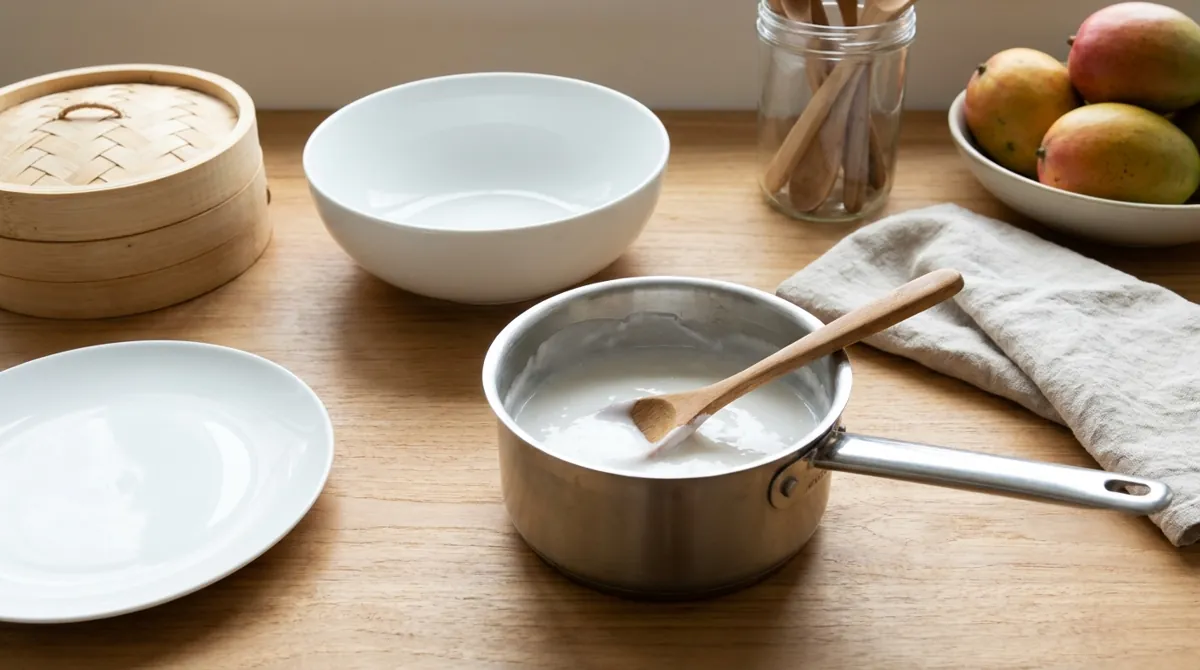
For the sauce, warm the remaining 1/2 cup coconut milk with 1 tablespoon sugar and 1/4 teaspoon salt in the small saucepan. Add the cornstarch mixture and simmer 1 minute, until just thick enough to coat a spoon.
- Step 6
Slice the mangoes. Mound the rice on plates, lay the mango beside it, spoon the sauce over the rice and finish with sesame seeds. Serve warm or at room temperature.
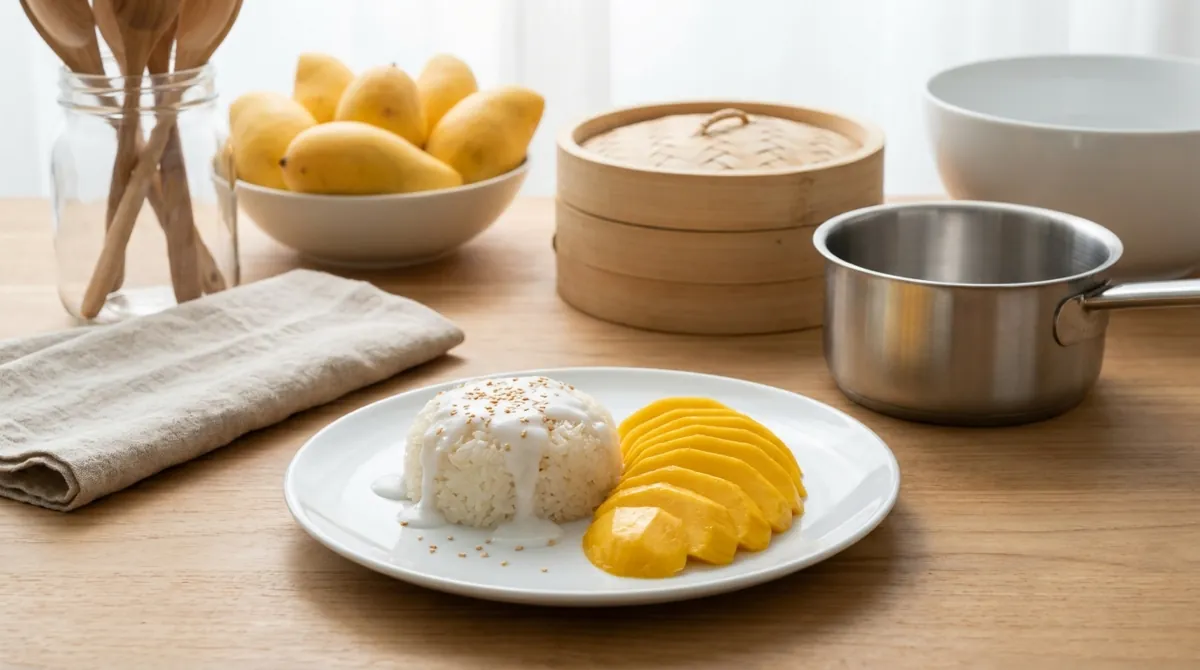
Mango Sticky Rice
Serves 4 · about 4 cups of rice · 4 hr 50 min total
- 1 1/2 cups glutinous (sweet) rice, labeled "sticky rice" (300 g)
- 1 1/2 cups full-fat unsweetened coconut milk (360 g), divided: 1 cup for the rice, 1/2 cup for the sauce
- 1/3 cup plus 1 tablespoon granulated sugar (77 g), divided
- 3/4 teaspoon plus 1/4 teaspoon fine salt, divided
- 1 teaspoon cornstarch (3 g) mixed with 1 tablespoon water
- 2 to 3 ripe mangoes, such as Ataulfo, peeled and sliced (about 450 g flesh)
- 1 tablespoon toasted sesame seeds (9 g), or crisp mung beans
Equipment: Small saucepan, Steamer, Chef's knife and cutting board, Measuring cups and spoons, Mixing bowls, Parchment paper, Cheesecloth
Method
- Rinse the rice in a bowl of cold water, pouring it off and refilling until the water runs almost clear. Cover with fresh cold water and soak at least 4 hours, or overnight. Drain very well.
- Line a steamer basket with damp cheesecloth or perforated parchment and spread the rice in an even layer. Steam over simmering water, covered, 25 to 35 minutes (thicker layers take longer), until the grains are translucent, tender and chewy all the way through; taste a grain to check.
- While it steams, warm 1 cup of the coconut milk with 1/3 cup of the sugar and 3/4 teaspoon of the salt in a small saucepan over low heat, just until the sugar dissolves. Do not let it boil.
- Tip the hot rice into a bowl, pour the warm coconut milk over it and fold gently to coat. Cover and leave 20 to 30 minutes, until the rice has absorbed nearly all the liquid and looks glossy.
- For the sauce, warm the remaining 1/2 cup coconut milk with 1 tablespoon sugar and 1/4 teaspoon salt in the small saucepan. Add the cornstarch mixture and simmer 1 minute, until just thick enough to coat a spoon.
- Slice the mangoes. Mound the rice on plates, lay the mango beside it, spoon the sauce over the rice and finish with sesame seeds. Serve warm or at room temperature.
Americanized house recipe, written for this site, within the common ratio of about 1 cup of coconut milk and 1/3 cup of sugar to 1 1/2 cups of dry glutinous rice. History: Wikipedia, "Mango sticky rice" (late Ayutthaya written record, ok rong mango, Chulalongkorn era, April and May season, mung bean and sesame toppings). Technique checked against Food Network, "Sticky Rice with Mango" (1 1/2 cups glutinous rice, soaked overnight, steamed 35 to 40 minutes, then left to absorb the coconut mixture); and El Mundo Eats, "Mango Sticky Rice" (soak at least 4 hours, coconut milk with sugar and salt, a small cornstarch thickening for the sauce). Steam times in these sources run from 25 to 40 minutes, so test a grain. en.wikipedia.org. Ingredient list follows the source; the method is in our own words.
All sources (3)
Tips
- Use real glutinous rice from an Asian grocery, not sushi rice or long-grain rice; it will not turn sticky.
- Never refrigerate the rice, which hardens it; keep it covered at room temperature for the day, or rewarm in a steamer.
- Shaken full-fat coconut milk from a can works; use the cream from the top for the sauce if you like it richer.
- Palm sugar can replace some of the white sugar for a deeper flavor.
The rules people argue about
What the sources agree on, what they don't, and what is just a good story.
- The dish goes back to Ayutthaya-era poems. Disputed: Wikipedia cites a written record from the late Ayutthaya period that mentions sweets and the ok rong mango, not a poem naming the dish, and calls the claim of a Thai origin under-sourced.
- It is a very old royal dessert. Folklore: the Chulalongkorn-era pairing of sticky rice in coconut milk with ripe mango is cited; an older royal origin is repeated but not proven here.
Meatballs of the World

Italian-American Meatballs
Big, tender meatballs braised for an hour in red sauce over spaghetti. The one most Americans grew up with.

Pallottine (Abruzzo Meatballs)
Tiny meatballs, smaller than a marble, tossed right through square spaghetti alla chitarra. No bread at all.

Swedish Meatballs (Köttbullar)
Small, soft meatballs browned in butter, in a cream sauce made from the same pan, with lingonberry jam on the plate.

Danish Frikadeller
Pork meatballs shaped with a spoon and fried slowly in butter, crusty outside and soft in the middle.

Königsberger Klopse
German meatballs that are never fried: poached, then served in a creamy white sauce with capers.

Spanish Albóndigas in Almond Saffron Sauce
The tapas bar classic: small meatballs in a golden sauce thickened with fried almonds and bread.

Mexican Albóndigas with Chipotle and Mint
Soft meatballs with rice and fresh mint inside, simmered in a smoky tomato and chipotle broth.

Izgara Köfte (Turkish Grilled Meatballs)
Small, flat meatballs kneaded hard, rested cold, and charred on a hot grill pan.

Lion's Head Meatballs
Big, soft pork meatballs, stirred into a sticky paste, fried to set, then braised in a savory sauce.

Chicken Tsukune
Japan's chicken meatball: kneaded sticky, grilled on skewers, glazed with sweet soy tare, dipped in egg yolk.