
Massaman Curry
Tender beef simmered in coconut milk with warm spices, potatoes and roasted peanuts: the mild, rich, sweet-and-sour Thai curry with Persian and Indian roots.
🍳Cook alongOne move at a time, with real timers
 Edited by JP Lambiase
Change the estimate
Swaps change the price only: cook any meat to its own safe temperature. Where these numbers come from
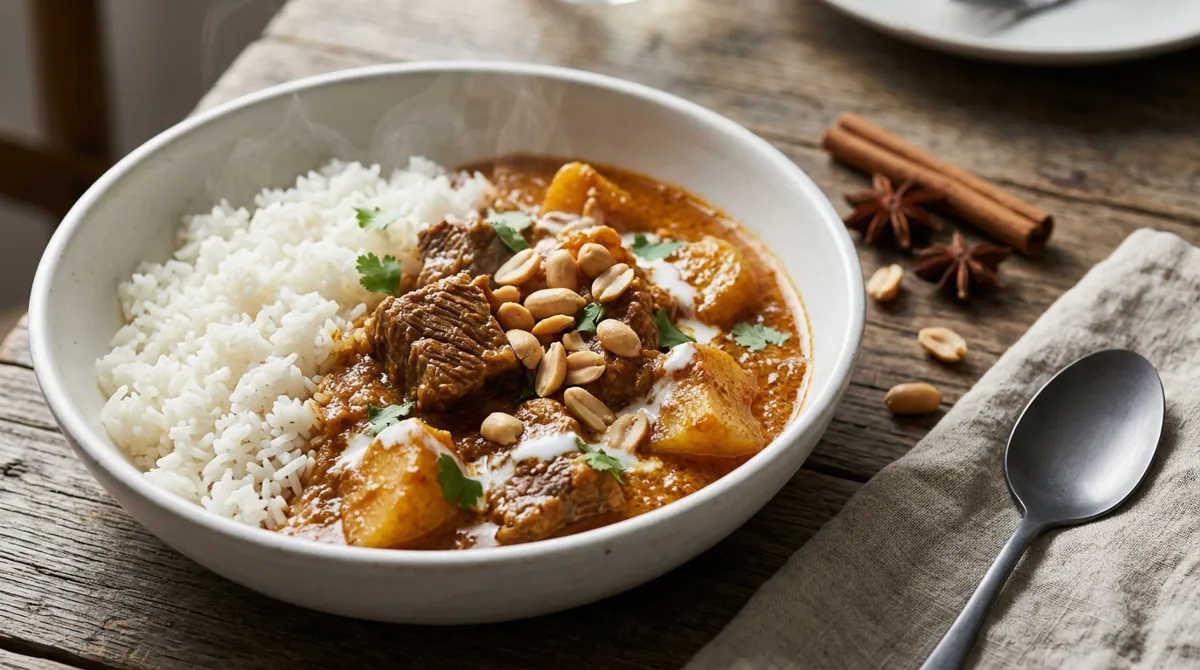
Massaman is the Thai curry that tastes least like the rest. It leans on cardamom, cinnamon, cloves, cumin and star anise rather than fresh green chilies, and it has potatoes and peanuts in it. The name is generally explained as a corruption of the Persian word for "Muslim" (mosalmān); mid-19th-century writers called it "Mussulman curry".
Where it came from is argued. Wikipedia reports that several Thai food writers and chefs, including Santi Sawetwimon and David Thompson, place it in 17th-century Ayutthaya, the cosmopolitan royal court of central Thailand, through the Persian merchant Sheikh Ahmad Qomi, an ancestor of the noble Bunnag family. That is DISPUTED: most other theories place it as a dish of southern Thailand shaped by Malay and Indian cooking. The warm spices themselves reached Thailand by trade, first through Muslim merchants and later Portuguese, Dutch and French traders. A late-18th-century Thai poem attributed to the future King Rama II, Kap He Chom Khrueang Khao Wan, praises a cumin-scented curry of this kind, and the first recorded recipe, a chicken version with bitter orange juice, was published by Lady Plean Phatsakorawong in 1889. In 2011 CNNGo ranked massaman number one in its list of the world's 50 most delicious foods, and again in 2018.
Why it works the kitchen science
Cracking the coconut cream
Frying the paste in the separated coconut oil, not plain oil, blooms the spices and gives the curry its deep flavor and sheen.
Low and slow
Chuck's connective tissue needs 1 1/2 to 2 hours at a gentle simmer to turn tender.
Potatoes late
Waxy potatoes added for the last 30 minutes cook through without falling apart.
Salty, sour, sweet
Fish sauce, tamarind and palm sugar balance the rich coconut milk.
🧰 You'll need 3 items
Everything the steps call for. Tick off what you have before you start.
Pans and pots
Tools
Step by step
- Step 1
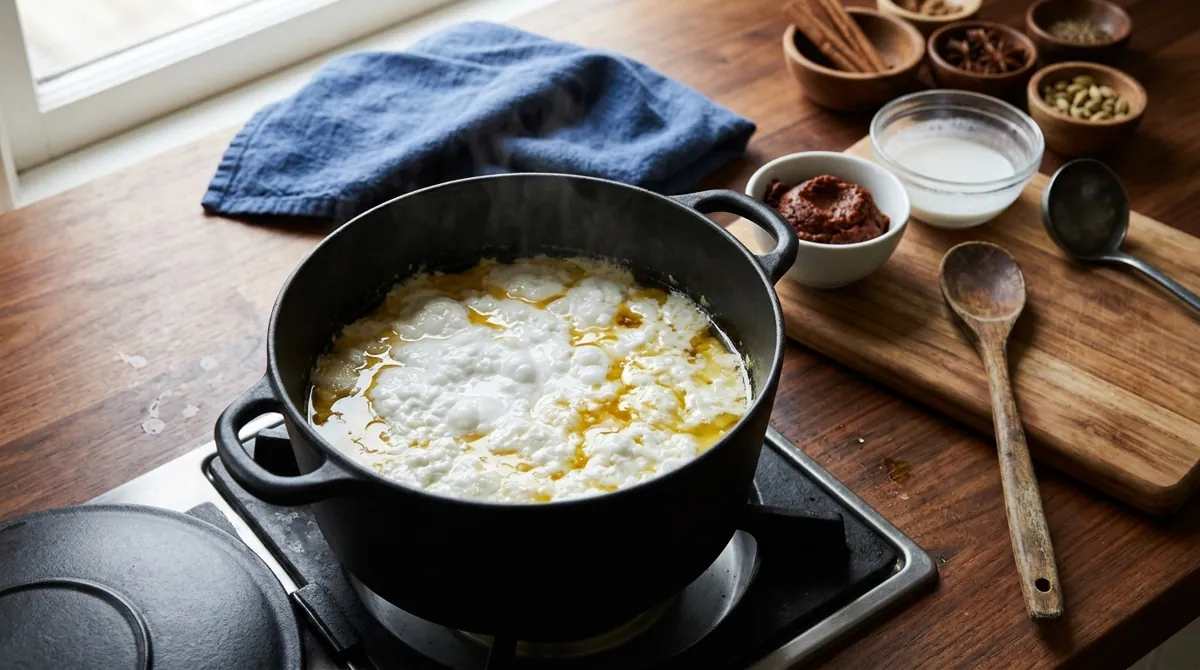
Skim the thick cream from the top of the unshaken cans of coconut milk into a large heavy pot (about 1 cup) and cook over medium heat 5 to 7 minutes, until the oil separates and the cream looks split and shiny. Save the thinner milk.
- Step 2
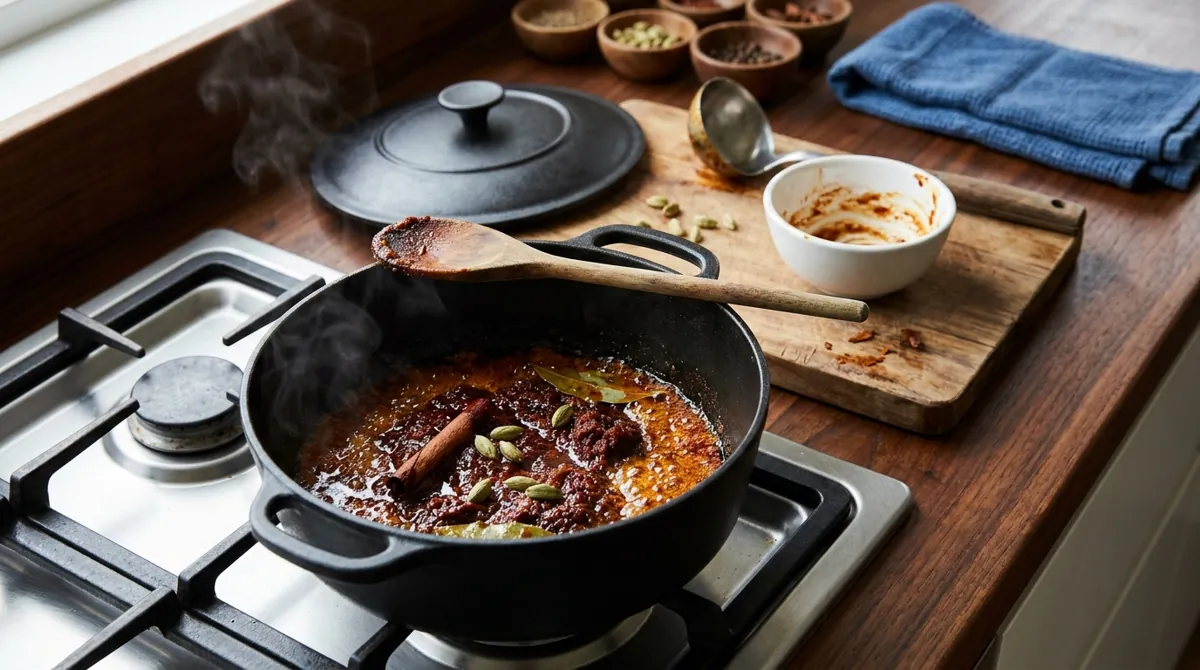
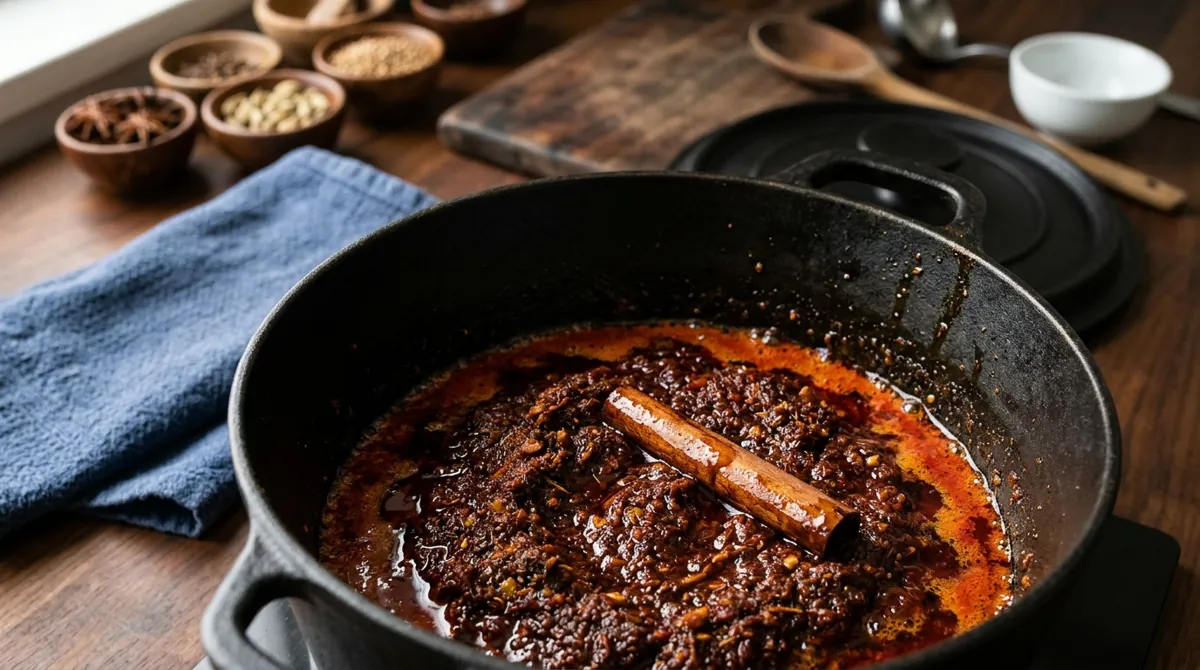
Stir in the curry paste and fry it in the separated oil for 3 to 4 minutes, until dark, fragrant and the oil turns red. Add the cardamom, cinnamon stick and bay leaves for 30 seconds.
✓ What it should look like - Step 3
Add the beef and stir to coat in the paste, 3 to 4 minutes. Add the rest of the coconut milk and the water.
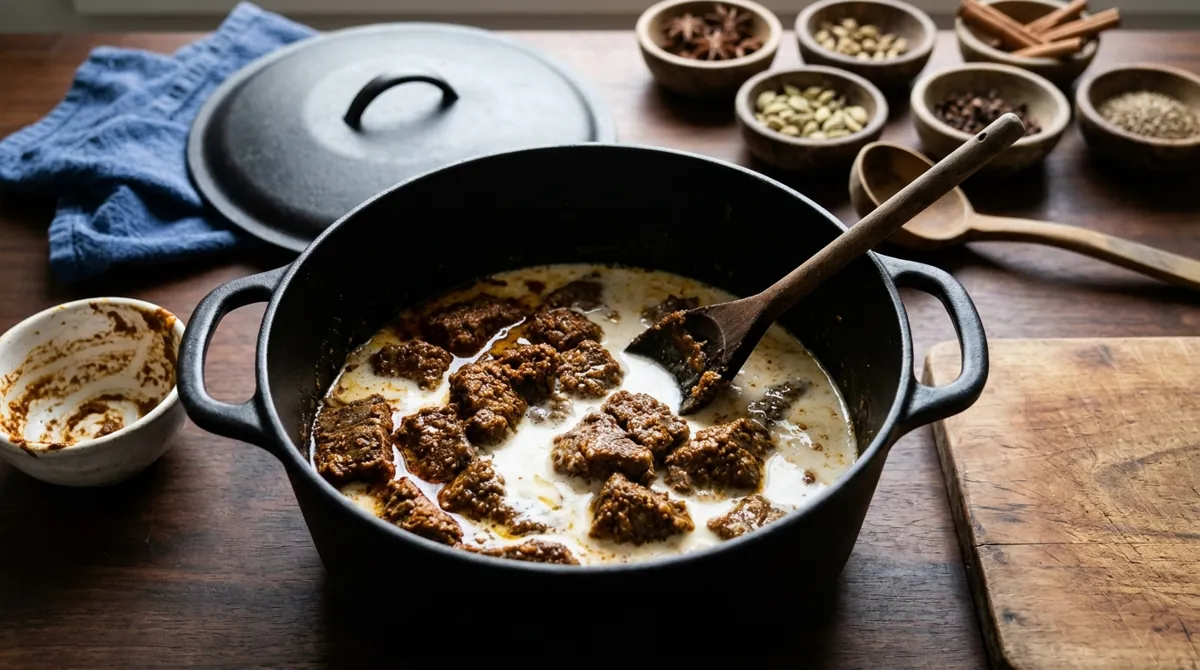
- Step 4
Bring to a gentle simmer, cover partly and cook on low about 1 hour, until the beef is nearly tender.
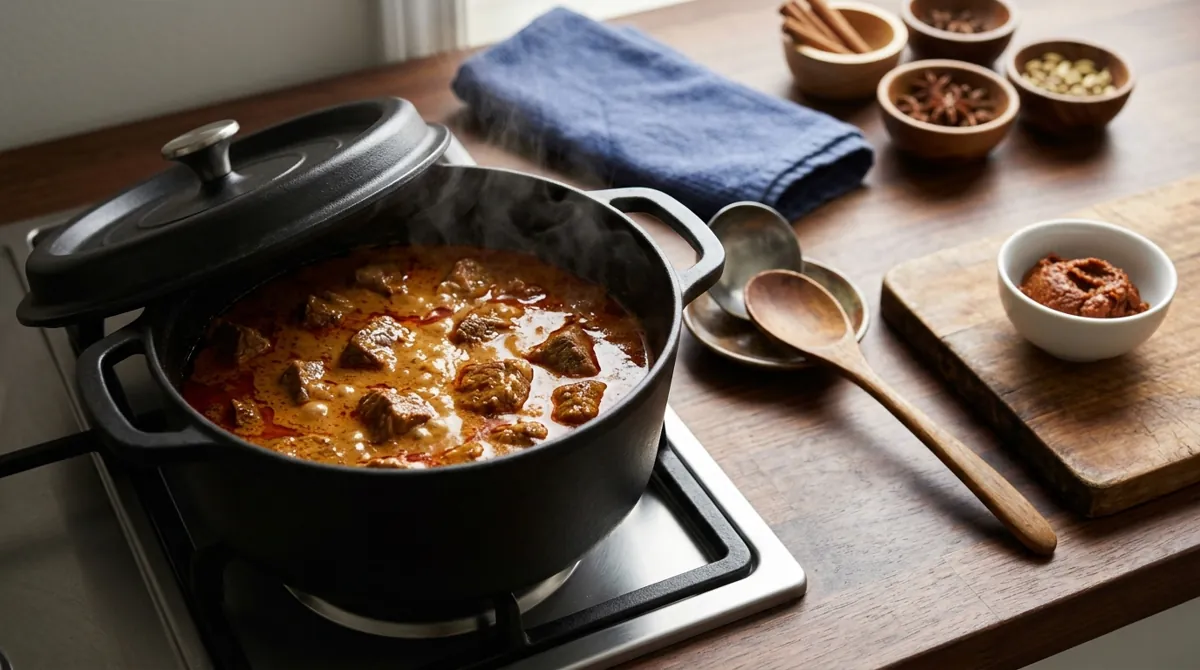
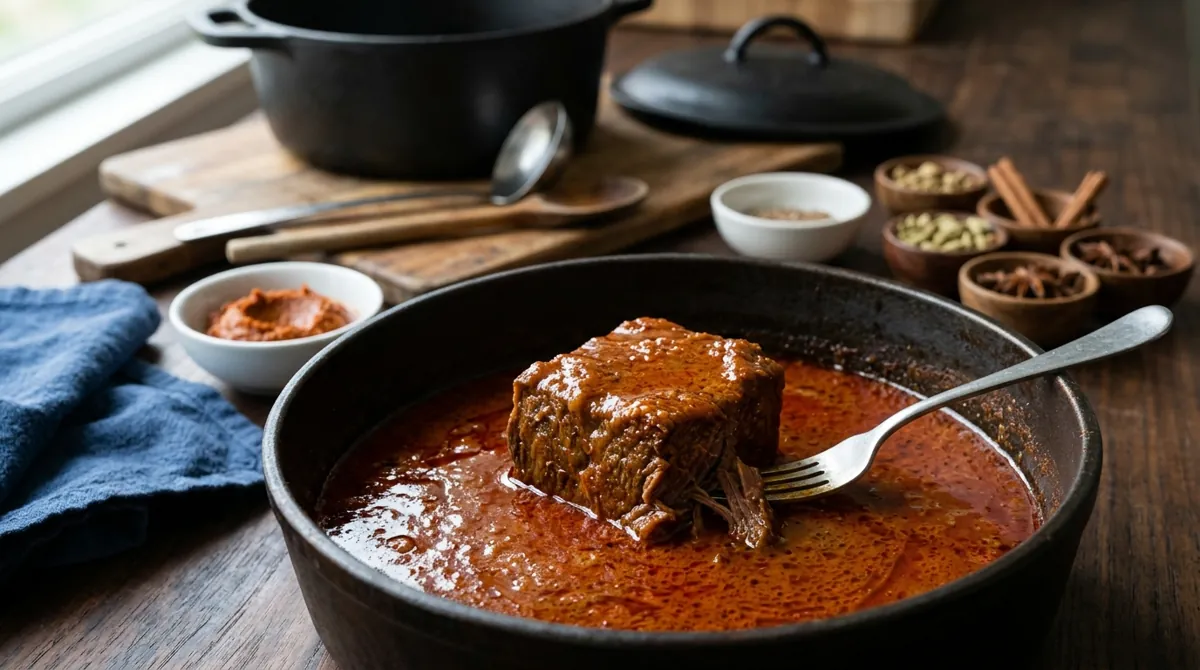
✓ What it should look like - Step 5
Add the onion wedges, potatoes and peanuts. Simmer another 30 to 40 minutes, until the potatoes are tender but still hold their shape and the beef is fork-tender.
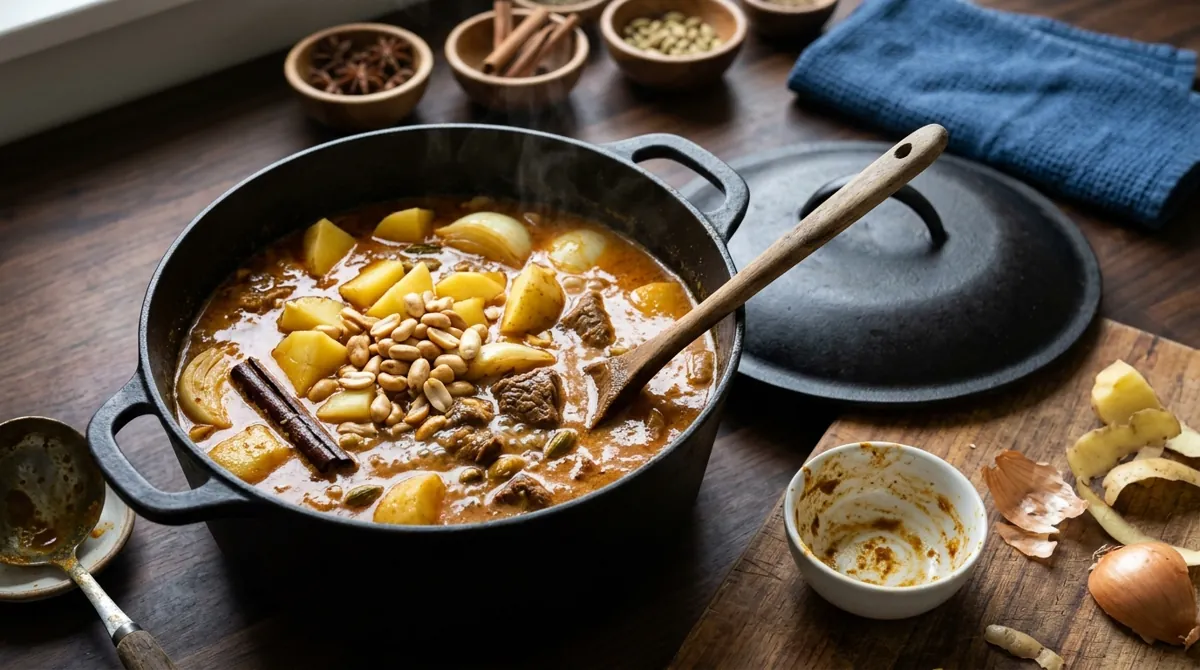
- Step 6
Stir in the fish sauce, tamarind and sugar. Taste and adjust: it should be rich and mild, with a balance of salty, sour and sweet. Simmer a few minutes to thicken slightly.
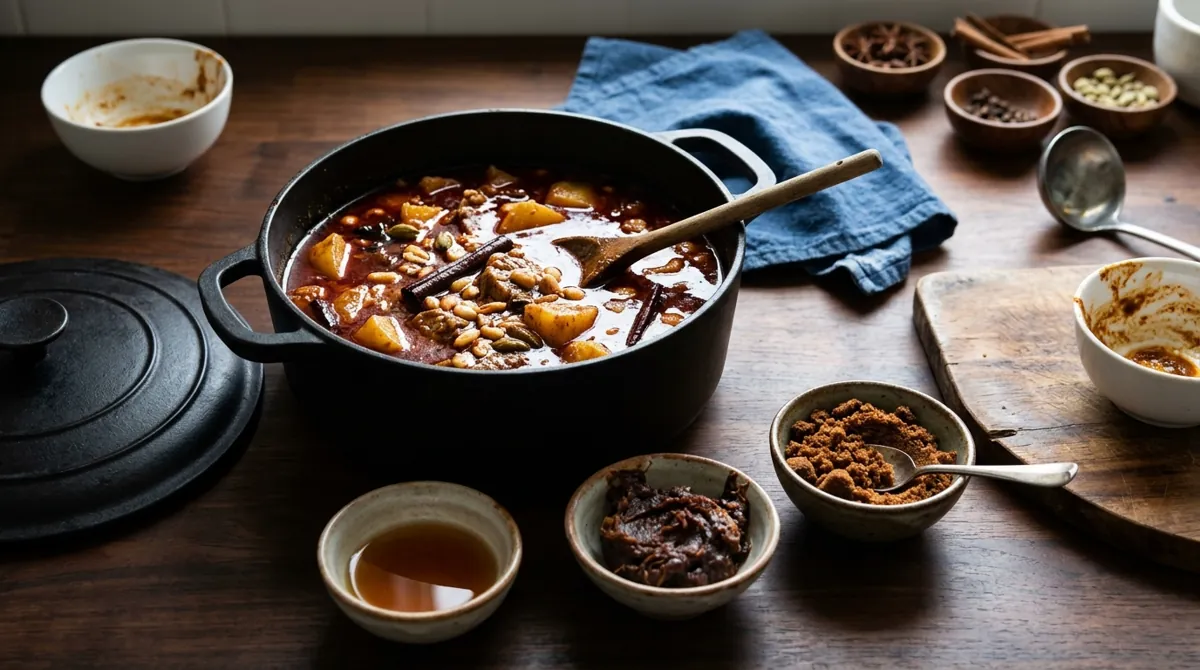
- Step 7
Serve over steamed jasmine rice.
Massaman Curry
Serves 4 · about 6 cups of curry · 2 hr 40 min total
- 1 1/2 lb beef chuck (700 g), cut in 1 1/2 inch cubes
- 2 cans (13.5 oz each) coconut milk, not shaken (about 800 g total)
- 3 tbsp massaman curry paste (about 50 g), store-bought or homemade
- 1 large yellow onion (200 g), cut in wedges
- 1 lb waxy potatoes (450 g), cut in 1 1/2 inch chunks
- 1/3 cup roasted unsalted peanuts (60 g)
- 2 tbsp fish sauce (36 g)
- 1 tbsp tamarind paste (15 g)
- 2 tbsp palm sugar or brown sugar (25 g)
- 3 green cardamom pods, 1 cinnamon stick and 2 bay leaves
- 1 cup water, plus more as needed
- Steamed jasmine rice, for serving
Equipment: Large pot, Chef's knife and cutting board, Measuring cups and spoons
Method
- Skim the thick cream from the top of the unshaken cans of coconut milk into a large heavy pot (about 1 cup) and cook over medium heat 5 to 7 minutes, until the oil separates and the cream looks split and shiny. Save the thinner milk.
- Stir in the curry paste and fry it in the separated oil for 3 to 4 minutes, until dark, fragrant and the oil turns red. Add the cardamom, cinnamon stick and bay leaves for 30 seconds.
- Add the beef and stir to coat in the paste, 3 to 4 minutes. Add the rest of the coconut milk and the water.
- Bring to a gentle simmer, cover partly and cook on low about 1 hour, until the beef is nearly tender.
- Add the onion wedges, potatoes and peanuts. Simmer another 30 to 40 minutes, until the potatoes are tender but still hold their shape and the beef is fork-tender.
- Stir in the fish sauce, tamarind and sugar. Taste and adjust: it should be rich and mild, with a balance of salty, sour and sweet. Simmer a few minutes to thicken slightly.
- Serve over steamed jasmine rice.
None of the three pages was fetched in full. History: Wikipedia, "Massaman curry" (Persian name, Ayutthaya and Sheikh Ahmad Qomi, the competing southern Thai theory, the 1889 recipe, CNN lists). recipetineats.com. Ingredient list follows the source; the method is in our own words.
Tips
- Store-bought massaman paste is fine; the paste is the biggest time saver. Homemade paste keeps up to 4 weeks in the fridge.
- Chicken thighs work: simmer 30 to 35 minutes total instead.
- The curry tastes better the next day and keeps 4 days in the fridge.
- Rinse the can top first; if the cream will not separate, add 1 tbsp neutral oil to fry the paste.
The rules people argue about
What the sources agree on, what they don't, and what is just a good story.
- Massaman was brought to Thailand by Persian traders in 17th-century Ayutthaya. Disputed: this is the view of several Thai food writers and chefs, but most other theories point to southern Thailand and Malay and Indian influence.
- Massaman is not a "real" Thai curry because it is mild. Folklore: it is on royal-court record from the 18th and 19th centuries, including a poem and an 1889 recipe.
- It must be beef. Disputed: beef is the common restaurant version, but chicken is what the first recorded recipe (1889) used, and the traditional dish is often made with duck, lamb or goat in the south.
- Homemade paste is the only right way. Disputed: authentic versions use paste from scratch, but many Thai home cooks and restaurants use ready-made paste.
Meatballs of the World

Italian-American Meatballs
Big, tender meatballs braised for an hour in red sauce over spaghetti. The one most Americans grew up with.

Pallottine (Abruzzo Meatballs)
Tiny meatballs, smaller than a marble, tossed right through square spaghetti alla chitarra. No bread at all.

Swedish Meatballs (Köttbullar)
Small, soft meatballs browned in butter, in a cream sauce made from the same pan, with lingonberry jam on the plate.

Danish Frikadeller
Pork meatballs shaped with a spoon and fried slowly in butter, crusty outside and soft in the middle.

Königsberger Klopse
German meatballs that are never fried: poached, then served in a creamy white sauce with capers.

Spanish Albóndigas in Almond Saffron Sauce
The tapas bar classic: small meatballs in a golden sauce thickened with fried almonds and bread.

Mexican Albóndigas with Chipotle and Mint
Soft meatballs with rice and fresh mint inside, simmered in a smoky tomato and chipotle broth.

Izgara Köfte (Turkish Grilled Meatballs)
Small, flat meatballs kneaded hard, rested cold, and charred on a hot grill pan.

Lion's Head Meatballs
Big, soft pork meatballs, stirred into a sticky paste, fried to set, then braised in a savory sauce.

Chicken Tsukune
Japan's chicken meatball: kneaded sticky, grilled on skewers, glazed with sweet soy tare, dipped in egg yolk.