
Minestrone
A big pot of soffritto, seasonal vegetables, beans and small pasta in a tomato broth, finished with Parmesan and basil: the Italian vegetable soup with no single recipe.
🍳Cook alongOne move at a time, with real timers
 Edited by JP Lambiase
Change the estimate
Swaps change the price only: cook any meat to its own safe temperature. Where these numbers come from
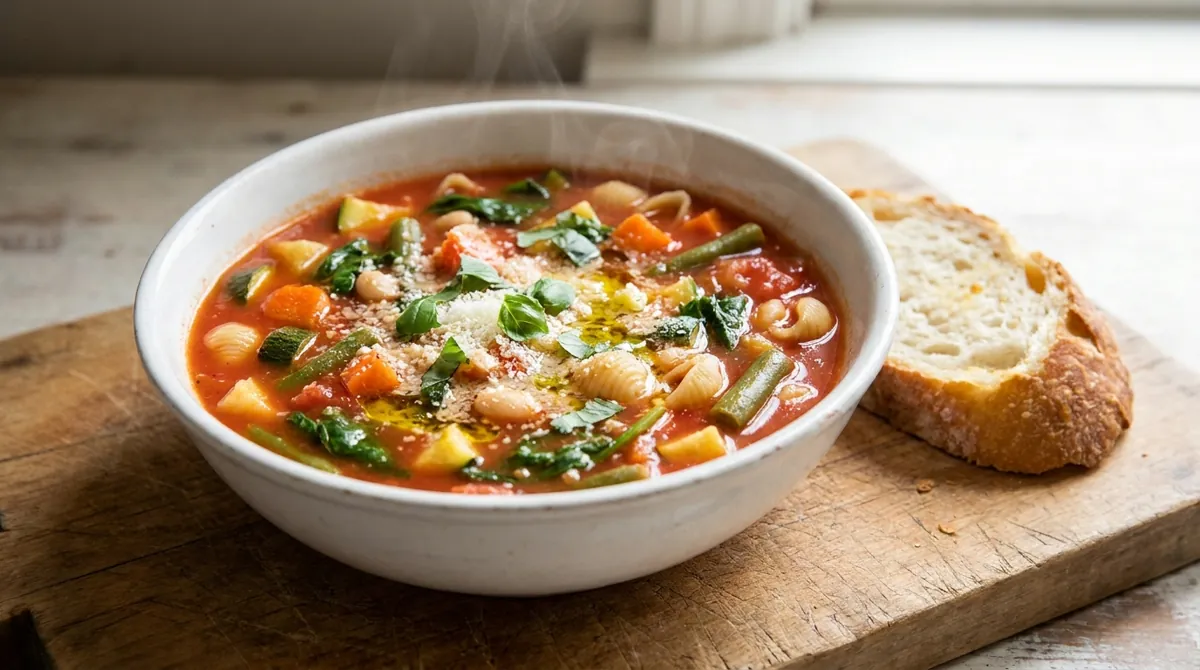
Minestrone means "big soup" in Italian, and the name fits: it is a chunky pot of whatever vegetables, beans and grains the cook has, not a fixed recipe. Wikipedia describes it as part of cucina povera, the "cuisine of the poor," and notes there is no precise recipe, so it can be dense and boiled down or brothy with lightly cooked vegetables. Pasta or rice is often added, and it is traditionally meatless, though some versions use meat or a Parmesan rind for depth.
Its roots are old. Wikipedia traces vegetable-and-grain porridges such as pulte to before the Roman Kingdom, and points to a soup of farro, chickpeas, fava beans, onions, garlic and greens in Apicius. Tomatoes only arrived from the Americas after the 15th century, so the red tomato broth most Americans know is much newer. Regional versions differ: minestrone alla genovese in Liguria leans on herbs and pesto.
Why it works the kitchen science
Soffritto
Cooking onion, carrot and celery slowly in oil until soft builds a sweet base before any liquid goes in.
Tomato paste cooked in the oil
It loses its raw edge and deepens the broth.
A parmesan rind
It simmers into the broth and adds savory depth without meat.
Adding vegetables in stages
Potato goes in early, quick vegetables and spinach late, so nothing turns to mush.
🧰 You'll need 5 items
Everything the steps call for. Tick off what you have before you start.
Pans and pots
Tools
Step by step
- Step 1
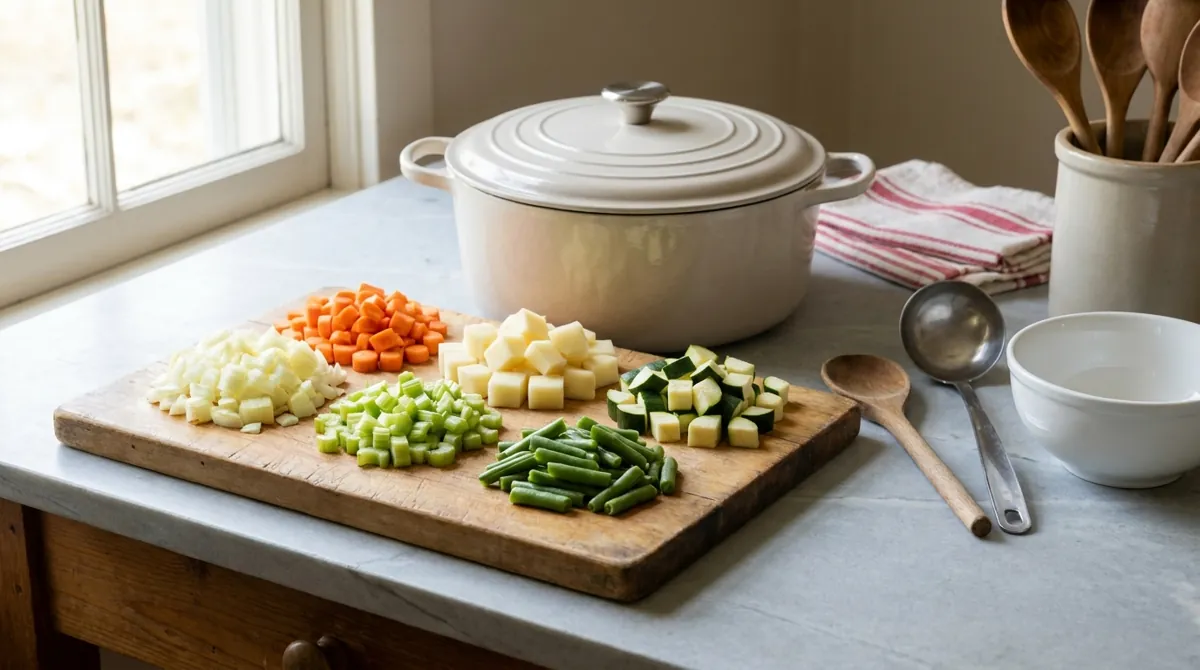
Dice the onion, carrots, celery, potato and zucchini into 1/2 inch pieces and cut the green beans, keeping each vegetable in its own pile.
- Step 2
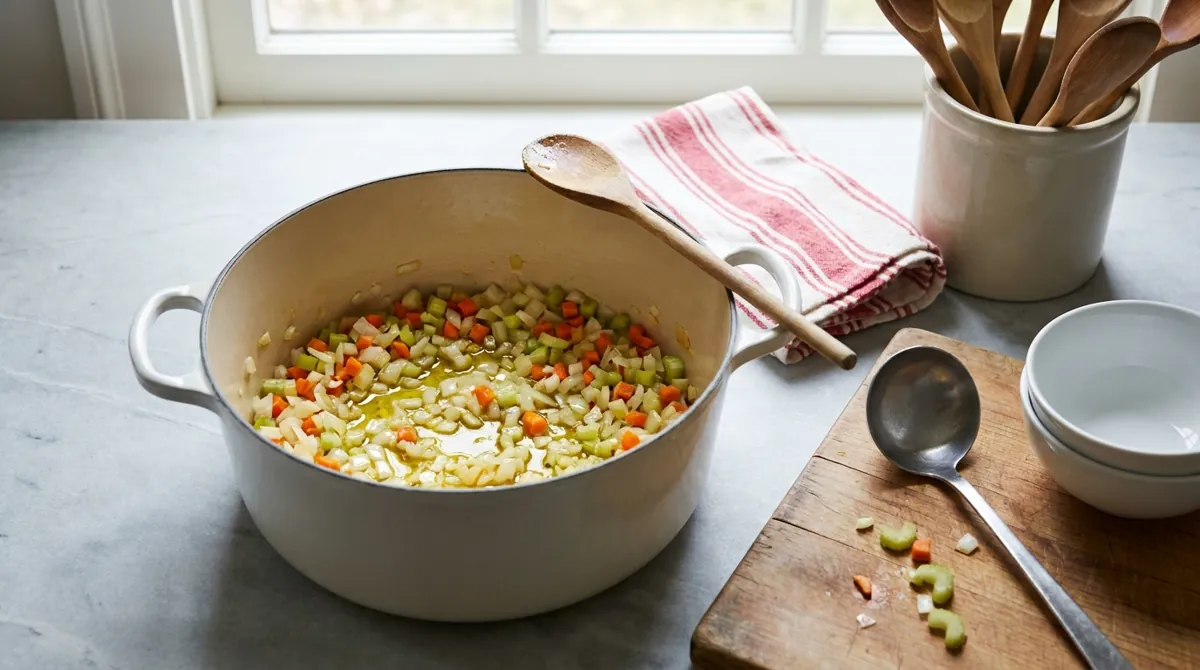
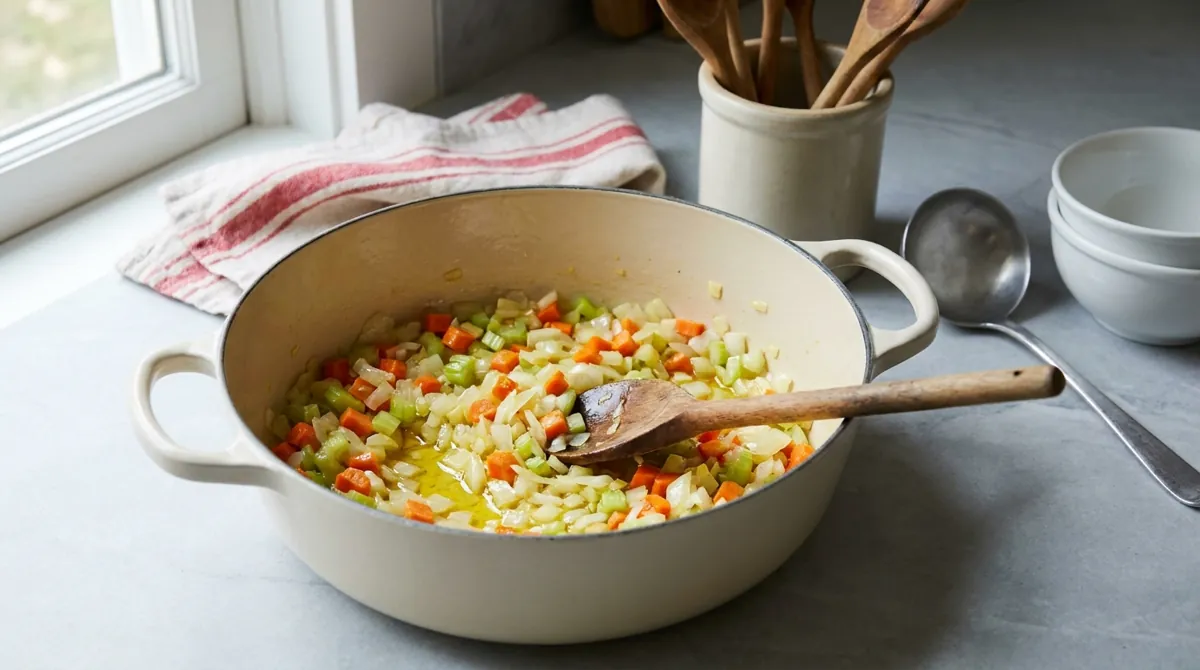
Heat the olive oil in a 6 quart Dutch oven over medium heat. Add the onion, carrots, celery and a pinch of salt and cook 8 to 10 minutes, until soft and sweet but not browned.
✓ What it should look like - Step 3
Add the garlic and tomato paste and cook 1 minute. Add the diced tomatoes, broth, water, potato, Parmesan rind and the remaining salt, bring to a boil, then simmer partly covered 25 minutes, until the potato is almost tender.
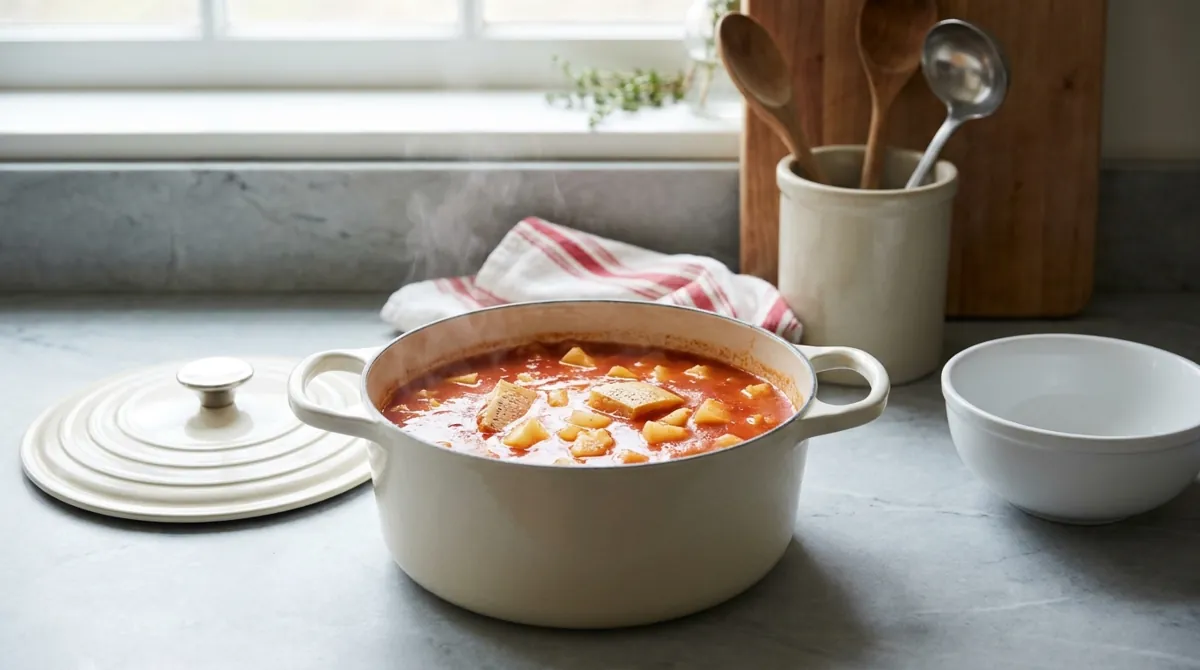
- Step 4
Add the zucchini, green beans, cannellini beans and pasta. Simmer 10 to 12 minutes, until the pasta is tender and the green beans are soft. Stir now and then so the pasta does not stick.
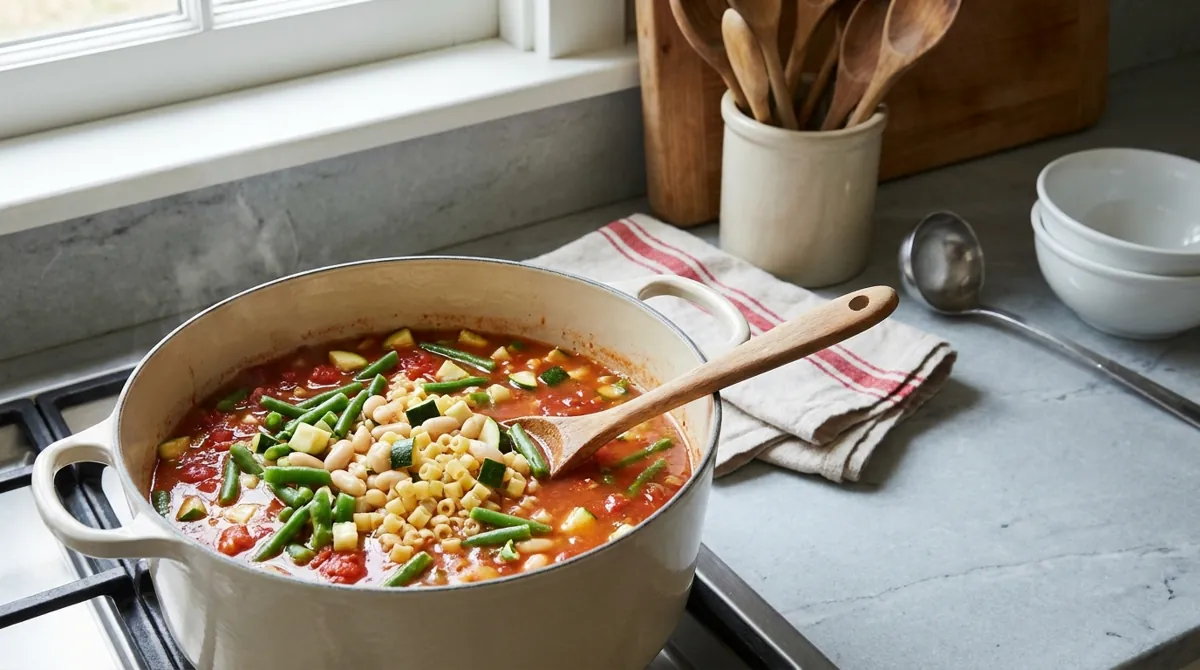
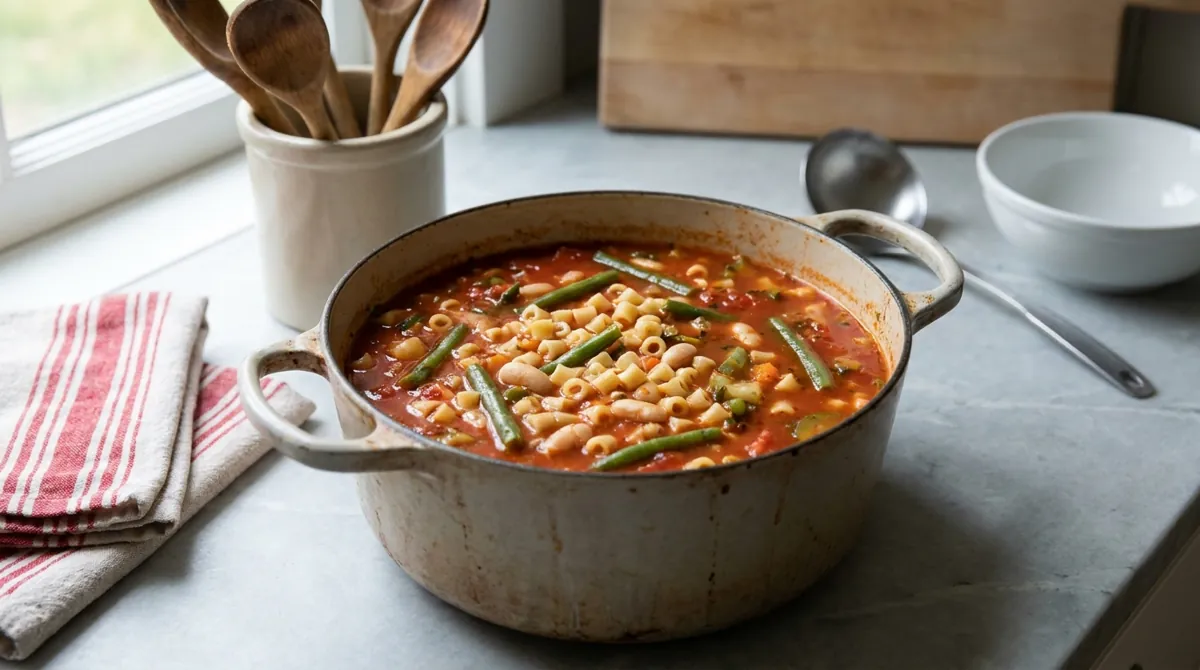
✓ What it should look like - Step 5
Add the spinach and cook 2 minutes until wilted. Remove the Parmesan rind, taste and add salt and pepper.
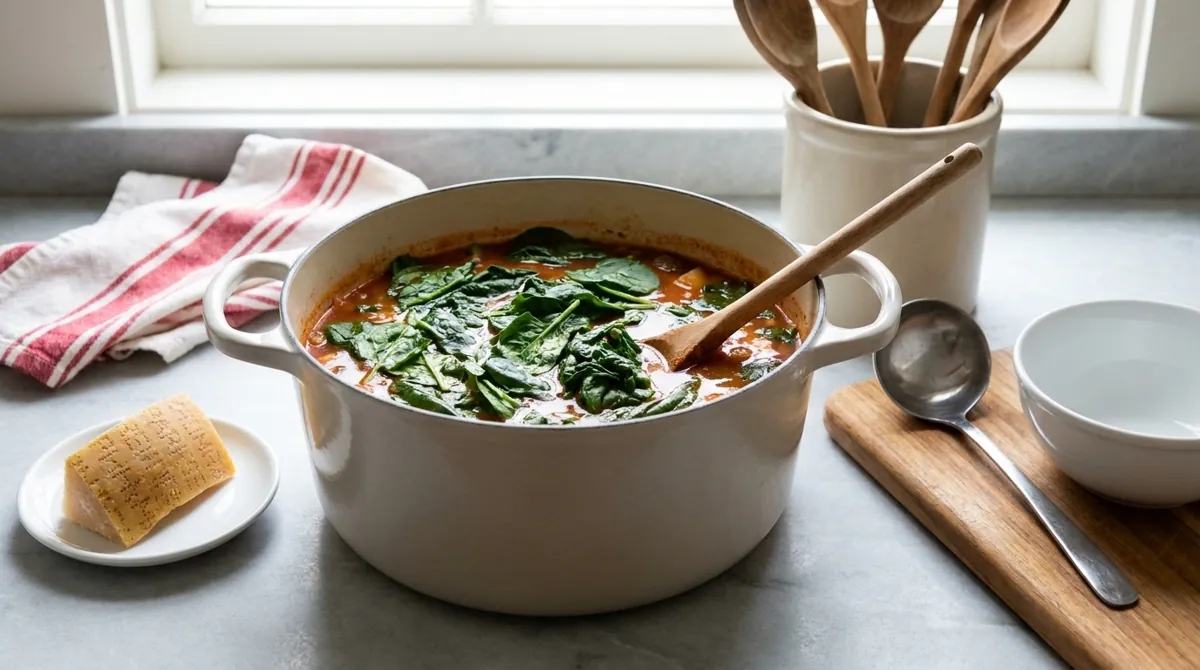
- Step 6
Let the soup rest off the heat 10 minutes, then ladle into bowls and top with Parmesan, basil and a drizzle of olive oil.
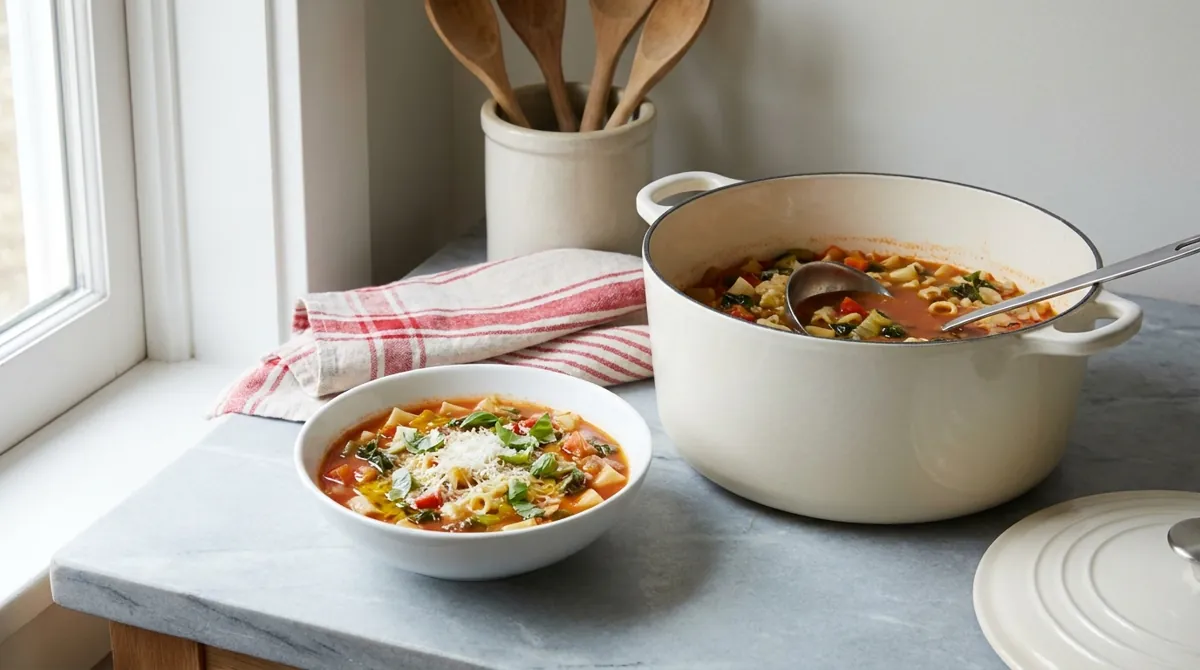
Minestrone
Serves 6 · about 3 quarts · 1 hr 20 min total
- 3 tablespoons olive oil (40 g), plus more to serve
- 1 medium yellow onion, diced (150 g)
- 2 carrots, diced (130 g)
- 2 celery ribs, diced (100 g)
- 3 garlic cloves, minced (10 g)
- 2 tablespoons tomato paste (32 g)
- 1 can (14.5 oz) diced tomatoes with their juice (400 g)
- 1 medium russet potato, diced 1/2 inch (200 g)
- 6 cups chicken or vegetable broth (1.4 kg) and 2 cups water
- 1 Parmesan rind (about 2 inches), optional
- 1 zucchini, diced (200 g)
- 1/2 pound green beans, cut in 1 inch pieces (225 g)
- 1 can (15 oz) cannellini beans, drained and rinsed (250 g drained)
- 1/2 cup small pasta such as ditalini (80 g)
- 4 packed cups baby spinach (120 g)
- 1 1/2 teaspoons fine salt, black pepper
- Grated Parmesan (30 g) and torn basil leaves, to serve
Equipment: 6-quart Dutch oven, Chef's knife and cutting board, Measuring cups and spoons, Mixing bowls, Ladle
Method
- Dice the onion, carrots, celery, potato and zucchini into 1/2 inch pieces and cut the green beans, keeping each vegetable in its own pile.
- Heat the olive oil in a 6 quart Dutch oven over medium heat. Add the onion, carrots, celery and a pinch of salt and cook 8 to 10 minutes, until soft and sweet but not browned.
- Add the garlic and tomato paste and cook 1 minute. Add the diced tomatoes, broth, water, potato, Parmesan rind and the remaining salt, bring to a boil, then simmer partly covered 25 minutes, until the potato is almost tender.
- Add the zucchini, green beans, cannellini beans and pasta. Simmer 10 to 12 minutes, until the pasta is tender and the green beans are soft. Stir now and then so the pasta does not stick.
- Add the spinach and cook 2 minutes until wilted. Remove the Parmesan rind, taste and add salt and pepper.
- Let the soup rest off the heat 10 minutes, then ladle into bowls and top with Parmesan, basil and a drizzle of olive oil.
Americanized house recipe, written for this site. History: Wikipedia, "Minestrone" (cucina povera, no precise recipe, pulte, Apicius soup, tomatoes after the 15th century, Genoese version with pesto). Technique checked against America's Test Kitchen, "Classic Minestrone with Rice or Pasta" (stovetop; 1 hour simmer for the vegetables, small pasta 8 to 12 minutes, cannellini beans last for about 5 minutes, Parmesan rind in the pot, pasta does not keep well refrigerated). This is a faster version of that method; simmer times in published recipes run from about 15 minutes to 2 hours, so simmer longer for a deeper broth. en.wikipedia.org. Ingredient list follows the source; the method is in our own words.
All sources (2)
Tips
- For a deeper broth, simmer step 3 for up to 1 hour, as America's Test Kitchen does, adding water as needed.
- It thickens as it sits; thin it with a splash of broth when reheating. The pasta keeps soaking up liquid, so for leftovers cook the pasta separately.
- Keeps 4 days in the refrigerator; freezes 3 months without the pasta.
- Swap in cabbage, kale, peas or butternut squash with the seasons. Stir in a spoonful of pesto at the table for the Genoese style.
The rules people argue about
What the sources agree on, what they don't, and what is just a good story.
- Minestrone is an ancient Roman soup. Disputed: vegetable and grain soups like pulte and the Apicius soup are old relatives, but tomatoes only arrived after the 15th century, so the modern red soup is not ancient.
- Real minestrone has a fixed recipe. Folklore: sources describe no precise recipe; it changes by region, season and household.
Meatballs of the World

Italian-American Meatballs
Big, tender meatballs braised for an hour in red sauce over spaghetti. The one most Americans grew up with.

Pallottine (Abruzzo Meatballs)
Tiny meatballs, smaller than a marble, tossed right through square spaghetti alla chitarra. No bread at all.

Swedish Meatballs (Köttbullar)
Small, soft meatballs browned in butter, in a cream sauce made from the same pan, with lingonberry jam on the plate.

Danish Frikadeller
Pork meatballs shaped with a spoon and fried slowly in butter, crusty outside and soft in the middle.

Königsberger Klopse
German meatballs that are never fried: poached, then served in a creamy white sauce with capers.

Spanish Albóndigas in Almond Saffron Sauce
The tapas bar classic: small meatballs in a golden sauce thickened with fried almonds and bread.

Mexican Albóndigas with Chipotle and Mint
Soft meatballs with rice and fresh mint inside, simmered in a smoky tomato and chipotle broth.

Izgara Köfte (Turkish Grilled Meatballs)
Small, flat meatballs kneaded hard, rested cold, and charred on a hot grill pan.

Lion's Head Meatballs
Big, soft pork meatballs, stirred into a sticky paste, fried to set, then braised in a savory sauce.

Chicken Tsukune
Japan's chicken meatball: kneaded sticky, grilled on skewers, glazed with sweet soy tare, dipped in egg yolk.