
Miso Soup
A clear, smoky kombu and bonito dashi, whisked with fermented soybean paste and dropped with soft tofu, green wakame and scallions: the everyday Japanese bowl that goes beside rice, ready in 25 minutes once the kelp has soaked.
 Edited by JP Lambiase
Change the estimate
Swaps change the price only: cook any meat to its own safe temperature. Where these numbers come from
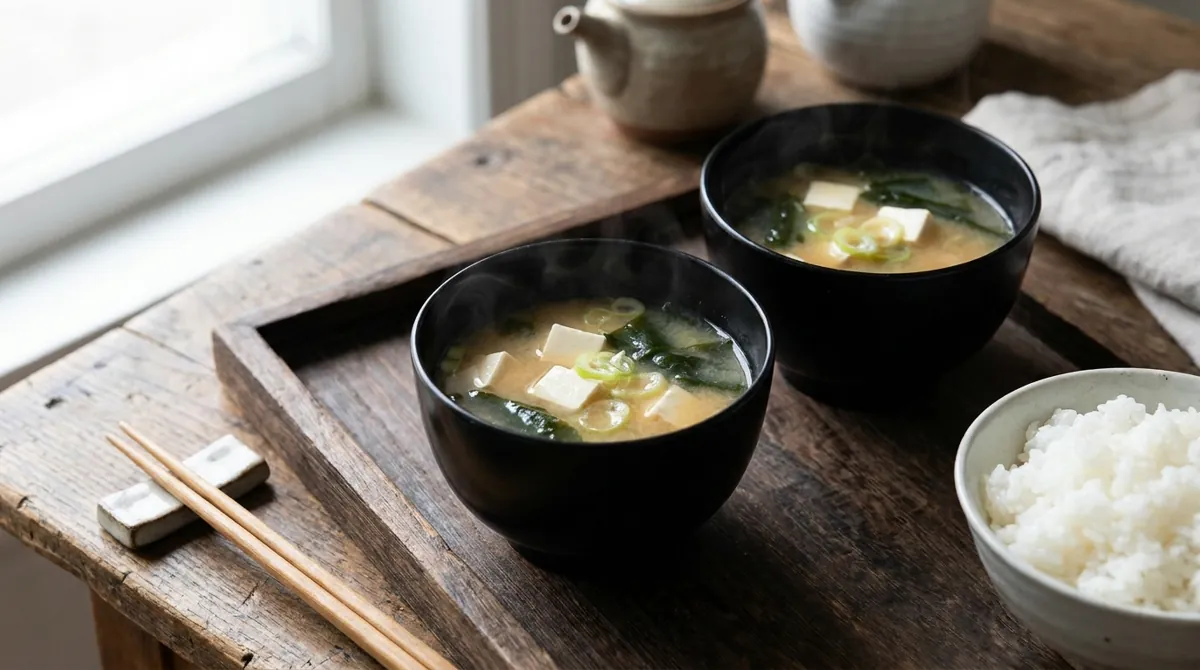
Miso soup, misoshiru, is the bowl that sits next to the rice in a Japanese meal. Wikipedia calls the pairing of plain rice and miso soup "a fundamental unit of Japanese cuisine", and says it is eaten daily by much of the population. The soup is just two things: dashi, a stock of kelp and dried bonito, and miso, a paste of soybeans fermented with salt and koji mold (Aspergillus oryzae), sometimes with rice or barley.
Where miso soup began is less settled than the usual one-line story. Miso itself reaches back to grain and fish pastes of the Jomon era and to a Nara-period (710 to 794) form called misho; it was a luxury for centuries. Several food sources place the rise of the soup in the Kamakura period (1185 to 1333), when a common meal was rice, dried fish, a serving of miso and a fresh vegetable, and Buddhist monks used grinding bowls to dissolve miso in water. Wikipedia's Miso page, though, ties the grinding of soybeans into paste to the later Muromachi period. So "a daily soup since the Kamakura era" is a fair rough date for when it became ordinary, not a proven first.
Why it works the kitchen science
Cold-soaked, never boiled kombu
It releases its savory glutamate gently, and keeping it below a boil avoids bitterness and slime.
Bonito steeped off the heat
A short steep gives a clean, smoky, clear dashi; long boiling makes it fishy and cloudy.
Miso whisked in last, on low heat
It dissolves without lumps and keeps its fragrance, which fades with a hard boil.
🧰 You'll need 7 items
Everything the steps call for. Tick off what you have before you start.
Pans and pots
Tools
Step by step
- Step 1
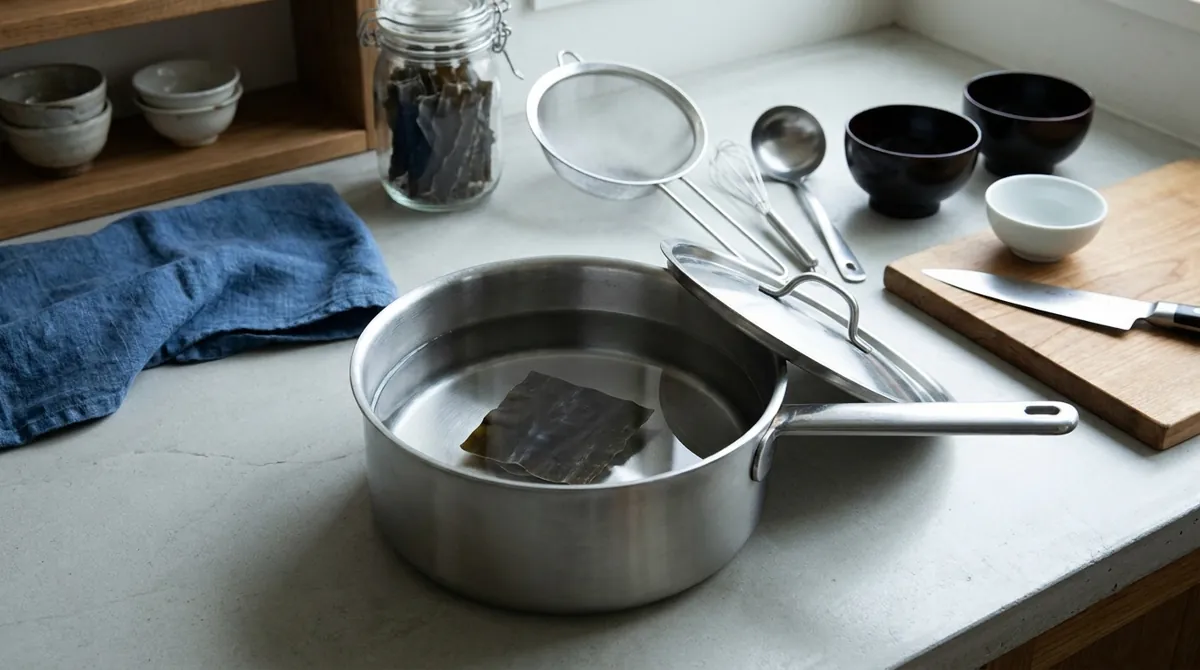
Put the kombu in the saucepan with the cold water. Leave it to soak 30 minutes, or up to a few hours. Do not rinse off the white powder on the kelp; it is flavor.
- Step 2
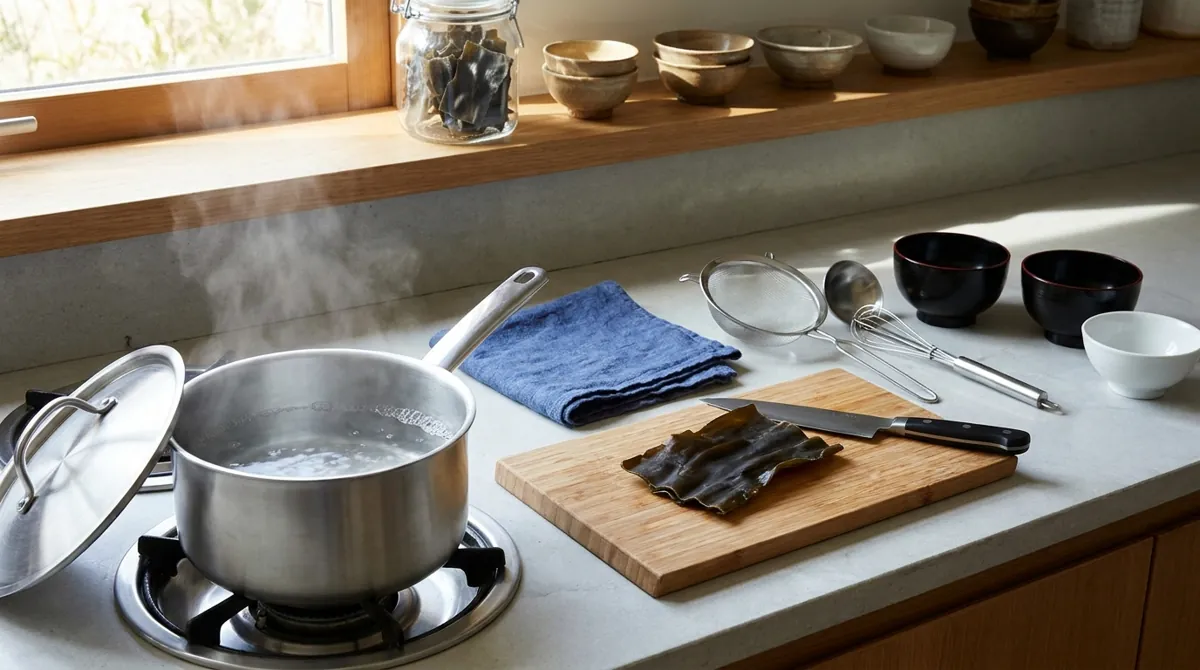
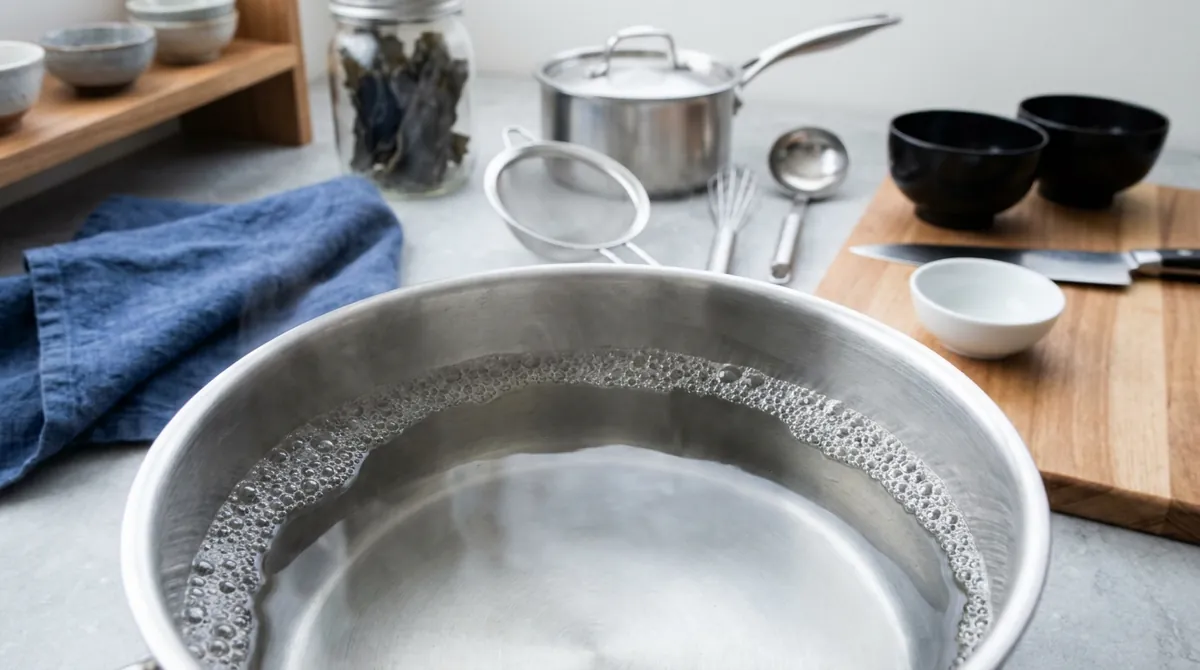
Set the pan over medium-low heat and warm it slowly, about 8 to 10 minutes, until tiny bubbles cling to the edge of the pan and the water steams but does not boil. Take the kombu out right then; boiled kombu turns bitter and slimy.
✓ What it should look like - Step 3
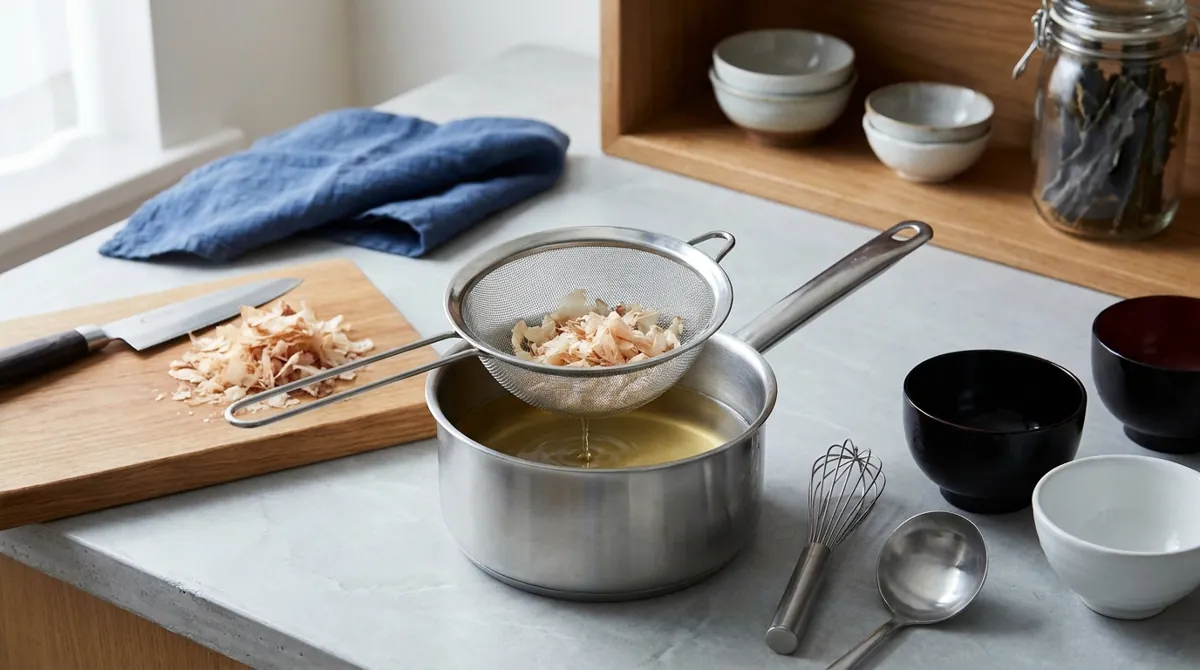
Bring the water to a bare boil, switch the heat off, add the bonito flakes and let them sink and steep 2 minutes. Strain through a fine-mesh strainer back into the pan; do not press on the flakes. This is the dashi.
- Step 4
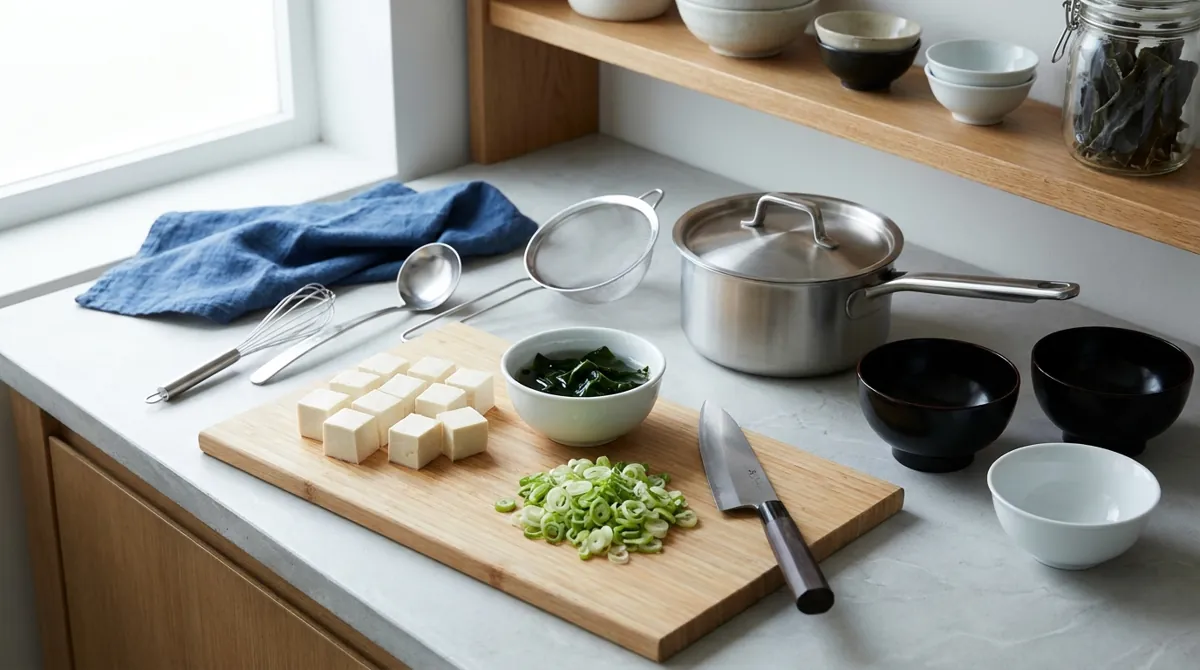
Cover the wakame with a little cold water for 5 minutes until soft and green, then drain. Cut the tofu into cubes and slice the scallions.
- Step 5
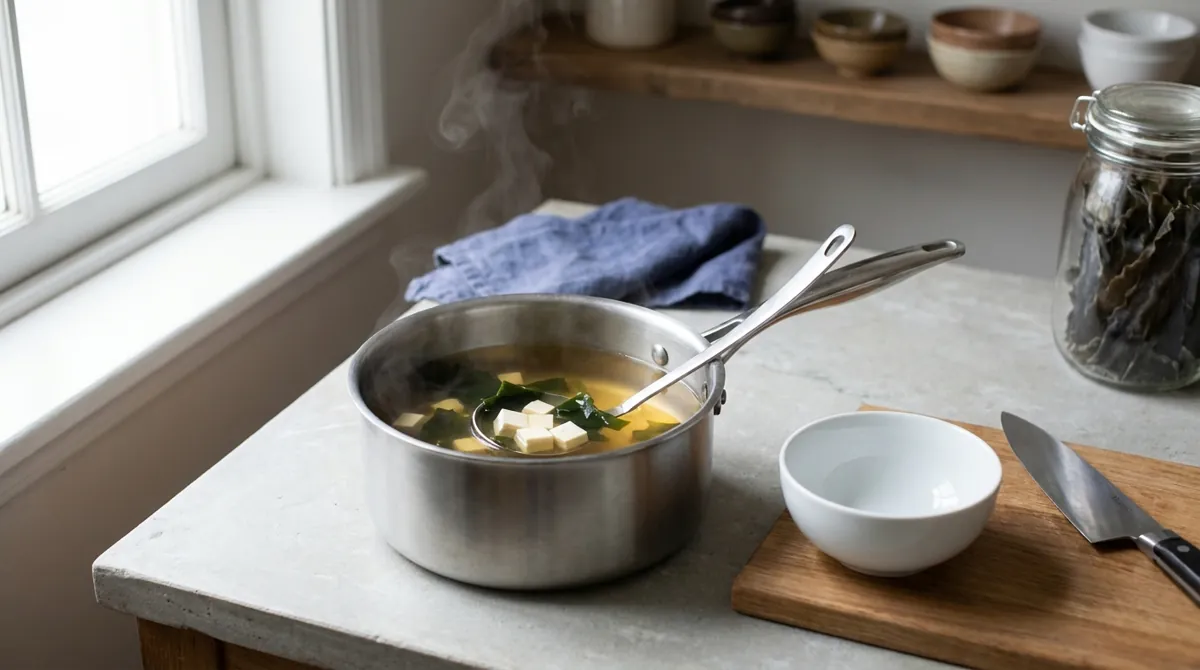
Warm the dashi to a gentle simmer, add the tofu and wakame, and heat 2 minutes. Turn the heat down to low.
- Step 6
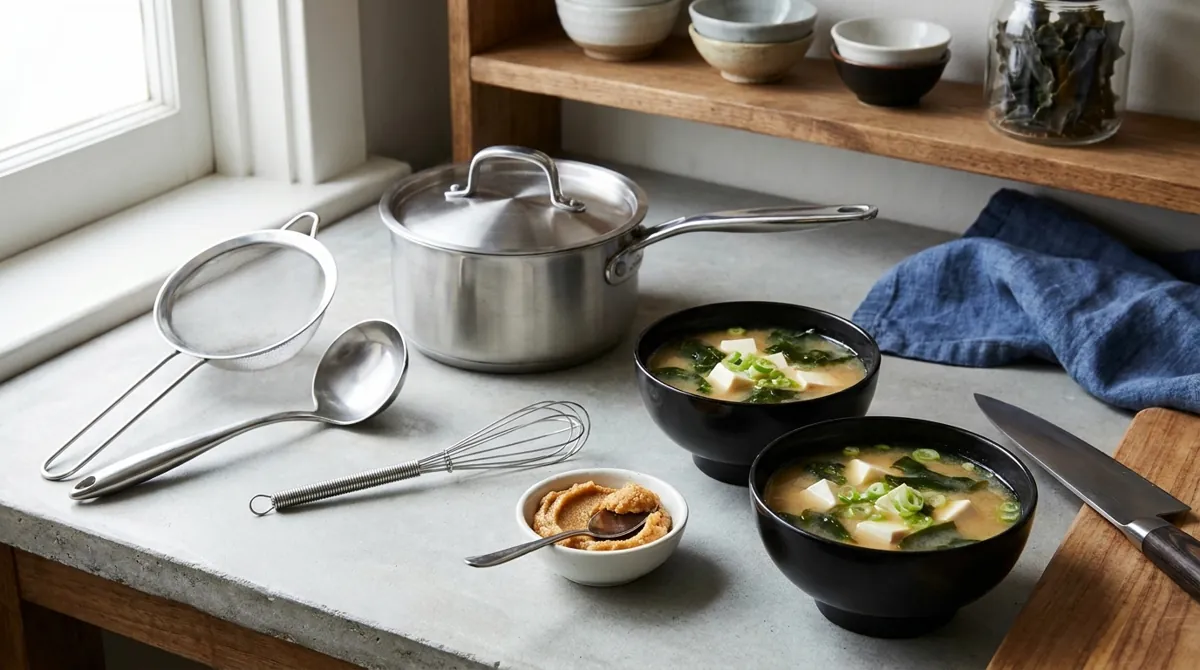
Ladle 1/2 cup of the hot dashi into a small bowl, add the miso and whisk until smooth, then whisk it back into the pan. Heat only until steaming, never boiling. Divide among 4 bowls and top with the scallions.
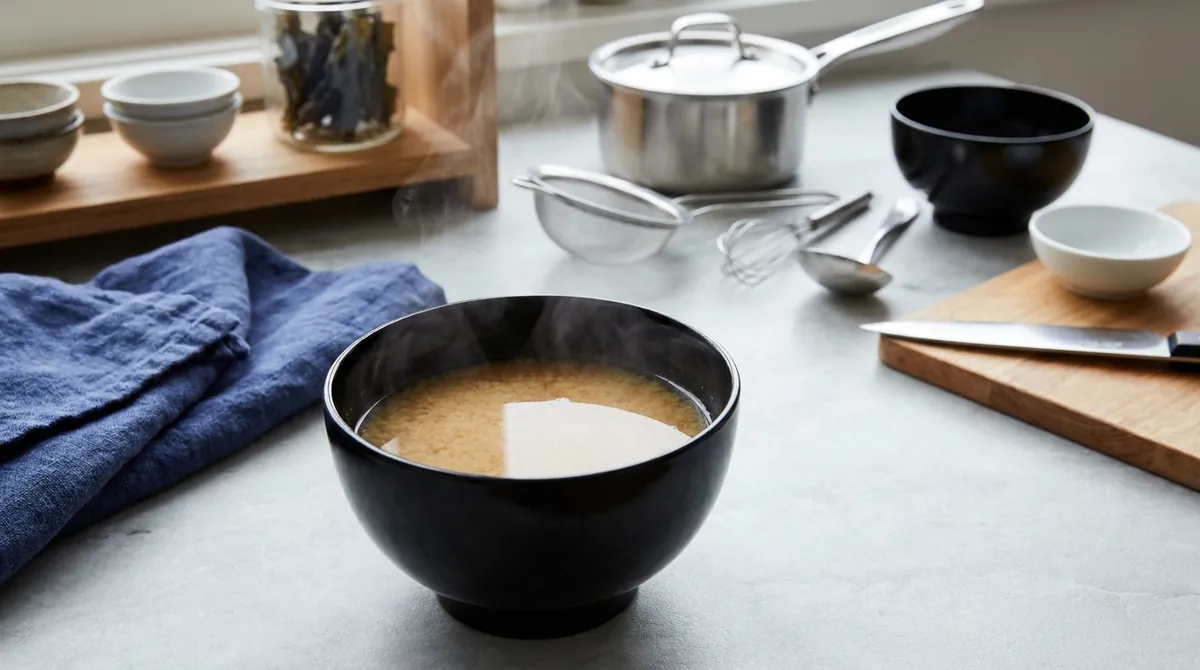
✓ What it should look like
Miso Soup
Serves 4 bowls · about 4 cups · 55 min total
Dashi
- 4 cups cold water (960 g)
- One 4 inch square piece of dried kombu (about 10 g)
- 1 cup loosely packed bonito flakes, katsuobushi (about 10 g)
Soup
- 3 to 4 tbsp miso paste (50 to 65 g), white or yellow for a mild soup, red for a stronger one
- 6 oz firm or soft tofu (170 g), cut into 1/2 inch cubes
- 1 tbsp dried wakame (about 2 g)
- 2 scallions (30 g), thinly sliced
Equipment: Saucepan, Chef's knife and cutting board, Measuring cups and spoons, Mixing bowls, Whisk, Ladle, Fine-mesh strainer
Method
- Put the kombu in the saucepan with the cold water. Leave it to soak 30 minutes, or up to a few hours. Do not rinse off the white powder on the kelp; it is flavor.
- Set the pan over medium-low heat and warm it slowly, about 8 to 10 minutes, until tiny bubbles cling to the edge of the pan and the water steams but does not boil. Take the kombu out right then; boiled kombu turns bitter and slimy.
- Bring the water to a bare boil, switch the heat off, add the bonito flakes and let them sink and steep 2 minutes. Strain through a fine-mesh strainer back into the pan; do not press on the flakes. This is the dashi.
- Cover the wakame with a little cold water for 5 minutes until soft and green, then drain. Cut the tofu into cubes and slice the scallions.
- Warm the dashi to a gentle simmer, add the tofu and wakame, and heat 2 minutes. Turn the heat down to low.
- Ladle 1/2 cup of the hot dashi into a small bowl, add the miso and whisk until smooth, then whisk it back into the pan. Heat only until steaming, never boiling. Divide among 4 bowls and top with the scallions.
Americanized house recipe, written for this site. History and facts: Wikipedia, "Miso soup" (dashi bases, miso types, boiling myth); Wikipedia, "Miso" (Kamakura meal, Muromachi grinding, Nara origin, "origin is not completely clear"); Wikipedia, "Dashi"; Japanese Taste, "The Ultimate Guide to Miso". Method follows common Japanese practice (cold-soak kombu, remove before a boil, steep bonito off the heat, dissolve miso off the boil). en.wikipedia.org. Ingredient list follows the source; the method is in our own words.
Tips
- Instant dashi granules (about 1 1/2 tsp for 4 cups of water) are a normal shortcut in Japanese homes.
- Miso is salty and varies by brand: start with 3 tbsp, taste, add more.
- For a vegetarian soup, skip the bonito and use a few dried shiitake soaked in the kombu water.
- Miso settles; give the soup a gentle stir before ladling each bowl. Keeps 2 days in the refrigerator; reheat gently without boiling.
The rules people argue about
What the sources agree on, what they don't, and what is just a good story.
- Miso soup has been a daily Japanese soup since the Kamakura era. Disputed: sources describe a Kamakura meal with miso and monks dissolving it in water, but Wikipedia places miso's origins earlier (Jomon grain pastes, Nara-period misho) and the soybean-paste grinding later (Muromachi). No single starting date is settled.
Meatballs of the World

Italian-American Meatballs
Big, tender meatballs braised for an hour in red sauce over spaghetti. The one most Americans grew up with.

Pallottine (Abruzzo Meatballs)
Tiny meatballs, smaller than a marble, tossed right through square spaghetti alla chitarra. No bread at all.

Swedish Meatballs (Köttbullar)
Small, soft meatballs browned in butter, in a cream sauce made from the same pan, with lingonberry jam on the plate.

Danish Frikadeller
Pork meatballs shaped with a spoon and fried slowly in butter, crusty outside and soft in the middle.

Königsberger Klopse
German meatballs that are never fried: poached, then served in a creamy white sauce with capers.

Spanish Albóndigas in Almond Saffron Sauce
The tapas bar classic: small meatballs in a golden sauce thickened with fried almonds and bread.

Mexican Albóndigas with Chipotle and Mint
Soft meatballs with rice and fresh mint inside, simmered in a smoky tomato and chipotle broth.

Izgara Köfte (Turkish Grilled Meatballs)
Small, flat meatballs kneaded hard, rested cold, and charred on a hot grill pan.

Lion's Head Meatballs
Big, soft pork meatballs, stirred into a sticky paste, fried to set, then braised in a savory sauce.

Chicken Tsukune
Japan's chicken meatball: kneaded sticky, grilled on skewers, glazed with sweet soy tare, dipped in egg yolk.