
Moussaka
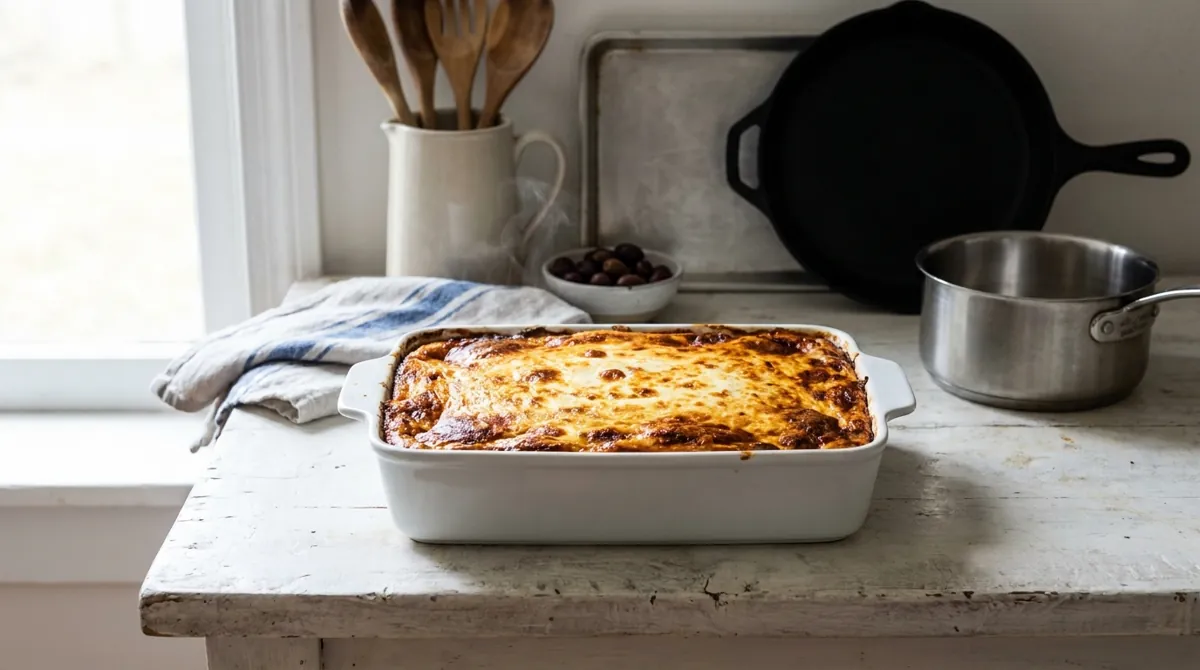
Layers of roasted eggplant and cinnamon-spiced lamb in tomato sauce under a thick, golden bechamel: the Greek baked dish most people mean when they say moussaka.
🍳Cook alongOne move at a time, with real timers
 Edited by JP Lambiase
Change the estimate
Swaps change the price only: cook any meat to its own safe temperature. Where these numbers come from
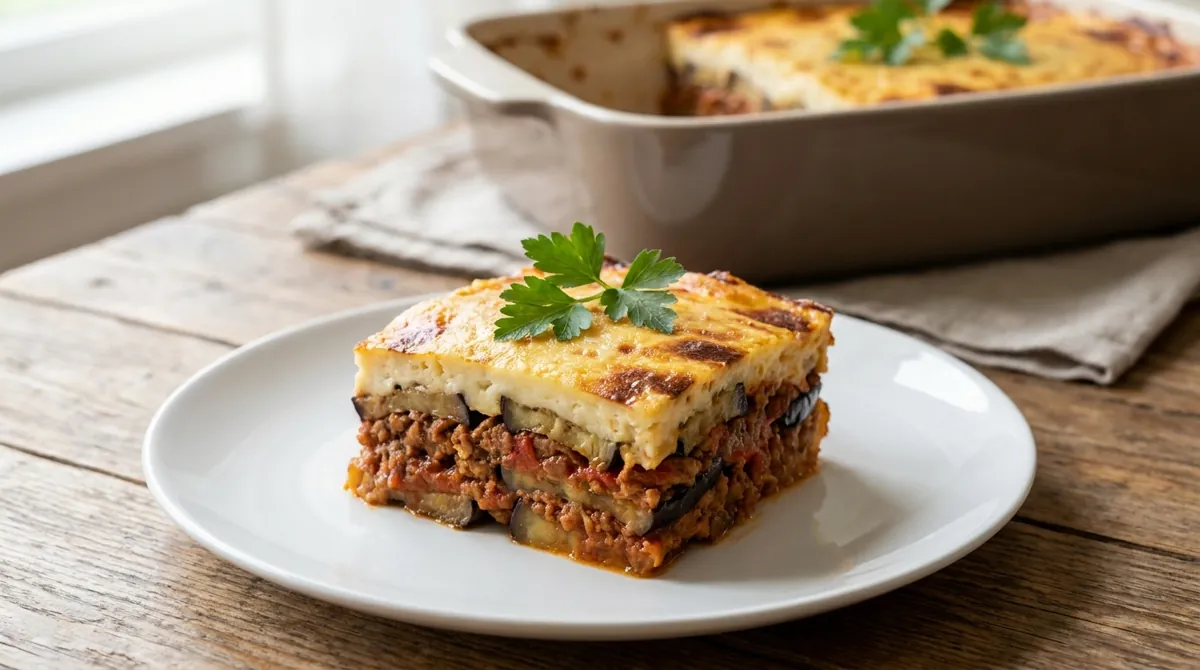
Moussaka comes from the Arabic musaqqa'a, which reached Greek through Ottoman Turkish. The earliest ancestor Wikipedia points to is maghmuma in the 13th-century Arabic cookbook Kitab al-Tabikh, with layers of eggplant and spiced minced meat, and recipes appear in 19th-century Ottoman and Egyptian cookbooks.
The Greek version most of the world knows is much younger. In the 1920s the chef Nikolaos Tselementes gave it its modern form: three separately cooked layers of sauteed eggplant, spiced ground meat with tomato, and a tall, creamy bechamel on top. Elsewhere in the Balkans the dish is often made with potatoes and a milk-and-egg custard instead.
Why it works the kitchen science
Roasting, not frying, the eggplant
It takes up far less oil and gets soft and sweet.
Salting the slices
Draws out water so the layers do not weep and turn the dish soupy.
A thick, reduced meat sauce
A wet sauce makes the bechamel slide off the layers.
Eggs in the bechamel
They set the top into a sliceable, custardy layer.
🧰 You'll need 10 items
Everything the steps call for. Tick off what you have before you start.
Appliances
Pans and pots
Tools
Step by step
- Step 1
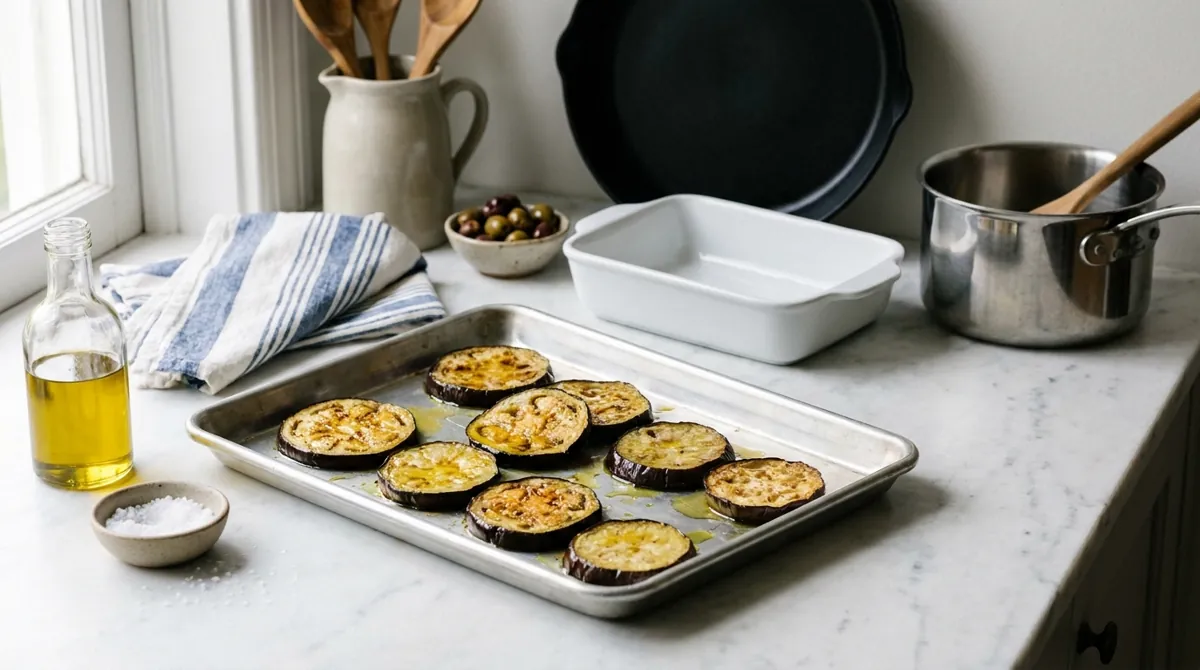
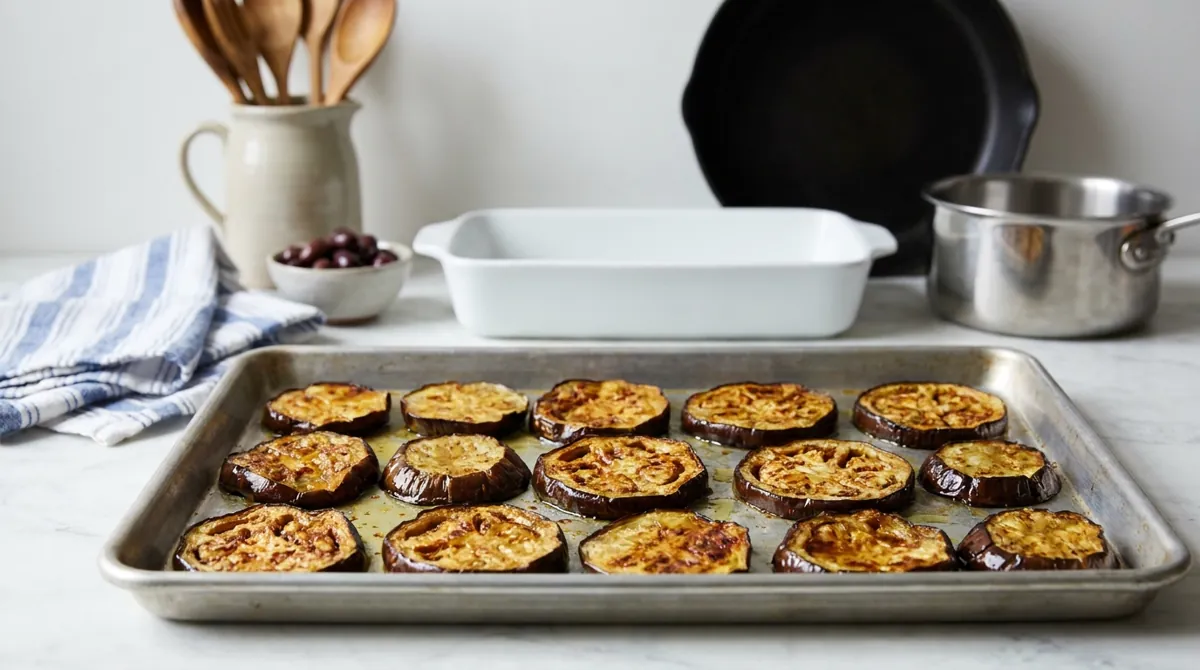
Salt the eggplant slices and leave them in a colander 30 minutes, then pat them dry. Heat the oven to 425°F. Brush both sides with olive oil on two sheet pans and roast 25 to 30 minutes, until golden and soft. Lower the oven to 350°F.
✓ What it should look like - Step 2
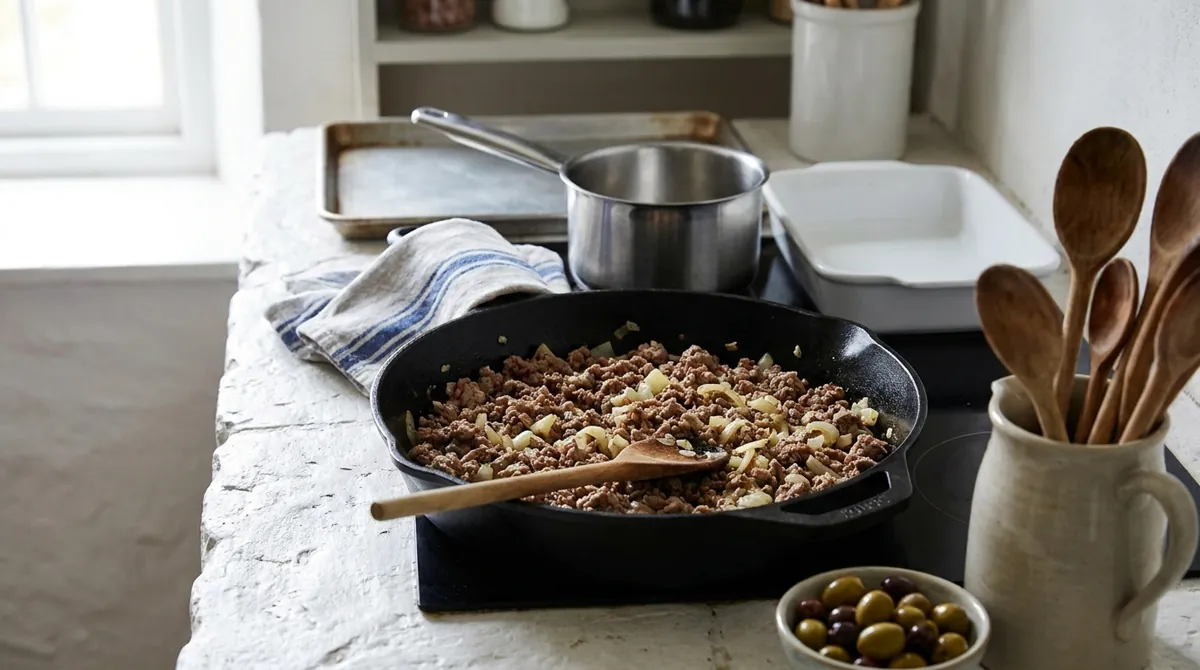
For the sauce, cook the onion in a large skillet with a little oil over medium heat 6 minutes. Add the garlic and lamb and cook, breaking it up, 8 to 10 minutes, until browned.
- Step 3
Stir in the tomato paste and cook 1 minute, then add the wine and cook until it has almost evaporated. Add the tomatoes, cinnamon, allspice, salt and pepper and simmer 25 to 30 minutes, until thick with little liquid.
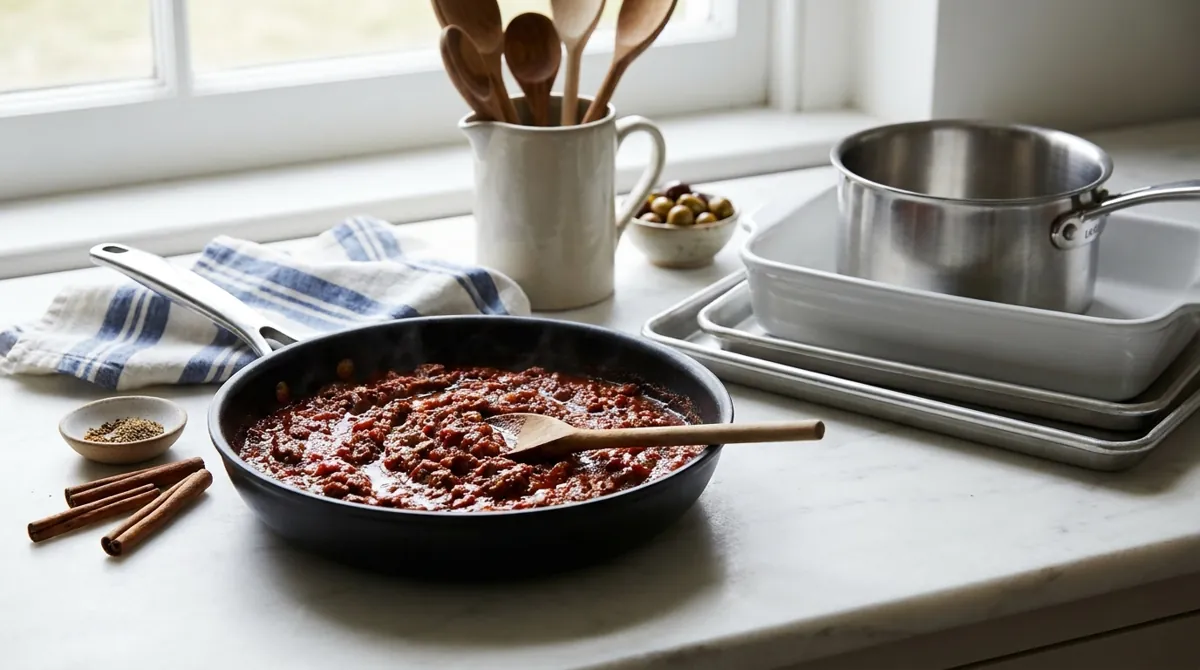
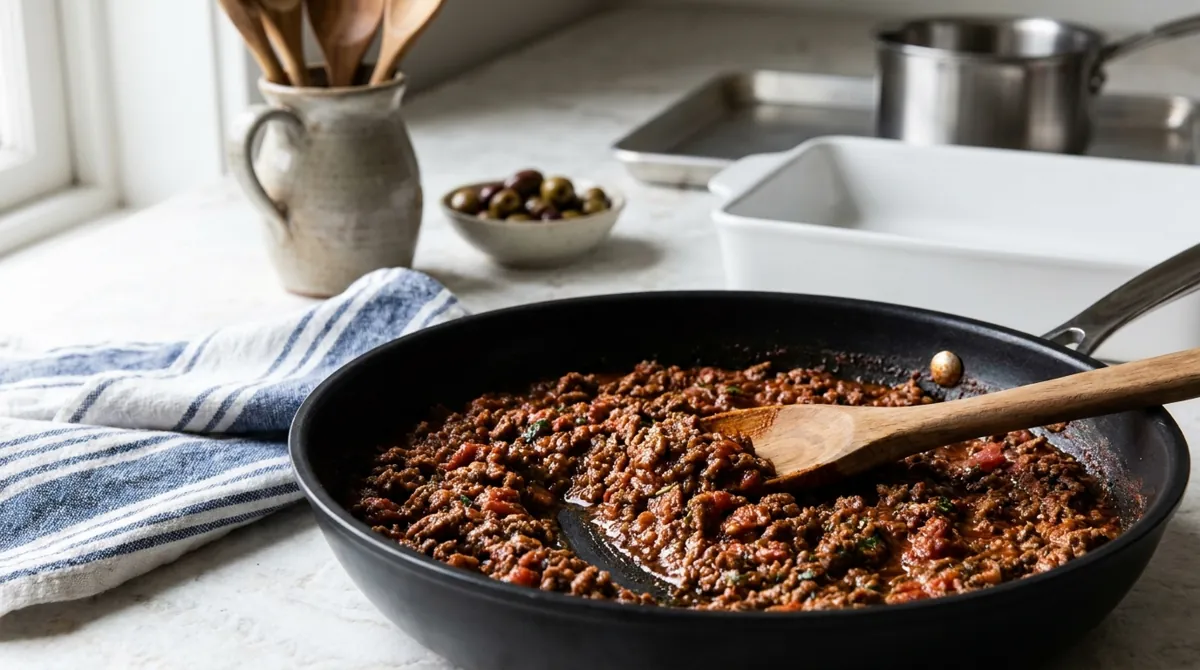
✓ What it should look like - Step 4
For the bechamel, melt the butter in a saucepan over medium heat, whisk in the flour and cook 2 minutes without browning. Whisk in the warm milk a little at a time and cook, stirring, 8 to 10 minutes, until thick as pudding. Cool 5 minutes, then whisk in the eggs, cheese and nutmeg.
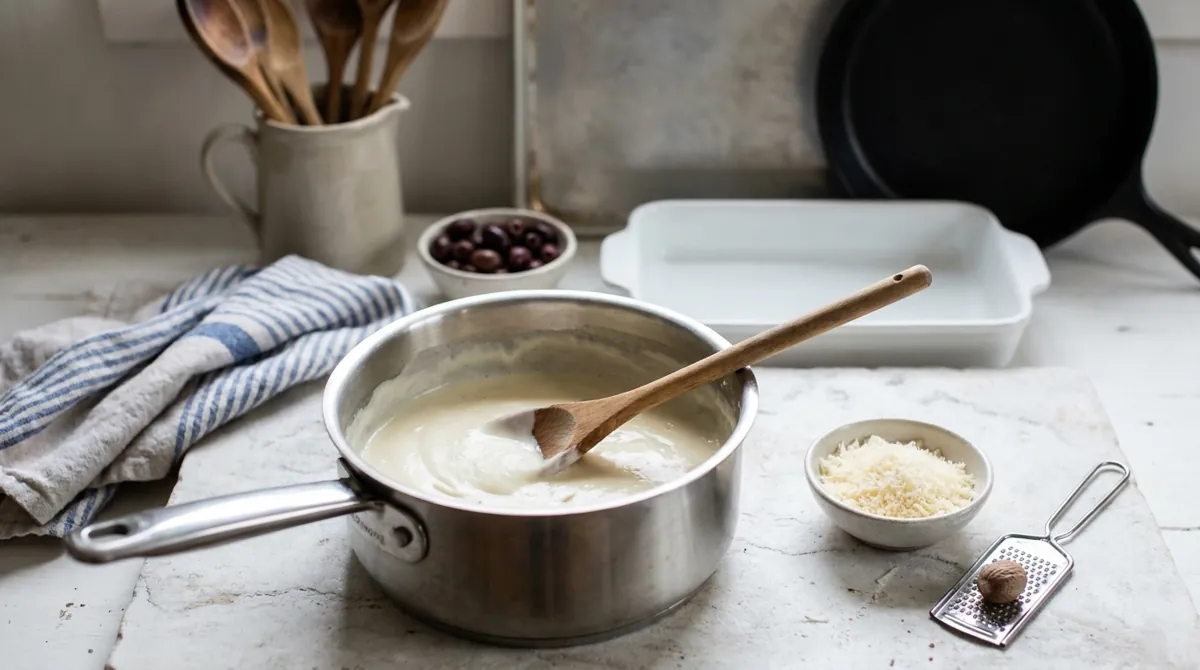
- Step 5
Layer half the eggplant in a 9 by 13 inch baking dish, then all of the meat sauce, then the rest of the eggplant. Pour the bechamel over the top and smooth it.
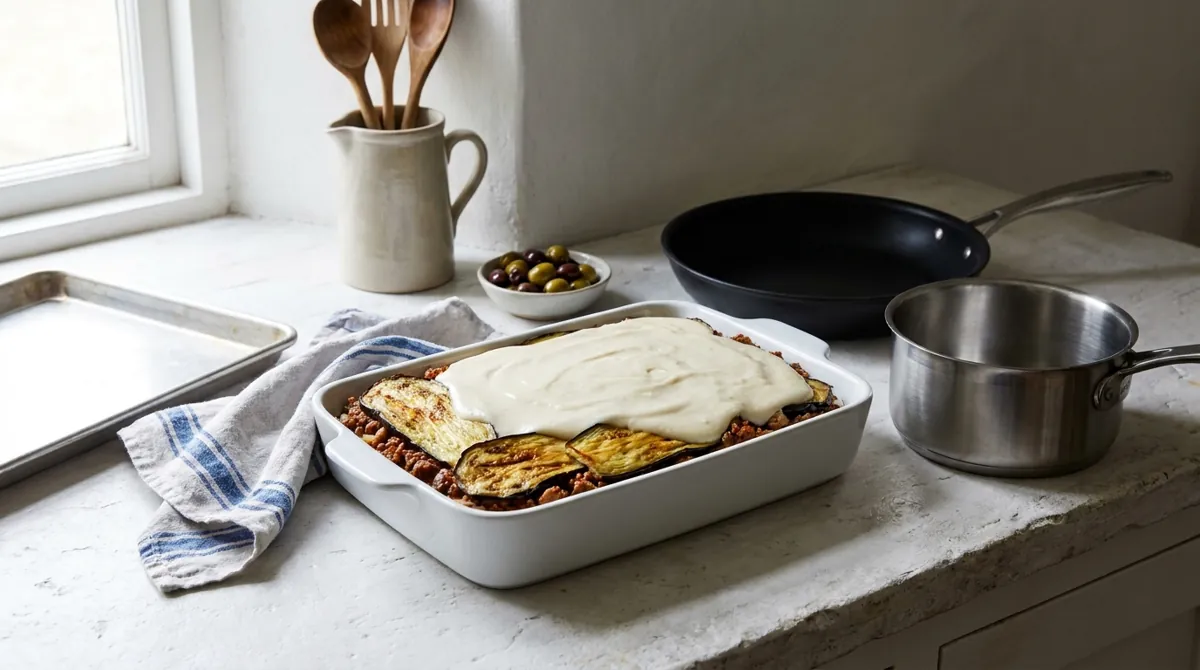
- Step 6
Bake 40 to 45 minutes, until the top is puffed and deep golden. Rest 20 minutes before cutting; it needs it to hold its layers.
Moussaka
Serves 8 · one 9 by 13 inch baking dish · 2 hr 50 min total
Eggplant
- 3 large eggplants (about 3 lb, 1.4 kg), sliced into 1/2 inch rounds
- 1/2 cup olive oil (108 g), for brushing
- Fine salt
Meat sauce
- 1 large onion, finely chopped (200 g)
- 3 cloves garlic, minced (9 g)
- 1 1/2 lb ground lamb (680 g)
- 2 tablespoons tomato paste (32 g)
- 1/2 cup dry red wine (120 g)
- 1 can (14 oz, 400 g) diced tomatoes
- 1 teaspoon ground cinnamon, 1/2 teaspoon allspice, salt and pepper
Bechamel
- 6 tablespoons butter (85 g)
- 6 tablespoons all-purpose flour (47 g)
- 3 cups whole milk (732 g), warmed
- 2 large eggs (100 g), beaten
- 1/2 cup grated parmesan or kefalotyri cheese (50 g)
- Pinch of nutmeg
Equipment: Oven, Baking dish, Rimmed baking sheet, Saucepan, Large skillet, Chef's knife and cutting board, Measuring cups and spoons, Whisk, Colander, Pastry brush
Method
- Salt the eggplant slices and leave them in a colander 30 minutes, then pat them dry. Heat the oven to 425°F. Brush both sides with olive oil on two sheet pans and roast 25 to 30 minutes, until golden and soft. Lower the oven to 350°F.
- For the sauce, cook the onion in a large skillet with a little oil over medium heat 6 minutes. Add the garlic and lamb and cook, breaking it up, 8 to 10 minutes, until browned.
- Stir in the tomato paste and cook 1 minute, then add the wine and cook until it has almost evaporated. Add the tomatoes, cinnamon, allspice, salt and pepper and simmer 25 to 30 minutes, until thick with little liquid.
- For the bechamel, melt the butter in a saucepan over medium heat, whisk in the flour and cook 2 minutes without browning. Whisk in the warm milk a little at a time and cook, stirring, 8 to 10 minutes, until thick as pudding. Cool 5 minutes, then whisk in the eggs, cheese and nutmeg.
- Layer half the eggplant in a 9 by 13 inch baking dish, then all of the meat sauce, then the rest of the eggplant. Pour the bechamel over the top and smooth it.
- Bake 40 to 45 minutes, until the top is puffed and deep golden. Rest 20 minutes before cutting; it needs it to hold its layers.
Americanized house recipe, written for this site. History: Wikipedia, "Moussaka" (Arabic musaqqa'a, maghmuma in the 13th-century Kitab al-Tabikh, Ottoman and 1893 Egyptian recipes, Tselementes and the three-layer Greek form in the 1920s, potato and custard versions in the Balkans). Method checked against: Food Network, moussaka recipe (eggplant salted and browned or roasted, cinnamon in the tomato sauce, a 1 to 1 butter and flour roux with milk and eggs for the bechamel, baked at 350°F about 45 minutes, cooled slightly before cutting). en.wikipedia.org. Ingredient list follows the source; the method is in our own words.
All sources (2)
Tips
- Ground beef works if lamb is hard to find.
- The dish keeps 4 days in the refrigerator and tastes better the next day; slice cold, then reheat.
- Do not skip the rest: cut hot, it falls apart.
The rules people argue about
What the sources agree on, what they don't, and what is just a good story.
- Moussaka is an ancient Greek dish. Folklore: the name is Arabic and the earliest ancestor we found is a 13th-century Arabic recipe; the Greek form is a 1920s creation.
- Tselementes invented the bechamel-topped version. Disputed: he is credited with the modern three-layer Greek form in the 1920s, but he built on existing Ottoman-era dishes and other versions already topped with custards.
Meatballs of the World

Italian-American Meatballs
Big, tender meatballs braised for an hour in red sauce over spaghetti. The one most Americans grew up with.

Pallottine (Abruzzo Meatballs)
Tiny meatballs, smaller than a marble, tossed right through square spaghetti alla chitarra. No bread at all.

Swedish Meatballs (Köttbullar)
Small, soft meatballs browned in butter, in a cream sauce made from the same pan, with lingonberry jam on the plate.

Danish Frikadeller
Pork meatballs shaped with a spoon and fried slowly in butter, crusty outside and soft in the middle.

Königsberger Klopse
German meatballs that are never fried: poached, then served in a creamy white sauce with capers.

Spanish Albóndigas in Almond Saffron Sauce
The tapas bar classic: small meatballs in a golden sauce thickened with fried almonds and bread.

Mexican Albóndigas with Chipotle and Mint
Soft meatballs with rice and fresh mint inside, simmered in a smoky tomato and chipotle broth.

Izgara Köfte (Turkish Grilled Meatballs)
Small, flat meatballs kneaded hard, rested cold, and charred on a hot grill pan.

Lion's Head Meatballs
Big, soft pork meatballs, stirred into a sticky paste, fried to set, then braised in a savory sauce.

Chicken Tsukune
Japan's chicken meatball: kneaded sticky, grilled on skewers, glazed with sweet soy tare, dipped in egg yolk.