
Nachos
Sturdy tortilla chips layered twice on a sheet pan with sharp cheddar, Monterey Jack, pinto beans and pickled jalapeños, baked until bubbling and finished with fresh pico de gallo and sour cream: the snack a Mexican maître d' invented in 1943 for American Army wives, built for game day.
🍳Cook alongOne move at a time, with real timers
 Edited by JP Lambiase
Change the estimate
Swaps change the price only: cook any meat to its own safe temperature. Where these numbers come from
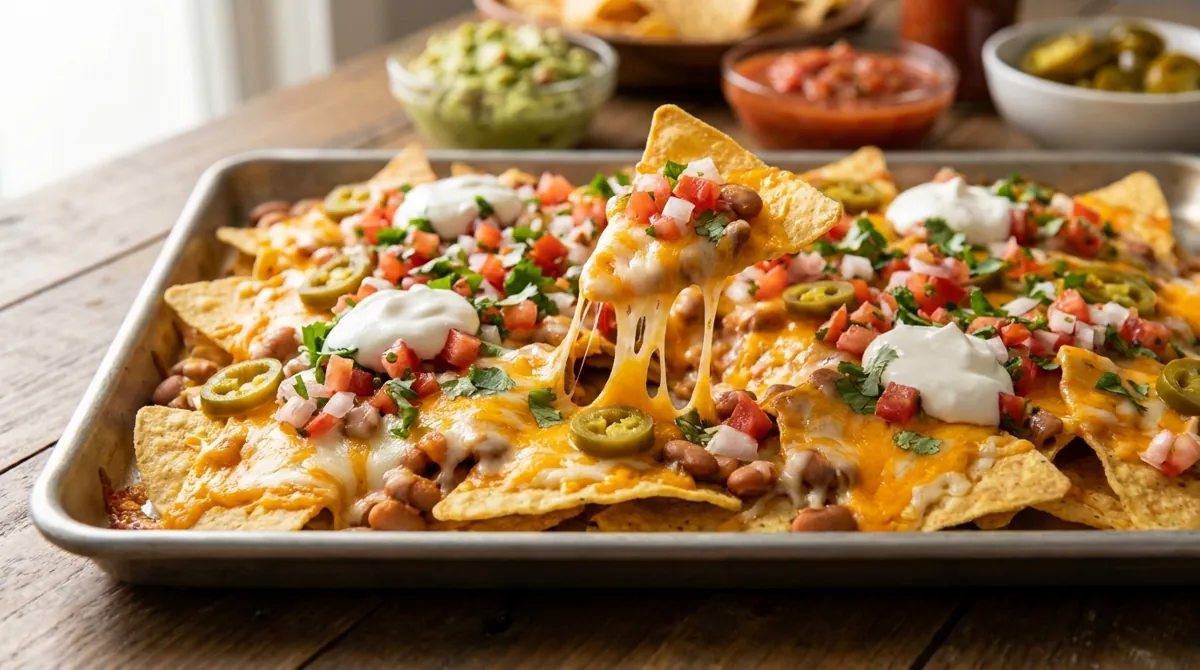
Nachos have an inventor with a name and a nickname. In 1943 a group of American women, wives of officers at Fort Duncan, the Army base by Eagle Pass, Texas, crossed the border to Piedras Negras, Coahuila, and arrived at the Victory Club after the kitchen had closed. The maître d', Ignacio Anaya, known as Nacho, put together what he had: fried tortilla triangles, shredded cheese and sliced pickled jalapeños, heated until the cheese melted. Asked what to call it, he named it after himself: Nacho's Special, nachos especiales. His recipe was printed in the 1954 St. Anne's Cookbook, and he died in 1975. Piedras Negras put up a bronze plaque, and October 21 is now the International Day of the Nacho.
The dish went national later, at the ballpark. In 1976 Frank Liberto of Ricos Products sold nachos with a pumpable cheese sauce at Texas Rangers games in Arlington Stadium, and on September 4, 1978, Howard Cosell said the word on Monday Night Football, which helped make "nachos" a household word. That is how a snack invented in Mexico for Americans became an American game-day food.
This is a home sheet-pan version true to the original idea, real cheese and jalapeño on every chip, with the beans, pico and sour cream that Tex-Mex added.
Why it works the kitchen science
Two thin layers on a wide sheet pan
Every chip gets cheese and none are buried bare at the bottom of a pile.
Grating your own cheese
Pre-shredded cheese is coated with anti-caking starch and melts grainier; cheddar brings flavor and Jack melts smoothly.
Wet toppings go on after baking
Beans patted dry and pico drained keep the chips crisp; fresh pico and cold sour cream added at the end stay bright.
🧰 You'll need 9 items
Everything the steps call for. Tick off what you have before you start.
Appliances
Pans and pots
Tools
Supplies
Step by step
- Step 1
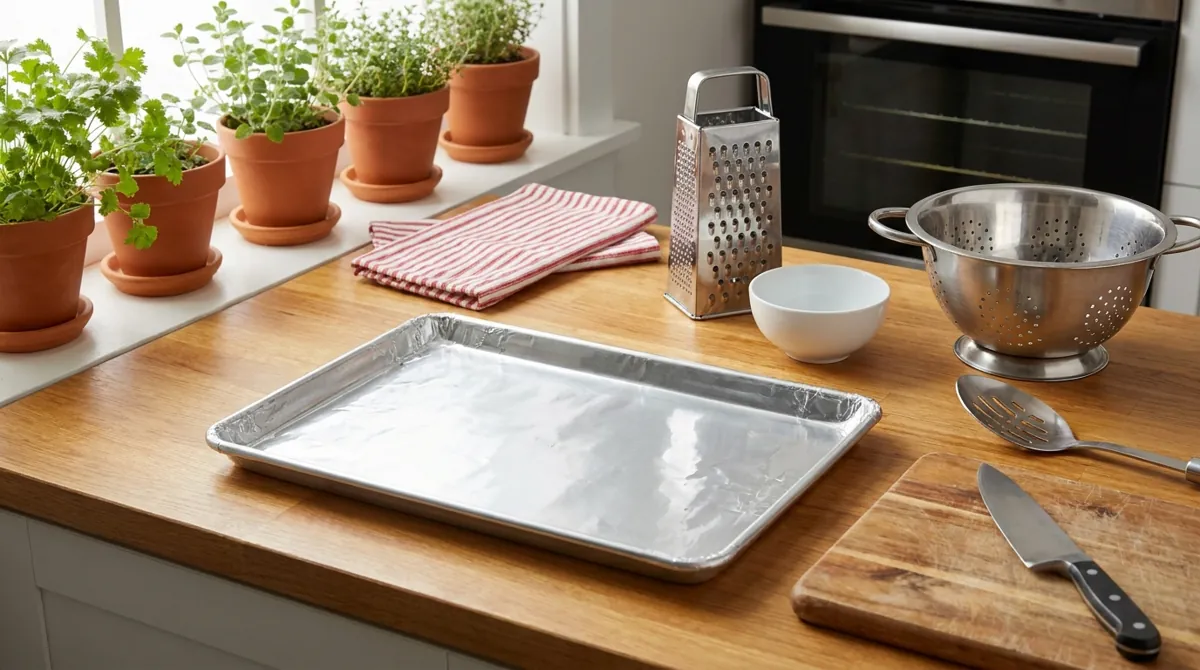
Heat the oven to 425°F with a rack in the middle. Line a rimmed half sheet pan with foil.
- Step 2
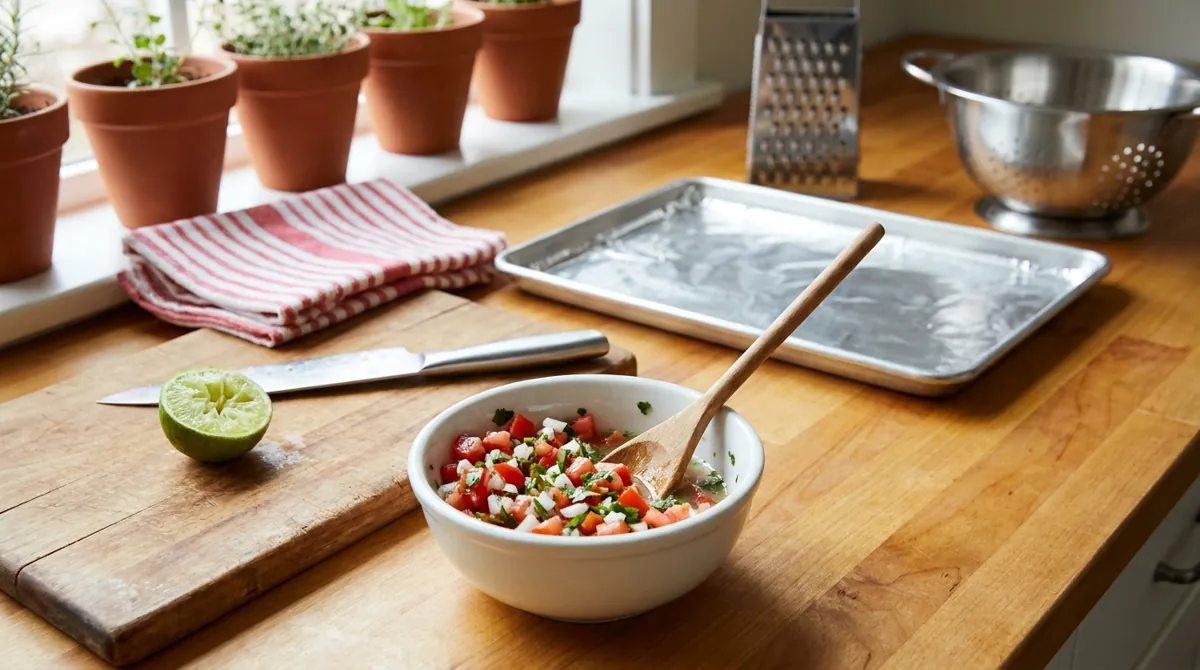
Make the pico de gallo: stir the tomatoes, onion, cilantro, lime juice and salt together in a small bowl and set it aside while you build the nachos.
- Step 3
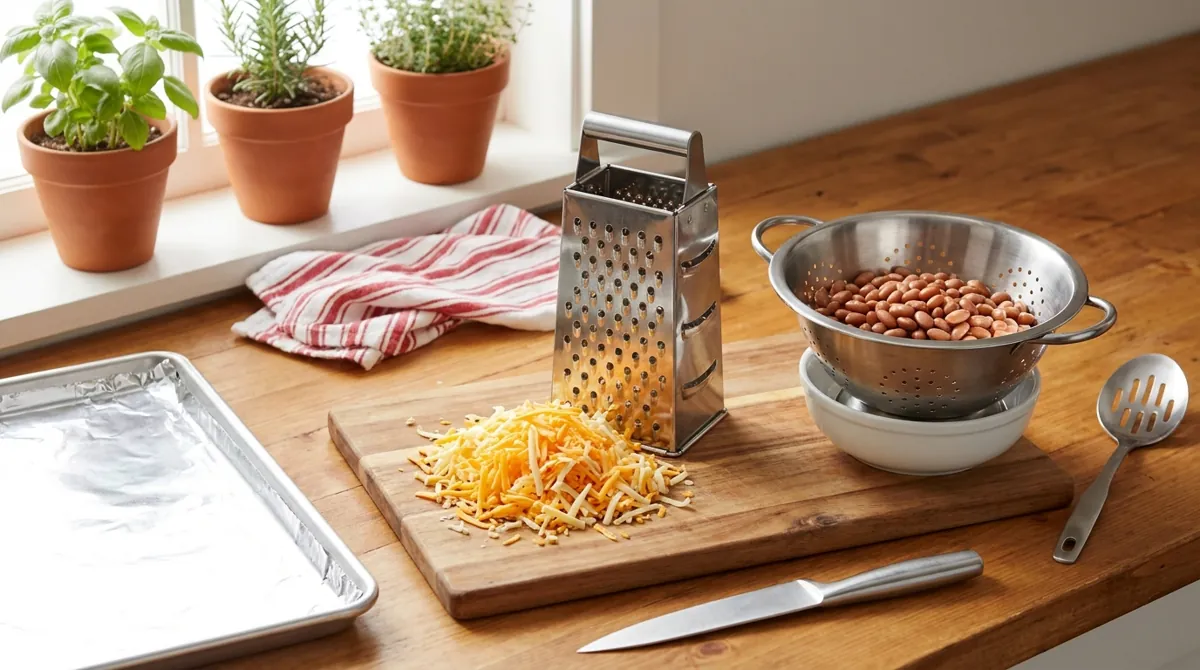
Grate both cheeses on the coarse side of a box grater and toss them together. Pat the drained beans dry with a paper towel.
- Step 4
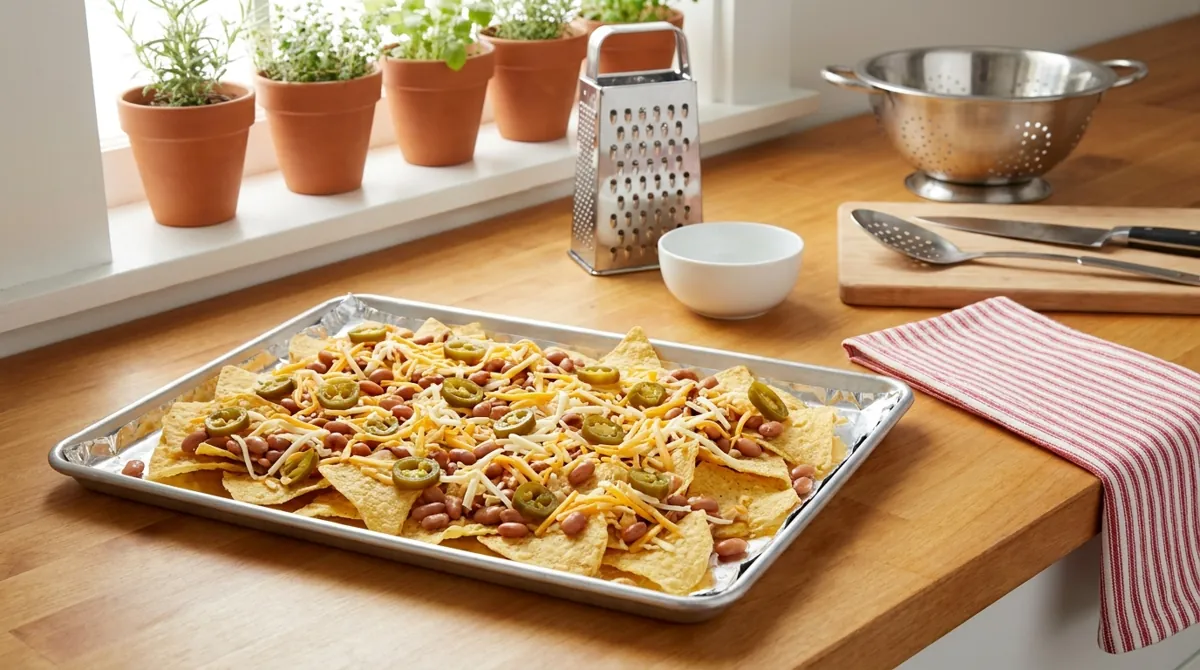
Spread half the chips over the pan in a single, slightly overlapping layer. Scatter over half the beans, half the cheese and half the jalapeños. Repeat with the rest of the chips, beans, cheese and jalapeños, so every chip has some cheese.
- Step 5
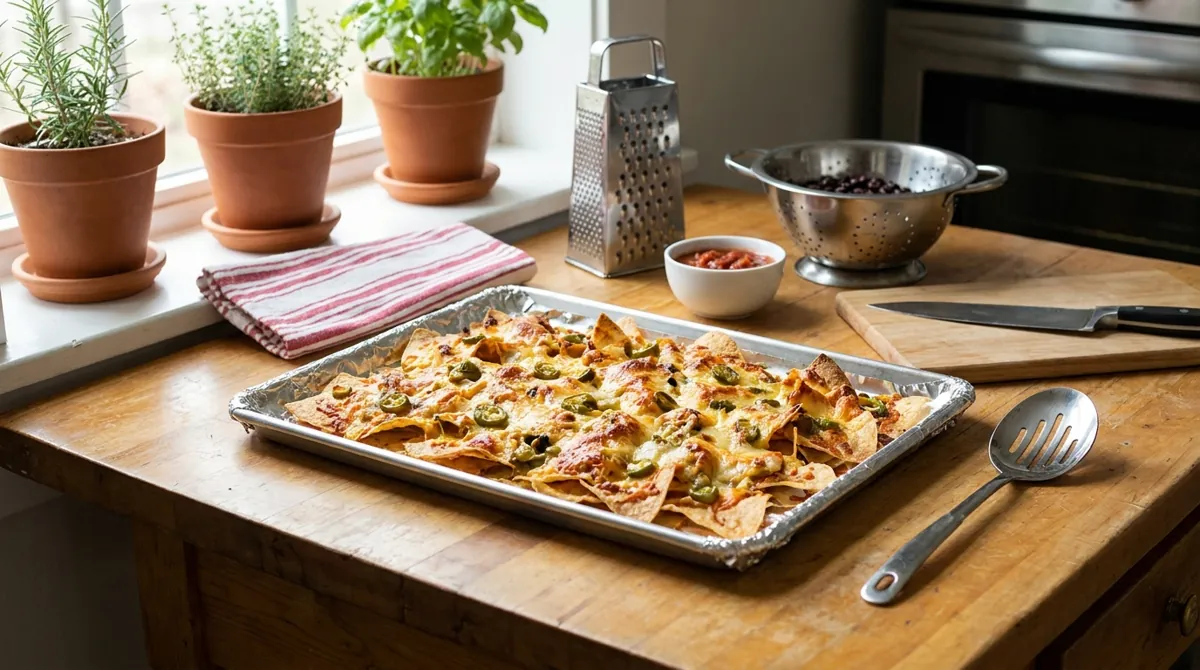
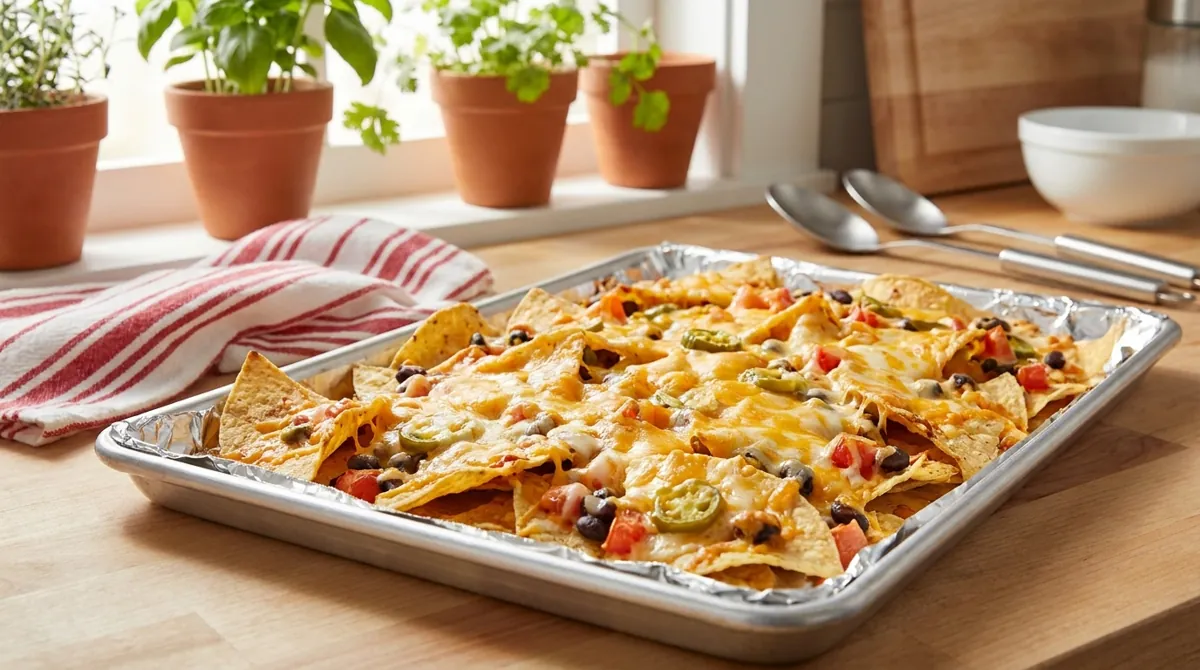
Bake 8 to 10 minutes, until the cheese is fully melted and bubbling and the chip edges are just turning golden.
✓ What it should look like - Step 6
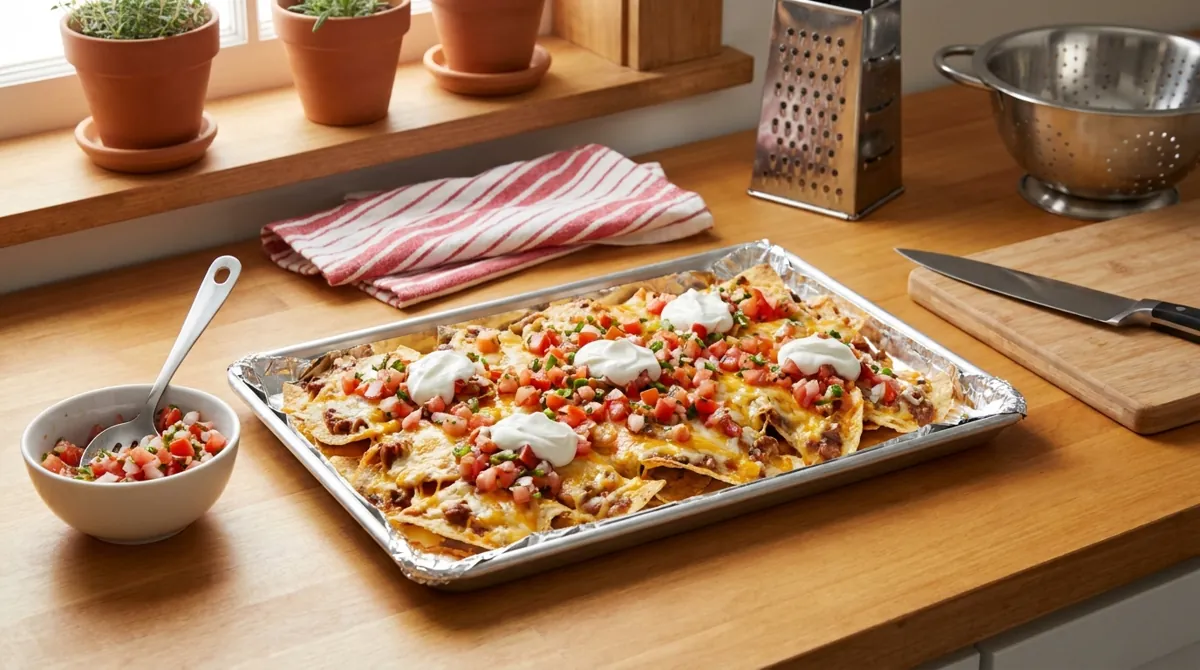
Spoon the pico de gallo over with a slotted spoon, leaving its juice behind, add dollops of sour cream, and serve straight from the pan.
Nachos
Serves 6 as a snack · one rimmed half sheet pan · 30 min total
Pico de gallo
- 2 Roma tomatoes, seeded and diced (120 g)
- 1/4 cup finely chopped white onion (40 g)
- 1/4 cup chopped fresh cilantro (8 g)
- 1 tbsp fresh lime juice (15 g)
- 1/4 tsp kosher salt
Nachos
- 8 oz thick restaurant-style tortilla chips (227 g)
- 6 oz sharp cheddar, coarsely grated (170 g, about 1 1/2 cups)
- 6 oz Monterey Jack, coarsely grated (170 g, about 1 1/2 cups)
- 1 can (15 oz) pinto beans, rinsed and well drained (about 255 g drained)
- 1/3 cup sliced pickled jalapeños, drained (50 g)
- 1/2 cup sour cream (115 g), to serve
Equipment: Oven, Rimmed baking sheet, Chef's knife and cutting board, Measuring cups and spoons, Mixing bowls, Slotted spoon or spider, Grater (box or rasp), Aluminum foil, Paper towels
Method
- Heat the oven to 425°F with a rack in the middle. Line a rimmed half sheet pan with foil.
- Make the pico de gallo: stir the tomatoes, onion, cilantro, lime juice and salt together in a small bowl and set it aside while you build the nachos.
- Grate both cheeses on the coarse side of a box grater and toss them together. Pat the drained beans dry with a paper towel.
- Spread half the chips over the pan in a single, slightly overlapping layer. Scatter over half the beans, half the cheese and half the jalapeños. Repeat with the rest of the chips, beans, cheese and jalapeños, so every chip has some cheese.
- Bake 8 to 10 minutes, until the cheese is fully melted and bubbling and the chip edges are just turning golden.
- Spoon the pico de gallo over with a slotted spoon, leaving its juice behind, add dollops of sour cream, and serve straight from the pan.
Americanized house recipe, written for this site. History: Wikipedia, "Nachos" (Ignacio Anaya, 1943, Victory Club, Fort Duncan wives, fried tortillas, Colby cheese and pickled jalapeños, "Nacho's Special", the 1954 St. Anne's Cookbook, death in 1975, the plaque and October 21, Frank Liberto at Arlington Stadium in 1976, Howard Cosell on September 4, 1978, the Carmen Rocha claim, and Ignacio Anaya Jr.'s account of Wisconsin cheese); TIME, "The International Day of the Nacho Would Not Be Possible Without This Man" (1943, about a dozen military wives, cheddar and jalapeños, "Nachos Especiales"); Barry Popik, "Nacho (Nachos)", word history and early print citations. en.wikipedia.org. Ingredient list follows the source; the method is in our own words.
All sources (3)
Tips
- Use thick chips; thin ones go soft under the cheese.
- Add browned ground beef or shredded chicken to the layers for a meal; add guacamole with the sour cream.
- For the original 1943 style, lay single chips flat, top each with a little cheddar and one jalapeño slice, and bake 5 minutes.
- Nachos do not keep. Make them right before serving.
The rules people argue about
What the sources agree on, what they don't, and what is just a good story.
- Ignacio Anaya invented nachos in 1943. Documented, with a rival: the Anaya story is the accepted one, but El Cholo in Los Angeles credits its waitress Carmen Rocha, who made them in San Antonio before bringing them to LA in 1959. Some accounts place Anaya's night in 1940 and name a different restaurant, so the year is Disputed; most sources, including Anaya's son, say 1943.
- The original used cheddar. Disputed: Wikipedia says Colby, TIME says cheddar, and Ignacio Anaya Jr. described a round Wisconsin cheese.
- The jalapeño goes on before the oven. Disputed: Anaya's own published accounts say before; his son said after.
Meatballs of the World

Italian-American Meatballs
Big, tender meatballs braised for an hour in red sauce over spaghetti. The one most Americans grew up with.

Pallottine (Abruzzo Meatballs)
Tiny meatballs, smaller than a marble, tossed right through square spaghetti alla chitarra. No bread at all.

Swedish Meatballs (Köttbullar)
Small, soft meatballs browned in butter, in a cream sauce made from the same pan, with lingonberry jam on the plate.

Danish Frikadeller
Pork meatballs shaped with a spoon and fried slowly in butter, crusty outside and soft in the middle.

Königsberger Klopse
German meatballs that are never fried: poached, then served in a creamy white sauce with capers.

Spanish Albóndigas in Almond Saffron Sauce
The tapas bar classic: small meatballs in a golden sauce thickened with fried almonds and bread.

Mexican Albóndigas with Chipotle and Mint
Soft meatballs with rice and fresh mint inside, simmered in a smoky tomato and chipotle broth.

Izgara Köfte (Turkish Grilled Meatballs)
Small, flat meatballs kneaded hard, rested cold, and charred on a hot grill pan.

Lion's Head Meatballs
Big, soft pork meatballs, stirred into a sticky paste, fried to set, then braised in a savory sauce.

Chicken Tsukune
Japan's chicken meatball: kneaded sticky, grilled on skewers, glazed with sweet soy tare, dipped in egg yolk.