
Omelette
Three eggs, good butter and about a minute and a half over the heat: a soft, pale-yellow, rolled French omelette with a creamy center and no browning.
🍳Cook alongOne move at a time, with real timers
 Edited by JP Lambiase
Change the estimate
Swaps change the price only: cook any meat to its own safe temperature. Where these numbers come from
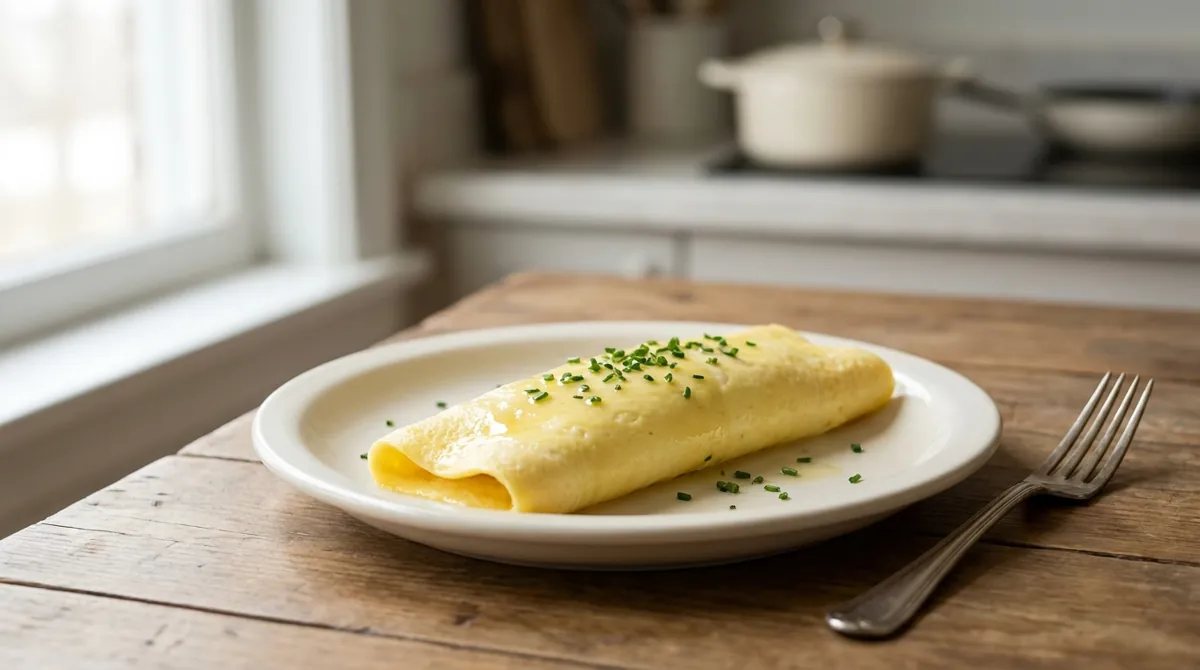
Eggs beaten and cooked in a pan are very old; some food writers trace omelette-like dishes to ancient Persia, where the herb egg dish kuku sabzi is still made. The French word omelette shows up in the middle of the 1500s, with older forms such as alumelle in a 1393 French household book, and by the 1800s French cooks wrote long lists of variations, savory and sweet.
The classic French omelette, as taught in French cooking and in many American restaurant cookbooks, is made quickly in butter, stirred at first so it stays soft, with no color on the outside, and rolled or folded into a neat cylinder. The American diner omelet is a different thing: made in a hot flat pan on the griddle, cooked until set and lightly browned, folded in half around a generous filling, such as the Denver omelet with ham, onion and green pepper. This recipe is the French style; the diner style is noted in the arguments below.
Why it works the kitchen science
Beating with salt first
Salt loosens the proteins so the eggs cook tender and evenly yellow.
Medium heat and fast stirring
Tiny curds make a creamy, custardy center.
Foaming butter
It is hot enough to set the eggs but not so hot that it browns them.
Stopping at barely set
The omelette keeps cooking from its own heat on the plate.
🧰 You'll need 5 items
Everything the steps call for. Tick off what you have before you start.
Pans and pots
Tools
Step by step
- Step 1
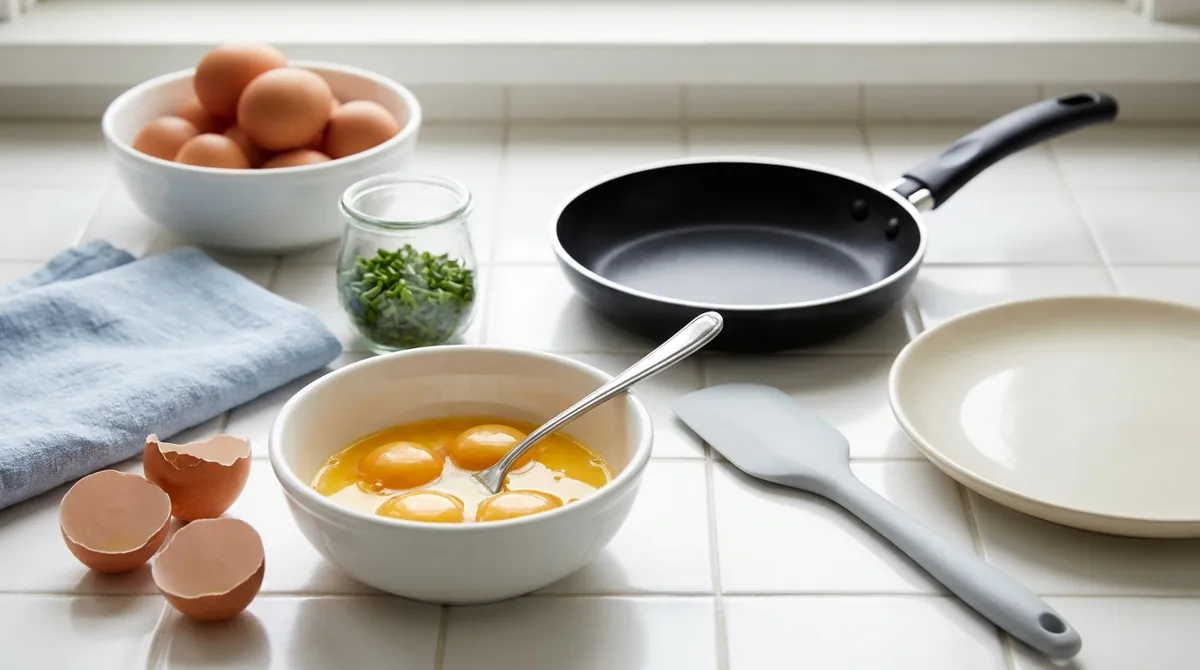
Crack the eggs into a bowl, add the salt and beat with a fork for 20 to 30 seconds, until no streaks of white remain and the eggs are uniformly yellow.
- Step 2
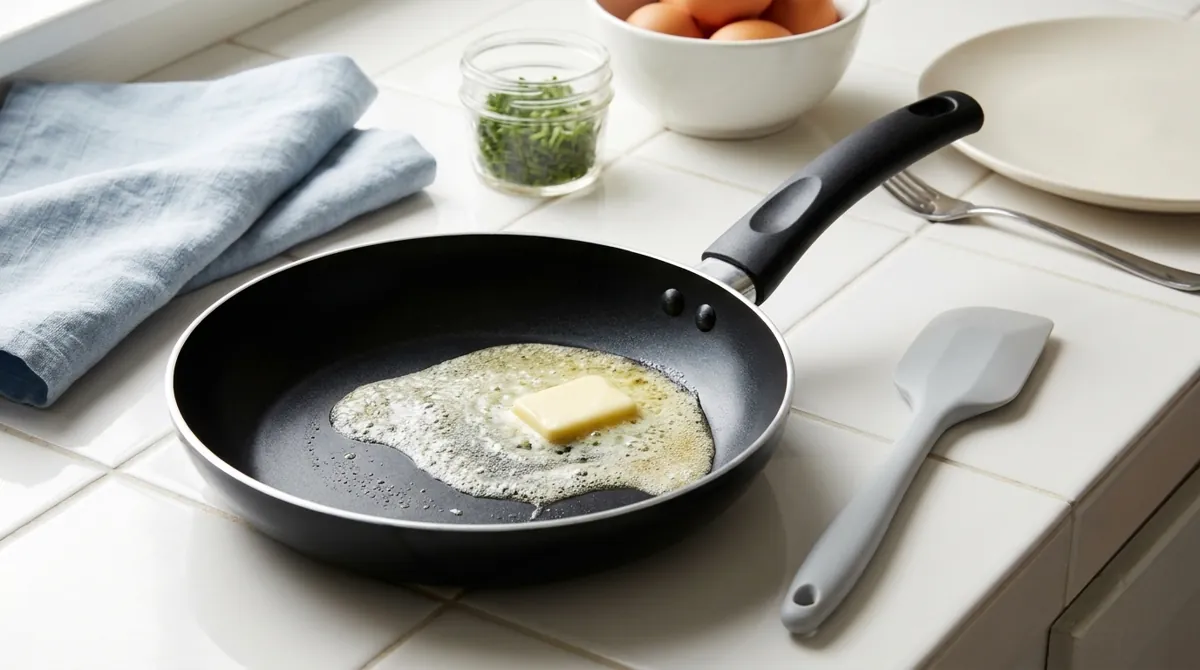
Heat an 8 inch nonstick skillet over medium heat for 1 minute. Add 1 tablespoon butter and swirl until it melts and foams, before it browns.
- Step 3
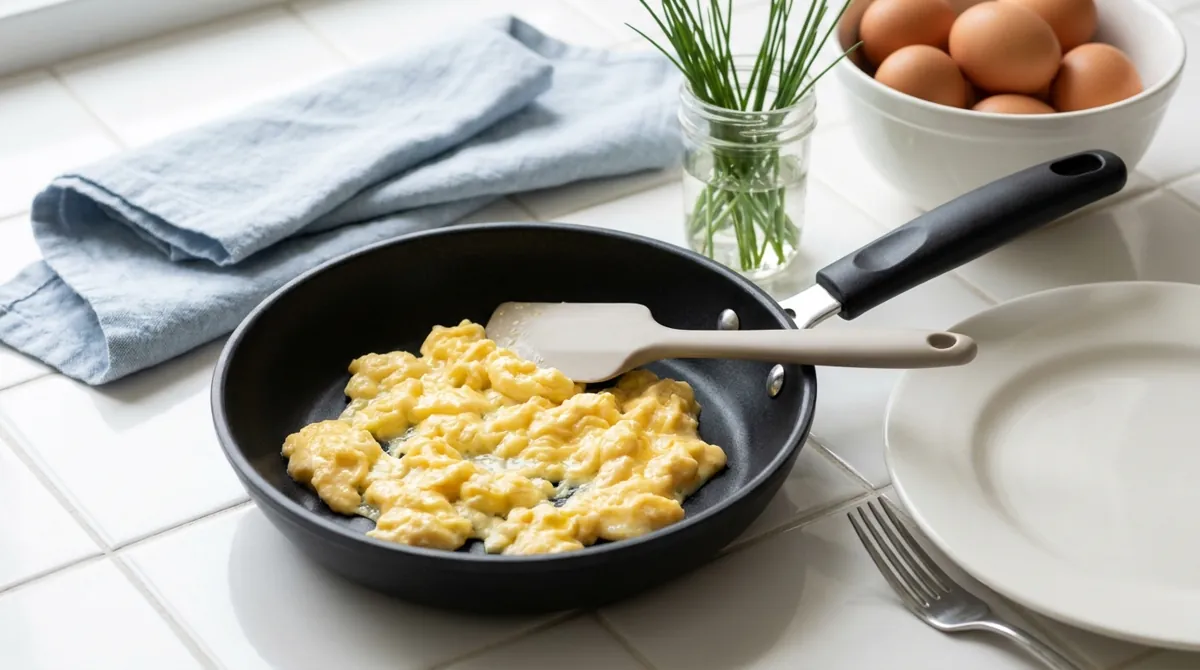
Add the eggs. Stir quickly with a spatula, shaking the pan back and forth, for about 20 seconds, until small soft curds form and the eggs look like loose scrambled eggs.
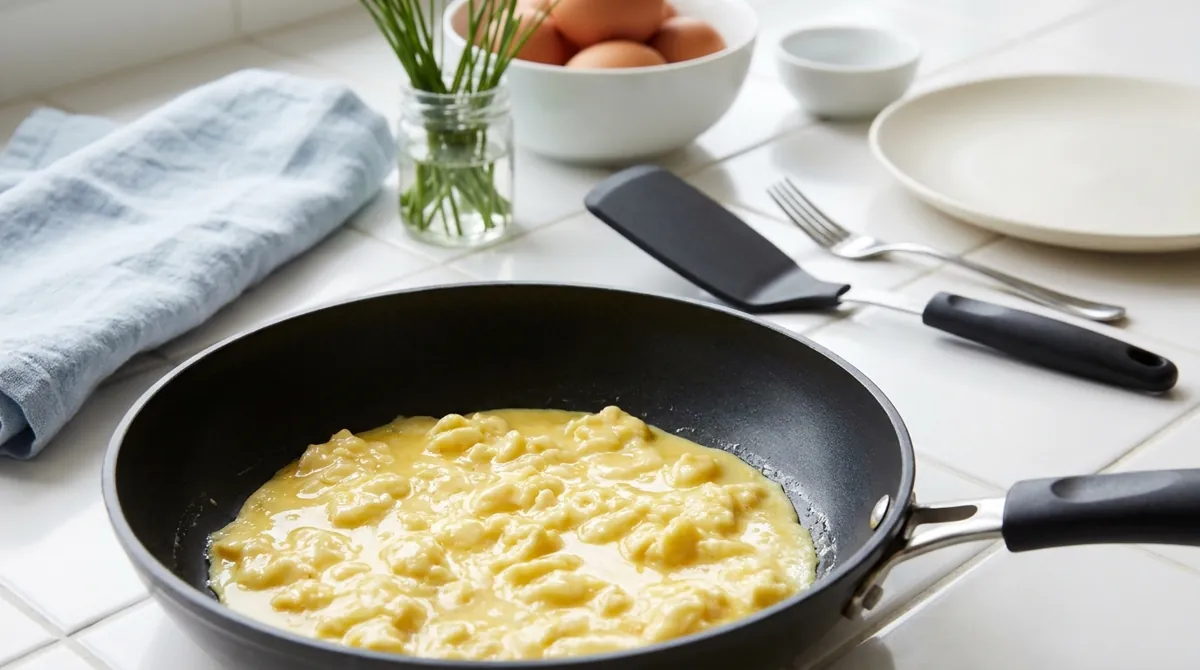
✓ What it should look like - Step 4
Stop stirring. Smooth the top flat and let it set for 10 to 15 seconds, so the bottom firms up while the top is still wet and shiny.
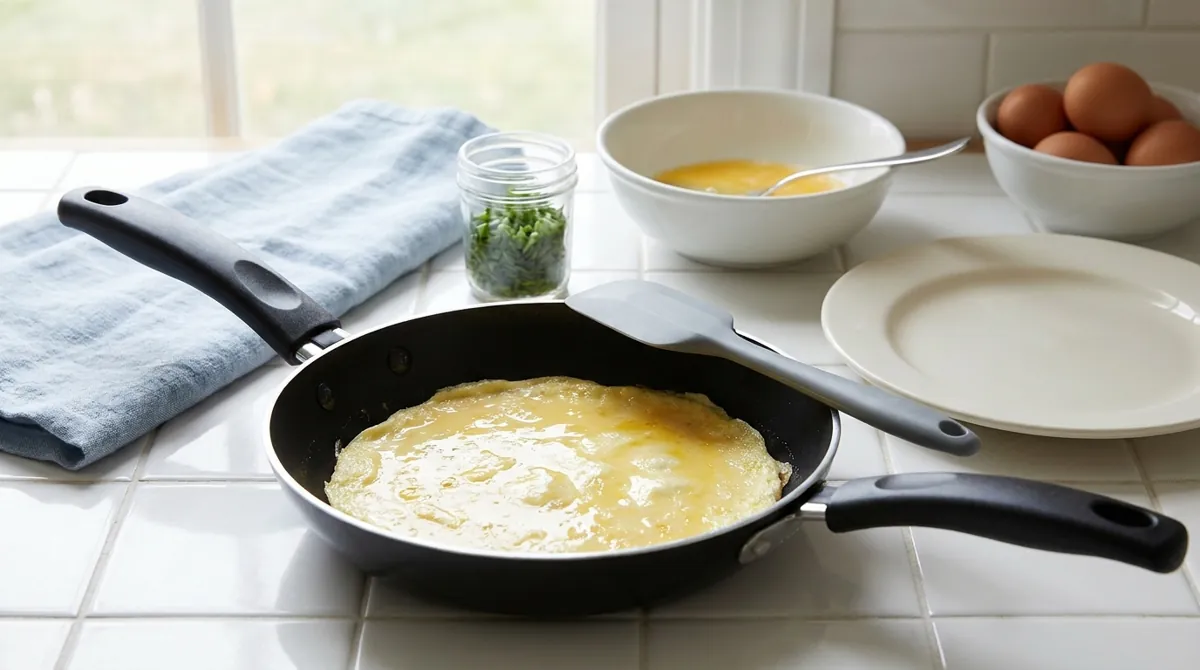
- Step 5
Tilt the pan, and with the spatula fold one third of the omelette over toward the center, then roll it onto a warm plate seam side down, shaping it into a neat cylinder.
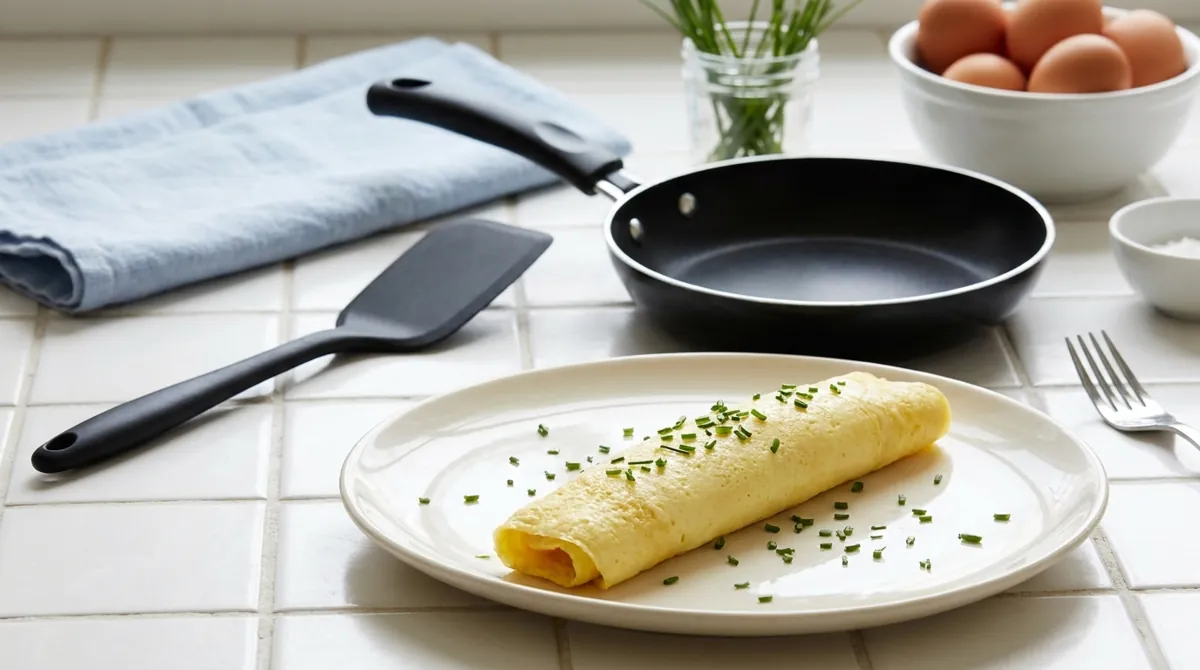
- Step 6
Rub the top with 1 teaspoon of butter for a glossy finish and scatter on the chives. Serve right away.
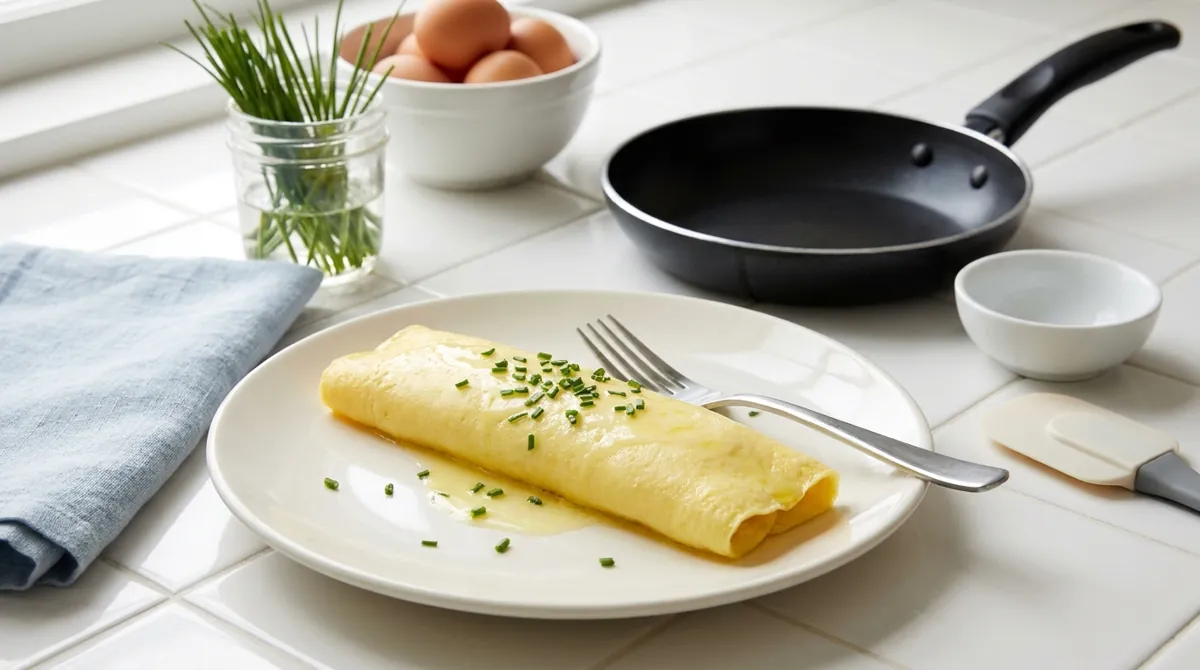
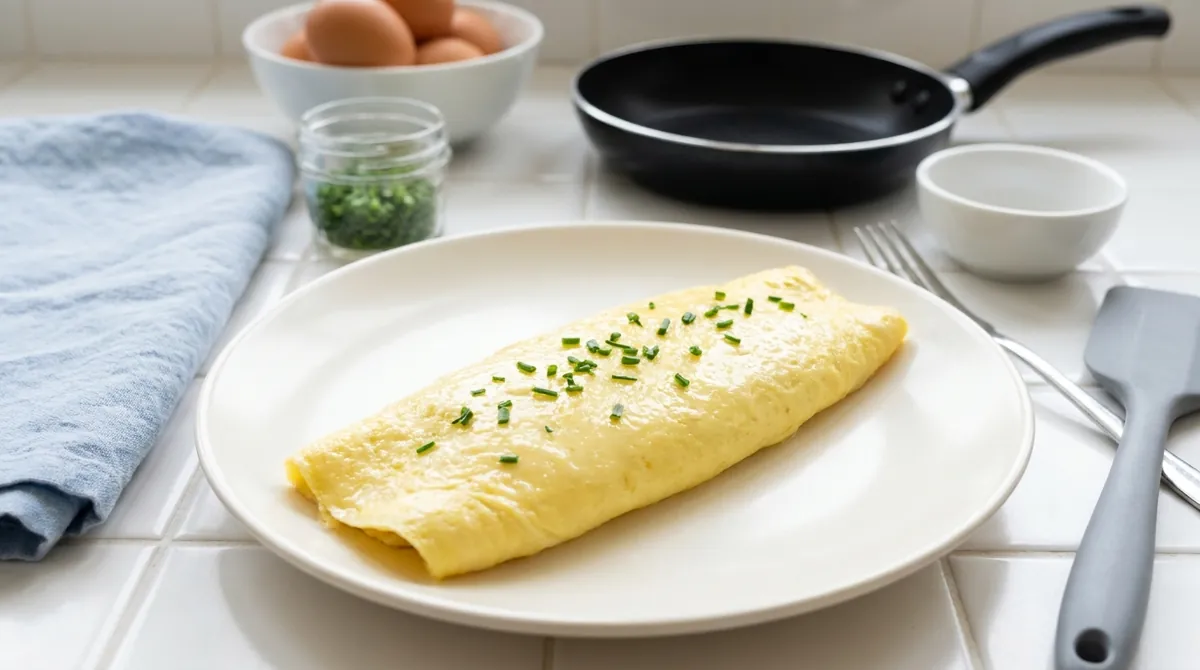
✓ What it should look like
Omelette
Serves 1 omelette · one 3 egg omelette · 8 min total
- 3 large eggs (150 g)
- 1 tbsp unsalted butter (14 g), plus 1 tsp (7 g) to finish
- 1/8 tsp fine salt
- 1 tsp finely chopped chives, optional
Equipment: Nonstick skillet, Chef's knife and cutting board, Measuring cups and spoons, Mixing bowls, Spatula
Method
- Crack the eggs into a bowl, add the salt and beat with a fork for 20 to 30 seconds, until no streaks of white remain and the eggs are uniformly yellow.
- Heat an 8 inch nonstick skillet over medium heat for 1 minute. Add 1 tablespoon butter and swirl until it melts and foams, before it browns.
- Add the eggs. Stir quickly with a spatula, shaking the pan back and forth, for about 20 seconds, until small soft curds form and the eggs look like loose scrambled eggs.
- Stop stirring. Smooth the top flat and let it set for 10 to 15 seconds, so the bottom firms up while the top is still wet and shiny.
- Tilt the pan, and with the spatula fold one third of the omelette over toward the center, then roll it onto a warm plate seam side down, shaping it into a neat cylinder.
- Rub the top with 1 teaspoon of butter for a glossy finish and scatter on the chives. Serve right away.
Americanized house recipe, written for this site, following the classic French method taught by Serious Eats ("How to Make a French Omelette") and by King Arthur and America's Test Kitchen guides: 3 eggs, 8 inch nonstick pan, butter, medium heat, stir, roll. History: Wikipedia, "Omelette" (16th century French usage, 1393 alumelle, Persian kuku, French unbrowned style vs American fillings such as the Denver). Serious Eats. Ingredient list follows the source; the method is in our own words.
All sources (2)
Tips
- Use a nonstick pan, about 8 inches across for 3 eggs.
- If you brown it, lower the heat next time; browning is fine, but it is not French.
- For cheese or herbs, add them just before rolling, in the center.
- Eat it at once; omelettes get tough as they sit.
The rules people argue about
What the sources agree on, what they don't, and what is just a good story.
- A real omelette is not browned. Disputed: classic French technique says no color, and many American restaurant cookbooks teach it that way, but French cooks have also written lightly golden versions, and diner omelets are browned.
Meatballs of the World

Italian-American Meatballs
Big, tender meatballs braised for an hour in red sauce over spaghetti. The one most Americans grew up with.

Pallottine (Abruzzo Meatballs)
Tiny meatballs, smaller than a marble, tossed right through square spaghetti alla chitarra. No bread at all.

Swedish Meatballs (Köttbullar)
Small, soft meatballs browned in butter, in a cream sauce made from the same pan, with lingonberry jam on the plate.

Danish Frikadeller
Pork meatballs shaped with a spoon and fried slowly in butter, crusty outside and soft in the middle.

Königsberger Klopse
German meatballs that are never fried: poached, then served in a creamy white sauce with capers.

Spanish Albóndigas in Almond Saffron Sauce
The tapas bar classic: small meatballs in a golden sauce thickened with fried almonds and bread.

Mexican Albóndigas with Chipotle and Mint
Soft meatballs with rice and fresh mint inside, simmered in a smoky tomato and chipotle broth.

Izgara Köfte (Turkish Grilled Meatballs)
Small, flat meatballs kneaded hard, rested cold, and charred on a hot grill pan.

Lion's Head Meatballs
Big, soft pork meatballs, stirred into a sticky paste, fried to set, then braised in a savory sauce.

Chicken Tsukune
Japan's chicken meatball: kneaded sticky, grilled on skewers, glazed with sweet soy tare, dipped in egg yolk.